Coffee · 10 of 35
Coffee Myths and Corrections
Coffee collects stories the way a grinder collects old grounds. Some are harmless legends, some are marketing, and some cost money or a burnt mouth. The Coffee pages correct dozens of them where they come up; this page gathers them in one place, grouped by subject. Each entry gives the claim, what the evidence says, the source, and the page that tells the whole story.
A correction is only as good as its source, so where the evidence is thin the entry says so. “Not proven” is a different verdict from “false,” and several of the stories below earn the first and not the second.
The short version
| The claim | The verdict | Where the evidence is |
|---|---|---|
| Kaldi’s goats discovered coffee | Legend, first printed 1671 | History |
| A pope baptised coffee | Legend; no record from his papacy | History |
| Dark roast has more caffeine | False; about the same by weight, slightly less brewed | How Coffee Is Roasted |
| A shot of espresso has more caffeine than a mug of drip | False per serving; true per ounce | Caffeine and Health |
| Cold brew is low-acid | Its pH matches hot coffee | Caffeine and Health |
| Freezing ruins coffee | False, done properly; the fridge is the poor choice | Keeping Coffee |
| The freshest coffee is the best coffee | Fresh beans need a rest of days first | Keeping Coffee |
| ”100% Arabica” means good coffee | It names the species, not the grade | The Bean |
| Fair trade means the farmer was paid well | It guarantees a floor, which was below the market 2021–2026 | Labels and Certifications |
| The Civil War made New Orleans drink chicory | Possible, not proven | Chicory and New Orleans Coffee |
| Crema means a good shot | It means fresh, dark or robusta-containing | Espresso |
| Coffee brewed at home can be sold at the market | Not under either Michigan route | The Michigan Rules |
History
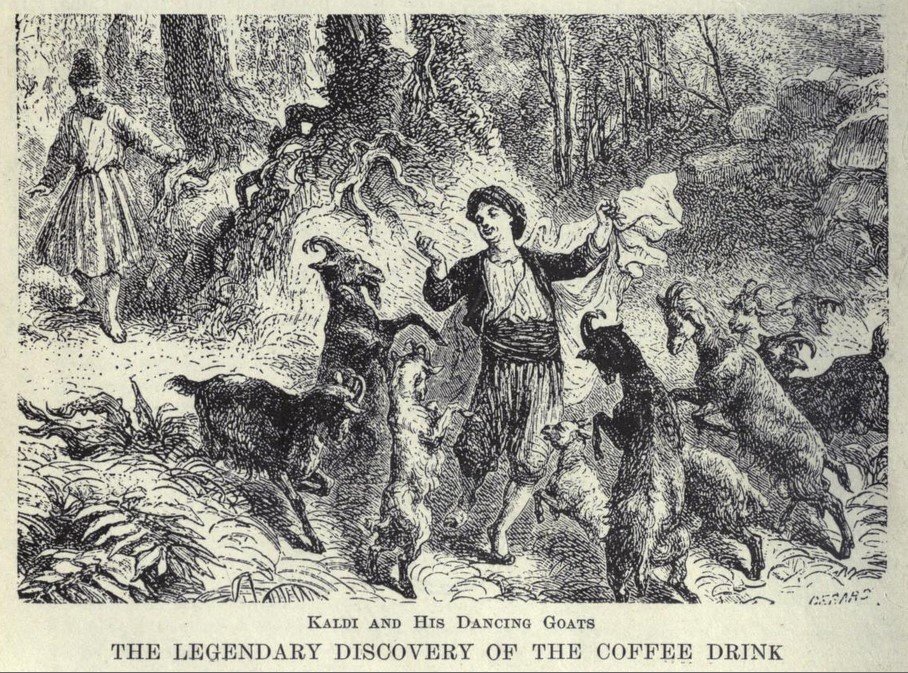
”A goatherd named Kaldi discovered coffee when his goats began to dance”
The evidence. The story first appears in print in 1671, in Antoine Faustus Nairon’s Latin treatise on coffee, roughly eight centuries after the date it is usually given. Within a generation the French orientalist Antoine Galland, working from Arabic manuscripts, criticised Nairon for accepting it, calling such tales unworthy of belief as history. Ukers’s 1922 All About Coffee retells it as “the legendary discovery.” Nobody wrote down who first found out what the plant did; the people of the Horn of Africa knew long before anyone recorded it.
Source: William H. Ukers, All About Coffee (1922), chapter on the origin of coffee, quoting Galland on Nairon. Full story: The History of Coffee.
”Pope Clement VIII tasted coffee and baptised it, so Christians could drink it”
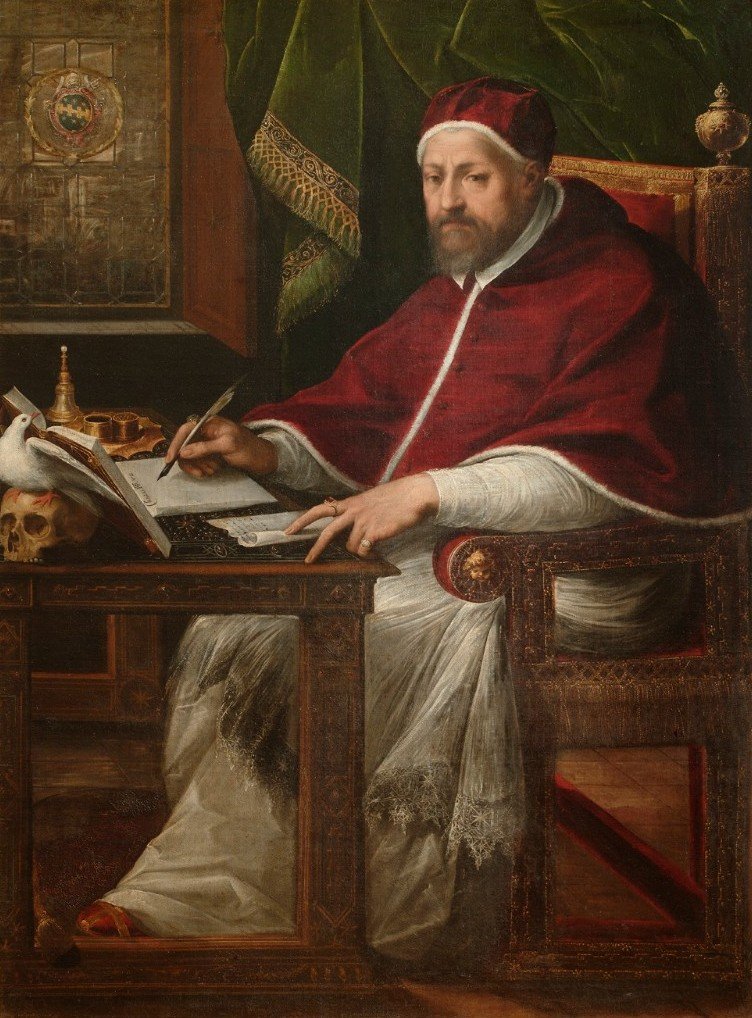
The evidence. It is a good story with no contemporary record behind it. Clement reigned from 1592 to 1605; the anecdote appears much later, and by 1922 Ukers was printing it as fact in a chapter heading, “How Pope Clement VIII baptized it and made it a truly Christian beverage.” Repetition in a standard reference is how a legend acquires a footnote. Print it as folklore.
Source: Ukers, All About Coffee, chapter IV. Full story: The History of Coffee.
”Baba Budan smuggled seven seeds out of Yemen strapped to his belly”
The evidence. Coffee does grow in the Chikmagalur hills of Karnataka, in hills that carry his name. The seven seeds and the belly appear in no contemporary record. A legend with a true outcome.
Full story: The History of Coffee.
”Coffee reached Brazil in a bouquet from a governor’s wife”
The evidence. Coffee did reach Brazil in the 1720s. The bouquet, the Portuguese officer and the romance are the colourful part of a story with no documentary support. What is documented, and too often left out, is that Brazil’s coffee economy ran on the labour of enslaved Africans until abolition in 1888.
Full story: The History of Coffee.
”Napoleon invented chicory coffee”
The evidence. Roasted chicory was being drunk in the Netherlands and Germany decades before his Continental Blockade of 1806. The blockade cut France off from colonial coffee and made chicory widespread there; it did not invent it.
Full story: Chicory and New Orleans Coffee.
”New Orleans has always drunk chicory coffee”
The evidence. The city’s two classic cookbooks, Lafcadio Hearn’s La Cuisine Créole (1885) and The Picayune Creole Cook Book (1901), give their coffee as Java and Mocha, with no chicory.
Source: The Picayune Creole Cook Book, “Creole Coffee.” Full story: Chicory and New Orleans Coffee.
”The Civil War blockade is why New Orleans drinks chicory”
The evidence. Possible, not proven. Chicory coffee was remembered afterwards as a Confederate wartime drink, and the Union blockade did cut the South off from coffee. But no New Orleans source from the war years shows the city adopting chicory, and its own cookbooks a generation later leave it out. The story may be true; it is not documented.
Full story: Chicory and New Orleans Coffee.
”Angelo Moriondo invented espresso in 1884”
The evidence. Moriondo patented a steam machine in Turin in 1884 that brewed coffee in bulk. Single servings came with Luigi Bezzera’s 1901 patent. The crema-topped espresso of today began with Achille Gaggia’s spring lever, developed in 1947 and sold from 1948.
Full story: The Espresso Machine.
”Espresso means fast” and “9 bar is what espresso requires”
The evidence. The word carries three senses at once: pressed out, fast, and made expressly for one customer. And 9 bar is a convention of pump machines, not a law of extraction: steam machines brewed at about 1.5 bar, the first spring levers peaked near 12 atmospheres and fell through the shot, and modern machines often ramp the pressure up and down. Why 9 bar became the standard is not documented by any maker.
Full story: The Espresso Machine and Espresso.
”Cupping is a modern specialty-coffee ritual”
The evidence. American buyers were already tasting coffee by the cup in Ukers’s day; before about 1900, he wrote, coffee was judged “simply by the appearance of the green or of the roasted bean.” The formal published protocol dates from 2004, and the Specialty Coffee Association replaced it in 2023–24.
Full story: Cupping.
”Andrew Jackson named red-eye gravy”
The evidence. The story of Jackson ordering ham with gravy “as red as your eyes” traces to modern food websites, not to anything from his day. The other explanation can be seen in a bowl: the coffee sinks and the ham fat floats on top in a round pool, like an eye. Neither has a documented first use.
Source: Wikipedia, Red-eye gravy, which flags its own sourcing as thin. Full story: Cooking With Coffee.
”Juan Valdez is a real coffee farmer”
The evidence. He is a fictional character, created for the advertising of the National Federation of Coffee Growers of Colombia and played by actors since 1958.
Source: Wikipedia, Juan Valdez. Full story: Labels and Certifications.
”Nescafé’s whole American output went to the army in World War II”
The evidence. Nescafé was launched in Switzerland on 1 April 1938 and became an American staple during the war. The claim that Nestlé’s entire US output went to the military is widely repeated and thinly sourced. Instant coffee was already in soldiers’ rations in World War I.
Source: Wikipedia, Nescafé. Full story: The History of Coffee.
Caffeine and health
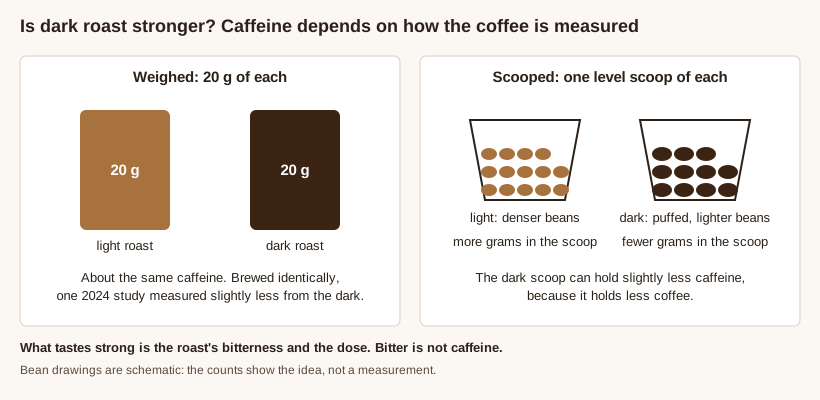
”Dark roast has more caffeine” (or “light roast has far more”)
The evidence. Neither. Caffeine barely changes in the roaster. Roasting puffs the bean up and drives out water, so a scoop of dark beans weighs less than a scoop of light ones and can carry slightly less caffeine. Brewed identically from the same green coffee, a 2024 study found caffeine “generally lower for dark roasts than light and medium roasts,” by a small margin. What tastes strong in a dark roast is bitterness, and bitter is not caffeine.
Source: Lindsey and others, Caffeine content in filter coffee brews as a function of degree of roast and extraction yield, Scientific Reports, 2024. Full story: How Coffee Is Roasted and Caffeine and Health.
”Espresso has the most caffeine”
The evidence. Per ounce, yes. Per drink, usually not: a single shot averages about 64 mg against about 95 mg for 8 oz of drip in USDA data. Café shots vary widely, from 51 to 322 mg in one survey of twenty, so a double from a heavy-handed café can top a mug.
Full story: Caffeine and Health.
”Cold brew is low-acid”
The evidence. By pH, no. A direct comparison found the pH of cold and hot brew from the same coffee “comparable, ranging from 4.85 to 5.13.” The hot brews had more titratable acid, which may be part of why cold brew tastes softer. “Low acid” on a label has no legal definition.
Source: Rao and Fuller, Acidity and Antioxidant Activity of Cold Brew Coffee, Scientific Reports, 2018. Full story: Caffeine and Health and Labels and Certifications.
”Decaf has no caffeine”
The evidence. A cup of decaf carries about 2 to 15 mg. Swiss Water certifies its process to 99.9% caffeine-free; no decaf is entirely free of it.
Full story: Caffeine and Health.
”Coffee causes heart disease”
The evidence. The large studies find lower death rates from heart disease among moderate drinkers, once smoking is accounted for. The possible exception is people who clear caffeine slowly (a variant of the CYP1A2 gene) and drink four cups or more.
Full story: Caffeine and Health.
”Coffee prevents diabetes, Parkinson’s and liver disease”
The evidence. It is associated with less of each in large observational studies. That is not proof that coffee causes the difference.
Full story: Caffeine and Health.
”French press coffee is healthier because nothing is filtered out”
The evidence. The opposite, for cholesterol. What a paper filter removes is cafestol, the coffee oil that raises LDL cholesterol. A French press, a metal filter, a phin and boiled coffee let it through.
Full story: Caffeine and Health.
”Coffee carries a cancer warning in California”
The evidence. It did from 2018. In June 2019 California adopted a regulation saying chemicals created by roasting and brewing coffee “do not pose a significant risk of cancer,” the courts upheld it, and the litigation ended in 2023.
Source: Scali Rasmussen, Coffee and Prop 65: The long and winding road is over (2023). Full story: Caffeine and Health.
”Chicory makes coffee stronger”
The evidence. Darker and heavier in the cup, yes. Stronger in caffeine, no: chicory has none, so a blend has less than the same weight of coffee.
Full story: Chicory and New Orleans Coffee.
”Hot coffee destroys honey”
The evidence. Overstated. Heat does break down honey’s enzymes, but slowly at drinking temperatures. In the USDA’s figures, half the enzyme activity lasts 3 to 16 hours at 145 °F and 40 minutes to 2½ hours at 160 °F, so the often-quoted “gone within half an hour above 140 °F” overstates it. Syrup made with 100 °F water shows no measurable change.
Full story: Honey in Coffee.
Brewing and water
”Tamp with 30 pounds of force”
The evidence. Folklore. Once the grounds form a coherent puck, at well under 30 pounds, more force does almost nothing, because nine bar of water pressure compresses the bed far harder than an arm can. What matters is that the tamp is level.
Full story: Espresso.
”Thick crema means a good shot”
The evidence. Crema is carbon dioxide from the roast, foamed by the coffee’s oils. Fresh beans, darker roasts and robusta all make more of it. A thin-crema light roast can be an excellent shot, and a cheap all-robusta shot can carry a magnificent blanket of crema and taste of burnt rubber. Steam machines made no crema at all; it arrived with the 1947 lever.
Full story: Espresso.
”If it is weak, brew it longer”
The evidence. Weak and under-extracted are different problems. A weak but balanced cup needs more coffee for the water. Brewing longer extracts more of the bitter end of the coffee without making the cup much stronger. Sour and thin means grind finer; bitter and harsh means grind coarser.
Full story: Troubleshooting and Brewing.
”Boiling water ruins coffee”
The evidence. For pour-over, water just off the boil is the usual advice; an open kettle drops into the 195 to 205 °F range in about thirty seconds. In a French press, boiling water is not the crime it is made out to be, because the slurry sheds heat quickly. Tasting panels found no appreciable difference between 87 and 93 °C once strength and extraction were held equal.
Full story: Brewing.
”The SCA water standard is 150 ppm TDS”
The evidence. That is the 2009 figure. The SCA’s later water documents dropped a dissolved-solids target, because a TDS reading says how much is in the water but not what. The current guidance is calcium hardness 50 to 175 ppm, alkalinity 40 to 70 ppm and pH 6 to 8.
Full story: Water.
”Magnesium extracts more flavour than calcium”
The evidence. The claim rests on one 2014 computer calculation, whose own authors said the effect “would be better probed experimentally.” The experiments since have not reproduced it: the SCAE Water Chart’s authors could not verify it with a refractometer, and a 2024 Umeå study found the salts “did not affect the extraction of the acids.” Magnesium’s real advantage is that it does not form scale the way calcium does.
Full story: Water.
”Distilled water makes the purest coffee”
The evidence. It makes flat coffee. With nothing dissolved in it, water extracts poorly. Reverse-osmosis water with minerals added back is how careful brewers get exactly the water they want.
Full story: Water.
The bean and the roast
”100% Arabica means quality coffee”
The evidence. It names the species. Arabica is about 56% of the world crop, and the exchange-grade washed arabica traded as the C contract on ICE is commodity coffee. On a label, “100% Arabica” is a legal promise that every bean is arabica and nothing more. Quality is decided by the farm, the processing, the sorting and the roast; fine robusta exists and poor arabica is common.
Source: USDA FAS, Coffee: World Markets and Trade (July 2026); ICE, Coffee “C” futures. Full story: The Bean and Packaging Coffee for Sale.
”Arabica is 60 to 70% of the world’s coffee”
The evidence. An out-of-date figure. The USDA’s July 2026 forecast for 2026/27 is about 56% arabica to 44% robusta, and arabica has run between about 53 and 58% since 2021/22.
Source: USDA FAS, Coffee: World Markets and Trade. Full story: The Bean.
”Robusta always costs about half as much as arabica”
The evidence. True for thirty years, until it was not: in 2024 robusta averaged about 201 cents a pound, more than mild arabica fetched in most years of the IMF series.
Full story: The Coffee Market.
”Excelsa is a kind of liberica”
The evidence. It was long classified that way. Since 2025 excelsa (Coffea dewevrei) and liberica are treated as two separate species.
Full story: Beyond Arabica and Robusta.
”A light roast is a better roast”
The evidence. Light roasting done well keeps more of a coffee’s origin character. Much of what is sold as fashionable light roast is simply underdeveloped: dropped too soon after first crack, sour and cereal-like however it is brewed. And a dark blend built on inexpensive coffee is sound engineering, because at the dark end the roast is the flavour.
Full story: How Coffee Is Roasted.
”Coffee beans are beans”
The evidence. They are the seeds of a fruit, the coffee cherry, two to a cherry, and the cherry itself can be eaten or dried and brewed as cascara.
Full story: The Bean.
Storage and freshness
”Freezing ruins coffee”
The evidence. Done properly, the freezer is the best place for coffee that will not be drunk within two weeks. Cold slows every kind of staling. In a Penn State study, frozen dark roasts kept their aroma over nine weeks while room-temperature ones changed noticeably. The old objection is condensation on cold beans; the harm has not been measured, and the method avoids it anyway: whole beans, airtight, portioned, frozen once, not refrozen, and not opened until they reach room temperature.
Source: Penn State, Wake up and smell the coffee: Research shows freezing beans can preserve aroma (Cotter and Hopfer). Full story: Keeping Coffee.
”Keep coffee in the fridge”
The evidence. The worst of both: cold enough to cause condensation when the bag comes out, not cold enough to slow staling much, and full of smells that dry coffee takes up. The National Coffee Association gives refrigerated beans two weeks, no better than a cupboard.
Source: National Coffee Association, Storage and Shelf Life. Full story: Keeping Coffee.
”Move beans into an opaque airtight canister”
The evidence. In the one study that measured it, beans tipped into an airtight tin and opened twice a week did worse than beans left in their valve bag. The bag is full of the coffee’s own carbon dioxide; the tin fills with kitchen air every time the lid comes off. A good foil bag, pressed flat and closed tight, is the best everyday container.
Full story: Keeping Coffee.
”The fresher the roast, the better the cup”
The evidence. Freshly roasted coffee is still giving off carbon dioxide fast, which gets in the way of brewing. Filter coffee wants a rest of 2 to 5 days and espresso 5 to 7 days or more. After that, whole bean is “fresh” for about three weeks (SCA); use it within 2 to 4 weeks of roasting and 2 weeks of opening.
Source: SCA, What is “freshly roasted” coffee? Full story: Keeping Coffee.
”Vacuum-seal fresh coffee, and add a desiccant pack”
The evidence. No to both. A vacuum pulls aroma out with the air, and fresh coffee still has litres of gas to give off. Roasted coffee is already far drier than a desiccant would make it, and silica gel takes up aroma as well as water. A one-way valve bag does the job.
Full story: Packaging Roasted Coffee.
”Each 1% of oxygen in the bag adds 10% to the rate of staling”
The evidence. The figure appears in a 2012 Specialty Coffee Association review, credited to a 2001 paper. It is not in that paper’s summary and does not fit the paper’s own finding that going from 0.5% to 21% oxygen speeded staling about twenty-fold. Not a number to repeat.
Full story: Packaging Roasted Coffee.
Buying and labels
”The C price is what coffee farmers are paid”
The evidence. The C price is the futures price for 37,500 pounds of exchange-grade washed arabica, delivered to a warehouse in a consuming country. Physical coffee sells at that price plus or minus a differential, and a farmer is paid a local price after milling, export and transport are taken out.
Source: ICE, Coffee “C” futures. Full story: The Coffee Market.
”The farmer gets 1 to 2% of the price of a bag” (or 10%, or any other single figure)
The evidence. The best public model, a 2024 study of coffee sold in Germany, found that growing the coffee took about 21% of the shop price, but that a smallholder’s net income, including pay for the family’s own labour, came to about 5%. Retail, roasting and Germany’s coffee tax each took 21 to 23%.
Full story: The Coffee Market.
”Fair trade means the farmer got a good price”
The evidence. Fairtrade International guarantees a minimum price to a co-operative, $1.80 a pound for washed arabica ($2.00 from 1 December 2026), plus a 20-cent premium. From 2021 to 2026 the market was far above that floor, so the only extra the label guaranteed was the premium. The floor was raised in 2023 for the first time since 2011.
Source: Daily Coffee News, Fairtrade International raises price minimums again (4 August 2026). Full story: Labels and Certifications.
”Fairtrade and Fair Trade Certified are the same thing”
The evidence. Two organisations and two seals. Fair Trade USA left the international system at the end of 2011 and sets its own standard, which also certifies larger farms; its published price tool lists a different floor.
Source: Fair Trade USA, price and premiums. Full story: Labels and Certifications.
”The Rainforest Alliance frog means a better price”
The evidence. In the organisation’s own words, certification “does not guarantee a minimum price.” Its “Sustainability Differential” is mandatory but the amount is negotiated.
Source: Rainforest Alliance, Does Rainforest Alliance Certified guarantee a minimum price? Full story: Labels and Certifications.
”Organic green coffee makes organic roasted coffee”
The evidence. Roasting is handling, and the roaster needs its own organic certificate, unless its organic sales are $5,000 a year or less. An exempt roaster may not use the USDA seal or call the coffee “certified organic.”
Source: 7 CFR 205.310. Full story: Labels and Certifications.
”A Kona blend is mostly Kona”
The evidence. Under Hawaii law a blend needs only 10% coffee from the named Hawaii origin until 30 June 2027, and 51% from 1 July 2027. The percentage has to be printed on the bag.
Source: Hawaii Revised Statutes §486-120.6. Full story: Labels and Certifications.
”Direct trade is better than fair trade,” or “direct trade is a certification”
The evidence. There is “no single set of direct trade standards.” No definition, no audit. It can describe an excellent relationship or be a phrase on a bag.
Source: Wikipedia, Direct trade. Full story: Labels and Certifications.
”Shade grown,” “low acid,” “single origin,” “estate” and “micro-lot” are regulated terms
The evidence. None has a US legal definition. Only the general law applies: a food is misbranded if “its labeling is false or misleading in any particular.” Smithsonian Bird Friendly is the one seal with a measurable shade standard.
Source: 21 U.S.C. 343. Full story: Labels and Certifications.
”Certified farms sell all their coffee at the certified price”
The evidence. Much coffee grown under certified conditions is sold as ordinary coffee, because there are not enough buyers paying for the seal.
Full story: Labels and Certifications.
”The 2025 price spike was caused by speculators”
The evidence. The USDA attributes the shortage to five poor Brazilian arabica crops in a row, from drought, heat and frost, and to world stocks falling 15.5 million bags between 2020/21 and 2024/25. How much speculation added has not been measured.
Source: USDA FAS, Coffee: World Markets and Trade. Full story: The Coffee Market.
”Coffee prices have fallen, so bags will get cheaper”
The evidence. Slowly, if at all. North American specialty retail prices fell only 2.5% in the year to late 2025 while the commodity fell much further, because roasters had bought months ahead.
Full story: The Coffee Market.
”Brazilian coffee still carries a 50% US tariff”
The evidence. The tariff on Brazilian coffee was removed in November 2025. The Supreme Court struck down the emergency tariffs in February 2026, and green coffee was exempted from the surcharge that replaced them; roasted coffee was not.
Source: Daily Coffee News, Trump order eliminates all tariffs on Brazilian coffee (21 November 2025). Full story: The Coffee Market.
Business and the law
These are the corrections most likely to cost a new seller money. The Michigan answers are as of October 2026; other states write their own rules.
”Coffee brewed at home can be carried to the market and sold”
The evidence. Not in Michigan under either route. Brewed coffee is not a cottage food, and a licensed booth may not serve drinks prepared in a home kitchen. Carry hot water; brew at the stall. The same reasoning rules out home-made ice, cold brew steeped at home and syrup mixed at home in a licensed booth.
Full story: The Michigan Rules.
”The cottage food exemption covers a cup of coffee”
The evidence. It covers sealed, labelled bags of roasted coffee, sold face to face or, since 24 March 2026, online to Michigan buyers. A cup is food service and needs a licence from the county health department.
Full story: The Michigan Rules and Selling Online and by Mail.
”Renting a licensed kitchen lets cottage food go wholesale”
The evidence. MDARD says otherwise: “Even if the rented kitchen is a licensed facility, you would need a food establishment license to sell your products.” Cottage food must be sold directly to the consumer, never to a café, shop or distributor.
Source: MDARD, Cottage food getting-started FAQ. Full story: Toll Roasting, Private Label and Shared Roasteries and Wholesale and Consignment.
”Forming an LLC means nothing can touch the owner”
The evidence. It shields the owner from the company’s debts, not from their own acts. A personal guarantee on a loan or lease puts the owner back on the hook, a scald the owner causes can be pursued personally, and mixing business and personal money invites a court to treat them as one. Liability insurance does the work an LLC cannot.
Full story: Setting Up the Business.
”A cheap per-event policy covers a food vendor”
The evidence. The cheapest per-event policies, such as ACT Go at $49 for one to three days, exclude products cover and exclude food vendors. A coffee seller needs a policy that includes products-completed operations, which for a market vendor is usually an annual one.
Full story: Insurance.
”My homeowners policy covers roasting at home”
The evidence. Usually not for business liability, and only about $2,500 of business equipment. The answer to get, in writing, is the insurer’s.
Full story: Insurance.
”The McDonald’s coffee case was a frivolous lawsuit”
The evidence. Stella Liebeck was a 79-year-old passenger in a parked car. The coffee was held at 180 to 190 °F; she suffered third-degree burns and needed skin grafts; she first asked for $20,000 in medical costs and was offered $800; McDonald’s had more than 700 earlier burn reports. The jury’s $2.7 million punitive award was cut to $480,000, and the parties then settled.
Source: Wikipedia, Liebeck v. McDonald’s Restaurants. Full story: Serving Hot Drinks Safely.
”Paper coffee cups are full of PFAS”
The evidence. In the largest US survey, none of 30 paper cups had detectable fluorine. The grease-proofing PFAS were on food wrappers and boxes, and the FDA says those uses have been off the US market since 2024. Moulded-fibre lids and bowls are the items to ask about.
Full story: Compostable, PFAS and Waste.
”Compostable cups can go in the backyard compost”
The evidence. “Compostable” on a cup means it breaks down in a commercial facility under ASTM D6400 or D6868. A backyard pile is not that, unless the item is separately certified for home composting.
Full story: Compostable, PFAS and Waste.
”Spent grounds make soil acidic, so put them on the blueberries”
The evidence. The acid in coffee dissolves into the cup. Oregon State University gives used grounds as pH 6.5 to 6.8, close to neutral, and says any change in soil pH is temporary. Grounds are a good nitrogen source for compost, up to about a fifth of a pile.
Source: Oregon State University Extension, Coffee grounds boost soil health, help control slugs. Full story: Cooking With Coffee and Growing Oyster Mushrooms on Spent Grounds.
”A home roaster is the same as a commercial one, only smaller”
The evidence. The Behmor 2000AB’s own manual asks for an hour between roasts and voids the warranty for commercial use; it makes about 2½ pounds in a four-hour session. It is a learning roaster. A stall needs a one-kilo machine once bag sales pass about ten pounds a week.
Full story: Choosing a Roaster.
What is not known
Some popular claims can be neither confirmed nor refuted from the published record, and the pages leave them open:
- Whether the Civil War blockade, or something later, made chicory New Orleans’s habit.
- Why the espresso machine makers settled on 9 bar.
- How much speculation added to the 2024–25 price spike.
- Whether condensation on beans taken from the freezer harms the cup in practice. The precaution against it costs nothing.
- Whether a Michigan licensed booth may brew home-roasted coffee at all. On a strict reading it may not; the question is listed for MDARD and the county on The Michigan Rules.
Sources
The full source list for each correction is on the page it links to. The sources quoted directly above:
- William H. Ukers, All About Coffee (1922), Project Gutenberg.
- The Picayune Creole Cook Book (1901; 1916 printing), Internet Archive.
- Lindsey and others, Caffeine content in filter coffee brews as a function of degree of roast and extraction yield, Scientific Reports, 2024.
- Rao and Fuller, Acidity and Antioxidant Activity of Cold Brew Coffee, Scientific Reports, 2018.
- US Food and Drug Administration, Spilling the Beans: How Much Caffeine Is Too Much?
- Penn State, Research shows freezing beans can preserve aroma.
- National Coffee Association, Storage and Shelf Life.
- Specialty Coffee Association, What is “freshly roasted” coffee?
- Scali Rasmussen, Coffee and Prop 65 (2023).
- ICE Futures U.S., Coffee “C” futures.
- USDA Foreign Agricultural Service, Coffee: World Markets and Trade (July 2026).
- Daily Coffee News, Fairtrade International raises price minimums again (4 August 2026) and Trump order eliminates all tariffs on Brazilian coffee (21 November 2025).
- Fair Trade USA, Price and premiums.
- Rainforest Alliance, Does Rainforest Alliance Certified guarantee a minimum price?
- 7 CFR 205.310 (organic exemptions); 21 U.S.C. 343 (misbranded food); Hawaii Revised Statutes §486-120.6 (Kona).
- Michigan Department of Agriculture and Rural Development, Cottage food getting-started FAQ.
- Oregon State University Extension, Coffee grounds boost soil health, help control slugs.
- Wikipedia: Red-eye gravy, Juan Valdez, Nescafé, Direct trade, Liebeck v. McDonald’s Restaurants.
- On this site: the glossary defines the terms used here.
Comments (0)