Coffee · 56 of 64
The International Coffee Agreements: When Governments Set the Price of Coffee
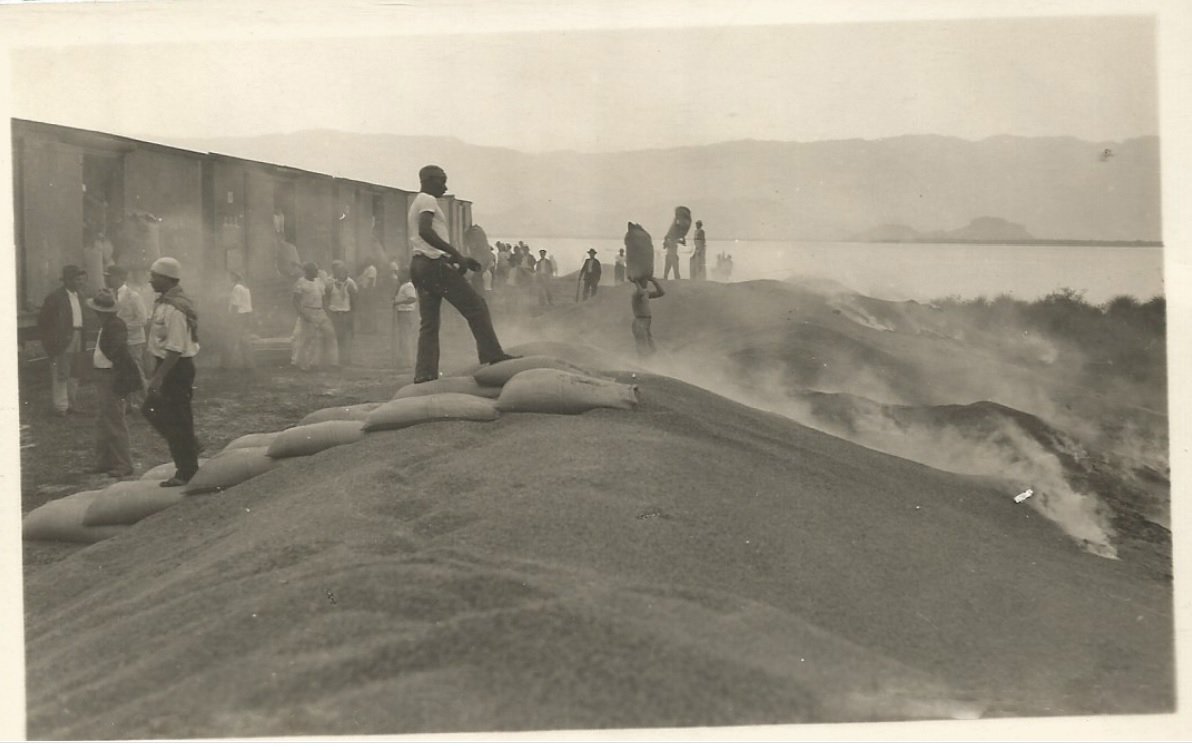
For most of the twentieth century the price of a pound of coffee was not left to the market. First Brazil held coffee back, then burned it; then the United States divided up its own market among Latin American countries; and from 1962 to 1989 nearly every country that grew or bought coffee belonged to a treaty that set export quotas, stamped every bag and defended a price band. When that system broke in July 1989 the price halved, and nothing has replaced it. The 1989 collapse and the coffee crisis that followed are on The Coffee Market; this page is the whole run, from 1906 to the agreement of 2022 that has not yet come into force.
The short version
| Question | Answer |
|---|---|
| What were they? | Treaties between coffee-growing and coffee-buying countries. From 1962 to 1989 they gave each exporting country an export quota, enforced by certificates and stamps at the ports of importing members, to hold the price inside an agreed band. |
| Who started it? | Brazil, alone, in 1906 (the Convênio de Taubaté). The first agreement with buyers was the Inter-American Coffee Agreement of 1940, in which the United States shared out its own market. |
| Why did the US join in 1962? | President Kennedy tied it to the Alliance for Progress: “A drop of one cent a pound for green coffee costs Latin American producers $50 million in export proceeds.” The State Department also argued it would keep Latin America on the American side in the Cold War. |
| How many agreements? | Eight: 1962, 1968, 1976, 1983, 1994, 2001, 2007 and 2022. Only the first four had quotas. |
| When did the quotas end? | 4 July 1989. Every agreement since 1994 has been a forum for statistics, studies and talks, with no price controls. |
| Is the US a member now? | No. It left in 1993, rejoined in 2005, and left again on 27 June 2018. |
| Is the 2022 agreement in force? | No. In March 2026 it had deposits from countries holding 28% of exporting votes and 17% of importing votes; it needs two-thirds of each. The European Union, with two-thirds of importing votes by itself, signed on 21 July 2026 but has not ratified. The 2007 agreement runs until 1 February 2028. |
| Did Fairtrade start because the quotas collapsed? | No. The first Max Havelaar coffee reached Dutch supermarkets on 15 November 1988, eight months before. Its minimum price mattered far more after 1989. |
The main source throughout is the International Coffee Organization’s own history, Pablo Dubois’s The International Coffee Organization 1963–2013: 50 Years Serving the World Coffee Community (ICO, 2013), cited below as “the ICO history”. It is the organisation telling its own story, and is labelled so where it argues its case.
Before 1962: one country, then one market
Brazil holds coffee back, 1906
By 1906 Brazil “had emerged as the world’s largest coffee producing country and was producing quantities which were leading to a collapse in market prices”. Its answer, led by the state of São Paulo, was “the first coffee valorization scheme, known as the Convênio de Taubaté after the town where the Agreement was concluded with other Brazilian coffee-producing states” (the ICO history, p. 3). The convention, signed in the town hall of Taubaté on 26 February 1906, set “minimum prices of 55 to 65 francs” a 60 kg bag, “a surtax of three francs … per bag of coffee exported”, and credit “up to the amount of 15 millions sterling” (US legation report, 1906). São Paulo began buying on 20 August 1906, through firms that included Crossman & Sielcken of New York, and at its peak held 8,474,623 bags at once (report to the US Attorney General, 1911). “It was initially effective in raising prices, but encouraged overproduction and was not able to cope with the loss in coffee demand brought about by the global recession of the 1930s”.
That pattern, a price held up that draws in more planting, which then has to be held back again, ran through every agreement that followed.
Brazil burns coffee, 1931–1944
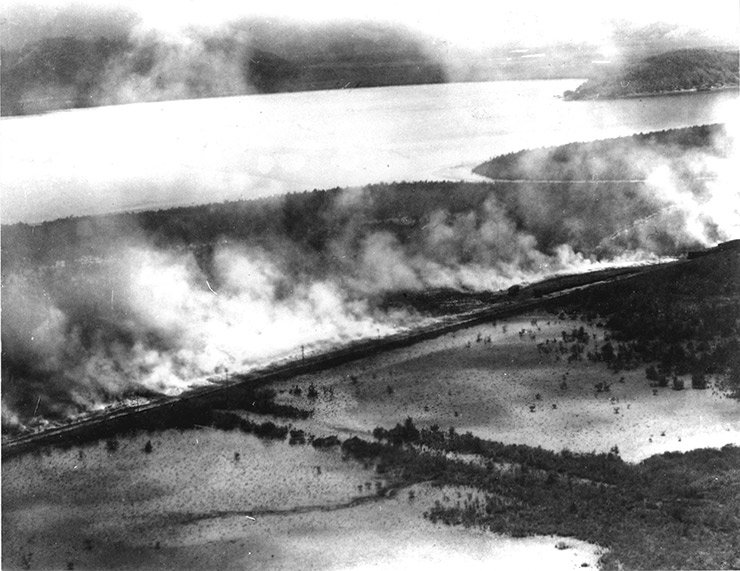
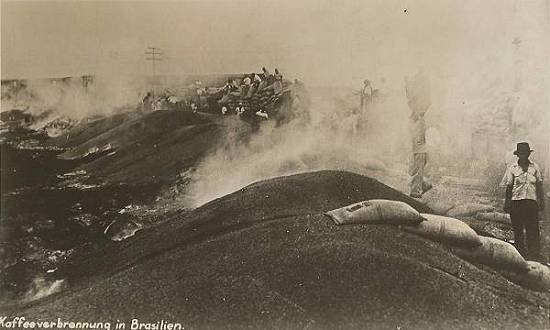
When the Depression cut demand, Brazil destroyed coffee instead of storing it. Between 1931 and 1944 it burned, dumped into the sea or otherwise destroyed some 70 to 78 million bags; the figure most often quoted, 78.2 million, is from Daily Coffee News, and Brazilian school texts give about 72 million. Daily Coffee News reports one trial in which “2,912 kilos (6,420 pounds) of coffee were to fuel a steam locomotive”. Time called it “the greatest wilful, peacetime destruction of property on record” (Time). A 60 kg bag is 132 lb, so 75 million bags is close to ten billion pounds.
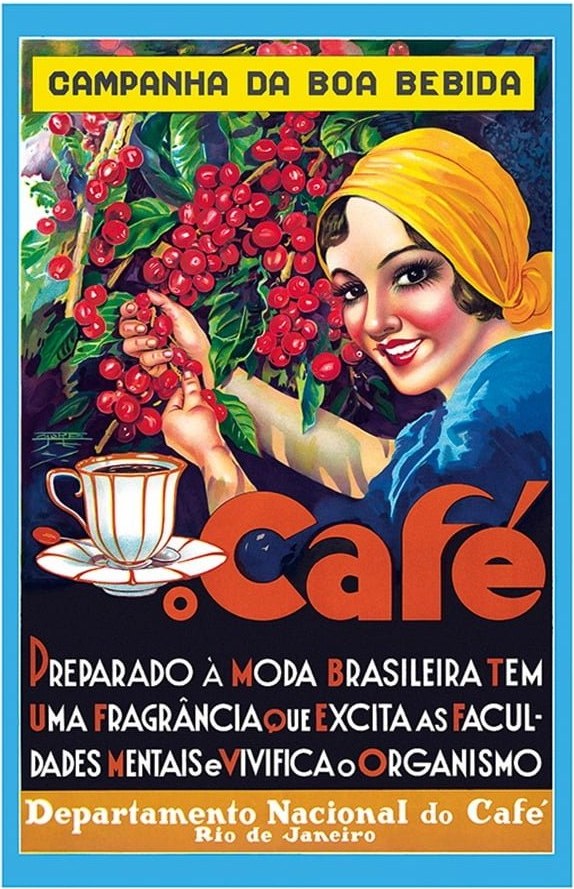
Two Pan-American coffee conferences, in 1936 and 1937, “failed to agree on policies”, but did set up the Pan-American Coffee Bureau in 1937 “to promote consumption in the USA” (the ICO history, p. 3).
The United States shares out its market, 1940
The Second World War closed Europe, the second market for Brazil and Colombia. The State Department told the Senate in 1941 that “important markets in Europe for coffee have been completely shut off or greatly curtailed. Surpluses have piled up in the producing countries, prices have been greatly depressed, and the purchasing power of the coffee-producing American republics for the goods and services of the United States has been seriously affected” (Senate Finance Committee, Report No. 74, 1941).
The Inter-American Coffee Agreement, signed in Washington on 28 November 1940 by the United States and fourteen Latin American republics, divided the US market itself into quotas, in 60 kg bags a year:
| Country | US-market quota |
|---|---|
| Brazil | 9,300,000 |
| Colombia | 3,150,000 |
| El Salvador | 600,000 |
| Guatemala | 535,000 |
| Mexico | 475,000 |
| Venezuela | 420,000 |
| Haiti | 275,000 |
| Costa Rica | 200,000 |
| Others in the agreement | 590,000 |
| Countries outside it | 355,000 |
| Total | 15,900,000 |
The United States kept a safety valve from the first day: it held 12 of the 36 votes on the coffee board, and could “increase the quota for the United States beyond the normal limits specified, by the vote of the United States alone” (the same report).
Producers organise, 1954–1961
After the war the producers tried on their own: a Latin American “Gentleman’s Agreement” on minimum prices in 1954, the Agreement of Mexico in 1957, a Latin American Coffee Agreement in 1958, and a Coffee Study Group in Washington the same year (the ICO history, p. 3). On 1 October 1959 the first short-term International Coffee Agreement brought in African producers, “using a quarterly export quota system based on countries’ historical exports”. It named thirty-three countries as “new markets, to which coffee could be exported without charging it to quota”, the seed of the “tourist coffee” problem below.
The quota years, 1962–1989
The 1962 agreement
The United Nations Coffee Conference met in New York from 9 July to 25 August 1962, and the agreement was approved on 28 September 1962. It came into force provisionally on 1 July 1963 and definitively on 27 December 1963, with “32 exporting Member countries accounting for some 95% of world exports and 22 importing Member countries with around 90% of world imports” (the ICO history, pp. 2–4). The new International Coffee Organization opened at 47 Parliament Street, London. The Soviet Union was an importing member, and Cuba an exporting one.
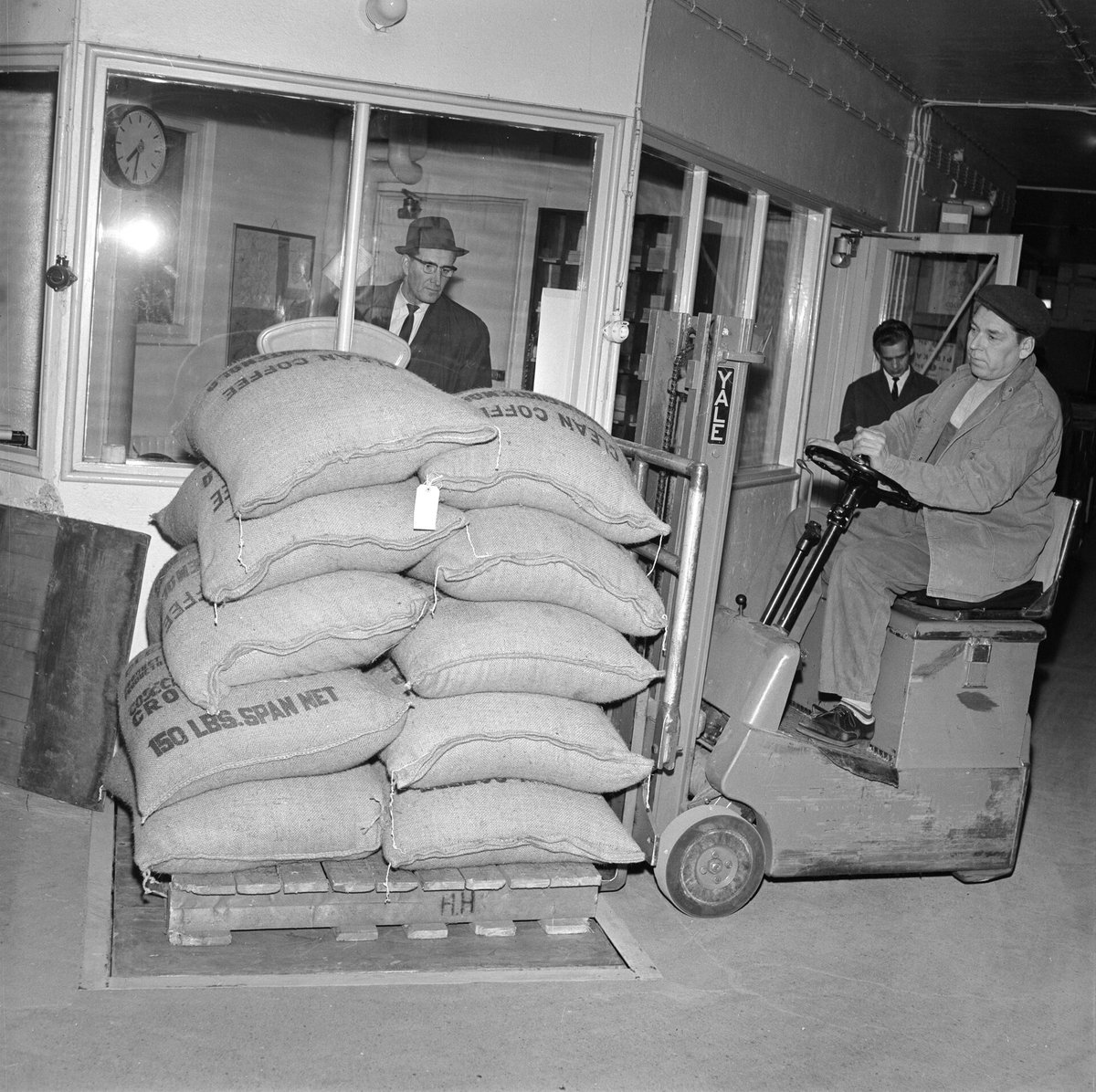
Its aims were “to achieve a reasonable balance between supply and demand”, “to alleviate the serious hardship caused by burdensome surpluses and excessive fluctuation in the prices of coffee”, and “to assist in increasing the purchasing power of coffee-exporting countries by keeping prices at equitable levels and by increasing consumption” (p. 8). The tool was “a system of export quotas”, each country’s share “based on its average exportable production (total annual production less domestic consumption)”. From March 1965 quotas moved up and down automatically with indicator prices, inside “an indicator price range of 38 – 44 US cents per lb” (p. 9).
Why Washington signed. Kennedy’s statement on the day of signature (American Presidency Project):
“Since we account for 50 percent of world coffee imports, the Agreement cannot take effect until ratified by the United States. … A drop of one cent a pound for green coffee costs Latin American producers $50 million in export proceeds—enough to seriously undercut what we are seeking to accomplish by the Alliance for Progress.”
The Cold War argument is on record too, in the words of an opponent. Senator Paul Douglas of Illinois, in the Senate Finance Committee’s 1964 report, summed up “a final plea of the State Department”: that the agreement was “necessary to keep Latin America on our side in our struggle with Russian and Chinese communism. The coffee growers are the most powerful economic group within Brazil, Colombia, and several of the Central American Republics.” His own objection was that higher prices would be “a blood transfusion from the hard-pressed, low income families of the United States into the well-fed bodies of the coffee aristocracy. This would be the Alliance in reverse” (Report No. 941, 1964). The Senate had consented in May 1963, but the law to enforce the quotas at American ports was not signed until 24 May 1965, by President Johnson.
Four kinds of coffee. African producers argued that quotas should move by type of coffee, not across the board. An arbitration panel ruled against them in 1965, but in August 1966 the Council “in effect overthr[ew] the legal decision” and set up “Four groups … each with its indicator price: Colombian Mild Arabicas, Other Mild Arabicas, Unwashed Arabicas and Robustas” (p. 9). Those groups survive: they are the four the ICO still averages into the composite price quoted in the news.
1968: stamps on every bag
The 1968 agreement wrote the coffee groups in, and tightened enforcement: “From 1 April 1969 all exports to quota markets had to be covered by certificates of origin issued by exporting Members. The certificates had to be covered by coffee export stamps with a weight value which were issued quarterly in accordance with each country’s quota. A system of marking of bags was introduced” (p. 10). The certificate of origin a coffee importer handles today, and the 60 kg bag as the unit of coffee statistics, are ICO conventions from these years.
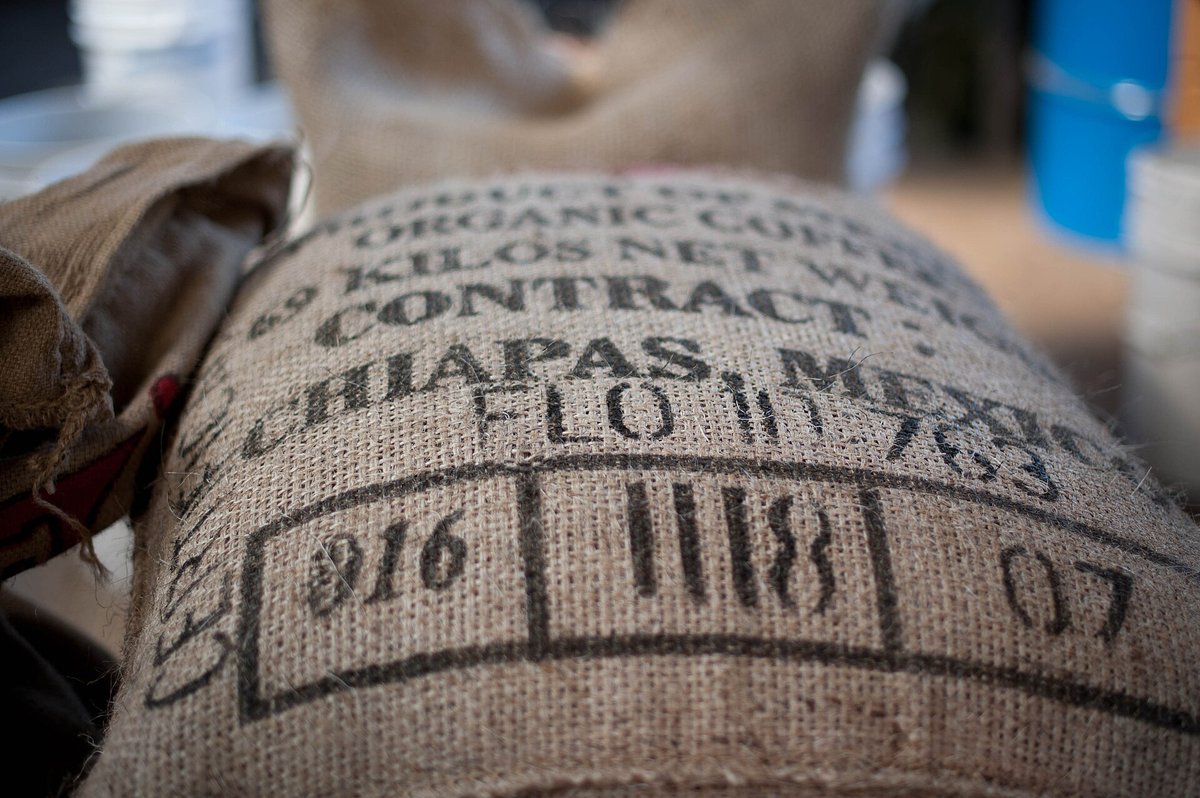
A Diversification Fund, 1969 to 1973, committed “some US$73 million … for 31 projects” to move farmers out of coffee into other crops. One of its economists was Sebastião Salgado, who “started to take memorable photographs of coffee production on ICO missions” (p. 11).
In the early 1970s “a combination of frosts in Brazil, political turmoil in Africa and inflationary pressures” pushed prices up, producers wanted a higher band, consumers refused, and the agreement was extended “with the deletion of all its economic provisions”, quotas included (p. 11).
1975: the black frost
On the night of 17–18 July 1975 a frost burned the coffee farms of Paraná and São Paulo; it is remembered as the “black frost” for the colour of the scorched leaves. A CIA assessment of August 1977, Coffee Outlook 1977–80 (CIA reading room), put Brazil’s harvest at 23 million bags before the frost and 9.5 million after it, and mild washed coffee rising from 66 cents a pound in July 1975 to $3.22 by April 1977; some 200 million trees had to be replaced, and consumption in importing countries fell by up to 20%. The 1976 agreement was negotiated during the spike; it kept a quota system, but with prices that high the quotas were not switched on until late 1980 (p. 12).
1983, and the end
The 1983 agreement carried the system forward. The State Department described it in 1982 as “the commitment to attempt to stabilize coffee prices within a range that is fair to consumers and remunerative to producers through individual country export quotas and a control system enforced by the importing members. Quotas are reduced to defend the price floor and expanded or suspended to defend the ceiling” (Foreign Relations of the United States 1981–88, vol. XXXVIII, doc. 287). With 30% of the consumer votes, it noted, “we have a virtual veto on major policy decisions”.
From October 1980 the target was 120 to 140 cents a pound for the ICO’s composite price, unchanged until 1989 (Akiyama and Varangis, World Bank, 1990); quotas were cut or enlarged at trigger prices that reached out to $1.15 and $1.50, and suspended above the top one (Foli, Minnesota Journal of Global Trade, 1995), which is why the State Department called it “the $1.15–1.50 price range”. Quotas were suspended in February 1986 after a price rise and restored in 1987. The final vote came on 3 July 1989: one resolution backed by most producers and the European Community, another by the “Other Milds” producers with Indonesia, the United States, Canada and the Nordic countries; neither passed, “only the USA and Singapore amongst importing Members voted against” the first, and “a fallback extension of the Agreement was adopted, without economic clauses. A price collapse of some 50% quickly followed” (p. 13). What happened to prices and farmers afterwards is on The Coffee Market.
Tourist coffee and the two-tier market
Quotas applied only to member markets. The ICO history describes what that did:
“Coffee exported to non-quota markets at substantially lower prices but which eventually ended up through illegal means in quota markets was known as ‘tourist’ coffee. The fact that non-quota coffee was sold at much lower (20-40%) prices than coffee shipped to quota market countries was described as creating a ‘two-tier’ market.” (p. 12)
The ICO insists “the volumes were never significant enough to affect the price effect on the market of quotas”. The US State Department took the opposite line in 1988: the agreement “has created a two-tier market in which U.S. and other member-country consumers, in most years, pay artificially inflated prices for coffee while surplus coffee is dumped at a discount in non-member countries, including the Soviet bloc” (FRUS doc. 395). The same department had argued six years earlier that the agreement would save American consumers “as much as $400–500 million over five years” in a Brazilian frost. Both were official positions.
What the quotas were worth, by the ICO’s own reckoning: real prices from 1963 to 1989 “averaged some 185 cents in real terms, between 42% and 48% higher than without quotas”, and producers’ earnings “over US$40 billion higher (US$1.6 billion a year)” (p. 14). That is the ICO making its case.
After 1989: a forum, not a price
Every agreement since has dropped the economic clauses. The 1994 agreement’s objectives “became very much less ambitious”: “enhanced international cooperation”, a forum, “the collection and dissemination of statistical, economic and technical information”, and encouraging consumption (p. 14). Between 1989 and 1994 the producers tried a retention scheme of their own, through the Association of Coffee Producing Countries, “but ultimately without success”.
The 2001 agreement added a voluntary Coffee Quality-Improvement Programme (2002): exports of arabica with “not more than 86 defects per 300g sample”, robusta 150, and moisture between 8% and 12.5% (p. 21). Having given up on a floor under the price, the ICO tried one under quality. The 2007 agreement, in force from 2 February 2011, made the ICO a forum for “intergovernmental consultations” and added a Consultative Forum on Coffee Sector Finance; extended, it is still the agreement in force, until 1 February 2028 (European Parliament).
The United States: out, in, out
- 1993. The United States announced on 27 September 1993 that it would not stay in: “We simply do not have the support at home to remain in the International Coffee Agreement.” It was out from 1 October 1993, when the extended 1983 agreement rolled over without it (Foli, 1995, citing the Atlanta Journal-Constitution of 28 September 1993). The US Trade Representative later said it had left over “continuing concerns” that the ICO was “primarily focused on manipulating coffee prices through restrictions on production and trade” (USTR, 2007).
- 2005. The United States acceded to the 2001 agreement “with effect from 3 February 2005” (ICO notice), after members “agreed to remove all vestiges of market manipulation” (USTR).
- 2018. It gave notice on 29 March 2018, and “The withdrawal of the United States of America became effective 90 days after the notice was served, namely 27 June 2018” (ICO membership list). The State Department later called it a decision on “the most effective use of U.S. taxpayer dollars” (Daily Coffee News, 2018). The National Coffee Association and the Specialty Coffee Association had both asked it to stay.
The world’s largest coffee importer is not a member of the organisation that keeps the world’s coffee statistics. The ICO now says it represents “93% of world coffee production and 63% of world consumption”, with 49 members covering 75 countries, the European Union counting as one (ICO).
The 2022 agreement, not yet in force
The International Coffee Council approved a new agreement on 9 June 2022, open for signature from 6 October 2022. It sets out to “strengthen the global coffee sector and promote its economically, socially and environmentally sustainable development in a market-based environment” (text, Art. 1). It has no quotas, no price band and no stamps. What it adds:
- Companies and civil society as affiliate members, for “the first time in 60 years” bringing “the world’s biggest coffee retailers, roasters and manufacturers, together with coffee farmers” to the table (ICO press release, 2022). Voting stays with governments.
- A Coffee Public-Private Working Party “to identify and implement practical and time-bound actions to address the issues of price levels, price volatility and the long-term sustainability of the coffee sector” (Art. 35).
- No end date: it “shall remain in force until terminated by the Council” (Art. 52). Every earlier agreement had a fixed life.
To come into force it needs ratification by governments holding two-thirds of the exporting members’ votes and two-thirds of the importing members’ votes (Art. 46). The ICO’s table at 24 March 2026 (ICO):
| Deposited | Needed | Notes | |
|---|---|---|---|
| Exporting votes | 28.3% | 66.7% | Viet Nam alone is 15.3%; Brazil (27.4%) and Colombia (9.7%) have signed but not ratified |
| Importing votes | 16.7% | 66.7% | Japan, Switzerland, Norway; the European Union holds 66.6%: signed 21 July 2026, not yet ratified |
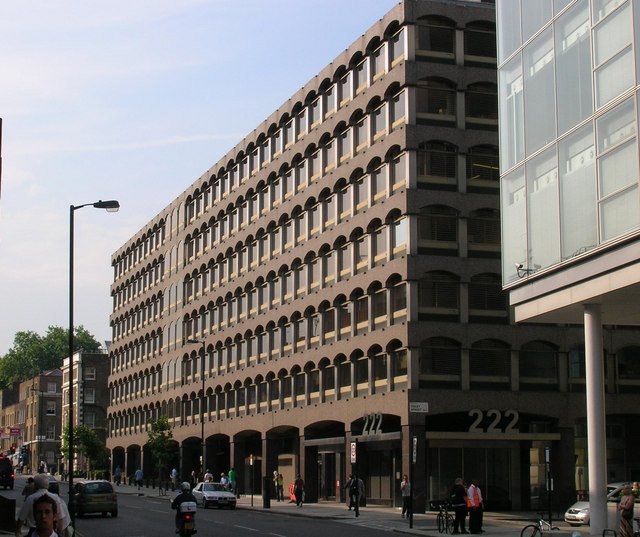
So the agreement cannot start until the EU ratifies, and on the exporting side Brazil’s vote is close to decisive. The EU signed on 21 July 2026 (ICO depositary notice); it cannot ratify until the European Parliament consents, and in October 2026 that request was still before a Parliament committee (European Parliament). Angola signed and ratified on 30 June 2026 (ICO). The ICO had published no updated vote table by early October 2026. Signature and ratification deadlines have been extended three times, now to 30 April and 31 July 2027 (ICC Resolution 485). The ICO itself has been in London since 1963, now at 222 Gray’s Inn Road (below); in 2026 its Council was weighing offers to move it to Geneva or Rome.
What it means for a cup of coffee in Michigan
- Nobody manages the price. The 2024–25 price spike on The Coffee Market ran its course with no intergovernmental lever to pull. The 2022 agreement talks about volatility and “excessive speculation”, but its tools are a forum and a working party.
- Fairtrade came first. The Dutch Max Havelaar label was “founded in May 1988” and “The first coffee with the Max Havelaar label was introduced in supermarkets on the 15th of November 1988” (Canon van Nederland), from a partnership between the Dutch agency Solidaridad and the Mexican cooperative UCIRI. It answered low prices paid to farmers under the quota system. After July 1989 its minimum price became, in the words of The Coffee Market, “the only floor left”. The certifications themselves are on Labels and Certifications.
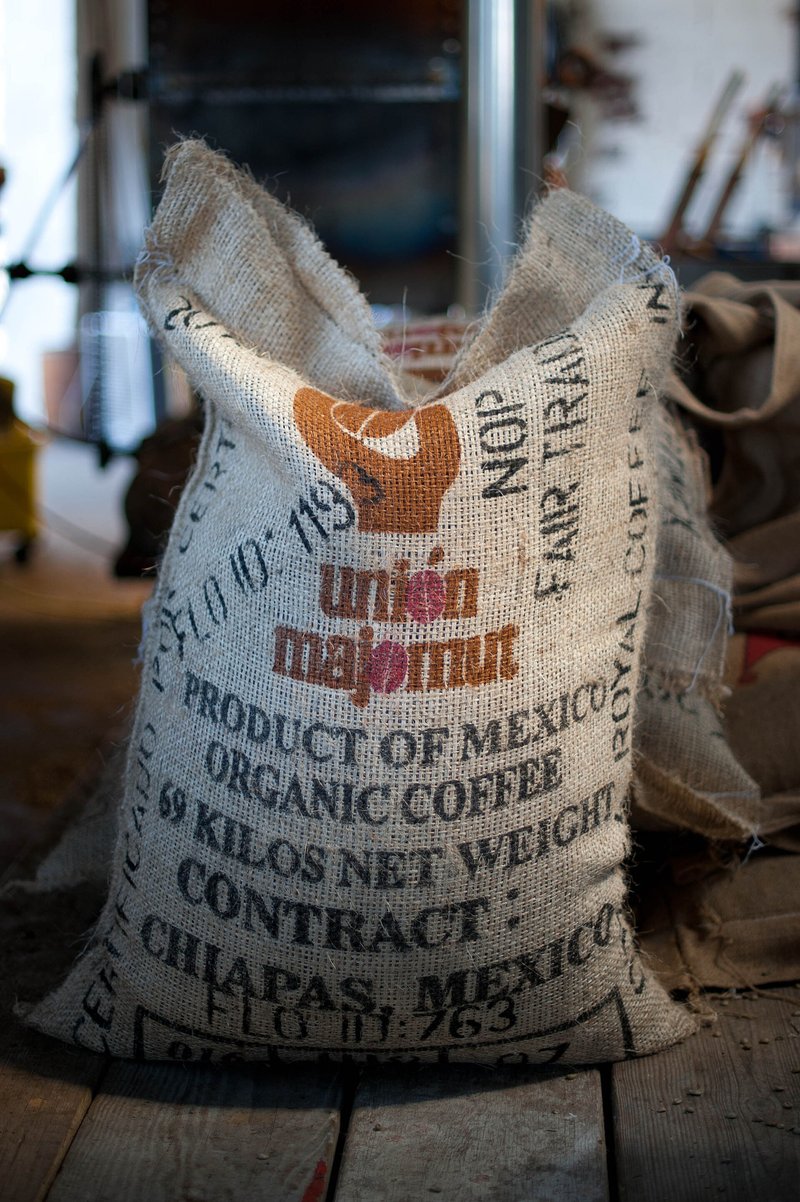
- The words on a sack. “Colombian milds”, “other milds”, “Brazilian naturals” and “robustas” are the ICO’s groups, inherited from the 1966 fight over quotas. The 60 kg bag, and the certificate of origin that travels with it, are from the same system.
Chronology
| Date | Event |
|---|---|
| 26 Feb 1906 | Convênio de Taubaté: Brazil’s coffee states agree to hold coffee off the market |
| 1931–1944 | Brazil destroys some 70–78 million bags |
| 28 Nov 1940 | Inter-American Coffee Agreement divides the US market by quota (in force April 1941) |
| 1954–1958 | Latin American producers’ agreements; Coffee Study Group, Washington |
| 1 Oct 1959 | First short-term International Coffee Agreement, with African producers |
| 28 Sep 1962 | International Coffee Agreement signed; ICO opens in London in 1963 |
| 24 May 1965 | US law enforcing the quotas signed |
| Aug 1966 | Quotas adjusted by four coffee groups |
| 1 Apr 1969 | Certificates of origin and export stamps required |
| 1972/73 | Quotas lapse |
| 17–18 Jul 1975 | Black frost in Brazil |
| late 1980 | Quotas restored |
| Feb 1986 – 1987 | Quotas suspended, then restored |
| 15 Nov 1988 | First Max Havelaar (Fairtrade) coffee in Dutch supermarkets |
| 4 Jul 1989 | Quotas suspended for good |
| 1 Oct 1993 | United States out of the agreement |
| 1 Oct 1994 | First agreement without economic clauses |
| 3 Feb 2005 | United States rejoins |
| 2 Feb 2011 | 2007 agreement in force |
| 27 Jun 2018 | United States leaves again |
| 9 Jun 2022 | New agreement approved; open for signature from 6 Oct 2022 |
| Mar 2026 | 2022 agreement at 28% / 17% of the votes it needs; 2007 agreement extended to Feb 2028 |
| 21 Jul 2026 | European Union signs the 2022 agreement |
What is not known
- How much coffee Brazil destroyed between 1931 and 1944: published totals run from about 70 to 78.2 million bags.
- Whether the agreement was tied to Cuba in particular, beyond the general Cold War argument.
- How much “tourist coffee” there was: the only estimates come from the ICO, which minimised it, and the State Department, which did not.
- What the ICO Council decided in Geneva in September 2026 about the 2022 agreement and its headquarters: unpublished in early October 2026.
- Exactly how the quotas stepped between the 1980s trigger prices.
Sources
- Pablo Dubois, The International Coffee Organization 1963–2013: 50 Years Serving the World Coffee Community (ICO, 2013); ICO, About us; Dubois, Improving market conditions for coffee producers (WTO, 2006).
- US Senate Finance Committee: Implementing the Inter-American Coffee Agreement, Report No. 74 (1941); International Coffee Agreement Act of 1963, Report No. 941 (1964).
- John F. Kennedy, statement on signing the agreement (1962); Lyndon B. Johnson, signing statement (1965) and message to the Senate (1968).
- Foreign Relations of the United States 1981–88, vol. XXXVIII, documents 287, 395 and 396.
- UN Treaty Collection, ICA 1994 and ICA 2001.
- ICO: US accession, 2005; membership as at 27 June 2018; Resolution 462 (2018); ICA 2022 membership as at 24 March 2026; Resolution 485 (2025); Council decisions, 141st session (2026); press release 330 (2022). Text of the ICA 2022 (Japan MOFA copy).
- USTR, statement on the 2007 agreement; European Parliament, procedure 2025/0267(NLE).
- Daily Coffee News: Brazil burned coffee (2021); US withdrawal and State Department confirmation (2018). Time on the burning.
- Taubaté: US legation report, 1906; Chantland report, 1911. Takamasa Akiyama and Panos Varangis, “The Impact of the International Coffee Agreement on Producing Countries”, World Bank Economic Review 4(2) (1990). Matthew J. Foli, “International Coffee Agreements and the Elusive Goal of Price Stability”, Minnesota Journal of Global Trade 4 (1995). CIA, Coffee Outlook 1977–80 (1977). ICO depositary notices: EU signature, Angola.
- Canon van Nederland, Establishment of Max Havelaar.
- On this site: The Coffee Market, Labels and Certifications, History, Origins.
Comments (0)