Coffee · 37 of 64
Kopi Joss: Yogyakarta's Charcoal Coffee
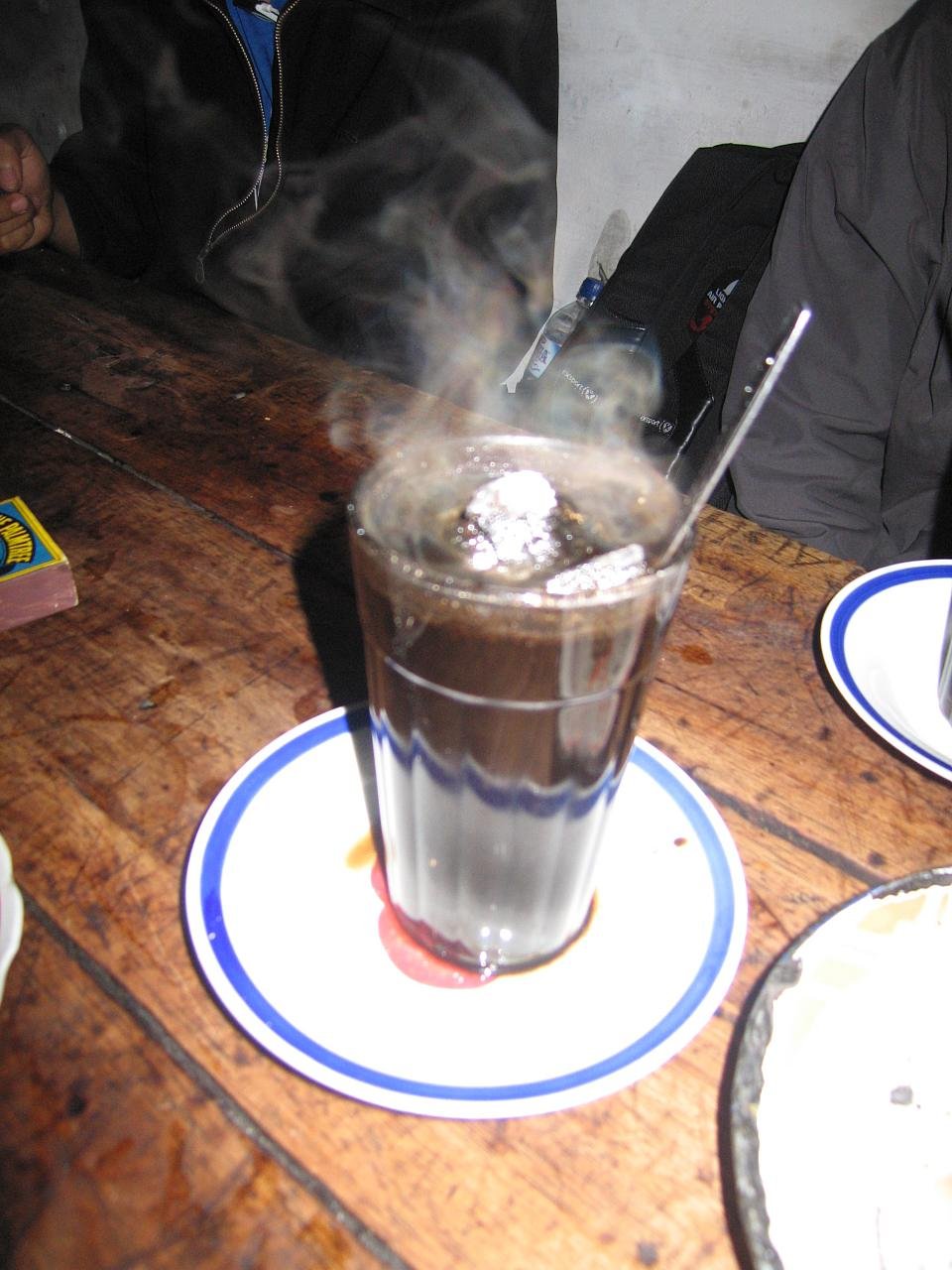
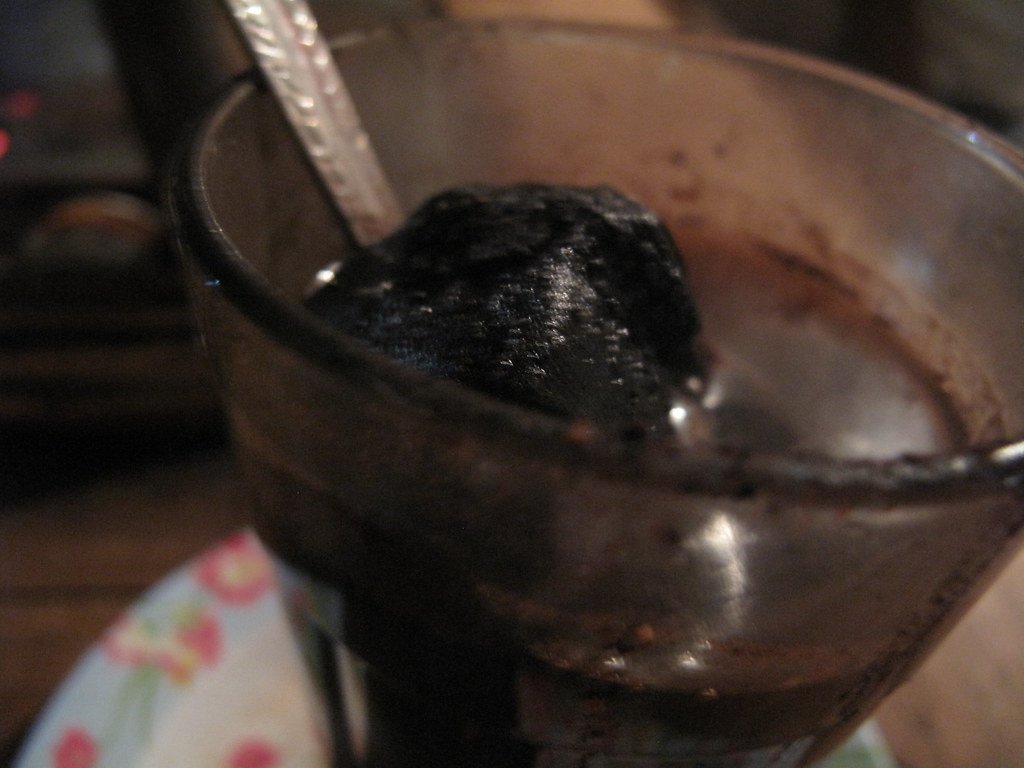
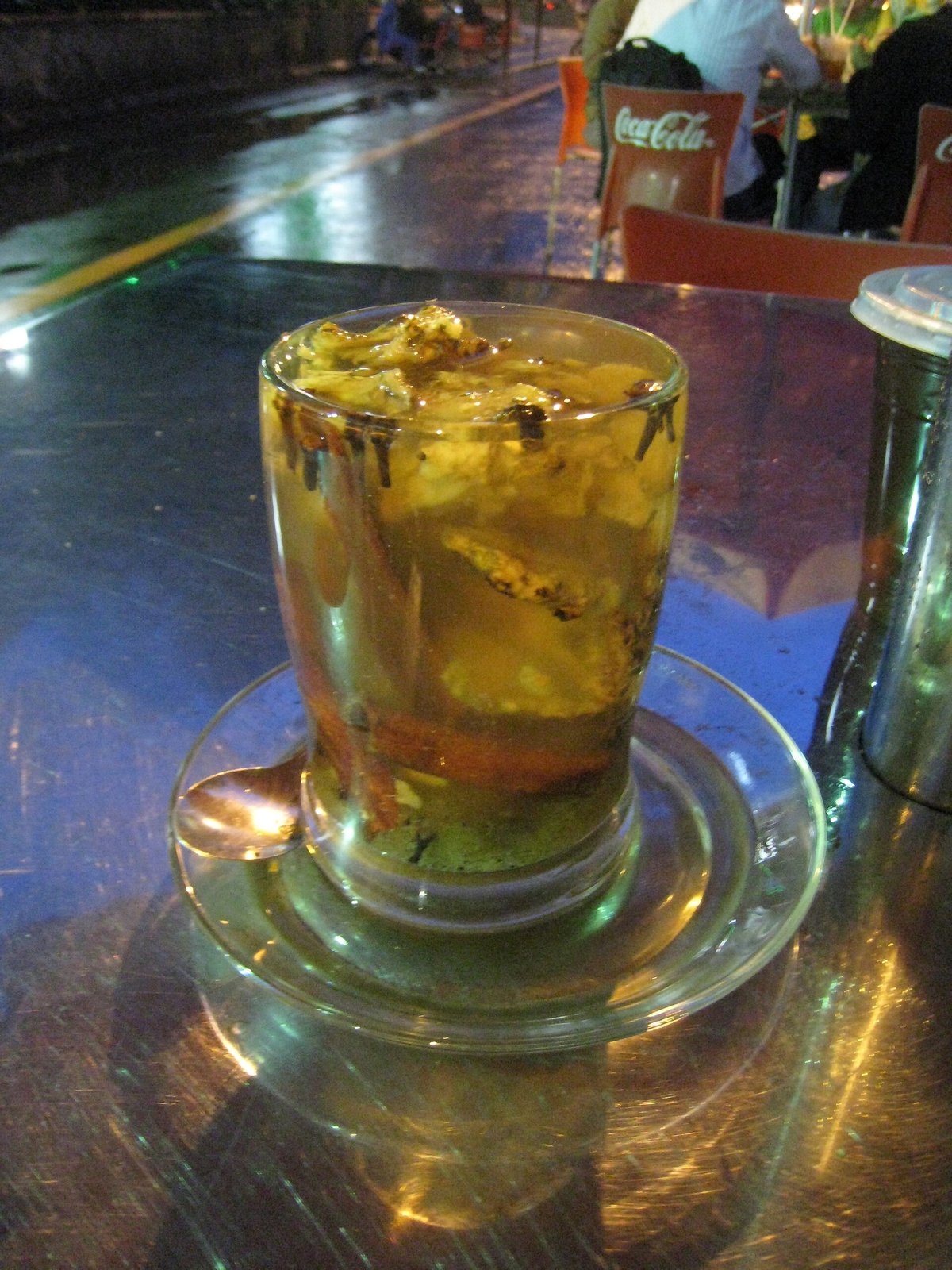
Kopi joss is sweet black coffee with a red-hot lump of wood charcoal dropped into the glass. The coal hisses and spits as it goes in, which is where the name comes from: joss is the sound. It is the signature drink of Angkringan Lik Man, a night-time street stall beside Tugu railway station in Yogyakarta, on the Indonesian island of Java, where it has been served since at least the 1960s or 1970s and where it is now one of the city’s sights.
The story told with it is that the charcoal takes the acid out of the coffee and settles the stomach. Nobody has tested that. The only laboratory study of kopi joss, a 2016 chemistry thesis at Gadjah Mada University, measured the charcoal soaking up some of the caffeine, and only after far longer than anyone takes to drink a glass. In 2023 Malaysia’s Ministry of Health ruled that selling it breaks Malaysian food law, because “charcoal is not classed as food”.
The recipe below is for kopi tubruk, the Javanese coffee kopi joss is made from; the coal is best left to the stall.
The short version
| Question | Answer |
|---|---|
| What is it? | Javanese black coffee with sugar, with a piece of glowing wood charcoal from the stall’s brazier dropped into the glass. |
| Where? | Angkringan Lik Man, Yogyakarta: for decades on Jalan Wongsodirjan, north of Tugu station; now on Jalan Pasar Kembang (Selasar Malioboro), with a branch at Pasar Kranggan. |
| Since when? | The stall dates from before 1965; the drink is variously dated 1968, “the 1980s” or “the 1960s to 1980s”. No record from the time dates it. |
| Why “joss”? | The hiss of the coal hitting the coffee. |
| Does the charcoal reduce acidity? | Untested. No study has measured the pH. The one laboratory study measured the charcoal absorbing some caffeine, with the most absorbed after 40 minutes in the glass. |
| Is it safe? | Unknown. Ordinary wood charcoal is not food-grade, can carry ash and combustion compounds, and charcoal can stop medicines being absorbed. Malaysia banned it in 2023. |
| Do you eat the charcoal? | No. It sits in the glass while you drink. |
| What does it cost? | Rp4,000 a glass in 2016; about Rp8,000 recently (roughly 50 US cents). |
| Can I make it? | The coffee, yes: Kopi Tubruk. The coal is best left to the stall. |
Angkringan Lik Man
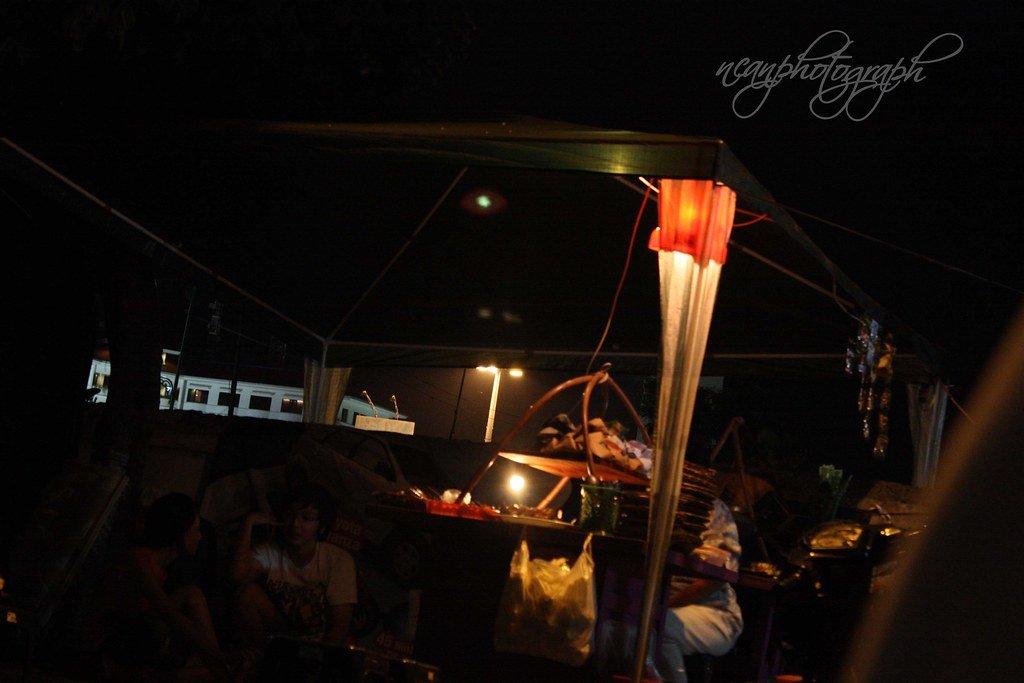
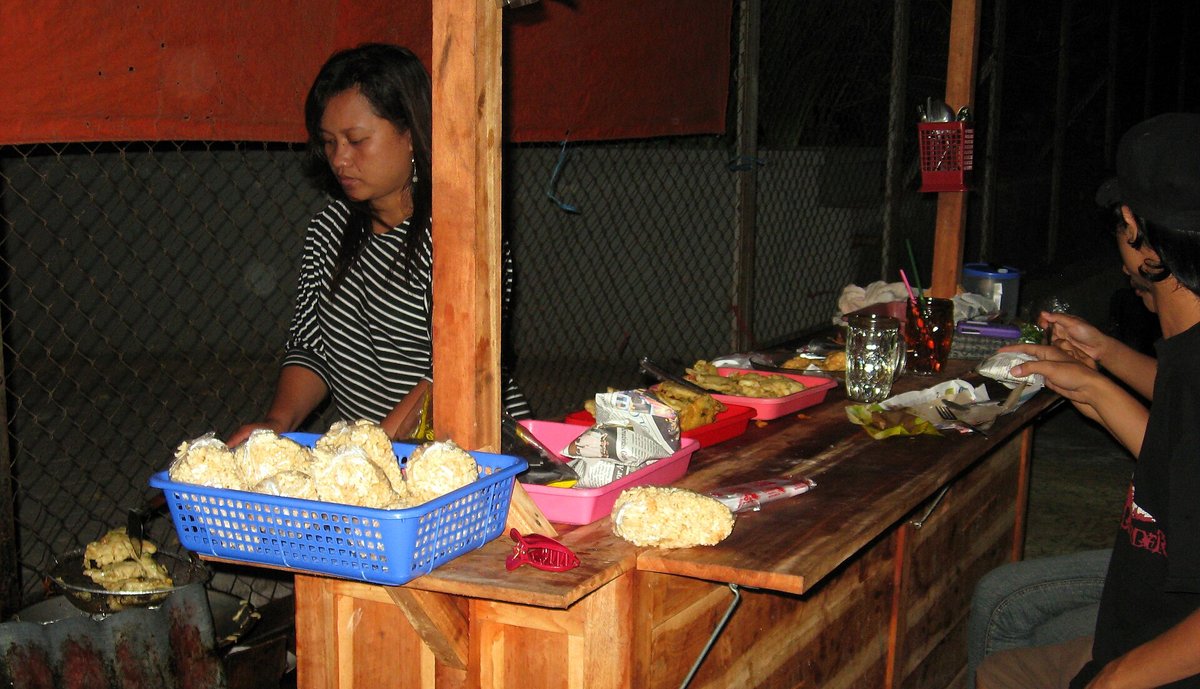
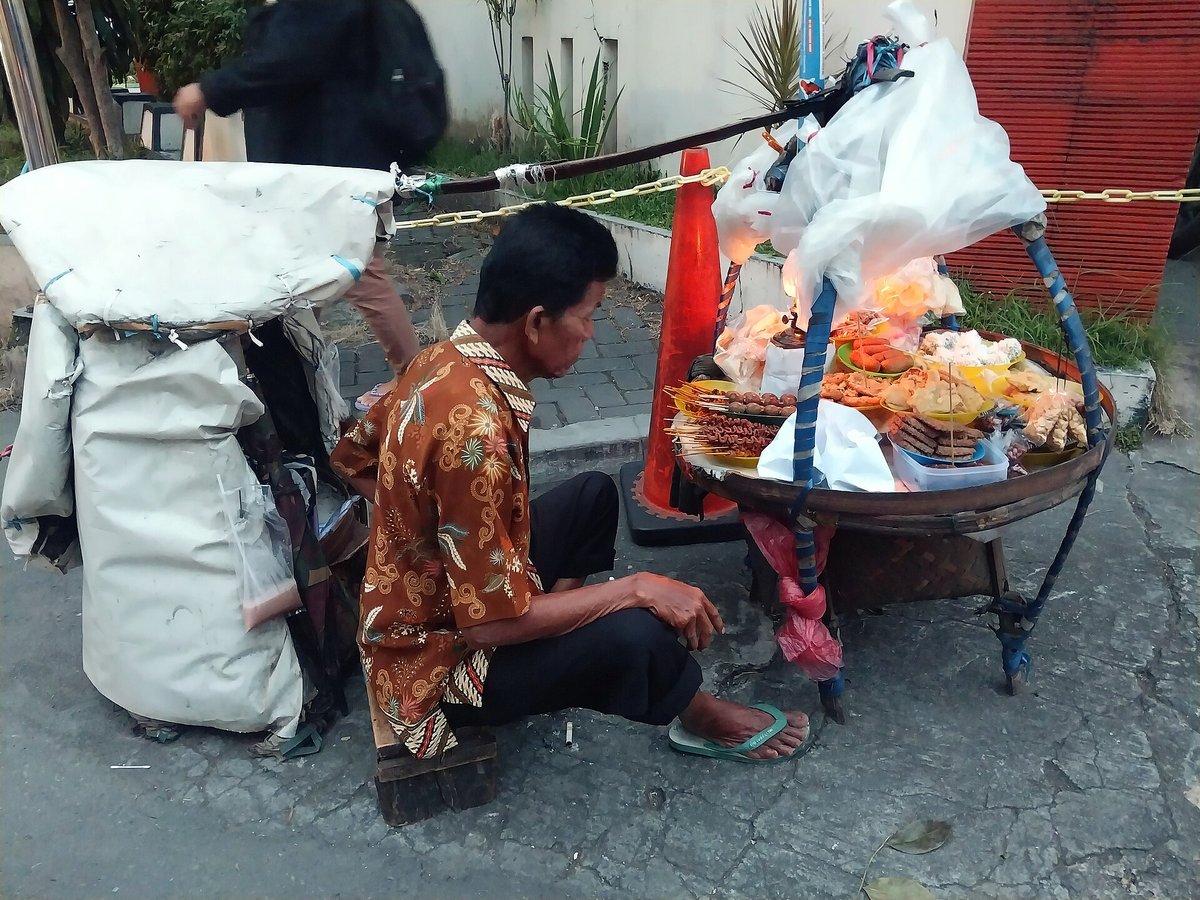
An angkringan is a Javanese street-food cart or stall: a wooden counter with a charcoal brazier keeping kettles of water hot, small packets of rice, skewers of satay and fried snacks, coffee, tea and ginger drinks, and benches or mats for customers to sit and talk late into the night (the word comes from angkring, glossed as “sitting at ease”). In Solo the same thing is called wedangan or HIK (Good News from Indonesia).
The family. In 2016 Lik Man’s son Kobar told Detik: “My grandfather sold drinks on foot, coffee and tea. He was from Klaten. In 1965 it was handed down to my father.” His grandfather is remembered as Mbah Pairo; Kobar took over in 2008 when Lik Man retired to farm in Klaten (Detik Travel, 2016). Other accounts give the handover as 1964 or 1969. By 2024 the third generation, Novi, had taken over from Kobar (Mojok, 2024).
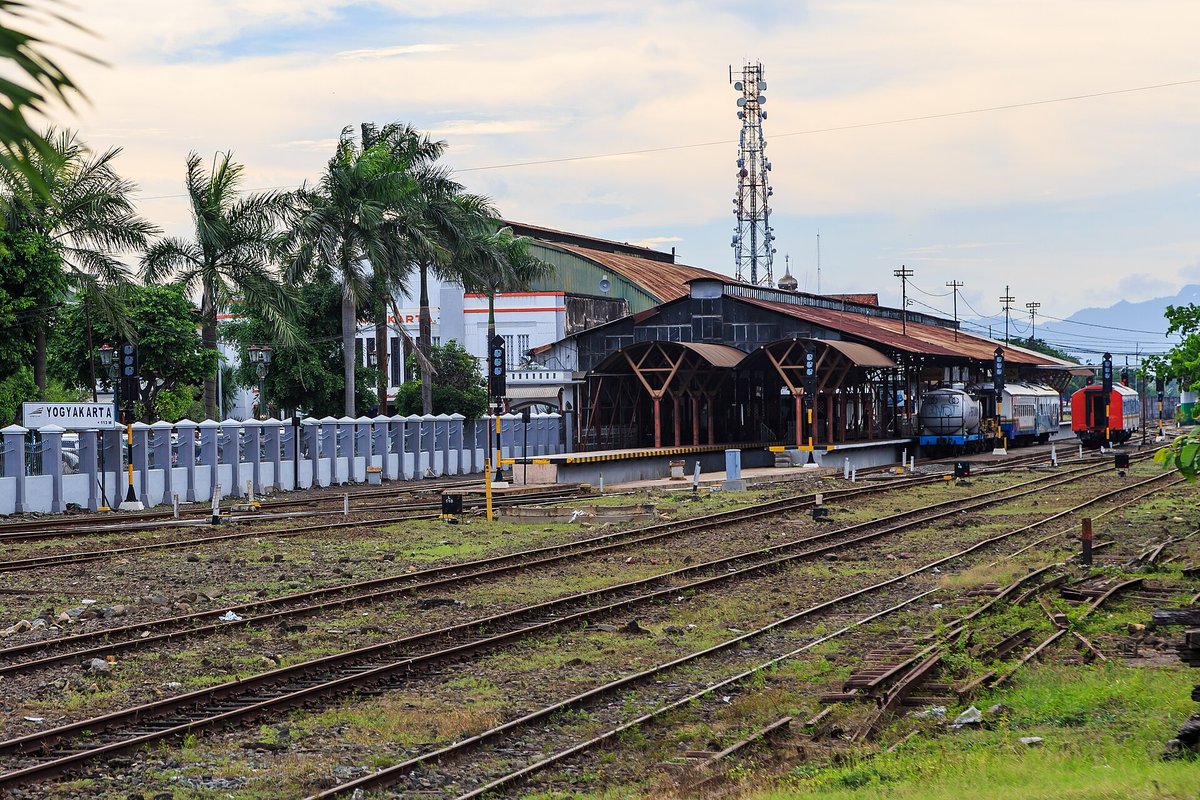
Where it stood. The Yogyakarta provincial tourism office’s history: inside Tugu station from 1968 to 1972, then east of it, then on Jalan Wongsodirjan from 1974 (Visiting Jogja). About a dozen other angkringan grew up alongside on the narrow pavement, copying its layout and hours (Maulana and Binta, GEWANG, 2021). When the railway company redeveloped the station area, Lik Man’s moved to Selasar Malioboro on Jalan Pasar Kembang, with a second stall at Pasar Kranggan (Mojok). Customers once sat on mats on the pavement; the new site has chairs.
How it is made
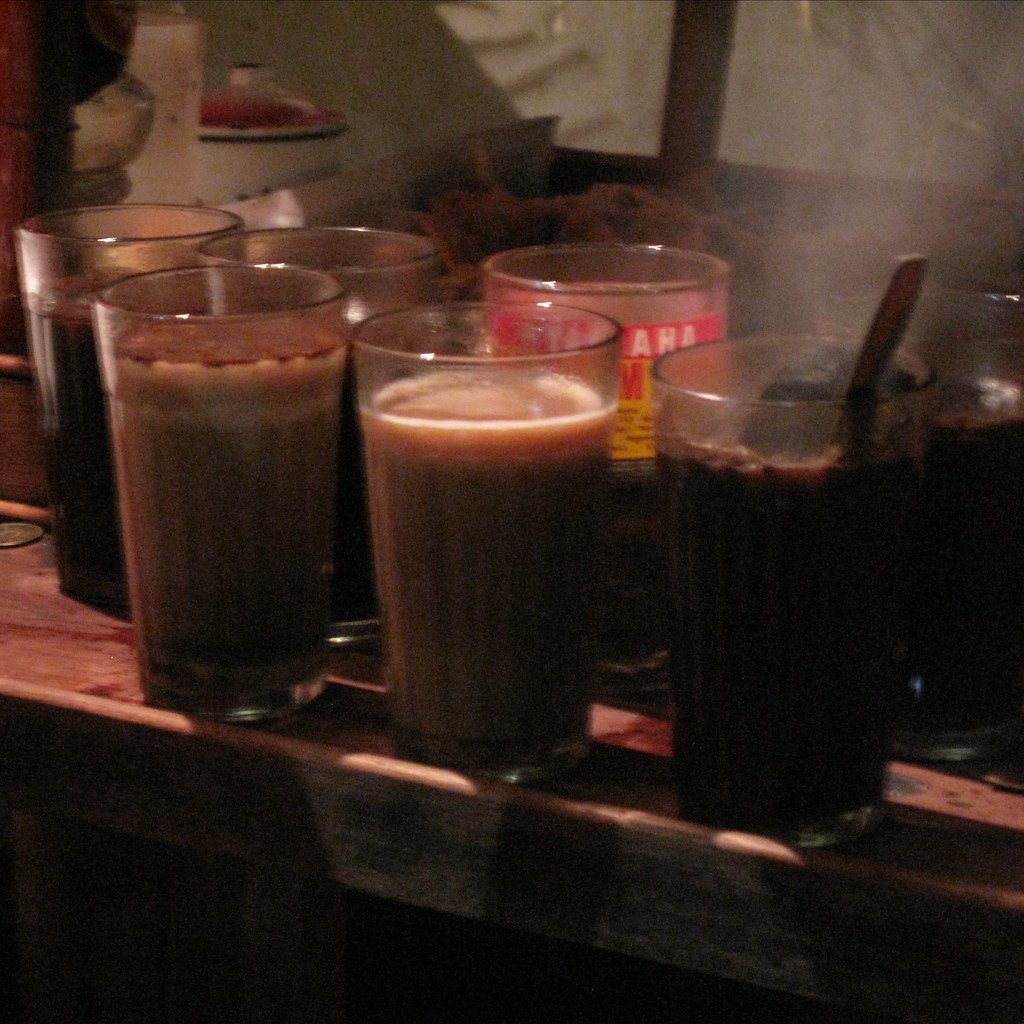
- The coffee is made the Javanese street way: ground coffee and sugar in the glass, hot water from the kettle poured over, stirred, and the grounds left to settle. Telkomsel’s travel blog says the stall uses an arabica and robusta blend; in 2016 Kobar told Detik it was a coffee powder (brand Murni) handed down in the family.
- The coal. A piece of glowing wood charcoal, taken with tongs straight from the brazier that heats the kettles, “arang membara yang diambil langsung dari tungku” (indonesia.travel), is dropped in. It hisses and foams, boiling the coffee around it for a moment, and stays in the glass.
- Kopi joss susu is the same with milk.
The coal stays in the glass while the coffee is drunk. What wood the charcoal is made from, and how big a piece goes in, is not recorded.
Why charcoal? Three stories are told, and none is documented:
- Customers from East Java asked for kopi klothok, coffee boiled with the grounds in the pot, which the stall could not make, so the coal was added to give the same look and boil (Detik Jogja; Visiting Jogja).
- A becak (pedicab) driver asked for coffee with a burning coal to ease a bloated stomach (Telkomsel’s travel blog).
- The coal “absorbs some of the acidity”, making the coffee “kinder on the stomach” (iNews).
Kobar’s own claim to Detik was that it “refreshes the body” and cures masuk angin, the Indonesian folk illness of “wind getting in” that covers chills, aches and a bloated stomach.
What the science says
The only measurement. In 2016 a chemistry student at Gadjah Mada University, Ahmad Fauzan, measured the caffeine in black coffee and in kopi joss made from it: 68.78 mg per 100 ml before the charcoal, 55.13 after. The charcoal adsorbed caffeine steadily, peaking after 40 minutes in the glass (UGM repository). A glass of kopi joss is drunk in a few minutes, so in practice the effect is smaller. The thesis abstract gives no pH.
Acidity: untested. No study has measured the pH of coffee before and after the coal. There is a plausible mechanism: wood ash is alkaline, its potassium, calcium and magnesium compounds being “carbonates, oxides, and hydroxides … all alkaline” (Alabama Cooperative Extension), and a glowing coal carries ash into the glass. Brewed coffee sits around pH 5 (about 4.9 to 5.1; see Cooking with Coffee); robusta runs a little higher (one Gadjah Mada study of cold brew measured arabica at 5.03–5.18 and robusta at 5.58–5.81). Whether a lump of charcoal moves that in a glass is not known.
Wood charcoal is not activated charcoal. The black powder sold in pharmacies and used in hospitals for poisoning is activated charcoal, processed to give it a huge surface area. A lump from a cooking brazier is plain wood charcoal: far less absorbent, and never made as a food.
The safety questions:
| Question | What is known |
|---|---|
| Ash and soot | A coal from an open brazier carries ash and whatever has fallen onto it. |
| Combustion compounds | Burning wood makes polycyclic aromatic hydrocarbons (PAHs), some of which cause cancer. No one has measured them in kopi joss. |
| Medicines | Charcoal “did have the potential to reduce the absorption of other medicines”, in the UK medicines regulator’s words about activated charcoal (MHRA). Malaysian doctors warned in 2023 that anyone on diabetes, blood-pressure or heart medicines should be careful (Good News from Indonesia). Whether a brief dip of ordinary charcoal matters is unknown. |
| Regulation | Malaysia’s Ministry of Health, 26 November 2023: serving kopi joss breaks Regulation 269A of the Food Regulations 1985, which lists what ready-to-drink coffee may contain. “Arang tidak dikategorikan sebagai makanan” (“charcoal is not classified as food”), and a hot coal, unlike food-grade activated charcoal, cannot be shown to be processed and free of toxic substances. The penalty: a fine of up to RM10,000 or two years in prison (Sinar Harian). No statement on kopi joss from Indonesia’s food agency, BPOM, is known. |
Kopi joss is a drink to try at the stall, as a piece of Yogyakarta, rather than one to make at home.
The angkringan table
What goes with it:
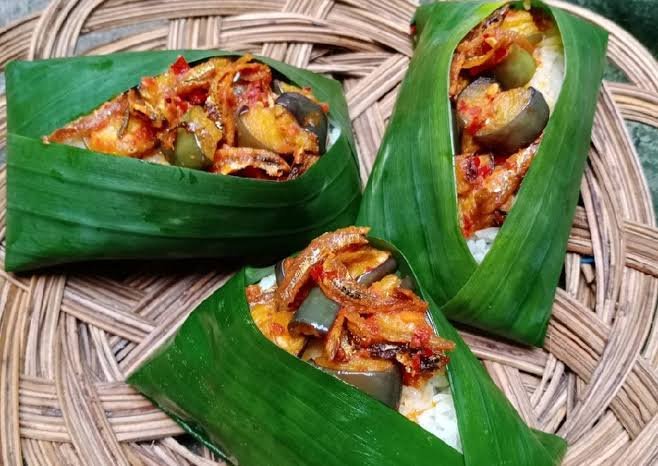
- Nasi kucing (“cat’s rice”): a small ball of rice with tempeh, anchovies or sambal, wrapped in banana leaf, “from Rp1,000” (Visiting Jogja). Customers eat several.
- Satay skewers, warmed again on the brazier.
- Wedang jahe, hot ginger with sugar and spices, the other hot drink of the angkringan.
- Kopi tubruk, the coffee itself.
Kopi tubruk: the coffee underneath
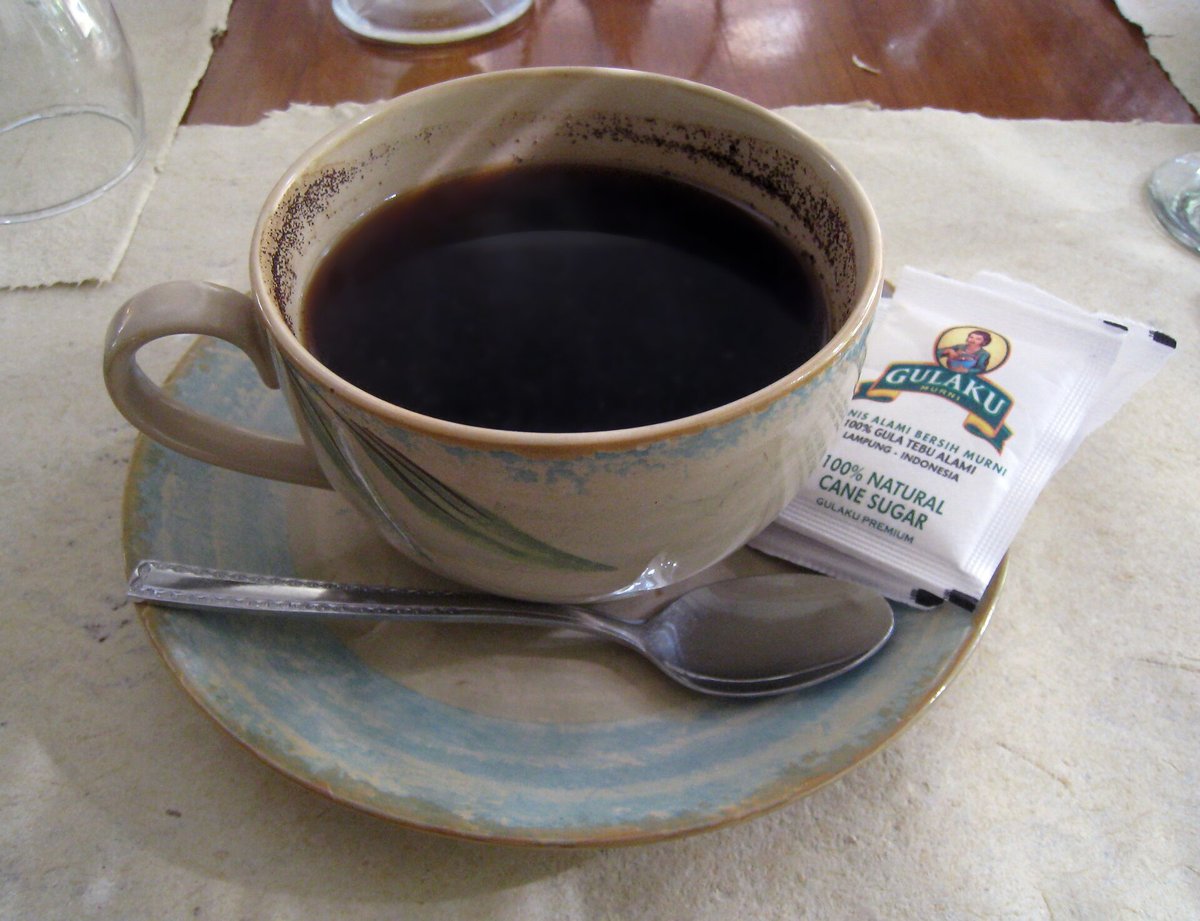
Kopi tubruk is Indonesia’s everyday coffee: finely ground coffee and sugar put straight into the glass, boiling water poured over, stirred, and left a few minutes for the grounds to sink. Tubruk means “collide” (Wikipedia). It is the same idea as Turkish coffee and Ethiopian buna, without the pot: unfiltered, sweet and thick, drunk carefully so the grounds stay at the bottom. Javanese coffee is often robusta, which gives it its weight and bitterness.
Recipe: Kopi Tubruk (Javanese Unfiltered Coffee).
Cousins: hot things in coffee
| Drink | What it is |
|---|---|
| Kopi klothok (East Java) | Coffee boiled with its grounds in a pot; the drink kopi joss is said to have been invented to imitate. |
| Kum kahvesi (Turkey) | Turkish coffee brewed in a cezve pushed into a tray of hot sand, the depth controlling the heat. See Turkish Coffee in Sand, and Reading the Cup. |
| Kopi arang (Malaysia, 2023) | A Malaysian copy of kopi joss that prompted the ban. |
What is not known
- When the charcoal was first added, and by whom.
- Whether it changes the acidity. No pH has been measured.
- What is in the coal: wood species, ash, combustion compounds.
- Lik Man’s full name.
Sources
- Ahmad Fauzan, Kajian Fisikokimia Penambahan Arang Kayu pada Minuman Tradisional “Kopi Jos”, S1 thesis, Universitas Gadjah Mada (2016).
- Sinar Harian, KKM: kopi joss offence under Regulation 269A (2023).
- Detik Travel, Nikmatnya kopi joss Lik Man di Yogyakarta (2016); Detik Jogja, Sejarah kopi joss Jogja (2023).
- Mojok, Kopi joss Angkringan Lik Man (2024).
- Visiting Jogja (Yogyakarta provincial tourism office), Kopi joss and Angkringan.
- indonesia.travel, 5 kuliner legendaris khas Jogja.
- Maulana and Binta, Angkringan along Jalan Wongsodirjan, GEWANG 3(1) (2021).
- Good News from Indonesia, Angkringan khas Yogyakarta (2025) and Minum kopi pakai arang (2023).
- iNews, Sejarah kopi joss di Jogja; Telkomsel, Angkringan Kopi Jos Lik Man.
- Alabama Cooperative Extension, Wood ashes for lime and potash.
- UK MHRA, Yellow Card case study: charcoal.
- Wikipedia, Kopi joss, Kopi tubruk, Turkish coffee.
Comments (0)