Coffee · 54 of 64
The Ethiopian Coffee Ceremony
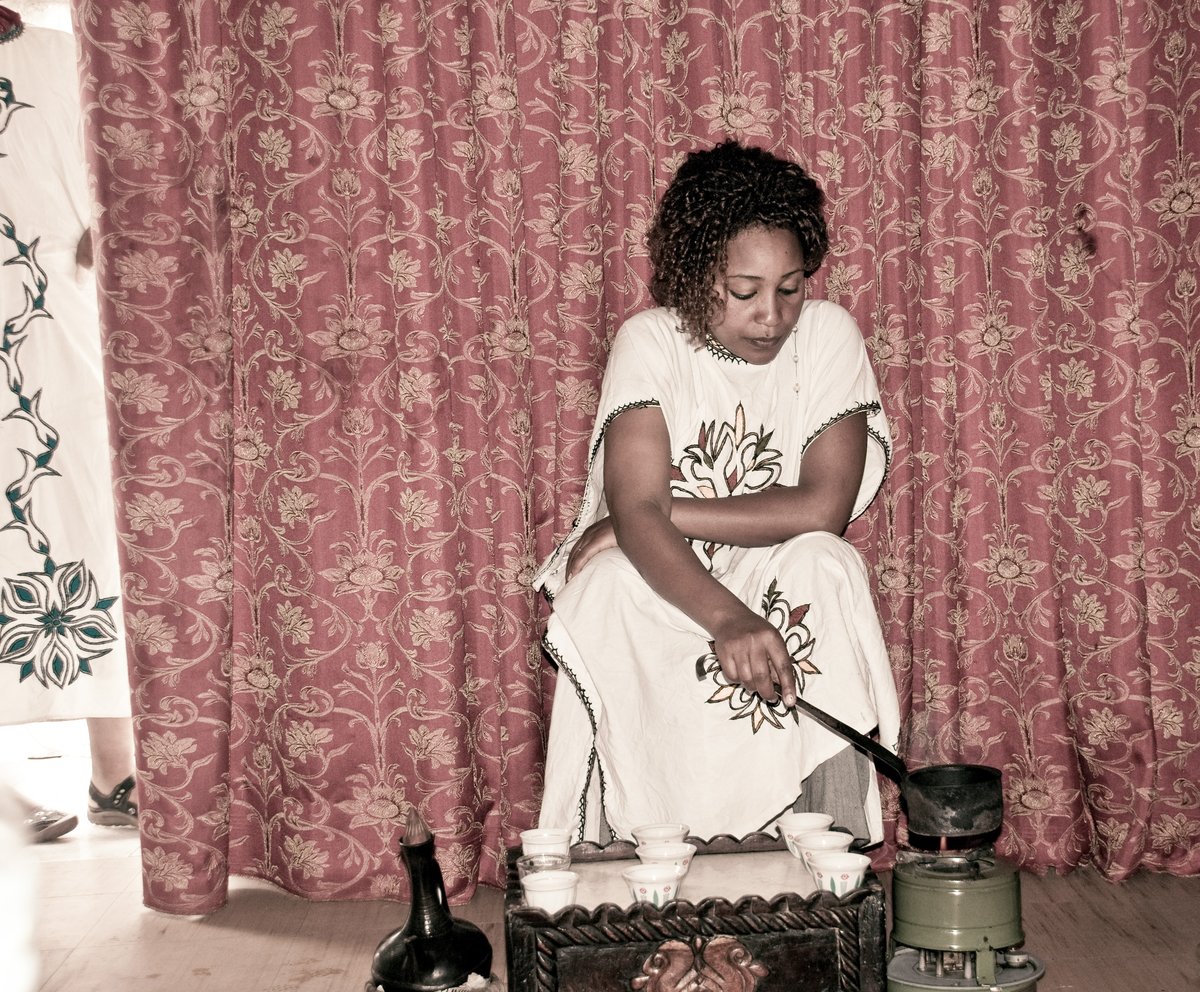
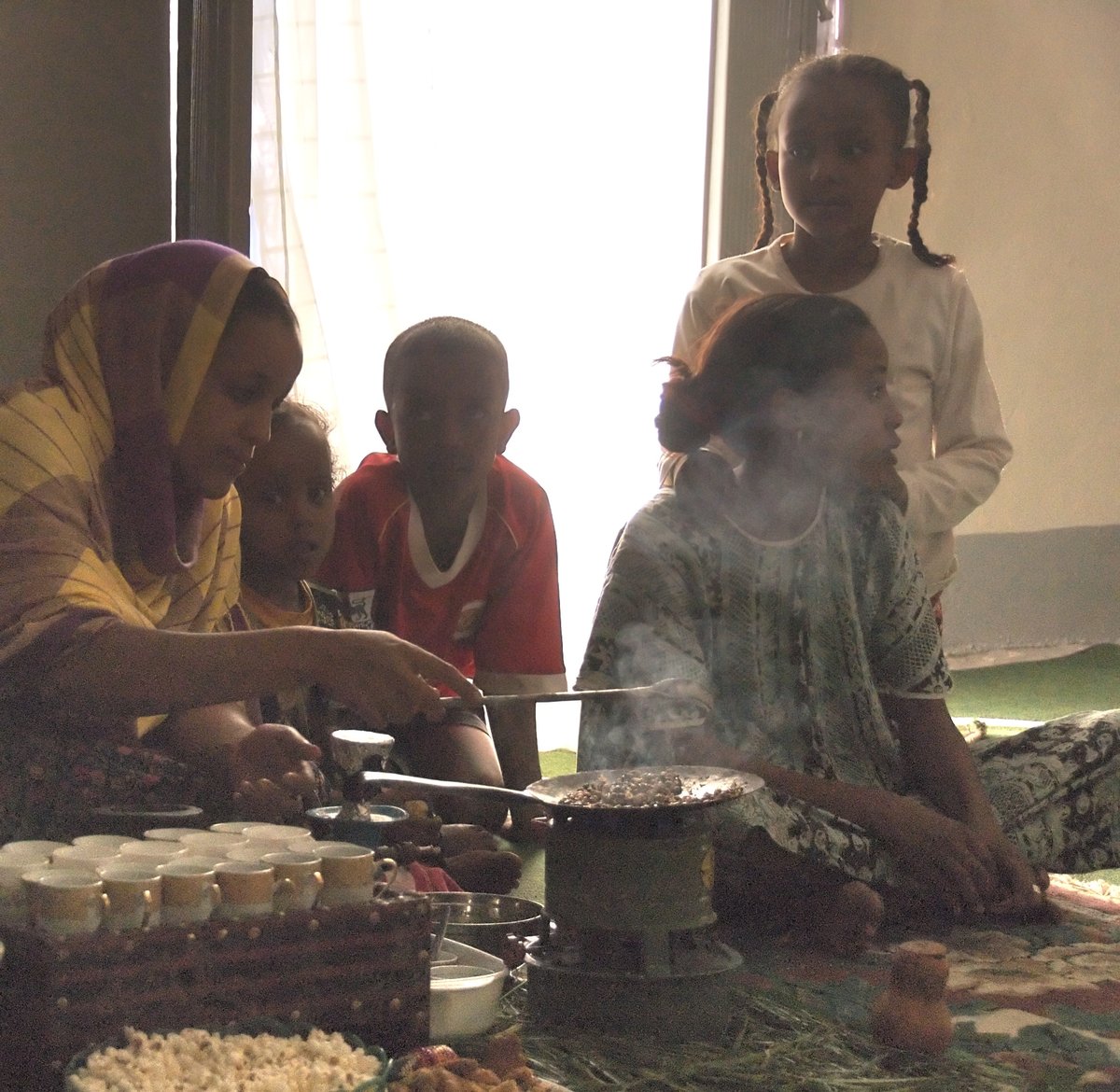
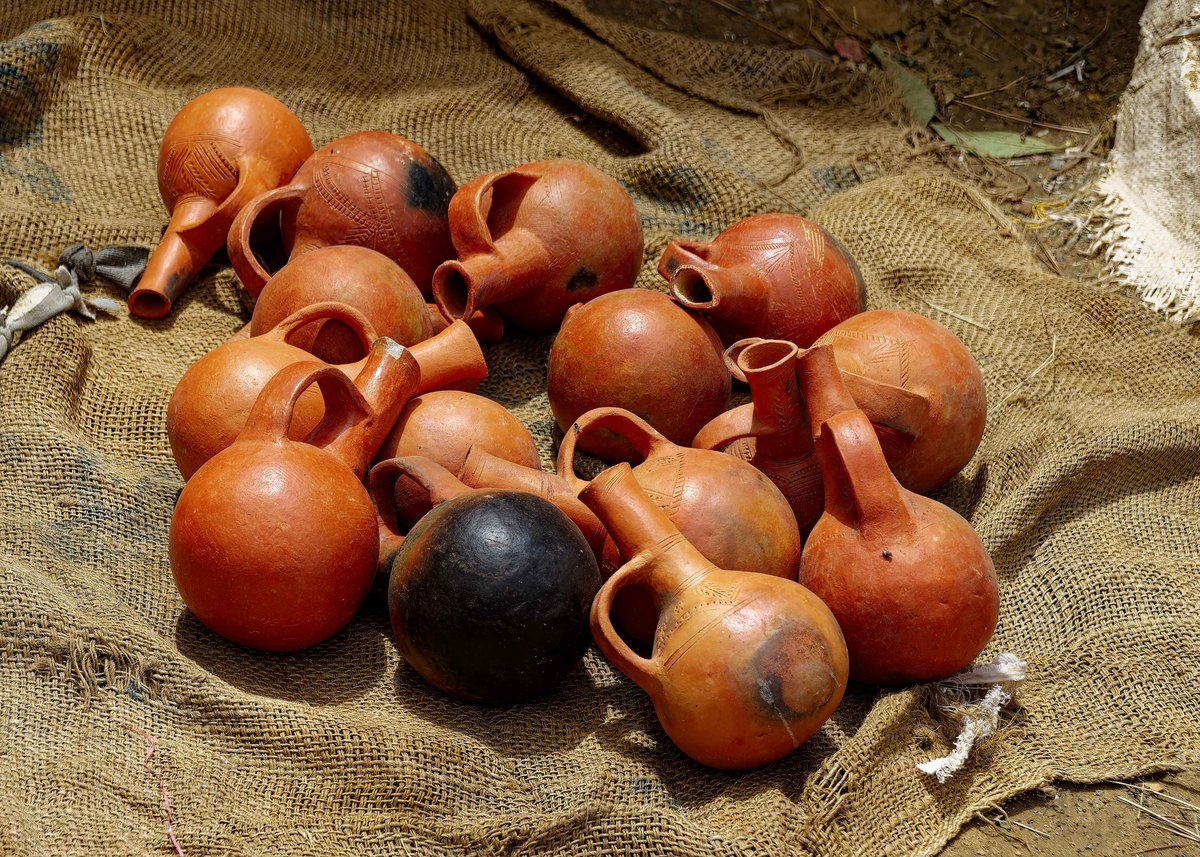
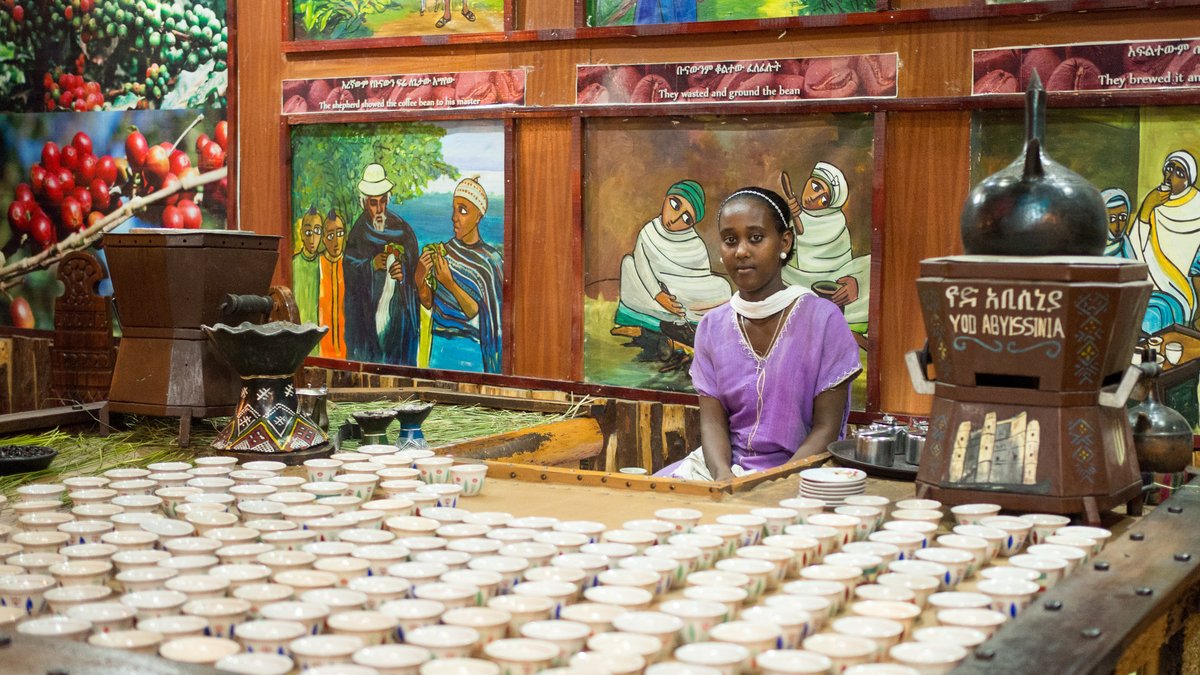
In Ethiopia, coffee is something a household does, not just something it drinks. Green beans are washed and roasted in a pan over charcoal in front of the guests, the smoking pan is carried round so everyone can breathe it in, the beans are pounded in a mortar and boiled in a round clay pot called a jebena, and the coffee is poured from a height into small cups in three rounds, while incense burns and fresh grass covers the floor. The word for coffee, buna, is also the word for the gathering: it is time for buna.
It is often called the oldest coffee ritual in the world. Nobody has dated it. What can be shown is that the country where coffee comes from has made drinking it a daily social occasion, that Christian highlanders long avoided coffee as a Muslim drink and took it up widely only in the 1880s, and that Ethiopia is preparing to ask UNESCO to recognise the ceremony, which it has not yet done.
The short version
| Question | Answer |
|---|---|
| What happens? | Grass and incense, green beans roasted in a pan, the smoke offered to guests, beans pounded in a mortar, boiled in a jebena, poured from a height into small cups. Three rounds. |
| The three rounds? | Abol, the first and strongest; tona, the second; bereka, “blessing”, the third. In Tigrinya: awel, kale’i, bereka. |
| Who makes it? | Women. A session takes about an hour, and at home in rural Ethiopia it happens at least daily. |
| Is it ancient? | No one has dated it. Highland Christians avoided coffee until the late nineteenth century; drinking “spread rapidly between 1880 and 1886” (Pankhurst). |
| Did the Church ban coffee? | Scholars describe Christians avoiding it and clergy disapproving of it; no decree imposing or lifting a ban has been found. |
| Does Ethiopia drink half its coffee? | That figure goes back to a 1997 student paper. The USDA puts it at about a third, forecast to rise to about two-fifths. |
| Is it UNESCO heritage? | Not yet. A nomination is being prepared. |
| Can I make it? | Yes: Buna in a Jebena, from Green Beans and Kolo. |
The ceremony, step by step
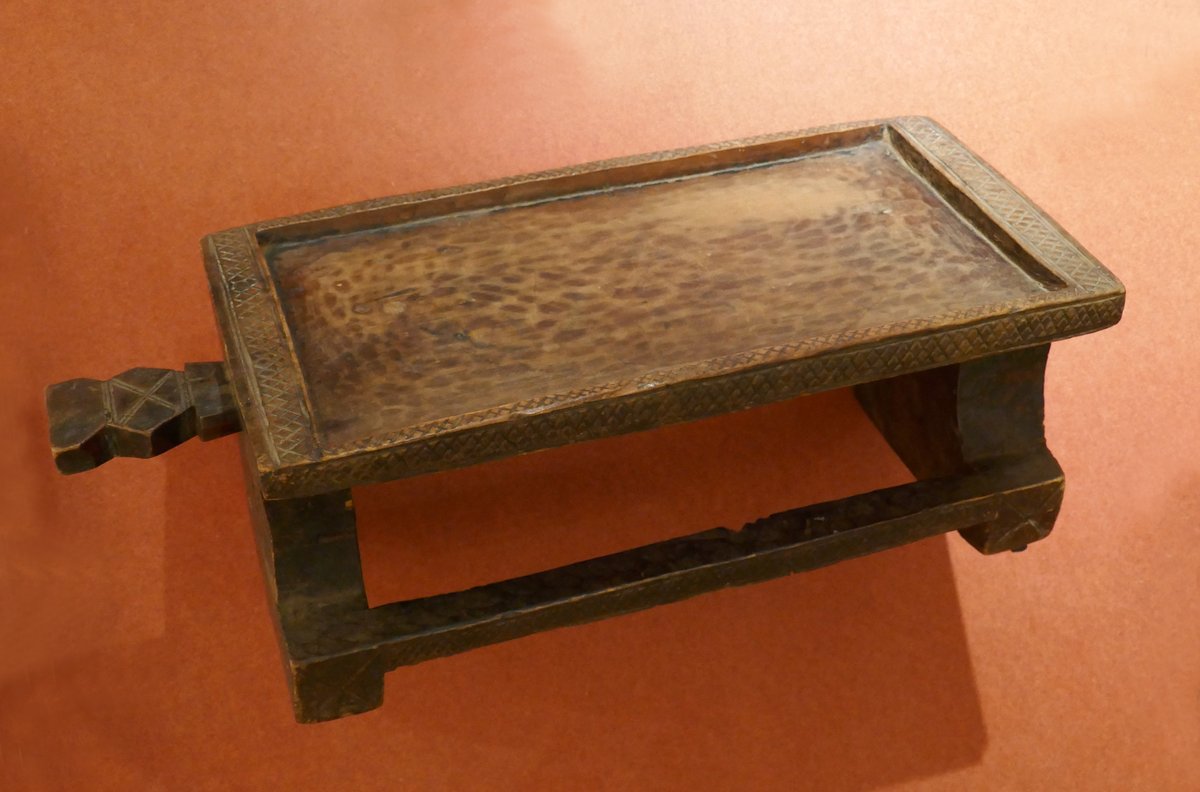
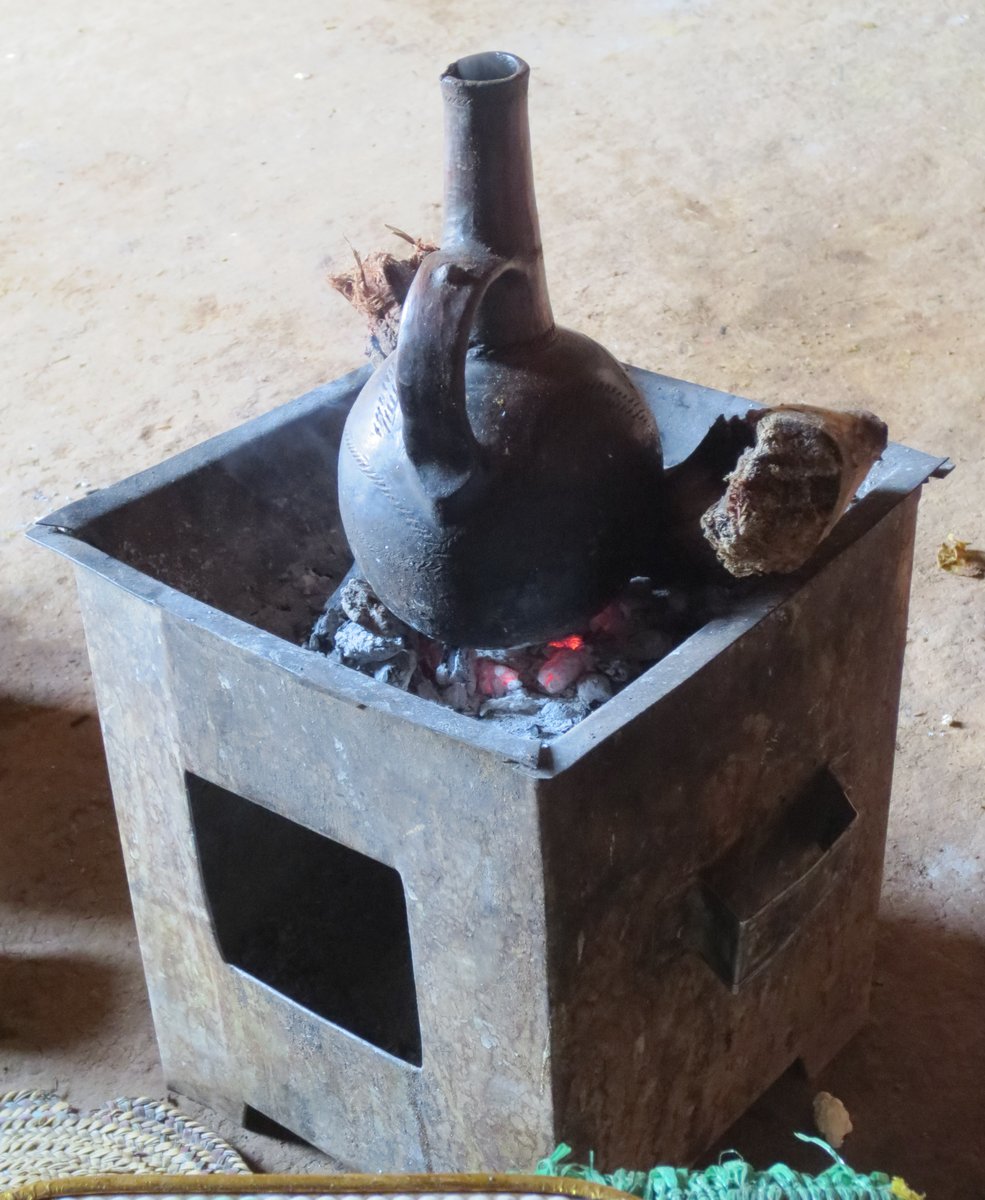
- The setting. Fresh grass, ketema, is strewn on the floor, sometimes with flowers (yellow Meskel daisies around the feast of Meskel in September). The cups are set out on a low wooden stand or tray, the rekebot, and the host sits on a low stool by a charcoal stove (Coffee ceremony of Ethiopia and Eritrea; Hannah Giorgis, Parts Unknown, 2018).
- Incense, etan (frankincense or myrrh), is lit on the coals. One of Jennifer Brinkerhoff Platt’s informants said that without incense it is not a proper ceremony (Brinkerhoff Platt, 2013).
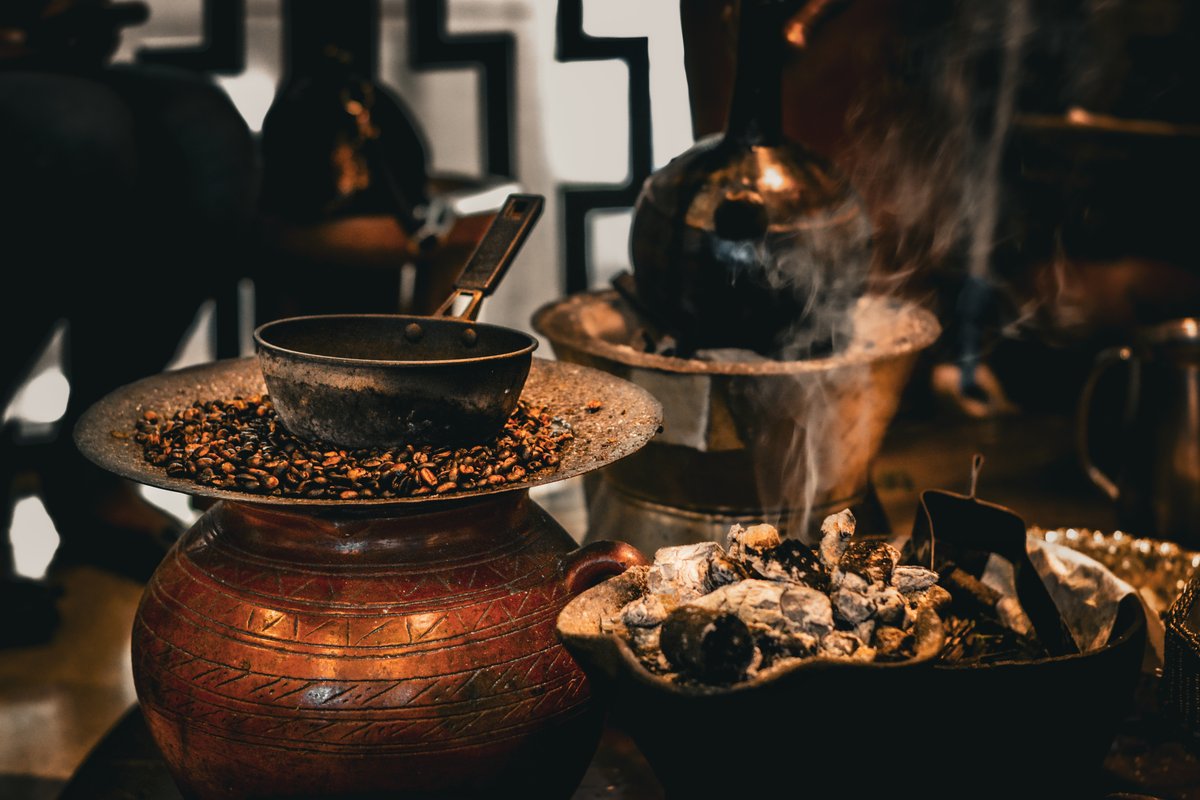
- Washing and roasting. The green beans are washed in several changes of water, then roasted in a flat pan over the coals, stirred constantly; the coffee importer Sweet Maria’s calls it “pure conduction roasting” (Sweet Maria’s, 2019). Some hosts add a clove.
- The smoke. The host carries the smoking pan round so each guest can waft the smoke towards them and smell it.
- Grinding. The beans are pounded in a wooden mortar, the mukecha, with a pestle, the zenezena, often while still warm. City homes and restaurants now often use electric grinders.
- Boiling. Water is boiled in the jebena on the coals, the grounds go in through the neck, and the pot comes off just before it boils over, then stands so the grounds settle in its round belly.
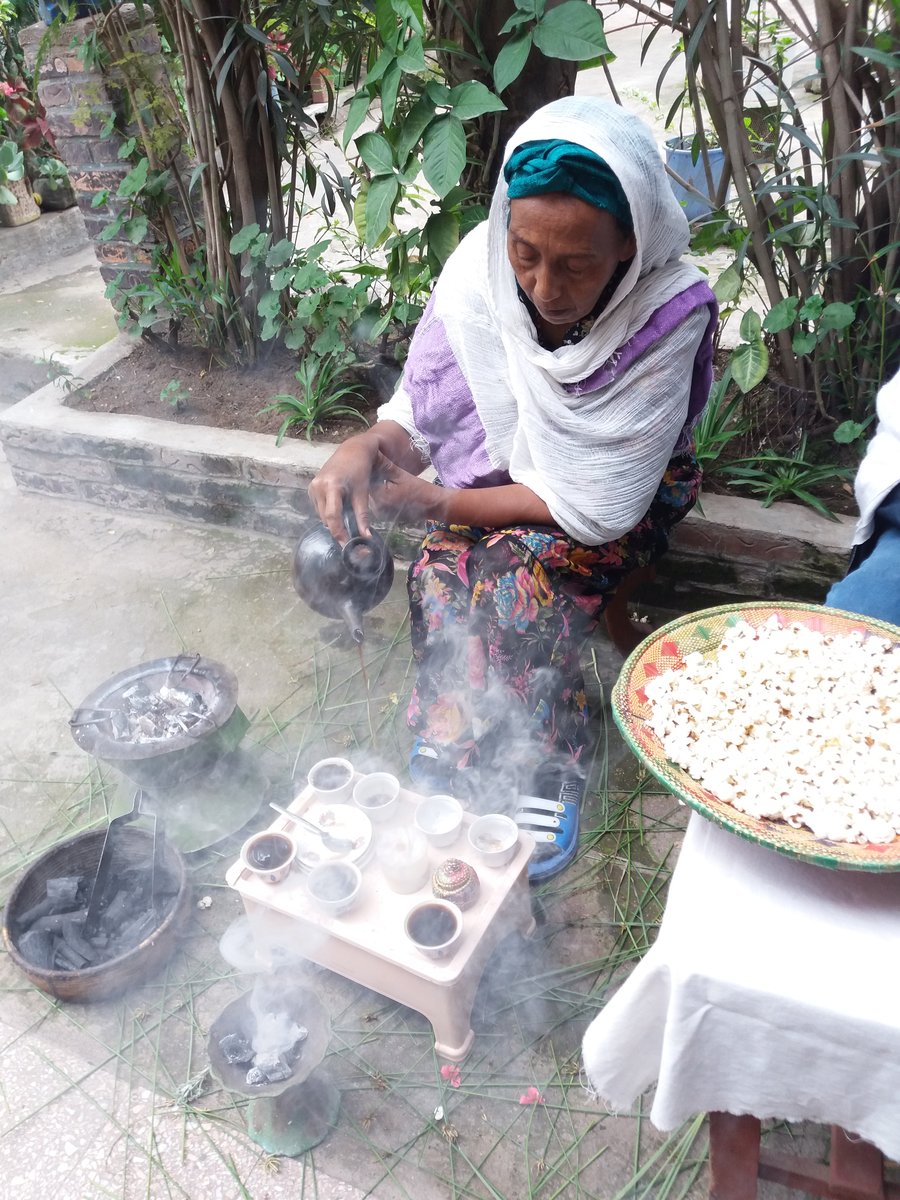
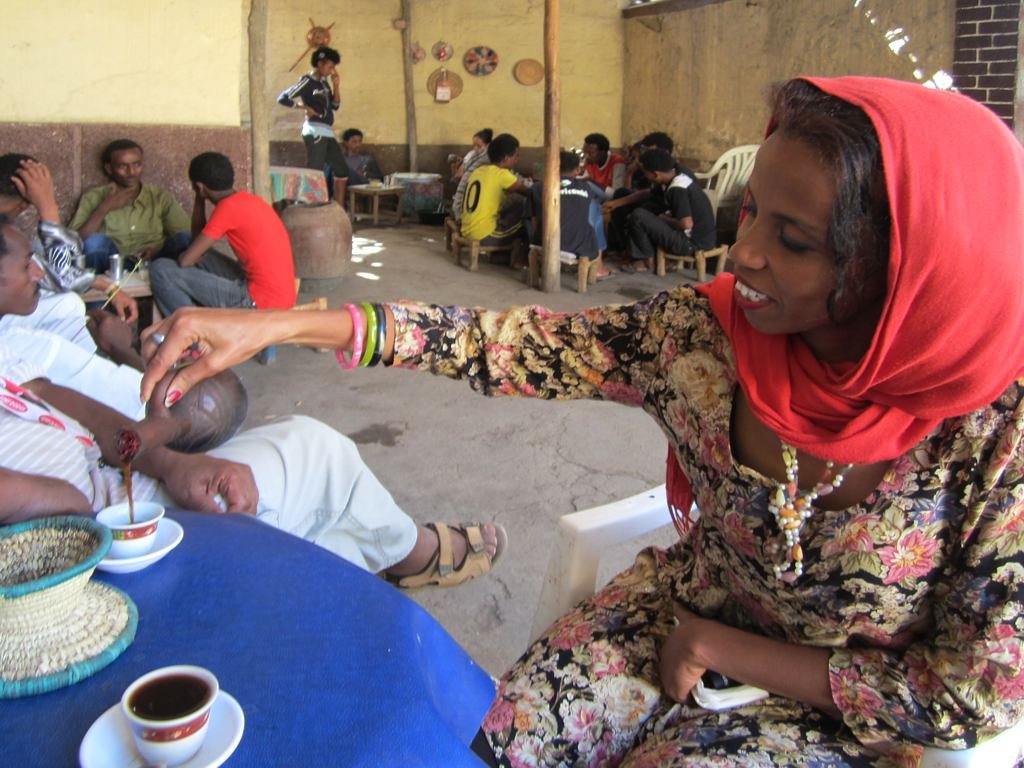
- Pouring. The coffee is poured in one unbroken stream from about a foot above the cups, moving along the row so each cup fills evenly, and stopping before the grounds come.
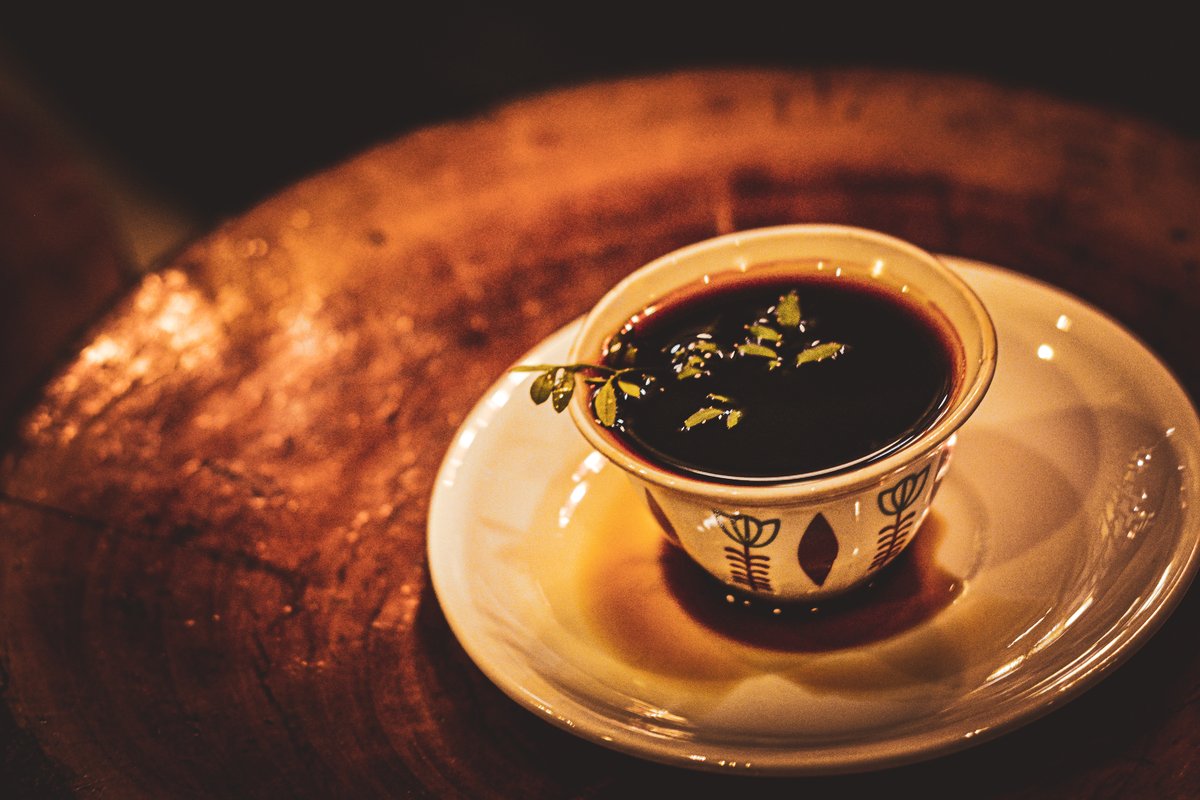
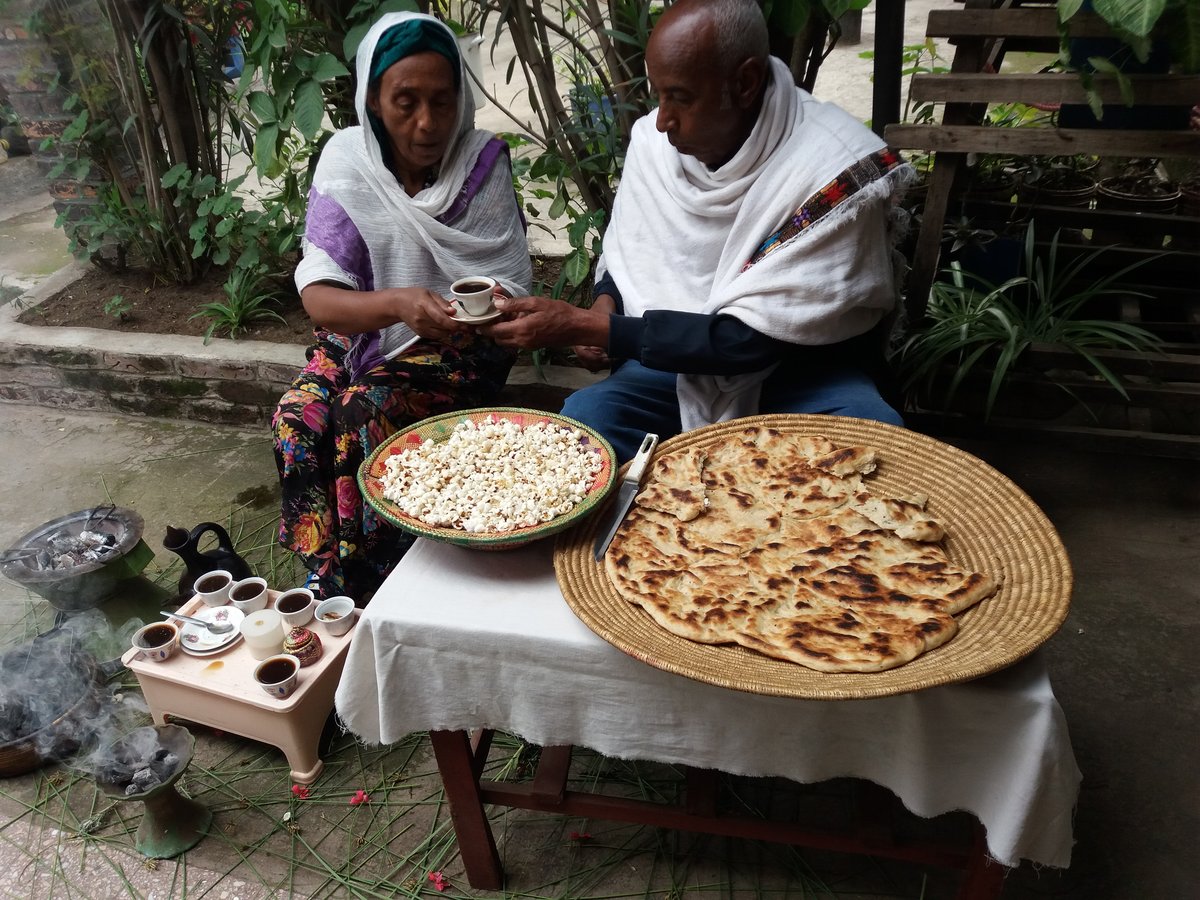
- Serving. Elders are served first, with both hands. Sugar is usual; in some places salt, a knob of spiced butter (niter kibbeh) or a sprig of rue, tena adam, goes in the cup. Milk usually does not (Medill, 2016).
- Food. Popcorn (fendisha), roasted barley (kolo), bread or peanuts come with the second and third rounds.
- The second and third rounds are made with fresh water on the same grounds: tona, then bereka.
The words
| Term | What it is |
|---|---|
| Buna (ቡና) | Coffee, and the gathering. In Tigrinya, bun. |
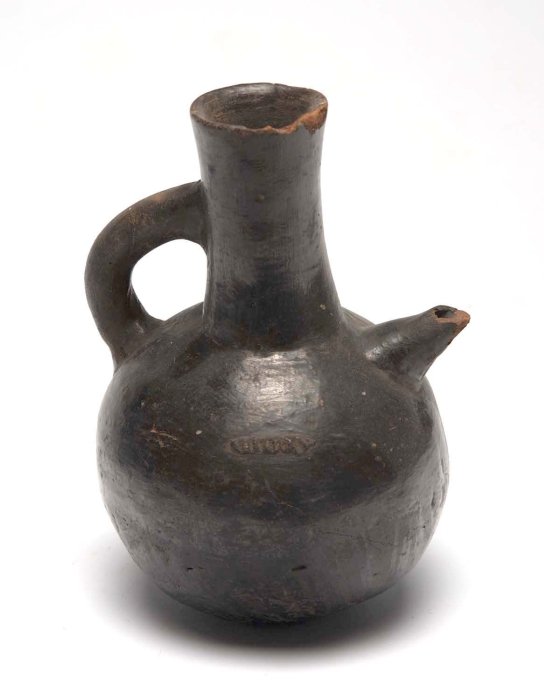
| Jebena (ጀበና) | The round-bellied clay pot with a long neck, a handle and a spout; the neck strains the grounds. The same pot in Sudan is the jabana. |
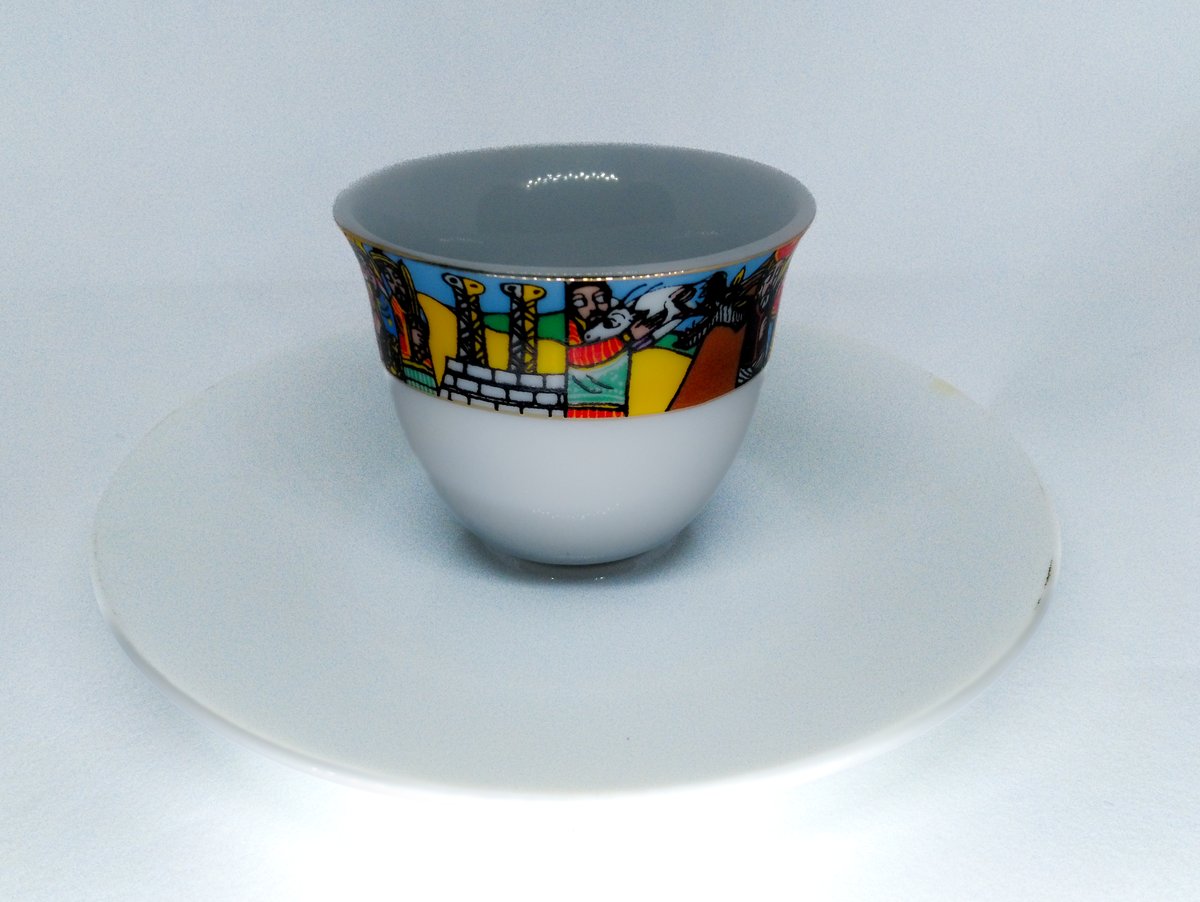
| Sini (ስኒ) | The small handleless cups, about 70 to 80 ml. Sweet Maria’s notes they are now “all made in China” (Sweet Maria’s, 2021). |
| Rekebot (ረከቦት) | The low wooden stand or tray for the cups. |
| Mukecha and zenezena | Mortar and pestle. |
| Etan | Incense. |
| Ketema | The grass on the floor. |
| Abol, tona, bereka | The three rounds. Some informants call the second hulettegna, “second time”. |
| Kolo, fendisha | Roasted barley and popcorn. |
The roasting pan’s name is less settled: Sweet Maria’s writes metaj, a word that also names the injera griddle; menkeshkesh, often given, is attested for Eritrea rather than in Amharic. The story that abol, tona and bereka were the names of Kaldi’s goats has no source, and the derivation of abol from Arabic awwal, “first”, is plausible but unproven.
Who makes it, and how often
“Women are the sole preparers of the buna,” Brinkerhoff Platt found among Ethiopian women at home and in the United States; men drink it but do not make it. Girls start making it around the age of ten, and hosting one’s own buna marks adulthood, usually after marriage. A session lasts about an hour. In rural Ethiopia it happens at least once a day, often at midday; among her American informants, usually weekly after Sunday worship (Brinkerhoff Platt, 2013). Wikipedia calls it “an honor” for the woman of the house. A guest who declines is offered tea instead.
Buna is neighbourliness: a daily gathering of relatives and neighbours. The anthropologist Sarah Howard found local government workers in rural Amhara using it to build solidarity (Anthropology Matters, 2018). It is not neutral for everyone: Don Seeman found Ethiopian Jews and Pentecostals in Israel who abstain from buna because they associate it with spirit possession (zar) and with the obligations of kinship (American Ethnologist, 2015).
Regional variations
- Oromo buna qalaa, “slaughtered coffee”. Not a drink brewed in a jebena: whole dried coffee cherries are nicked at the tip (traditionally with the teeth), fried in butter in a clay pot to a light roast, tipped into a wooden bowl, and covered with milk boiled in the same pot; the beans are chewed. “Slaughtered” refers to the nick in each cherry. It is served at births, naming ceremonies, weddings, reconciliations and the end of mourning, and offered by Borana Gadaa elders (Tewodros Balcha, Barista Magazine, 2025; Visit Oromia).
- Salt and butter. In the countryside some people add salt or niter kibbeh; a café owner from the south told Richmond Magazine: “in the southern part, where I grew up, they drink it with salt and butter. Some parts of the country they do sugar and some parts straight.”
- Tigray and Eritrea use the Tigrinya names for the rounds and serve himbasha, a slightly sweet bread; their jebenas often have fewer openings.
- Harar drinks kuti, a tea of coffee leaves, as well as coffee; the leaf and husk drinks are on Qishr.
The Church, and when coffee became Christian
The usual story is that the Ethiopian Orthodox Church banned coffee as a Muslim drink until Emperor Menelik II lifted the ban. The scholarship is more careful. The archaeologist Timothy Insoll writes that Ethiopian Christians “refrained from drinking coffee due to its perceived association with Muslims until the 19th century” (The Archaeology of Islam in Sub-Saharan Africa, 2003, as quoted in Coffee production in Ethiopia). The historian Richard Pankhurst wrote that consumption “spread rapidly between 1880 and 1886”, “largely due to Emperor Menilek, who himself drank it, and to Abuna Matewos, who did much to dispel the belief of the clergy that it was a Muslim drink” (Economic History of Ethiopia, 1968, as quoted by Brewminate). Menelik was then king of Shewa; he became emperor in 1889. No decree imposing or lifting a ban has been found, so “avoided” and “disapproved of” are the honest words.
That has a consequence nobody states outright: if highland Christians took up coffee only in the 1880s, the ceremony as it is practised in Orthodox Christian homes, with Meskel flowers on the grass and the third cup called “blessing”, may in its present form be well under two centuries old. Coffee itself grew wild in Ethiopia long before anyone drank it; the legend of Kaldi and his goats, and what is actually known of coffee’s beginnings, are on History.
How much Ethiopia drinks
Ethiopia is Africa’s largest coffee producer. “Ethiopians drink half their coffee” is a figure that Wikipedia traces to a 1997 student paper. The US Department of Agriculture’s figures, as reported by Daily Coffee News, put domestic consumption at about 3.7 million of 11.6 million 60-kg bags in 2025/26, about a third, and forecast 5.0 million of 12.1 million for 2026/27, about two-fifths (Daily Coffee News, 2025; 2026). The series jumps between years, so treat both figures as estimates. Ethiopian regions and coffees are on Origins, and the washed and natural processes they are known for on How Coffee Is Processed.
UNESCO
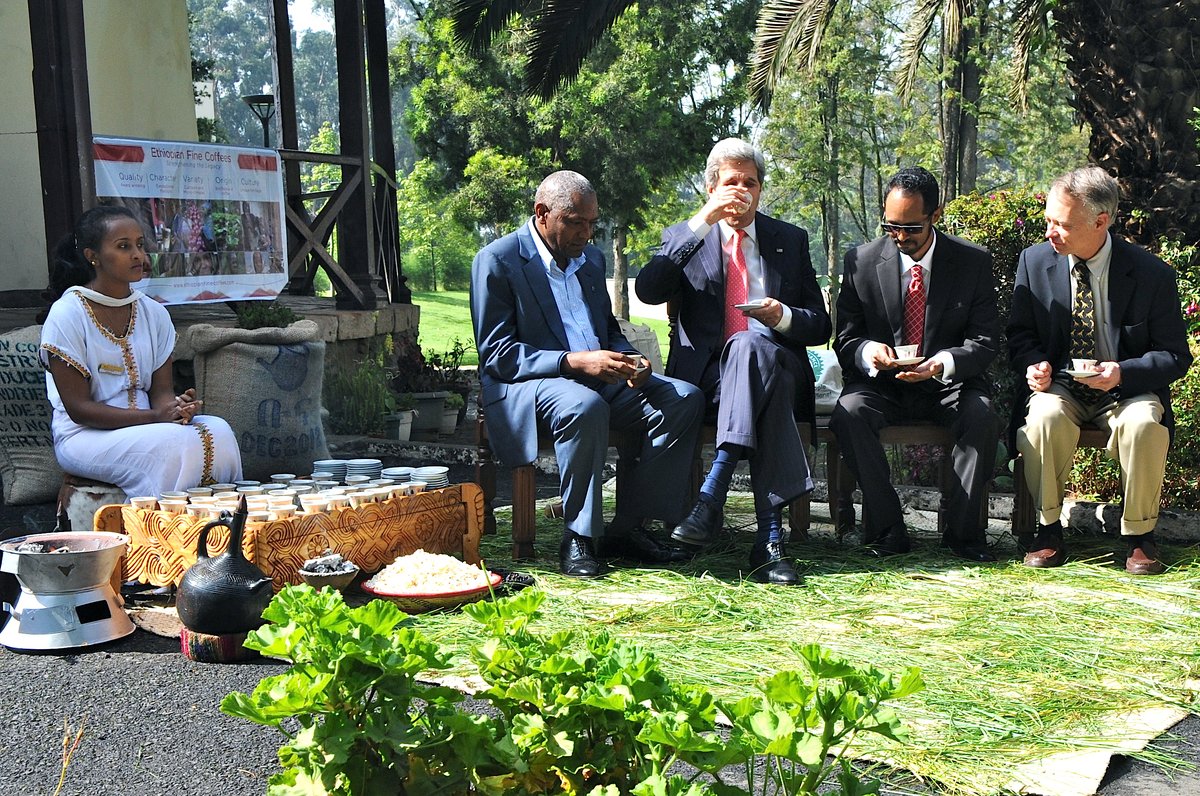
The ceremony is not on UNESCO’s intangible heritage lists. UNESCO’s Ethiopia page lists seven elements, among them the Meskel festival, the Gada system of the Oromo and Timkat, and none is about coffee (UNESCO). A nomination is being prepared: a national workshop met in Jimma in February 2025, and in February 2026 organisers of a coffee festival in Addis Ababa said paperwork was under way to nominate the ceremony “within two years” (Addis Fortune; Sprudge). Turkish coffee was inscribed in 2013 and Arabic coffee in 2015; see Arabic Coffee and Turkish Coffee in Sand.
The ceremony abroad
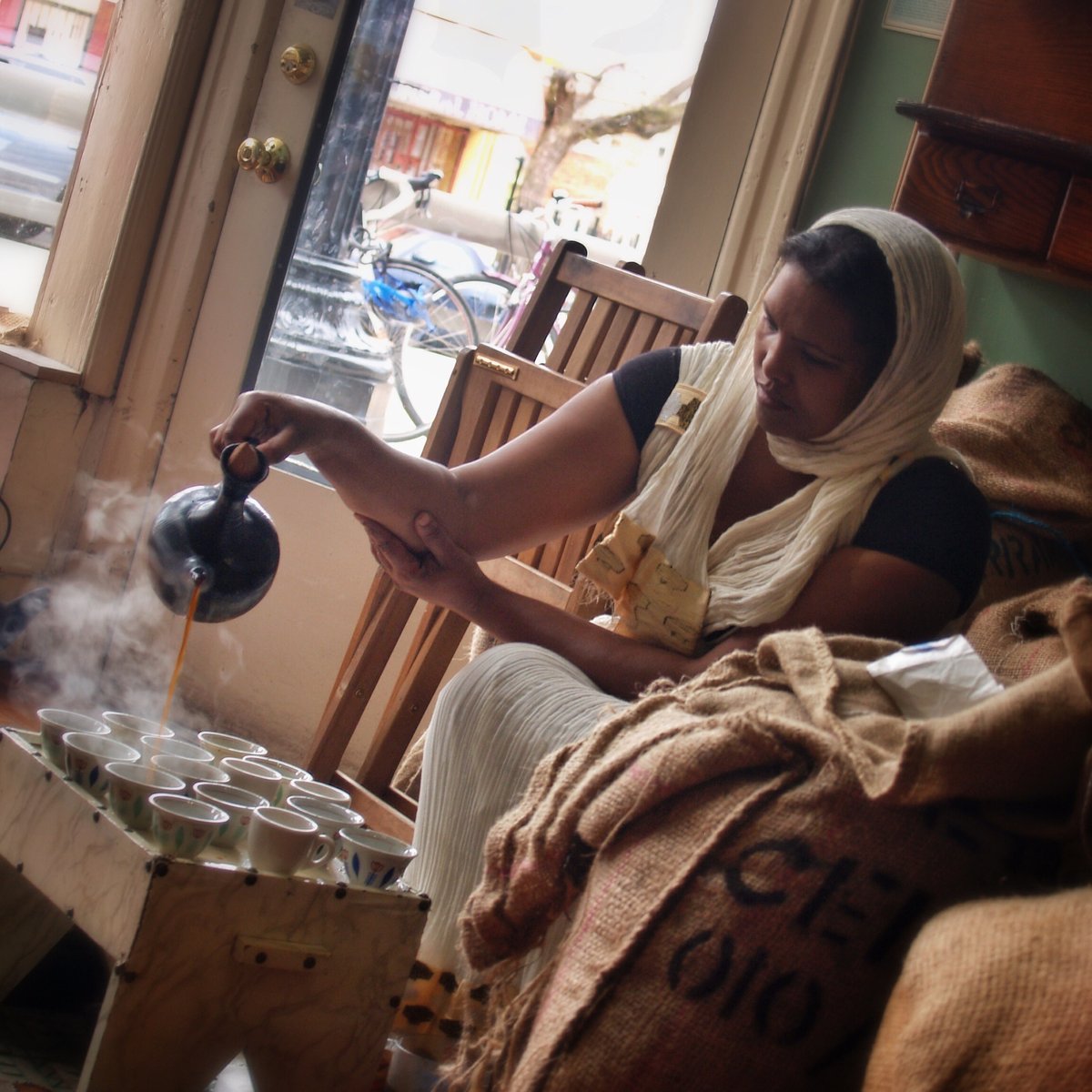
Ethiopian restaurants and cafés in American cities bring out a short version at the table, with jebena, cups and incense. Kenfe Bellay of Sidamo Coffee & Tea in Washington put the difference simply: “you grab coffee and you run. But in Ethiopia, they don’t want to finish it so fast” (Michigan Public, 2022). Tigist Reda of Demera in Chicago has held public ceremonies at the city’s Museum of Contemporary Photography, and Fetlework Tefferi of Café Colucci in Oakland performed one with Marcus Samuelsson (KQED, 2012). Visiting officials are greeted with it as a matter of course.
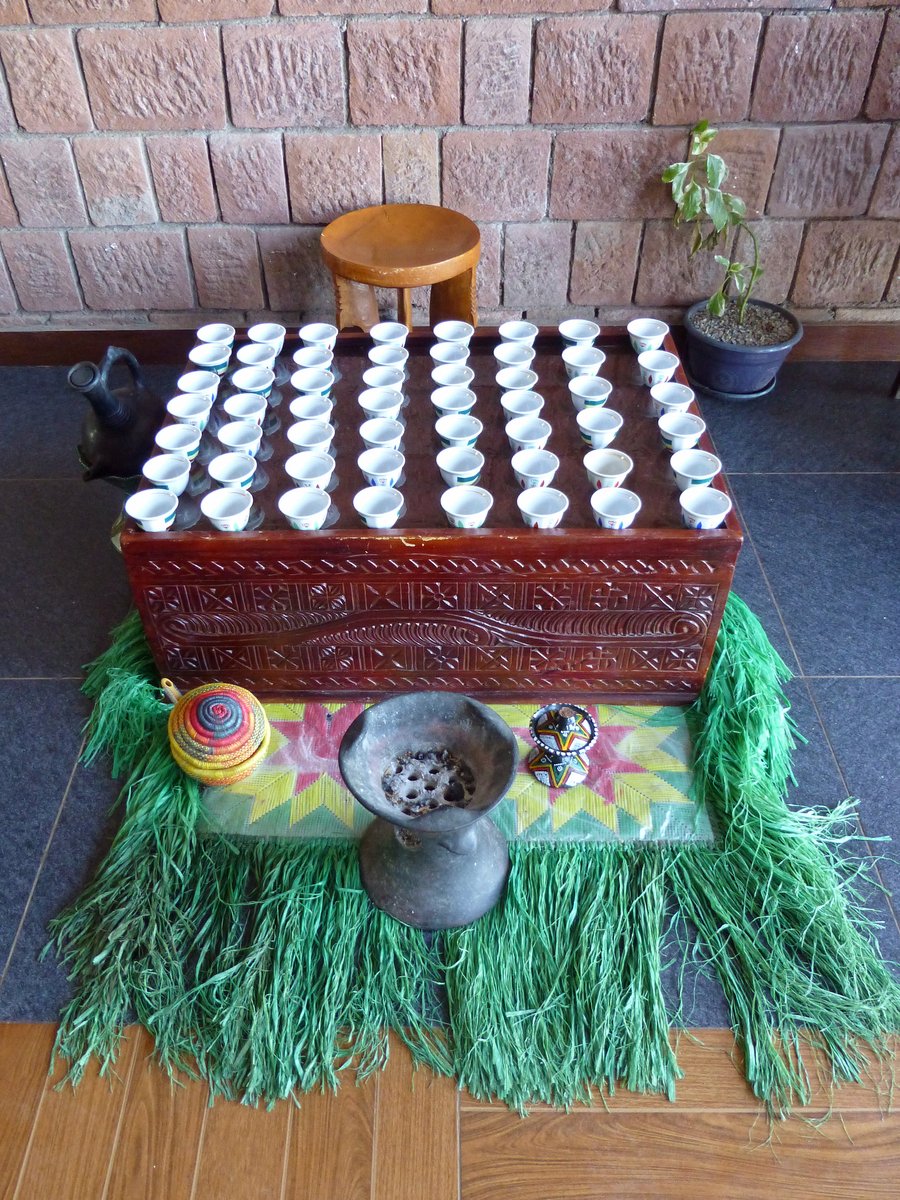
Buying the kit. Clay jebenas sell in the United States for roughly $40 to $110, and sets of small cups and incense are sold in Ethiopian groceries and online. A new clay jebena has to be seasoned before its first use, Reda told Good Housekeeping. A saucepan or a Turkish cezve works for the boiling if there is no jebena.
Making it at home
The recipe gives quantities; no Ethiopian cook has published a measured recipe, so those are a starting point assembled from the descriptions here. Five things that matter:
- Roast with the windows open. Green coffee in a pan smokes heavily, which is part of the point at a ceremony and a smoke alarm at home. How pan roasting works is on Home Roasting, Step by Step.
- Roast dark and even, until the beans “sweat and turn shiny dark brown” (Tefferi).
- Grind finer than drip, coarser than espresso.
- Let it settle for a few minutes before pouring, and pour in one steady stream so the grounds stay in the pot.
- Make three rounds from the same grounds, each with fresh water.
What is not known
- When the ceremony took its present form, and where.
- When and why highland clergy first disapproved of coffee, and whether any formal ban existed.
- Where the words abol and tona come from.
- Whether serving twelve cups, as one ethnographer’s informants said, is a widespread rule or one community’s habit.
- How common buna qalaa still is.
- A region-by-region map of salt, butter, sugar and rue.
- How much coffee Ethiopia drinks: the USDA’s figures jump between years.
- Any Michigan restaurant that performs the ceremony.
- When the UNESCO nomination will be filed.
Sources
- Jennifer Brinkerhoff Platt, “Sisters in Transition: Moving from the Buna Coffee Ritual to Relief Society”, in By Our Rites of Worship (2013).
- Sarah Howard, “Coffee and the State in Rural Ethiopia”, Anthropology Matters 18 (2018); Don Seeman, “Coffee and the Moral Order”, American Ethnologist 42 (2015).
- Richard Pankhurst, Economic History of Ethiopia 1800–1935 (1968), p. 198, as quoted by Brewminate; Timothy Insoll, The Archaeology of Islam in Sub-Saharan Africa (2003), as quoted in Coffee production in Ethiopia.
- Hannah Giorgis, “Love letter to Ethiopian buna”, Parts Unknown (2018); Medill News Service, the coffee ceremony in Chicago (2016); Angela Burke, “A step-by-step guide to performing an Ethiopian coffee ceremony”, Good Housekeeping (2024).
- Sweet Maria’s, Ethiopia coffee vignettes (2019) and cini cups (2021).
- Tewodros Balcha, “Preserving an age-old coffee tradition with Ethiopia’s buna qalaa”, Barista Magazine (2025); Oromia Tourism Commission, Visit Oromia.
- Daily Coffee News, Ethiopia coffee report (2025) and 2026.
- UNESCO, Ethiopia; Addis Fortune, Coffee festival wants UNESCO to certify a living ritual (2026); Sprudge, Ethiopia seeks UNESCO status for the coffee ceremony (2026).
- Michigan Public, East Africa is responsible for America’s favorite morning brew (2022); KQED, Traditional Ethiopian coffee ceremony (2012).
- Wikipedia: Coffee ceremony of Ethiopia and Eritrea, Jebena.
Comments (0)