Coffee · 15 of 64
Coffee Leaf Rust and Climate Change
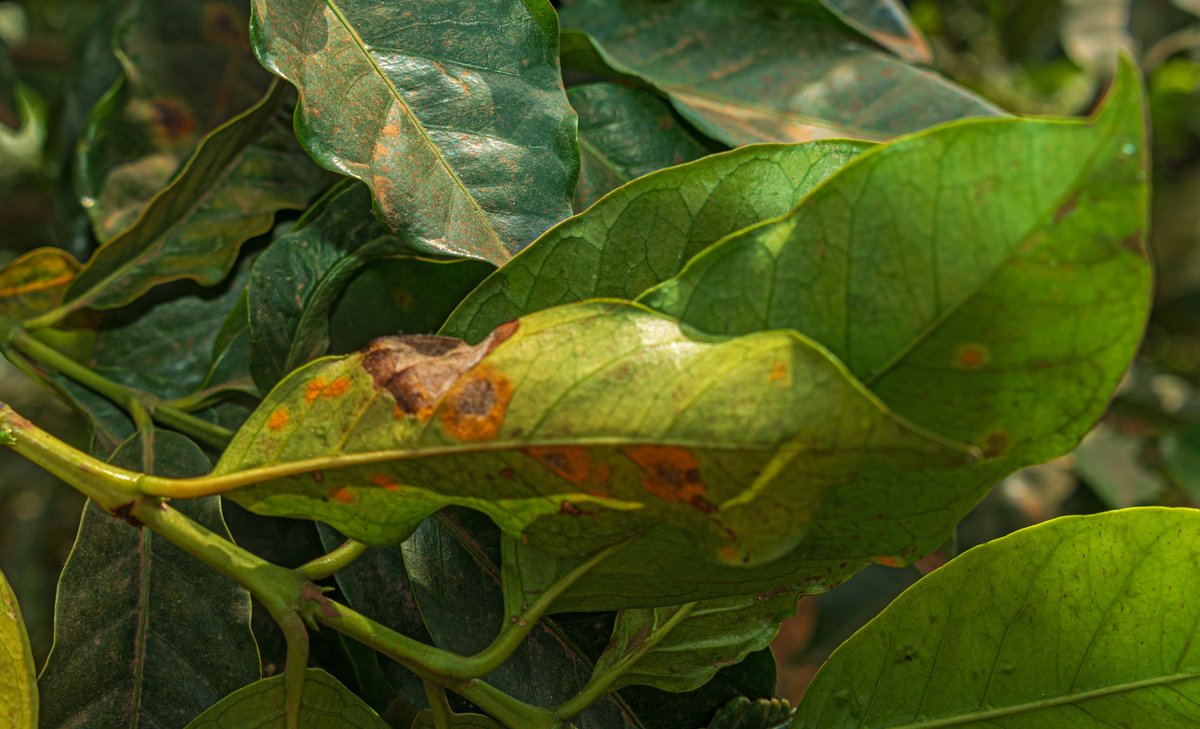
Coffee leaf rust is a fungus that covers the underside of a coffee leaf in orange powder, kills the leaf and strips the tree. In the nineteenth century it destroyed the coffee industry of Ceylon, which turned to tea; in 2012 and 2013 it swept through Central America, where more than half the coffee land was hit. It has reached every coffee country in the world, Hawaii last of all in 2020. It is the most important disease of arabica coffee.
It is also the disease most often blamed on climate change, and the evidence for that is weaker than the headlines. The climate models have their own story to tell about coffee’s future, and it is not the one usually told either.
The short version
| Question | Answer |
|---|---|
| What is it? | A fungus, Hemileia vastatrix, that lives only on coffee leaves. Yellow spots on top, orange powder underneath; the leaf dies and falls. |
| Does it hurt the beans? | No. It is a leaf disease; it weakens the tree and cuts this year’s and next year’s crop. Coffee from a rusted farm is safe. |
| Where did it start? | It was named in 1869 from specimens sent from Ceylon (Sri Lanka), where it appeared that year. Ceylon’s coffee exports fell about 80 percent by 1886. |
| And Central America? | It arrived in 1976 (Nicaragua). The 2012–13 epidemic affected over 50 percent of the region’s coffee area, cost about 2.7 million bags and US$500 million, and cut coffee employment by 16 percent. |
| Was that climate change? | Not shown. Warm nights and early rains, low prices that cut spraying and fertiliser, and old trees drove it. A study of Colombia found no long-term climate trend in rust risk from 1990 to 2015. |
| Do resistant varieties work? | Mostly, but resistance is not immunity: some varieties have lost it as new races appear. Blind trials find well-grown Castillo scores like Caturra. |
| What about climate? | Models put the loss of land suitable for coffee at about 50 percent by 2050, across scenarios, for arabica and robusta together, with some gains elsewhere. |
| Hawaii? | Found on Maui in October 2020, probably arriving on imported plants. |
The disease
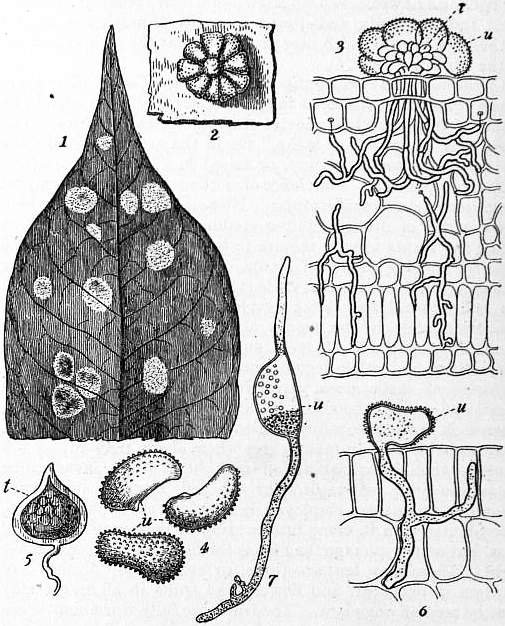
Hemileia vastatrix is a rust fungus. The name means “half-smooth devastator”: its spores are smooth on one side and warty on the other. It has no other known host; its spores on coffee leaves are “its most important (if not only) source of inoculum” (Talhinhas and others, 2017).
What you see. “Chlorotic spots are the first macroscopic symptoms”: small pale-yellow patches on the upper side of the leaf. Beneath them, orange powdery pustules of spores appear on the underside, then turn brown and dead, and the leaf falls. Yield losses run “up to 35%”, and the damage carries into following years, because a stripped tree cannot feed this year’s cherries or grow the new wood that bears next year’s (Talhinhas). Badly hit plots are cut back to the stump and take about three years to return to normal (Avelino and others, 2015).
How it spreads. Spores travel long distances on the wind and short ones by rain splash, on hands, tools and clothing. They need liquid water on the leaf to infect it. Rust likes mild, wet weather, and in Central America it was long thought not to be a problem above about 1,000 to 1,100 metres, or above 1,600 metres in Colombia; in 2008–13 Colombian farms above 1,600 metres were “unusually affected”, consistent with warmer nights (Avelino).
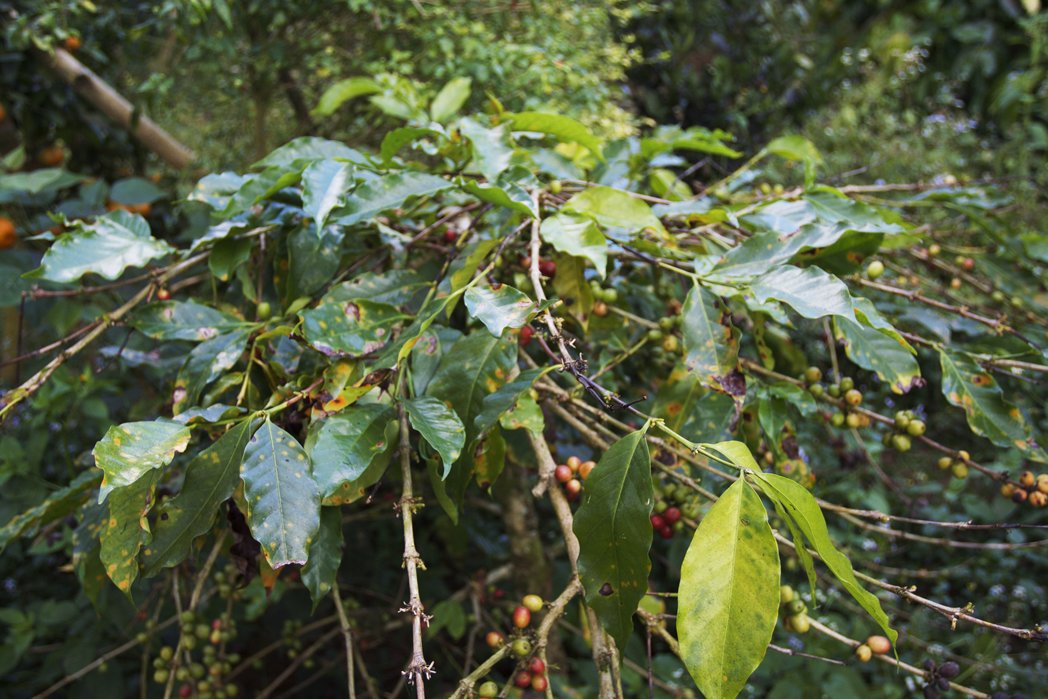
Control. Resistant varieties are “the most effective and durable” control (Talhinhas). Fungicides work: copper sprays are preventive and cheap, systemic fungicides can cure an infection. In trials on Hawaii Island in 2022–23, copper kept rust below the action threshold for six to eight weeks at $126 an acre per spray; biological and botanical products did not reduce it (Aristizábal and others, Crop Protection, 2025). Good fertiliser, pruning and timely spraying matter: Nicaraguan farmers who kept to a strict programme in 2012 “had no serious trouble” (Avelino).
Ceylon, 1869: the rust that made a tea country
In the 1860s Ceylon was one of the world’s great coffee producers. A report in Nature in 1876 gives the figures: exports rose from 54,000 hundredweight around 1840 to “somewhat over a million cwts” in 1868, about 112 million pounds, from some 200,000 acres. “In the following year” the “leaf disease”, with its orange-red dust “composed of the ripe spores of the fungus, appeared on a newly-opened estate in Madulsima, and within a very short time spread over all the coffee-producing districts in the island” (Nature, 31 August 1876). Miles Joseph Berkeley and Christopher Broome named the fungus in the Gardeners’ Chronicle in November 1869 from specimens sent from Ceylon. The often-repeated date of 1867 has no source.
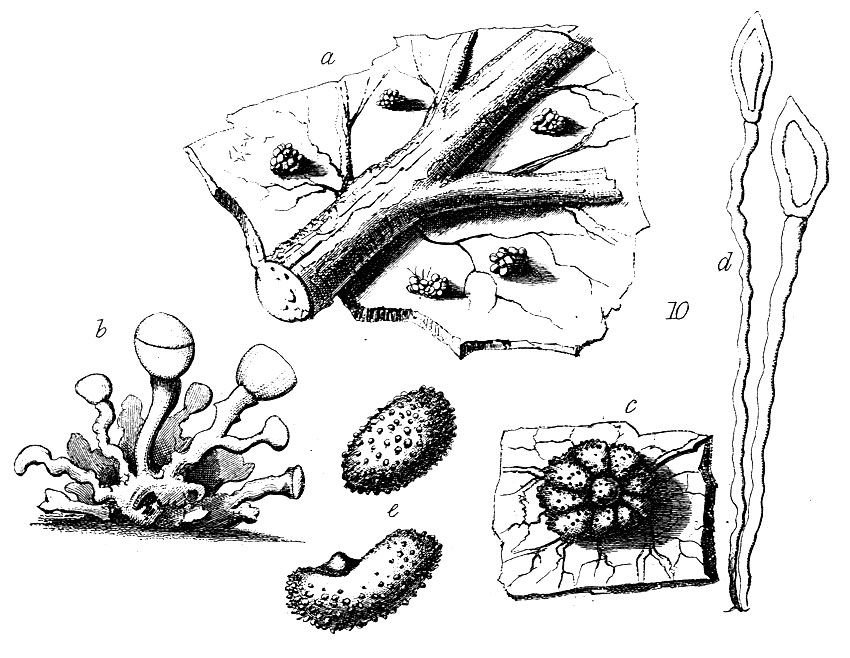
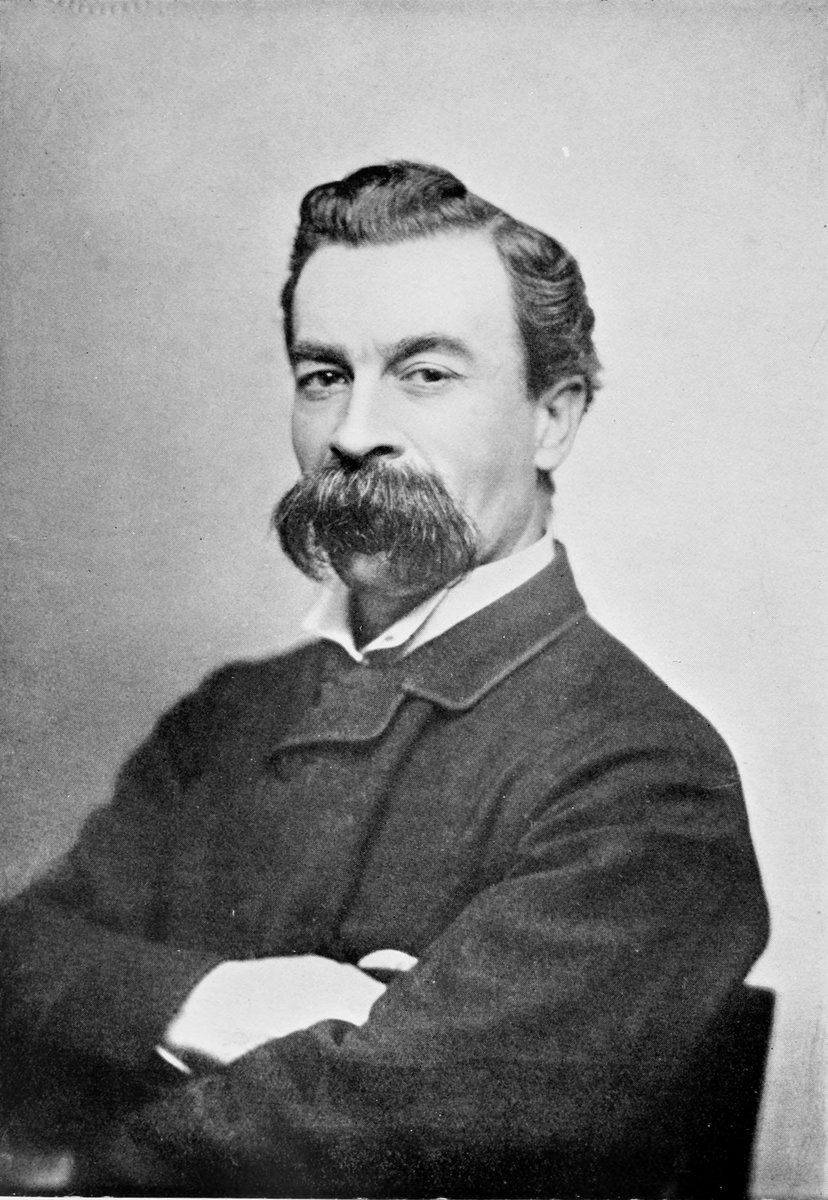
High prices kept the planters going at first. “By 1879, however, production began a rapid and steady decline”: exports fell about 80 percent by 1886, and by 1890 about 90 percent of the land under coffee had been abandoned (historian Stuart McCook, in NPR, 2018). Acreage figures for the boom and the collapse differ between sources. Ceylon’s government brought in the young botanist Harry Marshall Ward, who worked there from 1880 to 1882; he showed that the fungus caused the disease, worked out its life cycle and showed the spores were carried on the wind, and he advised against planting nothing but coffee and for belts of trees as windbreaks (Harry Marshall Ward). He could not save the industry. “Once coffee rust had broken out in Ceylon,” McCook says, “the global epidemic was inevitable.”
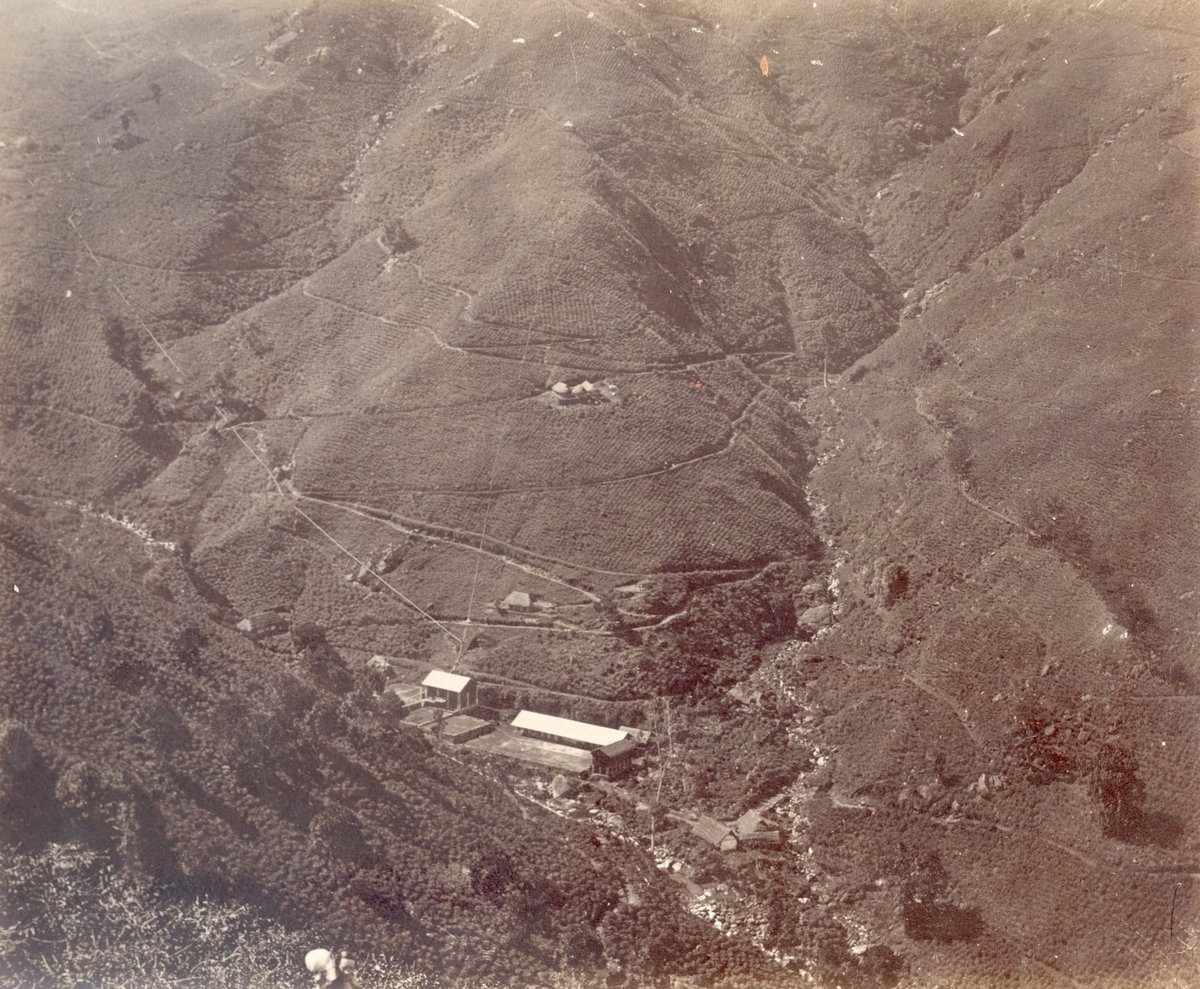
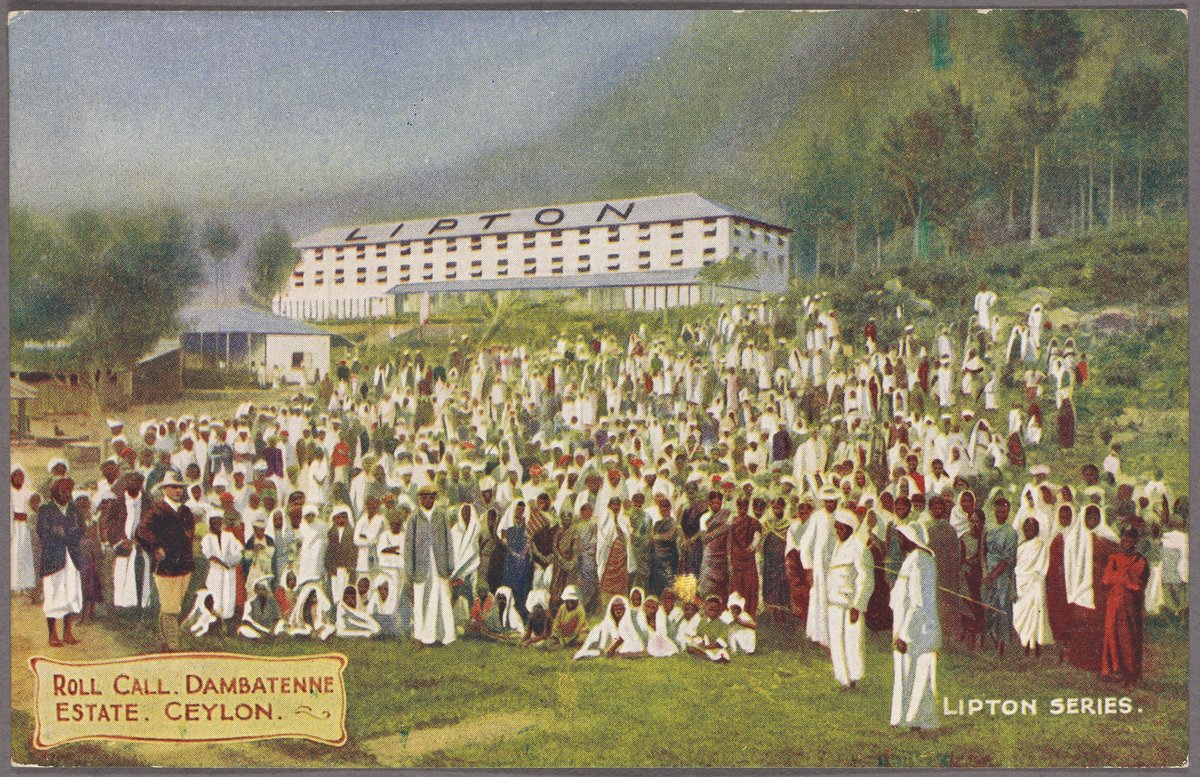
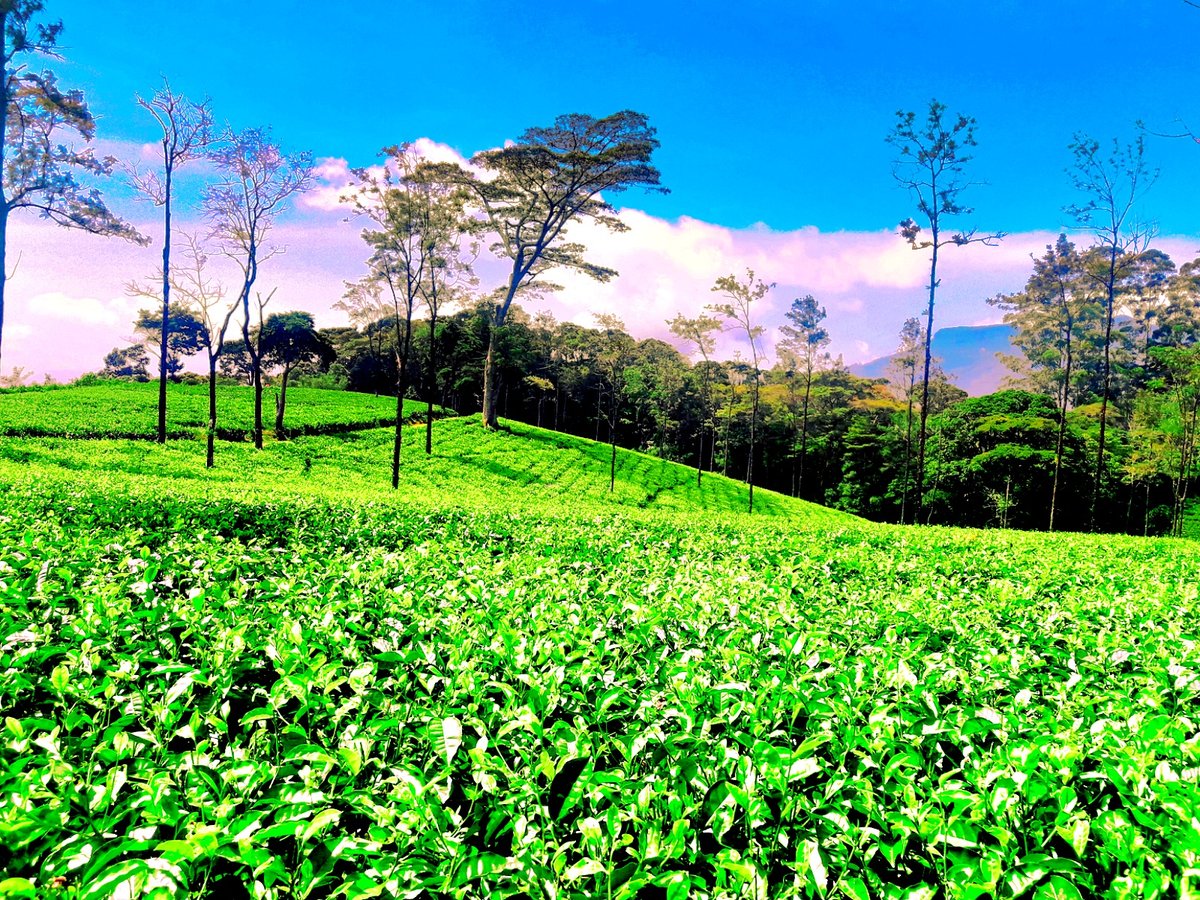
Tea. Tea did not start because of the rust. James Taylor planted 19 acres of tea at Loolecondera in 1867, two years before the disease appeared (Taking Tea, University of Exeter). The rust made tea the replacement: planters ruined by coffee turned their estates over to it, and Thomas Lipton bought his first Ceylon estate, Dambatenne, in 1890. Sri Lanka is now one of the world’s largest tea producers. The claim that rust turned the British into tea drinkers overstates it: Britain drank tea long before 1869; Ceylon changed where some of it came from.
Around the world
| Year | Where |
|---|---|
| 1869 | Ceylon; named the same year |
| 1870s | Southern India, Sumatra and Java |
| 1950s–60s | West Africa |
| 1970 | Brazil, the first in the Americas |
| 1976 | Nicaragua, the first in Central America |
| 1980s | Costa Rica, Colombia |
| 1989 | Puerto Rico |
| By 1985 | ”Every major coffee-growing region of the world, with the exception of Hawaii” |
| 2020 | Hawaii |
The early dates after Ceylon come from secondary sources, and how rust crossed the Atlantic to Brazil, on the wind from Africa or with people, is debated (Ramírez-Camejo and others, 2022).
Central America, 2012–13: la roya
The International Coffee Organization called it “the worst seen since the pest first appeared in Central America in 1976”. Its May 2013 report, using figures from the regional programme PROMECAFE, counted 593,037 of 1,082,421 hectares affected, “over 50% of the total coffee growing area”, damage of about 2.7 million bags, “costing the region around US$500 million”, and forecast some 374,000 jobs lost (ICO, 2013). The often-quoted “53 percent of farms” is a press rounding of an area figure, and the 374,000 jobs were a forecast. The measured figures are smaller but serious: Central American production fell 16 percent in 2012–13 and another 10 percent in 2013–14, coffee employment fell 16 percent and then 7 percent, and coffee wages fell 13 to 27 percent. Colombia had already lost an average of 31 percent of its output in 2008–11 to an earlier outbreak (Avelino, 2015). The authors warn that these loss estimates are uncertain, because crops vary from year to year anyway.
Why it happened. “The main drivers of these epidemics are economic and meteorological,” Avelino’s team concluded. Every intense epidemic in the previous 37 years had come when coffee paid badly, so farmers cut fertiliser and fungicide; 2012 also brought warmer nights, cooler days and an early start to the rains; and many plantations were old, more than a quarter of Guatemala’s coffee over 25 years. New races of the fungus were found afterwards, but “one hypothesis is that they are not the cause of the epidemic but its consequence”. A model of rust risk in Colombia from 1990 to 2015 found “no evidence for an overall trend in disease risk”, and its authors “reject the climate change hypothesis” for that outbreak (Bebber, Castillo and Gurr, 2016). Climate may still be raising the risk at higher altitudes; that has not been demonstrated.
Migration. The ICO warned in 2013 of “increased migratory pressure towards North America”. In ten communities in eastern Guatemala, a 2022 study found that rust more than doubled migration from farming families (Dupre, Harvey and Holland, World Development, 2022). How much it drove migration north across the region has not been measured.
Resistant varieties
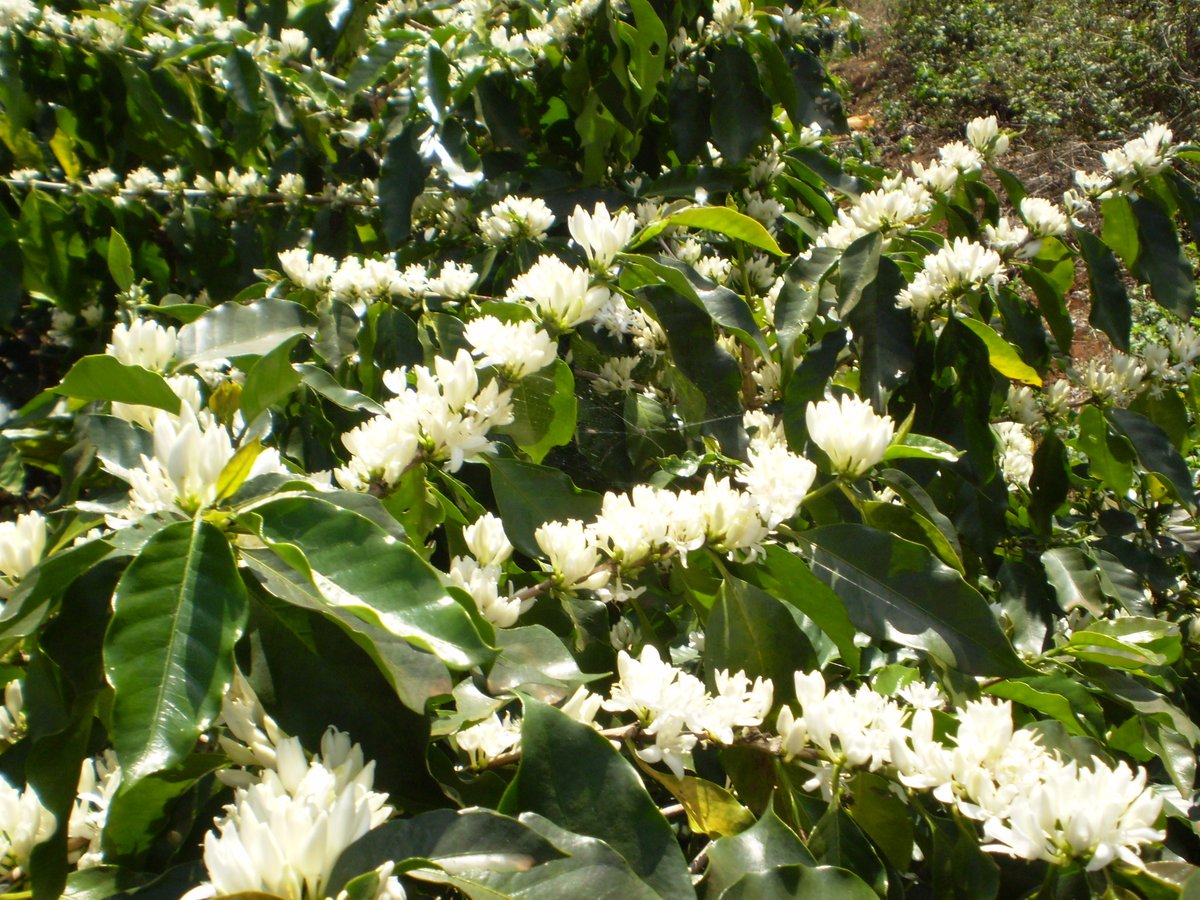
The Timor Hybrid. Most rust-resistant arabica descends from a natural cross between arabica and robusta found in a Typica planting on Timor, supposedly in 1927; the original plant has since been found to be triploid, so its story is messier than the usual one (Clarindo and others, 2013). From the 1950s Portugal’s coffee rust research centre at Oeiras distributed crosses made from it. Its descendants include Catimor (Caturra × Timor Hybrid), Sarchimor (Villa Sarchi × Timor Hybrid) and dozens of national varieties: Castillo and Colombia in Colombia, IHCAFE 90 and Lempira in Honduras, Obatã and Tupi in Brazil, Marsellesa. The F1 hybrids such as Centroamericano are on New Coffee Species.
Resistance is not immunity. Avelino’s team wrote that “some cultivars however have lost resistance, confirming that coffee rust can evolve”; the Colombia variety lost complete resistance but kept partial resistance, and Lempira in Honduras was hit hard in 2012. In 2021 Colombia’s research centre Cenicafé reported “six new races and nine new variants” of the fungus; a researcher put it plainly: “resistance is not the same as immunity” (Daily Coffee News, 2021). Castillo, released in 2005, is a multiline, a mix of many resistant lines, so that a race that beats one does not beat the field; after more than 300,000 hectares were replanted with it, Colombia’s rust incidence fell from over 40 percent in 2009 to 3 percent in 2013 (Avelino). No published study read for this page shows that Castillo as a whole has lost its resistance.
Do they taste worse? The early Catimors, often grown low, gave resistant coffee a poor name. In a blind trial in Nariño in 2014, cuppers’ scores for Castillo and Caturra showed no statistically significant difference; a sensory panel found different flavours, Castillo fruity and chocolatey, Caturra floral and caramel, and the farm mattered more than the variety (Daily Coffee News, 2014). Seeing Castillo, Catimor or Marsellesa on a green-coffee list is normal, not a warning.
Hawaii, Puerto Rico and the berry borer
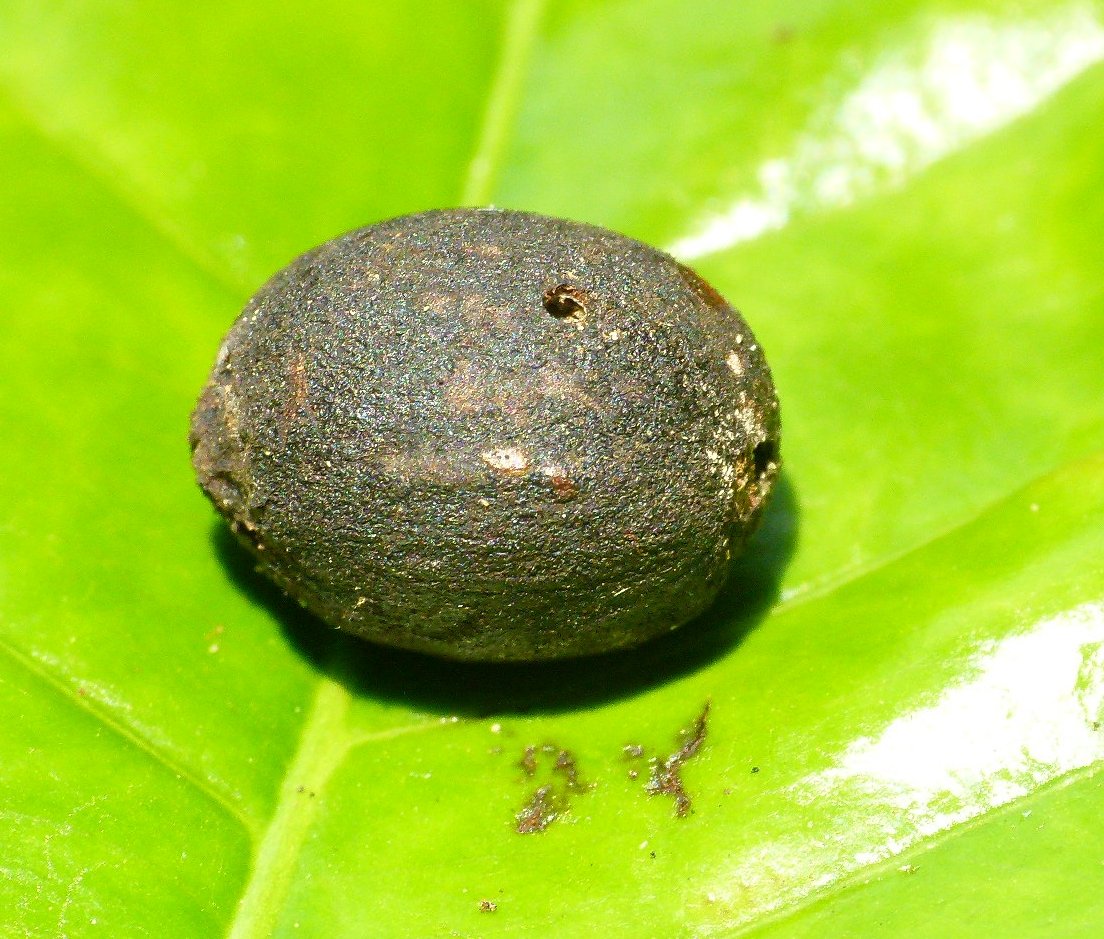
Hawaii was the last coffee region without rust. Spores were caught in traps on Maui in February 2020; the disease was confirmed on plants at Haʻikū, Maui, at the end of October 2020, and on Hawaiʻi Island at Hōlualoa, in Kona, on 10 November; samples from Hilo were negative (Hawaii Department of Agriculture, 2020). By July 2021 it was on every major coffee island. The genetics of the Hawaiian rust match a type common in Central America and Jamaica, and wind patterns make an airborne arrival unlikely, so imported plants or material are the probable route (Ramírez-Camejo, 2022). Rust came on top of the coffee berry borer, a 2 mm beetle that lays its eggs inside the bean, which reached Hawaii Island in 2010 (Chapman and others, 2015). The borer had in fact reached US soil first in Puerto Rico, confirmed at San Sebastián on 20 August 2007 (NAPPO), where rust had been recorded since 1989. Drought, rust and borer together cut Hawaii’s green coffee to 3.4 million pounds in 2023–24 (Hawaii Department of Agriculture).
Climate change and coffee’s future
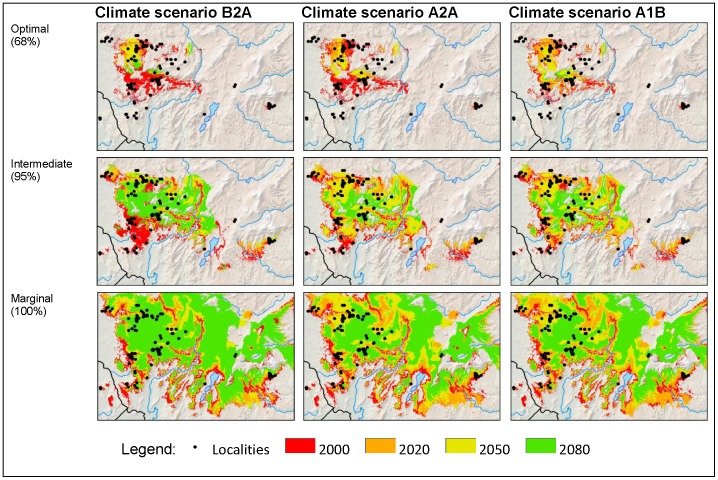
The models. “Climate change will reduce the global area suitable for coffee by about 50% across emission scenarios” by 2050, according to Bunn and colleagues’ “A bitter cup” — a figure for arabica and robusta together, worst at low latitudes and altitudes, with Brazil and Vietnam among the losers and some gains in East Africa and Asia, partly in forest (Bunn and others, Climatic Change, 2015). In Ethiopia, 39 to 59 percent of today’s growing area could become unsuitable by the end of the century, but moving coffee uphill while protecting forest could quadruple the suitable area (Moat and others, Nature Plants, 2017). At least 60 percent of all wild coffee species are threatened with extinction (Davis and others, 2019). These are models of suitable land, not forecasts of production, and nothing in them says coffee will be extinct by 2050.
Robusta is not a safe fallback. Ten years of yields from 798 farms in Southeast Asia showed robusta does best below a mean annual temperature of about 20.5 °C, far cooler than assumed, and loses about 14 percent of its yield for each degree of warming above its optimum (Kath and others, Global Change Biology, 2020). The other species that might help are on New Coffee Species.
Weather already moves the price. The frosts of 20 July 2021 in Brazil hit 150,000 to 200,000 hectares, about 11 percent of the country’s arabica area, and sent arabica to its highest price since 2014 (Reuters via Al Jazeera, 2021); frost kills leaves and branches, so the main loss falls on the following year’s crop. Successive weather-hit Brazilian crops and a robusta shortfall in Vietnam drove arabica above $4 a pound in February 2025 and to a new record of $4.3795 on 23 October 2025 (Bloomberg, 2025). Rust was not a main cause of the 2025 spike. Prices are on The Coffee Market.
What farms are doing
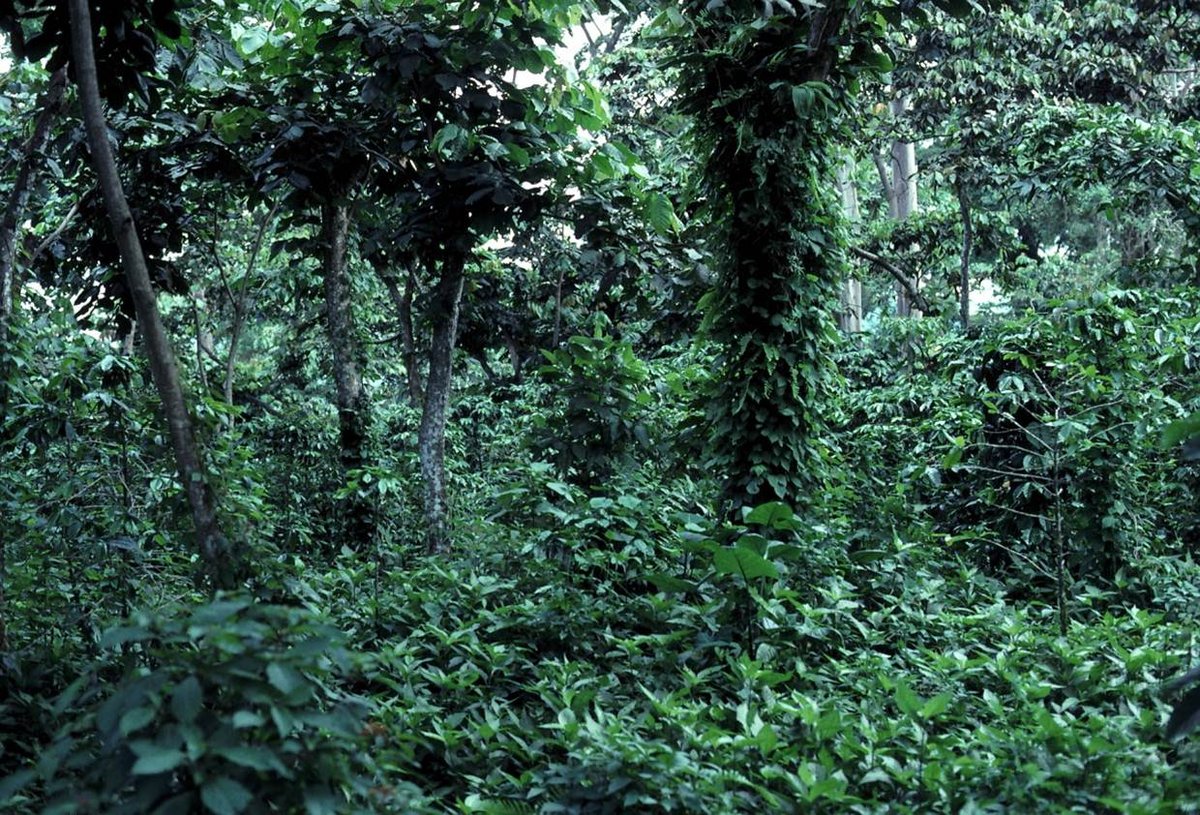
- Resistant varieties first, and renovation of old trees.
- Care: fertiliser, pruning and timely spraying, which collapse when prices are low.
- Shade. It cools the leaves by as much as 6 °C but keeps them wetter, and its effects on rust work both ways; the balance “is therefore difficult to establish” (Avelino). Shade-grown coffee is not protected from rust.
- Moving uphill. Suitable zones move up as it warms, but rust has followed, and the land above is often forest.
- Research. World Coffee Research, founded by the coffee industry in 2012, runs an international trial of more than thirty varieties at sites in over twenty countries (World Coffee Research).
What it means for a home or small roaster
A bad rust year in one country shows up as fewer and dearer lots from that origin; the world price is set mostly by Brazil’s weather and Vietnam’s robusta. Expect Hawaiian coffee to stay scarce and expensive. Nothing about rust affects the safety or roasting of beans already harvested. Rust-resistant varieties on a seller’s list are normal and, well grown, can cup as well as the old ones. Buying green coffee is on Green Coffee and the Line-up.
What is not known
- Ceylon’s exact export and acreage figures year by year; sources conflict.
- How rust crossed the Atlantic to Brazil in 1970.
- How much of the 2012–14 loss was rust and how much normal crop variation, low prices or drought.
- Whether climate change has already raised rust risk anywhere.
- How durable today’s resistance will prove against new races.
- How much migration to the United States rust caused.
- How rust reached Hawaii, and in how many introductions.
Sources
- International Coffee Organization, Report on the outbreak of coffee leaf rust in Central America, ED 2157/13 (13 May 2013).
- Avelino and others, The coffee rust crises in Colombia and Central America (2008–2013), Food Security 7 (2015).
- Talhinhas and others, The coffee leaf rust pathogen Hemileia vastatrix, Molecular Plant Pathology 18 (2017).
- Bebber, Castillo and Gurr, Modelling coffee leaf rust risk in Colombia, Philosophical Transactions of the Royal Society B 371 (2016).
- Nature 14:375, Coffee leaf disease in Ceylon (31 August 1876); NPR, Coffee rust threatens Latin American crop; 150 years ago, it wiped out an empire (2018); University of Exeter, Taking Tea: Sri Lanka; Wikipedia, Harry Marshall Ward.
- Clarindo and others, Timor Hybrid origin (2013); Daily Coffee News, Cenicafé identifies new rust races (2021) and Castillo vs Caturra (2014).
- Aristizábal, Maeda, Matsumoto and Johnson, “Fungicide efficacy and duration of protection against coffee leaf rust on commercial coffee farms in Hawaii”, Crop Protection (2025); Ramírez-Camejo and others, Coffee leaf rust in Hawaii, Journal of Fungi 8 (2022); Hawaii Department of Agriculture, rust confirmed on Hawaiʻi Island (2020) and Coffee Stats 2023–24; Chapman, Messing and Harwood, coffee berry borer in Hawaii (2015); NAPPO, coffee berry borer in Puerto Rico (2007).
- Bunn and others, “A bitter cup”, Climatic Change 129 (2015); Moat and others, Ethiopia’s coffee and climate change, Nature Plants (2017); Davis and others, High extinction risk for wild coffee species, Science Advances (2019); Kath and others, “Not so robust”, Global Change Biology (2020).
- Dupre, Harvey and Holland, Coffee leaf rust and smallholder farmers in Guatemala, World Development (2022).
- Reuters via Al Jazeera, Unusual cold weather in Brazil (2021); Bloomberg, Coffee prices reach record (2025); World Coffee Research, International Multilocation Variety Trial.
Comments (0)