Coffee · 34 of 64
Iced and Whipped Coffees: Frappé, Freddo, Dalgona and Their Cousins
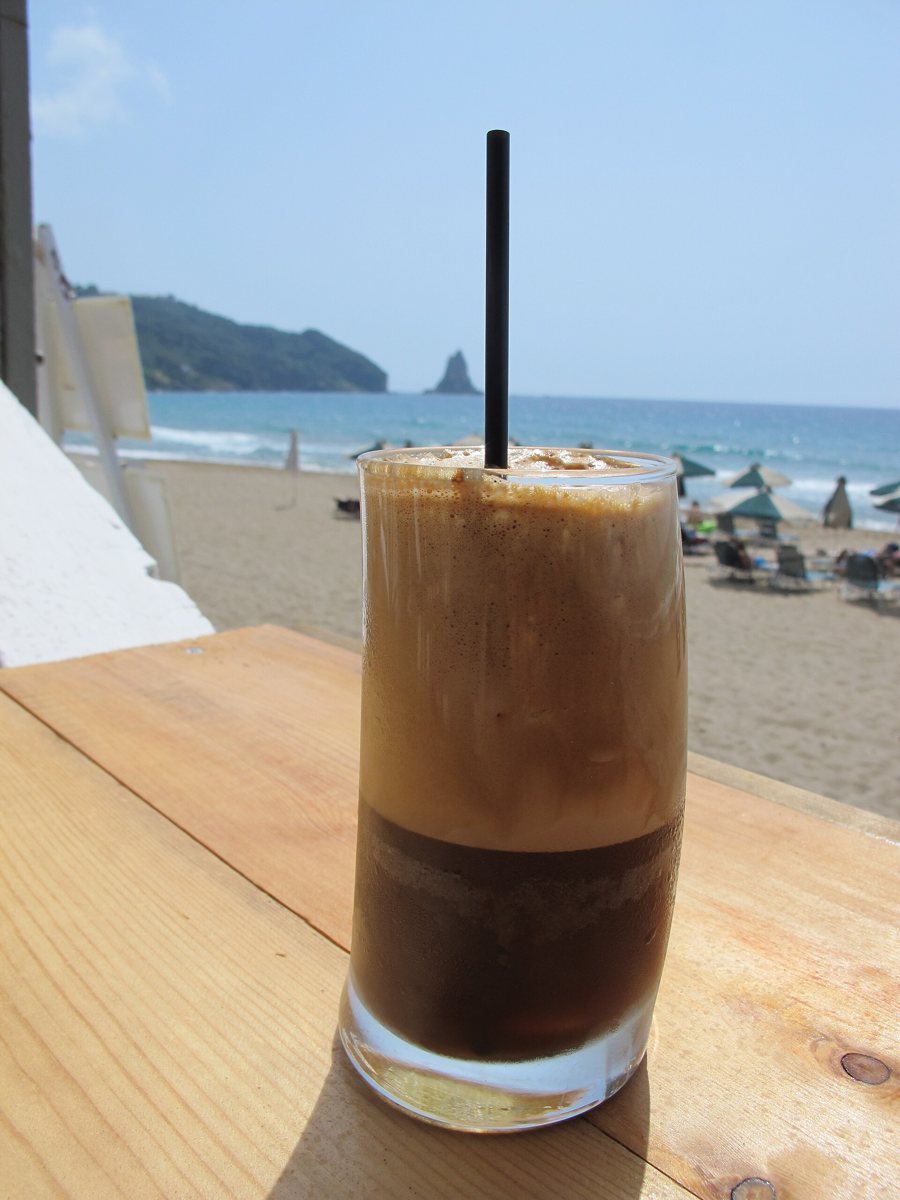
Most of the world’s cold coffee is brewed hot and cooled, or steeped cold; both are on Iced Coffee and Ice. This page is about a different family: coffees that are shaken or whipped until they foam, and the iced drinks that grew up around them.
The family has one surprising member at its centre. The most famous foams are made with instant coffee, not espresso. Greece’s frappé, India’s beaten coffee and the whipped coffee the internet called dalgona in 2020 all depend on dissolving a lot of instant in very little water, which brewed coffee cannot do. Espresso has its own shaken drinks, the Greek freddo and the Italian shakerato, and the foam on those comes from shaking with ice.
The short version
| Question | Answer |
|---|---|
| What is a frappé? | Greek iced coffee: instant coffee, sugar and a little cold water shaken into a thick foam, then topped up with water and ice. Nestlé dates it to the 1957 Thessaloniki International Fair. |
| And a freddo? | A double espresso shaken hard with ice and poured over fresh ice (freddo espresso), or the same topped with cold whipped milk (freddo cappuccino). Greek, from the early 1990s. |
| What is dalgona coffee? | Instant coffee, sugar and hot water whipped stiff (1:1:1) and spooned onto milk. The name is Korean, from January 2020; the drink is older, in Macau and in India. |
| Why does only instant whip? | Concentration. A dalgona has about 6 g of coffee solids in 30 ml of water; a cup of instant has about 1 g in 250 ml. Brewed coffee is far too dilute to hold a foam. |
| Does the sugar matter? | Yes. It thickens the liquid so the bubbles drain slowly. Without sugar the foam falls in minutes. |
| Other cousins? | Italy’s caffè shakerato, Vietnam’s coconut coffee, Thailand’s oliang, Japanese iced coffee, Australian and German iced coffee with ice cream. |
| Can I make them? | Yes: Frappé, Freddo Espresso, Dalgona, Beaten Coffee, Coconut Coffee, Shakerato. |
The Greek frappé
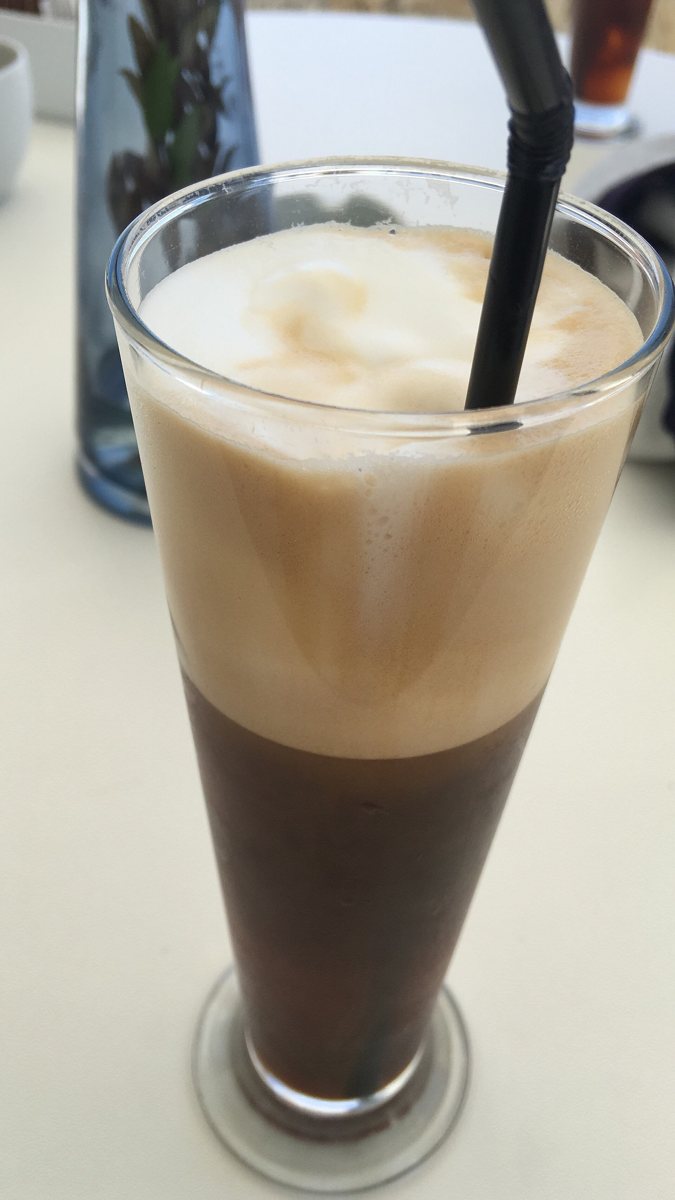
The story. Nestlé’s own account is that the frappé was invented at the Thessaloniki International Fair in 1957 by Dimitris Vakondios, a Nestlé employee, who had no hot water and “mixed the instant coffee granules with cold water and ice cubes in a shaker” (Nescafé; Wikipedia). It is the company’s story, and it is the one told everywhere. Secondary accounts add that he worked for Andreas Dritsas, Nestlé’s Greek distributor, that the shaker was one meant for Nesquik, and that early promotional recipes added evaporated milk and vanilla ice cream before the plain Nescafé, sugar and water version settled in (I Need Coffee). One Greek hotel’s history names “Giannis Dritsas” as the man at the stand instead.
The name is French, frappé, “chilled” or “struck”, the same word as in a New England frappé, which is a milkshake (Glossary). In Greece and Cyprus the frappé became the summer coffee for decades, and the 2004 Athens Olympics carried it abroad (Wikipedia).
Ordering one. A frappé is ordered by its sugar:
| Order | Sugar | Per 2 teaspoons of coffee |
|---|---|---|
| Skétos | None | 0 |
| Métrios | Medium | 1 or 2 teaspoons |
| Glykós | Sweet | 2 to 4 teaspoons |
The numbers differ by source (Wikipedia gives 2 and 4; Lemon & Olives gives 1 and 2 or more): the code is a ratio, and each café sets its own. Me gála adds milk. The same three words order a Greek coffee, the hot one made in a briki.
How it is made. Coffee, sugar and a tablespoon of cold water go into a shaker or a tall glass and are shaken, or whipped with a small electric frappé mixer, for 20 to 30 seconds, until the glass is half full of firm foam. Ice goes in, then cold water to the top, and milk if wanted; it is drunk through a straw, slowly. The coffee is usually Nescafé; cooks who make beaten coffee report that Greek Nescafé whips best (Pastry Chef Online). Recipe: Greek Frappé.
Freddo espresso and freddo cappuccino
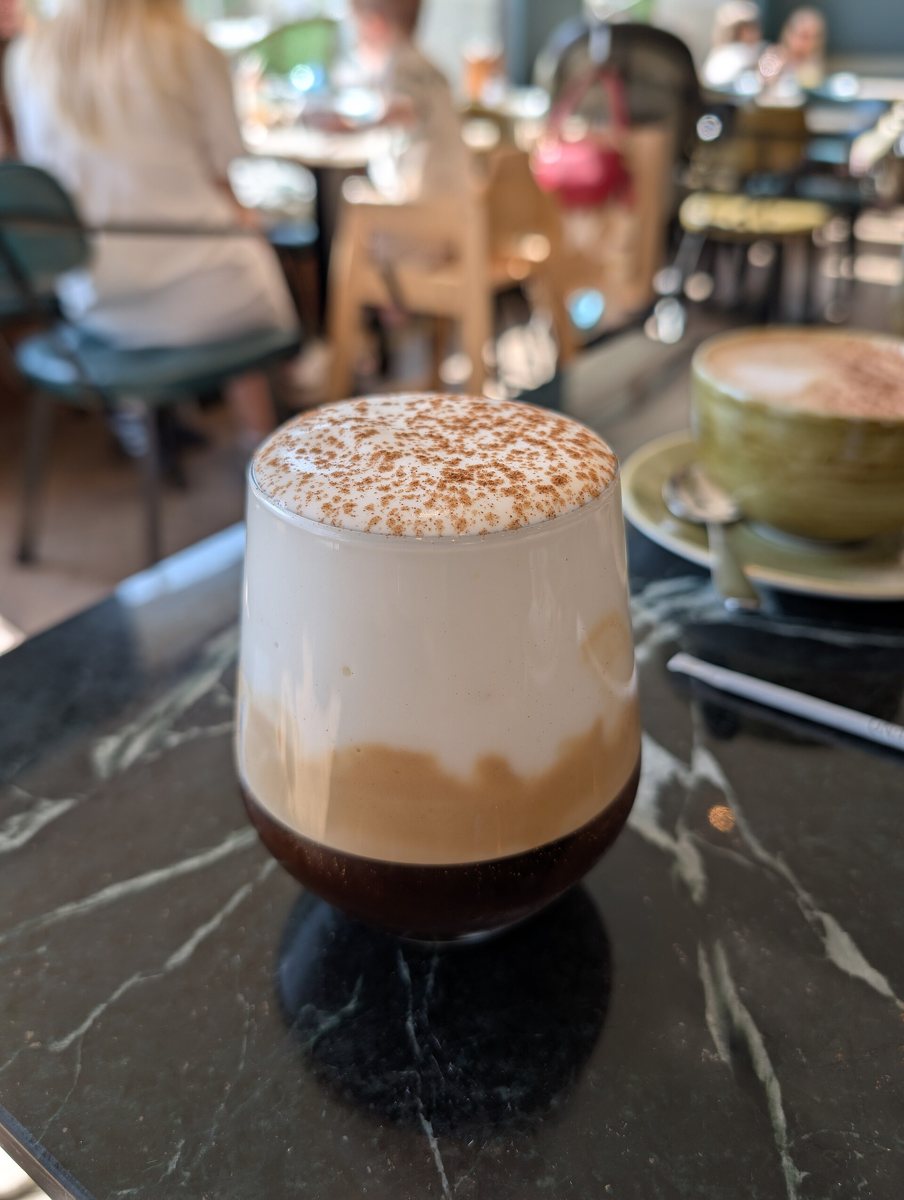
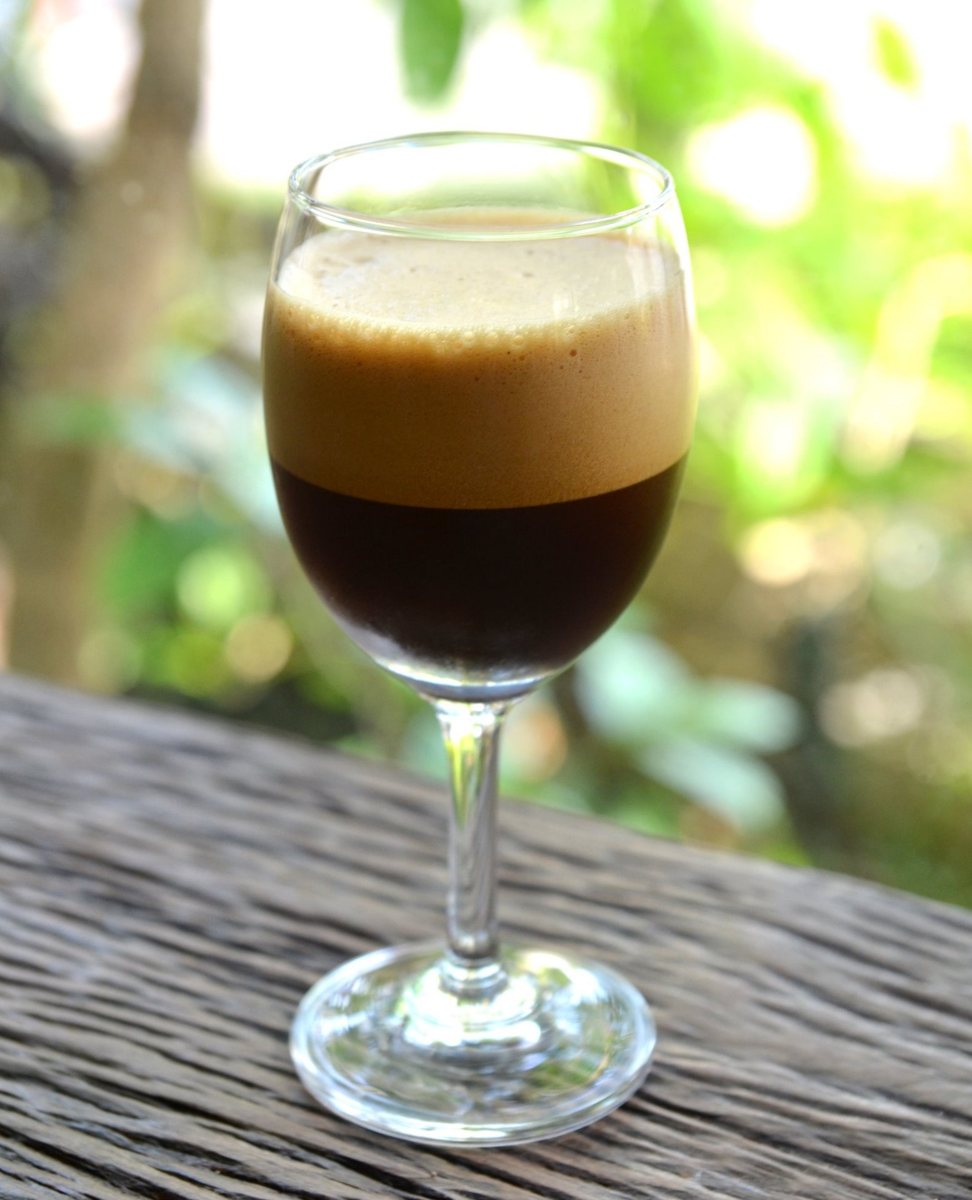
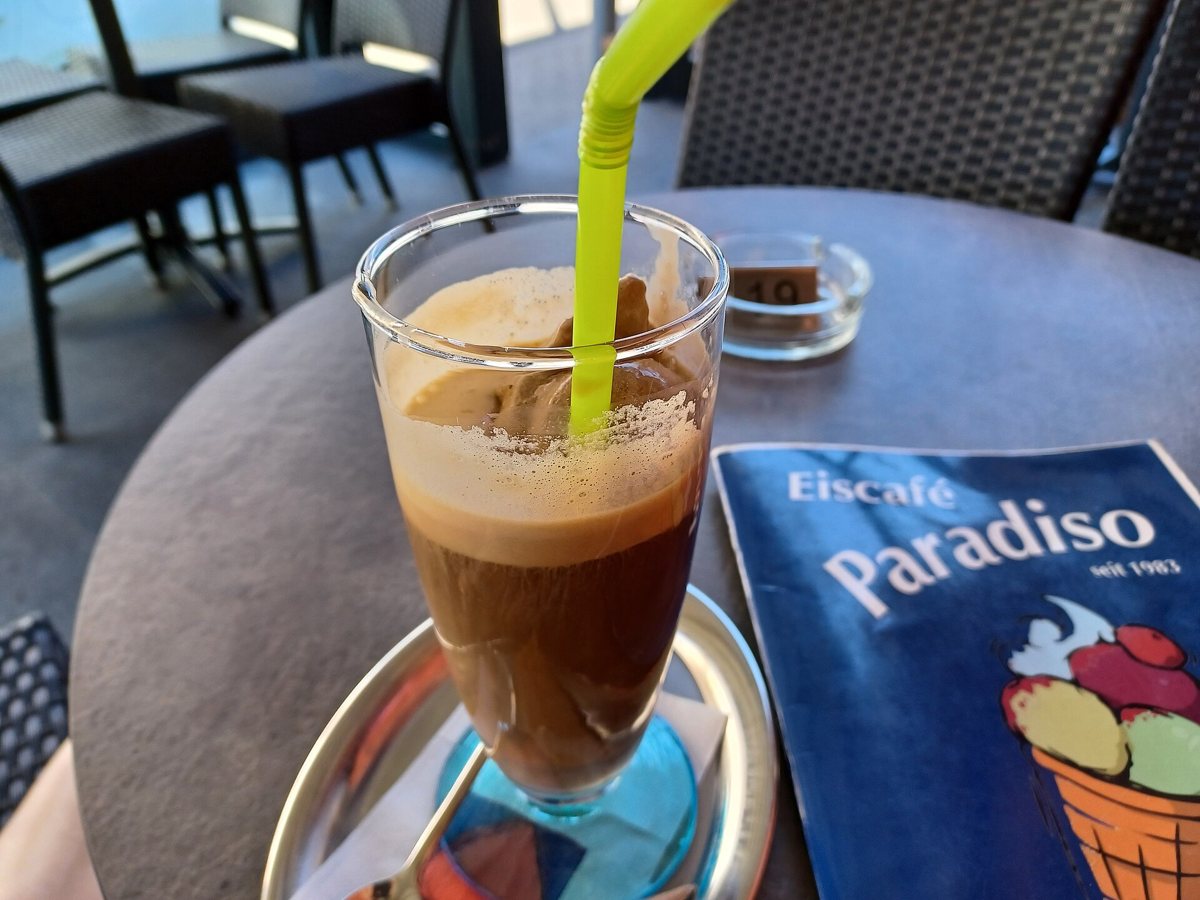
In Greece the frappé has been overtaken by the freddo. A freddo espresso is a double espresso shaken hard with ice in a metal mixer, then poured over fresh ice; shaking cools it in seconds and leaves a fine, pale foam on top. A freddo cappuccino is the same, topped with cold milk whipped into a thick foam, afrógala (“milk foam”) (To Vima, 2026).
To Vima credits Yiannis Iosifides of Kafea Terra, the company that brought illy coffee to Greece in 1988, as “most widely accepted” as its inventor, made to win back espresso sales that fell every summer. The usual date is 1991, in Athens, but that rests on Wikipedia and blogs. The head of the chain Coffee Island told the paper that the two freddos are 70 to 80 percent of all cold coffee drunk in Greece, an industry estimate. Recipe: Freddo Espresso.
Whipped coffee: dalgona, Macau and India
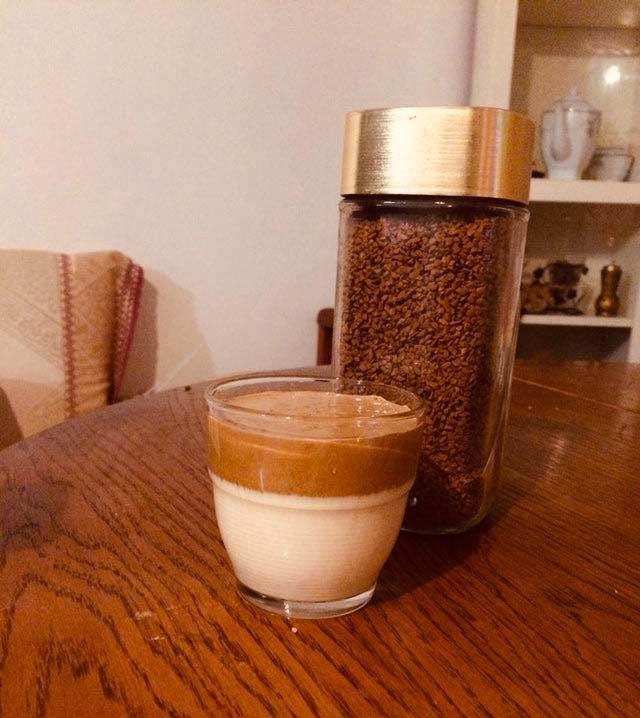
The name. In January 2020 the Korean actor Jung Il-woo made a whipped coffee on the KBS cooking show Stars’ Top Recipe at Fun-Staurant. He had drunk it in Macau, and he likened the taste to dalgona, a Korean honeycomb toffee sold by street vendors (Wikipedia; Matador Network, 2020; Matador says the comparison came from a panellist). Two months later, with Korea and then the world at home in the pandemic, it spread across social media as the dalgona coffee challenge. There is no toffee in it.
Macau. The coffee Jung drank came from Hon Kee Café, a roadside café in Coloane, Macau, opened in 1990 by Leong Kam Hon, a former shipwright from the boatyards at Lai Chi Vun. Leong beats instant coffee and sugar by hand, about 400 strokes, and says he learned it from a foreign couple who showed it to him between 1995 and 1997, during the Macau Grand Prix. The film star Chow Yun-fat drank it there in 2004, and it is sold locally as “Chow Yun-fat coffee” (Macao News, 2021). Other accounts date the couple’s visit to 1997 or the early 2000s.
India and Pakistan. Long before 2020, Indian and Pakistani households made beaten coffee: instant coffee and sugar beaten with a spoon and a few drops of water into a pale, fluffy paste, then hot milk poured onto it so the foam rises to the top. It is sometimes called phenti hui coffee, “whipped coffee” (Wikipedia, citing HuffPost, 2017). Dalgona turns this upside down: the foam goes on top of cold milk instead of under hot. When either began is not recorded. Recipe: Beaten Coffee.
The ratio. Every version uses equal volumes of instant coffee, sugar and hot water, usually 2 tablespoons of each, whipped until it holds stiff peaks: 10 to 15 minutes with a spoon, 2 to 5 with an electric whisk or milk frother. Recipe: Dalgona Coffee.
Why instant coffee foams
Three things hold a coffee foam up, and instant coffee has all of them in quantity:
| What | What it does | Source |
|---|---|---|
| Concentration | A dalgona dissolves about 6 g of instant in 30 ml of water, roughly 25 times a cup’s strength. Brewed coffee, at about 1.15 to 1.45% dissolved solids (Brewing), is far too dilute; the foam needs a thick, concentrated liquid in the bubble walls. | Food Crumbles, 2022 |
| Surface-active molecules | Coffee’s proteins, larger carbohydrates and the brown melanoidins formed in roasting gather at the surface of each bubble and stop it merging with the next. | Science Meets Food, 2020, citing Illy and Navarini, Food Biophysics, 2011 |
| Sugar | Raises the liquid’s viscosity so it drains out of the bubble walls slowly; it can double or triple the volume. Without sugar the foam collapses within minutes. | Food Crumbles |
A study of instant-coffee foam at Chalmers University found that tiny undissolved particles in the coffee, those larger than about 0.8 micrometres, strengthen the foam (Gmoser and others, European Food Research and Technology, 2017). Home cooks report that brands differ: Greek Nescafé whips well, and some very fine instants, such as Starbucks VIA, do not (Pastry Chef Online).
It is often said that whipped coffee is “impossible” with ground coffee. A more accurate statement is that brewed coffee is far too weak: espresso, several times stronger than filter coffee, does foam when shaken, which is what a freddo and a shakerato are.
The cousins
| Drink | Where | What it is | Source |
|---|---|---|---|
| Caffè shakerato | Italy | Espresso with sugar or sugar syrup, shaken hard with ice in a cocktail shaker and strained into a chilled stemmed glass, under its own foam. Recipe | Italian Wikipedia, citing L’Italia del caffè (Touring Club, 2004) |
| Caffè in ghiaccio | Salento, Italy | Espresso poured over ice, with sugar or almond milk | Wikipedia |
| Coconut coffee (cà phê cốt dừa) | Vietnam | Strong phin coffee under a slush of coconut cream, condensed milk and ice. The Hanoi chain Cộng Cà Phê (founded 2007) made it famous; where it began is not established. Recipe | Local Vietnam; World Coffee Portal, 2023 |
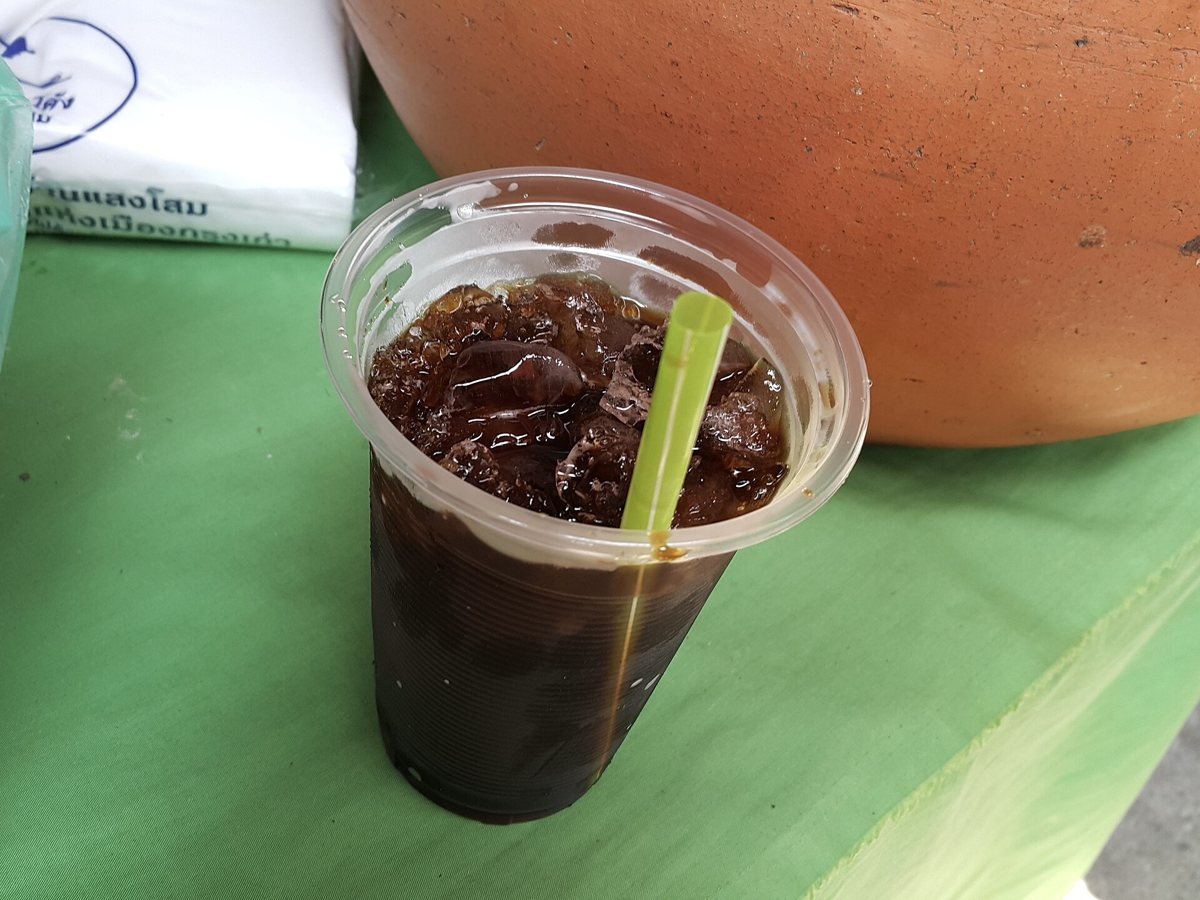
| Oliang | Thailand | Black iced coffee from robusta roasted with grains and seeds (corn, soybeans, rice, sesame), brewed in a cloth sock and sweetened; served black or with milk | Wikipedia |
| Japanese iced coffee | Japan | Strong coffee served iced with gum syrup and milk, in coffeehouses since the 1920s; brewed hot onto ice, the method now called flash brew. UCC sold the first canned coffee in 1969 | Wikipedia; Iced Coffee and Ice |
| Eiskaffee | Germany | Cold filter coffee poured over vanilla ice cream and topped with whipped cream, a café dessert | Wikipedia |
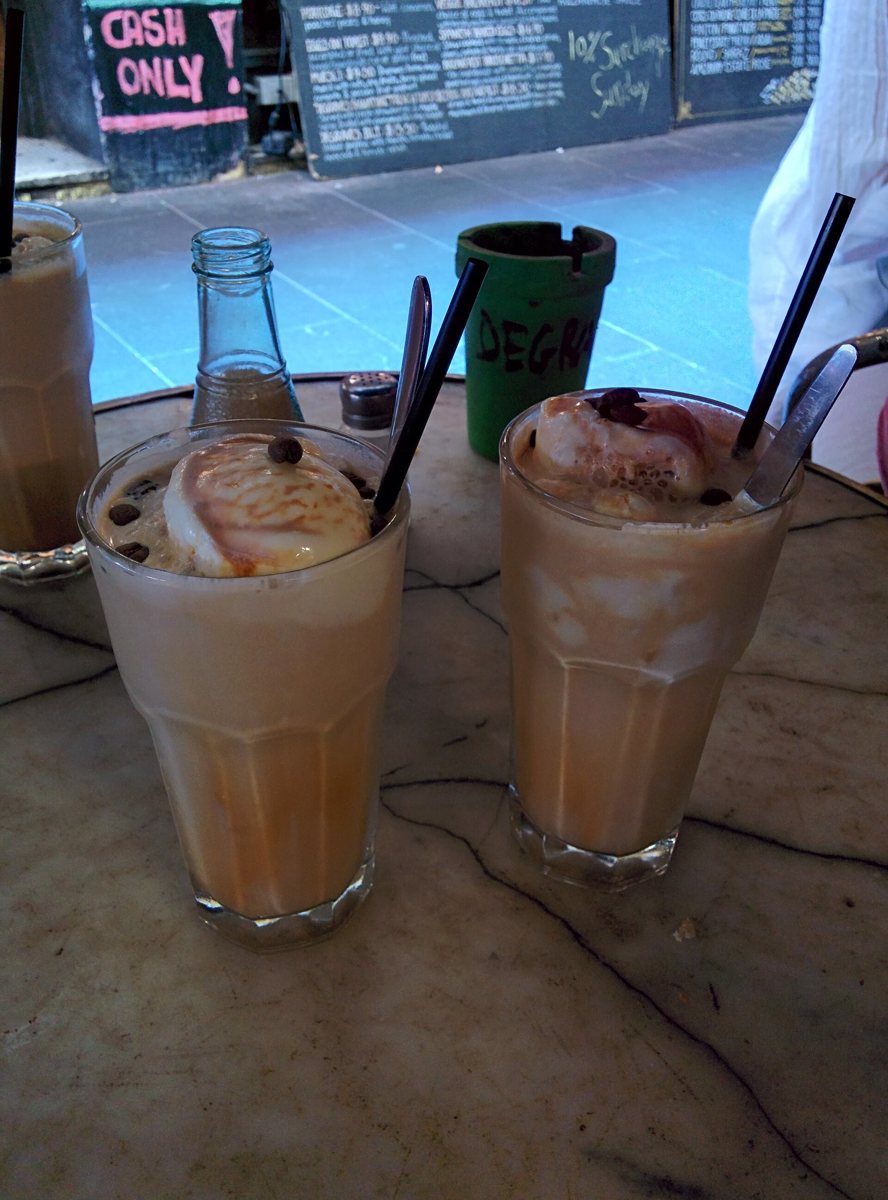
| Australian iced coffee | Australia | Coffee and cold milk, often with ice cream and cream. In South Australia, Farmers Union Iced Coffee is reported to outsell Coca-Cola | Wikipedia |
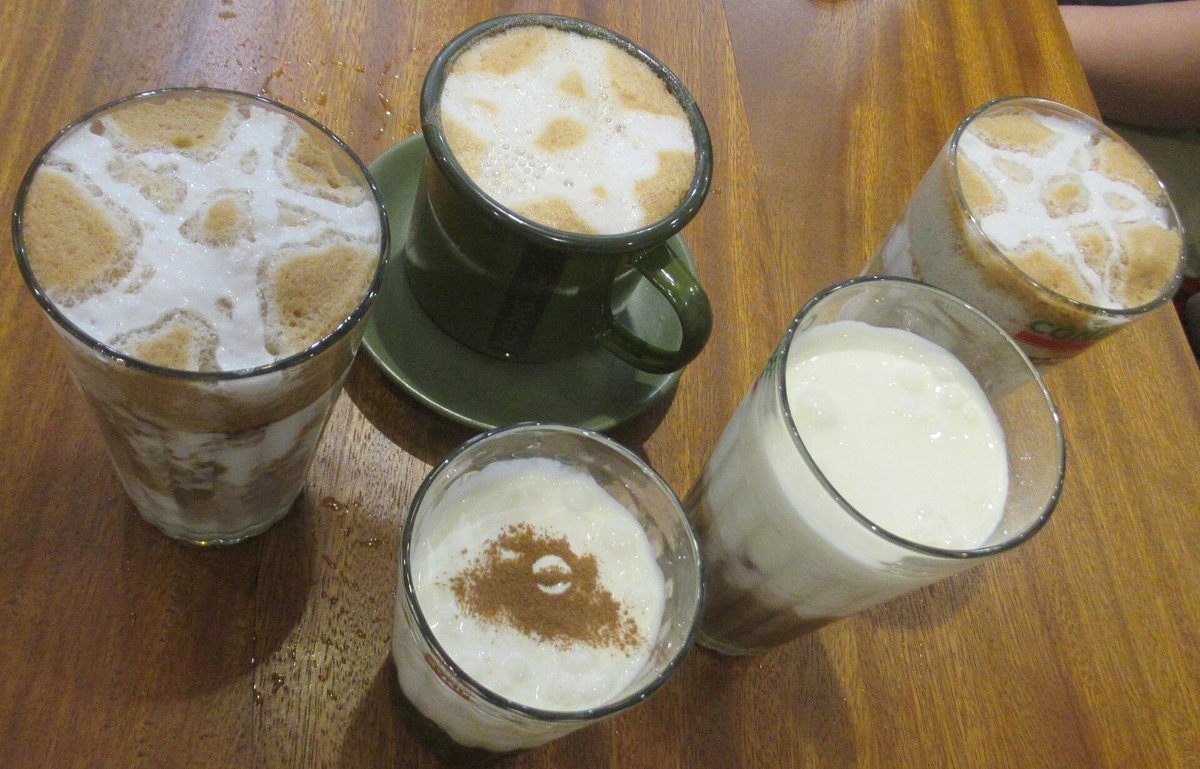
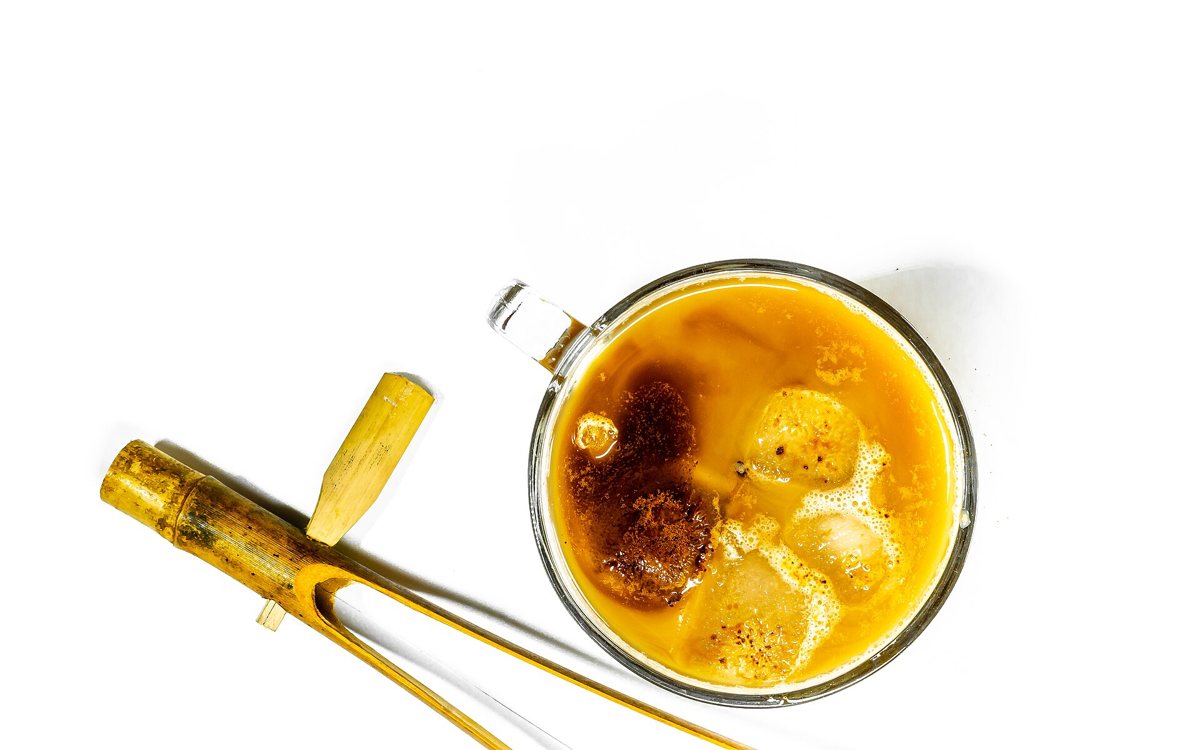
| Indian cold coffee | India | Instant coffee dissolved in a little warm milk, then blended or shaken with cold milk, sugar and ice | Home recipes; see the photo below |
| Frappuccino | United States | A blended iced coffee drink created at George Howell’s Coffee Connection near Boston, from New England frappé (milkshake) and cappuccino. Starbucks bought the company in 1994 and the name with it; its version came out in 1995, bottled with Pepsi in 1996 | Wikipedia; Mazagran |
| Café del tiempo | Valencia, Spain | Hot coffee poured over ice and lemon at the table | Mazagran |
Making them
The recipes give quantities. Five things that apply to all of them:
- The brand of instant matters for foams. Greek Nescafé is the usual choice; if one brand will not whip, try another.
- Sugar is part of the structure, not only the taste. Reduce it and the foam is looser and shorter-lived; a sugar-free whip will not hold for long.
- Shake espresso while it is hot. Shaking with plenty of ice cools it fast and makes the foam; pour it over fresh ice, so the drink is not diluted by the half-melted shaking ice.
- A jar works as a shaker. A sealed jar with a tight lid, or a protein shaker bottle, does the job of a cocktail shaker or frappé mixer. Hold the lid: hot liquid shaken in a closed jar builds a little pressure.
- Whipped coffee keeps. The whipped base holds in a covered jar in the refrigerator for a few days (Pastry Chef Online); stir before spooning.
Caffeine follows the amount of coffee. An 8 fl oz cup of instant coffee averages about 62 mg (USDA), usually from about a teaspoon of powder, so a frappé’s 2 teaspoons is roughly two cups’ worth, and a dalgona’s 2 tablespoons is several cups’ worth, divided between however many glasses it tops. A freddo espresso made with a double shot carries what a double espresso does. See Caffeine and Health.
What is not known
- When the frappé got its name, and whether Vakondios or someone else first shook it; the Nestlé account is the only one with a name and date.
- The first freddo, and the year; 1991 is unsourced.
- When Indian beaten coffee and Macau’s hand-beaten coffee began, and whether one came from the other.
- Where Vietnamese coconut coffee started; Hai Phong is suggested, without evidence.
- The year the Coffee Connection launched the Frappuccino.
Sources
- Nescafé, Shake your summer (the company’s account of 1957).
- Wikipedia: Frappé coffee, Dalgona coffee, Beaten coffee, Iced coffee, Oliang, Frappuccino; Italian Caffè shakerato.
- I Need Coffee, The history of Greek-style frappé.
- Lemon & Olives, Greek frappé.
- To Vima, The freddo espresso: a modern Greek cultural phenomenon (11 May 2026).
- Matador Network, Dalgona coffee origin (2020).
- Macao News, Whipped to perfection: the story behind Hon Kee Café (2021, updated 2023).
- Food Crumbles, Why dalgona whipped coffee is so foamy (2022).
- Science Meets Food, Dalgona coffee (2020).
- Gmoser and others, Effect of dispersed particles on instant coffee foam stability, European Food Research and Technology 243 (2017).
- Pastry Chef Online, Beaten coffee.
- Local Vietnam, Vietnamese coconut coffee; Vicky Pham, Vietnamese iced coconut coffee.
- World Coffee Portal, Cộng Cà Phê set for Canada debut (2023); Vietcetera, Cộng Cà Phê brews beyond Asia (2023).
Comments (0)