Coffee · 16 of 64
Coffee Liqueurs, Irish Coffee and Coffee Cocktails
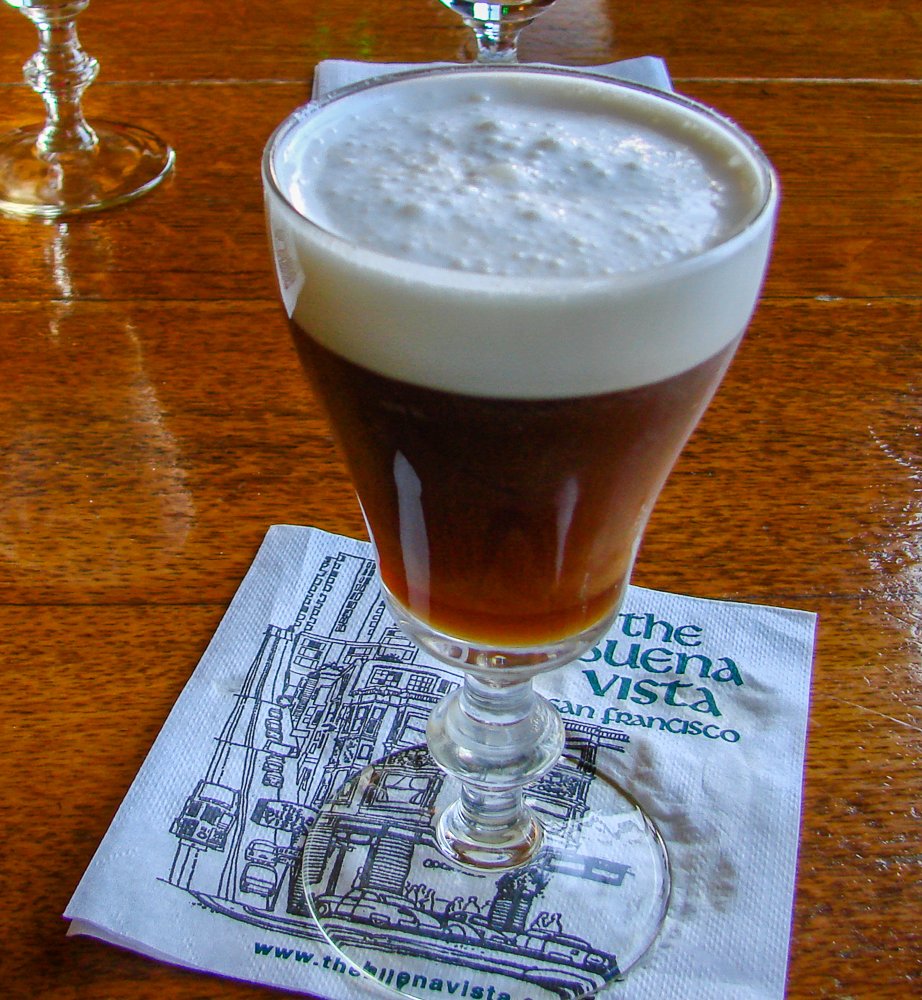
Coffee and spirits meet in two ways. The hot way is coffee with something in it: Irish coffee under its float of cream, a German Pharisäer with rum hidden beneath whipped cream, a flaming Rüdesheimer Kaffee, New Orleans’ café brûlot, Portland’s Spanish coffee, an Italian caffè corretto. The cold way is the coffee liqueur, coffee and sugar in a spirit, sold as Kahlúa, Tia Maria or Mr Black and made at home in a jar, and the cocktails built on it: the Black Russian, the White Russian and the Espresso Martini.
Nearly every one of these drinks has an origin story, and nearly every story is better than its evidence. Irish coffee was invented “one winter night in 1943” for stranded passengers at a flying-boat base in Ireland; the night is a legend, but the drink is in an American newspaper by December 1945. The Pharisäer’s story about a pastor and a christening cannot be verified; its court case, over how much rum one needs, is on file. The Espresso Martini was made for a model who wanted something to “wake me up, then f*** me up”, and was not called an Espresso Martini until 1997.
The short version on the Additions page started this; the coffee-syrup cocktails are on Coffee Milk and Coffee Syrup.
The short version
| Drink | What it is | Where and when |
|---|---|---|
| Irish coffee | Hot coffee, Irish whiskey, sugar, cream floated on top | Foynes and Shannon, Ireland, 1940s; in print by December 1945 |
| Pharisäer | Coffee, sugar, rum, whipped cream, not stirred | Nordstrand, North Frisia, Germany; legend says 1872 |
| Rüdesheimer Kaffee | Asbach brandy flamed with sugar, coffee, whipped cream | Rüdesheim am Rhein, 1957 |
| Café brûlot | Brandy and orange liqueur flamed with spices and citrus, put out with coffee | Antoine’s, New Orleans, late 19th century |
| Spanish coffee | Flaming 151 rum and triple sec in a sugared glass, then Kahlúa and coffee | Huber’s, Portland, Oregon, 1970s |
| Caffè corretto | Espresso “corrected” with grappa, sambuca or brandy | Italy |
| Carajillo | Coffee with brandy, rum or anís; in Mexico, Licor 43 shaken over ice | Spain; Mexico |
| Kahlúa | Coffee liqueur: Veracruz coffee, rum, sugar, vanilla; 20% | Mexico, 1936 |
| Black Russian | Vodka and coffee liqueur on ice | Ascribed to Brussels, 1949 |
| White Russian | The same with cream | In print 1965 |
| Espresso Martini | Vodka, coffee liqueur, espresso, shaken | London, about 1983 |
Irish coffee
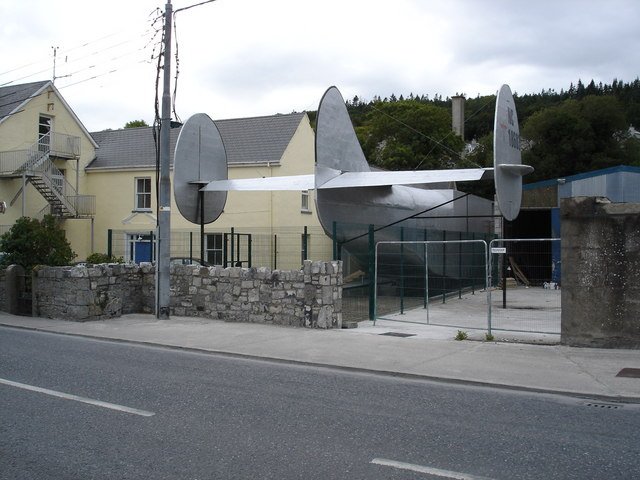
The story. The Foynes Flying Boat & Maritime Museum tells it: “Late one night in the winter of 1943, a flight left Foynes for New York. After flying for several hours in bad weather, the captain decided to return to Foynes.” The chef, Joe Sheridan, made the cold passengers hot coffee with whiskey and cream; asked if it was Brazilian coffee, he answered, “no, that was Irish Coffee!” (Foynes museum). The museum introduces it with “The story goes”; it cites no record, and other accounts give 1942 or 1943.
The record. The drink is in print at Shannon Airport, which replaced Foynes as Ireland’s transatlantic terminal, by 9 December 1945, when Washington’s Sunday Star described “Irish or Gaelic coffee—a delectable combination of one part Irish whisky, two parts hot coffee” (Barry Popik). So the drink is a 1940s Shannon one, as tradition says; the stormy night is the story told about it.
Joe Sheridan (1909–1962), from Castlederg in County Tyrone, applied for the Foynes job with “Dear Sir, I’m the man for the job.” He went to the Buena Vista in San Francisco in 1952 and is buried in Oakland (Foynes museum).
San Francisco. The Buena Vista Cafe says it began “on the night of November the 10th in 1952”, when its owner Jack Koeppler challenged the travel writer Stanton Delaplane to re-create the Shannon drink. The taste was wrong and “the cream would not float”. The bar took the problem to “San Francisco’s mayor, a prominent dairy owner”, and settled on cream “aged for 48 hours and frothed to a precise consistency”, floating “as delicately as a swan”, in a “six-ounce, heat-treated goblet” (Buena Vista; KQED). The bar’s claim to have brought the drink to America is disputed: the food writer Clementine Paddleford printed an Irish coffee recipe in the New York Herald Tribune on St Patrick’s Day 1948, four years earlier (KQED).
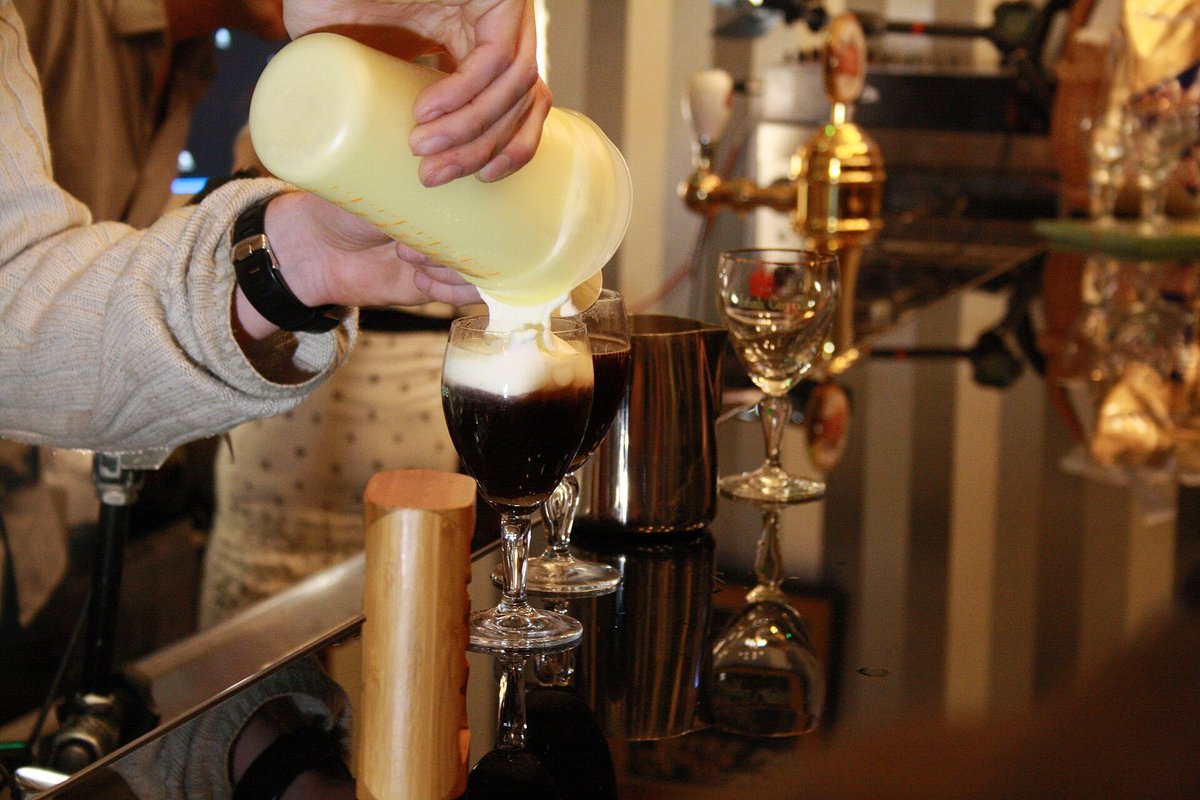
How to make it, and why the cream floats. The International Bartenders Association’s specification: 50 ml Irish whiskey, 120 ml hot coffee, 1 teaspoon sugar, 50 ml chilled fresh cream, the coffee in a warmed glass, the whiskey and sugar stirred in, the cream “carefully poured over the back of a spoon held just above the surface” (IBA). Three things make the float:
- Sugar in the coffee. It makes the coffee denser, so the cream sits on top instead of sinking.
- Thick or lightly whipped cream. Thick double cream poured over a spoon floats on sweet coffee; whipping it just until it thickens (the Buena Vista ages and froths it) makes the float easier. Stiff cream sits in a lump.
- A spoon. Pour slowly onto the back of a spoon at the surface.
Do not stir. The drink is the hot, sweet, whiskey coffee drunk through the cold cream. Recipe: Irish Coffee.
The German coffees
The Pharisäer. On the island of Nordstrand in North Frisia, the story goes, a strict pastor at a christening in 1872 disapproved of drink. His parishioners hid rum in their coffee under a cap of whipped cream, and served his without; when he found out, he cried “Oh, ihr Pharisäer!” (“You Pharisees!”). German Wikipedia, which tells the story, adds that it is “historisch nicht mehr nachweisbar”: it can no longer be verified (German Wikipedia). The drink is strong coffee, sugar, about 4 cl of dark rum and whipped cream, drunk unstirred through the cream. Recipe: Pharisäer.
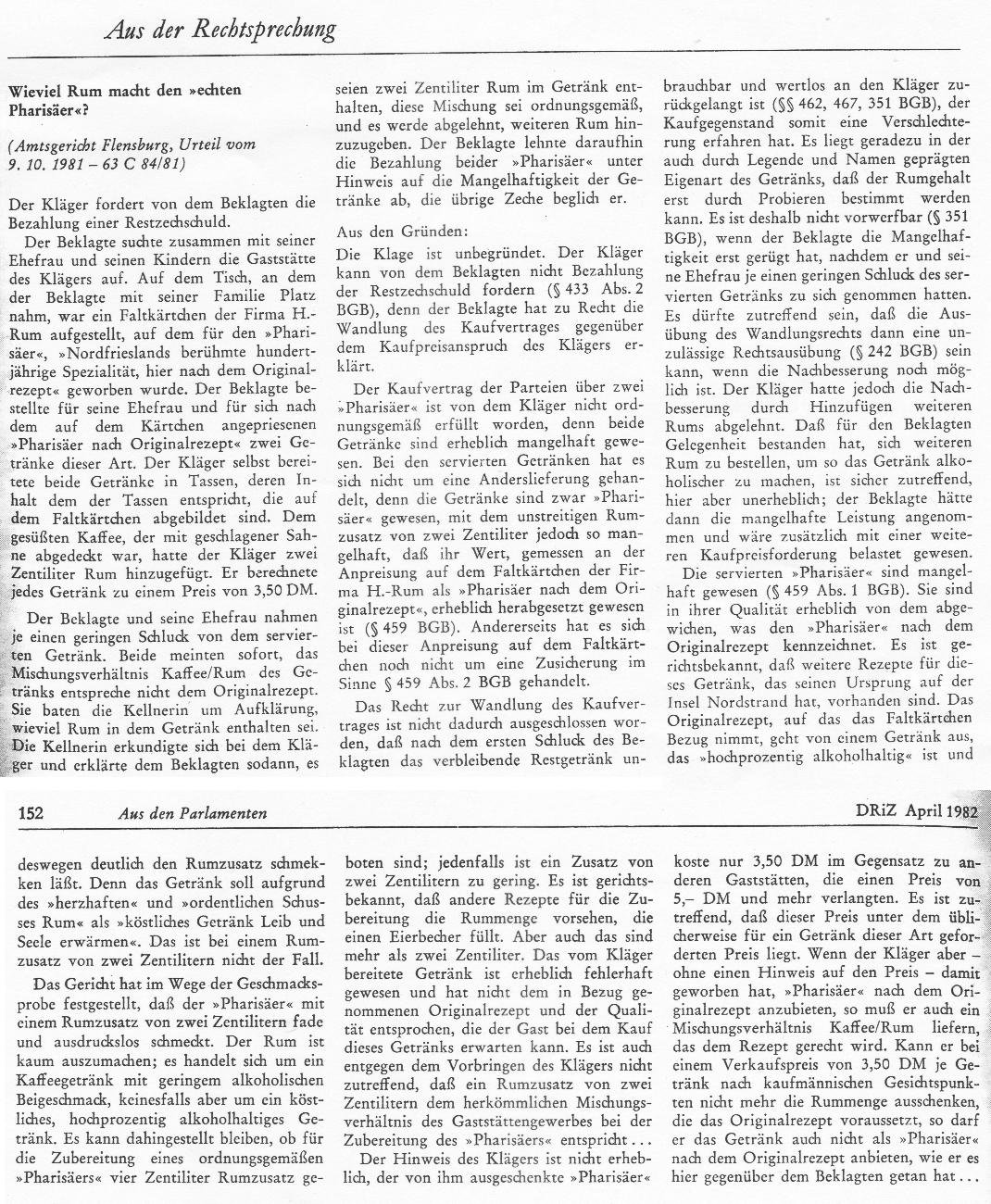
What is documented is the law. On 9 October 1981 the district court in Flensburg ruled (case 63 C 84/81) that a Pharisäer made with only 2 cl of rum was “fade und ausdruckslos”, flat and expressionless, and allowed the customer to cut his bill by 7 marks for two (German Wikipedia).
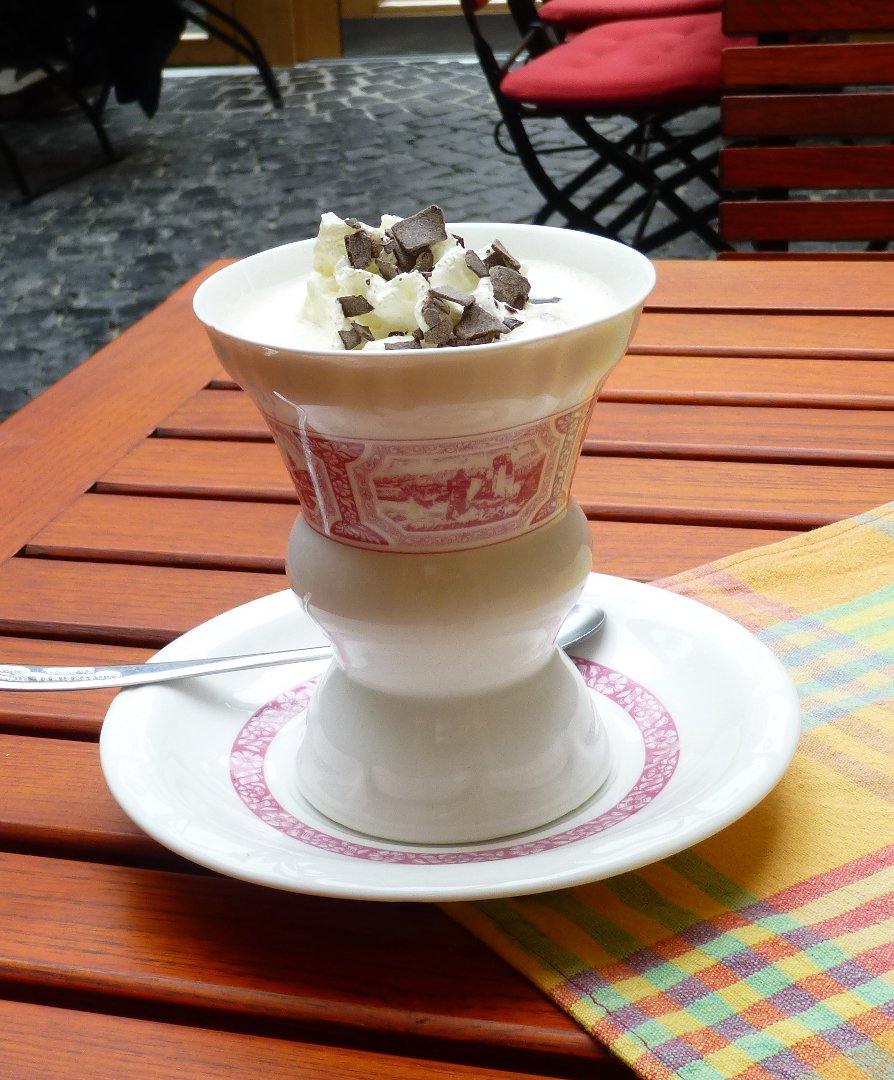
Rüdesheimer Kaffee was invented in 1957 by the German television chef Hans Karl Adam for the brandy maker Asbach, of Rüdesheim am Rhein. The recipe: three sugar cubes and 4 cl of Asbach Uralt brandy flamed together in the special Rüdesheimer cup, about 125 ml of hot black coffee poured in, topped with whipped cream sweetened with vanilla sugar and grated dark chocolate (Wikipedia). Recipe: Rüdesheimer Kaffee.
Flaming coffees in America
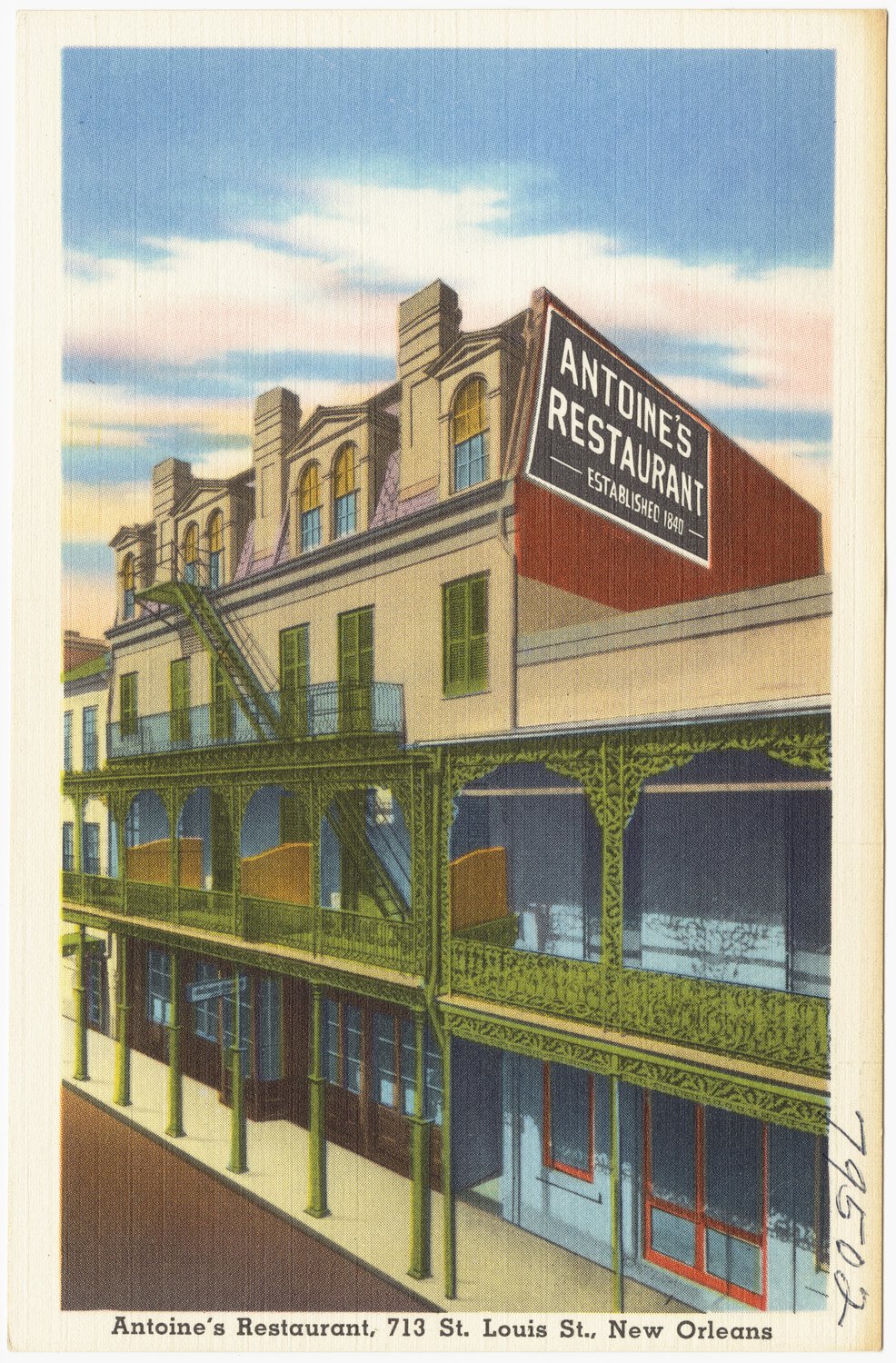
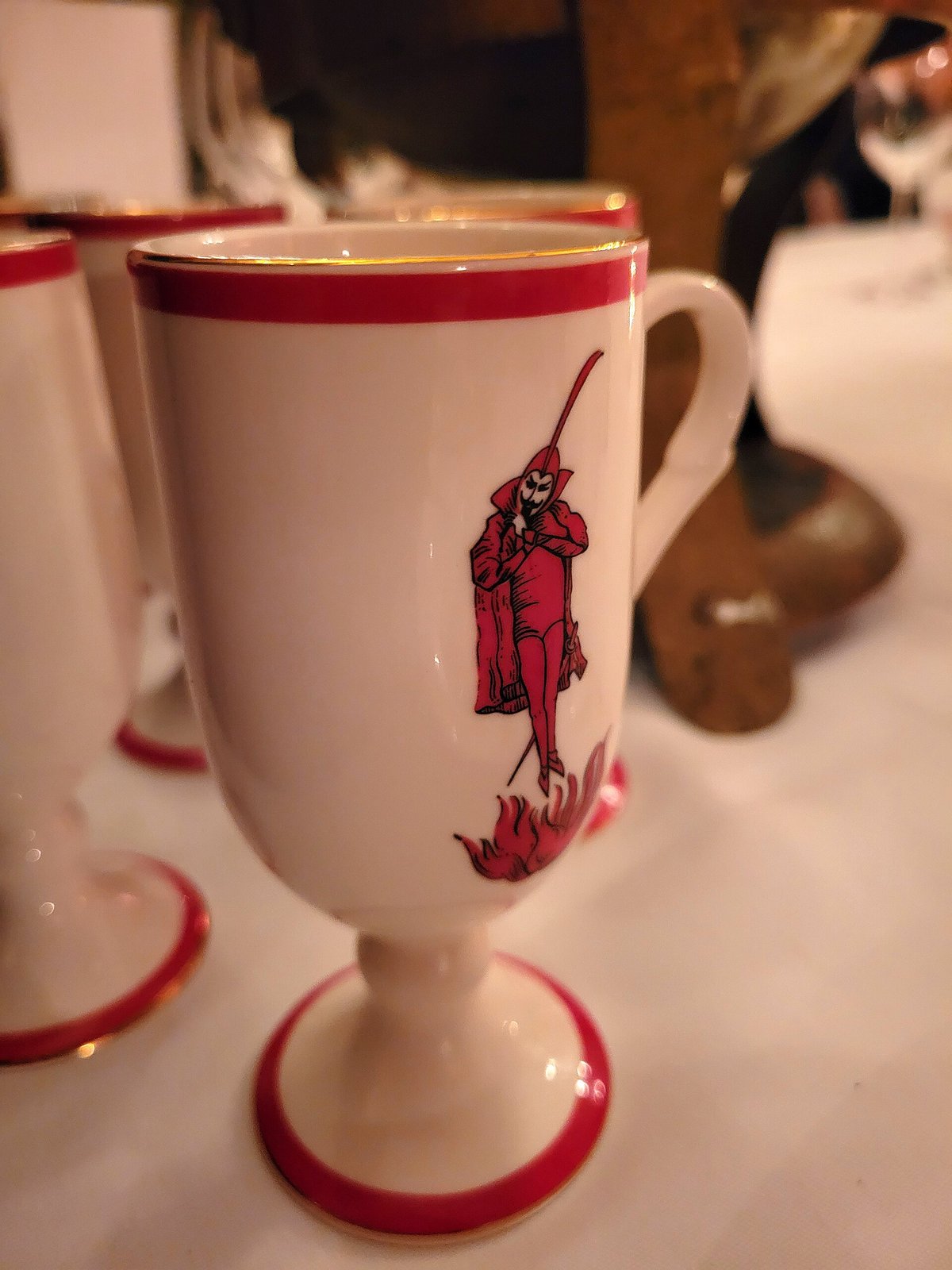
Café brûlot (French brûler, “to burn”) is a New Orleans dinner finale: brandy, orange liqueur, sugar, cloves, cinnamon and citrus peel set alight in a silver bowl, the flames ladled over a clove-studded spiral of orange peel, then put out with hot chicory coffee and served in demitasse cups. Antoine’s credits Jules Alciatore, son of its founder, with the drink, and gives no date (Antoine’s); others say the late 1880s or the 1890s. The bartender Dale DeGroff’s verdict on making it: “basically a firebomb” (Punch). Its coffee is New Orleans chicory coffee.
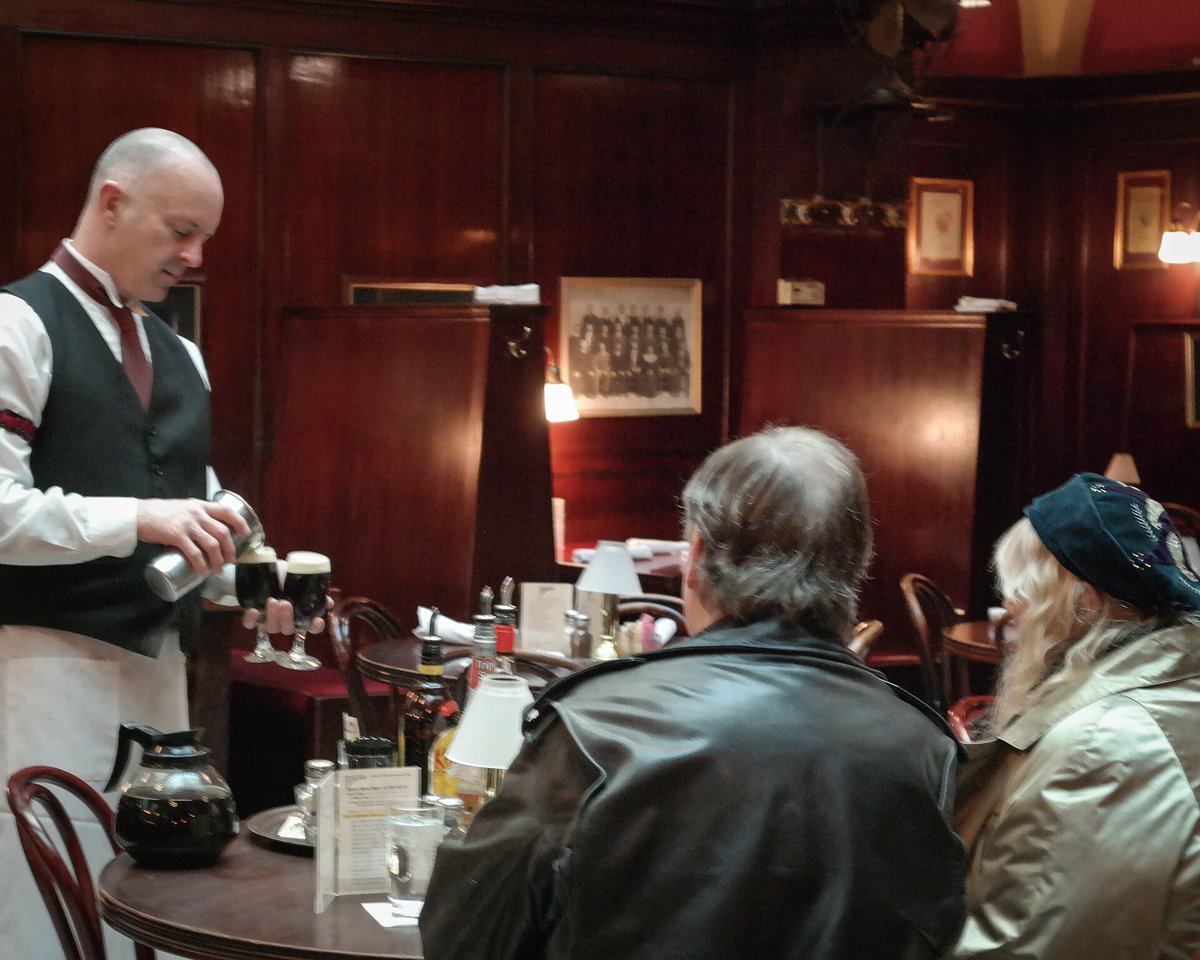
Spanish coffee is Portland, Oregon’s: at Huber’s, the city’s oldest restaurant, a waiter rims a glass with lemon and sugar, sets 151 rum and triple sec alight in it to caramelise the sugar, then adds Kahlúa and coffee and tops it with whipped cream and nutmeg. James Kai Louie learned it at the Fernwood Inn in Milwaukie, Oregon, and adapted it for Huber’s in the 1970s; Huber’s claims to sell more Kahlúa than any bar in the country. Louie died in 2025, at 79 (OPB, 2025).
Europe’s other corrected coffees
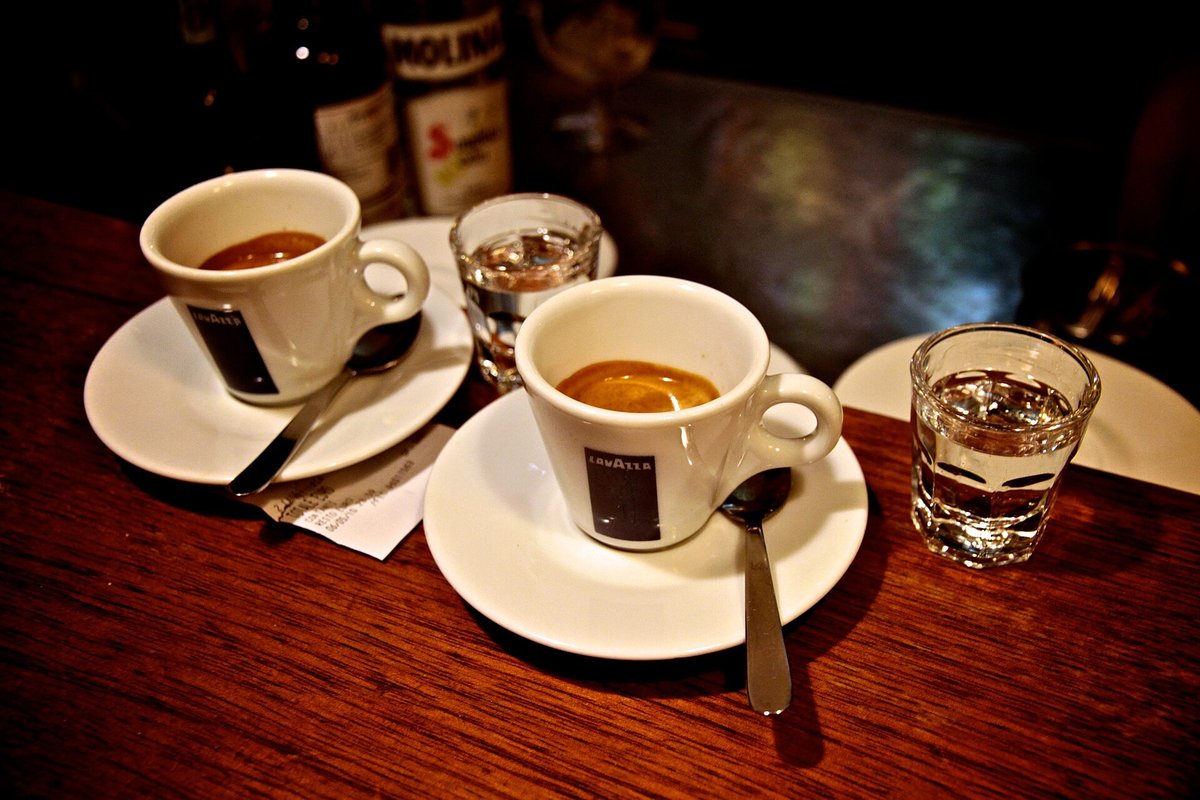
- Caffè corretto (Italy): an espresso “corrected” with a splash of grappa, sambuca or brandy, or with the spirit served beside it. In the Veneto, the rexentin is the spirit swirled round the empty cup and drunk (Wikipedia).
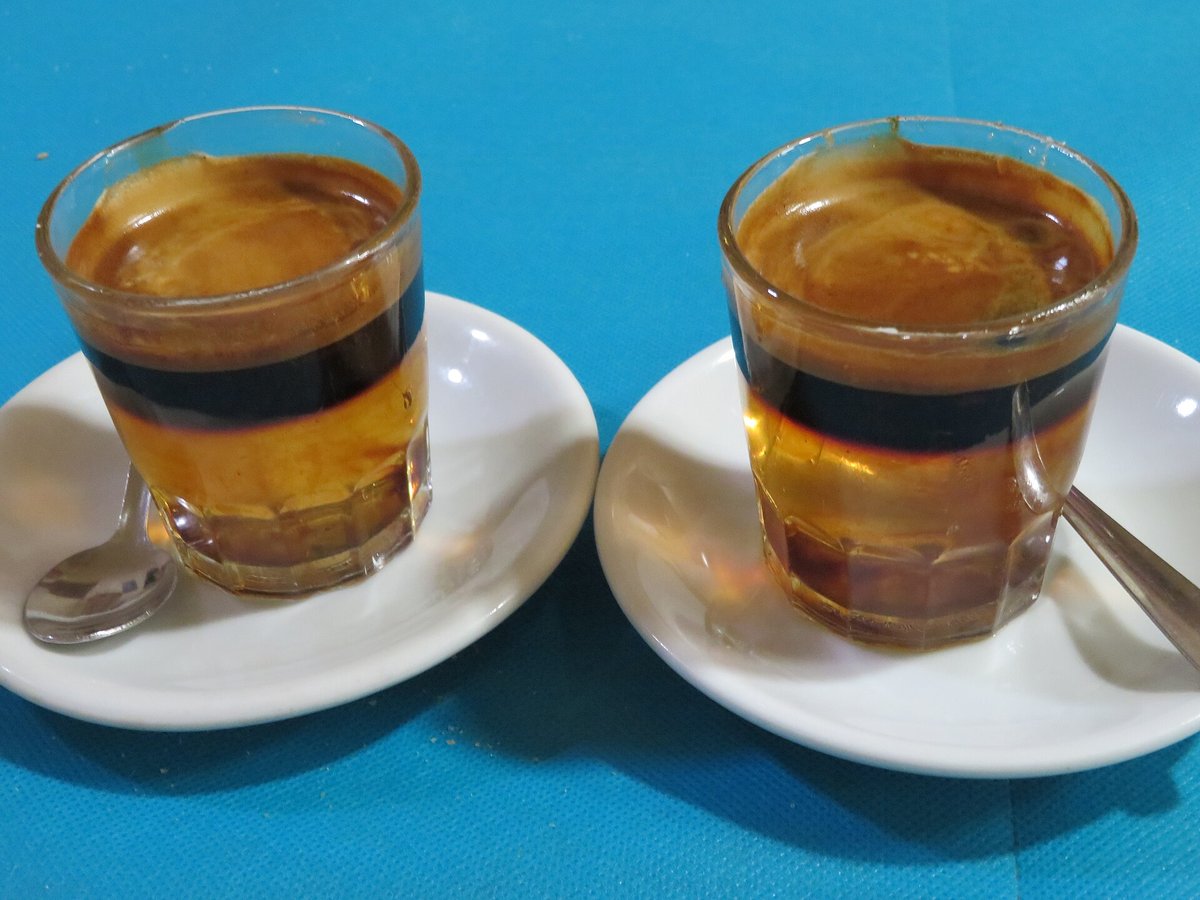
- Carajillo (Spain): coffee with brandy, rum, anís or orujo. In Castellón and Valencia the cremaet or quemado version heats the spirit with sugar, cinnamon, coffee beans and lemon peel, sets it alight, puts it out with a saucer, and pours the coffee over the back of a spoon so it layers on top. The name may come from corajillo, a little courage (Spanish Wikipedia). In Mexico the carajillo is now espresso shaken over ice with Licor 43, a Spanish vanilla-citrus liqueur.
- Kaffekask (Sweden) and karsk (Norway): coffee with home-distilled spirit, measured by a coin: put a coin in the cup, pour coffee until it disappears, then add spirit until you can see it again (Swedish Wikipedia).
Coffee liqueurs
| Liqueur | Origin | What is in it | ABV | Owner (2026) |
|---|---|---|---|---|
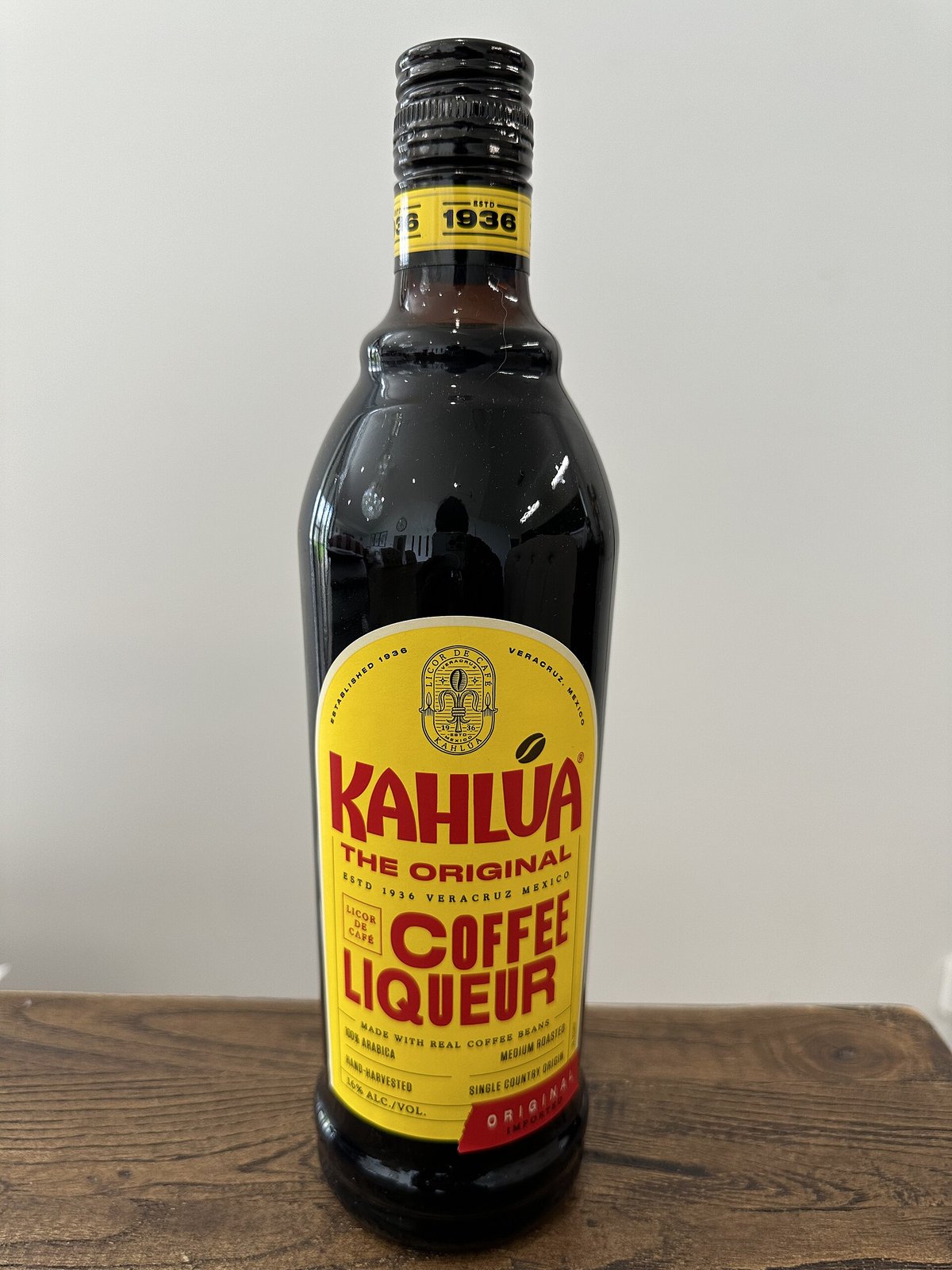
| Kahlúa | Veracruz, Mexico; Pedro Domecq, 1936 | Veracruz arabica (roasted low and slow), Veracruz rum, cane sugar, vanilla, a little caramel (Difford’s) | 20% since 2004 (26.5% before); 16% in the UK and Canada from 2021 | Pernod Ricard |
| Tia Maria | Jamaica; developed 1946 | Coffee, Jamaican rum, vanilla, sugar | 20% (once 31.5%) | Illva Saronno, made in Italy since 2009 |
| Mr Black | NSW Central Coast, Australia, 2013 | Cold-brew arabica from Colombia and Ethiopia | 25% (as reported) | Diageo (full ownership 2022) (ESM) |
| Caffè Borghetti | Ancona, Italy, 1860 | Arabica and robusta, sugar, alcohol | 25% | Fratelli Branca (Italian Wikipedia) |
| St. George NOLA | Alameda, California | Ethiopian coffee, French-roast chicory, vanilla, cane sugar (St. George) | 25% | St. George Spirits |
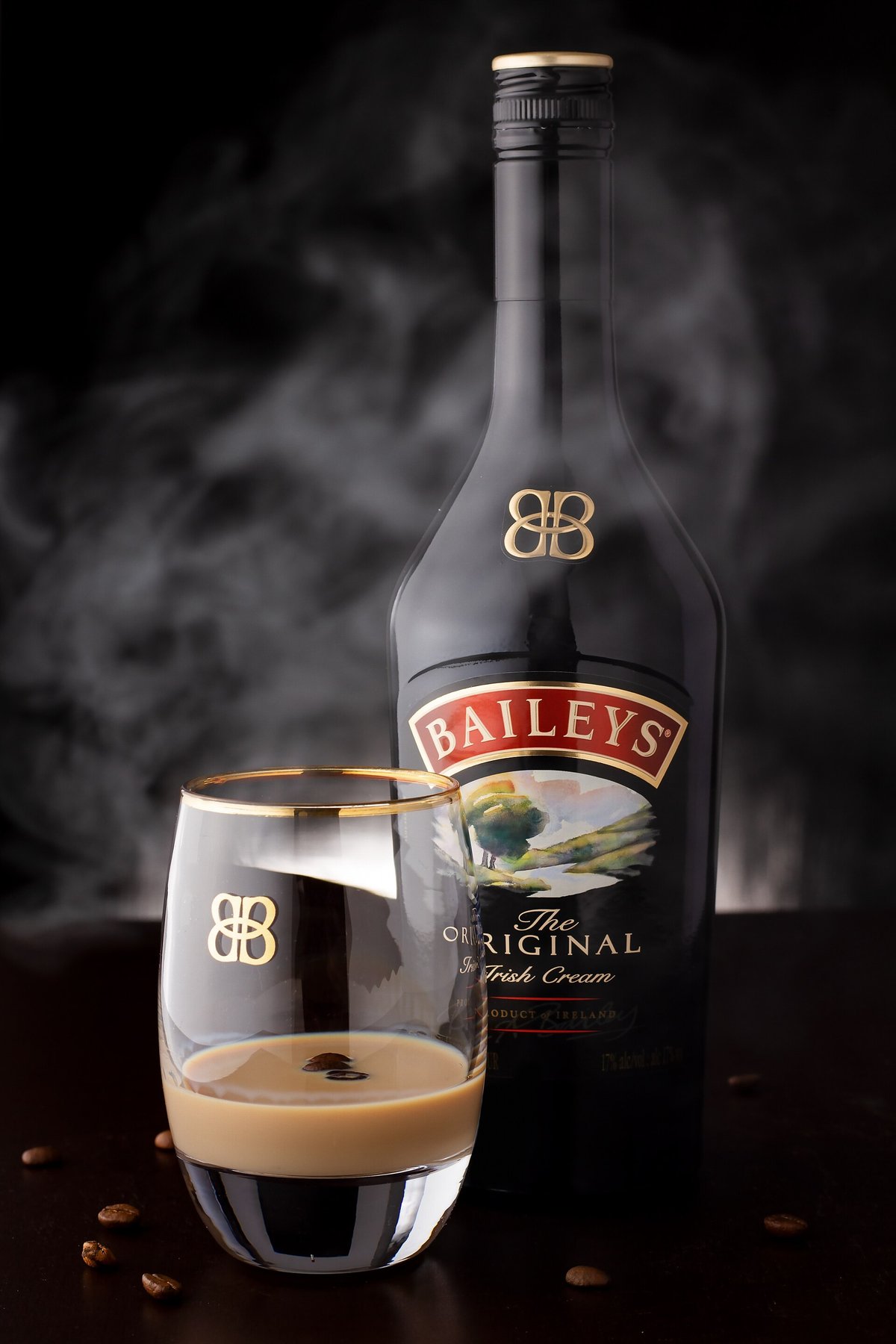
| Baileys Irish Cream | Created in London 1971 for Gilbeys of Ireland; launched 1974 | Irish whiskey and cream, homogenised into an emulsion | 17% | Diageo |
| Patrón XO Cafe | Mexico, 1992 | Tequila and coffee | 35% | Discontinued 2021 (The Spirits Business) |
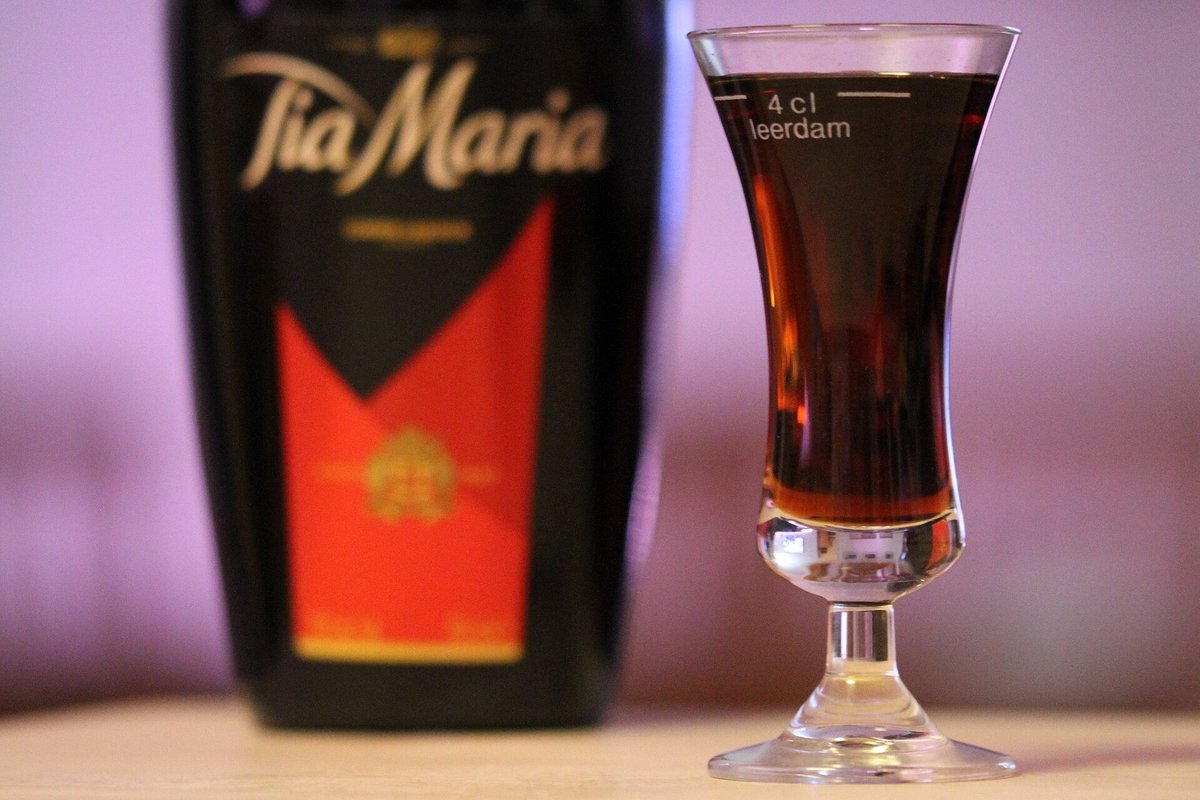
The Tia Maria legend. The brand says a seventeenth-century Spanish lady fleeing war in Jamaica was saved by her maid, Tia Maria, who carried off her mistress’s earrings and a family recipe, “rediscovered in the 1950s” by a Dr. Kenneth Evans. The account of Morris Cargill, one of its creators, is plainer: Evans developed the recipe in 1946, and an advertising man suggested the name “Aunt Mary” in Spanish (Wikipedia).
Michigan. Long Road Distillers of Grand Rapids makes Amaro Pazzo, a coffee-forward Italian-style bitter liqueur made with Madcap Coffee’s Eureka blend, and since March 2024 a canned Nitro Espresso Martini (13%) with the same coffee (Long Road).
Caffeine. Coffee liqueurs carry little: Kahlúa is reported at about 100 mg per litre, roughly 5 mg in a 1½-ounce measure, against about 95 mg in a cup of coffee (Wikipedia). An Espresso Martini’s caffeine is the espresso’s.
The cold cocktails
| Cocktail | Recipe (IBA unless noted) | History |
|---|---|---|
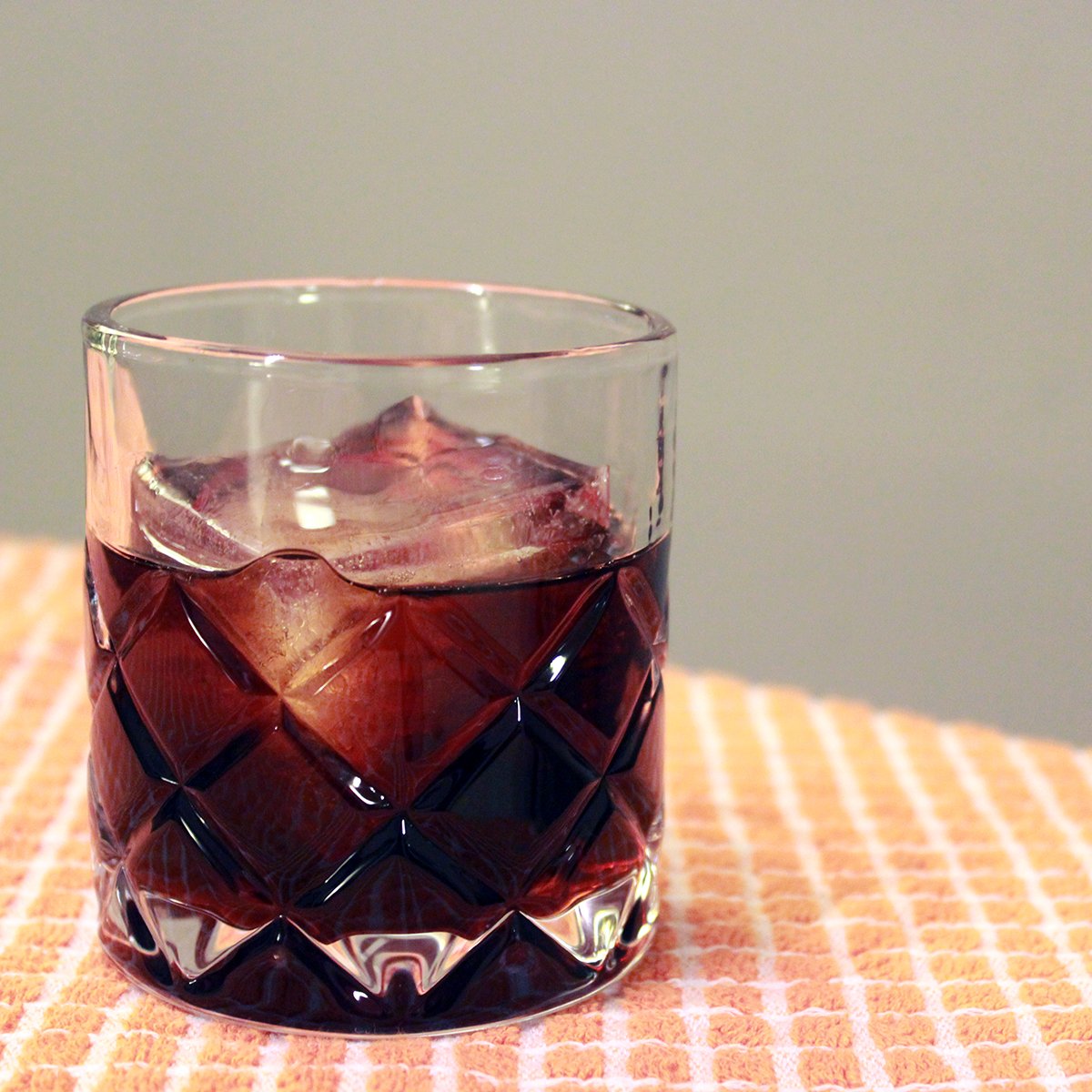
| Black Russian | 50 ml vodka, 20 ml coffee liqueur, built over ice (IBA) | Ascribed to Gustave Tops, Hotel Metropole, Brussels, 1949, for Perle Mesta, the US ambassador to Luxembourg; no 1949 record has been published. |
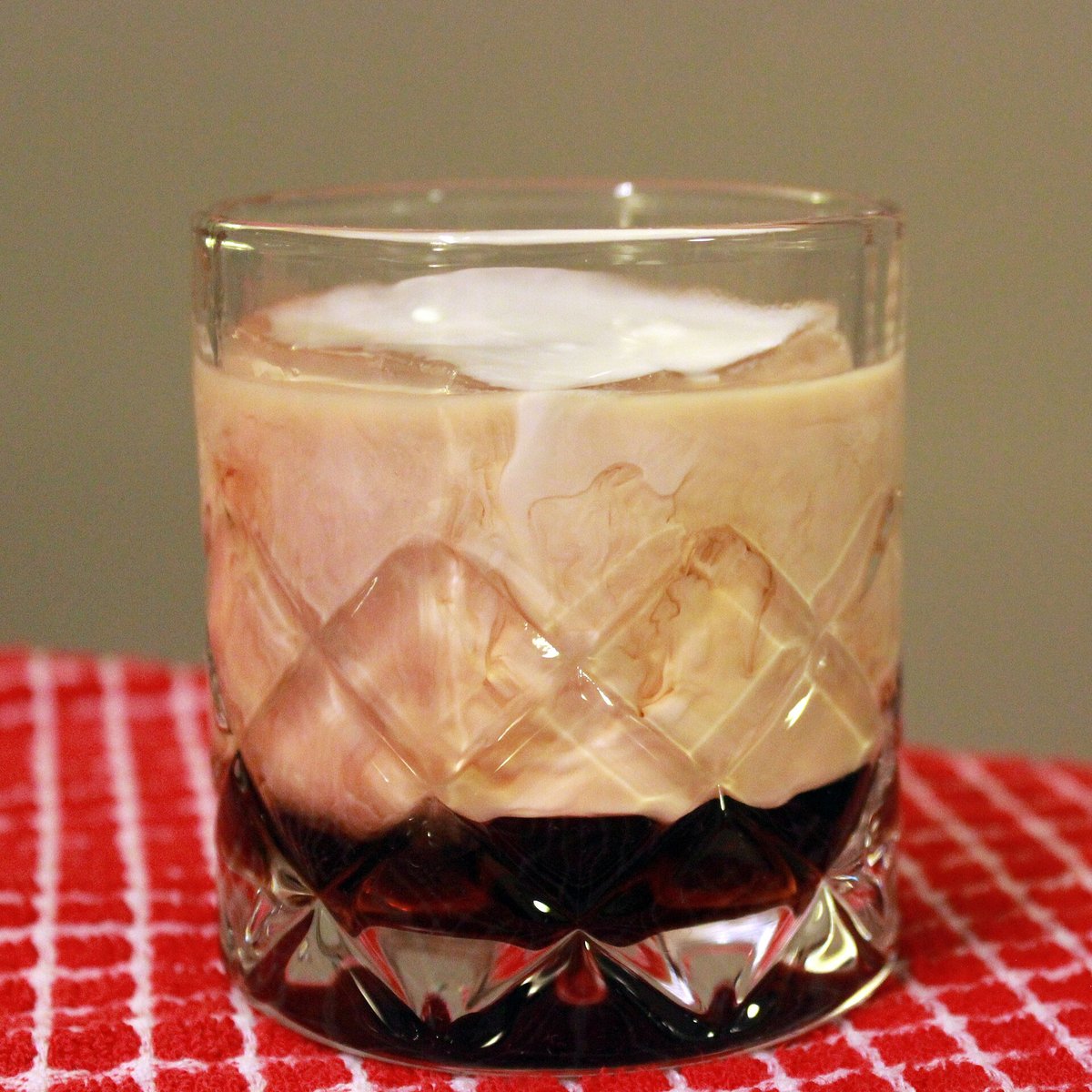
| White Russian | 5 cl vodka, 2 cl coffee liqueur, 3 cl cream, the cream floated | First in print in the Oakland Tribune, 21 November 1965, made with “Coffee Southern”, a short-lived Southern Comfort coffee liqueur. The Big Lebowski (1998) made it famous (Wikipedia). |
| Espresso Martini | 50 ml vodka, 30 ml coffee liqueur, 10 ml sugar syrup, 1 strong espresso, shaken hard, strained, 3 coffee beans (IBA) | Dick Bradsell, Soho Brasserie, London, about 1983, for a model who asked for something to “wake me up, then f*** me up”. It was first the Vodka Espresso, on the rocks; Difford’s says it was renamed Espresso Martini in 1997 at the Match bar, and in 1998 was the “Pharmaceutical Stimulant” at Damien Hirst’s Pharmacy (Difford’s). |
| Mudslide | 1½ oz each Irish cream, vodka and coffee liqueur, blended with vanilla ice cream (Difford’s) | Claimed by the Wreck Bar, Grand Cayman, 1970s: a White Russian ordered with no cream, so Baileys went in. |
| B-52 | Layered: coffee liqueur, Irish cream, Grand Marnier, 2 cl each | Claimed by the Banff Springs Hotel and the Keg in Calgary (both Alberta) and Maxwell’s Plum in New York, late 1970s. |
| Revolver | 2 oz bourbon, ½ oz coffee liqueur, 2 dashes orange bitters, flamed orange twist (Punch) | Jon Santer, Bruno’s, San Francisco, 2004. |
Recipe: Espresso Martini. The IBA specification calls for one strong espresso, and the drink is shaken hard, which gives it its pale foam.
Making coffee liqueur at home
A coffee liqueur is three things: coffee extract, sugar and spirit, usually with vanilla. A home version made by infusing bought spirit, the common method:
- Make strong coffee: cold brew is the common choice.
- Make a syrup of sugar and water (turbinado, as in the version below, adds a little molasses flavour).
- Combine the coffee, the syrup and a spirit: dark rum (like Kahlúa and Tia Maria), vodka or brandy, with a split vanilla bean.
- Rest it a few days to a few weeks, then strain and bottle.
One published version: ¼ cup of coffee cold-brewed in part of 1½ cups of water, ½ cup of turbinado sugar made into a syrup with the rest, 2 cups of dark rum and a vanilla bean, rested 4–5 days (Floating Kitchen, after Serious Eats). Worked out, two cups of 40% rum in about 3¾ cups of finished liqueur makes it about 21–22% alcohol, the same as Kahlúa; with 50% rum, about 27%. Recipe: Homemade Coffee Liqueur.
Keeping it. At over 20% alcohol with plenty of sugar, a liqueur keeps well in a cool cupboard; a lower-alcohol or cream version should be refrigerated. No tested shelf life for home coffee liqueur has been published; discard any that grows mould, ferments or smells off.
The law. The US Alcohol and Tobacco Tax and Trade Bureau allows adults to make beer and wine at home, and says “Federal law strictly prohibits individuals from producing distilled spirits at home” (TTB). Mixing a liqueur from spirit you have bought involves no distilling; TTB’s page does not address it. Selling any liqueur needs federal and Michigan licences; a home liqueur is for home.
Cautions
Flames. Several of these drinks are set alight. A cooking school’s flambé guidance: never pour from the bottle near a flame (the flame can run up into the bottle); add the spirit away from the heat or with the flame off; stand back; keep a lid and an extinguisher at hand; and never do it in a cramped space (Rouxbe). High-proof rum, like the 151 in Spanish coffee, catches fire far more readily than ordinary spirits.
Alcohol with caffeine. The CDC warns that mixing caffeine with alcohol “might make you feel like you have more energy, or … like the alcohol is affecting you less”, which “could lead you to drink more alcohol and become more impaired” (CDC). Its warning is about energy drinks, which carry far more caffeine than a cup of coffee, but the principle applies: a coffee cocktail does not make anyone more sober, and an Espresso Martini contains as much caffeine as an espresso.
What is not known
- The night Irish coffee was invented, if there was one.
- Whether the Pharisäer’s pastor existed.
- When café brûlot was first made.
- The Black Russian’s 1949 origin, beyond attribution.
Sources
- Foynes Flying Boat & Maritime Museum, Irish Coffee Centre and Chef Joe Sheridan.
- Barry Popik, Irish coffee (citing The Sunday Star, Washington, 9 December 1945).
- Buena Vista Cafe, Irish Coffee; KQED, Irish coffee in San Francisco.
- International Bartenders Association, Irish Coffee, Black Russian, Espresso Martini.
- Wikipedia: German Pharisäer (Kaffee); Rüdesheimer Kaffee; Caffè corretto; Spanish Carajillo; Swedish Kaffekask; Kahlúa; Tia Maria; White Russian.
- Antoine’s, A fiery finale; Punch, Café brûlot and Revolver.
- OPB, Huber’s, James Kai Louie and Spanish coffee (2025).
- Difford’s Guide, How Kahlúa is made and Espresso Martini.
- ESM Magazine, Diageo acquires Mr Black (2022); St. George Spirits, NOLA Coffee Liqueur; Long Road Distillers, Nitro Espresso Martini (2024).
- Floating Kitchen, Homemade coffee liqueur.
- TTB, Penalties for illegal distilling; CDC, Alcohol and caffeine; Rouxbe, Flambéing safety.
Comments (0)