Coffee · 49 of 64
Sugar-Free Sweeteners and Plant Milks
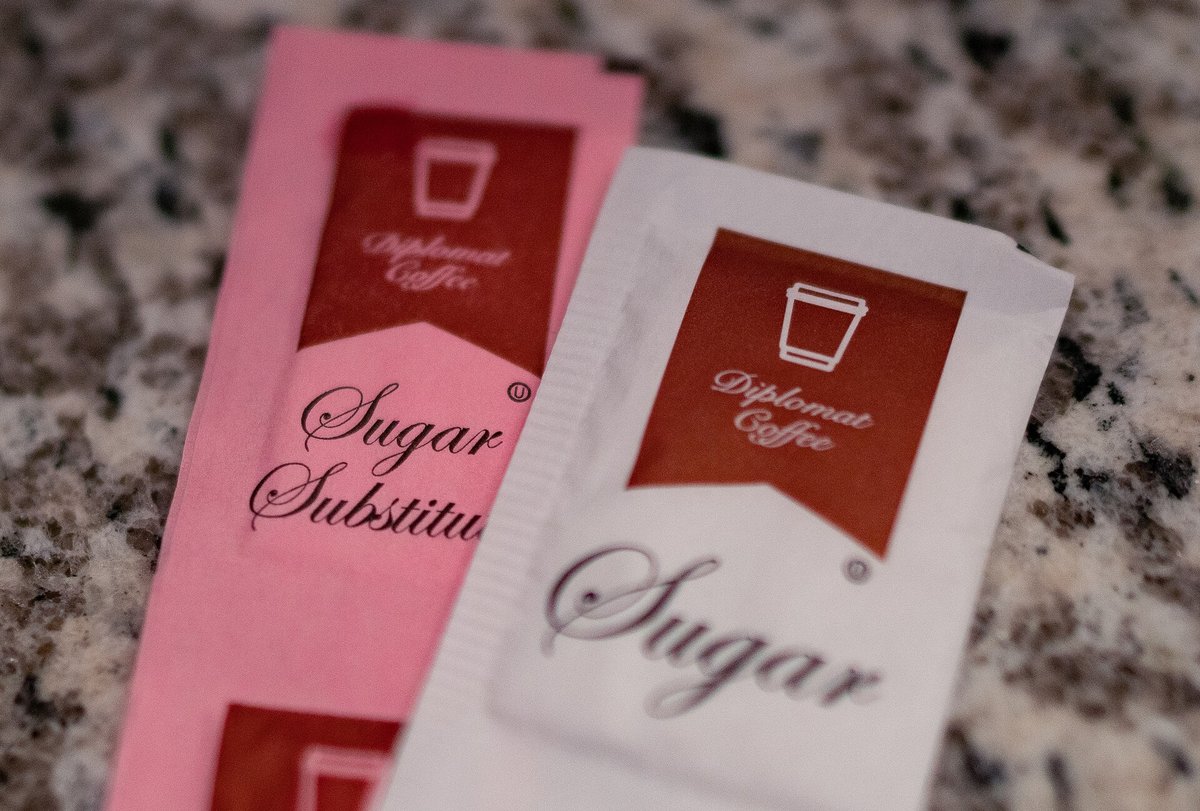
Two things change what people drink more than the coffee does: what they sweeten it with when they will not use sugar, and what they pour in when they will not use cow’s milk. Both questions arrive at every coffee counter. Below are the sugar-free sweeteners sold in the US (how sweet each is against sugar, how it behaves in a hot cup and in a syrup, what it tastes of, and what the health headlines about it actually found), and then the plant milks: what is in them, why they split in hot coffee, what the “barista” cartons add, and what the law says about calling them milk. Sugar, honey and maple, and the syrups made from them, are on Syrups for Coffee and Honey in Coffee. The brand-by-brand ingredient table for oat milk, condensed milk and creamer is on What People Put In It, and is not repeated here.
The short version
| Question | Answer |
|---|---|
| Which sweetener holds up in hot coffee? | Sucralose, stevia, monk fruit, allulose, erythritol, saccharin, acesulfame and xylitol all do. Aspartame loses sweetness when heated (FDA). |
| Which tastes closest to sugar? | Allulose, which also browns like sugar; then erythritol, though it leaves a cooling feel. The high-intensity ones (stevia, monk fruit, saccharin) leave a lingering or bitter finish for many people. |
| Best for a sugar-free syrup? | Allulose: it dissolves and stays dissolved. Erythritol tends to crystallize in a cold, strong syrup. |
| Is the “monk fruit” sweetener monk fruit? | Mostly not. The leading retail blends list erythritol first; the monk fruit extract is a small part. |
| The erythritol clotting study? | It found an association in people already under heart evaluation, and clotting effects in the lab. It did not show that erythritol causes heart attacks in healthy people. |
| Aspartame and cancer? | IARC called it “possibly carcinogenic” (Group 2B, limited evidence) in 2023; the WHO’s food-additive committee kept the safe daily intake at 40 mg per kg. The FDA disagrees with IARC’s call. |
| Xylitol | Safe for people in normal amounts. Poisonous to dogs, quickly. Never at a pet-friendly market. |
| Best plant milk in hot coffee | A barista-edition oat milk; then barista soy |
| Why plant milk splits | Coffee’s acid and heat pull the proteins out of suspension. Barista editions add a buffer (a phosphate, citrate or bicarbonate) and a gum. |
| Most protein | Soy and pea, close to cow’s milk; almond and oat have far less |
| Can it be called “oat milk”? | Yes. FDA’s 2023 guidance accepts the names; as of October 2026 it is still a draft. |
| At a Michigan stall | Sealed cartons need no cooler; opened ones go in the cooler. Sweetener packets are commercial and fine; a syrup has to be mixed at the booth (The Michigan Rules). |
The sweeteners, side by side
Sweetness is relative to table sugar (sucrose) by weight. “To match 8 g of sugar,” about two teaspoons, is that figure worked out: it shows why the strong ones come mixed with a filler.
| Sweetener | Brand examples | Sweetness vs sugar | To match 8 g of sugar | In hot coffee | Taste | What it is |
|---|---|---|---|---|---|---|
| Sucralose | Splenda | 600× | 13 mg | Stable | Clean; slight lingering sweetness | Chlorinated sucrose. Approved as a general sweetener 1999 |
| Aspartame | Equal, NutraSweet | 200× | 40 mg | Loses sweetness when heated | Close to sugar, short | Two amino acids joined. Carries a phenylalanine warning for PKU |
| Acesulfame K | Sunett, Sweet One | 200× | 40 mg | Stable | Bitter alone; used in blends | Usually paired with sucralose |
| Saccharin | Sweet’N Low | 200–700× | 11–40 mg | Stable | Metallic, bitter finish | The oldest, found 1879 |
| Stevia (steviol glycosides: Reb A, Reb M and others) | Truvia, PureVia, Stevia in the Raw | 200–400× | 20–40 mg | Stable | Slower to arrive, lingers; licorice or bitter at high doses | Purified from the leaf of Stevia rebaudiana |
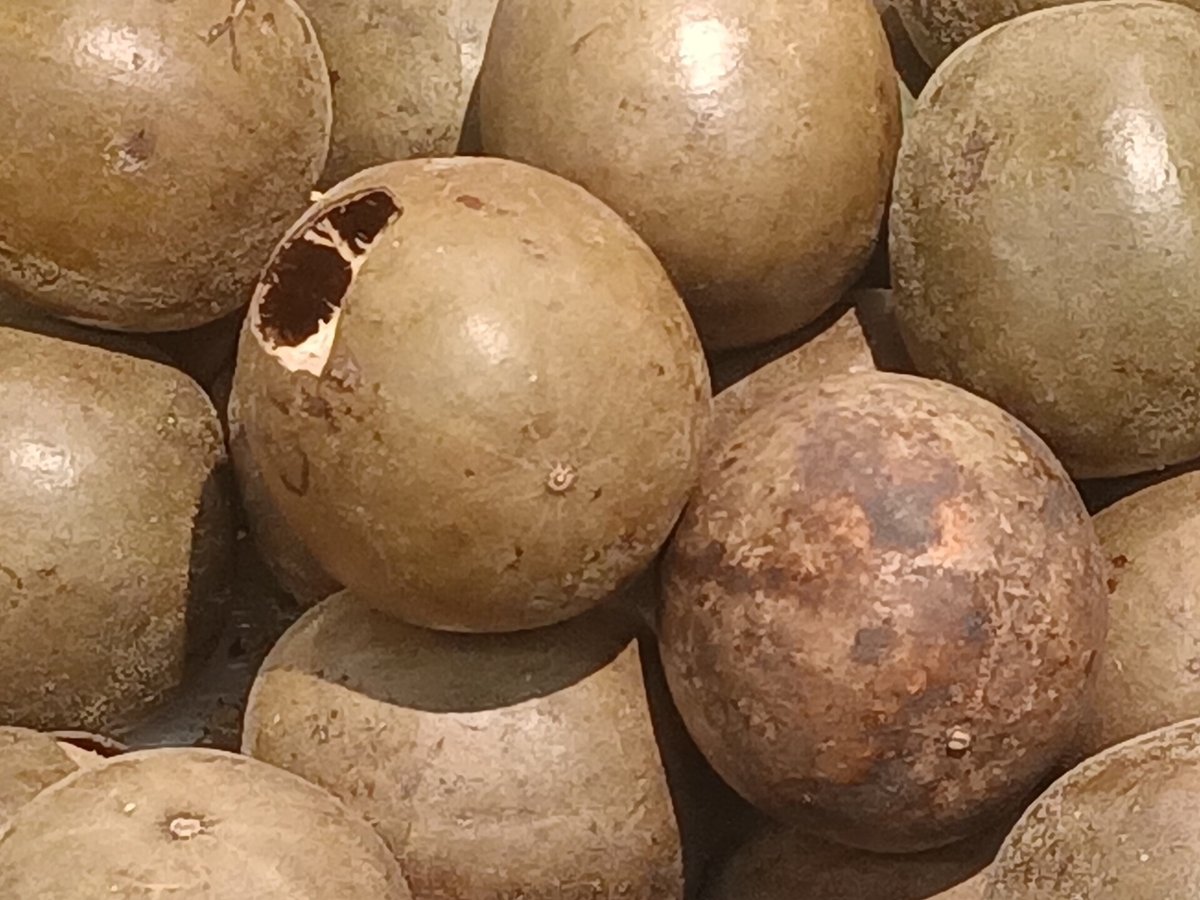
| Monk fruit (mogrosides) | Lakanto, Monk Fruit in the Raw | 100–250× | 32–80 mg | Stable | Fruity, lingering | Extract of luo han guo, a gourd from southern China |
| Erythritol | Swerve; the bulk of most monk fruit and stevia blends | 0.6–0.7× | 11–13 g | Stable | Close to sugar, with a cooling feel like mint | A sugar alcohol made by fermenting corn sugar |
| Allulose | Allulose sold as such; some blends | 0.7× | about 11 g | Stable; browns like sugar | The closest to sugar | A rare sugar, made from fructose with an enzyme |
| Xylitol | ”Birch sugar” | About 1× | 8 g | Stable; does not caramelize | Like sugar, slightly cool | A sugar alcohol; 40% fewer calories than sugar |
Sweetness multiples for the first six are the FDA’s; erythritol, allulose and xylitol from the references linked. Every figure is a range in practice, because perceived sweetness changes with concentration and temperature.
Why packets are mostly filler. Thirteen milligrams of sucralose cannot be poured by anyone. So a yellow Splenda packet lists dextrose, maltodextrin, sucralose, in that order (Open Food Facts); a Truvia lists erythritol, stevia leaf extract (Open Food Facts); a Lakanto Classic lists erythritol, monk fruit extract (Open Food Facts). The filler is what fills the spoon. Dextrose and maltodextrin are carbohydrates, so a “zero calorie” packet carries a few calories, under the five per serving that US labelling lets round to zero.
Each one in a cup of coffee
Sucralose. The safest bet for hot coffee: stable at baking temperatures by the FDA’s account, and sweet with little aftertaste. Its weakness in coffee is body: a drink sweetened with sucralose has no more weight in the mouth than the coffee, which is why a sugar-free latte tastes thinner than the sugared one. It is what most commercial sugar-free coffee syrups use. Torani’s sugar-free French vanilla lists water, natural flavors, acesulfame potassium, citric acid, potassium sorbate, sodium benzoate, xanthan gum and sucralose (Open Food Facts): two sweeteners, two preservatives, an acid and a thickener to put back some body.
Stevia. The purified glycosides, chiefly rebaudioside A (Reb A), are what the FDA has cleared; the leaf and crude extracts are not permitted as sweeteners in the US. Stevia’s sweetness arrives later than sugar’s and stays longer, and at the dose needed to sweeten a large drink some people taste licorice or bitterness. Newer purified glycosides such as Reb M are sold as tasting closer to sugar. In coffee it does best in small amounts, or blended.
Monk fruit. Extract strength depends on how much mogroside V it carries, from 100 to 250 times sugar. Pure extract is sold as a powder or liquid and is very strong; read the label to know which is in the bag.
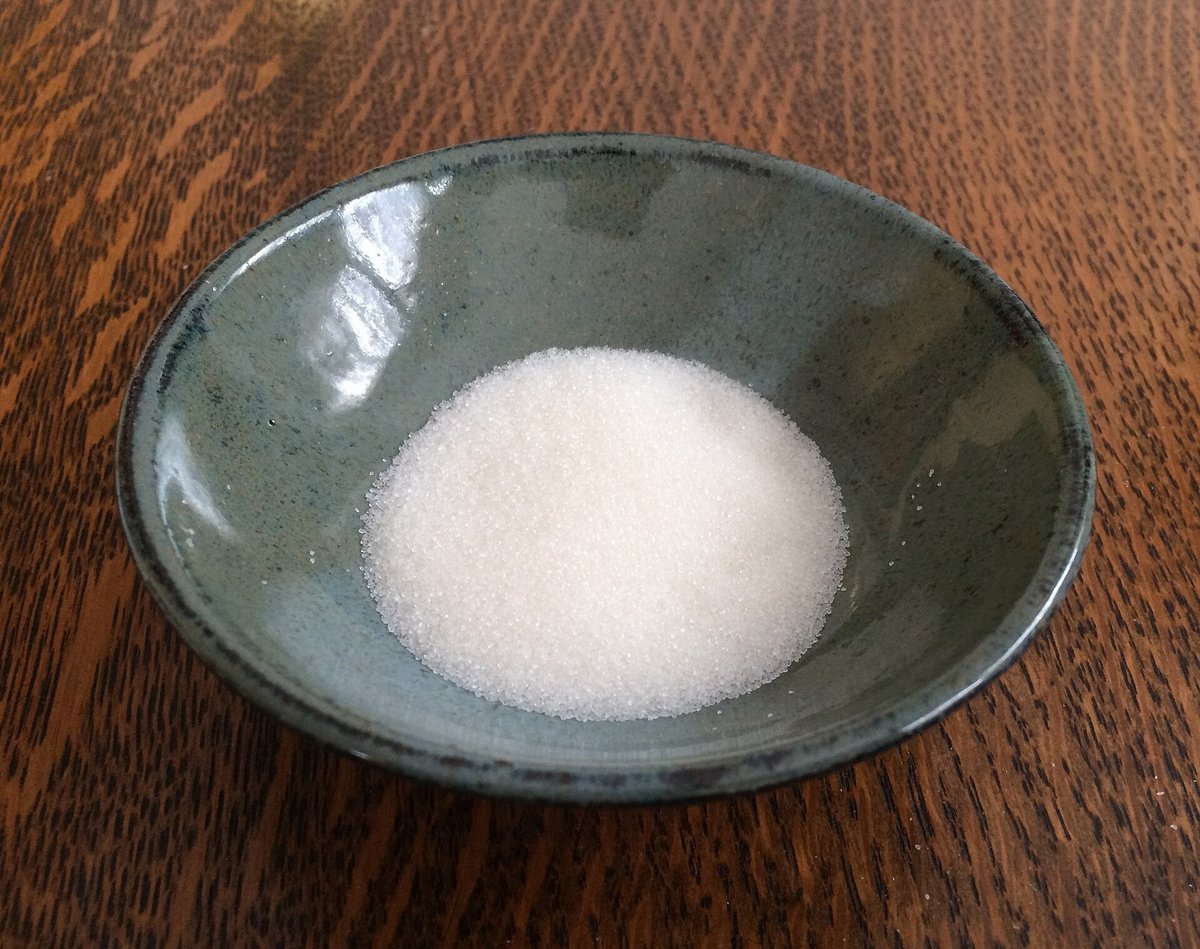
Erythritol. Nearly calorie-free and about 70% as sweet as sugar, so it is used spoon for spoon in blends. Its quirk is a cooling effect when it dissolves, mild in hot coffee and noticeable in iced. It is less soluble than sugar, so a strong erythritol syrup grows crystals in the refrigerator. Like every sugar alcohol it is a laxative in large amounts; the European Food Safety Authority’s 2023 review set a limit of 0.5 g per kg of body weight a day, about 35 g for a 70 kg adult, for that reason.
Allulose. The one that behaves most like sugar: about 70% as sweet, bulk and mouthfeel like sugar, and it browns in the Maillard reaction, so it can make a caramel-coloured syrup. The FDA lets it be left out of “Total Sugars” and “Added Sugars” on the label and counted at 0.4 calories per gram (FDA guidance, October 2020). It costs more than the others.
Aspartame. Fine in iced coffee; in hot coffee it slowly loses sweetness, so the FDA notes it “typically isn’t used in baked goods.” People with phenylketonuria (PKU) must avoid it, which is why its labels carry a phenylalanine statement.
Saccharin. The pink packet. Cheap and heat-stable, with a metallic finish that some coffee drinkers have used for decades and others cannot stand.
Xylitol. As sweet as sugar with 40% fewer calories, and it does not feed the bacteria that cause tooth decay. It is dangerous to dogs: in a dog it triggers a rapid release of insulin, and blood sugar can fall dangerously “within 10 to 60 minutes,” the FDA warns. At a market where dogs come to the table on leashes, a dropped xylitol sweet or a licked spill is a real risk. A stall is better off not stocking it.
The headlines, read properly
Erythritol and blood clots (2023)
In February 2023 a Cleveland Clinic team published a study in Nature Medicine (Witkowski and others, vol. 29, pp. 710–718), and the clinic’s release was headlined as a link to heart attack and stroke.
| What it did | What it found |
|---|---|
| Measured blood erythritol in 1,157 people undergoing heart-risk assessment, then in two more groups (2,149 in the US, 833 in Europe) | Those in the top quarter of erythritol levels had a higher three-year rate of heart attack, stroke or death: adjusted hazard ratios of 1.80 and 2.21 against the bottom quarter |
| Added erythritol to blood and platelets in the lab, and gave it to mice | Platelets were easier to activate; clots formed faster |
| Gave a drink with 30 g of erythritol to 8 healthy volunteers | Blood levels rose far above the lab threshold and stayed high for more than two days |
What it did not show. The people in the main groups were already being evaluated for heart disease; it is an association in them, and the clinic’s release says so: “clinical observation studies demonstrate association and not causation.” The body makes erythritol itself, also in the release, so a high blood level can reflect a person’s metabolism as well as their diet. No trial has given erythritol to healthy people for years and counted heart attacks. The fair reading: a real signal that justifies caution for people at high risk of clots, and not proof that a packet in a coffee is dangerous. The authors’ own conclusion is that “studies assessing the long-term safety of erythritol are warranted.”
Aspartame and cancer (2023)
On 14 July 2023 two WHO bodies reported on the same day. The International Agency for Research on Cancer (IARC) classed aspartame as “possibly carcinogenic to humans” (Group 2B), “citing ‘limited evidence’,” for one kind of liver cancer. The Joint FAO/WHO Expert Committee on Food Additives (JECFA) reaffirmed the acceptable daily intake of 40 mg per kg of body weight. The WHO’s release gave the arithmetic: a 70 kg adult would have to drink more than 9 to 14 cans of diet soda a day, at 200 to 300 mg a can, to pass it. IARC’s categories rank the strength of evidence that something can cause cancer, not the risk at a given dose; The FDA says it “disagrees with IARC’s conclusion” and has no safety concerns at approved use. A packet in a coffee holds a small fraction of a can’s aspartame.
Saccharin’s old warning
Saccharin carried a cancer warning label in the US from the 1970s, after bladder tumours in rats. The FDA reports that more than 30 human studies found the rat result irrelevant to people, the National Toxicology Program removed it from its list of potential carcinogens in 2000, and the label is no longer required.
A sugar-free syrup, by weight
A syrup sweetens an iced drink evenly, which a packet cannot. The table on Syrups gives the doses; the recipe is here.
Sugar-free vanilla syrup (allulose)
| Ingredient | Weight |
|---|---|
| Water | 250 g |
| Allulose | 250 g |
| Xanthan gum, optional, for body | 0.5 g (a small pinch) |
| Vanilla extract | 5 g, after cooling |
- Warm the water to about 60 °C (140 °F); it does not need to boil.
- If using xanthan, whisk it into the dry allulose first so it does not clump, then whisk both into the water until clear.
- Cool; stir in the vanilla (home-made extract works).
- Bottle in a clean squeeze bottle, label with the date, and refrigerate.
Dose: about 23 g in an 8 oz drink and 34 g in a 12 oz, the sweetness of the 16 g and 24 g of simple syrup in the Syrups table.
With a monk fruit and erythritol blend instead: the same method at 1 part blend to 1 part water, dosed like simple syrup. If crystals form in the refrigerator, remake it at 1 to 2 and use half as much again. Pure sucralose or stevia drops can be added to plain water instead, but the result has no body at all; that is what the xanthan replaces.
How long it keeps. Sugar preserves an ordinary syrup by tying up its water. A sugar-free syrup has none of that protection; it is flavored water that spoils like water. Commercial sugar-free syrups keep on a shelf because they add potassium sorbate, sodium benzoate and citric acid. No published test gives a shelf life for a home-made one, so the cautious rule is a week, refrigerated, and out at once if it clouds or smells off. At a licensed market stall it is mixed at the booth on the day, like any syrup (The Michigan Rules).
Plant milks
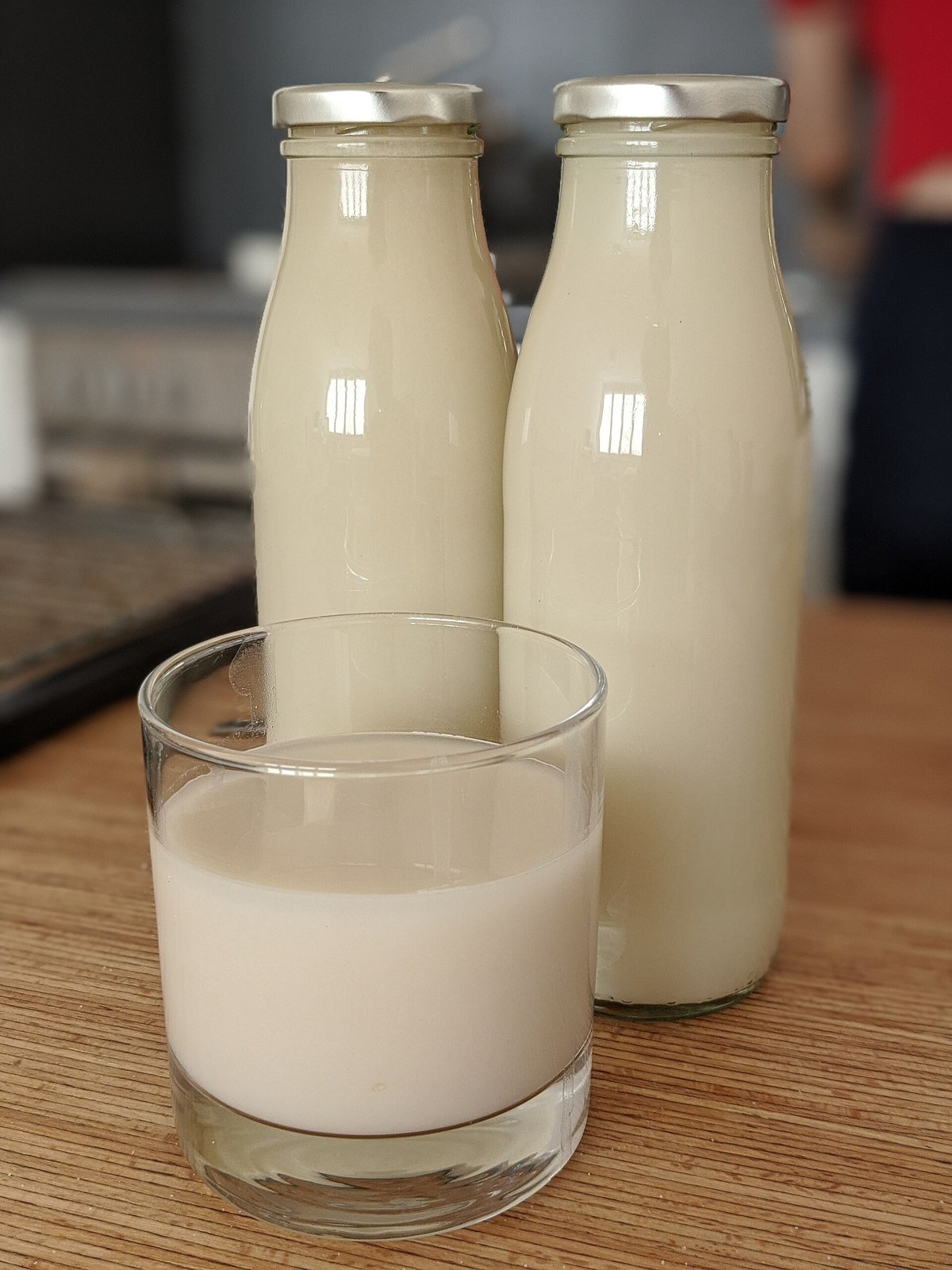
What is in them
Per 250 ml cup, unsweetened, from the USDA figures collected in Wikipedia’s plant milk article (Our World in Data gives the same picture: cow’s milk 3.4 g of protein per 100 ml against 0.5 g for almond):
| Milk | Protein | Fat | Carbohydrate | Calories | In hot coffee | Foam |
|---|---|---|---|---|---|---|
| Cow’s, whole | 7.7 g | 7.9 g | 11.7 g | 149 | The reference | The reference |
| Soy | 7.0 g | 3.9 g | 4.2 g | 80 | Splits easily unless buffered | Good: high protein |
| Oat | 3 g | 5 g | 16 g | 120 | Plain: may split. Barista: reliable | Barista: glossy, good for latte art |
| Almond | 1.6 g | 2.9 g | 1.5 g | 39 | Thin; often separates | Weak, quick to collapse |
| Coconut (carton) | Under 1 g | Varies; most of the calories | Low | Varies | Holds together; tastes of coconut | Light, short-lived |
| Pea (Ripple and similar) | Close to dairy (pea protein is the second ingredient) | From added oil | Low | — | Built for it: buffered | Good |
| Cashew | About 1 g | From the nuts | Low | — | Creamy, can separate | Modest |
The oat milk’s carbohydrate is mostly sugar made from the oat starch by enzymes during manufacture, which is why an unsweetened oat milk tastes sweet.
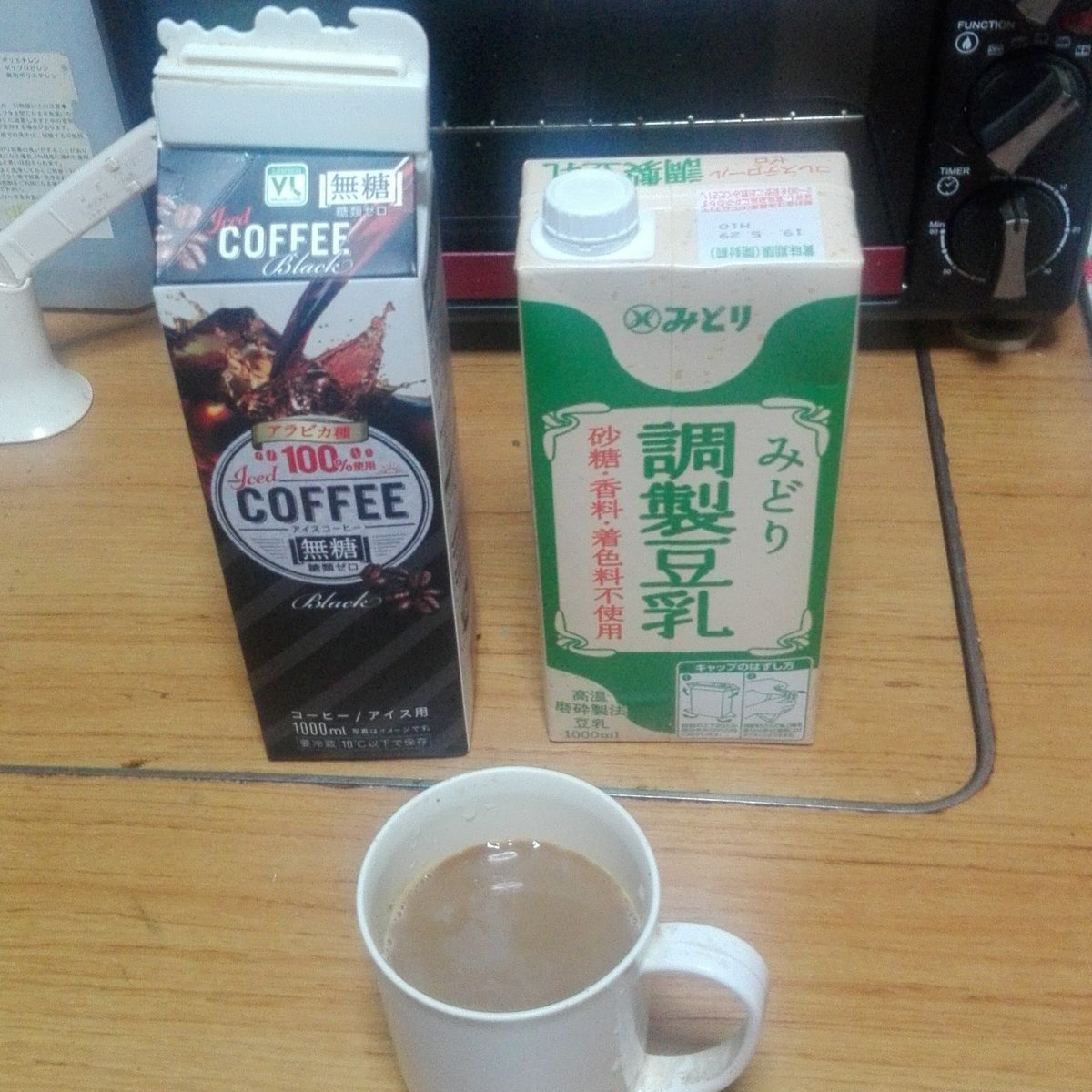
Why plant milk curdles in coffee
Coffee is mildly acidic, about pH 5, and it is hot. Proteins stay dissolved because their surfaces carry like charges that repel each other; add acid and the charge fades, until near the protein’s isoelectric point they clump and fall out. Dairy caseins do that at about pH 4.6 (Tetra Pak), below coffee’s pH, and milk carries enough natural buffer that a splash of coffee barely moves it, which is why fresh milk survives. A plant milk has less buffer, so the coffee pulls its pH further down, and soy proteins are the ones tofu makers set on purpose with calcium salts or acid. Heat speeds both. Soy milk poured into hot, bright coffee “feathers”: white flecks that float. The Additions page has the dairy side of the same story.
What makes it worse, and what to do:
| Makes it worse | Fix |
|---|---|
| A light, acidic roast | A medium or dark roast is less acidic |
| Very hot coffee poured onto cold milk | Let the coffee sit 30 seconds; pour the coffee into the milk, not the milk into the coffee; or warm the milk first |
| Hard water, high in calcium | Calcium bridges proteins together; softer water helps (Water) |
| Plain cartons | A barista edition |
What the “barista” cartons add
Read the ingredients of the barista editions and the same two kinds of additive appear every time:
| Product (as listed on the label) | Buffer: holds the pH up | Gum or emulsifier: holds it together |
|---|---|---|
| Califia Farms Almond Barista Blend | Potassium citrate | Gellan gum, guar gum, sunflower lecithin |
| Silk Protein soy | Sodium bicarbonate | Gellan gum |
| Ripple unsweetened pea | Dipotassium phosphate | Gellan gum, guar gum, gum arabic, sunflower lecithin |
| Oatly Barista, Califia Oat Barista (Additions) | Dipotassium phosphate | Added oil for body |
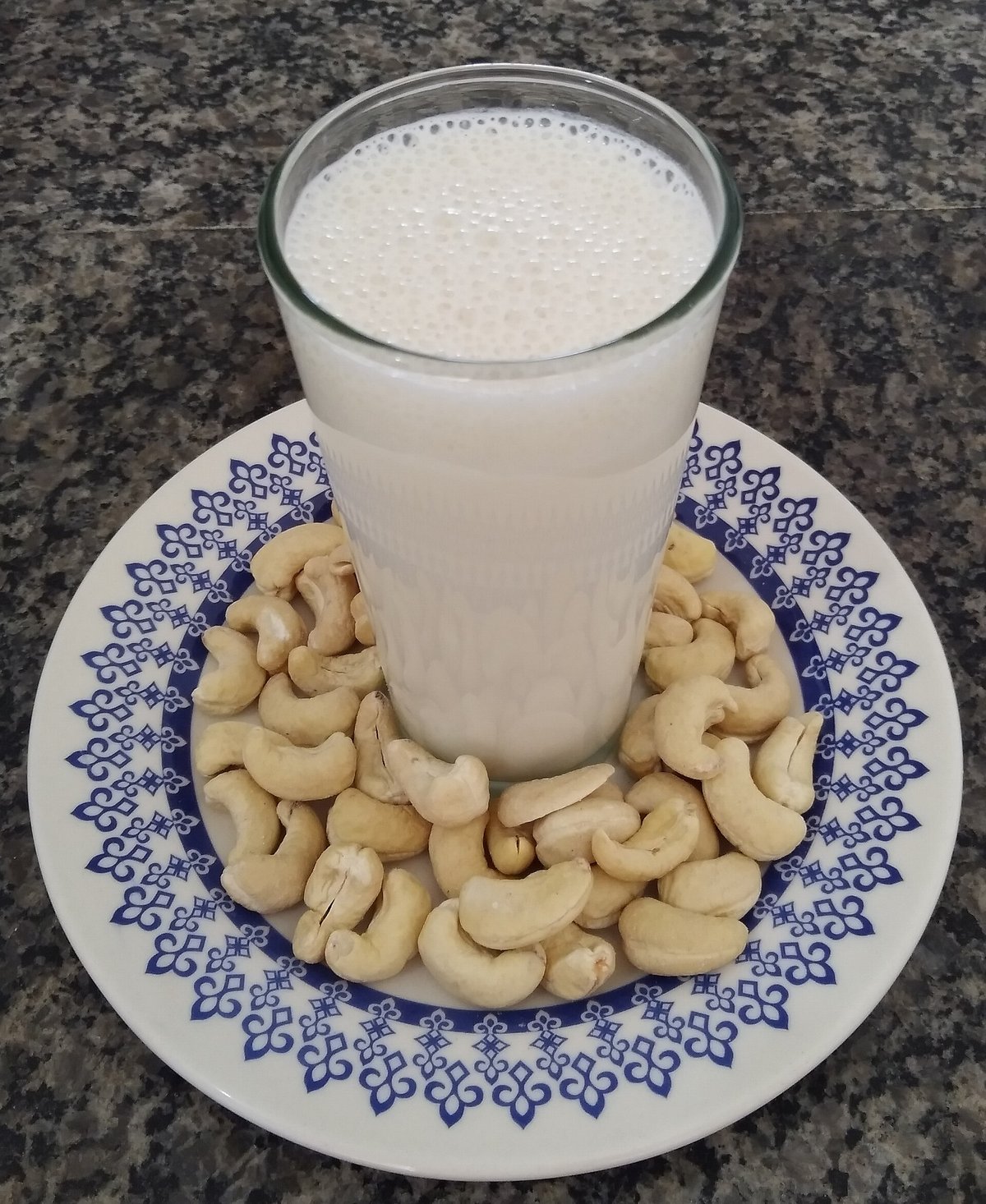
| Elmhurst Milked Cashews | None | None: “Filtered Water, Cashews” |
Acidity regulators (dipotassium phosphate, potassium citrate, sodium bicarbonate) are buffers: they soak up some of the coffee’s acid so the drink’s pH does not fall as far. Gellan gum and its relatives keep particles suspended and stop the carton separating. Added oil gives body and a foam that holds. A two-ingredient milk like the cashew one above is the purest choice and the one most likely to separate in hot coffee.
Allergens
Under US law the nine major food allergens are milk, eggs, fish, crustacean shellfish, tree nuts, peanuts, wheat, soybeans and sesame (FDA). So soy milk and the nut milks carry allergen statements; oat milk does not, but oats are often grown and milled beside wheat, so a customer with coeliac disease needs a carton labelled gluten-free. At a counter, the honest answer to “what is in the oat milk?” is to hand over the carton, which is one reason to pour from the carton rather than a jug.
The environment
Our World in Data, from the largest comparison of food systems (Poore and Nemecek, 2018), puts cow’s milk at about three times the greenhouse gas emissions of the plant milks per litre, about ten times the land, and two to twenty times the fresh water. Among the plant milks there is no single winner: almond has lower emissions and land use than soy but uses more water. Per gram of protein the comparison narrows, since soy and dairy carry several times the protein of almond.
Can it be called “milk”?
The FDA’s draft guidance of February 2023 accepts names such as “soy milk” and “oat milk,” on the view that shoppers understand them, and recommends a voluntary statement comparing the product’s nutrients with milk’s (for example, less protein or calcium). As of October 2026 the FDA’s page still labels it a draft, “not for implementation.” The FDA’s separate January 2025 draft on plant-based alternatives covers plant-based eggs, meat, seafood and cheese and expressly excludes plant-based milks, so it changed nothing here. Dairy’s own name is protected in a different way: “milk” is a standard of identity for the product of cows (21 CFR 131.110), which is why a plant carton says “oatmilk,” “almondmilk” or “oat drink” on the front and lists “oat base” in the ingredients.
At a market stall
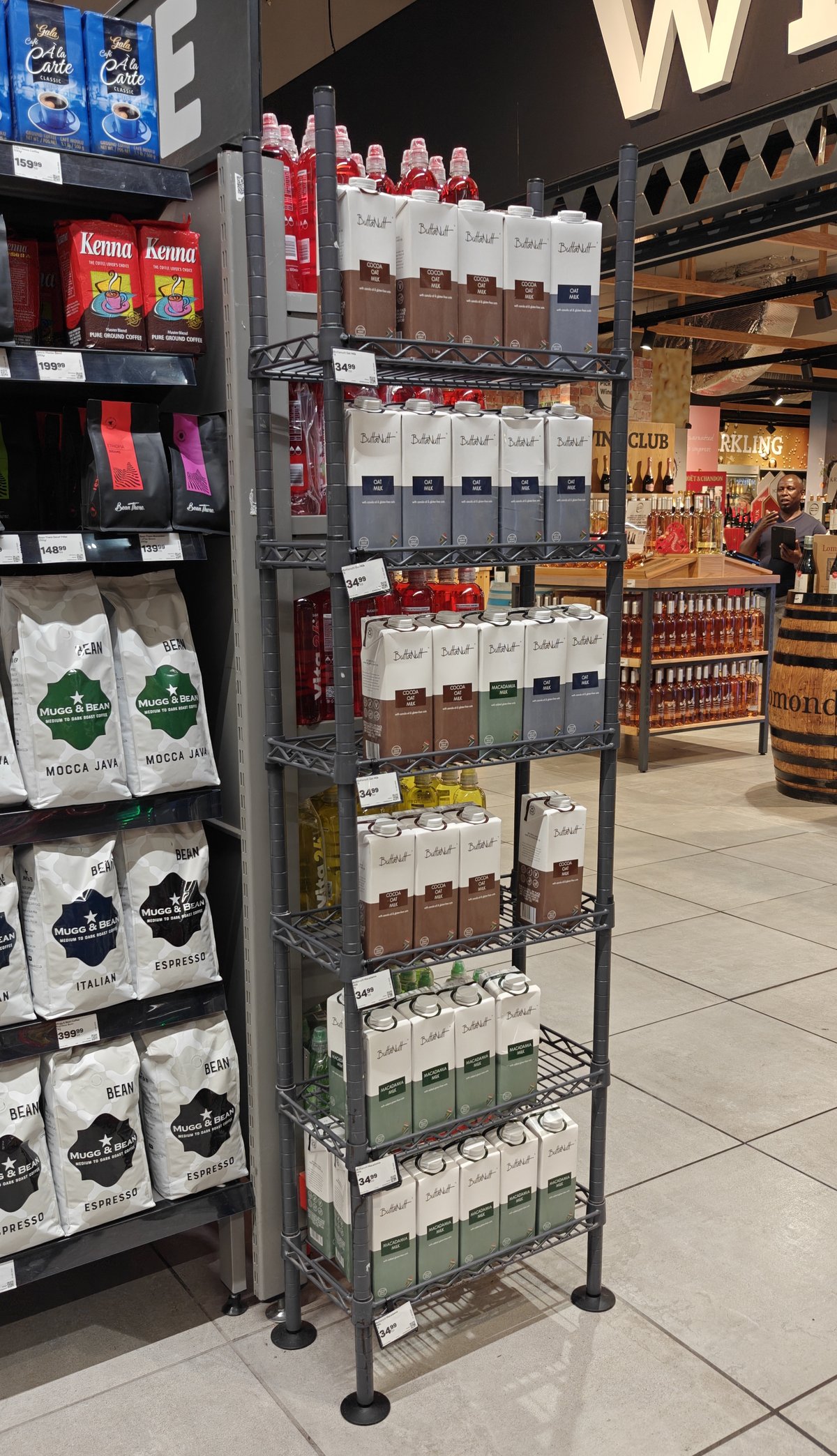
What the law allows. Plant milks and sweeteners are made commercially, so a licensed booth simply buys them; nothing about them needs a cottage-food exemption. The rules that apply are about temperature: an unopened shelf-stable carton needs no control, and once opened it is treated like dairy, in the cooler at 41 °F or below and used within the carton’s “after opening” time (The Michigan Rules). Packet sweeteners are sealed single servings. A sugar-free syrup, like any syrup, is mixed at the booth on the day, not at home (The Michigan Rules). Elsewhere in the US the same split holds under the FDA Food Code most states adopt; ask the county about holding an opened carton out of the cooler for a short time under a written procedure.
What to stock, smallest to largest:
| Stage | Plant milks | Sweeteners |
|---|---|---|
| First market | One carton of barista oat milk in the cooler | Sugar, a honey syrup, and one sugar-free packet (sucralose or a stevia blend) |
| Asked for often | Add barista soy | Add a monk fruit or allulose option |
| A shop | Oat, soy and one more (almond or pea), all barista editions | A sugar-free vanilla syrup made in the licensed kitchen, with the date on the bottle |
Costs. A barista oat milk costs three to five times what whole milk does by the ounce (at assumed supermarket prices of about $5 for a 32 oz carton against $4 a gallon for milk, as of October 2026), and a surcharge for it is usual; see Prices and Customers for the stall’s price list and The Numbers for what each cup costs. Packets are a few cents each. The drinks they go into are on The Milk Drinks and The Drinks.
On the sign. “Oat milk available” answers the most common question before it is asked. Listing the sweeteners by name (“sugar, honey, Splenda, stevia”) saves a conversation, and it lets the customer avoiding a particular one choose without asking.
What is not known
- Whether erythritol in normal amounts harms healthy people. The 2023 study found an association in people already at risk and effects in the lab; no long-term trial in healthy people exists.
- How long a home-made sugar-free syrup keeps. No test has been published; a week, cold, is a cautious rule, not a measured one.
- Which plant milk splits at exactly what coffee pH. The mechanism is established; no published table gives a curdling point for each commercial carton, and recipes change.
Sources
- US Food and Drug Administration: “Aspartame and Other Sweeteners in Food”; “Guidance for Industry: The Declaration of Allulose and Calories from Allulose” (October 2020); “Paws Off Xylitol; It’s Dangerous for Dogs”; “Draft Guidance: Labeling of Plant-Based Milk Alternatives and Voluntary Nutrient Statements” (February 2023); “Draft Guidance: Labeling of Plant-Based Alternatives to Animal-Derived Foods” (January 2025); “Food Allergies”; 21 CFR 131.110 (milk).
- International Agency for Research on Cancer, “Aspartame hazard and risk assessment results released”, 14 July 2023; World Health Organization, joint IARC–JECFA release, same date.
- Witkowski M. and others, “The artificial sweetener erythritol and cardiovascular event risk”, Nature Medicine 29, 710–718 (2023); Cleveland Clinic, news release, 27 February 2023.
- Wikipedia: Erythritol (sweetness; EFSA’s 2023 limit), Allulose (psicose), Xylitol, Stevia, Monk fruit, Plant milk (nutrition table).
- Hannah Ritchie, “Dairy vs. plant-based milk: what are the environmental impacts?”, Our World in Data, 2022.
- Tetra Pak, Dairy Processing Handbook, chapter 2.
- Ingredient lists as transcribed from labels on Open Food Facts: Splenda, Truvia, Lakanto Classic, Torani Sugar Free French Vanilla, Califia Almond Barista Blend, Silk Protein, Ripple, Elmhurst Milked Cashews. Recipes change; the carton in hand is the authority.
Comments (0)