Starting a Coffee Business · 34 of 39
The Michigan Rules: What Needs a Licence and What Does Not
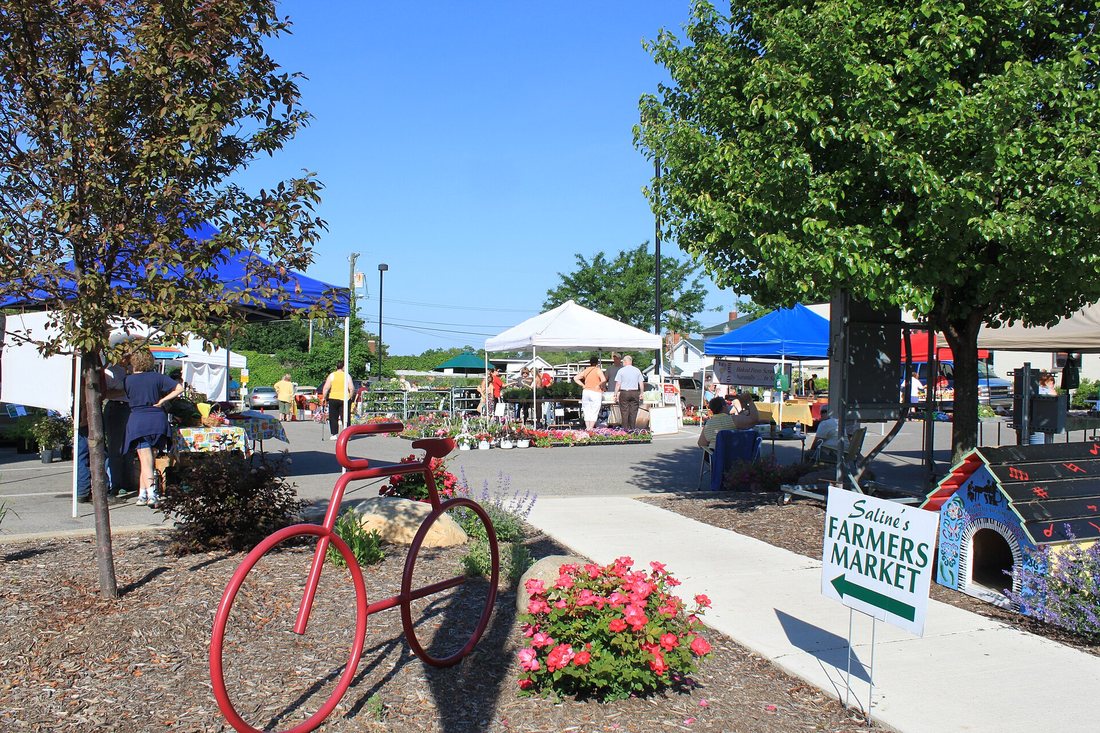
A coffee stall in Michigan is two businesses in the eyes of the law. Selling a sealed bag of roasted coffee is one, and it can be done from a home kitchen with no licence. Handing someone a cup of brewed coffee is the other, and it is food service, licensed by the county health department. Most of the surprises on this page come from the line between the two. Where each licence falls on the road from a market table to a shop is on Start Here.
I am not a lawyer and this is not legal advice. Everything here is from the statute, on MDARD’s pages, in the Michigan Modified Food Code or a health department’s own documents, as published in October 2026. Where the published sources do not answer a question, the page says so, and the last section lists the questions to put to MDARD (the Michigan Department of Agriculture and Rural Development, which runs the cottage food law) and the health department in writing, before spending money.
The short version
| What | Rule |
|---|---|
| Bagged roasted coffee, whole bean or ground | A cottage food. No licence. Must be roasted, bagged and labelled in the home kitchen. |
| A cup of brewed coffee | Not a cottage food. Needs a food service licence from the county health department. |
| Coffee brewed at home and carried to the market | Not allowed under either route. Brew it at the stall. |
| Free tasting samples of brewed coffee, brewed at the stall | Allowed under a food service licence. Without one, not settled. |
| Ice made at home | Not allowed in drinks sold from a licensed booth. |
| Cold brew steeped at home | Not allowed. It has to be made in a licensed kitchen. |
| Honey syrup mixed at home | Not allowed. Mix it at the licensed booth. |
| Cookies and scones from the home kitchen | Cottage foods, sold wrapped and labelled. Not loose from a tray. |
| Jam sweetened with honey or maple syrup | Can qualify as a cottage food if it reaches 65% soluble solids. |
| Sales tax | Bags of coffee are exempt. Anything in a cup is taxed at 6%. |
The licence names used here are defined in the glossary.
Made at home, or made at the stall
The single most useful rule on this page, because it decides what can be done the night before. MDARD’s guidance for a licensed temporary booth says “nor can there be any home cooked/prepared foods served” and that anything prepared off-site “must be prepared in a licensed food establishment,” under a written commissary agreement (a commissary is a licensed kitchen a mobile or temporary operator uses as its base). Its cottage food pages say beverages may not be made under the exemption at all. Put together:
| At home, the night before or that morning | At the stall, under a food service licence | At the stall, with no licence | |
|---|---|---|---|
| Roast, bag and label coffee | Yes (cottage food) | — | — |
| Wrap and label cookies and scones; cut cookie samples | Yes (cottage food) | — | — |
| Brew coffee — to sell, or to pour as samples | No | Yes | Samples only, and not settled (question 2) |
| Make ice, cold brew, or honey syrup | No | Syrup: yes, mixed at the booth. Ice: bought, bagged. Cold brew: only from a licensed kitchen | No |
| Boil plain water and carry it in airpots | Not addressed; water from an approved supply is not a food the guidance lists (Hot Water and Power) | — | — |
| Grind a bag already sold | — | Not addressed (question 3) | Not addressed |
So the tasting pots are brewed at the stall, from water carried hot, and the first pots of the day are brewed during set-up, not in the home kitchen. Sampling and The Stall follow that order.
Bagged coffee: the cottage food exemption
MDARD’s cottage food list allows “Ground coffee or roasted coffee beans.” It does not allow drinks: “Beverages are not allowed to be produced under Food Law exemptions for Cottage Food Operators,” and “No ready-to-drink beverages.”
Where it has to be made. The statute defines a cottage food operation as “a person who produces or packages cottage food products only in a kitchen of that person’s primary domestic residence.” MDARD’s FAQ rules out a cottage, a motor home, a shed or a barn, and a rented commercial kitchen. Nothing published addresses a coffee roaster in an attached garage, on a porch or outdoors. On the plain words, none of those is the kitchen. A roaster makes smoke and chaff, so this is the first question to ask MDARD.
Storage. “Cottage food products must be stored only in the primary domestic residence.” MDARD allows the kitchen, a spare room or a dry basement, and adds: “You may not use a garage, shed, barn, or other outbuilding as a storage facility.” That covers ingredients as well as finished bags, so the green coffee lives in the house.
The label. Every bag needs:
- the name and physical address of the home kitchen (or the registration number and phone number from the MSU Product Center’s voluntary registration, a one-time fee of not more than $50);
- the product name;
- the ingredients, in descending order by weight;
- the net weight, with the metric equivalent;
- allergens; and
- this statement, in at least 11-point type in a contrasting colour: “Made in a home kitchen that has not been inspected by the Michigan Department of Agriculture and Rural Development.”
Hand-printed labels are acceptable if legible and in permanent ink. A sample label, the federal placement and type-size rules, and a label checklist are on Packaging Coffee for Sale.
Where it can be sold. Direct to the consumer only: markets, roadside, and, since March 2026, by internet or mail order within Michigan if the buyer has had the chance to “directly interact with” the seller, in person or by video (Selling Online and by Mail). No wholesale, no shops, no restaurants, no sales outside the state (Wholesale and Consignment covers what selling to a café would take).
The cap. Gross sales of $50,000 a year, or $75,000 for products priced at $250 or more per unit. MDARD may adjust the figure each October from 2026; on 5 October 2026 its selling page still showed $50,000. MSU Extension reads the cap as applying separately to cottage foods, to honey and to maple syrup. (MSU’s own coffee page still says $25,000, which is out of date.) Keeping the sales records MDARD asks for is easiest with the point-of-sale categories on Taking Cards.
Grinding at the stall. Cottage foods “must be prepackaged and properly labeled before sale,” and MDARD says a vendor needs a licence if they “process and/or package food on-site.” The Food Law’s definition of processing names grinding. So opening a bag, grinding it and re-bagging it at the market is outside the exemption on a plain reading. The safe version is two stacks of sealed bags, whole bean and ground, both packed at home (Grinders). Whether grinding a bag the customer has just bought, as a courtesy, is acceptable is not answered in any published source.
Brewed coffee: a food service licence
MDARD: food service establishments, including “coffee shops… food concessions… temporary food service establishments, and transitory food units… are licensed by Local Health Departments.” At a farmers market that means the county.
| Licence | What it is | Fit for a weekly market stall |
|---|---|---|
| Temporary Food Establishment | One location, “not to exceed 14 consecutive days” | The usual start: one licence per event |
| Transitory Food Unit | An annual, statewide licence for a non-fixed operation; MDARD’s list includes tents | Plan review first (the department checks drawings and an equipment list before licensing), then two paid inspections a year at $90 each. A Truck or Trailer uses the same licence. |
| Mobile Food Establishment | Must return to a licensed commissary every 24 hours | Needs a commissary |
Fees from each department’s own schedule. This is the one table of county fees for the business pages; Prices and Customers, The Numbers and A Truck or Trailer draw on it.
| Health department | Temporary licence | Transitory Food Unit |
|---|---|---|
| Mid-Michigan District | $104, plus $35 if the application is under 30 days before the event | not in the memo |
| Central Michigan District | $110; a limited “in-office” temporary licence $70 | $165, plus the two $90 inspections |
| Shiawassee County (2026) | $114; $225 with less than four days’ notice | $155, plus $90 for each inspection; a general food-establishment plan review is listed from $688 |
| Bay County (2026) | $126 with a week’s notice, rising to $251 on the day | see schedule |
| Ingham County; District Health Department #10 | not published | not published |
A fixed shop goes through plan review with the county first; the fees, the 30-business-day review and the sinks the manual requires are on Opening a Coffee Shop.
A temporary licence does not require a certified food protection manager — a person who has passed an accredited food-safety exam such as ServSafe Manager (Food-Safety Certification). A Transitory Food Unit, a mobile unit and a shop each do.
One licence per market day, or one for the season? A weekly market from May to October is not a single 14-day event. Whether a department issues a temporary licence for each market day, or sends a weekly vendor to a Transitory Food Unit, is local practice and is not published. At $104 a market day a season costs more than $2,000; a Transitory Food Unit is a few hundred. That question decides the cost of selling cups.
A possible exemption for black coffee only. The Food Law exempts “a temporary food establishment with no food preparation using only single-service articles and serving only non-potentially-hazardous food or beverage.” (Single-service articles are cups, lids and stirrers used once and thrown away. A non-potentially-hazardous food is one that needs no time or temperature control to stay safe; the Food Code’s newer term is “not TCS”.) MDARD’s examples are beer tents and soft-drink stands. The statute elsewhere treats a “hot beverage” as non-potentially-hazardous. No source says whether brewing coffee counts as “food preparation” for this purpose. Milk, condensed milk, egg coffee, cold brew and ice all take a stall outside it, so the exemption could only ever cover black coffee in paper cups.
What the inspector expects at the booth
From MDARD’s temporary food establishment guidance, which the county departments hand out:
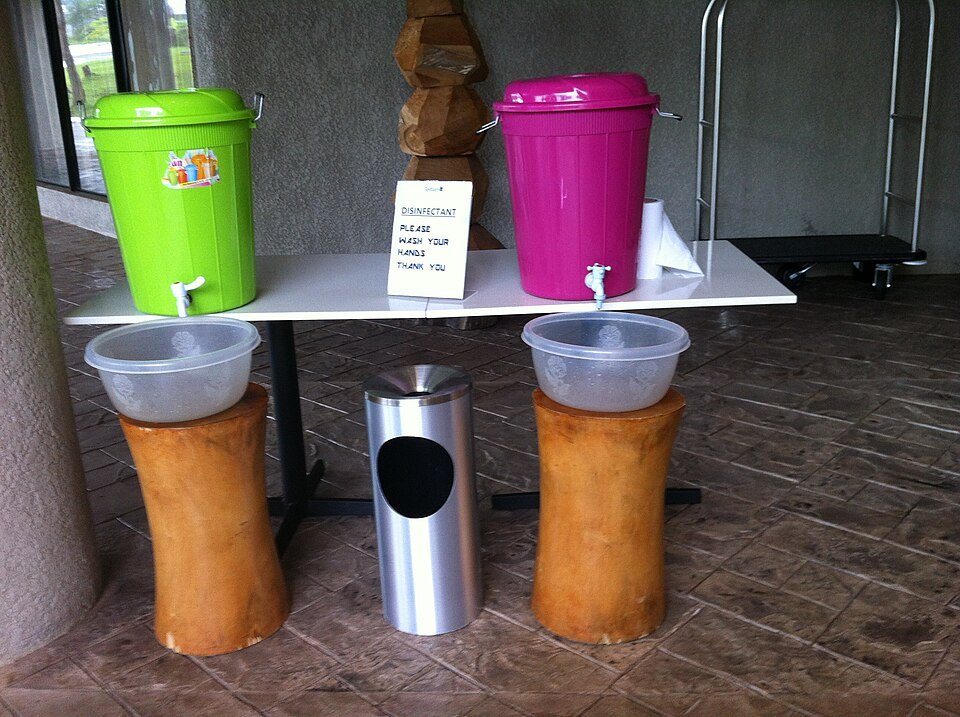
- A handwashing station. A portable unit, or “a large insulated container with a spigot” giving warm water over the hands into a waste bucket of equal or larger size, with soap, paper towels and a bin. Hand sanitizer does not replace it.
- A probe thermometer, 0 to 220 °F. “If a thermometer is not available… a license may not be issued!”
- Sanitizer and the matching test strips. Without them the inspector “cannot issue your license.” The code’s cleaning frequencies and sanitizer strengths for coffee equipment are on Cleaning and Descaling.
- Water from an approved source. A public supply or a tested well; food-grade hose; bottled water or a potable tank if the department approves.
- Wastewater carried away, never dumped on the ground or in a storm drain.
- A canopy overhead, and mats or a platform over grass or gravel.
- Everything six inches off the ground.
- Utensils. Either three wash basins big enough to submerge the largest item, or enough clean spares that nothing is washed on site. A dripper, a press or a phin used all day counts.
- Condiments in pumps, protected squeeze bottles or single-serve packets. That governs the honey, sugar and creamer.
- A person in charge who knows the rules, present the whole time.
What a licence takes away
This is the part that changes the plan, and the source of the table at the top. MDARD’s guidance for a licensed temporary booth says:
“All foods must be obtained from sources that comply with the law… Home canned foods are NOT allowed, nor can there be any home cooked/prepared foods served. All foods that are prepared off-site for service at the TFE must be prepared in a licensed food establishment… Ice must be from an approved source. For most TFEs this means commercially bagged ice. Foods prepared under the Michigan Cottage Food Law are not allowed to be served to the public in a licensed TFE.”
The Food Code says the same of any licensed establishment: “Food prepared in a private home may not be used or offered for human consumption in a food establishment.”
Four things follow.
1. Home-made ice is out (Iced Coffee and Ice). Ice is a food under the Food Code, and home-produced ice is excluded from cottage food by name. Drink ice has to be commercially bagged, or come from an ice machine in a licensed kitchen. Clear ice and large cubes are still possible; they have to be made somewhere licensed, or bought.
2. Cold brew made at home is out. It needs a 12 to 24 hour steep, so it cannot be made in a market morning. It would have to be steeped in a licensed kitchen under a commissary agreement and held at 41 °F. Michigan has published nothing on cold brew; Wisconsin’s regulator treats it as needing refrigeration and requires a variance for kegged or nitro cold brew held over 48 hours. Iced coffee brewed hot at the stall and poured over bagged ice avoids all of it.
3. Honey syrup has to be mixed at the booth (Honey in Coffee). A honey-and-water syrup made at home is a home-prepared food, and MDARD’s cottage list says “No simple syrups.” Whether my own honey, bottled at home under the honey exemption, counts as an approved ingredient in a licensed drink is not answered in any published source. Honey is not a cottage food and may lawfully be sold wholesale, which argues that it is an approved source. The fallback is certain: set out labelled jars or squeeze bottles and let customers add it themselves.
4. The beans themselves are the open question. Coffee roasted in a home kitchen is, on a strict reading, home-prepared food. The simple plan of roasting at home and brewing that coffee at the stall under a licence depends on the health department accepting home-roasted beans as an ingredient. No published source answers it. If the answer is no, the choices are to roast the brewing coffee in a licensed kitchen, to brew with beans from a licensed roaster until the shop exists, or to sell only bags and samples.
Whether sealed cottage-food bags, cookies and jam may be sold from the same tent as the licensed drinks, or need a separate table, is also unanswered. The guidance bars cottage food from being served in the licensed booth; it does not mention selling it sealed alongside.
Samples
MDARD’s farmers-market licensing guide says: “Sampling is exempt from licensing. All vendors may offer samples.” Its cottage food page says sampling is allowed as long as the product is non-potentially-hazardous, is not “cooked or prepared in a way that makes it a potentially hazardous food,” and the vendor follows the state’s sampling guidelines: bite-size portions, a canopy, and a handwashing set-up. Those guidelines say samples made ahead should be made “at a licensed kitchen,” with one named exception: a cottage food operator may cut baked goods into samples at home.
What that settles for coffee:
- Under a food service licence, brewing tasting cups at the stall is part of the licensed operation. This is the certain route.
- Brewing the samples at home is not allowed on either route. A pot of coffee is a beverage, which the cottage exemption excludes, and the sampling guidelines’ home-kitchen exception covers cutting baked goods, not making drinks.
- Brewing samples at the stall with no licence is the unsettled case. In favour: every vendor may sample what they sell, and black coffee is not a hazardous food. Against: what is sold is beans, a brewed cup is a “ready-to-drink beverage,” the guidelines say “cooking demonstrations must typically obtain a license,” and MSU Extension’s advice to cottage vendors is that samples be pre-packaged in the home kitchen, which cannot work for a drink. No Michigan source settles it. It is question two on the list below.
How to run tastings either way is on Sampling.
Milk, condensed milk and egg coffee
Under the Food Code, cold food that needs temperature control is held at 41 °F or below and hot food at 135 °F or above.
| Item | Status |
|---|---|
| Fresh milk, cream, half-and-half | Needs temperature control; must be bought pasteurized, Grade A (The Drinks) |
| Sealed shelf-stable creamers, unopened UHT cartons | No control needed while sealed |
| Sweetened condensed milk, unopened | No control needed |
| Sweetened condensed milk, opened | Not settled; expect the inspector to want it cold or time-marked |
| Hot black coffee | Treated as non-hazardous |
| Whipped egg cream for egg coffee | Needs temperature control |
Pasteurized eggs are required, not optional. The Food Code says pasteurized eggs or egg products “shall be substituted for raw eggs” in foods including “egg-fortified beverages.” MDARD’s temporary-event guidance adds that it “does not recommend serving undercooked foods at a temporary food event,” so expect questions and bring the carton.
Time instead of temperature. The Food Code lets a working supply sit out for up to four hours if there is a written procedure, the food starts at 41 °F or colder, and it is marked with the time four hours on, then discarded. That is the lawful way to run a small jug of milk or a bowl of egg cream through a four-hour market without a refrigerator, if the department approves the procedure.
Cookies, scones and jam
Baked goods are cottage foods: cookies, quick breads, muffins, and pastries with shelf-stable icings. Not allowed: anything needing refrigeration, cream cheese frosting, custard or cream fillings. A plain scone or one with a sugar-and-lemon glaze is fine; a glaze made with milk or cream is not addressed, so assume not.
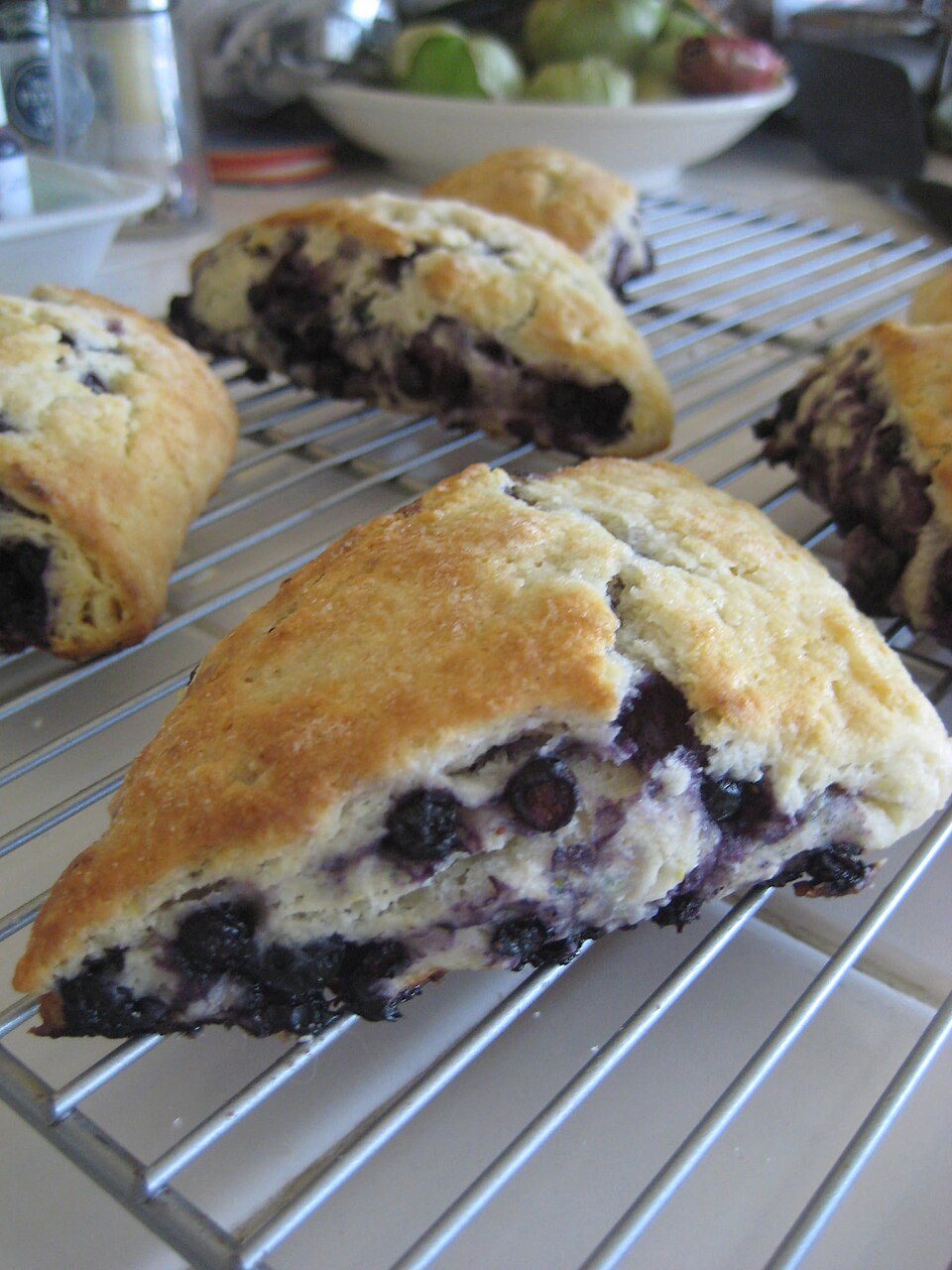
They have to be wrapped and labelled at home, each sale unit carrying the full cottage label with sub-ingredients and allergens. Selling loose cookies from a covered tray with tongs is the licensed-bakery model and is not open to a cottage operator.
Jam. Michigan allows “Fruit jams and jellies (as defined in 21 Code of Federal Regulations part 150)” and bans “low-sugar or no-sugar jams or jellies” and fruit butters. The federal standard permits “nutritive carbohydrate sweeteners” without defining the term in that part; FDA’s other standards list both honey and maple syrup under that name. So a jam sweetened only with honey, only with maple syrup, or with both can qualify, on three conditions:
- The fruit is on the standard’s list. Blackberry, blueberry, cherry, grape, raspberry, rhubarb and strawberry are; so are apricot, peach, pear and plum. Apple counts in a jam only in combination with another fruit.
- The finished jam reads 65% soluble solids or more on a refractometer. This is the condition that matters. A honey-sweetened jam that stops short is a “low-sugar” jam and is not allowed.
- It is in glass, shelf-stable, and labelled as a cottage food with the honey or maple syrup in the ingredient list.
Neither MDARD nor MSU Extension has said anything specific about honey- or maple-sweetened jam. Because “honey-sweetened” sounds like “low-sugar,” it is worth getting MDARD’s answer by email and keeping a refractometer reading for every batch. A jam that does not qualify has to be made in a licensed kitchen.
Sales tax
From the Department of Treasury’s bulletin RAB 2026-2. Food is exempt; “prepared food” is taxed at 6%. Prepared food is food “sold in a heated state,” or “two or more food ingredients mixed or combined by the seller for sale as a single item,” or food sold with utensils such as cups.
| Item | Tax |
|---|---|
| Bagged coffee | Exempt. (Whether a blend of two coffees is “two ingredients mixed” is a question for Treasury.) |
| Any coffee in a cup, hot or iced | 6% |
| Honey in jars | Exempt |
| Wrapped cookies and scones, no utensils | Exempt as bakery items |
| House jam | Probably taxable: Treasury’s own example taxes a market vendor’s home-made soup as ingredients “mixed or combined by the seller” |
| T-shirts, grinders, brewing gear | 6% |
A sales tax licence is needed either way, and several markets ask for a copy. It is free: register online through Michigan Treasury Online or on Form 518; Treasury’s FAQ says a seller at only one or two events a year may instead file Form 5089, the concessionaire’s return. Setting Up the Business has the rest of the paperwork.
The markets have rules of their own
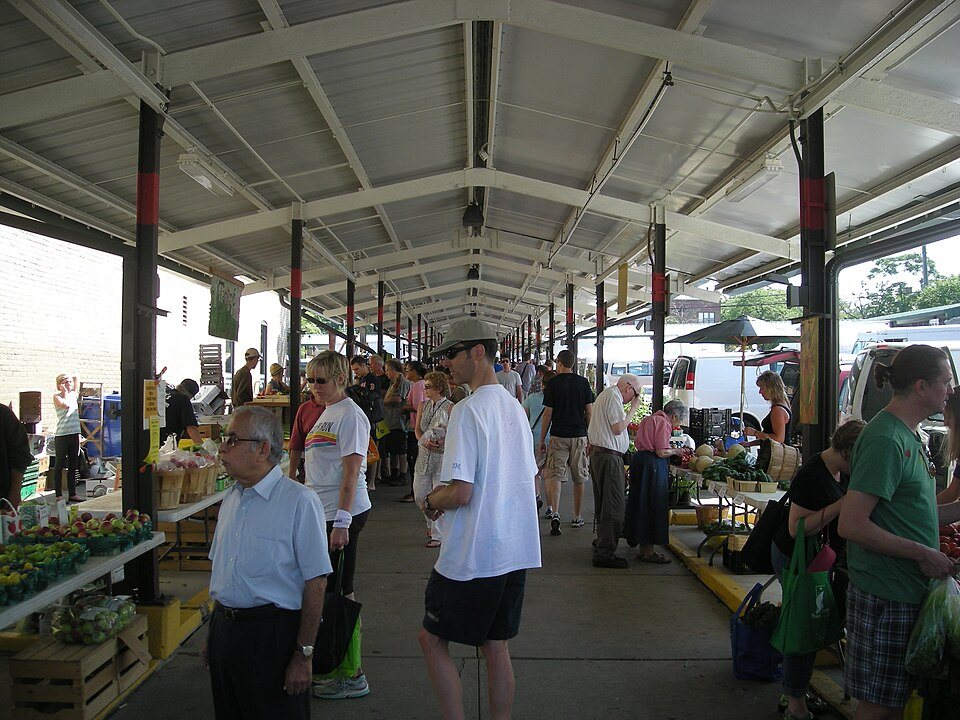
A market can be stricter than the state, and they differ a great deal. From each market’s published rules:
| Market | Day fee | Power | Insurance asked | Notes |
|---|---|---|---|---|
| East Lansing | $30 a day, $440 a season | $5 a day; no generators | $500,000, city named as insured | Prepared food must meet county and city rules |
| Meridian Township | $30 a day Saturday, $450 a season | Electricity can be requested | $500,000 or a hold-harmless | Coffee beans listed as an “exotic” item needing origin labelling |
| Holt | on the application | not stated | encouraged, not required | |
| Midland | $35 a day, $550 a season, $30 to apply | No power; inverter generator, 70 dB or less | $1,000,000 | Coffee by the cup classed with food trucks |
| Mount Pleasant | $25 a day outside, $40 pavilion | $1 a day; quiet generators case by case | $1,000,000 | Food-safety training required even of cottage vendors |
| Ludington (2022 packet, the newest published) | $20 a day, $175 a season | not stated | not stated | ”NO Cottage Foods will be accepted” and no food prepared for consumption on the premises |
Ludington’s rules, if still current, would shut out both halves of this plan at that market. Each market should be asked how it classes roasted coffee, since the beans are imported and many markets are producer-only. Almost every market asks for $500,000 to $1,000,000 of liability cover; what that costs is on Insurance.
Other things to know
- Scales. Every bag must hold at least its stated net weight. A scale used at the stall to sell by weight has to be a certified legal-for-trade model, placed in service by a registered agency. Whether the scale used at home to fill fixed-weight bags must be certified is not stated in MDARD’s published guidance.
- “Organic.” Roasting is handling. Above $5,000 a year of organic sales the roaster must be certified, even when the green coffee was. What the exempt roaster may and may not print, the certification cost and the penalty: Labels and Certifications.
- Well and septic. MDARD asks that a private well be tested at least annually, and that the septic system be evaluated before starting.
- Local rules still apply. The exemption does not override township ordinances.
Questions to ask before spending money
The business myths most often got wrong are gathered on one page.
MDARD (800-292-3939; [email protected], include the zip code):
- May a roaster run in an attached garage, on a porch or outdoors and still count as the home kitchen?
- May a cottage food operator brew their own beans at the stall and give free tasting cups as a sample, without a licence? With what handwashing set-up?
- May a sealed, labelled bag be ground for the customer after the sale?
- Is a jam sweetened only with honey or maple syrup, cooked to 65% soluble solids, an allowed cottage food? What record is wanted?
- Has the $50,000 cap been adjusted for the year from 1 October 2026?
- Is honey bottled at home under the honey exemption an approved ingredient for a licensed food service run by the same person?
- Does the scale used at home to fill fixed-weight bags need to be a certified model?
The county health department’s environmental health office:
- Does a stall serving only black coffee in disposable cups fall within the exemption in MCL 289.4105(1)(f)?
- May a licensed booth brew coffee that the licence holder roasted at home under the cottage food exemption? If not, what source is acceptable?
- For a weekly market: a temporary licence per market day, or a Transitory Food Unit? What does plan review cost, and can a tent qualify?
- May sealed cottage-food bags, cookies and jam be sold from the same tent as the licensed drinks?
- Is cold brew treated as needing temperature control, and may it be steeped in a commissary?
- Is egg coffee with pasteurized eggs acceptable at a temporary event, and is a written four-hour procedure acceptable for the egg cream and milk?
- Is opened sweetened condensed milk treated as needing temperature control?
- Is water carried from a home well acceptable, and with what test?
- May plain water be boiled at home and carried to the booth hot in airpots, for brewing at the booth?
Treasury: whether a blend of two roasted coffees, and a seller-made jam, are taxable as prepared food.
Where the rules land on the other pages
- Sampling: tastings, brewed at the stall.
- The Stall: the inspector’s list as a layout and a checklist.
- Iced Coffee and Ice: bagged ice and cold brew.
- Honey in Coffee: syrup mixed at the booth.
- The Drinks: milk, condensed milk and egg coffee.
- Grinders: why bags are ground at home.
- The Numbers: a licence per market day against a Transitory Food Unit.
- A Truck or Trailer: the same licence on wheels.
- Serving Hot Drinks Safely: temperatures, lids, first aid.
- Food-Safety Certification, Insurance, Setting Up the Business and Selling Online and by Mail.
Sources
- Michigan Food Law: MCL 289.1105, 289.1107, 289.1109, 289.1111, 289.2129, 289.3119, 289.4102, 289.4103, 289.4105, 289.4117, 289.6137.
- MDARD: cottage food pages (What Can I Make?, Labeling, Selling and Samples, Getting Started and FAQ); Farmers Market Licensing Guide and FAQ; “Guidelines for Providing Safe Food Samples at Farmers Markets” (2015); “Applying for and Safely Operating a Temporary Food Establishment License”; Food Service Licenses; fee schedule; Maple Syrup and Honey page; Weights and Measures.
- Michigan Modified Food Code (2009 FDA Food Code as adopted): §§ 1-201.10, 3-201.11, 3-202.14, 3-202.16, 3-302.13, 3-501.16, 3-501.19, 3-502.11.
- Michigan Department of Treasury, Sales Tax License FAQ.
- Fee schedules of the Mid-Michigan District, Central Michigan District, Shiawassee County and Bay County health departments.
- 21 CFR 150.140 and 150.160 (jelly, jam); 21 CFR 131.170 and part 168 (sweetener lists); 7 CFR 205.101 (organic).
- Michigan Department of Treasury, Revenue Administrative Bulletin 2026-2; MCL 205.54g.
- Published vendor rules of the East Lansing, Meridian Township, Holt, Midland, Mount Pleasant and Ludington farmers markets.
- MSU Extension and MSU Product Center pages on coffee, honey and sampling; Wisconsin DATCP guidance on cold brew.
Comments (0)