Starting a Coffee Business · 28 of 39
Smoke, Air Permits and the Neighbours
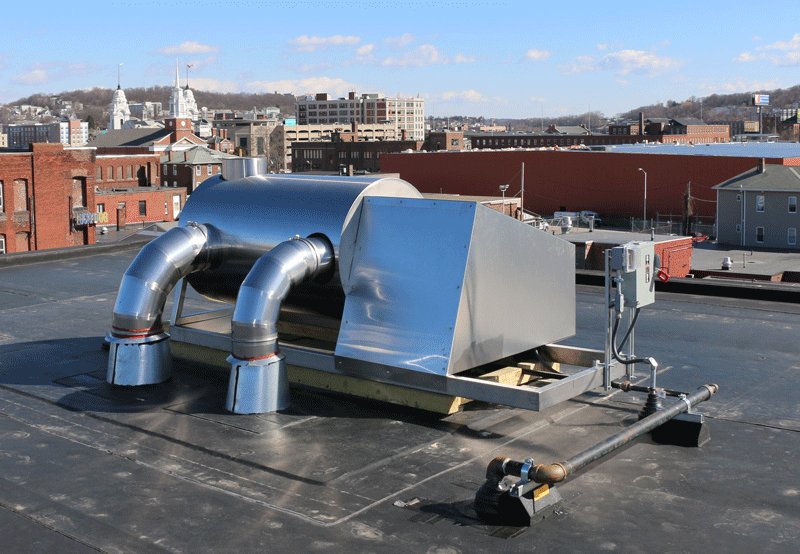
Roasting coffee makes smoke, and the smell that a customer loves in a café is the smell a neighbour complains about at seven in the morning. A home roaster making a few pounds a week deals with that through a window and a range hood. A shop roaster deals with it through a duct, a stack, sometimes an afterburner, and a conversation with the state’s air-quality regulators. I have roasted by home methods, in a popper and a skillet, and I own no roasting machine; a Behmor and later an Aillio Bullet are the plan (Choosing a Roaster). What follows covers what comes out of a roaster, what Michigan’s air rules say about it, what the controls cost, and the questions to put to the state and the township before a real roaster goes in.
None of this is legal advice. The rules are quoted so that the right question can be asked of the people who decide.
The short version
| Question | Answer, as of October 2026 |
|---|---|
| What does roasting give off? | Smoke (fine particles), organic vapours including aldehydes and acids, carbon monoxide and carbon dioxide, water vapour, and chaff. |
| Does a Michigan roaster need an air permit? | Michigan’s rule requires a permit to install for any process that may emit an air contaminant, unless an exemption applies. No exemption names coffee roasting. |
| Which exemptions might fit? | Rule 290 (units with limited emissions, with records kept), and possibly Rule 282’s exemptions for residential cooking equipment and for food preparation at restaurants and retail shops. EGLE decides; ask. |
| How much does a small roaster emit? | By the EPA’s factors, a roaster doing 40 lb of green a week gives off well under a pound of organic vapour a month. Rule 290’s limit for those is 1,000 lb a month. Toxic compounds have far lower limits, and there is no published figure for them per roaster. |
| Who to call | EGLE’s Environmental Assistance Center, 800-662-9278, [email protected]. |
| Afterburner cost | A catalytic afterburner for a small drum is listed at $11,500 to $22,000. |
| Venting a home roaster | Outdoors, a range hood that vents outside, or a duct to a window. Aillio wants a fan on any tube longer than 2.5 m. |
| The neighbours | Odour complaints go to the township or the city under its nuisance ordinance, and to EGLE under the state’s nuisance rule. A permit does not protect against a nuisance complaint. |
| Fire | Chaff burns. An ABC extinguisher beside the roaster, the chaff emptied every few batches, never water on a bean fire. |
What a roaster gives off
The US Environmental Protection Agency’s emission-factor handbook, AP-42 section 9.13.2, Coffee Roasting, describes it plainly: “Particulate matter (PM), volatile organic compounds (VOC), organic acids, and combustion products are the principal emissions from coffee processing.” The roaster itself “is the main source of gaseous pollutants, including alcohols, aldehydes, organic acids, and nitrogen and sulfur compounds.”
| Emission | What it is | Where it comes from | Why it matters |
|---|---|---|---|
| Smoke (particulate) | Fine droplets and solids, visible as haze | The beans, mostly after first crack; dark roasts make much more | Visible plume; soot on the stack and the neighbour’s siding |
| Volatile organic compounds (VOC) | Vapours of carbon compounds: the smell | The beans, through the whole roast | The odour; some are irritants; regulated as ozone precursors |
| Aldehydes and organic acids | A family within the VOCs | The beans | The sharp part of the smell; some are listed toxic air contaminants |
| Carbon monoxide | A colourless, poisonous gas | Gas burners, and the beans | A reason never to roast with gas in a closed room |
| Carbon dioxide and water vapour | Burners and beans | Harmless in the open air | |
| Chaff | The papery silverskin that blows off the beans | The beans, from yellowing on | Fuel for fires; litter if it leaves the stack |
Smoke rises sharply with roast degree. The stage table on Home Roasting, Step by Step runs from light smoke before first crack to “pungent smoke” past French. A roaster who mostly roasts light to medium makes much less smoke than one roasting dark.
How much, in numbers
AP-42 gives emission factors in pounds per ton of green coffee. They come from tests on large industrial roasters in New Jersey and California between 1987 and 1992, and the EPA rates them “D”, warning that such factors “may not be representative of the industry.” They are still the only published figures.
| Roaster (AP-42) | Organic vapour (VOC) | Carbon monoxide | Filterable particulate |
|---|---|---|---|
| Batch roaster, no control | 0.86 lb per ton of green | no data | no data |
| Batch roaster with a thermal oxidizer | 0.047 lb per ton | 0.55 lb per ton | 0.12 lb per ton |
| Continuous roaster, no control | 1.4 lb per ton | 1.5 lb per ton | 0.66 lb per ton |
Applied to roasters of the sizes on Choosing a Roaster, that works out as follows (a ton here is 2,000 lb; uncontrolled batch factor):
| Roaster and use | Green coffee a month | Organic vapour a month |
|---|---|---|
| Behmor, 10 lb of green a week | about 43 lb | about 0.02 lb |
| Aillio Bullet R2, 40 lb a week | about 173 lb | about 0.07 lb |
| 5 kg shop drum, 4 hours a day, 5 days a week | about 3,800 lb | about 1.6 lb |
| 15 kg drum, 8 hours a day, 22 days a month | about 23,000 lb | about 10 lb |
On organic vapour in total, even a busy 15 kg roaster is a hundred times under the 1,000 lb a month in Michigan’s limited-emissions exemption (below). The open question is not the total but which compounds are in it: the same rule allows only 20 lb a month of certain toxic air contaminants, and none at all of the most potent ones. AP-42 gives no figures per compound for coffee, and no Michigan guidance on roasters exists to fill the gap. That is the first question for EGLE.
Michigan’s air rules
Michigan’s air rules are administered by the Department of Environment, Great Lakes, and Energy (EGLE), Air Quality Division.
The permit to install
Rule 336.1201 is the starting point:
“Except as allowed in R 336.1202, R 336.1277 to R 336.1291, or R 336.2823(15) a person shall not install, construct, reconstruct, relocate, or modify any process or process equipment, including control equipment pertaining thereto, which may emit any of the following, unless a permit to install that authorizes such action is issued by the department.”
EGLE’s permit-to-install page puts it in one line: Rule 201 “requires a person to obtain an approved Permit to Install for any potential source of air pollution unless the source is exempt from the permitting process,” and its list of examples includes “ovens.”
So the question is never “is a coffee roaster big enough to need a permit?” It is “which exemption covers it?”
The exemptions, and where a roaster might fit
The exemptions are Rules 278 to 291, collected in EGLE’s Permit to Install Exemption Handbook (February 2020). None of them mentions coffee or roasting. The ones that come closest:
| Rule | Text | Does a coffee roaster fit? |
|---|---|---|
| R 336.1282(2)(a)(v) | “Bakery ovens and confection cookers where the products are edible and intended for human consumption,” electric or gas-fired, under 10,000,000 Btu an hour | A roaster is not a bakery oven or a confection cooker. Unlikely, but ask |
| R 336.1282(2)(d) | “All residential cooking equipment.” | Perhaps a home roaster in a home kitchen. Whether it still counts once the coffee is sold is a question |
| R 336.1282(2)(e) | “Equipment, including smokehouses, at restaurants and other retail or institutional establishments that is used for preparing food for human consumption.” | Perhaps a roaster in a café that roasts for its own counter and shelf. A roaster selling mostly wholesale is harder to fit |
| R 336.1285(2)(dd) | Equipment for “cooking, drying, coating, and packaging grain-based food products” | Coffee is not grain. No |
| R 336.1290 | Emission units with limited emissions | The general fallback. Below |
Rule 290, the limited-emissions exemption. An emission unit is exempt if, among other conditions:
- its organic vapour and other contaminants are “not more than 1,000 or 500 pounds per month,” uncontrolled or controlled;
- toxic air contaminants with screening levels between 0.04 and 2.0 micrograms per cubic metre “shall not exceed 20 or 10 pounds per month,” uncontrolled or controlled;
- it emits no toxic air contaminants with a screening level below 0.04 micrograms per cubic metre;
- and the records exist: “A description of the emission unit is maintained throughout the life of the unit,” with “records of material use and calculations identifying the quality, nature, and quantity of the air contaminant emissions,” kept “on file for the most recent 2-year period and … made available to the department upon request.”
A screening level is EGLE’s concentration in outdoor air below which a compound is not expected to harm people; the lower the number, the more potent the compound.
Claiming an exemption is not a form; it is a file. Rule 278a says the owner must be able to show “the specific exemption being used,” a description and installation date, and an analysis that the exclusions in Rule 278 do not apply, and that this “shall be provided within 30 days of a written request from the department.” The roast log — green coffee in, per batch, per month — is most of the material-use record Rule 290 asks for.
The nuisance rule, which applies whatever the permit says
“A person shall not cause or permit the emission of an air contaminant or water vapor in quantities that cause, alone or in reaction with other air contaminants, either of the following: (a) Injurious effects to human health or safety, animal life, plant life of significant economic value, or property. (b) Unreasonable interference with the comfortable enjoyment of life and property.”
An exemption from the permit to install is an exemption from the permit, not from this. Odour complaints about any business, permitted or not, can bring an EGLE inspector under Rule 901, and the township or city can act under its own nuisance ordinance as well.
What changes elsewhere in the US
Air rules are set by states and, in some states, by regional air districts, and they differ more than food rules do.
| Where | Rule | Coffee roasters |
|---|---|---|
| Michigan | Permit to install unless exempt; no roaster-specific exemption | Rule 290 records, or ask about Rule 282 |
| Southern California (South Coast AQMD) | Rule 219, amended June 5, 2026, equipment not requiring a written permit | Exempts “Coffee roasting equipment with a maximum batch capacity of 15 kilograms or less, and the control equipment used exclusively to vent the equipment” |
| Elsewhere | State air agency or local district | Look for a named exemption by batch size; where none exists, the general small-source exemption is the usual route |
The South Coast rule is the clearest example of a regulator drawing the line by batch size, and 15 kg is well above any machine a market stall would start with. Michigan draws no such line.
Controls, and what they cost
| Control | How it works | Cost, as of October 2026 | What it removes |
|---|---|---|---|
| Cyclone and chaff collector | Spins chaff out of the exhaust into a bin | Built into most drum roasters | Chaff, some coarse dust; not smoke or smell |
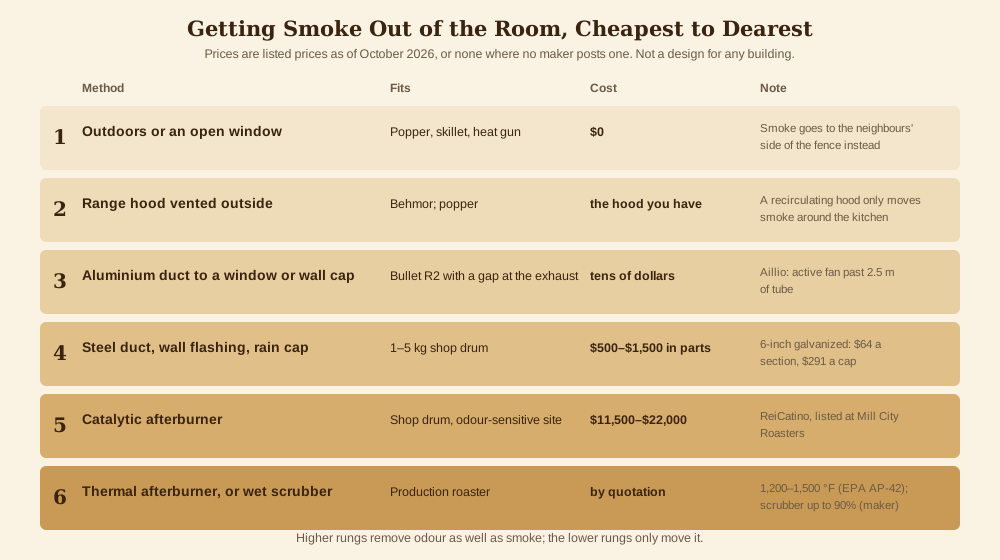
| Duct and stack | Carries exhaust outside and above the roofline | Single-wall vent pipe from Mill City Roasters: 6-inch galvanized $63.79 a section, stainless $132.38; 6-inch galvanized rain cap $290.75; wall flashing kit $119.39 | Nothing; it moves the smoke |
| Using the roaster’s own burner as an afterburner | Exhaust routed back past the flame | Built into some designs | Some smoke and odour; AP-42 notes separate oxidizers “are more efficient” |
| Catalytic afterburner | A catalyst burns the smoke at a lower temperature than a flame needs | ReiCatino, electric, two sizes, $11,500 to $22,000 at Mill City Roasters | Smoke and most odour |
| Thermal afterburner (thermal oxidizer) | A separate burner holds the exhaust at “between 650°C and 816°C (1200°F and 1500°F)” (AP-42) | Quoted per installation; burns gas the whole time the roaster runs | Smoke and odour; the method in most AP-42 test data |
| Wet scrubber | A water spray cools the exhaust until smoke condenses and is washed out | Quoted; Vortx’s Ecofilter, described in Daily Coffee News, uses 20 gallons to start and 1–2 an hour; the company claims emissions cut “by up to 90%“ | Smoke, much odour, chaff |
For scale, the same seller lists a complete new 2 kg roaster at $19,500 to $20,500 and a used 2 kg electric roaster with its afterburner at $24,500. An afterburner can cost as much as the roaster it sits on, which is why Roasting Machines calls the building, not the machine, the hard part.
The Aillio Bullet and the Behmor both use electric heat, so neither burns gas indoors. The Behmor has a built-in smoke-suppressing element. Neither maker publishes a measurement of its machine’s smoke.
Venting a home roaster
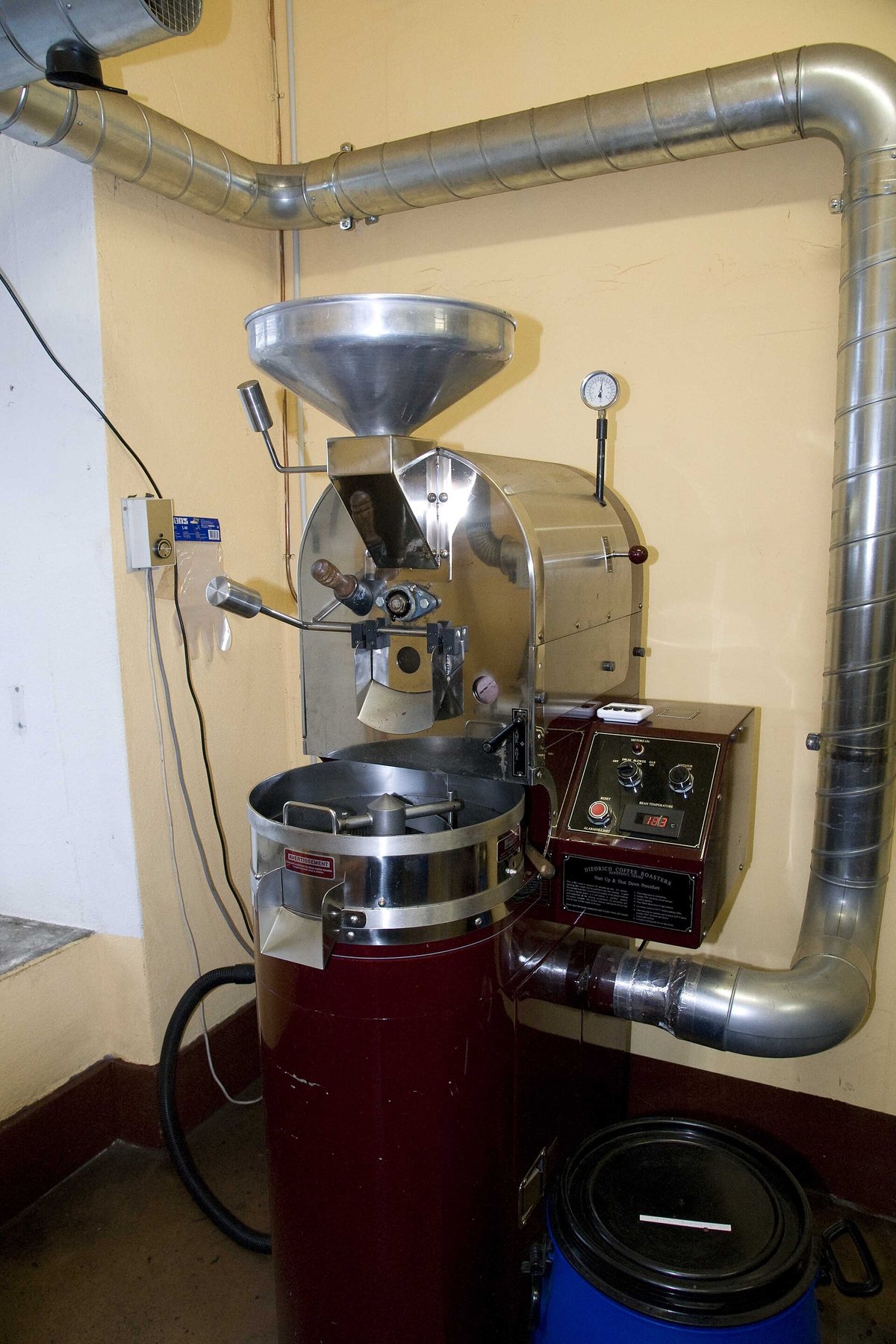
Popper, skillet, heat gun. Outdoors, or under a range hood that vents outside. Home Roasting, Step by Step covers each method. A recirculating hood, the kind that blows back into the kitchen through a filter, does not remove roasting smoke.
Behmor. Under a range hood that vents outside, or beside an open window with a fan. It is “NOT a set and walk away device” in its maker’s words (Choosing a Roaster).
Aillio Bullet R2. Aillio’s venting instructions are specific, and they warn that “an inadequate ventilation setup can cause the R2 to have a lot of issues, potentially damaging the R2 and voiding the warranty”:
| Set-up | Aillio’s verdict |
|---|---|
| Open: a tube near the exhaust port with an air gap, and a fan pulling air out | Ideal. “An active fan is required to properly vent the R2 for any ventilation tube longer than 2.5m.” |
| Sealed and passive: a tube clamped to the port, running outdoors with no fan | ”Susceptible to backdrafts”; chaff, heat, oil and moisture come out of the front |
| Sealed with a fan | May “pull too much air out” and change the roast |
| Partially sealed into an oven hood | Works, “well for light roast,” under 2.5 m of tube |
The gap at the exhaust port matters because the Bullet sets its own airflow as part of the roast; a duct that sucks or blows on it changes the profile.
Dryer-vent kits. Many home roasters vent through aluminium flexible duct and a dryer-vent wall cap, the same parts sold for a clothes dryer. Roaster exhaust is hotter, oilier and sootier than dryer exhaust; keep the run short, use metal (never plastic or foil-vinyl) duct, clean it often, and keep it clear of anything that burns.
Fire
Chaff is dry, light and flammable, and it collects in exactly the places that get hot.
- An ABC dry-chemical extinguisher within reach of the roaster (Home Roasting, Step by Step), and one by the door.
- Empty the chaff collector on schedule: Aillio asks for it every 2 to 3 kg (Choosing a Roaster).
- Clean the duct. Chaff and oily soot in a duct are fuel waiting for a spark.
- Never leave a roast. Behmor’s own words: unplug it, keep the door shut, and never use water on a bean fire.
- Know the signs that a roast is running away: smoke turning thick and acrid past second crack (Roasting Your Own).
- Tell the home insurer before roasting for sale (Insurance).
The neighbours
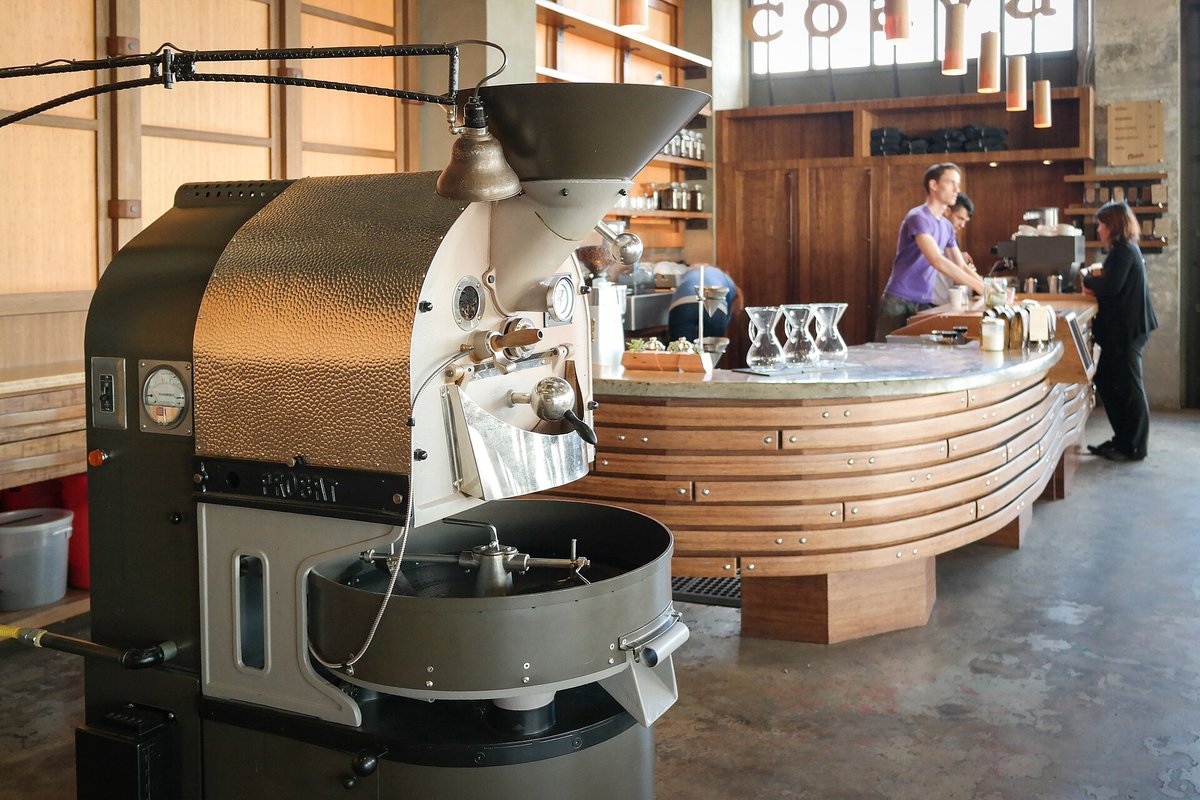
The smell of roasting coffee is one of the few industrial smells people pay to be near. Downwind, every morning, it is a different thing. The neighbour’s view counts in two places: the zoning rules and the nuisance rules.
Home occupation zoning. Most Michigan townships and cities allow a small business at home as a home occupation, with conditions: no outside employees, no signs, limited customer traffic, and often a limit on noise, odour or smoke noticeable beyond the property line. The wording is in each township’s ordinance. Michigan’s cottage food exemption does not override it (Setting Up the Business). A popper on the back step is not what such a rule is aimed at; a 1 kg roaster running two mornings a week with a duct out of the garage wall may be.
Nuisance. A complaint can go to the township’s code enforcement under its nuisance ordinance, and to EGLE under Rule 901. Either way the first visit usually starts with a conversation.
What keeps the peace:
- Roast at a sensible hour, not at six in the morning when windows are open.
- Roast light and medium where possible, and the dark batches on a breezy day.
- Put the vent where the wind takes it away, above the roofline if the building allows, and away from the neighbour’s bedroom window.
- Talk to the neighbours first, before the roaster arrives, and give them a bag. A neighbour who knows what the smell is complains far less often than one who wonders whether something is burning.
- Keep the log. If a complaint comes, a record of when and how much was roasted answers most of the inspector’s questions.
What changes in a shop
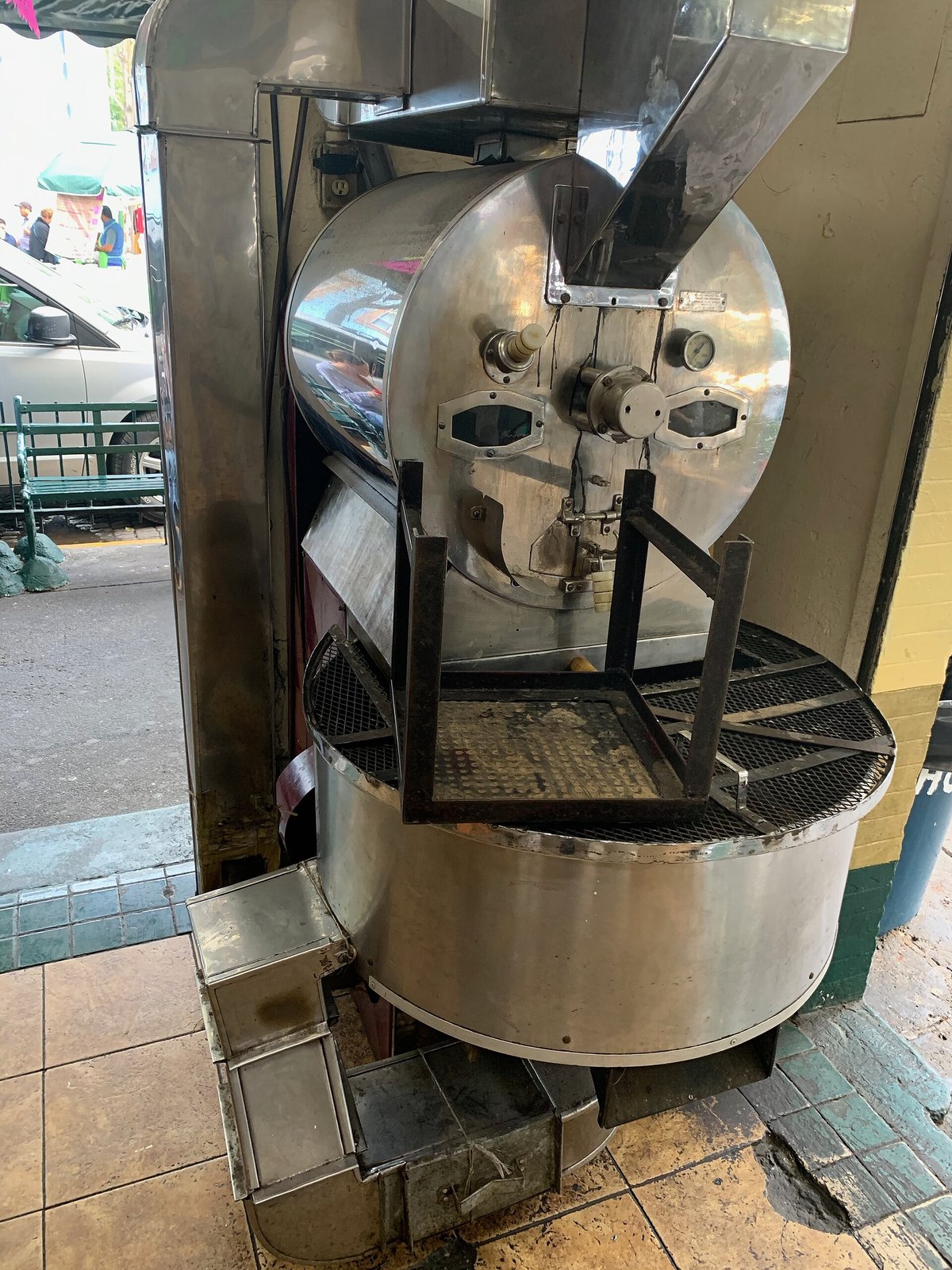
Moving the roaster out of the house and into a rented shop changes who must say yes.
| Who | What they decide |
|---|---|
| The landlord | Whether a roaster, a duct through the wall or the roof, and the smell are allowed at all. Get it in the lease |
| The building department | The mechanical permit for the duct and stack, and any gas line; whether the roaster’s listing allows its installation |
| The fire official | Clearances, extinguishers, and whether a roaster is treated like a cooking appliance needing a hood and suppression system |
| The county health department | The food licence, if coffee is brewed or sold there (The Michigan Rules) |
| EGLE | Whether the roaster is exempt from a permit to install, and on what records |
| The zoning office | Whether roasting is allowed in that zoning district as retail, food processing or light industry |
The full shop list is on Opening a Coffee Shop. The roaster’s own installation manual is the document every one of these offices will ask for first.
Questions to ask before a roaster goes in
To EGLE’s Environmental Assistance Center (contact page, 800-662-9278, [email protected], weekdays 8 to 4:30):
- I plan to roast coffee for sale on an electric drum roaster of 1 kg batch size (or name the machine), about 40 lb of green coffee a week. Does it need a permit to install, or which exemption applies?
- Is a home roaster used for a cottage food business “residential cooking equipment” under Rule 282(2)(d)?
- Is a roaster in a café, roasting for that café’s counter and shelf, “equipment … at restaurants and other retail … establishments … used for preparing food” under Rule 282(2)(e)? Does that change if some coffee is sold wholesale?
- If Rule 290 is the route, which compounds from coffee roasting does EGLE treat as toxic air contaminants, and what emission figures does it accept for them, given that AP-42 gives none?
- What records does EGLE expect a small roaster to keep under Rules 278a and 290, and is a batch log of green coffee roasted enough?
- Is an afterburner ever required for a roaster below a certain size in Michigan, or only when a permit is issued?
To the township or city:
- Is roasting coffee for sale a permitted home occupation in my zoning district? Does it need a permit?
- Does the home occupation ordinance limit odour or smoke, and how is that measured?
- Does venting a roaster through a wall need a mechanical permit?
- Where would roasting be allowed outside the home: which districts?
- How are odour complaints handled under the nuisance ordinance?
To the insurer: does the home or business policy cover a roaster, and does it require an extinguisher, a hood or a professional installation?
What is not known
- How much of any single toxic compound a small roaster emits. AP-42 gives totals for organic vapour, not per compound, and its tests are from large roasters of the 1980s and 1990s.
- How much smoke the Behmor or the Bullet makes. Neither maker publishes a figure.
- Where EGLE files a small coffee roaster. No Michigan rule or guidance names coffee roasting, so the answer comes from asking.
Related pages
Choosing a Roaster · Roasting Machines · Roast Logs, Quality Control and Blending · Home Roasting, Step by Step · Roasting Your Own · Setting Up the Business · Insurance · Opening a Coffee Shop
Sources
- Michigan Administrative Code, Air Pollution Control Rules: R 336.1201, R 336.1278, R 336.1278a, R 336.1282, R 336.1285, R 336.1290, R 336.1901.
- EGLE, Air Permit to Install Exemption Handbook, February 2020.
- EGLE, Air Quality Division permits, Permits to Install / New Source Review, Environmental Assistance Center.
- US EPA, AP-42 section 9.13.2, Coffee Roasting, September 1995.
- South Coast Air Quality Management District, Rule 219, amended June 5, 2026.
- Aillio, Venting the R2.
- Mill City Roasters, ReiCatino catalytic afterburner and venting parts (listed prices, October 2026).
- Daily Coffee News, Vortx Kleanair Systems offers wet scrubber Ecofilter for roaster emissions, 18 August 2021.
Comments (0)