Starting a Coffee Business · 8 of 43
Decaf for a Small Roaster
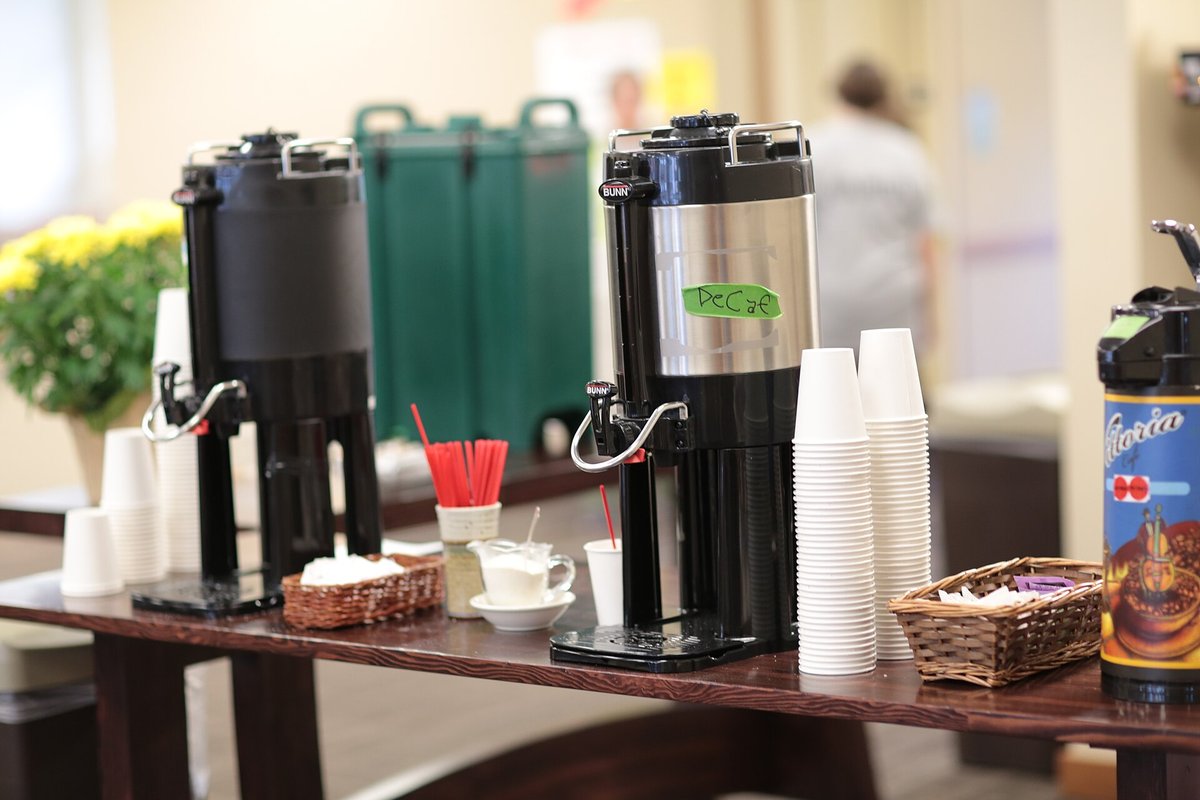
Every market has the customer who asks, “Do you have decaf?” Saying no sends away the person and often the friend they came with. Saying yes means one more coffee to buy, roast, bag, label and keep apart from the others, and it behaves differently at every one of those steps. What follows is decaf from the seller’s side: why a stall needs one, what the four ways of making it mean to a buyer, where to buy it and what it costs, how it roasts, what the label may say, and how to price it.
The health side of decaf, including the methylene chloride question and how much caffeine is left in a cup, is on Caffeine and Health and is not repeated here. I have roasted at home with simple home methods; everything about roasting decaf for sale is a plan, built from the roasters’ and decaffeinators’ own guidance.
The short version
| Question | Answer |
|---|---|
| Does a stall need decaf? | One bag of it, yes. The National Coffee Association says “more than 90% of American coffee drinkers” choose caffeinated, so under one in ten choose decaf; at a market that is the evening crowd, pregnant customers, older customers and anyone who has had their two cups. |
| Which process? | Buy the one you can name on the bag. Swiss Water and Mountain Water (water processes) and sugarcane (ethyl acetate) are the ones small roasters sell by name. Methylene chloride decaf is legal in the US and usually sold without the process named. |
| Where to buy | The same importers as the rest: Sweet Maria’s by the pound, Royal Coffee by the bag, Genuine Origin by the 65 lb box. |
| What it costs | About 90¢ a pound more than a like-for-like regular coffee at retail: Colombia Huila EA decaf $9.40 a pound against a regular Colombia Huila at $8.50 (Sweet Maria’s, 6 October 2026). That is about 80¢ more in green coffee per 12 oz bag. |
| How it roasts | It starts browner, goes faster, has a quieter first crack and can “popcorn” early. Judge by the colour of the ground coffee, not the bean. Swiss Water’s target for a sample roast: 8:30 to 9:30 minutes, Agtron 63 on the ground coffee. |
| What may the label say? | ”Decaf” or “decaffeinated,” and the process. Not “caffeine-free.” The US has no legal percentage; 97% removed is a trade convention. Germany’s legal limit for roasted decaf is 0.1% caffeine in the dry coffee. |
| Half-caf? | Roast the two separately, blend after, 50:50 by weight: about half the caffeine of the regular cup. Label it as containing caffeine. |
| The grinder | Purge before and after decaf, or give decaf its own grinder. A customer who asked for decaf is the one most likely to notice the difference. |
| Price | At least the house price; many roasters charge more. A Grand Rapids roaster charges $15.95 for a 12 oz decaf against $13.95 for its house blends. |
Why a stall needs a decaf
The NCA’s figure is the best national one there is: under one in ten American coffee drinkers choose decaf. That is a small share and a reliable one, and it is not spread evenly through the day or through the customers.
| Who asks | When |
|---|---|
| Customers who stop at caffeine after noon | An afternoon or evening market; a summer concert |
| Pregnant customers and those breastfeeding | Any time; caffeine limits for pregnancy are on Caffeine and Health |
| Older customers, customers on some medicines | Mornings as much as afternoons |
| Parents buying for a family | A bag for the house where one person drinks decaf |
| Catering clients | Every event. A wedding wants about a quarter of the after-dinner coffee as decaf (Catering) |
Two practical consequences for a small seller:
- One decaf is enough. A line-up of four or five coffees with one decaf covers the customer who asks (Green Coffee and the Line-Up). A decaf espresso and a decaf filter coffee are a shop’s problem, not a stall’s.
- Make it a good one. The trainer Mill City Roasters puts it plainly: “decaf drinkers deserve great coffee.” A decaf customer who finds a good one comes back for it every week, because good decaf is hard to find.
The four processes, as a buyer meets them
The history behind them, from Ludwig Roselius’s 1906 benzene patent to Sanka and the first CO₂ plant, is on Café HAG, Sanka and the Story of Decaf.
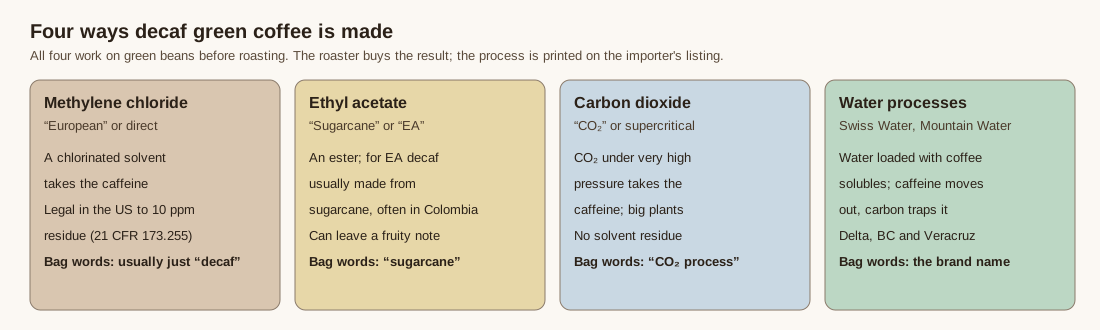
Every decaf is made from green coffee by a specialist plant, not by the roaster. What matters to a buyer is what each process is called on a price list, what can be printed on the bag, and what the importers have in stock.
| Process | What the listing says | Where it is made | What a small roaster gets |
|---|---|---|---|
| Water: Swiss Water | ”SWP” or “Swiss Water Process” | Swiss Water Decaffeinated Coffee, Delta, British Columbia | A trademarked name customers recognise; the company runs a roaster programme with a published roasting guide. Certified Fair Trade, Kosher, Halal and organic lines available. |
| Water: Mountain Water | ”MWP,” “WP” or “Mountain Water Process” | Descamex, Córdoba, Veracruz, Mexico; the first decaffeination plant in Latin America (1980), its water process patented in 1987, organic-certified since 2003 | A water process at origin for Mexican and other Latin American coffees, at a similar price. Sweet Maria’s lists several “WP” decafs from Mexico, Guatemala and Honduras. |
| Ethyl acetate (“sugarcane”) | “EA,” “sugarcane process,” sometimes “natural decaf” | Largely at origin in Colombia; Descafecol runs a plant in Manizales, Caldas | Often the best value; some find a faint fruit sweetness. “Natural” here is a marketing word: ethyl acetate is a solvent, found in fruit. |
| Carbon dioxide | ”CO₂ process” | A few large plants | Seen more in big brands than on specialty lists. |
| Methylene chloride | Often just “decaf”; sometimes “European process” | Large plants in Europe and elsewhere | Legal in the US at up to 10 ppm residue (21 CFR 173.255); a petition to withdraw it was undecided as of October 2026 (Caffeine and Health). A small roaster who uses it should still name it if asked. |
The NCA describes the solvent (“European”) method as “the most common” in the US. For a small seller at a farmers market the choice is simpler than the chemistry: customers ask “how is it decaffeinated?”, and a water process or sugarcane gives an answer that ends the conversation well.
Elsewhere: the European Union’s harmonised rule covers decaffeinated coffee extract, not beans (no more than 0.3% caffeine in the dry matter, Directive 1999/4/EC). The 0.1% limit for roasted decaf often quoted as “the EU rule” is national law, Germany’s among them (below).
Buying decaf green
What is on offer, October 2026
On 6 October 2026, Sweet Maria’s listed 25 decafs and had four in stock:
| Coffee | Process | 1 lb | 10 lb (per lb) |
|---|---|---|---|
| Colombia Huila EA Decaf | Ethyl acetate | $9.40 | $8.65 |
| Ethiopia Uraga SWP Decaf | Swiss Water | $9.95 | $9.20 |
| Guatemala FTO Huehuetenango WP Decaf | Water process | $9.85 | $9.10 |
| Honduras FTO Marcala WP Decaf | Water process | $9.45 | (2 lb $9.30) |
| For comparison: Colombia Huila La Argentina, regular | $8.50 | $7.75 |
The like-for-like pair is the two Colombia Huila coffees: the decaf costs 90¢ a pound more, about 11%, at both one pound and ten. Most of the decaf list was sold out, which is normal: decaf lots are fewer and turn over fast. Buy two or three months’ worth when the one you like comes in.
Royal Coffee, an importer selling full bags to roasters, listed decaf bags from $655 to $881 on the same day. Where the bag weight is given:
| Bag | Process | Price | Per pound |
|---|---|---|---|
| Honduras, Fair Trade, 60 kg | Swiss Water | $813.52 | $6.15 |
| Honduras, Fair Trade organic, 60 kg | Swiss Water | $826.75 | $6.25 |
| Colombia natural, 69.5 kg | Ethyl acetate | $849.23 | $5.54 |
A regular Brazil from the same importer runs about $4.60 a pound by the bag (Green Coffee and the Line-Up), so a full bag of decaf runs roughly $1 to $1.60 a pound more, though across different origins. A full bag is a year or more of decaf for a stall; it is a roastery’s purchase, not a market stall’s. Genuine Origin’s 65 lb boxes, an in-between size, listed a Colombian sugarcane decaf at $6.56 and a Swiss Water decaf at $7.18 a pound when the line-up page was written.
How much to buy
A stall selling 18 bags a market (The Numbers) might sell one or two of them as decaf. At 0.88 lb of green coffee per 12 oz bag, that is 1 to 2 lb of green a week, 10 to 20 lb for a ten-week stretch. Ten-pound lots at Sweet Maria’s fit that exactly. Green coffee keeps for months in a cool, dry place in its bag; how to store it is on Green Coffee and the Line-Up.
No published study compares how long decaf and regular green coffee keep. Decaf has been soaked, steamed and re-dried before it arrives, so buying ten weeks at a time, rather than a year, is the cautious course.
Roasting decaf
The plan for my stall is a Behmor 2000AB first and an Aillio Bullet later (Choosing a Roaster). The Behmor’s own manual warns that decaf and aged coffees “roast faster and get darker more quickly.” The most detailed guidance a small roaster can get is from the decaffeinator: Swiss Water’s 2026 Roasting Guide, a nine-page PDF on its Roaster Resources page. What it says, and what each point means in practice:
| Swiss Water says | What it means |
|---|---|
| Decaf “looks more developed from the outset. Decaffeination darkens green coffee.” | Green decaf arrives brownish, not green. The colour cues of drying and early browning are already used up before the roast starts. |
| ”Referencing the colour of ground coffee is usually a more reliable measure of true development than whole-bean appearance. Surface colour alone can be misleading and may lead to underdevelopment.” | The mistake the guide warns against is ending the roast early because the beans look done. Grind a few beans and judge the inside. |
| Decaf moves through drying, Maillard and development “differently from regular coffee because heat transfer is faster. Shorter drying and earlier Maillard onset demand tighter energy control.” | It runs ahead. Less heat late in the roast, not more. |
| ”Decaf often has a muted first crack, making sound a less reliable signal.” | First crack is quieter and harder to hear, especially in a noisy drum. |
| ”Early popcorning can occur before true first crack, and reacting to it too soon can leave the roast underdeveloped.” “Treat early popcorning with suspicion.” | A few early pops are not first crack. |
| ”A vinegar-like aroma often signals the start of true first crack before sweeter, caramelized aromas appear.” | Smell the trier or the exhaust, not just listen. |
| ”Development after first crack is where decaf profiles are most easily lost.” “Slightly faster after first crack.” | The development phase needs small, gradual heat cuts; a decaf can go from right to roasty in seconds. |
| Sample roast: 8:30 to 9:30 minutes; target Agtron 63 on the ground coffee (Gourmet scale). | A medium roast. The Agtron number is explained on Roasting. |
| ”Your decaf sample roast time and profile should be very similar to your regular green, although a bit faster after first crack.” | Start from the regular profile and shorten the end. |
Chaff. Decaf is often said to give off much less chaff than regular coffee, because the soaking and drying of decaffeination loosens the silverskin before the beans reach the roaster. No measurement of it has been published, and Swiss Water’s guide does not mention it. Less chaff in a small roaster is one less sign of where the roast is, and one less mess.
The importer says the same about the crack. Sweet Maria’s listing for its Brazil Swiss Water decaf carries the warning “First crack is very subtle,” and its decaf listings give roast ranges of City+ to Full City+, a medium to medium-dark, much like the Swiss Water target.
A routine for the first decaf roasts:
- Roast the decaf at the end of a session, after the regular coffees, so a stray regular bean in the drum is from a batch already bagged.
- Start from the regular coffee’s profile; plan to finish 30 seconds to a minute sooner after first crack.
- Watch the clock and the smell, not only the sound.
- At the expected end, grind three beans and compare the inside colour with the outside. Drop when the ground colour matches the target.
- Log it (Roast Logs) with the ground colour, and cup it two to five days later beside the regular coffee.
- Expect to need three or four roasts to land it. Swiss Water notes its own decafs are made to tight moisture levels, so “once a preferred roast profile is established, it can often be adapted across different Swiss Water Process lots with only minor adjustments.”
Rest and freshness are the same as any other coffee: a few days before brewing, and the freshness numbers on Keeping Coffee.
Labelling decaf
| Rule or practice | What it says | Source |
|---|---|---|
| No US legal definition | US law sets no percentage of caffeine removed and no maximum for “decaffeinated” coffee. | Labels and Certifications |
| ”About 97%“ | The trade figure. The NCA says decaffeination “typically removes around 97% of the caffeine.” It is a description, not a standard. | NCA |
| ”Not caffeine-free” | The FDA: “‘Decaffeinated’ Does Not Mean Caffeine-free”; a cup “typically has 2 to 15 milligrams.” | FDA |
| Germany: 0.1% | The word entkoffeiniert may be used for green and roasted coffee with no more than 1 gram of caffeine per kilogram of dry coffee, and for extracts with no more than 3 grams. | Kaffeeverordnung § 2(3) |
| EU extract rule | Decaffeinated coffee extract: no more than 0.3% caffeine in the dry matter. | Directive 1999/4/EC |
| The process | Not required in the US; sellers who use Swiss Water or sugarcane print it. “Swiss Water” is the company’s registered trademark, as its roasting guide notes; Swiss Water lists the roasters it works with as partners. | Packaging Coffee for Sale |
What goes on a stall’s decaf bag, beside everything every bag carries (the required lines):
- DECAF on the front, larger than the origin name. A different colour of label or sticker for decaf, so it cannot be mistaken on a crowded table.
- The process: “Swiss Water Process,” “Mountain Water Process,” “sugarcane process (ethyl acetate).”
- Not “caffeine-free,” not “zero caffeine.”
- For a cottage food bag in Michigan, the home-kitchen statement as on every other bag (The Michigan Rules).
At the airpot, the same rule: a printed sign and a different coloured lid or band, not just a strip of tape.
Half-caf
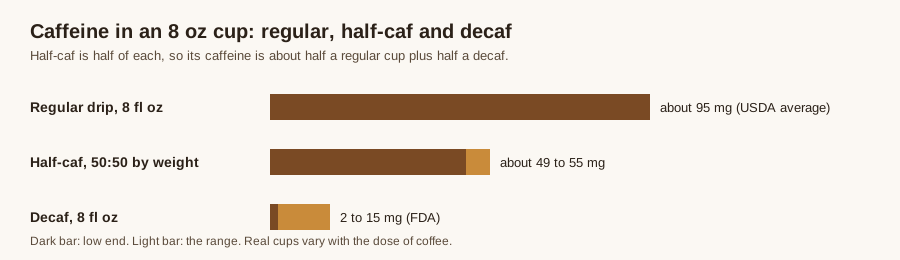
A half-caf, half regular coffee and half decaf, is the drink for the customer who wants a second cup without the second dose. The arithmetic is simple: an 8 oz cup of regular drip averages about 95 mg of caffeine (Caffeine and Health) and decaf 2 to 15 mg, so a 50:50 blend carries about 49 to 55 mg.
| Choice | Advice |
|---|---|
| Roast together or apart? | Apart, blended after roasting. Decaf roasts faster and darker; roasted together in one batch, either the decaf is over-roasted or the regular coffee is under. |
| Which regular coffee? | One close to the decaf in origin and roast: a washed Colombian with a Colombian sugarcane decaf, or a Central American with a Mexican water-process decaf. |
| The ratio | 50:50 by weight is the convention. A “quarter-caf” (three parts decaf to one regular) is a reasonable second option for evening customers. |
| The label | ”Half-caf: half decaffeinated” and the processes. It contains caffeine, and the bag should say so plainly. |
| At the stall | Mix the two in the grinder dose, or brew one airpot of each and pour half and half. Brewing from a pre-blended bag is more consistent. |
Keeping decaf separate in the grinder
A grinder always keeps some of the last coffee inside it. A laboratory study measured about 12% of a 10 g dose left in a large shop grinder; low-retention home grinders hold well under a gram (Grinding). For most coffees a few retained grams mean a small change of flavour. For decaf it means caffeine in the cup of someone who asked for none.
| Situation | What to do |
|---|---|
| Grinding a customer’s bag of decaf | Tap out and run the grinder empty; purge a few grams of the decaf into the waste first; then grind the bag. |
| After decaf | Purge a few grams of the next coffee before grinding for a customer. |
| A brewed decaf at the stall | Grind the decaf for the day at home, first thing, from a clean grinder, and bring it sealed. Or use a small hand grinder kept only for decaf. |
| A shop | A second, smaller grinder for decaf, so nobody empties and resets the main one (Grinders). |
The roaster carries over a little too: a few beans or some chaff from the last batch can sit in a drum or cooling tray. Empty the cooling tray and check the drum before the decaf batch.
Pricing it
| Cost per 12 oz bag | Regular | Decaf |
|---|---|---|
| Green coffee, 0.882 lb at retail (Colombia Huila, 1 lb lots) | $7.50 | $8.29 |
| Difference | about 79¢ |
The green coffee is the only cost that changes; bag, label, valve and time are the same (Bags, Labels and What a Bag Costs). Three ways to price it:
| Approach | Example | When it fits |
|---|---|---|
| Same price as the house coffee | $17 for both | A stall with one decaf, where it is a service to the customer; the 79¢ comes out of a margin of several dollars |
| A dollar or two more | $18 or $19 | When the decaf is a named single origin or Swiss Water, and the label says so. Ferris Coffee & Nut in Grand Rapids charges $15.95 for a 12 oz decaf against $13.95 for its house blends (Prices and Customers) |
| Priced with the single origins | $18 to $20 | When it is roasted and presented as one of the best coffees on the table |
In the cup, decaf costs the stall a few cents more: at about 20 g of coffee a cup, the 90¢-a-pound difference in green coffee is about 5¢. Selling a cup of decaf at the same price as the regular coffee from the same brewer keeps the menu simple.
A ladder, from no decaf to a decaf programme
| Step | What it is | Cost to start | Fits |
|---|---|---|---|
| 1. Say no, kindly | Point the customer to a tea or a cocoa | Nothing | The first market or two |
| 2. Buy roasted decaf in | A local roaster’s decaf, resold as theirs | Wholesale price of a few bags; check the rules on reselling under cottage food | Before roasting decaf is mastered |
| 3. One decaf, roasted in house | A 5 or 10 lb lot of a Swiss Water or sugarcane decaf | $45 to $90 of green coffee | A stall in its first season |
| 4. Decaf plus half-caf | The same decaf, blended 50:50 with the house coffee | Nothing more | Evening markets; catering |
| 5. A decaf in every role | A filter decaf, a decaf espresso, a decaf in the subscription | A second grinder in a shop | A shop or a roastery |
What is not known
- How decaf drinkers break down at farmers markets. The NCA’s national share is the only published figure; no market survey counts decaf buyers.
- How long decaf green keeps compared with regular. Roasters report that it fades sooner; no study measures it.
- Why decaf gives off less chaff, in numbers. The observation is common among roasters; no measurement has been published.
- How much caffeine a particular decaf lot carries. Importers rarely publish a figure per lot, and US law sets no maximum.
- Which plant makes each importer’s house-branded water-process decaf. Listings name the process, not always the decaffeinator.
Sources
- National Coffee Association, Decaf coffee.
- US Food and Drug Administration, Spilling the Beans: How Much Caffeine Is Too Much?.
- Swiss Water Decaffeinated Coffee: the process; Roaster Resources, including the 2026 Roasting Guide (PDF).
- Descamex, the Mountain Water Process; Descafecol, Manizales.
- Sweet Maria’s decaf list and Royal Coffee decaf list, prices read 6 October 2026.
- 21 CFR 173.255, methylene chloride; EU Directive 1999/4/EC; Germany’s Kaffeeverordnung.
- On this site: Caffeine and Health, Labels and Certifications, Green Coffee and the Line-Up (the Behmor manual and Mill City Roasters quotes), Grinding, Grinders, Roasting, Roast Logs, Packaging Coffee for Sale, Prices and Customers, Bags, Labels and What a Bag Costs and the glossary.
Comments (0)