Starting a Coffee Business · 31 of 39
Taking Cards: Readers, Fees and No Signal
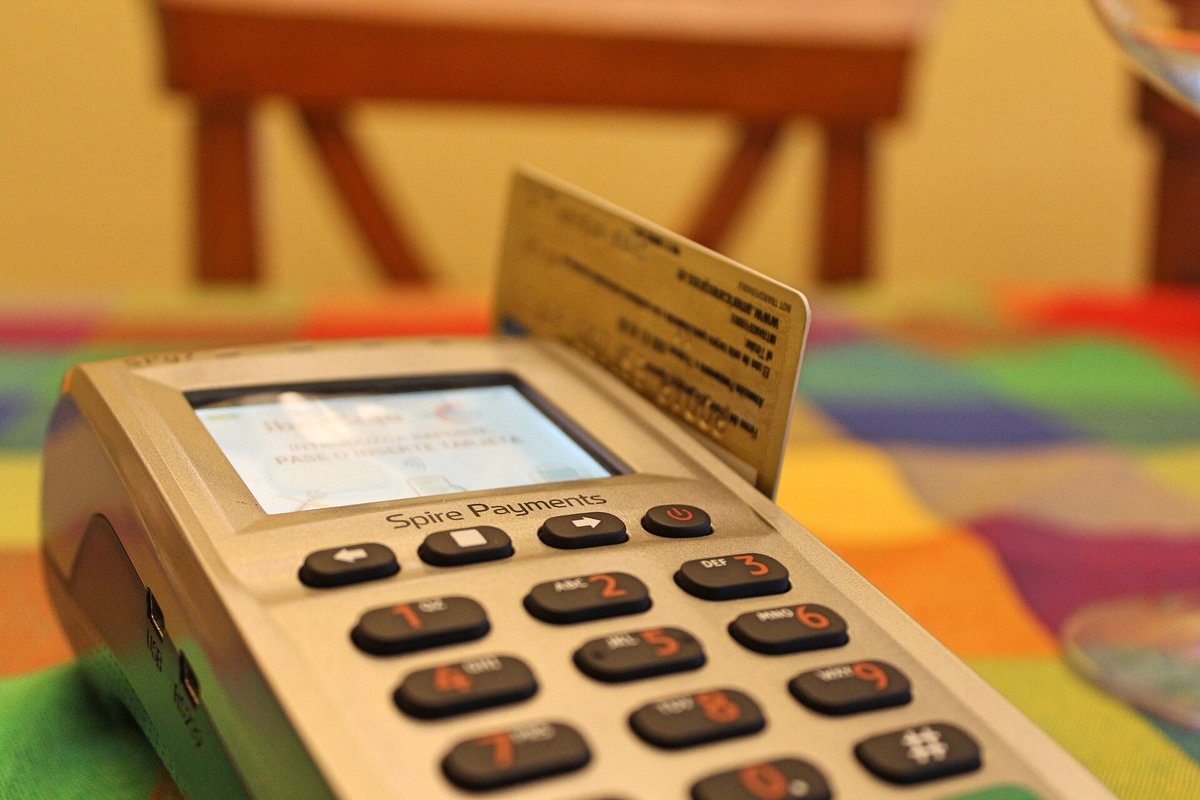
Most people now pay by card, and a stall that takes only cash loses the sale whenever someone has none. Taking cards at a market is cheap to start: a $59 reader and a phone. The decisions that matter are which processor, what to do when the market has no mobile signal, how much the fee takes from a $4 cup, whether to take SNAP, and how to keep the records the cottage food law asks for.
I already sell honey at markets. What follows compares the processors’ own published prices and rules, read in October 2026, and works out what they mean for a coffee stall. The Stall has the short version of the no-signal problem; this page is the long one.
The short version
| Question | Answer, as of October 2026 |
|---|---|
| Which reader to start with | Square’s contactless and chip reader, $59, with the free Square app on a phone. |
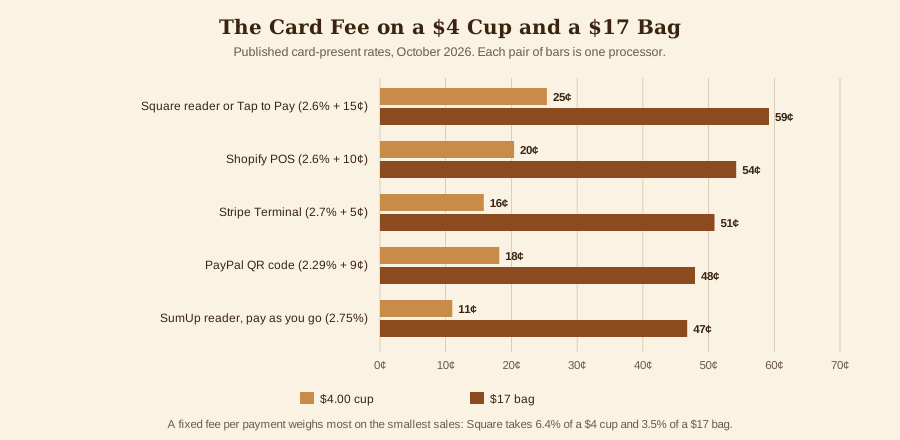
| What it costs per sale | 2.6% + 15¢: 59¢ on a $17 bag, 25¢ on a $4 cup. |
| No reader at all? | Tap to Pay on iPhone or Android takes cards on the phone itself, same fee. It does not work offline. |
| No signal at the market | Square’s offline mode stores payments; with a phone and a Square Reader they must be uploaded within 24 hours, on Square’s own devices within 72. Every declined offline payment is the seller’s loss. |
| Cheaper per sale? | On small sales, SumUp’s flat 2.75% (11¢ on a $4 cup). Below $100 it costs less than Square’s 2.6% + 15¢. |
| A monthly plan to cut the fee? | Not at a stall’s volume. Square Plus ($49 a month) saves 0.1%. |
| Surcharge the card fee? | Allowed in Michigan by Visa’s rules on credit cards only, never debit, at most 3%, with notice and signs. Simpler to price it in. |
| SNAP | Bagged coffee, honey and wrapped bakes are SNAP-eligible; a hot cup is not. Easiest through the market’s token programme. |
| Double Up Food Bucks | Michigan fruit and vegetables only; not coffee or honey. |
| Records for the cap | Put every item in a category (cottage food, honey, cups, other) so the year’s cottage food total is one report. |
Readers and processors compared
Card-present rates and hardware prices from each company’s own page on 5 October 2026, except where marked.
| Processor | Card-present fee | Hardware | Monthly fee | Offline | Notes |
|---|---|---|---|---|---|
| Square | 2.6% + 15¢ (Free plan); 2.5% + 15¢ Plus; 2.4% + 15¢ Premium | Reader $59; magstripe reader first one free; Terminal $299; Handheld $399 | $0; Plus $49; Premium $149 | Yes, with limits (below) | Tap to Pay on iPhone and Android on all plans; online shop on the same account; EBT on Terminal, Handheld and Register |
| SumUp | 2.75% per in-person payment, pay as you go; its POS plans list 2.6% + 10¢ | Reader price not shown in a readable form on its US page | $0 pay as you go | Not stated | No fixed fee on the reader rate, which favours small sales |
| Clover Go (Fiserv) | “Rates starting at 2.5% plus 10 cents” | Reader $199 | Point-of-sale plans from $14.95 | Not stated | Figures from Business News Daily’s Clover review, updated 20 July 2026 |
| Stripe Terminal | 2.7% + 5¢; Tap to Pay +10¢ | M2 reader $59; S700 $299 | $0; cellular data $10 a reader | Yes | Built for businesses with their own checkout software; no ready-made market app |
| PayPal | QR-code payments 2.29% + 9¢ (PayPal’s US fee schedule) | None for QR | $0 | No | The US fee schedule lists no card-reader rate; whether PayPal’s Zettle reader is sold to US merchants is not settled |
| Shopify POS | 2.6% + 10¢ on Basic | Shopify’s own reader | Basic $29 billed yearly, $39 monthly; POS Lite included | Not listed | Worth it only if the web shop is on Shopify (Selling Online and by Mail) |
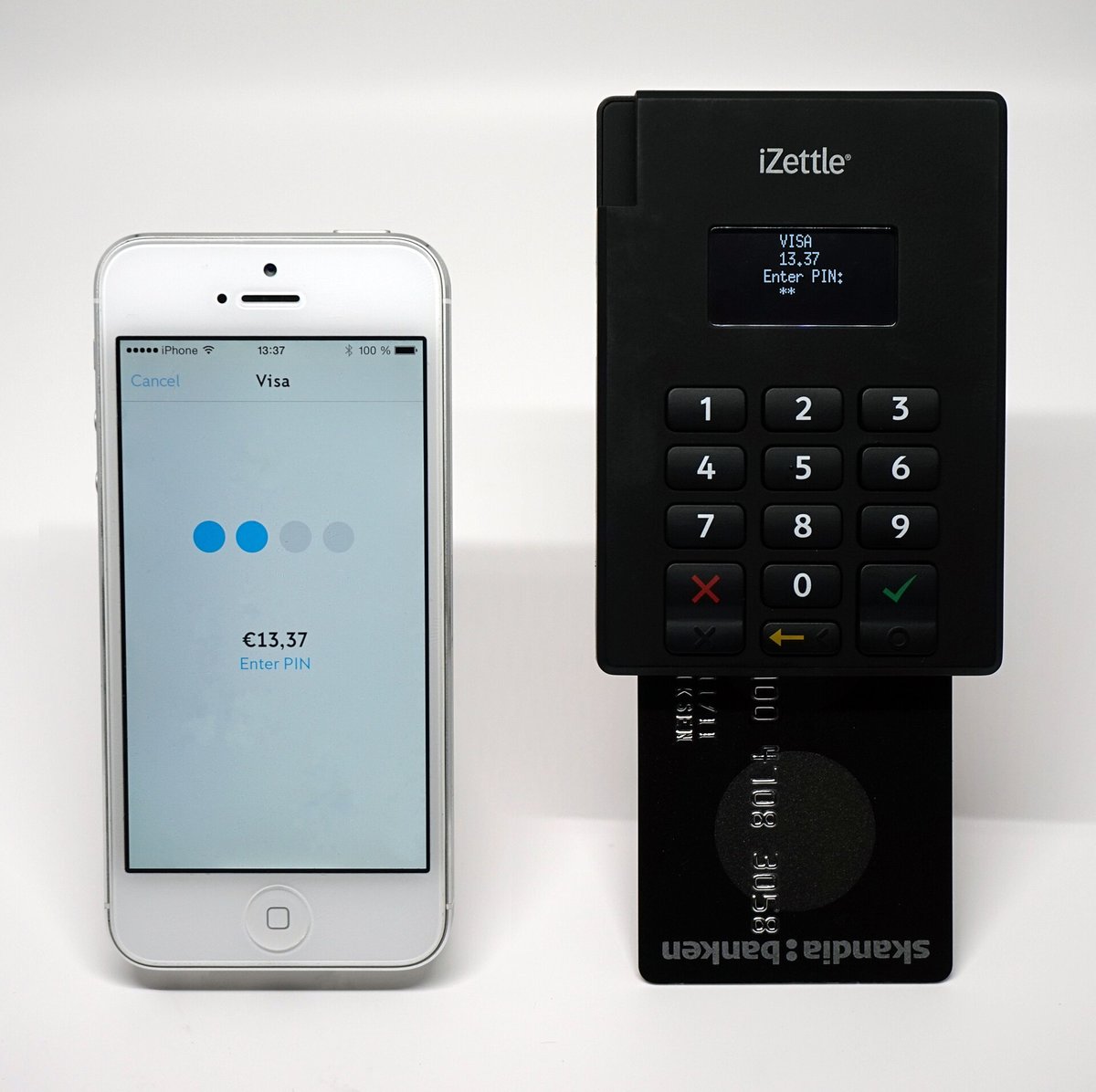
The choice for this stall is Square. Not because its fee is lowest (it is not, on small sales), but because one free account runs the market reader, Tap to Pay on the phone, offline mode, a free web shop and payment links, and puts every sale in one set of records. Its offline rules and its fee are both published plainly, which is worth more than a few cents a sale. SumUp is the alternative to watch for a stall selling mostly cups.
Tap to Pay on the phone
Square, Stripe and others now take a contactless card or phone wallet on the merchant’s own iPhone or Android phone, with no reader. Square charges the same 2.6% + 15¢ and includes it on every plan; Stripe adds 10¢. It is the cheapest possible start, and a good spare when the reader’s battery dies. Two limits: it takes only contactless cards and wallets, not chip-only cards, and it does not work offline (Square’s offline rules list it among the methods that “cannot process offline”). At a market with no signal, the reader is still needed.
When the market has no signal
Square’s offline mode lets the app take a card without a connection, store it, and send it to Square later. The rules, in Square’s words:
| Rule | What Square says |
|---|---|
| Time to upload | On Square Register, Terminal and Handheld, within 72 hours at most (“uploading your offline payments within 24 hours is highly recommended”). On a phone or tablet with a Square Reader: “You have 24 hours to accept offline payments.” After that, payments “expire.” |
| Limit per payment | The seller sets “your preferred max amount allowed per transaction for offline payments (between $1 and $50,000).” |
| What does not work offline | Tap to Pay on iPhone and Android, Square gift cards, EBT/SNAP, Afterpay, Cash App Pay, and card numbers typed in by hand. |
| Who carries the risk | ”You’re responsible for any expired, declined, or disputed payments accepted while taking offline payments. Square is unable to provide customer contact information or contact customers on your behalf for declined or expired offline payments.” |
| Hardware | Works with the second-generation Square Reader and Square’s own devices; not with the oldest readers or Square Kiosk. |
A correction to The Stall: its summary gives 72 hours for all offline payments. That is the limit on Square’s own devices. A phone with a Square Reader, the set-up this stall plans to use, has 24 hours. For a Saturday market that means reconnecting on Saturday, not on Monday.
An offline payment is a card that has not been checked. A card that is cancelled, over its limit or stolen will be declined when the payment uploads, and the coffee is gone. Ways to keep the risk small:
- Set the offline limit low, say $40: enough for two bags, not enough to lose much.
- Look for signal first. A phone on a different network, or a mobile hotspot, often finds a connection where the reader’s phone does not. Walking to the edge of the market can be enough.
- Upload before leaving. Open the app in the car park, or at the first place with signal on the way home, and check that the offline queue is empty.
- Take cash happily. A float of small notes and a sign that says cash is welcome.
- Note the large ones. If an offline payment is large, ask for a phone number on the spot; Square will not give it later.
A cellular reader avoids the problem entirely: Stripe offers mobile data on its readers for $10 a month. It needs a developer to set up, so for a single stall it is a later option, if the markets in the plan turn out to have no signal at all.
Cash and card at a market
No published survey gives the share of card payments at Michigan farmers markets. The national picture, from the Federal Reserve’s Diary of Consumer Payment Choice: in its 2026 findings credit and debit cards made up two-thirds of all payments, and cash was the third most used method for the sixth year running, after credit and debit cards. The same report finds heavier reliance on cash among households earning under $25,000, rural households, and adults 55 and older, which is a fair description of many small-town market crowds. Its 2019 diary found cash used for 26% of all payments and nearly 47% of payments under $10, the size of a cup.
So a stall should plan for both: most bags paid by card, a good share of cups in cash, and more cash at a small-town market than at a city one. The stall’s own records will show the real split after a few markets.
Pricing for cash. Michigan taxes a cup of coffee at 6% (The Michigan Rules). Prices that include the tax and end in whole or half dollars ($3.50, $4.00, $4.50) need no coins. The Numbers prices the menu that way. Bags are not taxed, so $16 or $17 is the whole price.
A float. For a morning of $3.50 cups and $17 bags: $100 in small notes (ten $1s, ten $5s, four $10s) and a few quarters in case a price ends in .25.
What the fee does to a bag and a cup
| Sale | Square 2.6% + 15¢ | SumUp 2.75% | Shopify 2.6% + 10¢ | Stripe 2.7% + 5¢ |
|---|---|---|---|---|
| $3.50 cup | 24¢ (6.9%) | 10¢ | 19¢ | 14¢ |
| $4.00 cup | 25¢ (6.4%) | 11¢ | 20¢ | 16¢ |
| $5.50 iced or phin drink | 29¢ (5.3%) | 15¢ | 24¢ | 20¢ |
| $16 bag | 57¢ (3.5%) | 44¢ | 52¢ | 48¢ |
| $17 bag | 59¢ (3.5%) | 47¢ | 54¢ | 51¢ |
| $34, two bags | $1.03 (3.0%) | 94¢ | 98¢ | 97¢ |
Arithmetic: Square on a $4 cup is 0.026 × 4 + 0.15 = 0.254. SumUp’s flat rate is cheaper than Square’s on any sale under $100 (where 0.0275 × 100 = 0.026 × 100 + 0.15).
What it means for the stall, using The Numbers’ model of 18 bags and 40 cups a market:
- On bags, the fee is about 3.5% whichever processor is used, and the difference between them is a few cents a bag: about $2 a market.
- On cups, Square takes 6% or more. Forty $4 cups by card cost about $10 in fees with Square and $4.40 with SumUp: about $5.60 a market, $135 over a 24-market season.
- A monthly plan does not pay. Square Plus lowers the rate by 0.1% for $49 a month, which breaks even at $49,000 of card sales a month.
- Encourage one payment, not several. A bag and a cup on one card pay one 15¢, not two.
The Numbers charges the fee on every sale, the worst case; every cash sale saves it.
Tipping
Square’s app can show a tip screen on the phone after the amount. At a coffee stall it suits the cups, which are a service, and not the bags, which are groceries; a tip prompt on a bag of beans annoys more people than it pays. Square lets the prompt be turned on or off; set it for cups only if the app allows it, or leave it off and put out a tip jar.
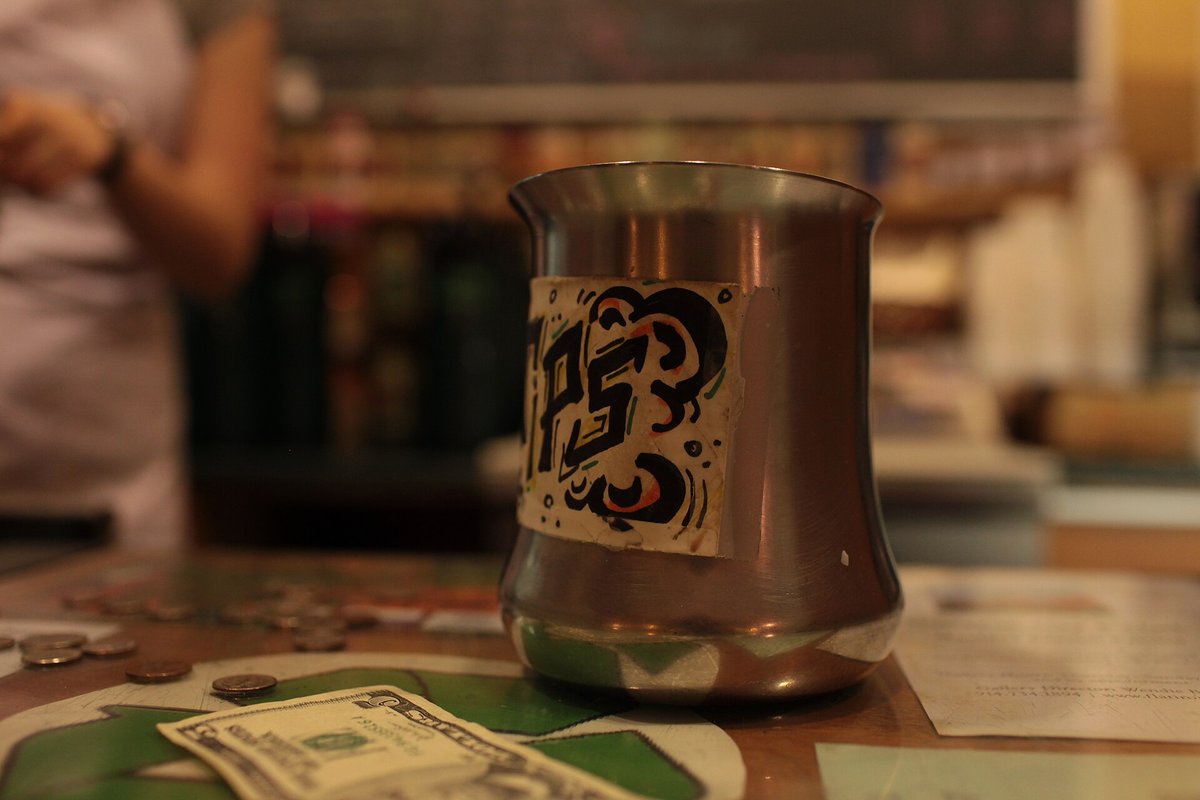
A card tip is charged the processor’s percentage like the rest of the payment.
Surcharges and cash discounts
A surcharge is an extra charge added for paying by card. Visa’s rules for US merchants (Merchant Surcharging Considerations and Requirements, linked from Visa’s small-business page):
- “Surcharging applies only to credit transactions … Debit and prepaid cannot be surcharged.”
- The surcharge must not exceed the merchant’s cost of accepting the card, and never more than 3%.
- The merchant must notify its acquirer (the processor) 30 days before starting.
- It must be disclosed “at the point of entry and point of sale,” and shown as a separate line on the receipt.
Visa’s document lists Connecticut, Maine, Massachusetts and Oklahoma as states that prohibit or limit surcharging; Michigan is not on its list. The document is dated 2023, and state laws change.
At a market the rules make a surcharge more trouble than it is worth: the reader would have to tell credit from debit, a sign is needed at the front of the stall, and Square’s fee on a $4 cup is 6.4%, more than twice what a surcharge may recover anyway. The plainer course is to set prices that already cover the fee, which the menu in Prices and Customers does. A cash discount, a lower price for paying cash, is the same idea from the other side; whether a processor’s terms allow it is a question for the processor.
SNAP, EBT and Double Up Food Bucks
SNAP (the Supplemental Nutrition Assistance Program, paid in Michigan on the Bridge Card, an EBT card) buys food for the household. The USDA’s list of eligible foods includes “Other foods such as snack foods and non-alcoholic beverages,” and excludes “Foods that are hot at the point of sale.”
| Item | SNAP |
|---|---|
| Bagged roasted coffee, whole bean or ground | Eligible |
| Honey, jam, wrapped cookies and scones | Eligible (food for the household) |
| A hot cup of coffee | Not eligible (“hot at the point of sale”) |
| An iced coffee made to order | Not settled. It is not hot, but a drink made to be drunk on the spot may be treated as prepared food. Ask the USDA’s Food and Nutrition Service before taking SNAP for it. |
| T-shirts, mugs, grinders | Not eligible |
Two ways to take SNAP at a market.
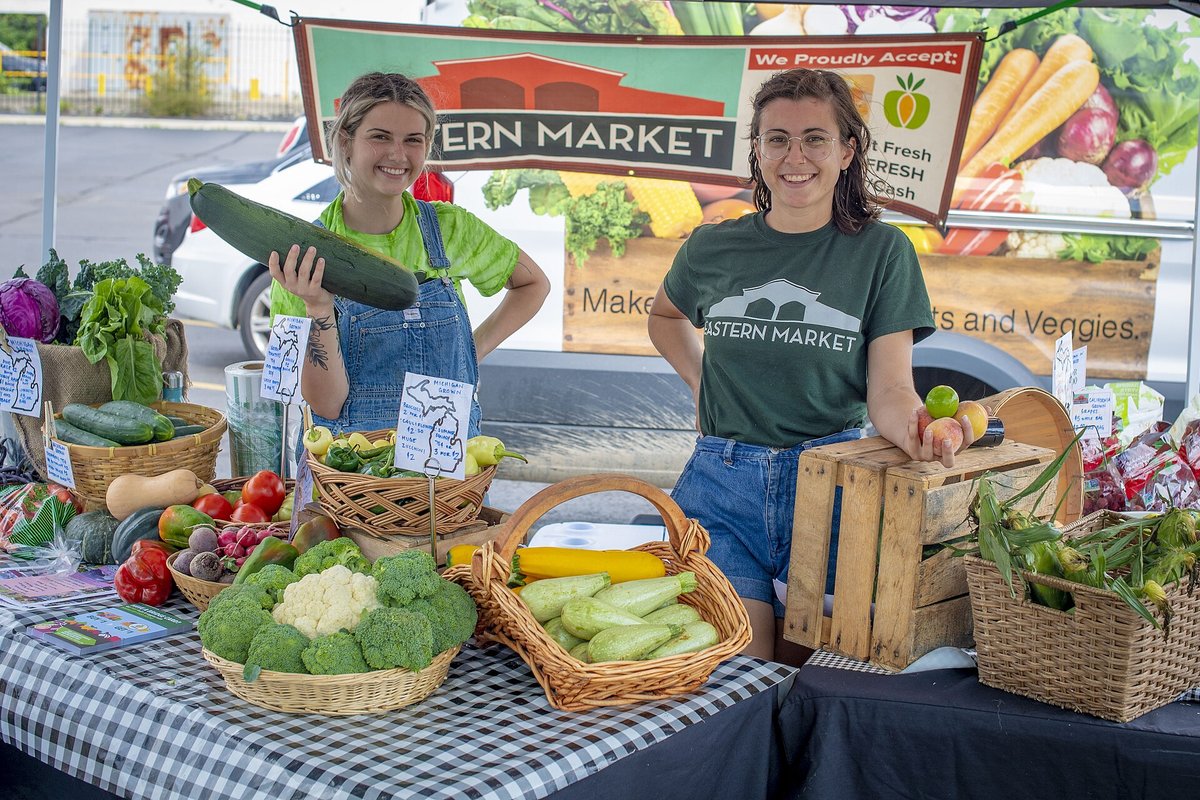
- Through the market’s token programme. Many Michigan markets run a central booth where shoppers swipe the Bridge Card and receive tokens. The vendor takes tokens for eligible food and the market pays the vendor back. The vendor needs no equipment and no licence of their own: ask the market manager whether it runs one and how it pays out.
- The stall’s own authorisation. A vendor can apply to the USDA’s Food and Nutrition Service for its own retailer number (an FNS number). Square accepts EBT SNAP with one, but only on Square Register, Terminal and Handheld (“EBT payments aren’t available on Square Stand or other iOS devices at this time”), only with a live connection, and at 1.8% + 5¢ a payment, waived during its open beta. That means a $299 Terminal or $399 Handheld and a signal. For a stall, the market’s token booth is far simpler.
Double Up Food Bucks is Michigan’s matching programme, run by the Fair Food Network. It matches Bridge Card spending on fresh and frozen fruits and vegetables “dollar for dollar,” up to $50 a day, at more than 240 Michigan locations. At a market, “Use your Bridge Card tokens to buy any SNAP-eligible foods … and your Double Up tokens to buy any fruits and vegetables grown in Michigan.” So a coffee and honey stall may take SNAP tokens for bags and jars, but not Double Up tokens.
Keeping the records for the cap
The cottage food law caps gross sales at $50,000 a year, and MDARD says the operator must “maintain sales records and provide them to a Michigan Department of Agriculture & Rural Development (MDARD) food inspector, upon request” (MDARD). A stall like this one sells under several regimes at once, and only one of them counts toward that cap (The Michigan Rules):
| Category in the point-of-sale app | What goes in it | Counts toward the cottage food cap? |
|---|---|---|
| Cottage food | Bags of coffee, wrapped bakes, jam, share payments | Yes |
| Honey | Jars and comb | No: honey has its own exemption and, by MSU Extension’s reading, its own cap |
| Maple syrup | If sold | No: separate, as honey |
| Cups | Every drink | No: sold under the food service licence |
| Other | T-shirts, mugs, grinders, gear | No |
Set those five categories once in Square’s item library and the year’s cottage food total is a single sales-by-category report. Cash sales go through the same app (as “cash” payments) so that they land in the same report. Once a month, export the report and keep it with the bank statement. If the stall uses a market’s SNAP tokens, enter token sales in the app as a separate payment type so they reconcile with the market’s payouts.
The ladder
| Stage | Kit | Cost |
|---|---|---|
| First market | Square app on the phone, Tap to Pay, a cash float | $0 |
| The first season | Square Reader for chip cards and offline mode; a spare phone battery | $59 |
| Two markets a week | A second reader, so two people can sell at once | $59 |
| SNAP through the stall’s own FNS number | Square Handheld or Terminal | $299 to $399 |
| A shop | A counter terminal or register on the same account (Opening a Coffee Shop) | $299 to $899 |
What is not known
- What share of sales at Michigan farmers markets is paid by card; the stall’s own first season will measure it.
- Whether PayPal’s Zettle card reader is sold to US merchants in 2026.
- Whether a made-to-order iced coffee is SNAP-eligible.
- SumUp’s US reader price, which its page does not show in a readable form.
Sources
- Square: processing fees, plans, hardware, offline mode, EBT SNAP. Read 5 October 2026.
- SumUp US pricing; Stripe Terminal; Shopify pricing; PayPal US merchant fees. Read 5 October 2026.
- Clover Go figures from Business News Daily’s Clover review (2026).
- Visa, Merchant Surcharging Considerations and Requirements (2023) and Visa small-business regulations and fees.
- USDA Food and Nutrition Service, SNAP eligible food items.
- Fair Food Network, How Double Up Food Bucks works.
- Federal Reserve Financial Services, research and Diary of Consumer Payment Choice findings.
- MDARD, Cottage Food: Selling and Samples.
Comments (0)