Starting a Coffee Business · 29 of 39
Start Here: the Road From a Market Table to a Shop
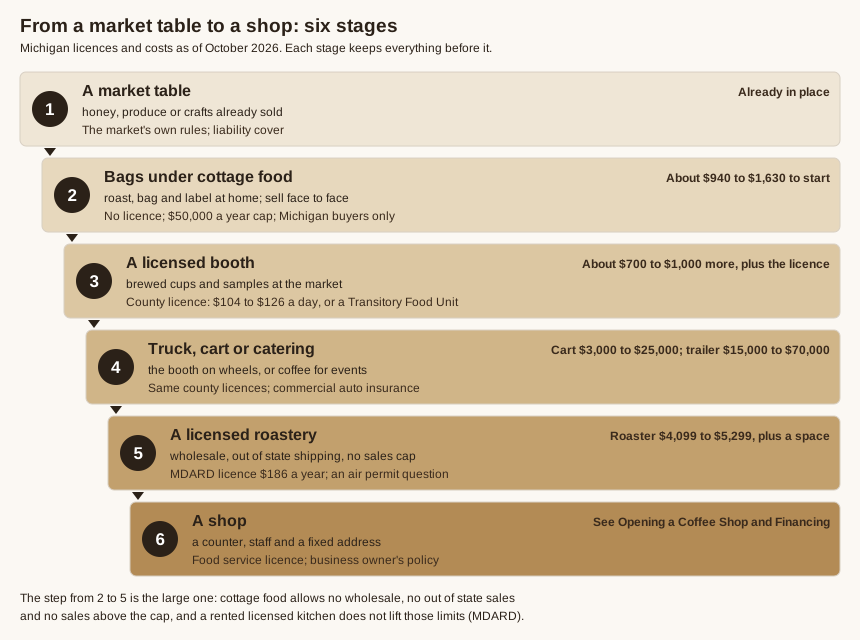
This is the map of the business pages. It is for anyone thinking about selling coffee: a table at a farmers market, a cart or a truck, a web shop, coffee sold to cafés and offices, or a shop with a counter and a door. It sets out the stages in the order most small sellers meet them, what each one needs in licences, insurance, equipment and money, which pages to read and in what order, and a checklist for each.
I sell honey from my own hives at farmers markets and I am saving to open a shop. My own plan, with its three stages and the things the research changed, is on The Plan. This page is the general version of that road, for a reader whose starting point and destination may be different.
The law here is Michigan’s, as of October 2026, because that is where the research was done. Each stage ends with what changes in other states. Nothing here is legal advice; where the answer is “ask the county” or “ask MDARD,” the exact question is given.
The short version
| Stage | What it lets you sell | Licence in Michigan | Money to start, roughly | Read first |
|---|---|---|---|---|
| 1. A market table | Whatever you already sell, plus the paperwork for a business | None for coffee yet; the market’s own rules | A few hundred dollars: market fees, insurance from $299 a year | Setting Up the Business, Insurance |
| 2. Bags under cottage food | Sealed, labelled bags of coffee you roasted at home, face to face or online to Michigan buyers | None; a set label and a $50,000 a year cap | $940 to $1,150 without a roaster; $1,420 to $1,630 with a learning roaster | The Michigan Rules, The Numbers |
| 3. A licensed booth | Brewed cups and samples at the market | County food licence: $104 to $126 a market day, or an annual Transitory Food Unit | About $700 to $1,000 more, plus the licence; about $1,205 for a Transitory Food Unit’s first year | The Michigan Rules, Food-Safety Certification |
| 4. Truck, cart or catering | The booth on wheels, or coffee for weddings and offices | The same county licences; commercial auto insurance | Cart $3,000 to $25,000; trailer $15,000 to $70,000; truck $40,000 and up | A Truck or Trailer, Catering |
| 5. A licensed roastery | Wholesale to cafés and shops, shipping to other states, no sales cap | MDARD Limited Wholesale Food Processor, $186 a year; an air-permit question | Roaster $4,099 to $5,299, plus a space outside the living quarters | Wholesale, Toll Roasting and Shared Roasteries |
| 6. A shop | A counter, staff, a fixed address | A food service licence from the county; a certified manager | Tens of thousands of dollars and up | Opening a Coffee Shop, Financing |
The single biggest step is from 2 to 5. Cottage food allows no wholesale, no sales to other states and nothing above the cap, and MDARD says plainly that renting a licensed kitchen does not lift those limits: “Even if the rented kitchen is a licensed facility, you would need a food establishment license to sell your products” (MDARD FAQ).
Words used below. Cottage food is Michigan’s exemption for non-perishable food made in a home kitchen. A temporary food establishment licence covers one location for up to 14 days. A Transitory Food Unit (TFU) is an annual statewide licence for a food operation that moves. A certified food protection manager (CFPM) has passed an accredited food-safety exam. The glossary has these and the rest.
Which road fits
Not every coffee business takes every stage, or takes them in this order. The six stages are the common path for someone starting at a market; the table shows where other starting points join it.
| If the goal is… | The usual road | What can be skipped | The page that matters most |
|---|---|---|---|
| A market stall selling bags | 1 → 2 | Everything after, until bags pass about ten pounds a week | The Michigan Rules |
| A stall selling cups too | 1 → 2 → 3 | Stage 4 and 5 | The Drinks |
| A cart, trailer or truck | 1 → 3 → 4 | Cottage food bags, if no roasting at home | A Truck or Trailer |
| Catering and event coffee | 3 → 4 | A market table altogether | Catering and Event Coffee Carts |
| Selling online | 2 (Michigan buyers only), then 5 to ship anywhere | — | Selling Online and by Mail |
| Wholesale to cafés and offices | 5, possibly through toll roasting or private label first | Stages 3 and 4 | Wholesale and Consignment |
| A shop | Any of the above, then 6 | Nothing is required first, but a few market seasons build the customer list and the sales record a lender reads | Opening a Coffee Shop |
The one published Michigan example of the whole road is 517 Coffee Company in Lansing, which began roasting at home and selling at farmers markets in 2014 and opened its first shop in 2021: seven years (The Numbers).
Stage 1: a market table
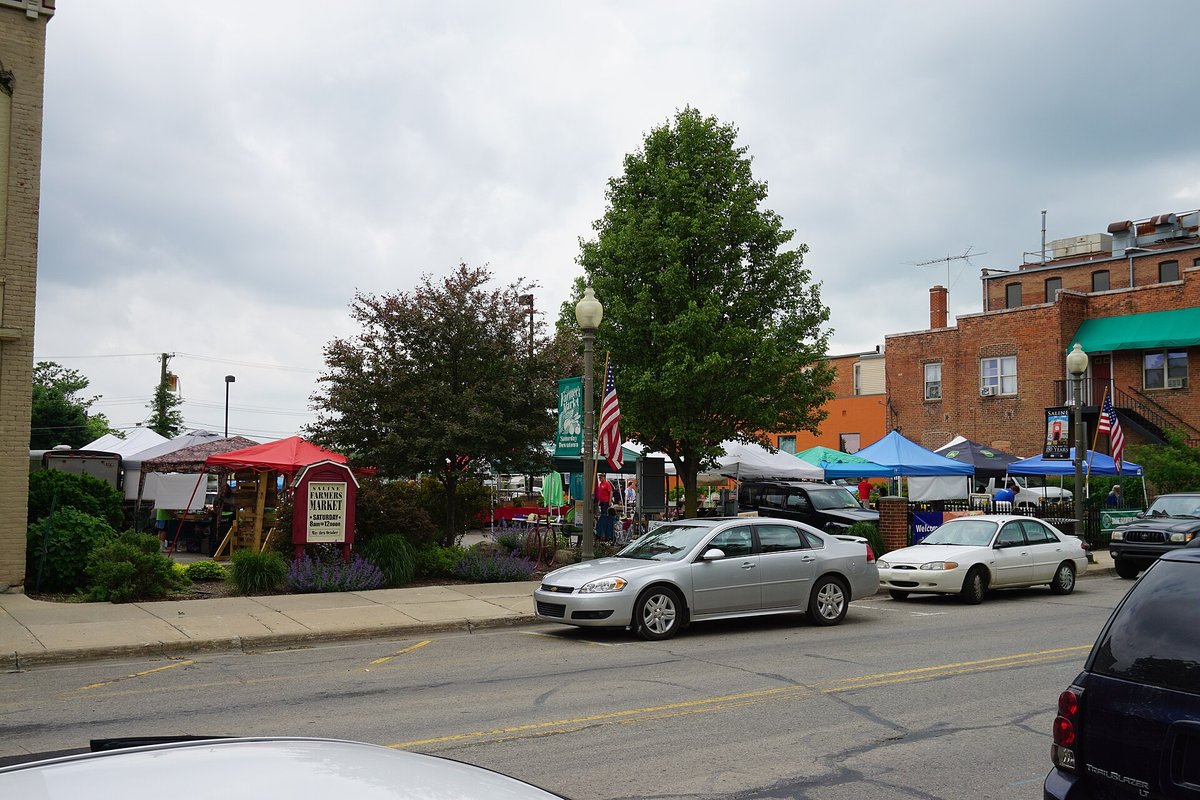
Before coffee comes into it, there is a business to set up and a market to get into. Many coffee sellers already sell something else, as I sell honey; for them this stage is paperwork they may have done already.
What it needs
| What | Cost, October 2026 | |
|---|---|---|
| Structure | A sole proprietorship needs nothing filed; an LLC is $50 to form and $25 a year | $0 to $50 |
| Tax ID | An EIN from the IRS, online | Free |
| Name | An assumed name (DBA) with the county clerk, or with the state for an LLC | $16 in Ingham County; $25 for an LLC |
| Sales tax licence | Michigan Treasury, online. Bags of coffee are exempt as food; a cup and a T-shirt are taxed at 6% | Free |
| Insurance | General and product liability, with the market named as an additional insured | From $299 a year for an annual food-vendor policy |
| Market fee | Mid-Michigan markets run from free to $35 a day, or $100 to $550 a season | Varies |
| Zoning | Ask the township whether the business is a permitted home occupation | Usually free |
| Free help | Michigan SBDC, SCORE, the MSU Product Center | Free |
Read, in order
- Setting Up the Business: structure, tax ID, name and free help
- Insurance: what a market vendor needs, and the cheapest cover that includes products
- Branding, Naming and Trademarks: before the name goes on a label
- Prices and Customers: the markets, their fees and who shops there
- Taking Cards: readers, fees and markets with no signal
- Marketing on a Shoestring
Checklist
- Choose sole proprietor or LLC (what an LLC does not protect).
- Get an EIN from irs.gov, free.
- File an assumed name if trading under anything but your own name.
- Register for Michigan sales tax.
- Open a separate bank account and keep a ledger from the first sale.
- Ask the township about a home occupation.
- Get an insurance quote that includes products-completed operations, and the certificate the market asks for.
- Apply to markets early: Saturday mornings at the established markets fill first.
Elsewhere in the US. The EIN, Schedule C and self-employment tax are federal and the same everywhere. Business registration, assumed names and sales tax on food differ by state; the state’s secretary of state and revenue department publish them.
Stage 2: bags of coffee under cottage food
Michigan’s cottage food law lets coffee roasted, bagged and labelled in the home kitchen be sold without a licence. It is the cheapest way to find out whether people will buy the coffee.
What the law allows, and does not
| Allowed | Not allowed |
|---|---|
| Whole bean and ground coffee, roasted and packed in the home kitchen | A cup of coffee, a sample brewed at home, home-made cold brew |
| Selling face to face: markets, a roadside stand, the front door | Selling to a café, shop, restaurant or distributor, or on consignment |
| Selling online, by mail or by delivery platform since 24 March 2026, to Michigan addresses, if the buyer is offered a chance to talk to the seller first | Shipping to another state, even as a gift |
| Up to $50,000 a year of cottage food sales | Anything above the cap |
| Wrapped, labelled cookies and scones, and jam that meets the standard | Grinding a customer’s bag to order at the stall (that is processing on site) |
What the bag needs. The product name, net weight in ounces and grams, the name and address of the home kitchen (or a registration number from the MSU Product Center, a one-time fee of not more than $50, which keeps the home address off the bag), and the sentence “Made in a home kitchen that has not been inspected by the Michigan Department of Agriculture and Rural Development.” in at least 11-point type. Put the roast date on it too; the law does not require it, and customers look for it. Packaging Coffee for Sale has the full checklist.
What it costs. About $940 to $1,150 to start without a roaster: green coffee to learn on, a carton of foil valve bags, labels, a sealer rated for foil, a scale, airpots and sample cups. A learning roaster such as the Behmor 2000AB Plus adds $479. Each 12 oz bag costs about $7.80 to make in the first season and $6.06 once green coffee is bought by the box (Bags, Labels and What a Bag Costs).
Read, in order
- The Michigan Rules: what needs a licence and what does not
- The Numbers: start-up costs and a market day
- Choosing a Roaster: what a home roaster can and cannot make
- Green Coffee and the Line-Up
- Roast Logs, Quality Control and Blending
- Bags, Labels and What a Bag Costs
- Packaging Roasted Coffee and Packaging Coffee for Sale
- Compostable, PFAS and Waste
- Grinders, The Stall and The Equipment List
- Selling Online and by Mail and Subscriptions and a Coffee Share
- Gift Baskets, for the autumn
Checklist
- Read MDARD’s cottage food pages and keep a copy of the label rules.
- Roast, bag and label only in the home kitchen.
- Every bag: name, net weight in ounces and grams, address or MSU registration number, allergens if any, the home-kitchen sentence in 11-point type, and a roast date.
- Track cottage food sales against the $50,000 cap from the first sale.
- Vent the roaster outdoors or through a hood that vents outside, and keep an ABC extinguisher beside it (Smoke, Air Permits and the Neighbours).
- Ask MDARD in writing whether free tastings may be brewed at the stall without a food licence; the answer is not settled.
- Keep a roast log with a lot code on every bag.
Elsewhere in the US. Every state writes its own cottage food law, with its own list, its own label sentence and its own cap, and some do not treat coffee as a cottage food at all. The state’s department of agriculture or health publishes the list. The federal rules on net weight and honest labelling apply everywhere.
Stage 3: a licensed booth for brewed cups
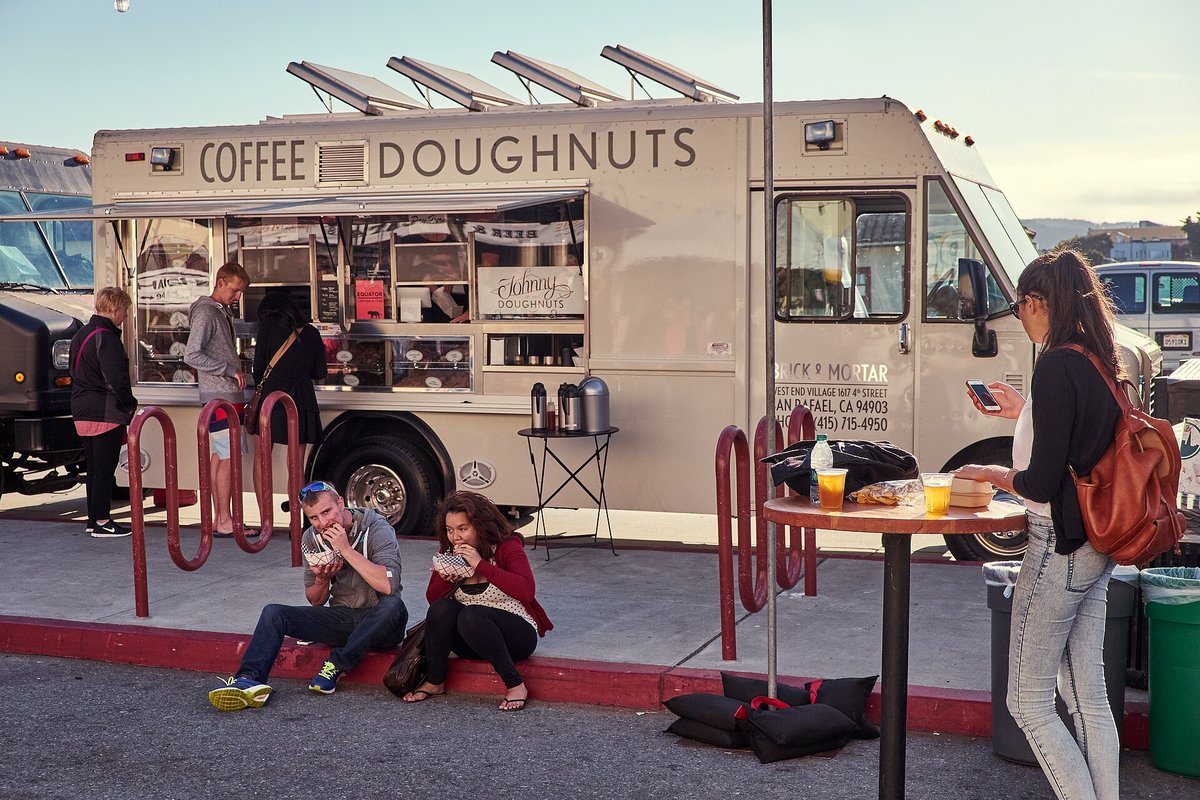
A cup of coffee is food service, licensed by the county health department, not MDARD. The licence brings the health code into the booth and reaches back into the kitchen: nothing in the cup may be prepared at home.
The licence
| Route | What it is | Cost, October 2026 | Certified manager? |
|---|---|---|---|
| Temporary food establishment | One location, up to 14 days; usually one licence per event | $104 (Mid-Michigan District) to $126 (Bay County), more with short notice | No; a person in charge who knows the rules |
| Transitory Food Unit | Annual and statewide, for a tent, cart or trailer that moves | First year about $1,205 in Shiawassee County: $155 licence, two $90 inspections, $688 plan review, $182 course; about $335 each later year | Yes |
At $104 a market day, a season of weekly markets costs more than $2,000; a Transitory Food Unit is a few hundred a year after the first. Which one a county will issue to a weekly vendor is local practice and is not published. That one answer decides whether cups pay.
What the inspector expects. A handwashing station with warm water (an insulated container with a tap over a catch bucket, soap and paper towels), a probe thermometer, sanitizer and its test strips, water from an approved source, waste water carried away, a canopy, everything six inches off the ground, condiments in pumps or packets, and a person in charge for the whole day (The Michigan Rules).
What it costs beyond the licence. About $700 to $1,000: airpots for hot water, a pour-over stand, a second cooler, a thermometer and sanitizer, the first thousand cups and lids. Many markets have no power; hot water carried from home in airpots and topped up on a battery is the plan that works (Hot Water and Power).
Read, in order
- Food-Safety Certification
- Hot Water and Power
- The Drinks
- Sampling
- Iced Coffee and Ice and Honey in Coffee
- Cups, and Standing Out
- Serving Hot Drinks Safely
- Reference Cards, printed for the stall
Checklist
- Ask the county health department which licence a weekly market vendor needs, and what each costs.
- Ask whether home-roasted coffee may be brewed in the licensed booth. On a strict reading it is home-prepared food; nothing published answers it (the questions).
- If a Transitory Food Unit: book the plan review, and pass a manager exam such as ServSafe Manager.
- Buy only commercially bagged ice; mix syrups and cold brew at the booth or in a licensed kitchen.
- Set up the handwashing station, thermometer, sanitizer and test strips before the inspector arrives.
- Tell the insurer that cups are now on the menu.
- Lids, sleeves and a serving routine for hot drinks near children (Serving Hot Drinks Safely).
Elsewhere in the US. Temporary food licences exist in every state, but the fees, the treatment of weekly markets and the rules on samples are set by the state food code and the local health department. Most states have adopted some edition of the FDA Food Code, so the handwashing, thermometer and sanitizer requirements will look familiar.
Stage 4: a truck, cart or catering
A vehicle changes the equipment and the insurance more than the law. In Michigan the same Transitory Food Unit licence covers a tent and a trailer; a Mobile Food Establishment, which must return to a licensed commissary every 24 hours, is the other route.
| Format | Price band | Notes |
|---|---|---|
| Cart or stand | $3,000 to $25,000 | One person, one product |
| Ready-made espresso cart | $14,289 before the machine | An Astra cart, as listed in October 2026 |
| Trailer | $15,000 to $70,000 | The most working space for the money; needs a tow vehicle rated for it |
| Truck | $40,000 to $150,000 and up | Drives itself; engine and kitchen share one fate |
A coffee-only unit does no grease-producing cooking, so the hood with fire suppression that dominates a food truck’s budget may not apply; ask the fire official before buying a unit built for frying. A vehicle used in the business needs a commercial auto policy.
Catering needs none of this to start. An airpot station costs a few hundred dollars more than a market stall already owns; a 120-guest wedding with an attended airpot station prices at about $720, and a 40-person office morning at about $250 (Catering and Event Coffee Carts). Whether a private, invitation-only event needs a licence is a question for the county.
Read, in order
- A Truck or Trailer Instead of a Stall
- Catering and Event Coffee Carts
- The Espresso Machine: Espresso Without Power, for espresso at an event with no outlet
- Insurance
Checklist
- Ask the county whether the unit will be licensed as a Transitory Food Unit or a Mobile Food Establishment, and whether it needs a commissary.
- Ask the fire official whether a coffee-only unit needs a hood.
- Get a commercial auto quote before buying the vehicle.
- For catering: a written contract, a deposit, and the county’s answer on private events.
- Ask each market how many food trucks it takes and what it charges them.
Elsewhere in the US. Mobile food rules are mostly city and county rules: permits per city, commissary requirements, where a truck may park. Each city’s own page is the place to start.
Stage 5: a licensed roastery
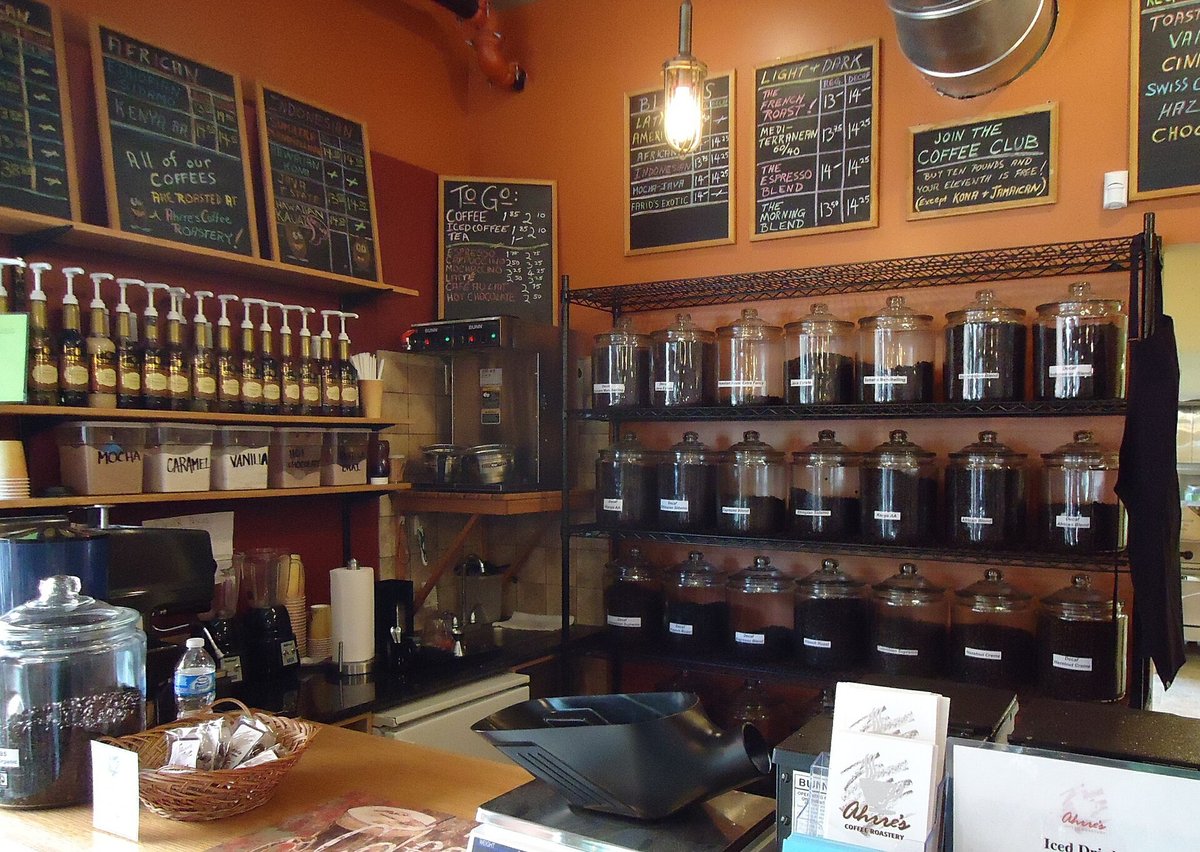
This is the step that removes cottage food’s limits: wholesale to cafés, offices and shops, consignment, shipping to other states, and no sales cap. It needs a licensed space that is not the home’s living quarters.
The licence and the space
| What | Cost, October 2026 | |
|---|---|---|
| Licence | MDARD Limited Wholesale Food Processor, up to $25,000 of wholesale sales a year; Wholesale Food Processor above that | $186 a year; $471 a year |
| Space | Not the living space: “Wholesale food operations shall not be conducted in a private residential living space.” A separate building on the property, a shared or incubator kitchen, or a rented unit | Rent varies; kitchen time by the hour is rarely published |
| Roaster | A one-kilo drum such as the Aillio Bullet R2 (120 V) or R2 Pro (240 V) | $4,099; $5,299 |
| Air | A permit to install from EGLE unless an exemption applies; none names coffee roasting | Ask EGLE: 800-662-9278. A catalytic afterburner for a small drum is $11,500 to $22,000 |
| Federal | A wholesale processor generally registers as a food facility with the FDA | Free; renew every two years |
| Barcodes | For a grocery shelf, from GS1 US | $30 for one; ten for $250 plus $50 a year |
Before a roastery of your own. Toll roasting (a licensed roaster roasts your green coffee to your profile) and private label (their coffee, your bag) reach wholesale sooner, at about $9.90 to $12.95 a pound roasted or $10.60 to $12.90 a 12 oz bag from one Midwest roaster. Reselling either may need a licence of your own; ask MDARD (Toll Roasting, Private Label and Shared Roasteries).
What wholesale pays. One Michigan roaster’s published list sells to shops at 69% of retail, about $13 a pound. That leaves about $3.20 a pound at first-season green prices and $5.45 buying green by the box (Wholesale and Consignment).
Read, in order
- Toll Roasting, Private Label and Shared Roasteries
- Wholesale and Consignment
- Smoke, Air Permits and the Neighbours
- Choosing a Roaster, the production machines
- Roast Logs, Quality Control and Blending, recall readiness
- Selling Online and by Mail, shipping beyond Michigan
Checklist
- Find the space: a separate building, a shared kitchen or a rented unit. Check its zoning before signing.
- Apply to MDARD for the processor licence and book the inspection.
- Call EGLE’s Environmental Assistance Center about the air permit before the roaster is installed.
- Ask the electrician about a dedicated circuit (120 V) or a 240 V outlet.
- Register the facility with the FDA if selling wholesale.
- Write a one-page recall plan; keep lot codes on every bag.
- Talk to the neighbours before the first roast.
Elsewhere in the US. Food processor licences are state licences everywhere, under different names. Air rules vary even more than food rules: Southern California’s air district, for one, exempts roasters of 15 kg a batch or less from a written permit, while Michigan names no roaster exemption at all (Smoke, Air Permits and the Neighbours). Once a roastery ships to other states, each state’s sales tax rules apply to sales into it.
Stage 6: a shop
A shop removes most of the limits above. A licensed kitchen ends the cottage food cap and the rules about ice, cold brew and syrup; the shop’s staff can serve at a market under the shop’s licence; and wholesale and online sales can run from the same address. It also brings rent, staff, a build-out and a lease that will usually ask the owner to sign personally.
| What | Notes | |
|---|---|---|
| Licence | A food service licence from the county health department, after plan review | A certified food protection manager on the staff |
| Insurance | A business owner’s policy (liability and property together) | A median of about $83 a month |
| Workers’ compensation | Required in Michigan from three employees at once, or one working 35 hours a week for 13 weeks | |
| Money | Savings, a loan, grants and crowdfunding | Financing |
What the market years are for, besides savings: a line-up of coffees that sells, a list of customers who will follow the stall to a shop, a record of sales that a landlord or lender will read, and written answers from MDARD and the health department (The Numbers).
Read, in order
- Opening a Coffee Shop
- Financing: Loans, Grants and Crowdfunding
- Insurance
- Water and Grinders
- Espresso and The Espresso Machine
- Cleaning and Descaling
Checklist
- A sales record and a customer list from the earlier stages.
- A business plan a lender will read; a talk with the Michigan SBDC, free.
- The county’s plan review before signing a lease; zoning and parking checked.
- Insurance quotes for a business owner’s policy.
- A certified food protection manager.
- Water treatment chosen for the espresso machine before it is installed.
What no stage can skip
- Written answers. Every open question on The Michigan Rules, put to MDARD or the county in writing before money is spent.
- Insurance with products cover, from the first sale.
- A separate bank account and a ledger, because the cottage food cap is counted in dollars and a lender reads the books.
- Roast dates on every bag, and a lot code that ties each bag to a roast.
- Safe hot water. Coffee is served at temperatures that burn in seconds (Serving Hot Drinks Safely).
What is not known
- Whether a Michigan county will license a weekly market vendor one market day at a time or send it to a Transitory Food Unit. It is local practice and is not published.
- Whether home-roasted coffee may be brewed in a licensed booth at all.
- Whether free tastings may be brewed at the stall under cottage food alone.
- Whether a coffee-only truck needs a fire-suppression hood.
- What shared roasteries and incubator kitchens in mid-Michigan charge by the hour; few publish it.
Sources
- Michigan Department of Agriculture and Rural Development, Cottage food getting-started FAQ, for cottage food and rented kitchens.
- WITL, 517 Coffee new location (2024), for the road from market to shop.
- Every licence fee, price and rule above comes from the business page it links to, where the statutes, fee schedules and makers’ pages are cited in full: The Michigan Rules, The Numbers, Setting Up the Business, Insurance, Food-Safety Certification, Selling Online and by Mail, Wholesale and Consignment, Toll Roasting, Private Label and Shared Roasteries, Smoke, Air Permits and the Neighbours, A Truck or Trailer and Catering and Event Coffee Carts.
- On this site: The Plan, my own staged plan; the glossary; and Coffee Myths and Corrections for the business claims most often got wrong.
Comments (0)