Starting a Coffee Business · 17 of 39
Marketing on a Shoestring
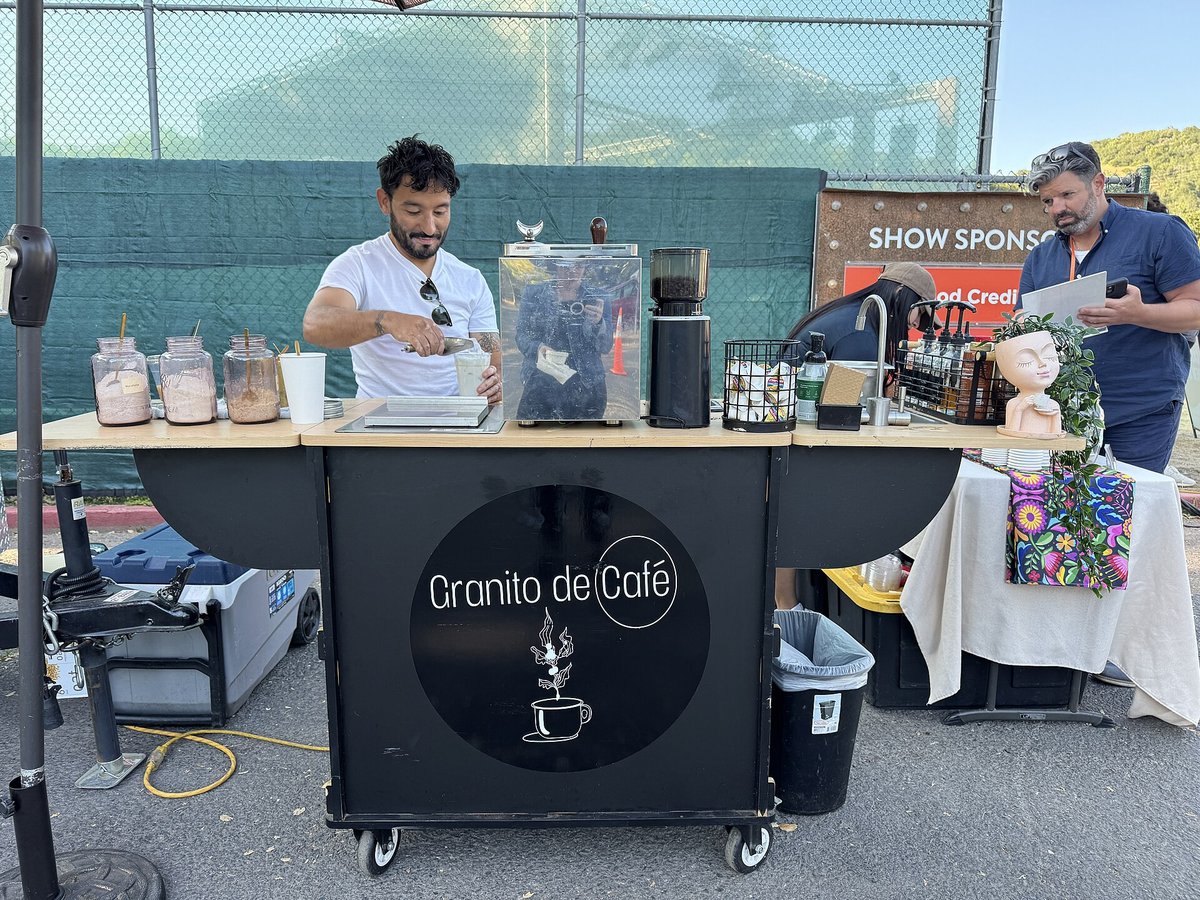
A one-person coffee stall cannot buy attention, so its marketing is mostly things done anyway, done on purpose: the table, the sample cup, the sign, the bag, the email list and a few posts a week. This page sets out what costs nothing and what costs money, what the evidence says about where market shoppers actually look for news, why an email list is worth more than followers, what Google’s rules allow a market vendor, how loyalty cards pay, and a weekly routine one person can keep. The name, the logo and the look come first, on Branding, Naming and Trademarks; the prices are on Prices and Customers.
I sell honey at farmers markets now; the coffee stall is a plan, and the routine at the end of this page is the one I intend to follow. The figures are as published in October 2026.
The short version
| Question | Answer |
|---|---|
| Best free marketing for a stall? | The table itself: a sign readable from the end of the aisle, a sample in the hand, a roast date on every bag, and a sign-up sheet. |
| Email or social media? | Both, but the email list first. Market shoppers in a 3,773-person survey named email as their favourite way to hear market news (35%), ahead of social media (31%). An email list belongs to the business; followers belong to the platform. |
| Instagram or Facebook? | Whichever the market’s own customers use; in small Michigan towns that is often Facebook. Post where the stall will be, what is roasted, and the board. Engagement on every major platform fell in 2025. |
| Google Business Profile? | Not for a stall that only sells at markets it does not run: Google’s rules exclude an ongoing service “at a location that you don’t own”. A catering cart that travels to customers can list as a service-area business; a shop lists as a storefront. |
| Loyalty card? | A paper punch card costs pennies. A free cup of house coffee costs about 54 cents of coffee and cup; the card’s real cost is small and its real value is the return visit. |
| What costs money? | Printed signs and banners, stickers, cups with a logo, paid ads, paid email and loyalty software beyond the free tiers. None is needed in the first season except a sign. |
| How to know what works? | Ask “How did you hear about us?” and keep tallies; count sign-ups, sales and samples every market; change one thing at a time. |
Who is at the market, and why
The best published picture of farmers-market shoppers comes from the University of Minnesota Extension’s FM360 programme, which asked 3,773 visitors at Minnesota markets four questions with sticky dots in summer 2023 (FM360 2023 summary). Minnesota is not Michigan, and the questions are about the market, not a vendor, but it is the closest large sample there is.
| Question | Answer |
|---|---|
| Main reason for the visit | Buy 54%; browse 24%; experience the market 19%; eat at the market 4% |
| Spending that day | Average $24.27; the largest group (42%) spent $11–$25 |
| Preferred way to get updates about the market | Email newsletter 35%; social media 31%; family, friends and coworkers 11%; physical signage 10%; market website 8%; mailings and periodicals 5% |
| How they came | Drove 81%; walked 14%; bicycle 4%; public transport 1% |
Three things follow for a coffee stall. Most people arrive meaning to buy, so the job at the table is to be chosen, not to persuade. A $17 bag is most of a typical visitor’s whole budget, so the bag has to look worth it from a step away (Cups, and Standing Out). And the people who come are people who like to be told what is on, by email first.
What costs nothing and what costs money
| Free | Costs money |
|---|---|
| A sample in every hand (Sampling) — the coffee is a cost, about $18 a market in the first season (The Numbers) | A printed banner or valance for the canopy |
| A chalkboard or whiteboard menu | Stickers and printed cards for bags |
| A sign-up sheet on a clipboard | A logo stamp or printed cups |
| Mailchimp’s free plan, up to 250 contacts (Mailchimp pricing) | Email software past the free tier |
| Instagram and Facebook posts, and the market’s own posts | Paid social ads, boosted posts |
| Word of mouth, and the vendors either side | Loyalty software such as Square Loyalty (paid, with a 30-day free trial) |
| A handwritten punch card | Printed punch cards |
| A free tasting at the stall (Hosting a Tasting) | Event fees, a booth at a festival |
| A note to the local paper and the market manager | Print or radio advertising |
The right-hand column can wait. A stall with a readable sign, samples, a clipboard and a phone can do everything else on this page.
The stall is the advertisement
Before anything goes online, the stall has to do its own selling. The layout, canopy and kit are on The Stall; the cups on Cups, and Standing Out. The marketing points:
- A name the aisle can read. The canopy valance or a table banner carries the name and one line saying what is sold. A shopper deciding which way to walk reads it in a second or not at all.
- The menu board is the most photographed thing on the table. A chalkboard with today’s coffees, the roast dates, the drinks and one “special today” changes every week, which is what makes people look again and what makes a good photo to post.
- The roast date in big writing. “Roasted Thursday” on the board does more than any adjective. Freshness is the one thing a market roaster can offer that a supermarket cannot (Keeping Coffee).
- Something to taste. A sample turns a passer-by into a customer more reliably than anything printed. How to do it within the rules is on Sampling.
- A reason to come back next week. “Next Saturday: a natural Ethiopian” on the board, and the sign-up sheet beside it.
- Something to take away. A small card in every bag with the name, the handle, the web address and the market schedule.
The email list: the one thing the business owns
Social platforms decide who sees a post; an email goes to everyone on the list, and the list moves with the business to a shop, a new platform or a new town. A list of a few hundred local buyers is the asset a lender or a landlord will look at later as proof that customers follow the stall (The Numbers).
How email performs. Mailchimp’s published averages across its users are a 35.63% open rate and a 2.62% click rate, with 0.22% unsubscribing per email (Mailchimp benchmarks, data to December 2023). Mailchimp warns that opens are inflated by Apple’s Mail Privacy Protection, which loads emails automatically, so the click rate is the honest one. On a list of 300 market customers that is still about 100 opens and eight clicks per email, every one of them a person who has already bought.
Building it at the stall.
- A clipboard with columns for name and email, and a line at the top saying what they will get (“Where the stall will be and what is roasted, once a week. Nothing else.”).
- Or a tablet or phone with the email service’s sign-up form, which records consent properly.
- A reason to sign up today: a free sample of next week’s coffee, or a stamp on the punch card.
- Type the paper sheet in the same evening; handwriting gets harder to read by the week.
What to send. One short email a week in season, sent the evening before market day:
- Where the stall will be, and the hours.
- What was roasted this week, with roast dates and one line each on how they taste.
- The special, and anything new on the table (jam, a pastry, a new honey).
- How to pre-order for pickup, if offered (Selling Online and by Mail).
Out of season, once a month: the winter roast schedule, gift boxes in November and December (Gift Baskets), and the date of the first market of spring.
The law. Commercial email in the US falls under the federal CAN-SPAM Act. The FTC’s compliance guide sums it up: accurate “From” lines, no deceptive subject lines, “your valid physical postal address” in every message (a registered post office box will do, which keeps a home address private), and a way to opt out that is honoured “within 10 business days”. Mainstream email services build these in. Only email people who signed up; never add a customer from a card receipt or a phone contact.
Social media: what actually sells coffee
The trend. Rival IQ’s 2025 benchmark report, built on more than four million brand posts, found engagement down on every major platform in a year: Facebook down 36%, Instagram 16%, TikTok 34% and X 48% (Rival IQ 2025). For a small business, that means a post reaches a small and shrinking share of its followers, which is the case for treating social media as the shop window and email as the delivery.
Which platform. One platform done every week beats three done now and then. Instagram suits pictures of coffee; Facebook is where many small-town market customers, and most market managers, actually post. The market’s own page and group are the most useful place to be seen: tag the market, and share its posts.
What to post, roughly in order of what moves coffee:
| Post | When | Why it works |
|---|---|---|
| ”This Saturday at ___ market, 8–1” with the board | The day before | It is the one piece of information a follower can act on |
| Roast day: beans in the cooling tray, the bags being filled, the roast date written | Roast day | Freshness, shown not claimed |
| The menu board | Market morning | Changes weekly; looks like the stall |
| One coffee, one sentence: where it is from, how it tastes, a photo of the beans | Midweek | Teaches the customer what to ask for |
| Behind the table: the bees, the honey harvest, the jam being made | When it happens | The story, which is true (Branding) |
| Sold out | During the market | Makes next week matter |
Photographs of the coffee, the board and the hands working do better for a food business than designed graphics. A phone is enough; good light is the whole trick (Selling Online has the photo notes).
What not to spend time on in the first season: daily posting, video editing, follower-count growth, paid boosts. None of them is measured as producing sales for a market stall in any published study.
Google Business Profile: what the rules allow
A Google Business Profile puts a business on Google Maps and in local search, with hours, photos and reviews. Its rules are stricter than most vendors realise. Google’s eligibility guidelines say “a business must make in-person contact with customers during its stated hours”, and list as ineligible “an ongoing service, class, or meeting at a location that you don’t own or have the authority to represent”, along with online-only businesses (Google eligibility guidelines).
| Situation | What Google allows |
|---|---|
| A stall at markets run by someone else | Not a clean fit. The market owns the location; a stall there is the case the rule excludes. The market itself may have a profile, and a vendor can ask to be named in it or in its posts and photos. |
| A coffee cart that goes to customers (weddings, offices, events) | A service-area business: one profile, a service area of no more than about two hours’ drive, and the home address hidden (Google guidelines). See Catering and Event Coffee Carts. |
| A shop | A storefront profile, with “permanent fixed signage” at the address. |
| Seasonal | Allowed: set the season’s hours, and mark the profile “temporarily closed” in the off-season. A seasonal storefront needs permanent signage year-round. |
Listing a home address as if it were a shop, or inventing an address, breaks the rules and can get the profile suspended. The honest route for a market-only stall is to be findable through the market, its own website and its social pages, and to add a service-area profile once there is a catering service, or a storefront profile with the shop.
Reviews. Where a profile exists, ask happy customers for a review in person or with a card in the bag. Do not offer anything in exchange. Google’s Maps content policy does not allow merchants to “offer incentives – such as payment, discounts, free goods and/or services - in exchange for posting any review”, and removes such reviews. Federal law is narrower but has teeth: the FTC’s 2024 rule on fake reviews bans incentives “conditioned on the writing of consumer reviews expressing a particular sentiment” and lets the agency seek civil penalties. Answer every review, briefly, including the bad ones.
Loyalty and punch cards
A loyalty card’s job is a second and third visit. What it costs is the free item, and only when a card is filled.
| Card | Free item’s cost to the stall | Cost per item bought |
|---|---|---|
| Buy 9 house coffees, the 10th free | About 54¢ of coffee, cup, lid and sleeve (The Numbers) | About 5–6¢ a cup |
| Buy 9 bags, the 10th free | About $7.80 in the first season | About 78¢ a bag, under a tenth of a bag’s margin |
| Buy 5 bags, get a honey stick or a cup of coffee | A few cents to 54¢ | Pennies |
A paper card, stamped with the logo stamp, costs almost nothing and works with cash. Digital loyalty programmes (Square Loyalty is one, joined to the card reader) track customers by phone number and do not get lost in a wallet, but they are a monthly cost after the trial, and a stall with a few hundred regulars can manage on paper. Two rules: set the reward so the card fills within a season, and honour the cards when prices change.
Sampling as marketing
Sampling is covered in full on Sampling: brew ahead or brew live, the cup, the rules, and how to turn a taste into a sale. As marketing it does three things no sign does: it stops people, it lets them choose between coffees without risk, and it starts a conversation in which the roast date and the story get told. At about $18 a market, it costs about two bags’ margin; it pays if it sells three extra bags.
Collaborations
A small business borrows customers from its neighbours.
- The honey. Coffee and honey on one table is already a collaboration with itself: honey coffee as a drink, a honey stick with every bag, a honey-and-coffee gift box (Honey in Coffee, Gift Baskets).
- The baker at the next stall. “Get a coffee next door with your scone” signs on both tables, or a pairing of the week (The Stall).
- A café, restaurant or bakery that sells the beans. A named coffee on someone else’s menu is advertising that pays. The terms are on Wholesale and Consignment.
- Local events. A 5K, a church fair, a school fundraiser: a coffee cart at cost, with the name on the cart, reaches people who never visit a market. Licences are on Catering and Event Coffee Carts.
Events and tastings
A free tasting at the stall on a slow morning, or a ticketed tasting at a library, a brewery or a community kitchen, is the strongest event a roaster can run: people taste three coffees side by side and leave knowing which they like and whose it is. The methods, from a three-cup comparison to a full cupping, are on Hosting a Tasting; a tasting card is on Reference Cards. Collect email addresses at every event.
Press, market newsletters and local writers
- The market manager. Most markets send a weekly email and run a social page, and managers look for vendor news to put in them: a new vendor, a new product, a seasonal special. Send a two-line note and a good photo early in the week.
- The local paper and food writers. A new roaster at a small-town market is a story, especially with a true angle (a beekeeper adding coffee; a former coffee-shop owner coming back to it). Send a short email with the facts, one photo, and the market dates. Do it once at the start of the season and once for something new, not every week.
- Community calendars, library boards and the chamber of commerce newsletter, for tastings and events.
A weekly routine for one person
The routine has to fit around roasting, bagging, baking, the honey and the market itself, so it is short.
| Day | Task | Time |
|---|---|---|
| Roast day | Photograph the roast (cooling tray, bags, roast date); post it | 10 minutes |
| Two days before market | Email to the list: where, when, what’s roasted, the special. Send the market manager any news. | 30 minutes |
| Day before market | Post “this Saturday” with location and hours; write the board | 15 minutes |
| Market day | Board photo posted in the morning; sign-up sheet out; tally “how did you hear?”; stamp cards; “sold out” post if it happens | During the market |
| Evening after market | Type in the sign-ups; fill in the tally sheet; reply to messages and reviews | 30 minutes |
| Once a month | Look at the tallies; drop what is not working; plan next month’s special | 30 minutes |
About two hours a week, outside market day.
Measuring what works
A small business does not need analytics software. It needs a tally sheet and the habit of filling it in.
The market-day tally, one line per market:
| Column | How to count |
|---|---|
| Bags sold, cups sold, by coffee | From the card reader’s item report and a cash tally |
| Samples poured | Count the stack of sample cups before and after |
| Email sign-ups | Count the sheet |
| ”How did you hear about us?” | Ask buyers who are new; mark one of: walking past / sample / email / Facebook or Instagram / market’s own posts / friend / other |
| Punch cards started and redeemed | Count |
| Weather and market size | One word each; they explain more bad days than any marketing choice |
What to look at after a month:
- New customers by source. If almost nobody says “Instagram”, spend less time on it. If many say “the sample”, pour more.
- Sign-ups per market. A list that grows by ten a week reaches 250, the free-plan limit, in half a season.
- Email clicks, not opens, and whether sales rise on the day after the email.
- Repeat buyers. Punch cards redeemed, and regulars recognised, are the measure that matters most to a stall planning a shop.
Change one thing at a time (a new sign, a new sample, a different email day) and give it three markets before judging it. A single wet Saturday says nothing.
What is not known
- No published study measures how a farmers-market coffee or food vendor’s sales divide between word of mouth, email, social media and passers-by. The FM360 survey asked how shoppers like to hear about the market, not what made them buy from a particular stall.
- The benchmark figures for email and social media come from the platforms and analytics companies that sell those services, and they cover all kinds of businesses, not small food vendors.
- Whether a loyalty card raises total spending, or only rewards customers who would have come back anyway, is not measured for market vendors.
Sources
- University of Minnesota Extension, FM360 2023 summer visitor summary (3,773 visitors).
- Google Business Profile Help: Business eligibility and ownership guidelines; Guidelines for representing your business on Google.
- Mailchimp: Email marketing benchmarks; Pricing.
- Rival IQ, 2025 Social Media Industry Benchmark Report.
- Square, Square Loyalty.
- Federal Trade Commission: CAN-SPAM Act compliance guide; final rule banning fake reviews and testimonials (14 August 2024).
- Google, Maps user-generated content policy: prohibited and restricted content.
- On this site: The Numbers (cup and bag costs, the cost of sampling), Sampling, The Stall, Cups, and Standing Out, Hosting a Tasting, Selling Online and by Mail, Catering and Event Coffee Carts, Wholesale and Consignment, Branding, Naming and Trademarks.
Comments (0)