Starting a Coffee Business · 39 of 39
Wholesale and Consignment: Cafés, Restaurants, Offices and Shops
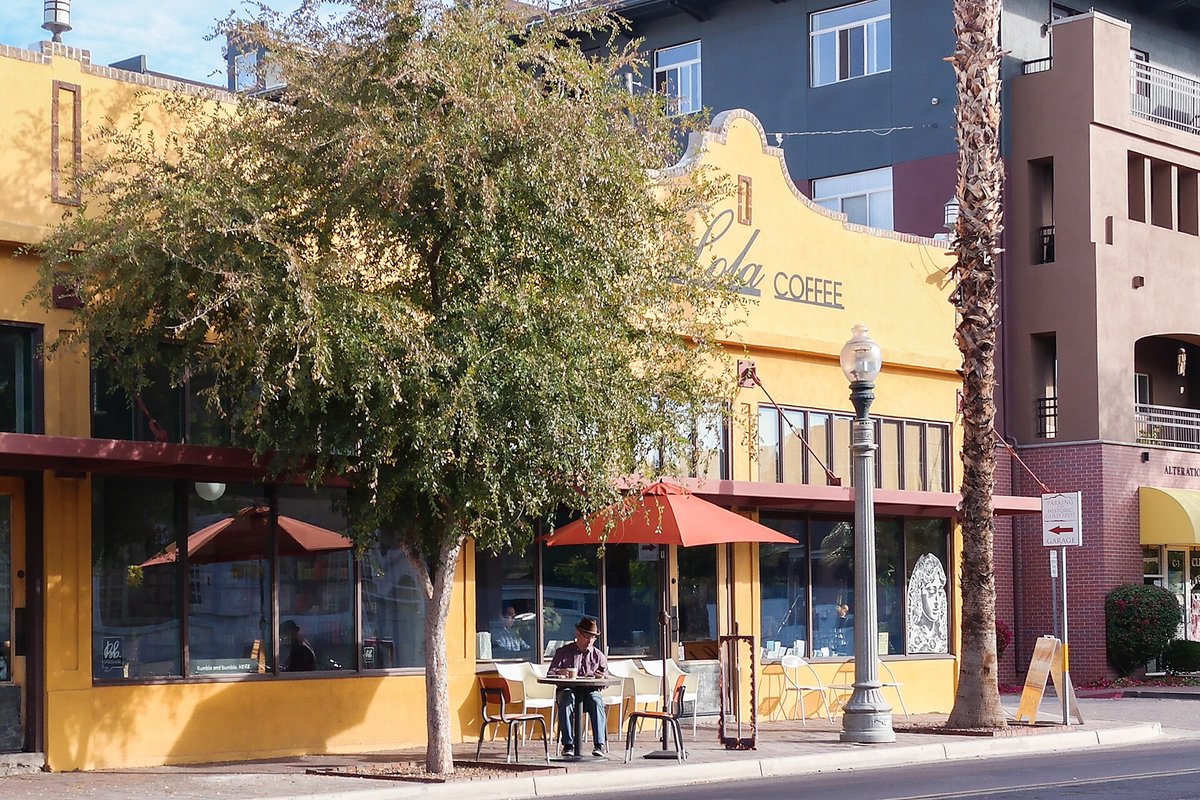
Selling to a café, a restaurant, an office or a gift shop is a different business from selling bags at a market. The roaster sells fewer dollars per pound and more pounds per week, delivers on a schedule, and gets paid by invoice. In Michigan it also needs something a market table does not: a licence. This page covers what wholesale needs legally, how roasters price it, what an equipment loan costs, how offices and grocery shelves work, consignment, private label, and a ladder from one café to a delivery route. Prices and rules are as published on 5 October 2026.
None of this is something I do yet. I sell honey at markets, and the coffee is still at the planning stage; wholesale is the step after a licensed roasting space exists (Toll Roasting, Private Label and Shared Roasteries covers the ways to reach one). On Start Here it is stage 5.
The short version
| Question | Answer |
|---|---|
| Can cottage-food coffee be sold to a café or a shop? | No. MDARD: cottage foods “must be sold directly from the cottage food operation to the consumer.” No restaurants, no grocery stores, no distributors, no consignment. |
| What licence does wholesale need? | An MDARD food establishment licence: Limited Wholesale Food Processor, $186 a year, up to $25,000 of wholesale sales; above that, Wholesale Food Processor, $471. |
| Can that be in the house? | Not in the living space: “Wholesale food operations shall not be conducted in a private residential living space.” A separate building, a shared kitchen or a rented unit can qualify. |
| What do roasters charge wholesale? | One Michigan roaster’s published list: 69% of retail on 12 oz bags, 65% on 5 lb bags ($13.00 a pound). |
| What is left per pound? | About $3.20 a pound at first-season green prices, $5.45 buying green by the box, at $13 a pound wholesale. |
| Lend a café a brewer and grinder? | About $2,437 of equipment pays back in roughly 450 lb of coffee bought by the box; worth it for an account buying 10 lb a week or more. |
| Barcodes for a grocery shelf? | GS1 US: one barcode $30, no renewal; ten for $250 plus $50 a year. |
| Consignment? | Allowed only for licensed product. Argus Farm Stop in Ann Arbor pays producers 70% of the shelf price, plus a shelf fee. |
What the law requires
Cottage food stops at the consumer
The cottage food exemption is the reason a bag of home-roasted coffee can be sold at a market with no licence. It is also why that bag cannot go anywhere else. MDARD’s selling page lists what a cottage food operator cannot do:
“Cannot sell to wholesalers, brokers or distributors. Cannot sell to restaurant or grocery store. Cannot sell on consignment.”
And it gives the reason: “Because your home kitchen is unlicensed and not inspected, the safe food handling practices are not evaluated by any food safety official,” so the food “is not considered an approved source for use in a restaurant or grocery store.” On consignment: “Another person or business cannot sell your products for you.”
So a café that wants to brew the coffee, a gift shop that wants a shelf of bags, and an office that wants a weekly delivery all need the coffee to come from a licensed facility. A café owner who says “just sell it to me, nobody will know” is asking the café to buy from an unapproved source, which is the café’s licence at risk, not only the roaster’s.
The licence: a wholesale food processor
MDARD’s Wholesale Manufactured Foods New Business Guide defines wholesale as “selling or distributing foods to entities, such as restaurants, grocery stores, and distributors,” and lists roasting’s neighbours among the processing activities: “grinding, crushing, milling… packing.” A wholesale processor may also sell at retail; it is “not excluded from selling directly to the end-user consumer, but it is not their primary business.”
From MDARD’s licence fee schedule, as of October 2026:
| Licence | Fee a year | Fits |
|---|---|---|
| Limited Wholesale Food Processor | $186 | A processor with “$25,000 or less in annual gross wholesale sales.” MDARD’s examples are a small maple syrup operation and a small honey processor. Only the wholesale sales count toward the $25,000. |
| Wholesale Food Processor | $471 | Above $25,000 of wholesale sales |
| Retail Food Establishment | $186 | Selling food directly to consumers, such as a shop selling bags |
| Food Warehouse | $186 | Storing or distributing prepackaged food |
The licence year runs to 30 April, applications go in 30 business days before opening, and paying the fee does not allow operating until the inspector has been. MDARD’s step-by-step checklist ends with a pre-licensing inspection at which the operator demonstrates the actual process, and a label is presented for review. It “highly” recommends a manager’s certification such as ServSafe (Food-Safety Certification).
Where the roasting can happen
MDARD’s physical facilities page is the one to read before signing anything:
- “Wholesale food operations shall not be conducted in a private residential living space.”
- Floors, walls, ceilings and tables smooth, easily cleanable and non-absorbent; shielded or shatter-resistant lights.
- Ventilation for equipment “that produces steam or debris (ovens, fryers, stoves, roasters, etc.)” — roasters named — with “Documented approval… from the mechanical inspector.”
- A three-compartment sink or a commercial dishwasher, a separate handwashing sink with hot and cold running water, and an enclosed toilet with its own handwashing sink.
- On a private well or septic system, approval from the local health department (and EGLE for the septic) before licensing.
- Zoning, building, electrical, plumbing and mechanical codes are the owner’s responsibility.
Read closely, that leaves three places a small roaster can be licensed: a rented commercial space; a shared or incubator kitchen; or a separate building on the home property, such as a converted outbuilding, since the rule excludes the “living space,” not the lot. The third is the cheapest on paper and depends on the township’s zoning, the smoke (Smoke, Air Permits and the Neighbours), and the well and septic sign-off. It is a question for the area manufactured food inspector (MDARD, 800-292-3939) before a dollar is spent.
Federal registration
A wholesale processor also has a federal step that a market stall does not. FDA’s food facility registration rule exempts “Retail food establishments” and “Restaurants” (21 CFR 1.226), but not a facility that packs coffee for resale by others, so a wholesale roastery registers with FDA. FDA’s preventive-controls rule has lighter, “modified” requirements for a qualified facility, which includes a “very small business”: one “averaging less than $1,000,000, adjusted for inflation, per year” in food sales (21 CFR 117.3). A home-scale roaster is far inside that. Which of the modified requirements apply is a question for the MDARD inspector, who enforces the federal rule in Michigan plants.
Selling the licensed bags at the market too
Once the coffee comes from a licensed facility, the market table changes as well. MDARD’s farmers market guide says “Food processors may sell pre-packaged foods” at a market under their existing licence, and MCL 289.4105(4) treats the market table as an extension of the licensed establishment “if the food is transported and sold by employees of the food establishment.” Licensed bags do not count toward the cottage food cap, carry the processor’s address instead of the home-kitchen statement (Packaging Coffee for Sale), and may be sold out of state.
Pricing: what roasters charge a café
One Michigan roaster publishes its wholesale prices in its online store: Foster Coffee. Read on 5 October 2026:
| Foster coffee | Retail | Wholesale | Wholesale as share of retail |
|---|---|---|---|
| Core blend, 12 oz | $19.50 | $13.50 | 69% |
| Core blend, 5 lb | $99.99 | $65.00 ($13.00 a pound) | 65% |
| Seasonal blend, 12 oz | $26.50 | $17.50 | 66% |
| Seasonal blend, 5 lb | $153.00 | $99.50 | 65% |
| Decaf, 5 lb | $89.00 | ||
| White-label 12 oz bags for named businesses | $12.50 whole bean, $12.75 ground |
The pattern is the usual one: a café pays about two-thirds of the shelf price, and a little less per pound for the 5 lb bag it brews from. Ground costs a quarter more than whole bean, for the grinding. Foster also wholesales syrups, a chai concentrate and its own bagels, which is the other half of a café account: the roaster becomes a supplier of more than beans.
For comparison, Minneapolis’s Mill City Roasters sells roasted coffee to the trade at $9.90 to $12.95 a pound in 5 lb bags, with a 40 lb minimum order. That is a supplier selling to other roasters and cafés, not a neighbourhood roaster, and it sets a floor that a small roaster’s wholesale price will be compared with.
What is left for a small roaster
Using the site’s one cost table (green at $8.00 a pound in the first season, $6.11 by the 65 lb box, 15% roasting loss) and a 5 lb foil bag at $1.34 (Packaging Coffee for Sale):
| First season | By the box | |
|---|---|---|
| Green for a 5 lb bag (5.88 lb) | $47.06 | $35.94 |
| 5 lb foil bag with valve, label | $1.59 | $1.52 |
| Electricity | $0.27 | $0.27 |
| Cost of a 5 lb wholesale bag | $48.92 ($9.78 a pound) | $37.73 ($7.55 a pound) |
| Sold at $65.00 | $16.08 left ($3.22 a pound) | $27.27 left ($5.45 a pound) |
| A 12 oz bag at 69% of $17 ($11.73) | $3.93 left | $5.67 left |
| The same 12 oz bag sold retail at $17, after a card fee | $8.61 left | $10.35 left |
Arithmetic: 5 ÷ 0.85 = 5.88 lb of green; 5.88 × 8.00 = 47.06; 5.88 × 6.11 = 35.94. 65.00 − 48.92 = 16.08.
Two things follow. Wholesale only works at box prices. At first-season green costs a café account earns about $3 a pound, which barely pays for the drive. And a wholesale pound earns about half a retail pound. What it buys is volume without a market day: no stall fee, no five hours standing, no unsold bags. Ten pounds a week to one café is the coffee for 13 retail bags, sold in a ten-minute delivery.
Price tiers
Most roasters that publish a structure use some combination of these. The figures here are a plan to start from, set against Foster’s list:
| Tier | Who | Price, 5 lb | Terms |
|---|---|---|---|
| Retail | Market and online customers | $85 to $100 | Paid at sale |
| Wholesale | Cafés, restaurants, offices buying under 20 lb a week | $65 ($13 a pound) | Weekly or fortnightly delivery; invoice, net 15 |
| Volume | Over 20 lb a week, or with a 6-month agreement | $60 ($12 a pound) | Fixed delivery day |
| Equipment account | Café with a loaned brewer and grinder | $65, no volume discount | Minimum purchase in the agreement |
| Private label | A business’s name on the bag | per bag, quoted on the bag and label cost | Minimum run |
“Net 15” means the invoice is due 15 days after delivery. A small roaster carrying a dozen accounts on 30-day terms has a month of green coffee out on credit, so start at 15 days and ask for a card on file.
Minimums and delivery
A wholesale minimum protects the roaster’s time, not the coffee. One delivery a week inside a 30-minute radius is the plan to start with; beyond that, ship (Selling Online and by Mail). Reasonable starting terms:
- Minimum order: 10 lb, or $100, for free delivery; smaller orders picked up or shipped at cost.
- Delivery day: one fixed day for every account, so the roast day before it is the week’s one production day.
- Roast-to-delivery: delivered two to five days after roasting, inside the rest window for filter coffee and before the three-week “fresh” mark (Keeping Coffee). Espresso accounts get coffee rested five to seven days.
- Stock rotation: the roaster checks the shelf at each delivery and takes back anything older than four weeks from roast, credited or not, as the agreement says. Stale coffee in a café is the roaster’s name on a bad cup.
Lending equipment to a café
Some roasters place a brewer and a grinder in a café in exchange for a promise to buy their coffee. The terms are rarely published: Counter Culture describes installation, calibration and “scheduled maintenance”; Higher Grounds in Traverse City offers “equipment installation”; neither prints a minimum volume. The arithmetic shows where the minimum comes from.
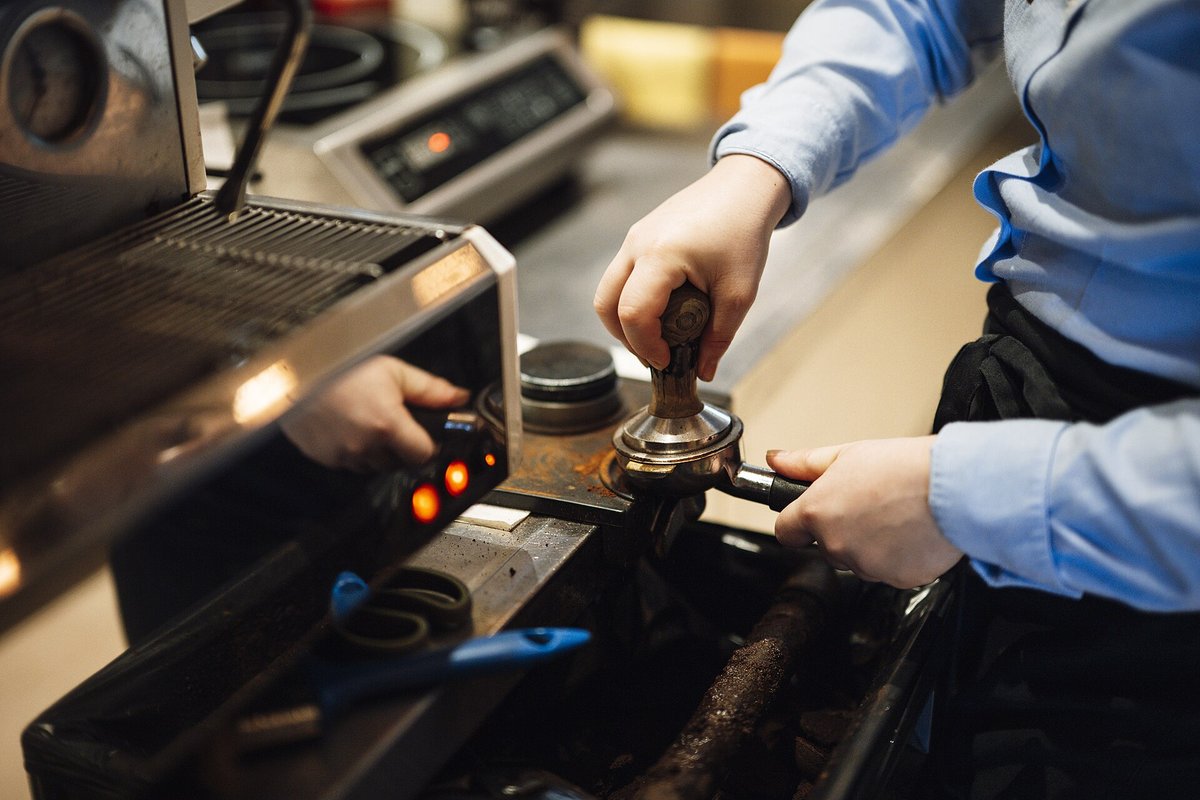
| Equipment | Price, October 2026 |
|---|---|
| Bunn CWTF15-APS airpot brewer, plumbed, 120 V | $980 |
| Bunn G1 bulk grinder | $1,457 |
| Package | $2,437 |
At $5.45 left on each pound (by the box), the package pays for itself after 447 lb of coffee (2,437 ÷ 5.45). For a café buying:
| Café buys | Payback, green by the box | Payback, first-season green ($3.22 a pound) |
|---|---|---|
| 5 lb a week | 89 weeks | 151 weeks |
| 10 lb a week | 45 weeks | 76 weeks |
| 20 lb a week | 22 weeks | 38 weeks |
So a loan makes sense for an account buying 10 lb a week or more, on a written agreement, and not in the first season. The agreement should say:
- The equipment stays the roaster’s property, with serial numbers listed.
- The café buys a stated minimum each month; below it for two months, the roaster may collect the equipment.
- Only the roaster’s coffee goes through the equipment.
- Who cleans and descales, and how often (Cleaning and Descaling); damage from neglect is the café’s cost.
- Who pays the plumber for a plumbed brewer, and who insures the equipment (Insurance).
- Notice to end, and the café’s cost if it ends the agreement early.
A used brewer and grinder cut the payback in half, and a café that owns its own equipment is a cheaper account to win.
Training the café’s staff
The coffee is only as good as the person brewing it, and a roaster that delivers good beans to a café that brews them badly loses the account. Madcap in Grand Rapids says “New wholesale partners receive hands-on barista training and technical assistance at no extra cost,” on site “within 200 miles of Grand Rapids.” Higher Grounds trains through a Specialty Coffee Association certified instructor. That is the standard a small roaster is compared with.
What a small roaster can offer at the start, for free:
- A dial-in visit at the first delivery: set the grinder, set the brewer’s dose and volume, taste it together.
- A brew card taped to the brewer: dose, water, grind setting, brew time, hold time. Ratios has the numbers.
- A hold rule. Batch coffee held in an airpot is fine for a while and then is not; write the discard time on the card.
- A cleaning schedule for the brewer, airpots and grinder.
- A call when the coffee changes: a new crop or a new blend gets a new dial-in.
Office coffee
An office is a café that does not care about latte art and does care about the coffee showing up. Counter Culture sells an office subscription; Michigan’s Paramount Coffee sells frac packs, “single use packages of ground coffee which will brew one standard 12 cup pot of coffee.” For a small roaster the simple version is 5 lb bags, or 12 oz bags pre-ground for the office’s brewer, delivered on the route day.
How much an office drinks, with stated assumptions (1.5 cups a person a day, an 8 oz cup brewed at about 13 g of coffee, five days a week):
| Office | Cups a week | Coffee a week | A year (48 weeks) | At $13 a pound |
|---|---|---|---|---|
| 10 people | 75 | 2.1 lb | 103 lb | $1,340 |
| 40 people | 300 | 8.6 lb | 413 lb | $5,370 |
| 100 people | 750 | 21.5 lb | 1,032 lb | $13,420 |
Arithmetic, 40 people: 40 × 1.5 × 5 = 300 cups; 300 × 13 g = 3,900 g = 8.6 lb.
A 40-person office is worth about as much in a year as a busy market season of bags, with a fraction of the time. Offices also buy the extras: decaf, a tea, cups, and sometimes a catering order for a meeting.
Grocery stores and co-ops
A grocery shelf is the hardest wholesale account to reach and the slowest to pay, and the one most new roasters ask about first.
Barcodes. A store’s till reads a UPC, and the numbers come from GS1 US. As of October 2026:
| GS1 US option | First year | Each year after |
|---|---|---|
| One barcode (a single GTIN) | $30 | $0 |
| Company prefix, 10 barcodes | $250 | $50 |
| Company prefix, 100 barcodes | $750 | $150 |
| Company prefix, 1,000 barcodes | $2,500 | $500 |
Each coffee, size and grind is its own barcode: three coffees in 12 oz whole bean and ground is six. A ten-barcode prefix is the usual start.
Slotting fees. Large chains often charge a manufacturer to put a new product on the shelf. The figures in print are old: a 2002 Forbes report, cited on Wikipedia, put a new item at about $25,000 for a regional cluster of stores and up to $250,000 in high-demand markets, and the Federal Trade Commission found the practice “widespread” in a 2003 study. A one-person roaster does not pay that. The realistic grocery accounts are the independent ones: a neighbourhood grocer, a co-op, a farm stop, a gift-and-grocery shop in a small town, where the owner decides.
Co-ops and farm stops. Argus Farm Stop in Ann Arbor is the clearest published model in Michigan. It “operates on a consignment relationship with our producers”: the producer owns the product until it sells and sets the price; “Argus Farm Stop only takes 30% of the sales price and a shelf fee, while producers receive 70%.” Producers apply online, the store reviews applications monthly, and the application asks for images “of any pertinent licenses.” Argus says its shelves are full in many categories and keeps a waiting list.
What a buyer wants to see: the licence; a product liability certificate naming the store; the barcode; a wholesale price sheet with a suggested retail price; a case size (often six or twelve bags); the roast-date policy and a promise to rotate stock; and a sample.
Consignment at gift shops
Consignment means the shop holds the bags and pays the roaster only for what sells. It is the easiest way into a gift shop, an arts centre, a winery or an orchard’s store, because the shop risks nothing. It is also the one channel MDARD forbids outright for cottage food, so it begins with a licence.
The split is a negotiation. At Argus’s 70/30:
| A $17 bag on consignment | First season | By the box |
|---|---|---|
| Roaster’s 70% | $11.90 | $11.90 |
| Cost of the bag | $7.80 | $6.06 |
| Left | $4.10 | $5.84 |
That is about the same as selling the bag wholesale at 69%, with the difference that unsold bags come back. For coffee that matters more than for a scarf: a bag on a gift-shop shelf for two months is a stale bag. A consignment agreement for coffee should say:
- Who owns the stock until it sells (the roaster), and who bears loss or theft (the shop).
- The split, and whether a shelf or display fee is charged.
- Who sets the price, and that it is not discounted without agreement.
- How old the coffee may get: bags are pulled at four weeks from roast and replaced, and pulled bags come home (Keeping Coffee).
- When the shop reports sales and pays: monthly is usual.
- Notice to end, and how the remaining stock is returned.
- Sales tax: the shop collects and remits on its sales; bagged coffee is exempt in Michigan (the rules page), so this matters for gear and gifts on the same shelf.
Private label: their name on your coffee
A church, an arts centre, a brewery, a wedding venue or a company may want coffee in a bag with its own name on it. That is private label (also “white label”), and it is a wholesale order with a different label. Foster’s store shows how ordinary this is in Michigan: twelve-ounce bags at $12.50 for named businesses, including a brewery, an arts centre, a church and a women’s centre — a dollar under its own-brand wholesale price.
What it takes:
- A minimum run, set by the label: 50 to 100 bags is reasonable for printed sticker labels on stock pouches; custom-printed bags need a thousand or more (Packaging Coffee for Sale).
- Artwork from the customer, with the roaster’s legal lines added.
- The legal lines. Federal labelling law requires the “name and place of business of the manufacturer, packer, or distributor,” and when the name on the label is not the maker’s, it “shall be qualified by a phrase that reveals the connection,” such as “Manufactured for” or “Distributed by” (21 CFR 101.5). “Roasted for St. Mary’s by [roaster], [town], Michigan” does both jobs.
- A roast date on every bag, as on any other bag.
- A price built from the cost table: the coffee, the bag, the label run, and an hour of setup.
The other side of private label — buying someone else’s roasted coffee under one’s own name — is on Toll Roasting, Private Label and Shared Roasteries.
The ladder: from one café to a route
| Rung | What it is | What it needs | Weekly volume |
|---|---|---|---|
| 0. Licensed | Coffee roasted in a licensed space | Limited Wholesale Food Processor licence ($186), a qualifying space, insurance, FDA registration | — |
| 1. One café | A café or restaurant within half an hour, brewing 5 lb bags | A price sheet, a dial-in visit, a brew card | 5–15 lb |
| 2. An office or two | Pre-ground 12 oz or 5 lb bags on the delivery day | Consistent grind; a decaf | 2–10 lb each |
| 3. A shop shelf | A gift shop, farm stop or winery, on consignment or wholesale | Retail bags, a rotation promise, perhaps barcodes | 1–3 lb each |
| 4. Private label | A business’s name on the bag | A label run, the “Roasted for” line | by the order |
| 5. Equipment accounts | A café with a loaned brewer and grinder | $2,400 of equipment per account, an agreement | 10 lb and up |
| 6. A route | 8 to 15 accounts on one delivery day | A fixed roast day, invoicing, a vehicle; the $25,000 limit of the limited licence | 60–150 lb |
A route at 100 lb a week, at $13 a pound, is about $1,300 a week of sales and about $545 a week left at box prices — before mileage and time. It passes the Limited Wholesale Food Processor’s $25,000 limit in about 19 weeks (25,000 ÷ 1,300), so a real route moves to the $471 licence, and needs more roaster than a home machine (Choosing a Roaster).
What is not known
- What any Michigan roaster asks as a minimum for an equipment loan; none publishes it.
- Typical consignment splits for food at Michigan gift shops, beyond Argus Farm Stop’s 70/30.
- Whether MDARD will license a roastery in an outbuilding at the roaster’s home, and what the mechanical inspector wants to see for a roaster’s exhaust. Ask the area manufactured food inspector.
- Which of FDA’s modified preventive-controls requirements MDARD applies to a very small roastery.
Sources
- MDARD: Selling and Samples (cottage food); food establishment licence fees; Wholesale Manufactured Foods New Business Guide, its step-by-step checklist, physical facilities requirements and licensing information; Farmers Market Licensing Guide. All read 5 October 2026.
- MCL 289.4105.
- 21 CFR 1.226, 21 CFR 117.3, 21 CFR 101.5.
- Foster Coffee store listings, read 5 October 2026; Mill City Roasters toll menu.
- Wholesale programmes of Madcap, Higher Grounds and Counter Culture.
- WebstaurantStore for the Bunn brewer price; the grinder price from Grinders.
- GS1 US barcode pricing; Wikipedia, “Slotting fee” (citing Forbes, 2002, and the FTC, 2003).
- Argus Farm Stop, producer terms.
Comments (0)