Starting a Coffee Business · 19 of 39
Packaging Coffee for Sale: From a Kitchen Sealer to a Bagging Line
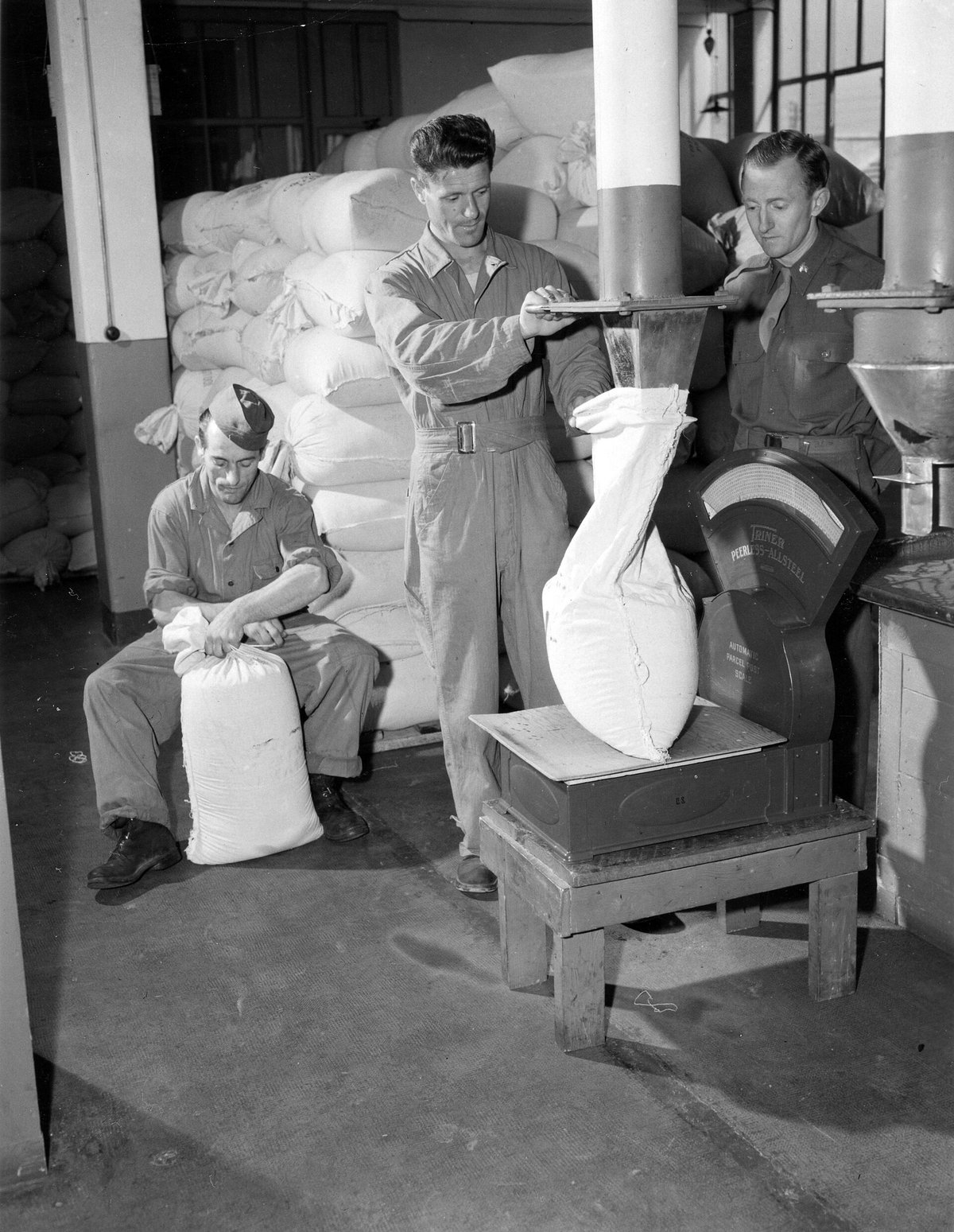
Here is the how-to: what to buy at each stage, from a hand sealer on the kitchen counter to a machine that makes its own bags from a roll of printed film, what each step costs, and what has to be printed on the bag. Why coffee goes stale, what the one-way valve does, and why vacuum sealing and desiccant packs do not belong in a coffee bag are on Packaging Roasted Coffee. What one bag costs to make, with the bag and label prices, is on Bags, Labels and What a Bag Costs; the numbers here are taken from that table. Prices were read in October 2026.
I have not bagged coffee for sale yet. What follows is the plan, and the published rules and prices it rests on.
The short version
| Question | Answer |
|---|---|
| Cheapest way to start | Stock foil-lined valve pouches with a zipper (45¢), a kitchen scale, a funnel, a constant-heat hand sealer rated for foil ($185) and hand-applied labels. About $300 of equipment. |
| When to step up | When bagging takes more hours than roasting. A $8,100 weigh-filler pays back at roughly 470 bags a week for a year on the assumptions below. |
| Best bag | Foil-lined stand-up or flat-bottom pouch with a one-way valve and a zip. Kraft and compostable bags only with a stated oxygen barrier (why). |
| Best seal | Heat-sealed above the zipper, pull-tested on a sample of each batch. |
| Sizes | 12 oz as the main bag; 8 oz as the first purchase; 5 lb for cafés and offices. |
| Net weight | Print it in ounces and grams on the front, in the bottom 30% of the panel. Fill about 5 g over. |
| Must be on a Michigan cottage-food bag | Product name, ingredients, net weight with metric, name and address (or MSU registration number and phone), allergens, and “Made in a home kitchen that has not been inspected by the Michigan Department of Agriculture and Rural Development.” in at least 11-point type. |
| Nutrition Facts? | Not for plain coffee, under 21 CFR 101.9(j)(4) — unless the bag makes a nutrition or health claim. |
| Should be on the bag | Roast date, origin, process, roast level, whole bean or ground, three flavour words, a brew ratio. |
| Where to keep filled bags | Cool, dark, standing up, inside the house. Never in a hot car or on market pavement in the sun. |
The ladder
| Rung | Who it suits | What it adds | Equipment cost | Rough fit |
|---|---|---|---|---|
| 1. Kitchen table | Cottage-food stall, first season | Stock valve pouches, scale, funnel, hand sealer, hand-applied labels | about $300 | up to 50 bags a week |
| 2. Small roaster’s bench | A full season of markets, online orders, a first café | Printed pouches or a printed brand label, thermal label printer, date stamp, a tabletop or band sealer | $500 to $6,500 | 50 to 300 bags a week |
| 3. Semi-automatic | A shop roastery or a busy wholesale roaster | Weigh-filler, a valve applicator (if buying bags without valves), nitrogen | $8,000 to $30,000 | 300 to 1,500 bags a week |
| 4. Production line | Grocery and large wholesale | Vertical form-fill-seal machine making bags from printed rollstock, with valve applicator and gas flush | from $25,000 for a basic machine; coffee lines on quote | thousands a week |
The bag counts are judgement, not published figures: they assume one person bagging a few hours a week at rung 1, and a paid packer at rung 3. The step from one rung to the next is decided by hours, not by how professional the bag looks. A roaster on rung 1 with good labels sells the same coffee as one on rung 3.
Rung 1: the kitchen table
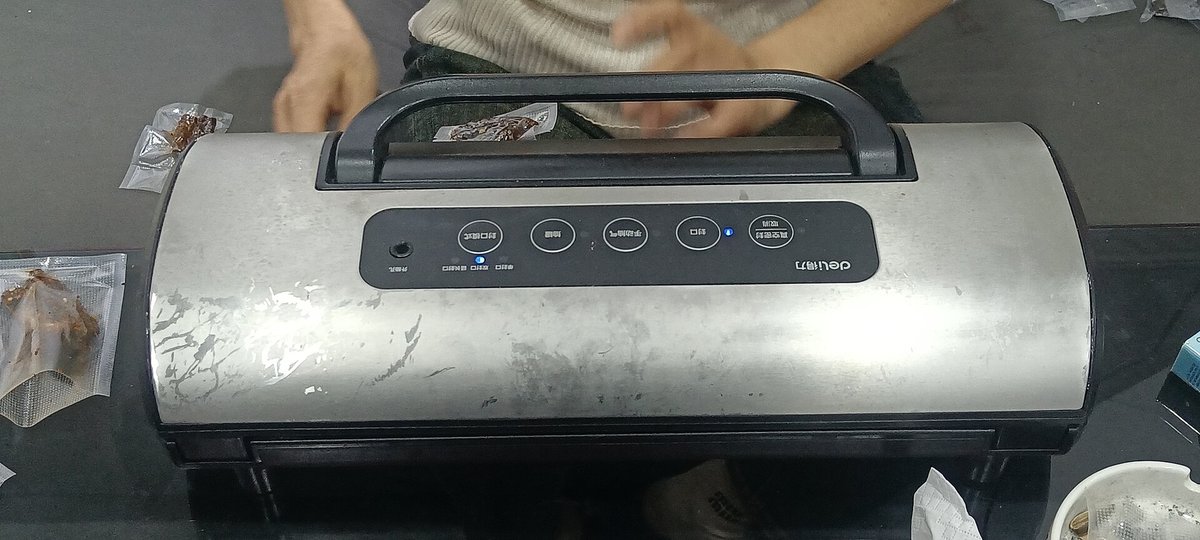
What to buy:
- Bags: stock foil-lined stand-up pouches with a factory-fitted valve and a zip. The default on the bags page is Uline’s 16 oz pouch (holds a 12 oz fill) at 45¢ in a carton of 500, or the 8 oz at 38¢. For a first season that cannot use 500, the compostable kraft pouch comes a hundred at a time at 95¢, with the barrier caveat on that page. Tin-tie paper bags (12 to 31¢) are cheaper still, but they are not a barrier bag; they suit coffee that will be drunk within a few days.
- A scale reading to 1 g, with a tare button. Any kitchen scale will fill bags; whether the one used at home must be a certified legal-for-trade scale is an open question for MDARD.
- A funnel wide enough for beans, or a scoop with a spout.
- A sealer that matches the bag. A foil pouch about 6 mil thick needs a constant-heat sealer; an impulse sealer rated to 2.5 mil will not hold it. Uline’s own page for its pouch names the H-1069 crimper hand sealer at $185, setting 5 to 6. A plain impulse sealer ($97 for Uline’s 8-inch) is the right tool only for thin poly or tin-tie bags.
- Labels: a printed brand label bought by the roll (about 25¢ each at 500) and a small coffee label written or printed at home with the origin, roast and roast date. Sheet labels for an inkjet printer cost about 8¢.
A constant-heat sealer stays hot and crimps the layers together; an impulse sealer heats a wire for a second each time the arm comes down. The second is cheaper and cooler to the touch; the first is what thick foil pouches need.
Time: filling, sealing and labelling one bag by hand takes a minute or two once the routine is set. Fifty bags is an evening.
Rung 2: a small roaster’s bench
What changes:
- Printed bags or a better label. Custom-printed pouches used to mean a minimum of tens of thousands. Digital printers have lowered it: ePac’s online shop takes 500 pouches with at least 100 per design, with no plate fees and about 15 business days from artwork. A printed pouch carries the brand; the coffee’s own details still go on a small label, because a 500-bag print run outlasts any one coffee.
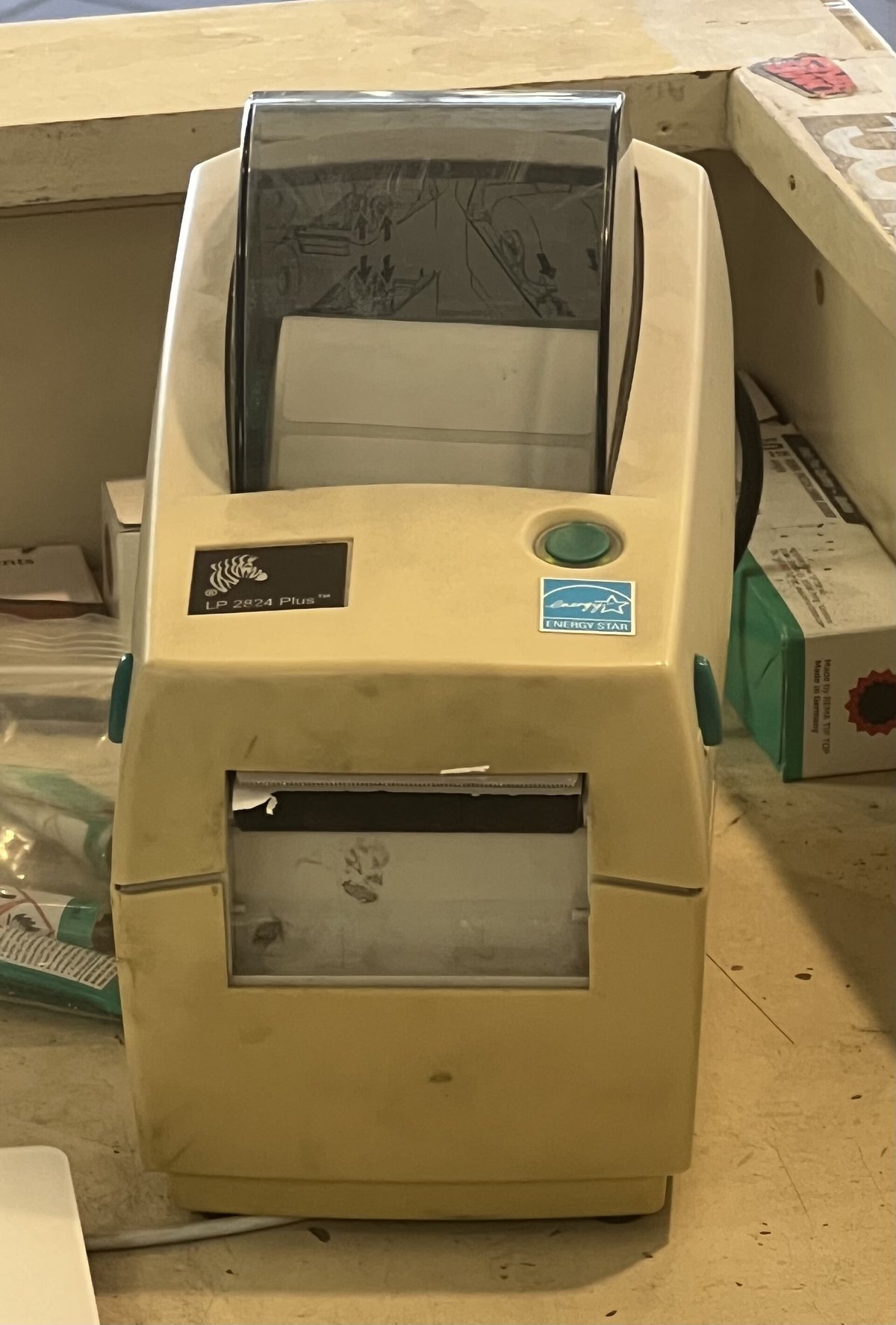
- A label printer.
| Printer | How it prints | Cost | Best for |
|---|---|---|---|
| Thermal (direct thermal, such as Rollo or Zebra) | Heat on heat-sensitive labels; black only | about $200; labels 2 to 3¢ | Roast date, origin and lot labels, shipping labels |
| Colour inkjet label printer (such as Epson’s ColorWorks CW-C4000) | Pigment ink on rolls 1 to 4.25 inches wide | Sold through dealers; Epson’s page prints no price | Full-colour brand labels printed as needed, in place of a printed roll |
| Office inkjet or laser on sheet labels | Ink or toner | 8¢ a label | Short runs; check the label stays put on a cold bag |
Direct thermal labels darken with heat and sunlight over months. For a roast date that only has to last a few weeks that does not matter; for a brand label that sits on a shelf it can.
- A date stamp. A self-inking date stamp marks the roast date in a second, and is a way to keep the roast date on the bag without printing a new label for each roast.
- A faster sealer. A tabletop impulse sealer with a foot pedal frees both hands; a band sealer (a continuous sealer that carries the bag’s top through heated bands on a conveyor) seals as fast as bags can be fed. Coffee Equipment Pros lists a Dupré DSHVBS-280 convertible band sealer at $6,175, rated at over 20 bags a minute. At 300 bags a week a band sealer saves perhaps two hours; below that, a hand sealer keeps up.
Rung 3: semi-automatic
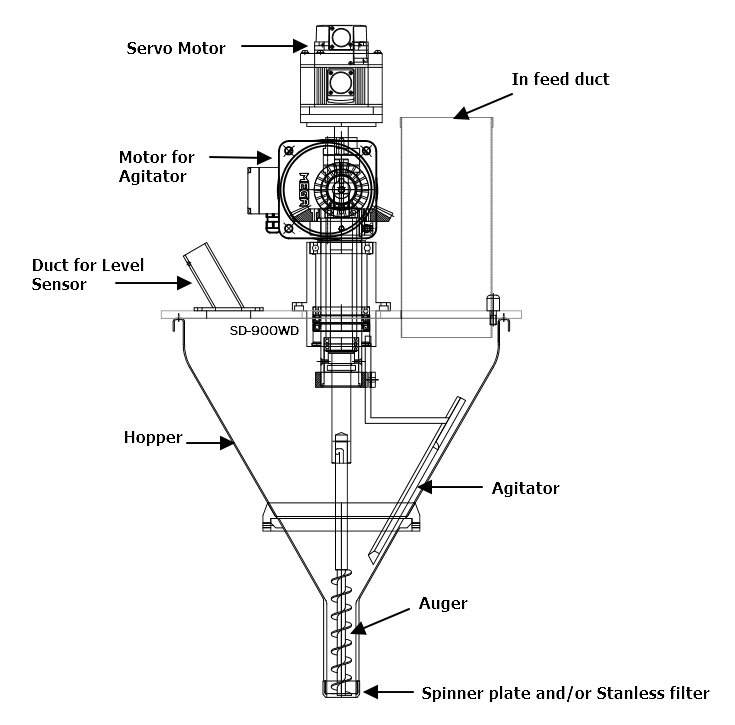
- A weigh-filler. A hopper above a vibrating tray feeds beans onto a load cell until the target weight is reached, then drops the dose into a bag held under the spout. Mill City Roasters’ benchtop weigh/fill machine is $8,100 (regularly $9,100), fills 1.4 oz to 2.6 lb of whole beans from a 55 lb hopper, runs on an ordinary 120 V, 15 A outlet and, on units built after June 2024, needs no compressed air. Coffee Equipment Pros lists the All-Fill VF/100e single-lane vibratory filler at $12,250. Auger fillers, which turn a screw to meter powder, are for ground coffee.
- A valve applicator, only if buying bags without valves. Valves are bought by the case for machine application (TricorBraun Flex lists four sizes at $1,625 a case) and pressed or welded onto the bag. A manual applicator such as the AstaPoint APVA-1801 is $6,900 and needs compressed air; simpler heat-press units from overseas makers are listed around $700 to $1,000. For a small roaster, bags bought with the valve already fitted are almost always cheaper.
- Nitrogen flushing. Pushing nitrogen into the bag before sealing lowers the oxygen left inside. Gas Generation Solutions puts a generator for “a small craft roaster or coffee shop” at about $10,000 and gives 99.5% nitrogen as “typical for whole bean and ground coffee bags.” Whole beans sealed fresh in a valve bag flush their own bag with carbon dioxide, which is why the science page puts nitrogen low on the list for a roaster who sells within weeks. It earns its place for ground coffee and for bags meant to sit on a grocery shelf.
Rung 4: a bagging line
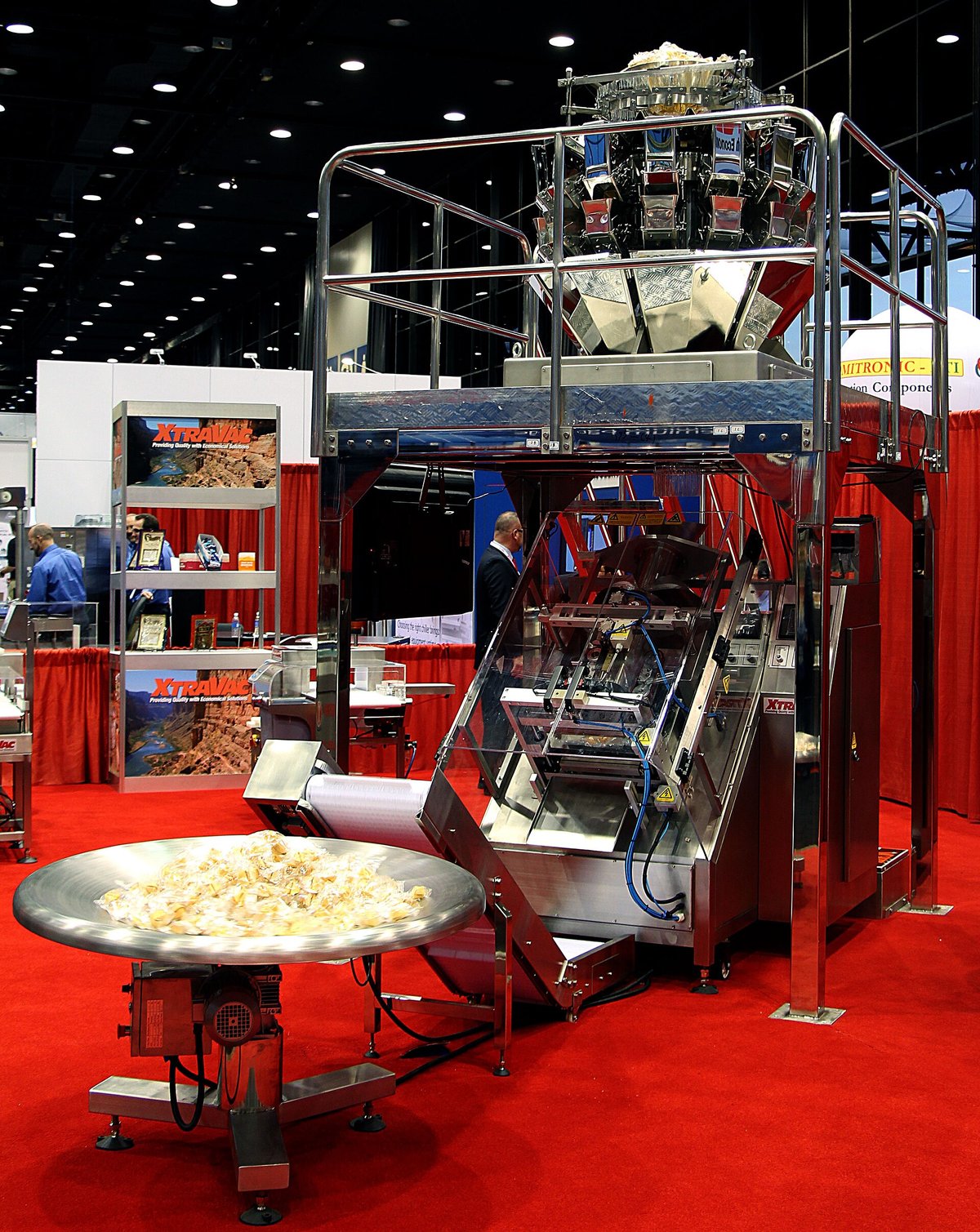
A vertical form-fill-seal machine (VFFS) makes the bag itself. Printed film comes off a roll (rollstock), wraps around a forming tube, is sealed down the back, filled from a weigher above and sealed across the top. Coffee machines add a valve applicator before the forming tube and a gas flush.
- A basic machine without coffee options: Bags & Pouches LLC lists its Model 420 from $24,999, 5 to 50 bags a minute.
- Coffee machines with valve applicators: Fres-co offers “streamlined, cost-effective machines for the small batch roaster” with an optional degassing-valve applicator; Viking Masek’s M250 runs up to 100 bags a minute. Both are priced on quote.
- The building matters as much as the machine. The M250 is listed at 480 V three-phase, 20 A, with compressed air at 30 cubic feet a minute and a weight of 1,655 lb. That is a commercial unit with a compressor, not a garage.
- Printed rollstock is ordered by quote; ePac’s custom route starts at a $1,500 order.
When each rung pays
No published figure gives a hand-packing rate for coffee. With stated assumptions the arithmetic is simple:
| Assumption | Value |
|---|---|
| Time to fill, seal and label one bag by hand | 2 minutes |
| Time saved per bag by a weigh-filler | 1 minute |
| What an hour of packing is worth | $20 |
| Saving per bag | 33¢ |
| Weigh-filler cost | $8,100 |
| Bags to pay it back | about 24,500 |
| At one year | about 470 bags a week |
| At three years | about 160 bags a week |
On those assumptions a weigh-filler is not worth buying until bagging is a weekly job of several hours. A band sealer ($6,175) saving 20 seconds a bag needs about 55,000 bags. Change the assumptions and the answer moves; the method is the point. The roast log page is where the weekly bag count comes from.
Bag types compared
| Type | What it is | Stands up? | Barrier | Price per bag (Oct 2026) | Notes |
|---|---|---|---|---|---|
| Flat pouch (lay-flat, three-side seal) | Two panels sealed on three sides | No | Depends on film | Not priced here | Samples and 2 to 4 oz tasters |
| Side-gusset bag | Folds on the sides; the classic coffee “brick” | Only when full and folded | Foil laminate common | Uline 5 lb foil bag with valve, $1.34 ($1.22 at five cartons) | Heat-seal, then fold and tie; the wholesale bag |
| Stand-up pouch (doypack) | Gusset in the bottom | Yes | Foil laminate or kraft | Uline 16 oz foil, valve and zip, 45¢; 8 oz 38¢ | The retail default |
| Flat-bottom (block-bottom, box) pouch | Square base, side gussets | Yes, like a box | Foil or kraft laminate | TricorBraun kraft 12–16 oz with valve, 83¢; printed flat-bottom from ePac by quote | Looks best on a shelf; takes a wide sealer |
| Tin or can | Metal, often with a plastic lid | Yes | Complete until opened | Not priced here | Gift and premium use; refillable; heavy to ship |
| Compostable pouch | Kraft paper with a plant-based film | Yes | No published figure | Elevate 12 oz, valve and zip, 95¢ (100 at a time) | See Compostable, PFAS and Waste |
| Paper tin-tie bag | Paper, sometimes a thin liner, wire tie | Folded | Low | 12 to 31¢ | Coffee drunk within days |
Whatever the shape, what keeps coffee fresh is the layer inside: aluminium or another stated high-barrier film. The one controlled comparison found that kraft with a plain polyethylene liner lost aroma within two weeks, valve or no valve (the science).
Valves
A one-way degassing valve is a small plastic disc with a rubber or oil-wetted membrane that lets carbon dioxide out of the bag and keeps air from coming in. How it works, and why it lets coffee be sealed the day it is roasted, is on the science page.
- Buy bags with the valve fitted. Every bag priced here comes with one.
- Whole bean or ground. Valves for ground coffee have a filter so fines do not clog the membrane.
- Do not cover it. A label over the valve blocks it. Put the front label below the valve and clear of it.
- Do not squeeze bags through the valve to “test” them more than once. Pressing a little air out before sealing is part of the routine; pumping a sealed bag repeatedly to hear it hiss pushes aroma out.
Sizes
| Size | Metric on the label | Use | Bag |
|---|---|---|---|
| 2 to 4 oz | 57 g to 113 g | Tasters, flights, gift baskets | Small flat or stand-up pouch |
| 8 oz | 227 g | The first purchase after a sample; ground coffee, so it is used quickly | 8 oz pouch, 38¢ |
| 12 oz | 340 g | The main retail bag; the commonest size among Michigan roasters | 16 oz pouch, 45¢ |
| 1 lb | 454 g | Value bag; regulars | 16 oz pouch, filled to the top, or a 1 lb flat-bottom |
| 5 lb | 2.27 kg | Cafés, offices, wholesale | Uline gusseted foil bag, $1.34 |
The metric figures above are the rounded conversions a label would carry. The prices page has what Michigan roasters charge for each size.
Filling and weighing
Three terms do all the work:
- Net weight is the coffee alone. The FDA’s labelling guide works it out as the filled package less the empty container and wrappers (21 CFR 101.105(g)).
- Tare is the weight of the empty package: bag, valve, tie and label. Put an empty, labelled bag on the scale and press tare, and the scale shows net weight from then on.
- Tolerance. The national handbook inspectors use, NIST Handbook 133, lets a single 12 oz package fall short by no more than 16.3 g and an 8 oz package by 12.7 g. That is the most any one bag may be short. The lot as a whole must average at least the labelled weight. A roaster who aims at exactly 340 g and has a scale that drifts will fail the average before any one bag fails.
Coffee also loses weight after it is sealed, as gas leaves through the valve: up to about 4 g from a 12 oz bag of dark roast (the science page). So the target is label weight plus about 5 g: 345 g in a 12 oz bag, 232 g in an 8 oz bag. At $8 a pound of green coffee, 5 g over costs about 10¢ a bag.
Check the scale. Weigh a known weight (a calibration weight, or a sealed 1 kg bag of sugar weighed once on a trusted scale) at the start of each packing session. Re-weigh one finished bag in ten and write the weights in the roast log.
Sealing, step by step
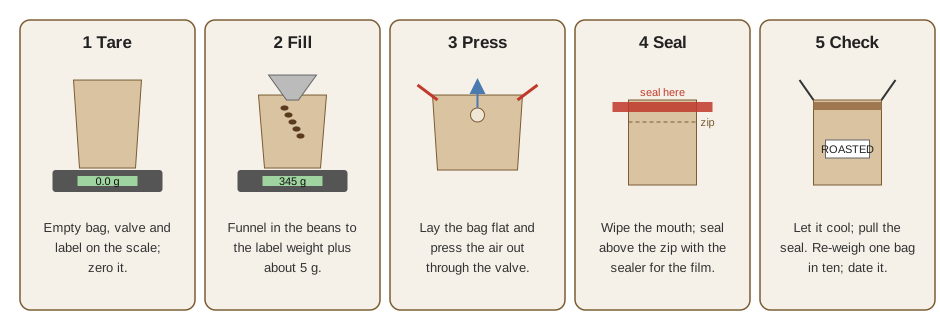
- Cool the beans fully. Warm beans fog the bag and soften the seal.
- Label first. It is easier to put a label on a flat empty bag than a full one, and the scale tares the label with the bag.
- Tare the empty, labelled bag on the scale.
- Fill through the funnel to the target (345 g for a 12 oz bag).
- Wipe the mouth. A bean fragment or a film of oil in the seal area makes a leak. Wipe the inside of the top inch with a dry cloth.
- Close the zip, then press the bag flat against the beans so most of the air goes out through the valve before sealing.
- Seal above the zip, at the setting that worked in testing. On a foil pouch with a crimper sealer that is setting 5 to 6, and half the width of a wide bag at a time.
- Let the seal cool, then pull it gently. A good seal tears the film before it peels apart. Pull-test one bag in each batch, and every bag on a new roll or a new setting.
- Date it. Stamp or print the roast date.
- Stand the bags up to finish degassing. A bag that swells hard in a day or two has a blocked or missing valve.
Test a new bag and sealer on a few empty bags before the first real batch. No bag maker prints a seal temperature or time (the science page).
Storing the bags
Filled bags at home. Cool, dark and dry, standing up, away from the roaster’s smoke and from anything with a smell. Under Michigan’s cottage food law the bags, and the green coffee, have to be stored inside the home: MDARD allows the kitchen, a spare room or a dry basement, and says “You may not use a garage, shed, barn, or other outbuilding” (the rules). Sort by roast date, oldest at the front.
At the stall. Heat is the enemy on a market day. Gas comes out of coffee about twice as fast for each 10 °C, and a black pouch in July sun gets far hotter than the air. Keep the stock in a closed tote under the table in the shade, with a few bags out on display, and turn the display bags over through the day. Do not leave bags in a parked car. Bags more than two weeks from roasting come off the table (the routine).
In a shop. The same rules on a shelf: first in, first out by roast date, out of direct sun, away from the espresso machine’s heat. A licensed shop also keeps stock off the floor, as the inspector expects of any food.
Empty bags. A bag is a food-contact material. Keep cartons closed, dry and off the floor, away from chemicals and roaster smoke; take out only what one session will use. Valve makers do not publish a shelf life for a valve sitting in an unused bag, so buy a quantity that will be used within a season or two, and test a few seals from an old carton before trusting it.
Shipping
Under the 2026 amendment, Michigan cottage foods may be sold by internet or mail order within Michigan if the buyer has had a chance to “directly interact” with the seller first (MCL 289.4102); a licensed roaster may ship anywhere. The details are on Selling Online and by Mail. For the package itself:
- A sealed valve bag needs no extra barrier. It does need protection from crushing: a small box, or a padded mailer for one bag.
- Ship early in the week so bags do not sit in a hot depot over a weekend.
- Put the brew card from the science page in the box.
- The shipping label goes on the box, not on the coffee bag.
What goes on the label
What the federal rules require
These are the FDA’s rules in 21 CFR Part 101, summarised in its Food Labeling Guide. They are the rules a label is judged against once coffee is sold through shops or across state lines.
| Line | Where | Rule |
|---|---|---|
| Statement of identity (the name of the food: “Whole bean coffee,” “Ground coffee, medium roast”) | Front (principal display panel) | 21 CFR 101.3 |
| Net quantity, in ounces and grams: “Net wt 12 oz (340 g)“ | Front, in the bottom 30%, parallel to the base | 21 CFR 101.105 |
| Name and place of business: name, street address, city, state, ZIP. A roaster packing for someone else adds “Roasted for” or “Distributed by.” | Front or the information panel (the panel to the right of the front) | 21 CFR 101.5 |
| Ingredients | Information panel | Needed when there is more than one ingredient: a flavoured or blended-with-chicory coffee lists everything. |
| Allergens | With the ingredients | Plain coffee has none. A flavouring carrying milk, tree nuts or another major allergen must declare it. |
| Nutrition Facts | — | Not required for plain coffee. 21 CFR 101.9(j)(4) exempts foods with insignificant nutrients and names “coffee beans (whole or ground),” provided the label “bears no nutrition claims or other nutrition information.” |
Type size for the net weight depends on the area of the front of the bag, not the label:
| Front panel area | Smallest letters |
|---|---|
| 5 sq in or less | 1/16 inch |
| over 5 to 25 sq in | 1/8 inch |
| over 25 to 100 sq in | 3/16 inch |
| over 100 to 400 sq in | 1/4 inch |
A 16 oz stand-up pouch is about 7 by 11½ inches, roughly 80 sq in, so its net weight needs letters at least 3/16 inch (4.8 mm) tall, measured on a lower-case “o”. Since a lower-case “o” is about half the height of the type size, that is roughly 27-point type, larger than most small coffee labels use.
The nutrition exemptions are lost by a claim. A bag that says “zero calories,” “antioxidant-rich,” or “good for your heart” has made a nutrition or health claim, and the exemption for coffee and the small business exemption (fewer than 100 full-time employees and 100,000 units; no notice needed under 10 employees and 10,000 units) both stop applying. The safest label has no health words at all. What the research says about coffee and health is on Caffeine and Health, not on the bag.
What Michigan’s cottage food law requires
The statute, MCL 289.4102(3), as amended by 2025 PA 51 (in force 24 March 2026), and MDARD’s labelling page:
- The name and address of the cottage food operation, or its name, telephone number and the registration number from the MSU Product Center’s voluntary registration (which keeps a home address off the bag).
- The name of the product.
- The ingredients, in descending order by weight. For plain coffee: “Ingredients: roasted coffee.”
- The net weight. MDARD adds that it “must also include the metric equivalent.”
- Allergen labelling as the federal rules specify.
- Nutrition labelling if any nutritional claim is made.
- This statement, “printed in at least the equivalent of 11-point font size in a color that provides a clear contrast to the background”:
Made in a home kitchen that has not been inspected by the Michigan Department of Agriculture and Rural Development.
The 2026 amendment did not change the wording. MDARD’s page puts 11-point at “about 1/8” tall” and accepts all capitals or mixed case. Hand-printed labels are acceptable “if they are clearly legible, written with durable, permanent ink, and printed large enough.”
Other states have their own cottage food lists and their own required sentence; some do not treat coffee as a cottage food at all. The state’s agriculture or health department publishes the list.
What changes under a licence
A roaster who moves to a licensed food processing plant (Toll Roasting and Shared Roasteries and Opening a Coffee Shop cover the routes) drops the home-kitchen sentence and the MSU registration option. The label then follows the federal table above in full: net weight on the front in the bottom 30% at the right type size, and a street address, since the registration number is a cottage-food option only. Bags may then be sold to shops, cafés and across state lines (Wholesale). A private-label coffee roasted by someone else carries “Roasted for [the stall’s name]” or “Distributed by.”
The lines buyers expect
None of these is required. All of them are what a coffee buyer reads first.
| Line | Example | Why |
|---|---|---|
| Roast date | ”Roasted on 2026-10-14” | The one fact a fresh-roast buyer is paying for. Print “Roasted on,” not only “Best by.” If a “best within” line is added, use about three weeks from roast (Keeping Coffee). |
| Origin | ”Colombia, Huila” | Country at least; region, farm or cooperative if known |
| Process | ”Washed” / “Natural” / “Honey” | How the fruit was removed; it shapes the flavour |
| Variety | ”Caturra and Castillo” | For buyers who follow varieties |
| Roast level | ”Medium” | A plain word beats a number; see Roasting |
| Whole bean or ground | ”Whole bean” / “Ground for drip” | Ground coffee carries a grind date too |
| Flavour notes | three words | Honest, tasted words, not a list of ten |
| Brew guide | ”20 g to 320 g water” | One ratio; Ratios |
| Decaf | ”Decaf, Swiss Water Process” | Say it on the front and name the method |
| Lot or batch | ”Lot 41” | Ties the bag to the roast log if there is ever a question |
Words that are regulated
| Word on the bag | What it takes |
|---|---|
| Organic, or the USDA seal | A certified organic roaster once organic sales pass $5,000 a year, even if the green coffee was certified (7 CFR 205.101; the rules page). |
| Fair Trade and the certifiers’ marks | A licence from the certifier; the mark is a trademark. What each one promises is on Labels and Certifications. |
| Kona and other Hawaii origins | Hawaii law: a “Kona blend” may now hold as little as 10% Kona; from 1 July 2027 any product using a Hawaii origin name must contain at least 51% (HRS §486-120.6; Origins). |
| “100%” of an origin or a species | Every bean. A blend with any other coffee in it cannot say “100% Colombian” or “100% Arabica.” |
| Health and nutrient claims (“boosts metabolism,” “low acid” as a health benefit, “rich in antioxidants”) | FDA claim rules, and the loss of both nutrition exemptions. |
| Single origin, small batch, specialty, artisan, local | No legal definition. True words are fine; Labels and Certifications has what buyers take them to mean. |
A sample label
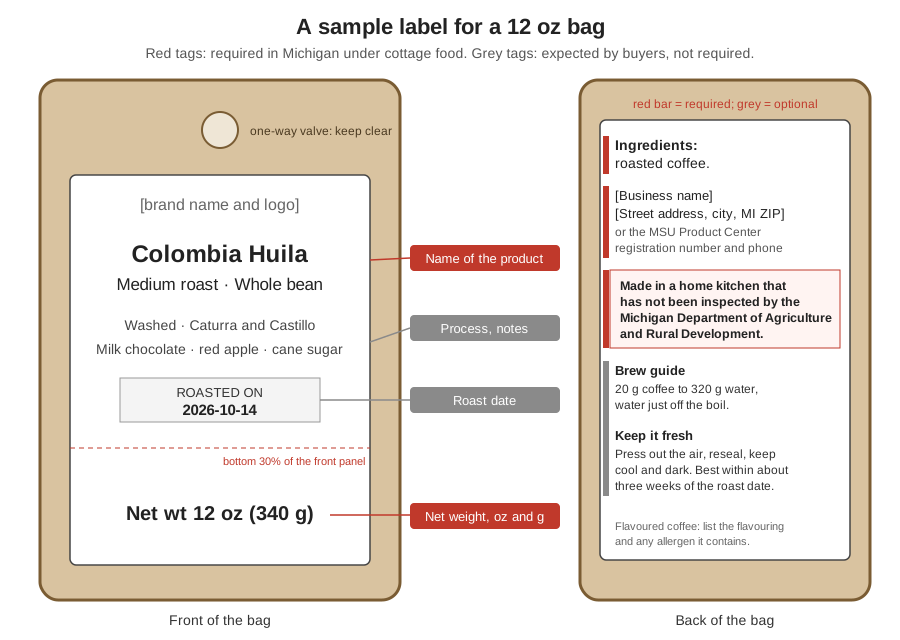
The label checklist
Before a label is printed in quantity:
- Product name on the front (“Whole bean coffee, medium roast” or the coffee’s name with “coffee” in it).
- Net weight in ounces and grams, on the front, in the bottom 30%, at least 3/16 inch tall on a 12 oz pouch.
- Name and street address, or (cottage food) name, phone and MSU registration number.
- Ingredients line: “roasted coffee,” plus any flavouring.
- Allergens declared for any flavouring.
- Cottage food: the home-kitchen sentence, word for word, at least 11-point, contrasting colour.
- No nutrition or health claims anywhere on the bag, the card in the bag, or the stall sign.
- Every certification mark backed by a current certificate or licence.
- Roast date on the front, as “Roasted on.”
- Label clear of the valve.
- Label stays on a cold bag and a bag that has been handled: test one in the freezer and one in a pocket for a day.
- Printed text legible from arm’s length; dark ink on a light ground.
What is not known
- A published hand-packing rate for coffee bags, so the payback table above rests on stated assumptions.
- A shelf life for one-way valves in unused bags.
- Whether MDARD requires the 3/16-inch federal type size on a cottage-food bag, where the statute sets only the 11-point minimum for the home-kitchen sentence.
- Whether a nitrogen-flushed bag is acceptable under the cottage food exemption.
Questions for MDARD (800-292-3939; [email protected]), to add to the list on the rules page:
- On a cottage-food bag, does the net weight have to meet the federal placement and type-size rules, or only be present with its metric equivalent?
- May the product name and net weight go on a printed pouch and the address, ingredients and home-kitchen sentence on a separate back label?
- Is a nitrogen-flushed bag allowed under the exemption?
Sources
- US Food and Drug Administration, Guidance for Industry: A Food Labeling Guide (2013): principal display panel, information panel, net quantity placement, type sizes, dual units, net weight.
- 21 CFR 101.5 and 101.9(j)(1), (j)(4), (j)(18), read in the 2024 CFR on govinfo; FDA, Small Business Nutrition Labeling Exemption guidance.
- Michigan: MCL 289.4102 (as amended by 2025 PA 51, effective 24 March 2026); MDARD, cottage food labelling.
- NIST, Handbook 133.
- 7 CFR 205.101 (organic exemptions); Hawaii Revised Statutes §486-120.6.
- Equipment and bag listings read 5 October 2026: Uline H-1069 sealer and 5 lb gusseted foil coffee bag; Mill City Roasters weigh/fill machine; Coffee Equipment Pros packaging and Viking Masek M250; Bags & Pouches LLC VFFS machines; Fres-co VFFS; TricorBraun Flex valves; Signature Bag, APVA-1801; Gas Generation Solutions; ePac minimums.
- Bag, label, sealer and printer prices not listed above are from Bags, Labels and What a Bag Costs, with its own sources.
- The payback table is arithmetic on the assumptions shown.
Comments (0)