Starting a Coffee Business · 25 of 39
Selling Online and by Mail
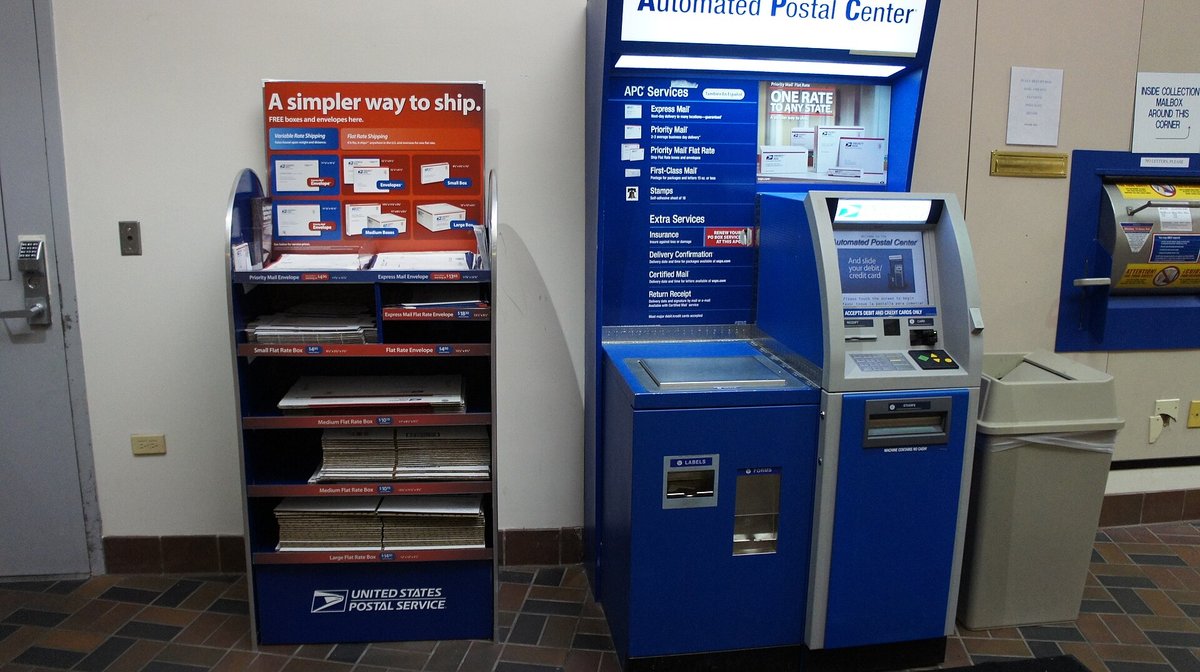
Until March 2026 a Michigan home roaster could sell a bag of coffee only face to face: at a market, a farm stand, the roadside. The law changed on 24 March 2026, and now the same bag may be sold through a website, by mail order, or through a delivery app, as long as the buyer is in Michigan and had the chance to talk to the roaster first. That makes a small online shop possible from the home kitchen, with no licence, alongside the market table.
I already sell honey at farmers markets, and selling coffee online is part of the plan, not something I do yet. The rules here are from the statute and from MDARD (the Michigan Department of Agriculture and Rural Development, which runs the cottage food law), and the prices from the platforms’ and the Postal Service’s own pages, all read in October 2026. The wider rules for a home kitchen, including the label and the $50,000 cap, are on The Michigan Rules; this page covers only what changes when the buyer is not standing at the table. I am not a lawyer and this is not legal advice.
The short version
| Question | Answer, as of October 2026 |
|---|---|
| Can a cottage food roaster sell online? | Yes, since 24 March 2026: by internet, mail order or a third-party delivery platform. |
| The condition | The buyer must be offered “an opportunity” to “directly interact” with the seller, face to face or by a video call, before the sale. |
| Where can it go? | Michigan addresses only. No shipping to other states, even as a gift. |
| What label? | The same cottage food label as at the market, home-kitchen statement included. |
| Licence needed? | None for bagged coffee under the cottage food law. Shipping out of state, or selling to shops, needs a licensed facility. |
| Cheapest way to start | Pre-orders for pick-up at the market stall, paid by a payment link. No shipping, and the meeting happens at the table. |
| Cheapest platform | Square Online’s free plan: no monthly fee, 3.3% + 30¢ a payment. |
| Postage for one 12 oz bag in Michigan | $7.33 to $7.86 with a label bought online, if the parcel stays under a pound; $10.05 to $11.10 at the post office counter. |
| Sales tax | None on bagged coffee (it is food); 6% on mugs, grinders and T-shirts. |
| Not realistic | Amazon, and Etsy as a cottage food seller. |
What the law allows since March 2026
Public Act 51 of 2025 amended section 4102 of the Michigan Food Law, the cottage food section, with effect from 24 March 2026. The new words:
“A cottage food product may be sold by internet or mail order or may be delivered to a consumer through a third-party food delivery platform if the cottage food operation provides an opportunity for a consumer to directly interact with the cottage food operation before the cottage food product is sold.”
and
“A cottage food product sold by internet or mail order or delivered through a third-party delivery platform must be sold or delivered only to a consumer in this state.”
The statute defines “directly interact with” as “either a face-to-face meeting or a virtual meeting,” and a virtual meeting as one “in which communication occurs electronically in a manner that permits 2-way communication so that participants can see or be seen and hear or be heard by all parties.” MDARD’s selling page repeats the same words and adds that “Cottage food businesses may advertise online and collect payments in-person or through a pay app.”
Read closely, four things follow.
It is an opportunity, not a meeting. The law requires that the buyer be offered the chance to meet, in person or by video, before buying. It does not say every buyer must take it. A regular from the market has already met the roaster; a stranger who finds the shop online has to be offered a meeting. How the offer should be made, and how to show later that it was, is not set out anywhere; it is question 1 in the list at the end.
A phone call is not a video call. The virtual meeting has to let people “see or be seen and hear or be heard.” Email, a chat window or a voice call meets neither half of that definition. A video call does.
Michigan only means Michigan only. “Only to a consumer in this state.” A Michigan customer who orders a bag sent to a daughter in Ohio is asking for something the cottage law does not allow. MDARD’s answer to “Can I sell my Michigan Cottage Food product in another state?” is that the seller must check with the other state. In practice, out-of-state shipping is the point at which a roaster needs a licensed facility (below).
Everything else stays the same. Still direct to the consumer: MDARD’s list of what cottage food may not do is unchanged (“Cannot sell to wholesalers, brokers or distributors”; “Cannot sell to restaurant or grocery store”; “Cannot sell on consignment”). Still made, packed and stored in the home. Online sales count toward the same $50,000 gross-sales cap as the market table, and the operator must “maintain sales records and provide them” to an MDARD inspector on request (The Michigan Rules; Taking Cards has a way to keep them).
Giving buyers the chance to meet
Three ways to offer the meeting, from least to most effort. Each leaves a record.
| Way | How it works | What it leaves on file |
|---|---|---|
| Market customers only | Online ordering is offered to people who have bought at the stall: a card in the bag with the shop address, or an email list signed up at the table. | The sign-up list, dated |
| ”Meet the roaster” on every product page | A line above the buy button: “Before you buy, you can meet me at the market on Saturday or book a short video call,” with a booking link. The buyer ticks a box saying they were offered it. | The checkbox on each order; the booking calendar |
| Open hours on video | A fixed half-hour a week when anyone can join a video call, linked from the shop. | The calendar entries |
The second is the one most online shops can run. The checkbox costs nothing and turns “an opportunity was provided” into something that can be shown. Whether MDARD will accept that is not published; ask, and keep the answer in writing.
Delivery apps
Third-party delivery platforms are named in the statute, so a cottage food bag may go out through a delivery service, with the same two conditions. A delivery app suits prepared food in a town with drivers more than bagged coffee from a home in the country, and its commission comes on top of the card fee. It is listed here because the law now allows it.
The label on a shipped bag
The label does not change when the bag goes in the post. Every bag carries the full cottage food label described on the rules page, including, in at least 11-point type in a contrasting colour, “Made in a home kitchen that has not been inspected by the Michigan Department of Agriculture and Rural Development.” Bags, Labels and What a Bag Costs has a worked label.
No Michigan rule requires that statement on the web page as well. It is still worth putting it there, in the product description, so that the first time a buyer reads it is not when the parcel is opened. The same goes for the roast date: the label carries it, and the product page should say when orders are roasted and posted.
For the parcel itself:
- Seal the bag the day it is roasted, cool, as on Packaging. A valve bag can be posted the next day; the gas the coffee gives off in transit escapes through the valve.
- A padded mailer protects a stand-up pouch well enough and keeps the weight down. A box is sturdier and heavier.
- A slip in the parcel: what is inside, the roast date, how to keep it (Keeping Coffee), and how to reach the roaster.
Platforms compared
Prices as published on each platform’s own page in October 2026. “Card fee” is the online rate for a customer paying by card.
| Platform | Monthly cost | Card fee online | Good at | Watch out for |
|---|---|---|---|---|
| A payment link or invoice (Square, PayPal) | $0 | Square 3.3% + 30¢ | Pre-orders by text or email; nothing to build | No shop window; each order is typed by hand |
| Square Online, Free | $0 | 3.3% + 30¢ | A simple shop that shares its item list and sales records with the market reader; pickup, local delivery and shipping all included; shipping labels can be printed | Square’s branding; real-time carrier rates only on Premium |
| Square Online, Plus | $49 | 2.9% + 30¢ | Adds subscriptions and bundles, loyalty, a free-shipping progress bar | Pays for itself only when subscriptions are wanted (Subscriptions and a Coffee Share) |
| Shopify, Basic | $29 billed yearly, $39 monthly | 2.9% + 30¢ (Shopify Payments) | The most flexible shop; the free Shopify Subscriptions app; POS Lite for the market included | A 2% extra fee on every order if another payment processor is used |
| WooCommerce | $0 for the software; web hosting is extra | WooPayments, pay as you go | Full control, on a WordPress site already owned | Hosting, updates and security are the seller’s job |
| Local Line, Core | $109 ($87 a month billed yearly) | 2.9% + 30¢ | Built for farms: pickup points, market pre-orders, CSA and subscriptions ($29 a month add-on on Core) | Priced for a farm business with a lot of orders |
| Barn2Door, Entrepreneur | $119, plus $399 to set up | 2.9% + 30¢ | Farm store, POS, subscriptions | The dearest to start |
| Etsy | $0; $0.20 a listing | 6.5% of the sale including shipping, plus 3% + 25¢ processing (Craftybase’s April 2026 summary); offsite ads take 12–15% of the sales they bring | A large audience | A national marketplace: the buyers it brings are mostly out of state, which the cottage law forbids |
| Amazon | Not realistic: a home kitchen cannot sell nationally, and the law requires direct sales within Michigan |
The ladder, cheapest first:
- Payment links for market pre-orders. No monthly cost. Enough for the first season.
- Square Online, Free. One system for the market reader and the web shop, so every sale, in person or online, lands in one record for the cap. This is the plan’s second step.
- Shopify Basic or Square Plus, once subscriptions or a coffee share are worth automating.
- A farm platform (Local Line, Barn2Door) only if the business grows into many pickup points and a large share programme.
Keep the shop to Michigan. Set the shipping zones so the checkout offers delivery only to Michigan addresses, test it with an out-of-state address, and refund and cancel any order that slips through. A billing address elsewhere is fine: a visitor from Ohio may buy a bag to collect at the market. The delivery address is what the law reads.
Shipping coffee
What it costs
The USPS price list (Notice 123) in force from 4 October 2026. Every Michigan address from central Michigan is in zones 1 to 4.
| Service | Under 1 lb | 1 lb to 2 lb |
|---|---|---|
| Ground Advantage, label bought online (commercial price) | Zones 1–2 $7.33; zone 3 $7.70; zone 4 $7.86 | 1 lb: $8.01 to $8.55; 2 lb: $8.39 to $8.91 |
| Ground Advantage at the counter (retail price) | Zones 1–2 $10.05; zone 4 $11.10 | 2 lb: $11.30 to $13.50 |
| Priority Mail padded flat-rate envelope | $12.84 with a label bought online; $15.00 at the counter; any weight that fits | |
| Priority Mail small flat-rate box | $12.95 online; $14.65 at the counter | Only 1¾ inches deep inside: too thin for a stand-up pouch |
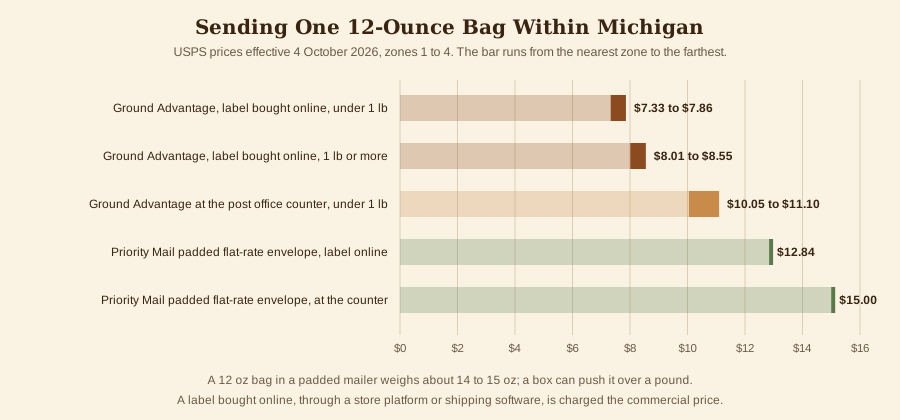
Three things follow from the table.
- Buy labels online. The same parcel costs $2.70 to $3.25 more at the counter. Labels bought through a shop platform’s shipping tool are charged the commercial price; Square lists label printing and shipping discounts on all its plans, the free one included.
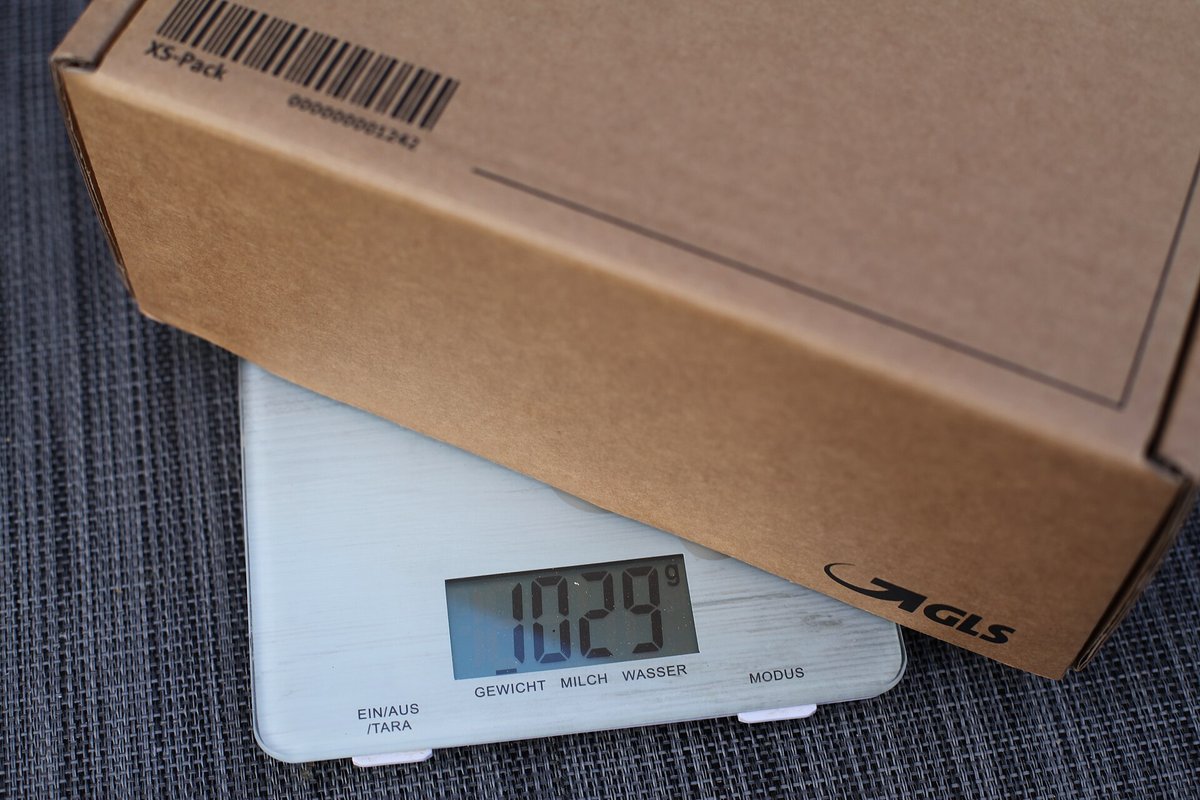
- Stay under a pound. USPS charges by the ounce up to 15.999 oz and then jumps to the 1 lb price. A 12 oz bag in its pouch and a padded mailer comes to roughly 14 to 15 oz (an estimate; weigh the first one); a cardboard box can push it over. Two bags go at the 2 lb price, about $8.40 to $8.90: the second bag ships for about a dollar.
- Flat rate is for heavy parcels. For one or two bags Ground Advantage is cheaper. A padded flat-rate envelope earns its keep at three or four bags, if they fit.
What shipping does to the price of a bag
A $17 bag with $7.86 of postage and a mailer costs the buyer close to $25. Four common answers:
| Approach | What it means | Trade-off |
|---|---|---|
| Charge postage at cost | Buyer pays $17 + about $8 | Honest and simple; puts off one-bag buyers |
| Flat $5 shipping | The roaster absorbs about $3 a parcel | Easier to read at checkout |
| Free shipping over two bags | Two bags, $34, cost about $8.40 to send | Gives up $8.40 of the $18 to $22 the two bags leave |
| Free pickup at the market | No postage at all | The best fit for a market roaster; it is also where the buyer meets the seller |
Counter Culture Coffee, a national roaster, offered free shipping on orders of $30 or more in October 2026, which is the two-bag line. A small roaster’s margin on a bag is about $9 to $11 (The Numbers), so free shipping on a single bag would give away most of it.
Roast day and post day
The rest a coffee needs after roasting, 2 to 5 days for filter (Keeping Coffee), is about the time it spends in the post. So the coffee can go in the mail the day after roasting and arrive ready.
A weekly rhythm that fits around a Saturday market:
| Day | Job |
|---|---|
| Sunday evening | Online orders close for the week |
| Monday | Roast the online orders; bag and seal when cool |
| Tuesday | Label, pack, post. The buyer has it by Friday or Saturday |
| Wednesday–Thursday | Roast for the market table and for pre-orders |
| Saturday | Market: the table, pre-order pickups, new customers met in person |
Two cautions. Do not post on a Friday: the parcel sits in a warm truck or depot over the weekend. And in July and August a parcel in a mailbox in the sun gets hot; the coffee is not spoiled by it, but it stales faster, so tell buyers when to expect it.
Pre-orders for market pickup: the gentle start
The simplest online selling is not shipping at all. A customer orders and pays during the week and collects at the stall on Saturday. It needs no postage and no mailers, and the meeting the law asks for happens at the table. It also tells the roaster how much to roast before the market, which is the hardest number to guess.
How to run it:
- A short list of what is roasting this week, posted on Monday by email or social media, with prices.
- Orders by payment link or a free Square Online page set to “pickup”, closing Wednesday night.
- Roast Thursday, bag, label each with the buyer’s name on a sticker.
- A labelled crate at the end of the table; a list to tick off.
- Anything not collected by the end of the market is held for one more week, then refunded or credited. A bag is still well within its best weeks a week later.
Pre-orders are also the first step towards a season share, on Subscriptions and a Coffee Share.
Photos and product pages
A product page does what the market table does: shows the coffee, says what it tastes like, and answers the questions a person would ask in person.
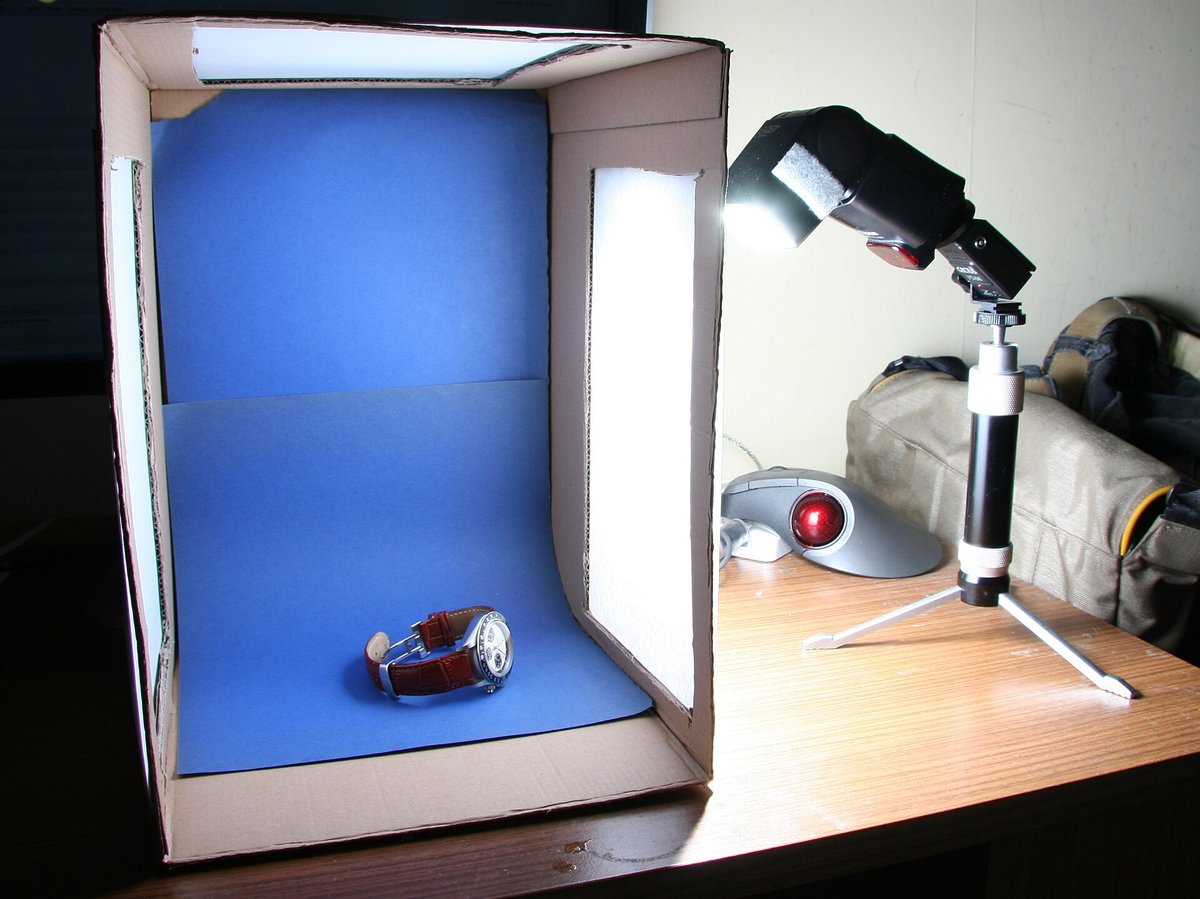
Photographs. Three per coffee are enough: the bag, front on, with the label readable; a handful of the whole beans on a plain surface; and the coffee brewed, in a cup or a pour-over. Use soft, even light (a window on a cloudy day, or a home-made light box), a plain background and the same set-up for every coffee, so the shop looks like one shop. Show the real bag: a photograph of the product as it will arrive is fairer to the buyer than a mock-up.
Product page checklist:
- Name, origin (country and region, farm or co-operative if known) and process
- Roast level, in words and, if measured, an Agtron number (Roasting)
- Three or four tasting notes, and which brewing methods suit it
- Weight, and whole bean or ground (and for which brewer)
- When it is roasted and when it is posted
- Michigan addresses only, and the offer to meet: at the market or by video
- The home-kitchen statement, as on the label
- Postage, or free pickup at the market
- How to keep it, with a link to Keeping Coffee
The FTC’s Mail Order Rule applies to any seller taking orders by mail, phone or internet: goods must ship within the time the seller states, or within 30 days if no time is stated, and if an order cannot go out on time the buyer must be offered the choice of agreeing to the delay or cancelling for a prompt refund. “Roasted Monday, posted Tuesday” on the page is that stated time.
Taxes on shipped sales
Within Michigan. Bagged roasted coffee is food and is exempt from Michigan’s 6% sales tax whether it is handed over or posted; cups of coffee are taxed (the rules page, from Treasury’s RAB 2026-2). A web order for a bag and a mug is taxed on the mug only, so set each item’s tax category in the platform rather than one rate for the whole shop. The free sales tax licence covers online sales too.
Other states, later. A cottage food operation cannot ship out of the state, so this arises only after the move to a licensed roastery. Since the Supreme Court’s decision in South Dakota v. Wayfair (2018), a state can require a seller with no presence there to collect its sales tax once sales into it pass a threshold; South Dakota’s law, the one the Court upheld, set it at “more than $100,000 of goods or services” or “200 or more separate transactions” a year, and other states copied similar figures. Most states exempt bagged coffee as grocery food, but not all, and a few count every sale toward the threshold whether taxed or not. A roaster shipping nationally checks each state it sells into once a year, or lets the shop platform’s tax tool track it.
Beyond the home kitchen: a licensed roastery
The cottage food law is the first stage. A roaster who wants to ship to other states, sell to cafés and shops (Wholesale and Consignment), or sell more than $50,000 a year needs a licensed facility. What changes:
The state licence. MDARD licenses food establishments; its fee schedule for 2026:
| Licence | Fee | Fits |
|---|---|---|
| Retail Food Establishment | $186 | A roastery selling mostly to the public: a counter, the market, the web shop |
| Limited Wholesale Food Processor | $186 | Up to $25,000 a year of wholesale sales, to cafés and shops |
| Wholesale Food Processor | $471 | More than $25,000 of wholesale |
A licence comes with an inspection and, for new premises, plan review. The roastery cannot be the home kitchen; a separate room built to code, or a shared or rented licensed space (Toll Roasting, Private Label and Shared Roasteries).
FDA food facility registration. Federal law requires a “facility” that manufactures, processes, packs or holds food to register with the FDA. Two exemptions matter here, both in 21 CFR 1.227:
- “The private residence of an individual is not a facility.” A cottage food kitchen does not register.
- A retail food establishment does not register. That is an establishment whose “primary function is to sell food directly to consumers,” and the test is money: it qualifies “if the annual monetary value of sales of food products directly to consumers exceeds the annual monetary value of sales of food products to all other buyers.” A roastery selling more than half its coffee, by value, to the public is retail.
One point in that rule is not settled for a coffee roaster. The regulation counts “mail, catalog and Internet order” as sales directly to consumers, but it says so only in the paragraphs about farms and farm-run businesses. Whether a non-farm roastery’s web sales count as retail sales “from that establishment” is a question for the FDA. Registration is free and renewed every two years, so many small roasters register as a precaution.
The preventive controls rule. A registered facility also falls under the FSMA rule on preventive controls for human food (21 CFR 117), which normally requires a written food safety plan. A qualified facility has lighter duties: a “very small business,” meaning one “averaging less than $1,000,000, adjusted for inflation, per year” in food sales over the previous three years, or one selling mostly to consumers and nearby shops and restaurants. A qualified facility attests to its status to the FDA instead of writing the full plan. Every roaster at the scale on these pages is a very small business.
Shipping across state lines. Coffee from a licensed, inspected roastery is an “approved source,” which is what a café in another state needs to buy it and what lets a web shop ship nationally. Each state’s sales tax then applies as above. Before selling a named coffee outside Michigan, see whether a federal trademark is worth filing (Branding, Naming and Trademarks).
What is not known
- How a cottage food seller should offer, and record, the “opportunity” to meet: MDARD has published no guidance.
- Whether MDARD counts an online sale toward the cap on the day it is paid or the day it is delivered.
- Whether a non-farm roastery’s internet sales count as direct sales for the FDA’s retail exemption.
- How long a 12 oz bag actually takes by Ground Advantage within Michigan; the first few parcels, sent to friends, will show.
Questions to put to MDARD, in writing
- For an internet or mail-order cottage food sale, what counts as providing “an opportunity for a consumer to directly interact” before the sale, and what record should the seller keep?
- Does a checkbox at checkout, with a booking link for a video call, meet the requirement for a buyer who has never been to the stall?
- Is an order paid online and collected in person at a farmers market a “face-to-face” sale for this purpose?
- Does a sale count toward the $50,000 cap when it is paid or when it is delivered?
- May a cottage food bag be posted to a Michigan address for a buyer whose billing address is in another state?
Sources
- Michigan Food Law, MCL 289.4102, as amended by 2025 PA 51, effective 24 March 2026.
- MDARD, Cottage Food: Selling and Samples; food establishment licence fees.
- Michigan Department of Treasury, RAB 2026-2.
- FDA regulations: 21 CFR 1.227 (food facility registration); 21 CFR 117.3 (qualified facility, very small business).
- FTC, Mail, Internet, or Telephone Order Merchandise Rule, 16 CFR 435.2.
- South Dakota v. Wayfair, Inc., 585 U.S. (2018).
- USPS, Notice 123 price list, effective 4 October 2026.
- Platform price pages read 5 October 2026: Square fees, Square plans, Square Online plans; Shopify and Shopify Subscriptions; WooPayments; Local Line; Barn2Door; Etsy fees as summarised by Craftybase (2 April 2026).
- Counter Culture Coffee subscriptions, for a national roaster’s shipping terms.
Comments (0)