Starting a Coffee Business · 26 of 39
Serving Hot Drinks Safely
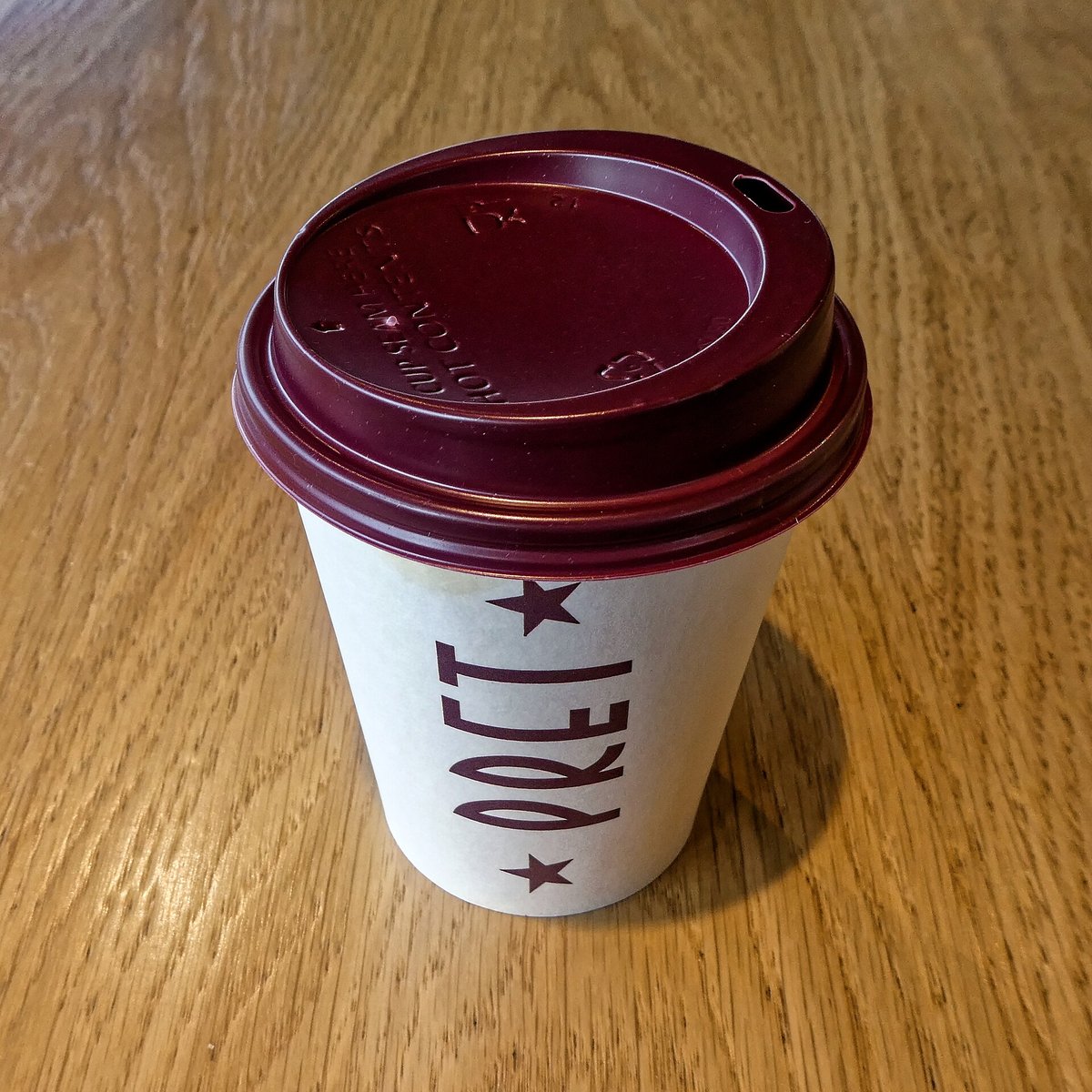
Coffee is brewed with water just off the boil, and at that temperature a spill burns skin in under a second. A market stall puts that coffee into thin paper cups and hands them across a folding table, in a crowd, with children at elbow height. What follows is how fast hot liquid burns, what really happened in the McDonald’s coffee case, what temperature to serve at, lids and carriers, children, spills, first aid, iced drinks, and what the health code and an insurer expect. The equipment for keeping water hot is on Hot Water and Power; the rules for the booth are on The Michigan Rules.
The short version
| Question | Answer |
|---|---|
| How fast does coffee burn? | Adult skin takes a third-degree (full-thickness) burn in about 5 seconds at 140 °F and about 1 second at 155 °F. Coffee in the cup is usually hotter than that. Children’s skin burns faster. |
| What temperature to serve at? | 130 to 160 °F is the range two burn researchers recommend; people prefer to drink coffee at about 140 °F. Brewing water is 195 to 205 °F, which is a different number. |
| The McDonald’s case? | A 79-year-old passenger in a parked car, coffee held at 180 to 190 °F, third-degree burns needing skin grafts, more than 700 earlier burn reports. Not a frivolous lawsuit. |
| Lids? | On every hot drink unless the customer says no, matched to the cup by the same maker and pressed on all the way round. |
| Children? | Keep hot pots and full cups at the back of the table, hand drinks to the adult, never over a child’s head. |
| First aid | Cool running water for 20 minutes, as soon as possible (within 3 hours). Not ice, butter or cream. Cover loosely with cling film. Carry a separate jug of clean cool water for it. |
| Legal maximum temperature? | None. Coffee is not a food the Food Code requires to be held hot. The duty to serve it safely is a matter of care and liability. |
| Iced drinks | Bagged ice from an approved source, a scoop, and milk kept at 41 °F or below. |
How fast hot liquid burns
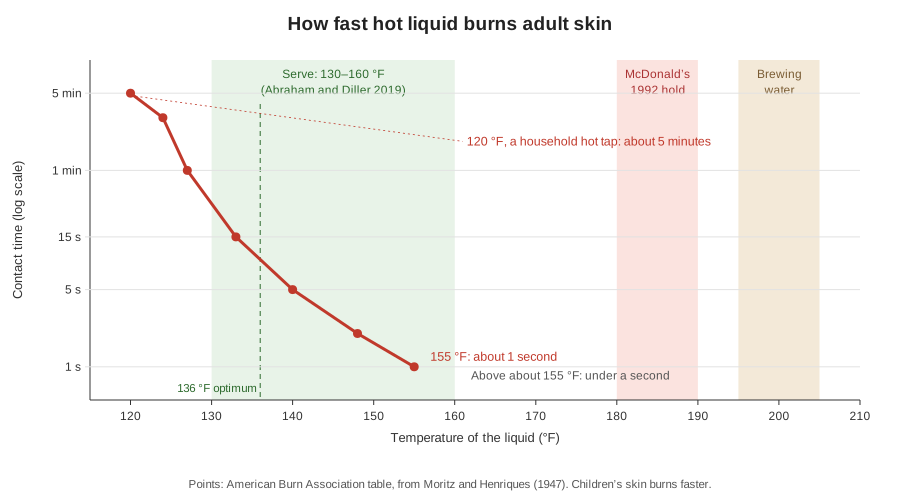
The figures come from experiments by Alan Moritz and Francis Henriques, published in 1947 (American Journal of Pathology 23: 695–720), which measured how long skin had to touch water at each temperature before the full thickness of the outer skin died. The American Burn Association gives them as the time for a third-degree burn in adult skin:
| Liquid temperature | Time to a third-degree burn |
|---|---|
| 120 °F (48 °C), the usual setting for a household water heater | 5 minutes |
| 124 °F (51 °C) | 3 minutes |
| 127 °F (52 °C) | 1 minute |
| 133 °F (56 °C) | 15 seconds |
| 140 °F (60 °C) | 5 seconds |
| 148 °F (64 °C) | 2 seconds |
| 155 °F (68 °C) | 1 second |
The ABA adds: “Coffee, tea, hot chocolate and other hot beverages are usually served at 160 to 180°F, resulting in almost instantaneous burns that will require surgery.”
Three things make a spilled cup worse than the table suggests:
- Clothing holds the liquid against the skin. A splash on bare skin runs off; coffee soaked into trousers keeps burning until the cloth is pulled away or cooled.
- Laps. Most coffee spills land on thighs, groin and hands: a sitting customer, a cup between the knees, a lid pushed off.
- Children. “Young children have thinner skin resulting in deeper burns than adults for the same temperature and exposure time,” the ABA says, and “the same cup of spilled coffee will burn a much larger percent of a small child’s body.” In Australia, hot drinks cause 18% of all childhood burns, and the researchers who report it call hot drink scalds the leading cause of childhood burns.
Liebeck v. McDonald’s: what actually happened
The case is usually told as a woman who spilled coffee on herself and won millions. The record says otherwise.
| The popular version | What the record shows |
|---|---|
| She was driving | She was a 79-year-old passenger in a parked car in Albuquerque, on 27 February 1992 |
| Coffee is supposed to be hot | McDonald’s required its franchisees to hold coffee at 180 to 190 °F. Its own quality-assurance manager testified the coffee at that temperature was “not fit for consumption because it would burn the mouth and throat” |
| A minor burn | Third-degree burns on 6% of her body and lesser burns over 16%; eight days in hospital and skin grafts |
| She went straight for millions | She asked for $20,000 to cover her medical costs. McDonald’s offered $800 |
| A freak accident | McDonald’s had received more than 700 reports of burns from its coffee and had settled claims for more than $500,000 |
| She got millions | The jury found her 20% at fault, cutting $200,000 of compensatory damages to $160,000, and awarded $2.7 million in punitive damages, about two days of McDonald’s coffee sales. The judge cut that to $480,000. The parties then settled for a confidential sum before appeal |
Sources: the case summary on Wikipedia, which cites the trial record and contemporary reporting, and the Consumer Attorneys of California, a trial lawyers’ association, for the quality-assurance testimony and the 3-to-7-second burn time at 180–190 °F.
The lesson for a stall is not that coffee should be lukewarm. It is that a seller who knows a temperature is hurting people, and keeps serving at it, is the one a jury blames. By 2013 McDonald’s served coffee at 170 to 180 °F.
Brewing, holding and serving temperatures
Three different temperatures get confused:
| Temperature | Why | Source | |
|---|---|---|---|
| Brewing water | 195 to 205 °F (90 to 96 °C) | To extract the coffee properly | Brewing, after the SCA |
| Holding in an airpot or carafe | Whatever the pot keeps: a good airpot is still around 185 °F after six hours | For quality; there is no safety rule | Hot Water and Power |
| Drinking | Preferred at about 140 °F ± 15 (a study of 300 people) | Comfort and taste | Brown and Diller, 2008 |
| Serving (what is in the cup when it is handed over) | Recommended 130 to 160 °F; a calculated optimum of 136 °F | The balance of burn risk and what customers like | Abraham and Diller, 2019; Brown and Diller |
Brown and Diller, engineers at the University of Texas, combined the burn model with the preference data and concluded that “the presently recommended serving temperature” should come down: an optimum of “approximately 136 °F (57.8 °C).” Abraham and Diller’s 2019 review put it more plainly: serving “at very high temperatures is not only unnecessary (from a preference standpoint) but also unsafe,” and “an appropriate range for service temperatures is (130 to 160 °F).”
What this means at a stall:
- Brew hot, serve cooler. The brewing water stays at 195 to 205 °F. A pour-over or French press cools as it is poured into a room-temperature cup in the open air; airpot coffee is often hotter than fresh-poured.
- Measure it. The inspector requires a probe thermometer at a licensed booth anyway (the list). Put it in a few cups on the first market day: straight from the airpot, from the pour-over, from the French press. Then decide.
- Ways to bring a cup down: leave room for milk and offer it; pour a sample cup at the end of a pour rather than the start; for a child’s or an elderly customer’s drink, ask whether they would like it cooler, and add a splash of cold milk or water.
- Do not hold above what the coffee needs. A boiler set to 208 °F is for brewing water (the kettle section); brewed coffee does not need to be kept that hot.
Lids, sleeves and cups
- A lid on every hot drink, unless the customer says they do not want one. Ask, do not assume.
- Match lid to cup. A lid fits the rim of one maker’s cup in one size. Buy cups and lids from the same line, and try a few before a market: press the lid on, turn the cup over over a sink, and squeeze it gently.
- Press all the way round. The commonest failure is a lid seated on one side and loose on the other. Run a thumb round the rim before handing it over.
- Leave a gap. Fill to about a finger’s width below the rim so the lid does not push coffee out of the sip hole.
- Double wall or a sleeve. A single-wall paper cup of hot coffee is too hot to hold comfortably, and a customer who cannot hold a cup grips it hard, which squeezes the lid off. A kraft sleeve costs 3.5 to 6 cents (Cups).
- No foam cups, no thin cups. A flimsy cup buckles when gripped.
- A travel mug is safer still. The ABA recommends “travel mugs with tight-fitting lids for all hot drinks” around children. A stall that sells a branded mug (the gift baskets) is also selling the safest cup there is.
Children at a market stall
A market is full of children at exactly the height of a folding table. The ABA’s advice for the home translates directly:
- Keep the heat out of reach. The stall layout puts the kettle, brewers and hot-water airpots on a side table behind the front, out of the public’s reach. The tasting airpots on the front table are the exception: use pump pots with the lids locked, stand them well back from the front edge, and let the server, not the customer, pump the sample.
- No dangling cords or tablecloths at the front. A child pulls on a cloth or a cord; whatever is on it comes down. Cords run behind the table and are taped or tied to a leg. A tablecloth stops above a child’s reach or is clipped tight.
- Hand the drink to the adult. Never pass a hot cup over a child’s head or a pushchair, and never hand a hot drink to a child.
- Hot samples are for adults. Pour tasting cups for children only from cooled coffee, or not at all. Coffee is not a children’s drink anyway (Caffeine and Health); a cookie sample is the better offer (Sampling).
- Watch the queue. A parent juggling a toddler and a cup is the moment a cup tips. A cup carrier, or a second trip, is worth offering.
Carrying trays and crowded tables
- Offer a carrier for two or more drinks. A moulded-pulp cup carrier stops two cups being carried in one hand.
- Set the drink down, do not hand it up. At a busy table, put the lidded cup on the counter in front of the customer and let them pick it up.
- Condiments away from the hot side. Milk and honey on a separate end of the table so customers do not reach across hot pots (the drinks page).
- Weight the canopy. A gust that lifts a tent leg tips the whole table; canopy weights are on the stall page.
When something spills
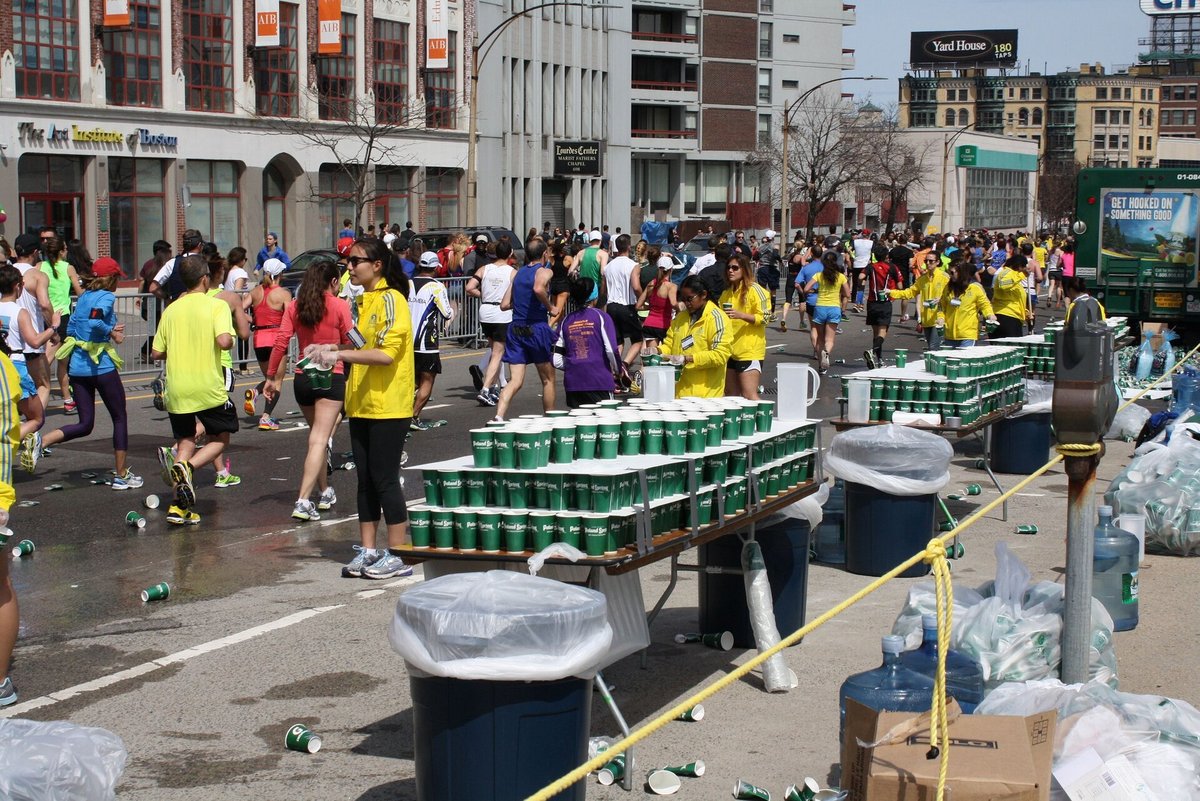
- Stop pouring. Put the pot down first.
- If it reached skin, start first aid immediately (below). A spill on clothing: pull the soaked cloth away from the skin, unless it is stuck.
- Wipe the table and the ground so nobody slips.
- Write it down afterwards: date, time, what happened, what was done, and the customer’s name and contact if they will give it. Insurers ask for this, and a written note made the same day is worth far more than a memory later (Insurance).
- Do not argue about fault at the table. Help, and record.
First aid for a scald
The NHS’s instructions for burns and scalds:
- “Hold the burn or scald under cool running water for 20 minutes. Do this as soon as possible, within 3 hours of it happening.”
- “Remove any clothing or jewellery that’s near the affected area, but do not remove anything that is stuck to the affected area.”
- “When the burn or scald has cooled, lay cling film over it if you can. Do not wrap the cling film around it.”
- “Do not put any creams, oils or butter on burns or scalds.”
- Go to an emergency department, or call 911 in the US, if the burn “is very large or deep,” is “on your face, genitals or bottom,” or was caused by a chemical or electricity.
The American Burn Association says the same in fewer words: “Cool the burn with cool (not cold) water to stop the burning process,” remove clothing, “cover with a clean, dry sheet or bandage,” and get medical attention. Cool, not cold: ice and iced water on a burn damage skin further and chill a small child quickly.
The stall problem is the water. Twenty minutes of a gentle pour from a jug is in the region of 20 to 40 litres, more than any stall carries spare. The handwashing water is warm and is not to be used for it, and the brewing water is hot. So:
- Carry a dedicated first-aid water jug: 5 gallons (19 litres) of clean, cool drinking water, labelled, not used for anything else.
- Start with the jug at once, then move the person to the nearest running tap (the market’s restroom or a vendor with a sink) to finish the 20 minutes.
- If neither lasts, clean cloths soaked in cool water and changed every minute or two keep the cooling going until help arrives.
A small first-aid box for the stall: the water jug, a roll of cling film, clean non-fluffy dressings, a pair of scissors to cut clothing, disposable gloves, and the incident notebook.
Iced drinks and cold holding
Iced coffee has its own safety rules, and they are about the ice and the milk, not burns. They are on Iced Coffee and Ice:
- Ice from an approved source, which at a temporary booth “means commercially bagged ice.” Home-made ice is not allowed in drinks sold from a licensed booth.
- A drink-ice cooler and a separate cooling cooler. Ice that has had milk cartons in it “may not be used as food.”
- A scoop, stored with the handle out of the ice; no hands or cups in the drink ice.
- Milk, condensed milk and egg cream at 41 °F or below, with a thermometer in the cooler (the drinks page).
What the health code and an insurer expect
The health code. Coffee is not a food that needs time or temperature control for safety: the Michigan Food Law treats a “hot beverage” as non-potentially-hazardous (the rules page). So no rule sets a maximum or a minimum temperature for black coffee. What the inspector does check is the probe thermometer, the handwashing station, approved water, sanitiser and test strips, and that milk and other foods that do need control are cold enough (the inspector’s list). A food-safety certificate covers the rest.
The insurer and the market. Most markets ask vendors for $500,000 to $1,000,000 of general liability cover (Insurance). A scald claim is the classic liability claim against a coffee seller. What helps, if one is ever made:
- A written serving routine: lids offered on every drink, cups matched to lids, the hot zone at the back of the table.
- A note of serving temperatures measured on a market day.
- “Caution: contents hot” on the cup. Nearly every stock cup and lid already carries it. It is a reminder, not a defence: the McDonald’s cups carried a warning too.
- The incident log.
Market-day checklist
- Cups and lids from the same maker, tested for fit; sleeves or double-wall cups.
- Probe thermometer; serving temperatures checked on the first pours.
- Kettle, brewers and hot-water pots out of the public’s reach; tasting pots locked and set back from the edge; cords behind and tied off.
- Tablecloth short or clipped; canopy weighted.
- Cup carriers on hand.
- First-aid water jug (5 gallons, cool, labelled), cling film, dressings, scissors, gloves.
- Nearest running tap located before the market opens.
- Incident notebook and pen.
- Iced drinks: bagged ice, scoop, two coolers, thermometer in the milk cooler.
What is not known
- A published measurement of coffee temperature in the cup straight from a pour-over, a French press, a phin or an airpot, in the open air. The first market day’s thermometer readings will answer it for this stall.
- Whether Michigan has any rule on lids, or on children near temporary food booths; MDARD’s temporary-booth guidance, as summarised on the rules page, lists none.
- How often scalds happen at farmers markets; no survey of market injuries is published.
Sources
- Moritz, A. R., and F. C. Henriques, “Studies of Thermal Injury: II. The Relative Importance of Time and Surface Temperature in the Causation of Cutaneous Burns,” American Journal of Pathology 23 (1947): 695–720.
- American Burn Association, Scald Injury Prevention Educator’s Guide, and “Pediatric Scalds: A Burning Issue.”
- Brown, F., and K. R. Diller, “Calculating the optimum temperature for serving hot beverages,” Burns 34 (2008): 648–654.
- Abraham, J., and K. Diller, “A Review of Hot Beverage Temperatures: Satisfying Consumer Preference and Safety,” Journal of Food Science 84 (2019): 2011–2014.
- Burgess, J. D., and others, “Cool Runnings: an app-based intervention for reducing hot drink scalds,” Trials 17 (2016): 388.
- NHS, “Burns and scalds.”
- Liebeck v. McDonald’s Restaurants: Wikipedia’s case summary and its sources; Consumer Attorneys of California, “The McDonald’s hot coffee case.”
- Michigan rules, temperatures for brewing and holding, ice and milk: The Michigan Rules, Brewing, Hot Water and Power, Iced Coffee and Ice, with their own sources.
- The water volume for 20 minutes of cooling at a stall is an estimate.
Comments (0)