Starting a Coffee Business · 2 of 39
Bags, Labels and What a Bag Costs to Make
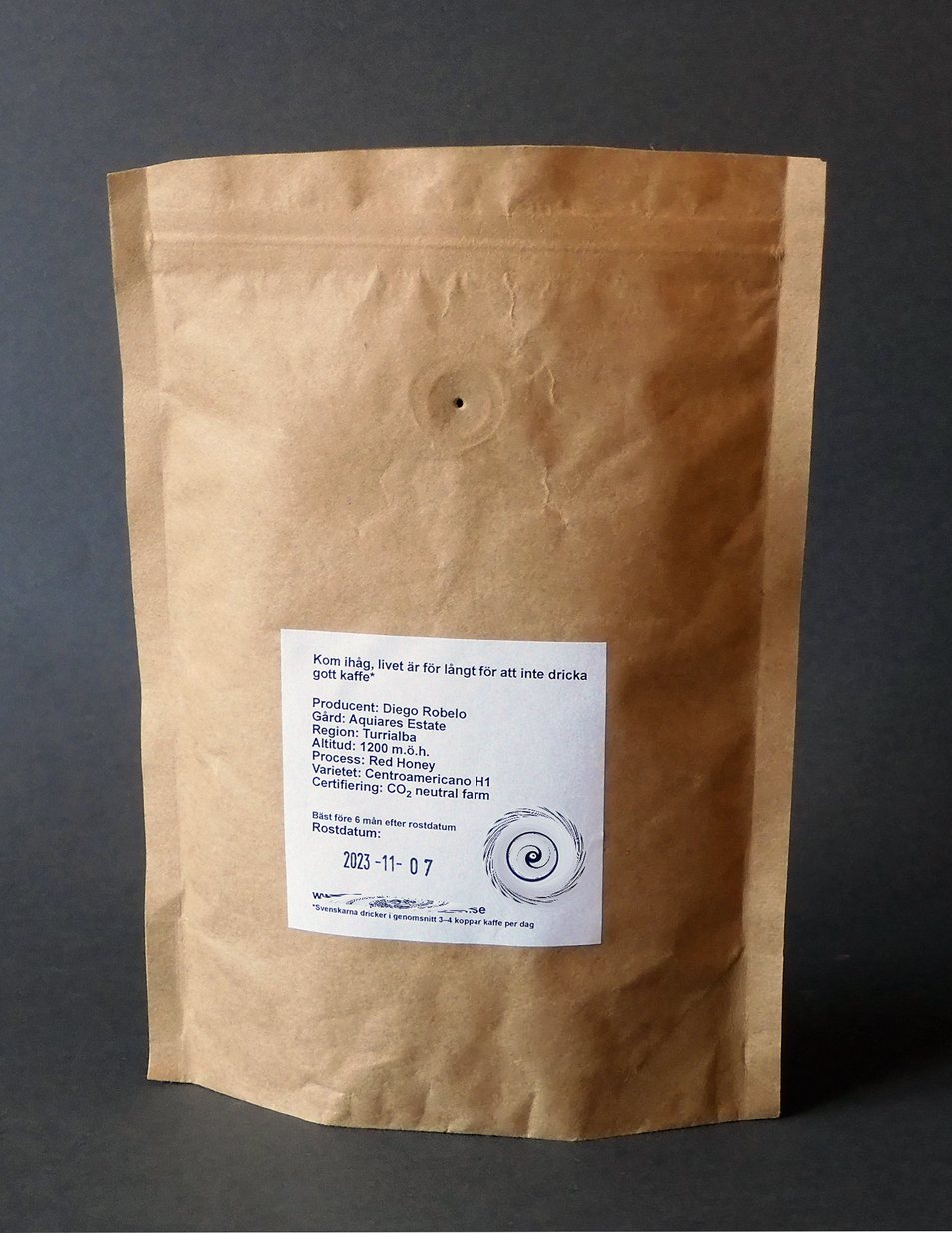
A bag of coffee on a market table is a few ounces of packaging around six to seven dollars of green coffee. The table on this page, what one 12 oz bag costs to make, is the one the rest of the business section uses: The Numbers, Gift Baskets and the money card all take their cost per bag from it. Prices were read on 2 and 5 October 2026.
The short version
| Cost of a 12 oz bag, first season (green bought in small lots) | $7.80 |
| Cost of a 12 oz bag, buying green by the 65 lb box | $6.06 |
| The bag to buy | A foil-lined (aluminium-layer) valve pouch with a zipper, 45¢ |
| The sealer to buy | A constant-heat hand sealer rated for foil pouches, $185 |
| What Michigan roasters charge | Most everyday 12 oz bags are $14 to $20 (the roaster price table) |
The bag
Fresh-roasted coffee gives off carbon dioxide for days, so a coffee bag has a one-way valve: gas gets out and air does not get in. A plain paper tin-tie bag is far cheaper, at 12 to 31 cents, but it is not a barrier bag and the coffee stales faster in it. What the valve does, what the bag should be lined with, and why vacuum sealing, desiccant packs and oxygen absorbers do not belong in it are on Packaging Roasted Coffee; the steps from a kitchen sealer up to a bagging line are on Packaging Coffee for Sale.
| Bag | Sold in | Per bag | What is inside the bag |
|---|---|---|---|
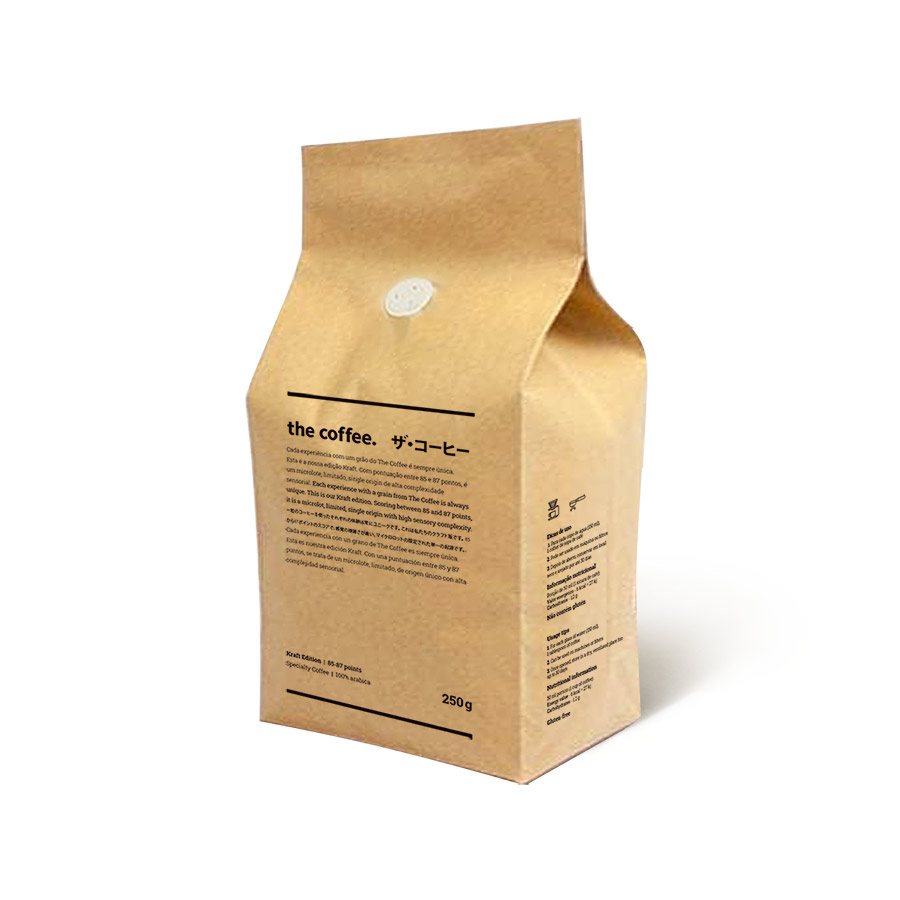
| Uline stand-up coffee pouch, 16 oz, valve and zipper (S-23457) | carton of 500, $225 ($205 a carton at five) | $0.45 | PET / aluminium / LLDPE, about 6 mil. Foil-lined. |
| Uline stand-up coffee pouch, 8 oz, valve and zipper (S-23456) | carton of 500, $190 | $0.38 | The same family of film |
| TricorBraun Flex kraft block-bottom, 12–16 oz, valve | case of 500, $413 | $0.83 | Liner not stated; ask. No zipper; a tin tie is $0.11 more |
| Elevate compostable kraft pouch, 12 oz, valve and zipper | pack of 100, $95 | $0.95 | ”Kraft paper and compostable laminated film”; certified to ASTM D6400 and EN 13432; the maker claims an “excellent oxygen and moisture barrier” and prints no figure |
Uline has no 12 oz pouch with a valve; its 12 oz kraft pouches are sold without one. A 12 oz fill goes in the 16 oz pouch. Freight on the cartons is extra and is not in the table.
Which one. The only controlled comparison of coffee bags found that a bag with an aluminium layer kept coffee measurably fresher, and that a kraft bag with a plain plastic liner lost aroma within two weeks, valve or no valve. So the default is the foil-lined Uline pouch, which is also the cheapest bag here. A kraft bag looks the part on a table, but “kraft” describes the outside; buy one only after the supplier has named its layers and given an oxygen transmission rate. The compostable pouch suits a stall that sells honey from its own hives, and it can be bought a hundred at a time, but its barrier is a claim without a number. If the supplier cannot give its oxygen transmission rate, do not use it for coffee meant to sit more than a week before it is opened. What “compostable” is worth where there is no commercial composting is on Compostable, PFAS and Waste.
Sizes. Twelve ounces is the commonest retail size among Michigan roasters. Some sell 8 oz and 16 oz, or 10 oz. An 8 oz bag at a lower price is worth having at a market: it is an easier first purchase for someone who has just tasted a sample.
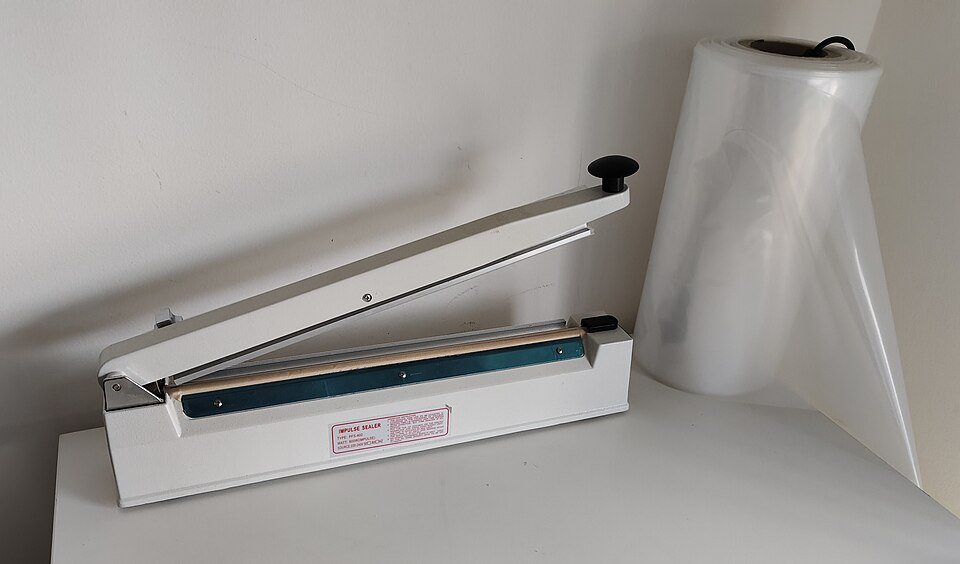
Sealing. A bag without a zipper needs a tin tie or a heat seal; a zipper pouch is heat-sealed above the zipper so the customer is the first to open it. The sealer has to match the bag. Uline’s 8-inch tabletop impulse sealer ($97) is rated for metallised bags up to 2.5 mil, and the foil pouch above is about 6 mil a layer. Uline’s own page for that pouch names its H-1069 crimper hand sealer, a constant-heat sealer rated for “metalized food bags” and “barrier pouches” up to 10 mil, at $185, used on heat setting 5 to 6 and sealing half the bag’s width at a time. That is the sealer to budget. Packaging has the pull test for a good seal.
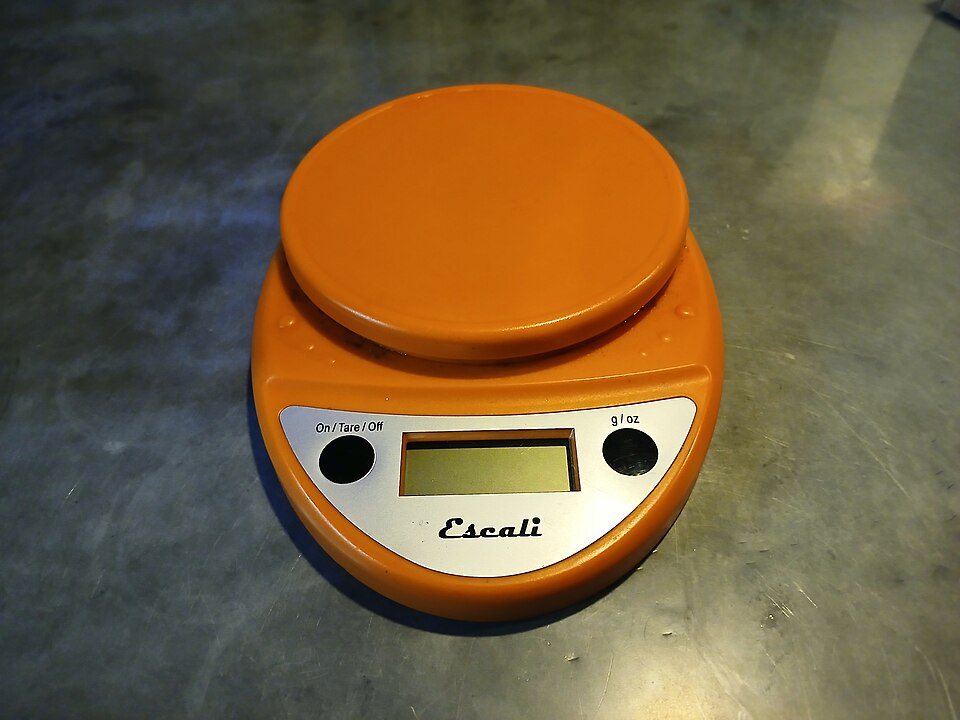
Filling. At the volume The Numbers models, 18 bags a market or about 13½ lb of roasted coffee a week, the method is a scoop and a bench scale. Weigh-and-fill machines start around $6,000, which is more than the roaster. A scale used to sell by weight at the stall has to be legal for trade; the rules page has what is and is not settled about the scale used at home.
The label
At this scale most small roasters use two labels:
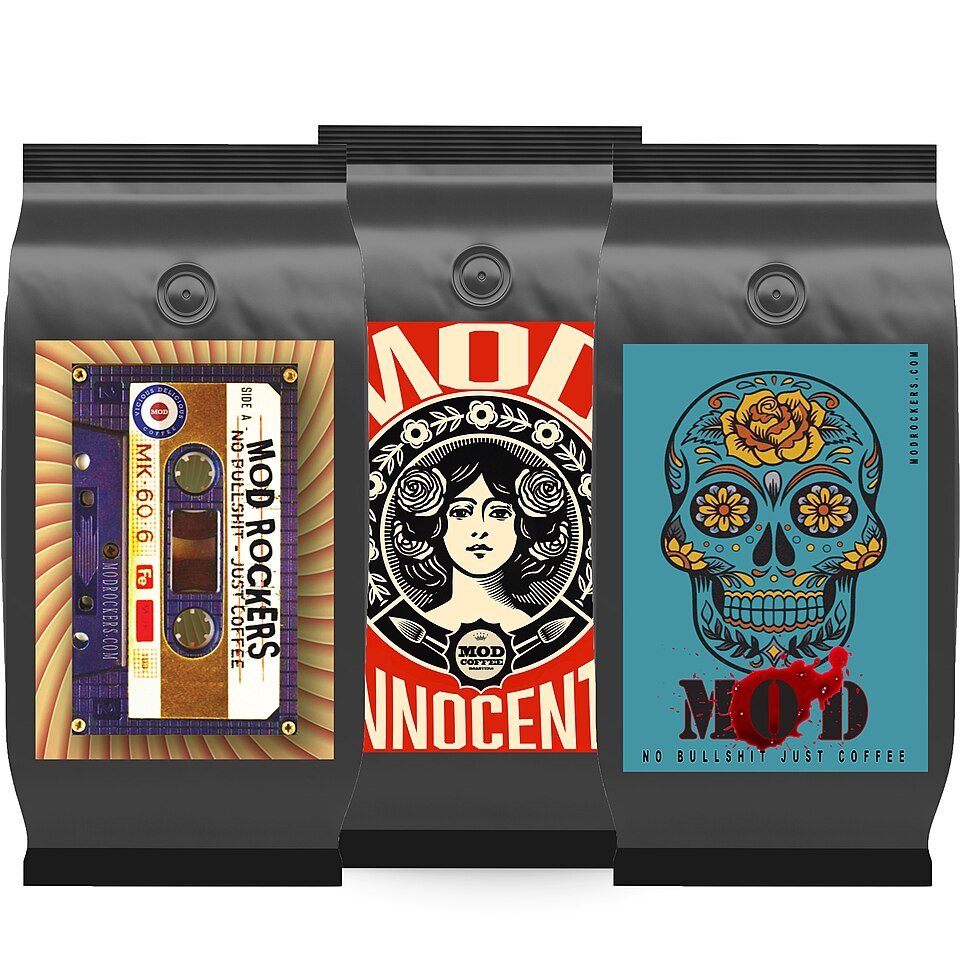
- a brand label, bought printed by the roll; and
- a small coffee label with the origin, roast level and roast date, printed on a thermal label printer, stamped, or written by hand.
The name, the mark and how to keep them the same from bag to canopy are on Branding, Naming and Trademarks.
What Michigan requires on a cottage food bag (MDARD’s labelling page; the rules page has the detail):
| Line | On a bag of coffee |
|---|---|
| Name and physical address of the home kitchen (or the registration number and phone number from the MSU Product Center’s voluntary registration) | On the back label |
| Product name | ”Colombia Huila, medium roast, whole bean” |
| Ingredients, in descending order by weight | ”Roasted coffee.” A flavoured coffee lists the flavouring. |
| Net weight, with the metric equivalent | ”Net wt. 12 oz (340 g)“ |
| Allergens | None for plain coffee; a flavoured coffee declares any of the major allergens its flavouring contains |
| The home-kitchen statement, in at least 11-point type in a contrasting colour | ”Made in a home kitchen that has not been inspected by the Michigan Department of Agriculture and Rural Development.” |
Then the lines the law does not require and the customer reads first: the roast date, the origin, the process (washed, natural), the roast level and three flavour words. Counter Culture Coffee tells buyers to look for a “Roasted On” date rather than a “Best By” date; print the roast date, and if a “best within” line is added, use the canonical figure of about three weeks from roast (Keeping Coffee).
Where the labels go. Put the front label below the valve and clear of it; a label over the valve blocks it. The back label carries the legal lines, and the roast date goes where a customer looks first, on the front.
Claims. “Organic” on a bag needs a certified roaster once organic sales pass $5,000 a year, even when the green was certified (the rules page). What fair trade, “single origin” and the other label words actually promise is on Labels and Certifications.
Costs, all indicative, from the sellers’ price calculators and not from a quote: printed roll labels about 18 to 31 cents each at a thousand, 25 cents at five hundred and 66 cents at a hundred; blank sheet labels for home printing about 8 cents; a thermal label printer about $200, with labels at 2 to 3 cents. The rubber stamp that marks the cups marks the bags too.
What one 12 oz bag costs to make
Coffee loses about 15% of its weight in the roaster at a full-city roast (Sweet Maria’s weight-loss table), so a 12 oz bag takes 0.882 lb of green coffee (12 ÷ 0.85 = 14.1 oz).
| First season: green in small lots | By the box: green in 65 lb boxes | |
|---|---|---|
| Green coffee | about $8.00 a pound landed: Sweet Maria’s Colombia at $7.45 in a 20 lb lot plus its $8.99 flat shipping on 6–20 lb (45¢ a pound) is $7.90; one-pound lots run $8.50 to $9.50 plus shipping. 0.882 lb × $8.00 = $7.06 | Genuine Origin Colombia at $6.11, shipping included. 0.882 lb × $6.11 = $5.39 |
| Bag with valve (foil-lined Uline pouch) | $0.45 | $0.45 |
| Brand label | $0.25 (a roll of 500, about $125) | $0.18 (a thousand or more) |
| Roast date | stamped or hand-written, nothing | the same |
| Electricity (a one-kilo roaster) | $0.04 | $0.04 |
| Total | $7.80 | $6.06 |
Arithmetic: 7.06 + 0.45 + 0.25 + 0.04 = 7.80; 5.39 + 0.45 + 0.18 + 0.04 = 6.06.
Adjustments to either column:
| Change | Per bag |
|---|---|
| Compostable pouch in place of the foil pouch | +$0.50 |
| Kraft block-bottom bag with a tin tie in place of the foil pouch | +$0.49 |
| Roasting on a Behmor in place of a one-kilo roaster (electricity) | +$0.09 |
| A Brazil natural at $5.74 in place of the Colombia, by the box | −$0.33 |
| One-pound green lots at $8.50 plus shipping in place of 20 lb lots | about +$0.50 to +$1.00 |
| An 8 oz bag in place of the 12 oz (0.588 lb of green, the 8 oz pouch) | $5.36 first season; $4.18 by the box |
The sealer, the scale and the label printer are equipment and are counted once, in What it costs to start.
Two things stand out. Green coffee is about 90% of the cost (7.06 of 7.80; 5.39 of 6.06), so the quantity it is bought in moves the cost of a bag by about $1.75 (the two columns differ by $1.74). The choice of bag moves it by about fifty cents. The place to save money is the green coffee, and the place to spend it is the packaging the customer sees. What the green costs and how to buy it is on Green Coffee and the Line-Up. The Coffee Market follows the same green coffee back to the farm.
The table leaves out the market fee, the coffee brewed for samples, the roaster itself, insurance and time. Those are on The Numbers.
Against what a bag sells for
What Michigan roasters charge is in one place, the roaster price table on Prices and Customers: most everyday 12 oz bags run $14 to $20, with a median of $16.50. Prices at Michigan market stalls are not published by anyone.
| A 12 oz bag at | First season ($7.80) | By the box ($6.06) |
|---|---|---|
| $16 (the small-town target) | $8.20 left | $9.94 left |
| $17 (the Lansing-area target) | $9.20 left | $10.94 left |
That is before the market fee, samples, equipment and time. The reference cards include a money card with these figures for the till.
Sources
- Supplier listings read 2 and 5 October 2026: Uline (S-23456, S-23457, kraft barrier pouches, H-1069 crimper hand sealer, H-163 impulse sealer), TricorBraun Flex, Elevate Packaging.
- Green prices: Genuine Origin and Sweet Maria’s listings of 2 October; Sweet Maria’s shipping rates, read 5 October.
- Sweet Maria’s weight-loss table (15.1% at Full City+).
- MDARD, cottage food labelling; Counter Culture Coffee, “Coffee basics: freshness.”
- Label prices from the sellers’ price calculators (Sticker Mule, Avery, OnlineLabels, Rollo), indicative only.
Comments (0)