Coffee · 23 of 35
Labels and Certifications: What Fair Trade, Organic and the Rest Actually Promise
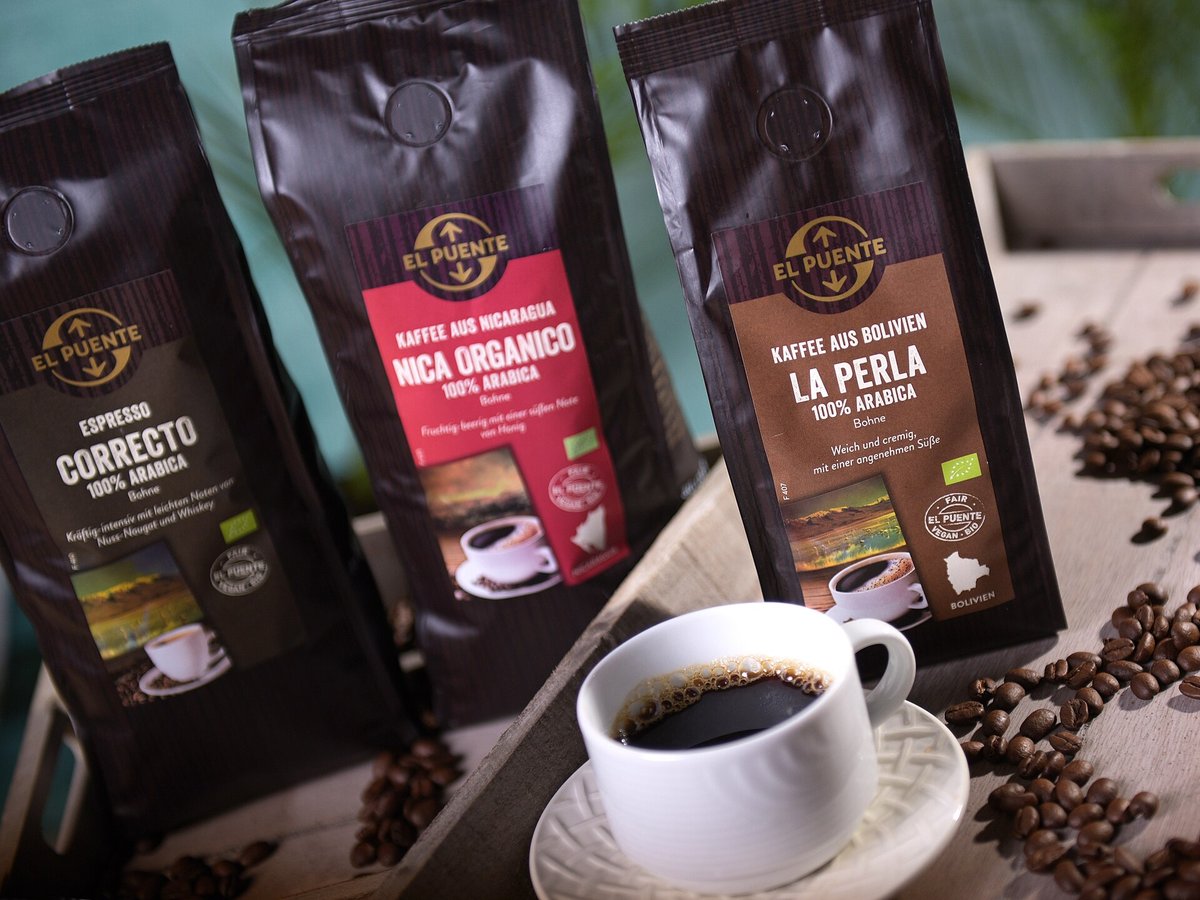
A bag of coffee can carry half a dozen seals and phrases: organic, Fairtrade, Fair Trade Certified, Rainforest Alliance, Bird Friendly, shade grown, direct trade, single origin, 100% Colombian, Kona. Some are backed by federal law and a civil penalty. Some are private standards with inspectors and a price floor. Some are a company’s own programme. Some mean whatever the roaster wants them to mean.
This page sorts them out: who sets each one, what the farmer actually gets, what it guarantees and what it does not, and what a small roaster has to pay to print it. Then it covers the label words that have no certificate behind them, and what the law says about using them. Every figure is as of October 2026.
For what green coffee costs and how much of a bag’s price reaches the farm, see The Coffee Market. For the lines Michigan requires on every bag, see Packaging Coffee for Sale and Bags, Labels and Cost.
The short version
| Seal or word | Who sets it | What the farmer gets | What it guarantees | What it does not | What a small roaster pays to print it |
|---|---|---|---|---|---|
| USDA Organic | US law (the National Organic Program) | Whatever the buyer pays; organic usually earns a premium | Grown and handled without prohibited synthetic inputs, every step certified | Anything about price, wages or flavour | Its own organic handling certificate: about $1,000 to $1,300 the first year, $750 a year after, plus inspection, from one certifier. Not needed below $5,000 a year of organic sales, but then no seal |
| Fairtrade (Fairtrade International) | A multi-stakeholder non-profit | At least $1.80 a pound for washed arabica ($2.00 from 1 December 2026), plus 20 cents premium, plus 40 cents if organic | A price floor and premium, paid to a smallholder co-operative | That a given farmer earns a living; that the coffee is better | A licence fee, set per company and not published |
| Fair Trade Certified (Fair Trade USA) | A US non-profit with its own standard | A floor (its published tool says $1.40) plus 20 cents premium | A floor and premium; also covers larger farms | The same as above | Fees not published |
| Rainforest Alliance (with UTZ, since 2018) | An international non-profit | No minimum price; a mandatory “Sustainability Differential” whose amount is negotiated | Farm-level environmental and social rules, audited | Any particular price | A royalty on green coffee: 1.5 cents a pound, as last published in 2020 |
| Smithsonian Bird Friendly | The Smithsonian Institution | Usually a premium; not fixed by the scheme | Organic, plus a real shade canopy of mostly native trees | Price | A licence fee, set by the programme |
| Regenerative Organic Certified | The Regenerative Organic Alliance | Not set | Organic plus soil health, animal welfare and farmworker fairness | Price | Annual licence fees on its fee schedule |
| C.A.F.E. Practices | Starbucks | Whatever Starbucks pays | Starbucks’ own audited buying code | Anything on another company’s bag | Not available to others |
| 4C | 4C Services (Germany) | Not set | A baseline standard for mainstream coffee | Rarely shown on a bag | |
| Direct trade | Nobody | Whatever the roaster says | Nothing by itself | Everything | Nothing |
| Kona, Kona blend | Hawaii law | 100% Kona if “100%”; at least 10% Kona in a “blend” until 30 June 2027, 51% from 1 July 2027 | |||
| Jamaica Blue Mountain | Jamaica’s coffee regulator; a US certification mark | Certified coffee from the Blue Mountain parishes | Permission from the mark’s owner | ||
| Single origin, estate, micro-lot, shade grown, low acid | Nobody | Nothing beyond the general law against false labels | Nothing |
Why so many seals
Each scheme answers a different question. Organic answers: what was sprayed on the farm? Fairtrade answers: is there a floor under the price? Rainforest Alliance and 4C answer: does the farm meet a checklist of environmental and labour rules? Bird Friendly answers: is there forest over the coffee? None of them answers whether the coffee tastes good, and none of them, alone, tells you what the person who picked it was paid.
They also reach very different amounts of coffee. In Germany in 2021, a study for the Global Coffee Platform found Rainforest Alliance coffee made up 20% of retail coffee sales and Fairtrade 1.2% (BASIC, The Grounds for Sharing). The same study notes that “much coffee that is produced under certified conditions is not sold as such, which means that the farmer may not recuperate his or her costs of certification.” A farm can be certified and still sell most of its crop at the ordinary price, because there are not enough certified buyers.
USDA Organic
What it promises
“Organic” on food sold in the United States is governed by the National Organic Program (NOP), run by the US Department of Agriculture’s Agricultural Marketing Service under the Organic Foods Production Act. Organic coffee is grown without prohibited synthetic pesticides and fertilisers, and every business that handles it on the way must be certified too, so that organic coffee is never swapped for or mixed with ordinary coffee. Imported coffee must come from a farm certified to the US standard or an equivalent one.
It says nothing about the price paid to the farmer or about labour.
A roaster needs its own certificate
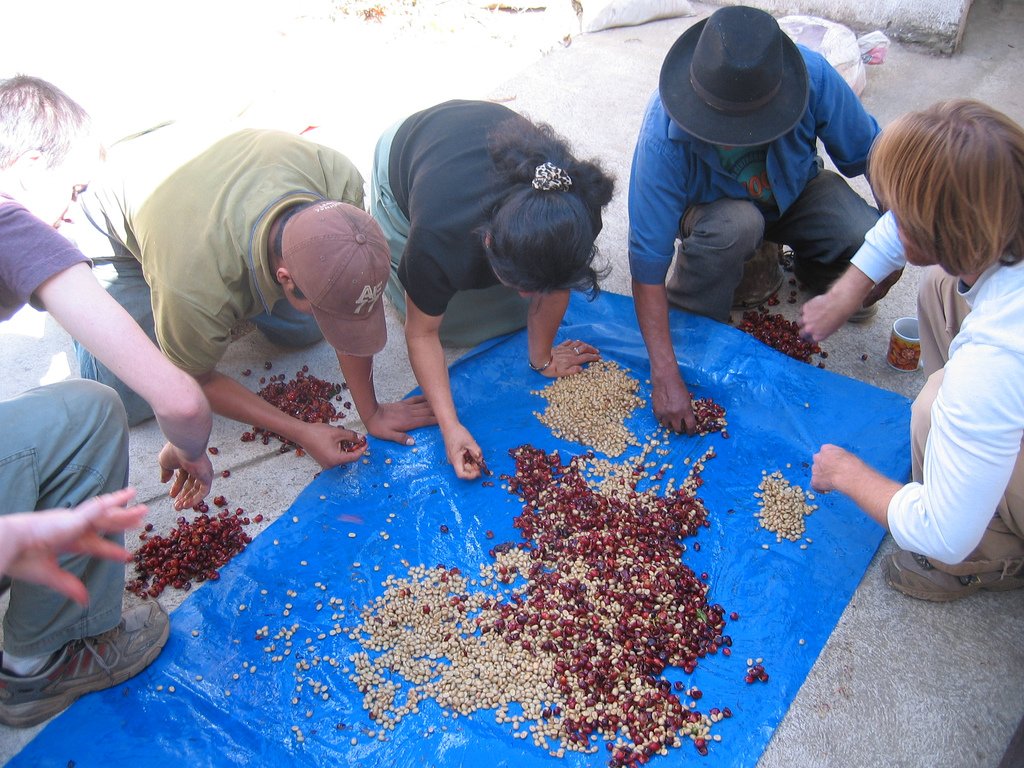
This is the point most small roasters miss. Roasting is handling. Buying certified organic green coffee does not let a roaster call the roasted coffee organic. The roaster needs its own organic handling certificate, unless it fits one of the exemptions in 7 CFR 205.101:
| Exemption | Wording | Does it fit a roaster? |
|---|---|---|
| Small operation | ”whose gross agricultural income from organic sales totals $5,000 or less annually” | Yes, while organic sales stay at or under $5,000 a year |
| Retail shop | ”a retail establishment that does not process organically produced agricultural products” | No: roasting is processing |
| Sealed packages | products that “remain in the same sealed, tamper-evident packages” and “are not otherwise handled” | Only for reselling someone else’s sealed bags |
The small-operation exemption has strings attached, in 7 CFR 205.310. An exempt roaster must still follow the organic rules and keep records, and its coffee must not:
“(1) Display the USDA seal or any certifying agent’s seal… or (2) Be represented as a certified organic product or certified organic ingredient to any buyer.”
And no one else can use it as organic: it “must not be identified or represented as ‘organic’ in a product processed by others.” So an exempt roaster can write “organic” on its own bag, but cannot print the green USDA seal, cannot say “certified organic,” and cannot sell the coffee to a café that wants to call its drinks organic.
The 2024 rule
The Strengthening Organic Enforcement rule (Federal Register, 19 January 2023) took full effect on 19 March 2024. It was written after a series of frauds in imported organic grain. It narrowed the exemptions, so that brokers and traders who never touch the product must now be certified; added import certificates for every organic shipment entering the country; and required certifiers to do more unannounced inspections. The $5,000 exemption and the sealed-package exemption survived. For coffee, the effect is that more of the paperwork trail behind a bag of organic green coffee is checked.
What it costs
Certification is sold by private certifiers accredited by the USDA, and their fees vary. One certifier’s published schedule, Oregon Tilth’s for 2026, gives an idea:
| Item | Oregon Tilth, 2026 |
|---|---|
| New applicant fee, once | $300 |
| First-year base fee, processors and handlers | $1,000 |
| Annual fee after that, retail processor with organic sales up to $25,000 | $750 |
| Inspection | $72 an hour, plus travel at $45 an hour and expenses |
A one-person roaster should budget about $1,500 to $2,000 in the first year and about $1,000 to $1,500 a year after, once inspection is included. That is an estimate from the schedule, not a quote. The USDA’s Organic Certification Cost Share Program has reimbursed 75% of certification costs, up to $750 per scope (handling is a scope) for both the 2025 and 2026 program years, with applications for both due by 31 December 2026. Certifiers can be found in the USDA’s Organic Integrity Database.
The penalty
Knowingly selling or labelling a product as organic when it is not carries a civil penalty of up to $22,974 for each violation, the inflation-adjusted figure in 7 CFR 3.91 since 29 May 2025.
For a market stall: under $5,000 of organic sales a year, organic green coffee can be roasted and sold as “organic” (never “certified organic”, never with the seal), with records kept. Above that, certify or stop using the word. Michigan’s own cottage food label rules are on Michigan Rules.
Fairtrade and Fair Trade USA
Two schemes, two seals
There are two fair-trade seals on American coffee, and they are run by different organisations.
- Fairtrade (the black, blue and green “person” mark) belongs to Fairtrade International, which sets the standard, and is certified by its auditing company FLOCERT. In the United States it is run as Fairtrade America.
- Fair Trade Certified (a figure holding a bowl, in a circle) belongs to Fair Trade USA, founded in 1998 as TransFair USA. It was the American member of the international system until it left at the end of 2011 to run its own standard, which also certifies coffee from larger farms and estates with hired workers, not only co-operatives.
Fairtrade International’s coffee standard is open only to small producers. Coffee, cocoa, sugar, honey, rice and cotton “are the only Fairtrade products which remain closed to large producers,” because small-farmer organisations opposed certifying plantations in those crops (Wikipedia, Fair trade coffee).
The money
| Fairtrade International | Fair Trade USA (its published tool) | |
|---|---|---|
| Minimum price, washed arabica | $1.80 a pound; $2.00 from 1 December 2026 | $1.40 |
| Minimum price, natural arabica | $1.95 from 1 December 2026 | $1.35 |
| Minimum price, washed robusta | $1.35 from 1 December 2026 | $1.05 |
| Premium on top | $0.20 a pound | $0.20 a pound (“Community Development Fund”) |
| Organic, extra | $0.40 a pound | Organic floor $1.70 |
Sources: Daily Coffee News, 4 August 2026; Fair Trade USA price and premium search, which still shows those figures as effective from 1 April 2011.
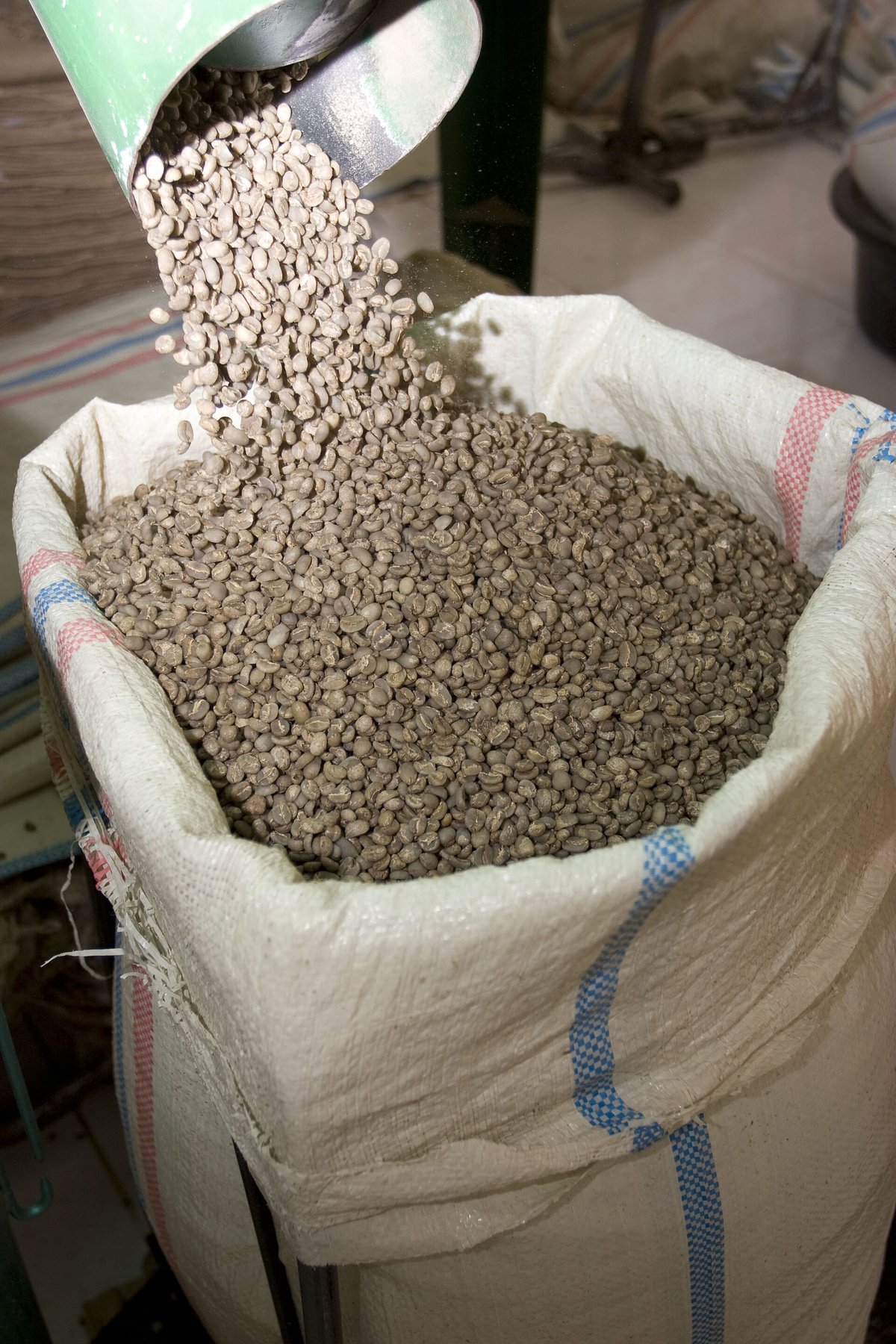
How it works: the buyer pays the minimum price or the market price, whichever is higher, and the premium on top to the co-operative, which decides by vote how to spend it, with part going to productivity and quality. Fairtrade America says coffee growers have earned “over $400m” in premium since 2020, across 592 coffee producer organisations and “775K+” farmers.
The floor only matters when the market is below it. For most of 2018 and 2019 the floor was above the market and did real work. Since 2021, and especially in 2024–25, the market has been far above any fair-trade floor; the only extra a Fairtrade farmer was guaranteed was the 20-cent premium. The rise to $1.80 in 2023 was the first since 2011; The Coffee Market charts the floor against the market.
The co-operative is paid, not the farmer. The minimum is paid at the co-operative’s export door (FOB). The co-operative deducts its costs before paying its members, and the premium is spent on shared projects. What an individual farmer receives is not set by the scheme.
What a roaster pays
To use the Fairtrade mark, a US company applies through FLOCERT for “Permission to Trade,” then signs a licence and registers each product. “The cost of certification depends on the product,” and fees are quoted on application (Fairtrade America). Fair Trade USA also quotes fees on application. A small roaster that only wants to say it buys fair-trade green coffee can say so truthfully in words, but needs a licence to print either seal.
Rainforest Alliance
The frog seal belongs to the Rainforest Alliance, which merged with the Dutch scheme UTZ in 2018; their joint “2020 Certification Program” “took effect in July 2021.” It audits farms against environmental and social rules: protecting forest and water, banning the worst pesticides, and requirements on child labour, forced labour and wages.
On price it is explicit: “Rainforest Alliance certification does not guarantee a minimum price for certified crops” (RA). Since 2021 buyers must pay a Sustainability Differential, “a mandatory additional cash payment to certified farms over and above the market price,” and make Sustainability Investments in the farms. For cocoa the scheme sets a minimum differential ($70 a tonne); for coffee it sets none, so the amount is whatever buyer and seller agree.
Companies selling under the seal pay a volume royalty, which for coffee was “$0.015 per pound green” when Cafe Imports last published it in 2020.
It is the largest of the schemes by volume in many markets. It is a farm-practice standard, not a price standard.
Smithsonian Bird Friendly
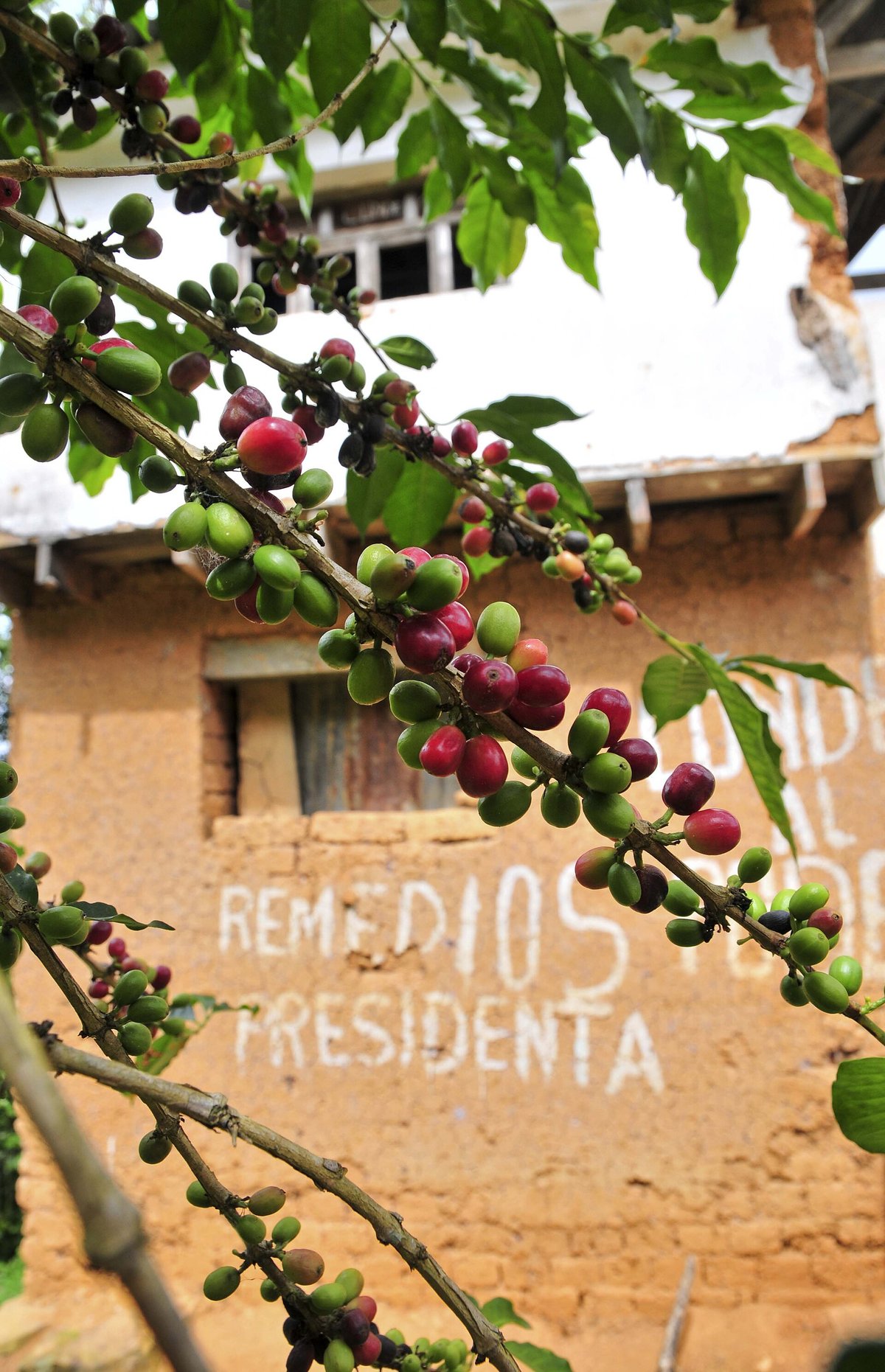
Bird Friendly is run by the Smithsonian’s Migratory Bird Center and is about twenty-five years old. It is the strictest of the environmental seals. Certified farms “are organic, deforestation-free, and guarantee habitat protection through agroforestry or forest conservation practices” (Smithsonian National Zoo). In addition to being organic, the coffee is grown under a shade canopy, and “at least 60% of shade trees on a coffee or cocoa farm must be native” (Willistown Conservation Trust). The programme is also commonly described as requiring a tall canopy (about 12 metres), at least 40% shade and at least ten tree species.
Why it matters: “increased canopy cover in coffee systems has been shown to enhance biodiversity” (Wikipedia, Shade-grown coffee), and migrating songbirds winter in those canopies. Sun coffee, planted in open rows for higher yields, gives up most of that.
Because a Bird Friendly farm must be organic first, a roaster selling it as organic still needs the organic handling certificate above. The programme licenses its seal to roasters and importers for a fee set by the programme.
Regenerative Organic Certified
The Regenerative Organic Alliance, a non-profit, certifies farms and products in three areas: “soil health, animal welfare, and farmworker fairness,” at Bronze, Silver or Gold. It is built on top of organic: a farm must hold its baseline certifications first (ROA certification). Brands pay “annual license fees based on the Cost & Fee Structure.” It is new in coffee and rare on American shelves.
C.A.F.E. Practices (Starbucks)
“Since 2004, the cornerstone of the Starbucks ethical sourcing approach to buying coffee has been the Coffee and Farmer Equity (C.A.F.E.) Practices program,” in the words of its verifier, SCS Global Services. Farms and mills selling to Starbucks are audited by third parties against Starbucks’ own scorecard of economic, social and environmental rules. It is one company’s supplier code, not a public certification: no one else can use it, and it sets no public minimum price. “Ethically sourced” on a Starbucks bag refers to it.
4C
4C began as the Common Code for the Coffee Community in 2004, became a company (4C Services, in Cologne) in 2018, and was renamed in 2025 “Certification for Climate, Conservation and Communities.” It is a baseline standard for mainstream coffee, used by large roasters to show that their supply meets minimum rules. The BASIC study notes it is not “well known by consumers as it is not usually displayed on packs.” It sets no minimum price.
Direct trade
Direct trade has no definition, no standard and no auditor. “There is no single definition of direct trade nor set of common standards,” and “a lack of third-party accountability is a frequent criticism” (Wikipedia, Direct trade). Some roasters who use the term pay well above any certified floor, visit the farm, and publish what they paid. Others use it for coffee bought from an importer’s list.
What to ask a roaster who says “direct trade”:
- Which farm or co-operative, by name?
- What did you pay, per pound, and is that FOB, at the farm gate, or delivered?
- How does that compare with the C price and the Fairtrade minimum on the day you bought?
- How many years have you bought from them?
- Who else was in the chain: an importer, an exporter, a mill?
- Do you publish it? Some roasters publish a transparency report with these numbers for every coffee.
A roaster who answers all six is doing something real. One who cannot answer the second is using a phrase.
Label words: what the law says
The general rule
Two laws cover every word on a coffee bag.
- Under the federal Food, Drug, and Cosmetic Act, a food is misbranded if “its labeling is false or misleading in any particular” (21 U.S.C. 343).
- The Federal Trade Commission treats advertising, websites and social media posts the same way. Environmental claims fall under its Green Guides: “It is deceptive to misrepresent, directly or by implication, that a product, package, or service offers a general environmental benefit,” and unqualified claims like “eco-friendly” are ones “it is highly unlikely that marketers can substantiate” (16 CFR 260.4).
So a word with no legal definition is not a free word. It still has to be true in the sense a customer would take it.
”Organic” without certification
Covered above. Under $5,000 of organic sales a year: the word, honestly used, with records; never the seal, never “certified.” Above $5,000 without a certificate: up to $22,974 per violation.
Kona and “Kona blend”
Hawaii’s law, HRS §486-120.6, is the strictest coffee origin law in the United States. It applies to every Hawaii coffee origin, not only Kona:
- “100% Kona Coffee” only if the coffee is 100% from that origin.
- A blend must state the percentage: “10% Kona Coffee Blend,” in type of the same size as the rest of the name, above the net weight, with a “Contains:” list of every origin and its percentage below.
- Minimum to use the name at all: 10% “until June 30, 2027”; 51% “on or after July 1, 2027.”
Origins explains what Kona is and why a 10% blend was mostly a way to sell the name. Whether Hawaii’s statute reaches a roaster in Michigan selling only in Michigan is a question for a lawyer; the federal misbranding rule reaches everyone, and from July 2027 a blend with less than half Kona will be hard to defend anywhere as “Kona.”
Jamaica Blue Mountain
“Jamaica Blue Mountain” is not a description; it is a certification mark, registered with the US Patent and Trademark Office (No. 1,414,598) and controlled by the Jamaica Agricultural Commodities Regulatory Authority, formerly the Coffee Industry Board (Wikipedia). Only certified coffee from the Blue Mountain area (the parishes of St Andrew, St Thomas, Portland and St Mary) may use it. Other Jamaican coffee is sold as Jamaica High Mountain or Jamaica Supreme. A “Blue Mountain blend” or “Blue Mountain style” is using another party’s mark, and the mark’s owner can object.
”100% Colombian” and Juan Valdez
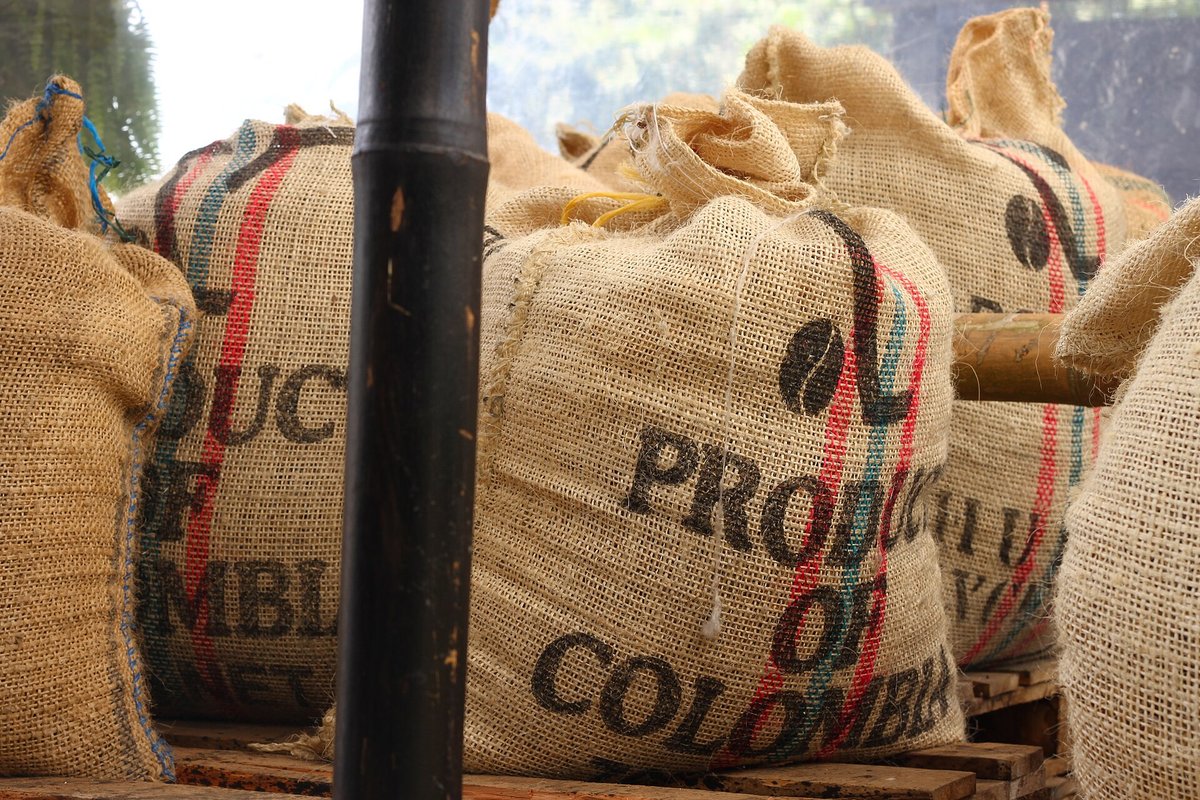
The National Federation of Coffee Growers of Colombia created Juan Valdez, a fictional farmer with his mule, for its advertising in 1958, with “the goal of distinguishing 100%-Colombian coffee from coffee blended with beans from other countries” (Wikipedia); the logo with him in it dates from 1981 (Wikipedia). The Federation owns the Juan Valdez and Café de Colombia marks, and using them on a bag needs its permission. “Colombian” or “100% Colombian” in words is a factual claim: it must be all Colombian coffee, and the importer’s paperwork is the proof. A blend with some Colombian coffee in it is not “Colombian coffee."
"Single origin,” “estate,” “micro-lot”
None has a legal definition in the United States. In common use:
| Word | What customers take it to mean | What makes it honest |
|---|---|---|
| Single origin | From one place | One country at the least; better, one region, farm or co-operative, named |
| Estate | From one farm that grows and processes its own coffee | One named farm |
| Micro-lot | A small, separately kept lot, often one variety or one picking | A named farm and a lot that was kept separate, which the importer can confirm |
| Single farm, single variety | Exactly that | The import paperwork |
The safe practice is to print the name that makes the word checkable: the farm, the co-operative, the region, the importer’s lot number.
”Shade grown”
No legal definition. A farm with a few banana plants over the coffee can call it shade grown. The Bird Friendly seal is the only one that sets a measurable shade standard. Under the Green Guides, a roaster using “shade grown” as an environmental claim should be able to show what shade it means.
”Low acid”
No legal definition for coffee. Coffee sold as “low acid” is usually a dark roast, a low-grown coffee, or one treated by steaming; how acidic any of them tastes or measures varies. “Low acid” in the medical sense, easier on a stomach, is a health claim (below) and needs evidence.
Health claims
The FDA recognises three kinds of claim on a food label (FDA): health claims (that a food reduces the risk of a disease), which need FDA authorisation; nutrient content claims (“low”, “free”, “high”), which have defined meanings; and structure/function claims about normal body function. A claim that a coffee treats or prevents a disease makes it, in law, a drug. The FTC requires “competent and reliable scientific evidence” for any health claim in advertising (FTC). What the evidence actually says about coffee and health is on Caffeine and Health; a roaster’s bag is not the place to summarise it.
Words to keep off a bag: “boosts immunity”, “detox”, “anti-inflammatory”, “good for your heart”, “mould-free” or “toxin-free” (they imply other coffee is unsafe), and “healthy” without checking the FDA’s definition.
Where marketing outruns the standard
More label myths are on Coffee Myths and Corrections.
| What the bag implies | What the standard actually says |
|---|---|
| ”Fair trade” means the farmer was paid well | It guarantees a floor that was below the market for most of 2021–2026, plus a premium paid to a co-operative |
| A frog seal means a better price | Rainforest Alliance “does not guarantee a minimum price”; the coffee differential is negotiated |
| Organic green coffee makes organic roasted coffee | Only if the roaster is certified, or sells under $5,000 a year and does not use the seal |
| ”Direct trade” is a step above fair trade | It has no definition and no audit; ask the six questions |
| ”Kona blend” is mostly Kona | 10% is enough until 30 June 2027 |
| ”Shade grown” protects birds | Only the Bird Friendly standard sets a measurable canopy |
| ”Ethically sourced” means certified | On a Starbucks bag it means Starbucks’ own audited code |
| A seal on the bag means the farm sold all its coffee at the certified price | Much certified coffee is sold at the ordinary price because there are not enough certified buyers |
A checklist for a small roaster’s bag
A market-stall bag in Michigan starts under the cottage food rules, which set the mandatory lines (Packaging Coffee for Sale and Michigan Rules). On top of those, the safe rule is to print only claims there is paperwork for. It is the rule I plan to follow:
- Country and region always; the farm or co-operative when the importer names it.
- The roast date.
- “Organic” only on coffee bought certified organic, with the importer’s certificate kept on file, and only while organic sales stay under $5,000 a year. No seal.
- “Fair trade” only in words, on coffee the importer sold as Fairtrade or Fair Trade Certified, with the invoice kept. No seal without a licence.
- No “direct trade”, no health claims, no “shade grown” unless it is a Bird Friendly coffee.
- A small card at the stall with the green price per pound for each coffee, so customers can see it.
What is not known
- What either fair-trade licence costs a small US roaster: both schemes quote it on application.
- Whether Fair Trade USA’s published floor of $1.40 is current, or whether it now follows the international $1.80.
- The current Rainforest Alliance royalty for coffee; the last public figure is from 2020.
- Bird Friendly’s current published criteria and licence fee, in the programme’s own documents.
- Whether Hawaii’s origin law applies to a roaster outside Hawaii selling outside Hawaii.
- How much of the certified coffee grown each year is actually sold on certified terms; the BASIC study says “much” is not, without a number for coffee overall.
Questions to ask before printing a claim: MDARD (for a cottage food bag): “Can a cottage food label say ‘organic’ for coffee roasted from certified organic green beans, under the $5,000 federal exemption?” A certifier: “What would handling certification cost for a roaster with under $25,000 of organic sales, and is the Cost Share Program open?” Fairtrade America and Fair Trade USA: “What is the licence fee for a roaster buying under 2,000 lb of green coffee a year?”
Sources
- Organic: 7 CFR 205.101; 7 CFR 205.310; 7 CFR 3.91; “National Organic Program: Strengthening Organic Enforcement,” Federal Register, 19 January 2023; Oregon Tilth Certified Organic fee schedule, 2026; USDA Organic Integrity Database.
- Fairtrade: Daily Coffee News, “Fairtrade International Raises Price Minimums Again” (4 August 2026); Fairtrade America, coffee and the certification process; Fair Trade USA, price and premium search.
- Rainforest Alliance, “Does Rainforest Alliance Certification Guarantee a Minimum Price?” and “What Is the Difference Between Rainforest Alliance and Fairtrade?”; Cafe Imports, “A Series About Certifications, Part 3: Rainforest Alliance” (2020).
- Bird Friendly: Smithsonian National Zoo and Conservation Biology Institute; Willistown Conservation Trust.
- Regenerative Organic Alliance and its certification documents.
- SCS Global Services, Starbucks C.A.F.E. Practices; 4C Services.
- BASIC, The Grounds for Sharing (2024).
- Hawaii Revised Statutes §486-120.6.
- Wikipedia: Jamaican Blue Mountain Coffee; Juan Valdez; Coffee production in Colombia; Direct trade.
- Federal law on claims: 21 U.S.C. 343; 16 CFR 260.4; FDA, “Label Claims for Conventional Foods and Dietary Supplements”; FTC, “Health Products Compliance Guidance.”
Comments (0)