Cooking With Coffee
Coffee is a drink to most people and an ingredient to me. It’s a roasted seed — the same category of thing as a cocoa bean or a toasted spice — and once you stop thinking of it as breakfast and start thinking of it as a dark, bitter, roasty, faintly acidic, tannic, deeply savory ingredient, it turns up everywhere it belongs. In a rub. In a gravy. In a barbecue sauce next to molasses. In a chocolate cake, where it does something close to magic. And in the simplest, dumbest, best thing I do with it: a bag of steaks and a pot of leftover coffee.
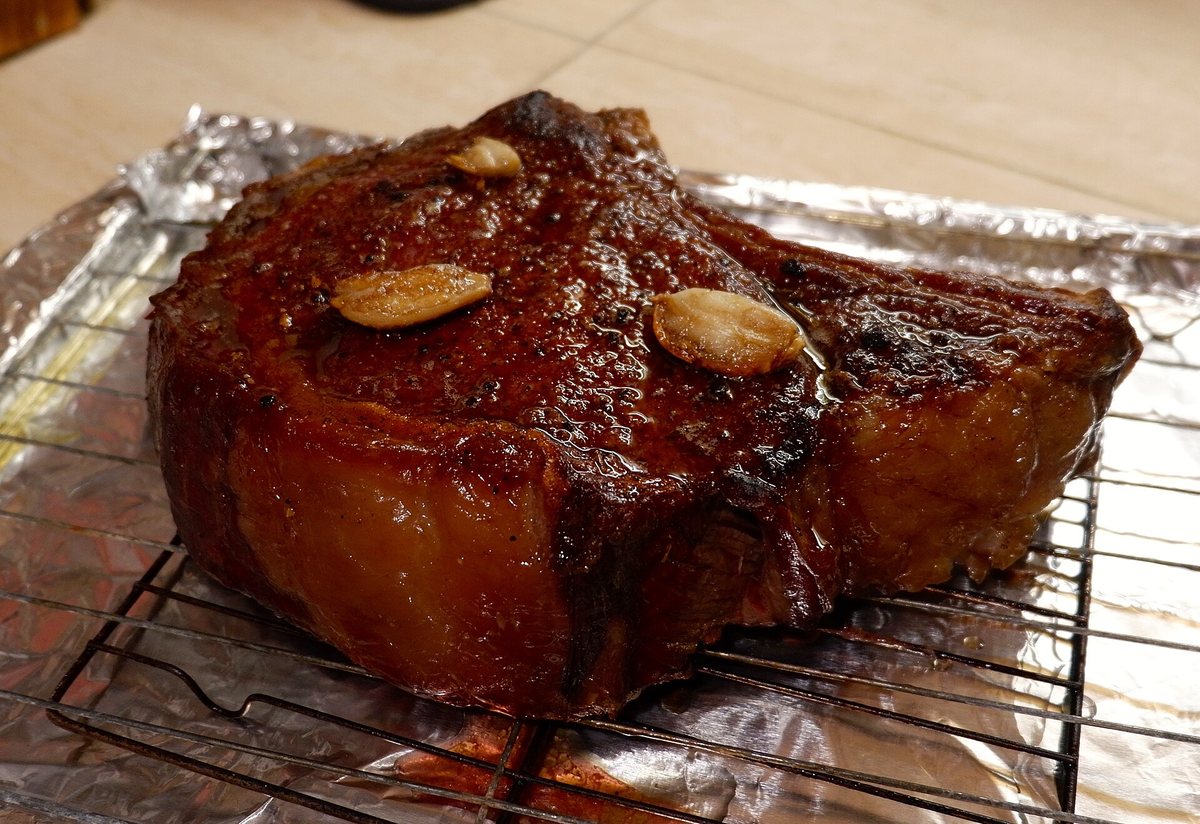
My coffee-marinated steak
This is the one people don’t believe until they eat it, and the best part is how little there is to it.
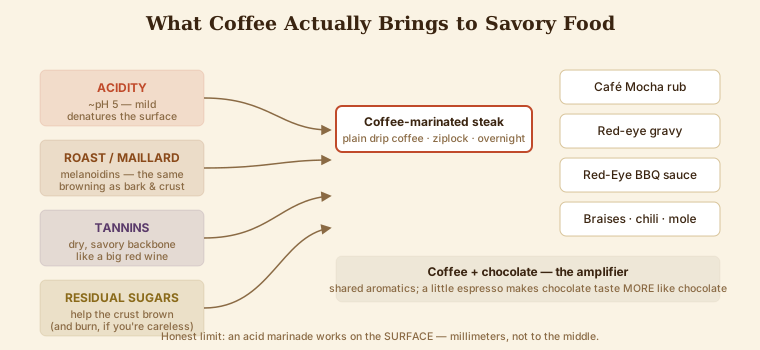
The coffee marinade is just plain drip American coffee, put in a ziplock bag with steaks and left to marinate overnight in the fridge. That’s the whole recipe. It makes the steak tender, juicy and yummy.
No garlic, no soy, no brown sugar, no mustard, no ten-ingredient list. Plain brewed coffee — the regular American drip stuff, not espresso, not some fancy single-origin — steaks, a bag, one night in the fridge. The next day you pull them out and cook them. That’s it. Part of the charm is that there’s nothing else in it, and I’d ask you to resist the urge to improve it before you’ve tried it as written, because the whole point is that a pot of ordinary coffee does all the work by itself. The full thing is over on my coffee-marinated steak.
I don’t want to oversell it, so here’s the honest accounting of what’s actually happening.
Why it works
It’s mildly acidic, and mild is the point. Brewed coffee sits at roughly pH 5 — acidic, but gently so, in the neighborhood of a very weak vinegar. Acid denatures the proteins at the surface: the protein structures unwind, the tissue holds onto water better, and that outer layer cooks up juicier and reads as more tender.
The honest caveat: acid marinades work on the surface. Millimeters, not to the middle. A marinade doesn’t diffuse into the center of a steak overnight or over three nights — the physics isn’t there. You’re treating the outside, which is fine, because the outside is where the crust and most of the perceived texture live.
And that’s exactly why coffee is safe overnight when a strong acid isn’t. Put a steak in buttermilk, citrus, or vinegar overnight and the surface goes chalky, gray and mushy — the acid over-denatures the proteins until the texture collapses, and you’ve cooked the outside without heat. Coffee is mild enough that overnight lands in the sweet spot: enough acid to do the work, not enough to wreck it. The mildness isn’t a compromise, it’s the feature.
The roast compounds are doing the flavor. Roasted coffee is full of melanoidins and browned aromatics — Maillard products, generated in the roaster the same way they’re generated on a steak in a hot pan or a pork butt in a smoker. Coffee tastes, at a chemical level, like roasted things. On beef, that savory-bitter roast note doesn’t read as “coffee,” it reads as a deeper, meatier, more browned version of the steak. Same Maillard family I’m chasing every time I light up a rig over on the smoking side of the kitchen — coffee and beef were always going to get along. Coffee also carries residual sugars, which help the surface brown; a coffee-marinated steak develops a darker crust than a plain one at the same heat.
The tannins add a backbone. Coffee’s tannins and polyphenols are the drying, astringent compounds — the family that makes red wine grip your tongue. On beef they read as savory structure underneath the fat, a slight bitterness that keeps a rich cut from going one-note. The same job a dark beer does in a braise.
What I won’t claim. You’ll read that coffee enzymatically tenderizes meat, tearing apart muscle fiber deep inside the way papaya (papain) or pineapple (bromelain) genuinely do. That claim is weak — coffee has no well-established tenderizing enzyme working at that scale, and even if it had one, it’d face the same surface-only problem as the acid. This is not turning a chuck steak into a filet.
The honest verdict: terrific flavor, a real and worthwhile surface effect on texture and juiciness, and no deep-tissue miracle. Which is plenty. It’s a free bag of leftover coffee making a steak better.
Practical notes
- Use it cooled. Room temperature or fridge-cold. Pouring hot coffee over raw steak puts the meat into the temperature danger zone and starts cooking the surface. Brew it, cool it, then bag it.
- Don’t extend it for days. Overnight is right. Two nights won’t destroy it. A week is a different food.
- Salt is a separate decision. I salt at cook time rather than putting salt in the acid bath for a long soak. Long acid-plus-salt exposure pushes the surface toward cured-and-mushy.
- Pat it dry. Really dry. This is the step people skip and then wonder why they got gray steak. Surface moisture has to boil off before browning can start, so a wet steak steams itself. Paper towels, both sides, aggressively.
- Sear it in cast iron. Rippingly hot, dry steak, and the coffee’s residual sugars and melanoidins will give you a crust darker and deeper than plain beef ever manages. This is exactly what a cast-iron skillet is for.
Coffee in rubs
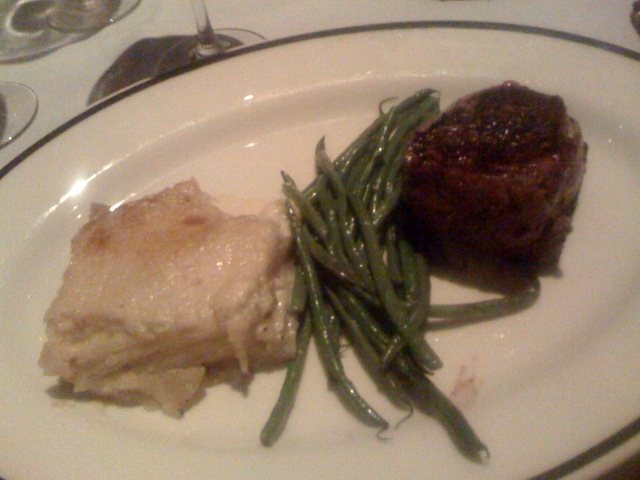
Ground coffee in a dry rub behaves like a spice, because functionally that’s what it is: a roasted, aromatic, bitter, oily ground seed. It sits comfortably next to paprika and cumin and does a job none of them can — it brings roast bitterness and a dark, savory depth that makes beef taste more like itself.
My Cafe Mocha rub is the one I keep in the rotation for beef: coffee and cocoa as the backbone, brown sugar for sweetness and crust, paprika for color and gentle warmth, cinnamon for that sweet-spice lift, and cayenne to keep it from getting comfortable. Coffee and cocoa together are the whole idea — two roasted, bitter, Maillard-heavy ingredients reinforcing each other — and the sugar and spice keep it from reading as a mouthful of grounds.
Two things to actually get right:
Grind size matters more than you’d think. A rub sits on the surface and gets eaten; nothing brews it. Too coarse and you get literal gritty grounds in your teeth, which is the failure mode everybody hits on their first coffee rub. Go fine — espresso-fine or close — so it dissolves into the crust rather than sitting on it as gravel. Instant coffee or espresso powder is a legitimate shortcut here precisely because it’s soluble and can’t go gritty.
Sugar in a rub burns hot and fast. That’s not a coffee problem, it’s a sugar problem, and it’s the same rule that governs a sweet barbecue sauce: brown sugar starts scorching well before a hot sear or a high-heat grill is finished. So a sweet coffee rub belongs on low-and-slow cooks, where the smoker never gets hot enough to burn it, or on a sear where you accept a very dark crust and go fast. Put a sugar-heavy coffee rub on a steak over a raging fire and you’ll get bitter, not roasty. On a brisket at 250°F it’s perfect.
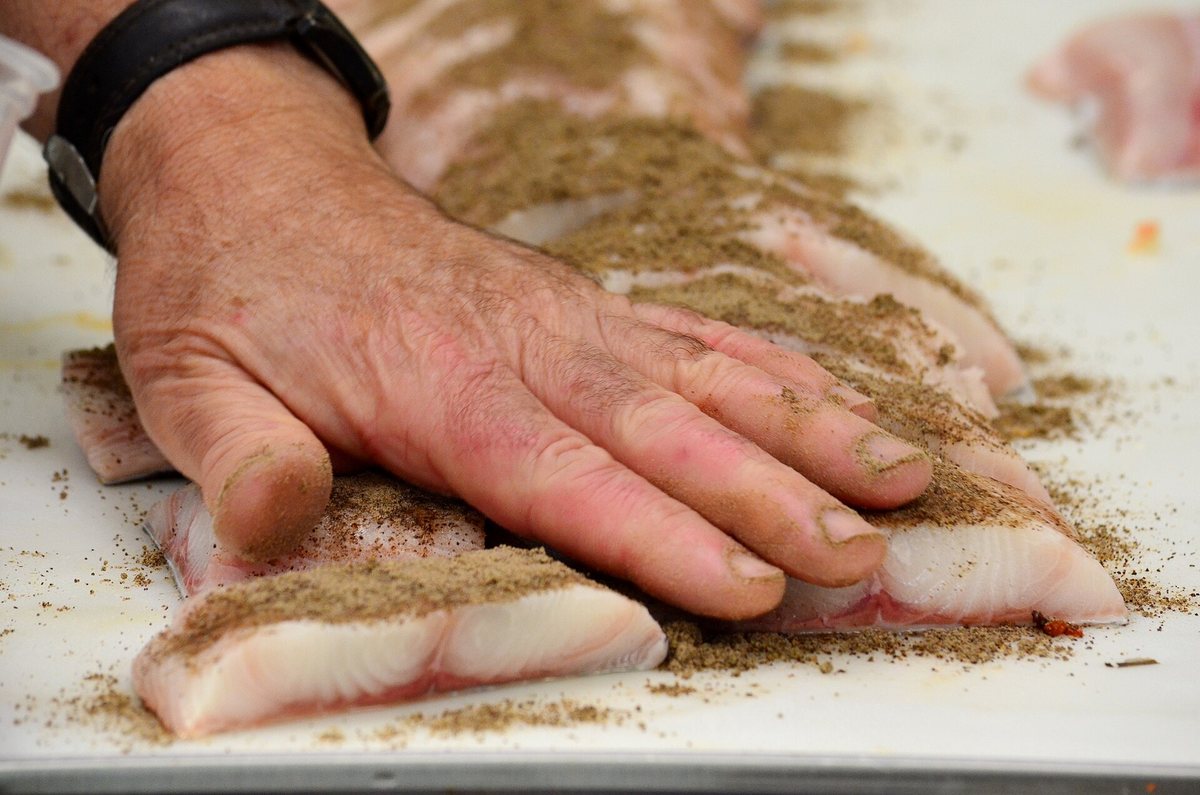
Red-eye gravy
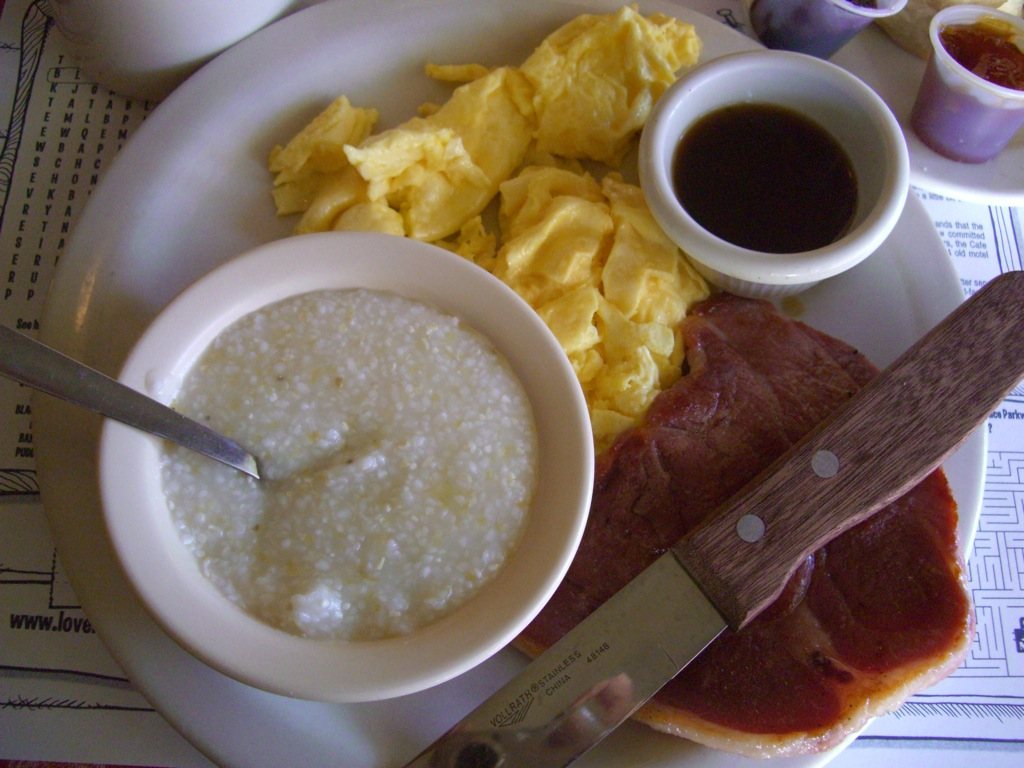
The Southern classic, and the oldest piece of coffee-in-savory-cooking in the American repertoire. Fry a slice of salty country ham, pull the ham, pour black coffee into the hot pan, scrape up every browned bit, let it reduce a minute, and pour that thin, dark, salty, bitter, brilliant liquid over the ham and a split biscuit or a mound of grits. No flour, no roux, no cream — which is why calling it a “gravy” confuses everybody the first time. It’s a pan deglaze, and coffee is the deglazing liquid.
It works because the two halves are exactly opposite: country ham is aggressively salty and rich, and black coffee is bitter and acidic and cuts straight through it. Neither is any good alone in that quantity. Together they’re breakfast.
I keep both versions: Country Ham and Red-Eyed Gravy and Redeye Gravy with Country Ham.
The name — and I’m flagging this as folklore, because it is. The most-repeated story has Andrew Jackson telling a hungover cook to bring him gravy as red as his red eyes. Another says the name comes from the way the fat pools into a red-rimmed “eye” in the middle of the gravy in the pan, which at least has the advantage of being something you can actually watch happen. Nobody has the receipts on either. Good story, unverified history, excellent gravy.
Coffee in barbecue sauce
Coffee belongs in barbecue sauce, and once you understand the five levers it’s obvious why. Sauce is a balance of acid, sweet, heat, smoke, and umami, and umami is the dial most people never touch. Coffee lands right on it: bitter, roasty, tannic, savory depth that makes a sauce taste less like sweet-and-sour ketchup and more like something that came out of a kitchen.
My Red-Eye BBQ Sauce uses instant coffee for exactly this — and instant is the right call rather than a shortcut, because it’s already soluble, it’s concentrated, and it lets me add coffee intensity without adding a cup of liquid that I’d then have to boil back out.
The reason coffee slots so naturally beside molasses and vinegar is that they’re all doing related work. Molasses is dark, bitter-sweet, and full of its own roasted-cooked-sugar depth; vinegar is the acid backbone; coffee bridges them, adding a bitterness that isn’t sweet and a roastiness that isn’t smoke. Molasses and coffee are practically cousins in the glass. Add Worcestershire on top of that and you’ve got a sauce with four different kinds of savory in it, which is the entire difference between homemade and the bottle. The full argument is over on BBQ Sauces.
Braises, chilis, and mole
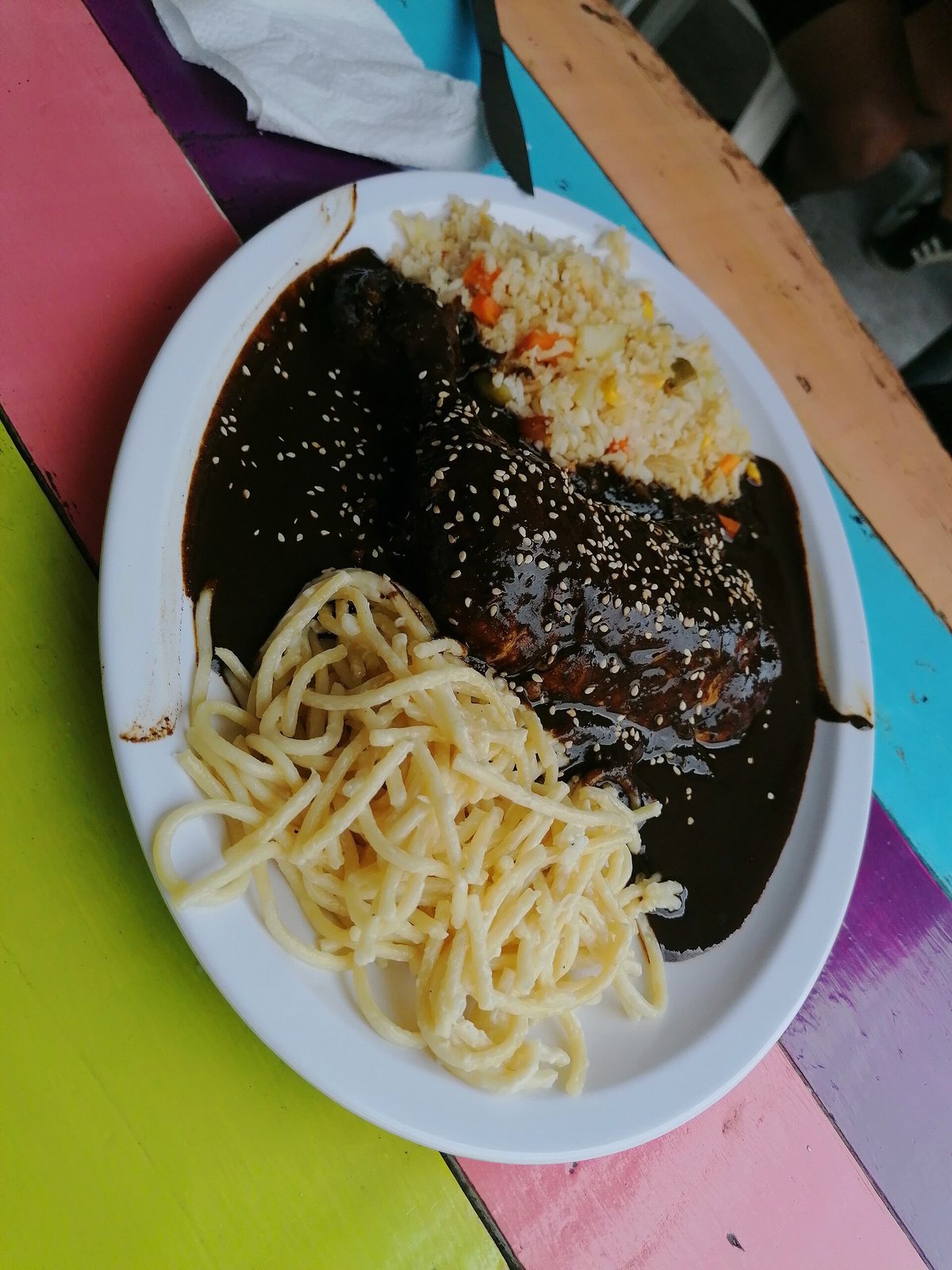
Once you accept coffee as a bitter/roast note rather than a beverage, a splash goes into anything long, dark, and beefy — working the same way a dark beer or a square of unsweetened chocolate works. All three add roasted bitterness to balance richness and keep a heavy braise from turning flat and sweet.
- Short ribs and pot roast — a cup of black coffee as part of the braising liquid, alongside the stock. Long cooking blows off most of what reads as “coffee” and leaves the depth behind.
- Chili — a splash in a beef chili is a standard trick in Texas cook-off country, and it belongs there. Chiles and coffee are both roasted and bitter; they reinforce rather than compete.
- Mole — coffee sits comfortably in that world of chiles, chocolate, spices and toasted seeds. Same logic: layers of roasted bitterness making the sweetness and the heat legible.
The rule for all of it is restraint. Coffee in a braise is a background ingredient. If you can taste “coffee,” you’ve added too much; when it’s right, the dish just tastes deeper and nobody can tell you why.
Coffee and chocolate — the great amplifier
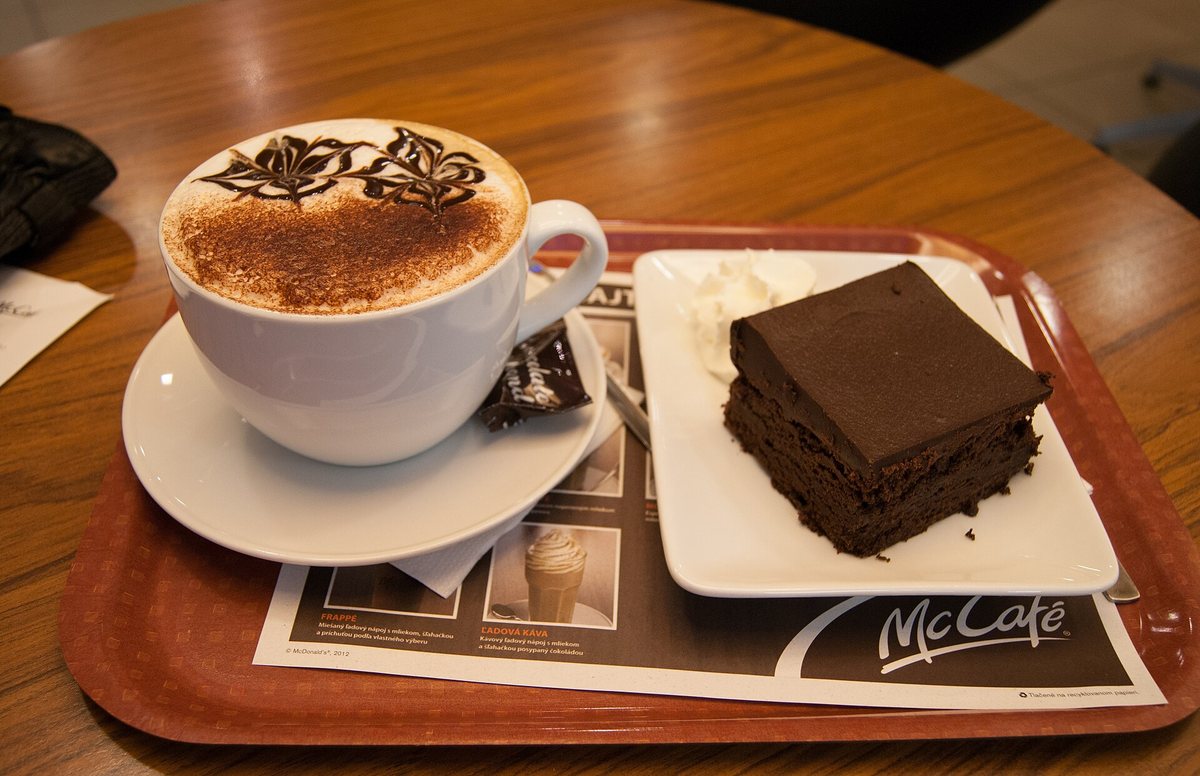
Here’s the one everybody should know and most people don’t: a spoon of espresso powder in a chocolate dessert doesn’t make it taste like coffee. It makes it taste more like chocolate.
The reason is that coffee and cacao are both roasted seeds, and roasting them produces heavily overlapping sets of aromatic compounds — the same pyrazines, furans, and Maillard products in both. So coffee doesn’t add a new, competing flavor; it stacks onto the flavors already there and turns up the volume. On top of that, coffee’s own bitterness reinforces chocolate’s bitterness, which gives a sweet dessert a darker, more serious backbone and makes the chocolate read as richer and more intense rather than merely sweeter.
The dose is the trick: enough to amplify, not enough to identify. A teaspoon of espresso powder in a cake batter, a tablespoon of strong brewed coffee in a frosting. If a taster says “is there coffee in this?”, you’ve gone past the sweet spot.
This is the biggest section of my collection where coffee is quietly load-bearing:
- The ones where coffee is the point. Tiramisu — the entire architecture is coffee-soaked ladyfingers under mascarpone, and it’s still the best coffee dessert ever devised. French Laundry Coffee and Doughnuts — cinnamon sugar doughnuts served with a coffee semifreddo, the joke-that-isn’t. And classic breakfast coffee cake, which is famously not a coffee-flavored cake at all — it’s the cake you eat with coffee, and I love that the name has fooled people for a century.
- The ones where coffee is the secret. Flourless chocolate cake — with nothing but chocolate and eggs to hide behind, a little coffee is what keeps it from being monotonous. Chocolate mousse — same story, and coffee gives the airiness something to stand on. Reine de Saba — almond, chocolate, and coffee is a combination that has never once failed anybody. ‘Express’ Dobosch Torte, where the coffee sits in the buttercream between the layers.
- The cookies. Espresso chocolate cookies put it right in the name, and brownie cookies are the same amplification trick in a chewier package. Both are sourdough discard recipes, which is its own kind of thrift I approve of.
- The rest of the chocolate bench. Chocolate pecan pie bars — coffee against toasted pecans and dark corn syrup. Chocolate fudge frosting — a tablespoon of strong coffee here is the single highest-leverage teaspoon in baking; it takes a sweet frosting and gives it depth. Childhood chocolate cake with chocolate frosting — the plainest cake on the list and one of the best places to prove the point.
- And the boozy one. Jack Daniel’s Tipsy Cake — whiskey, chocolate, and coffee, which is Irish coffee’s dessert cousin.
If you take one thing off this page into your own kitchen, make it this: next time you bake anything chocolate, put a teaspoon of espresso powder in it. You’ll never bake it the other way again.
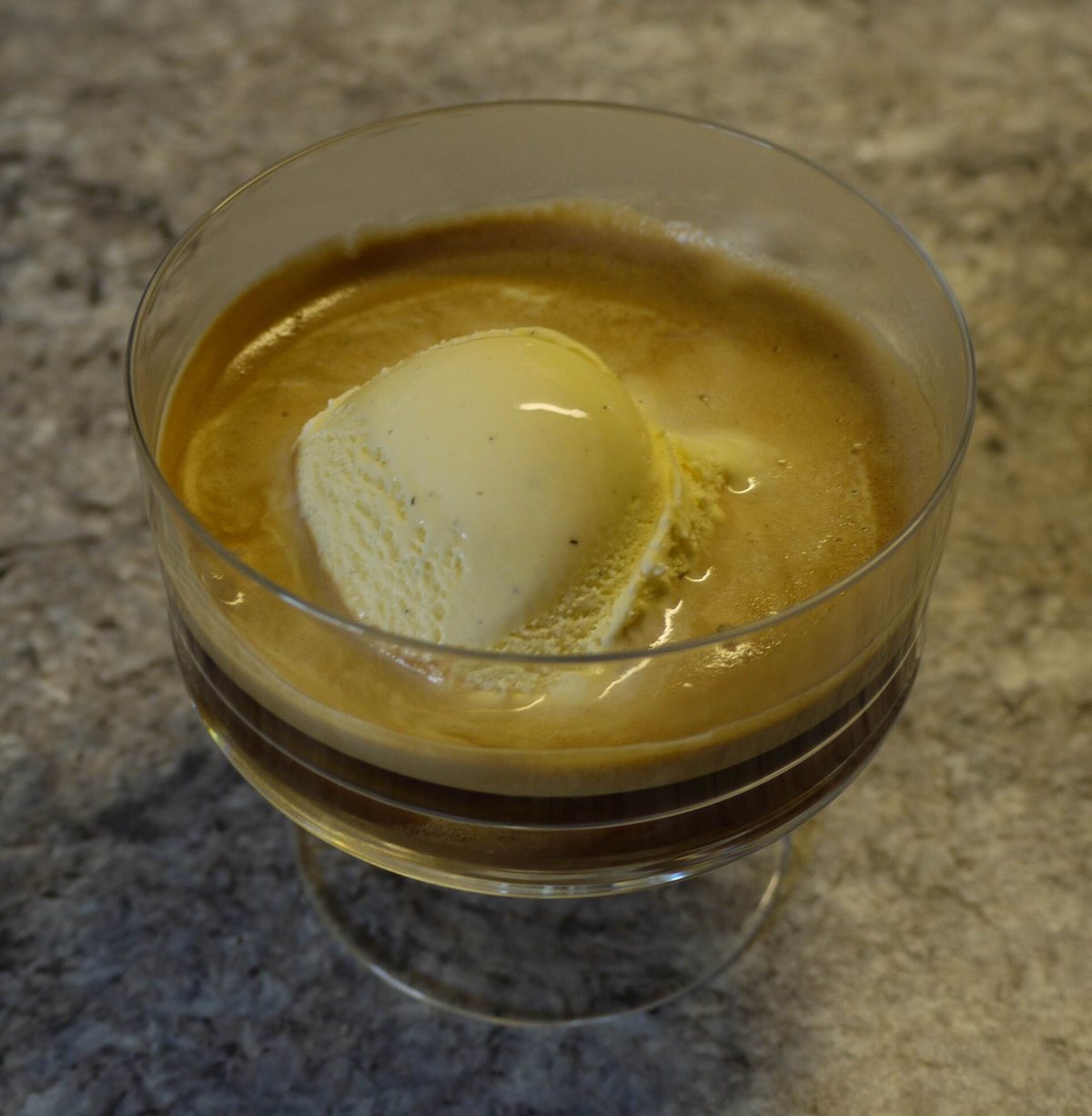
Spent grounds — the honest version
Everybody has a jar of used grounds and a vague sense they should be good for something, so let’s be straight about it.
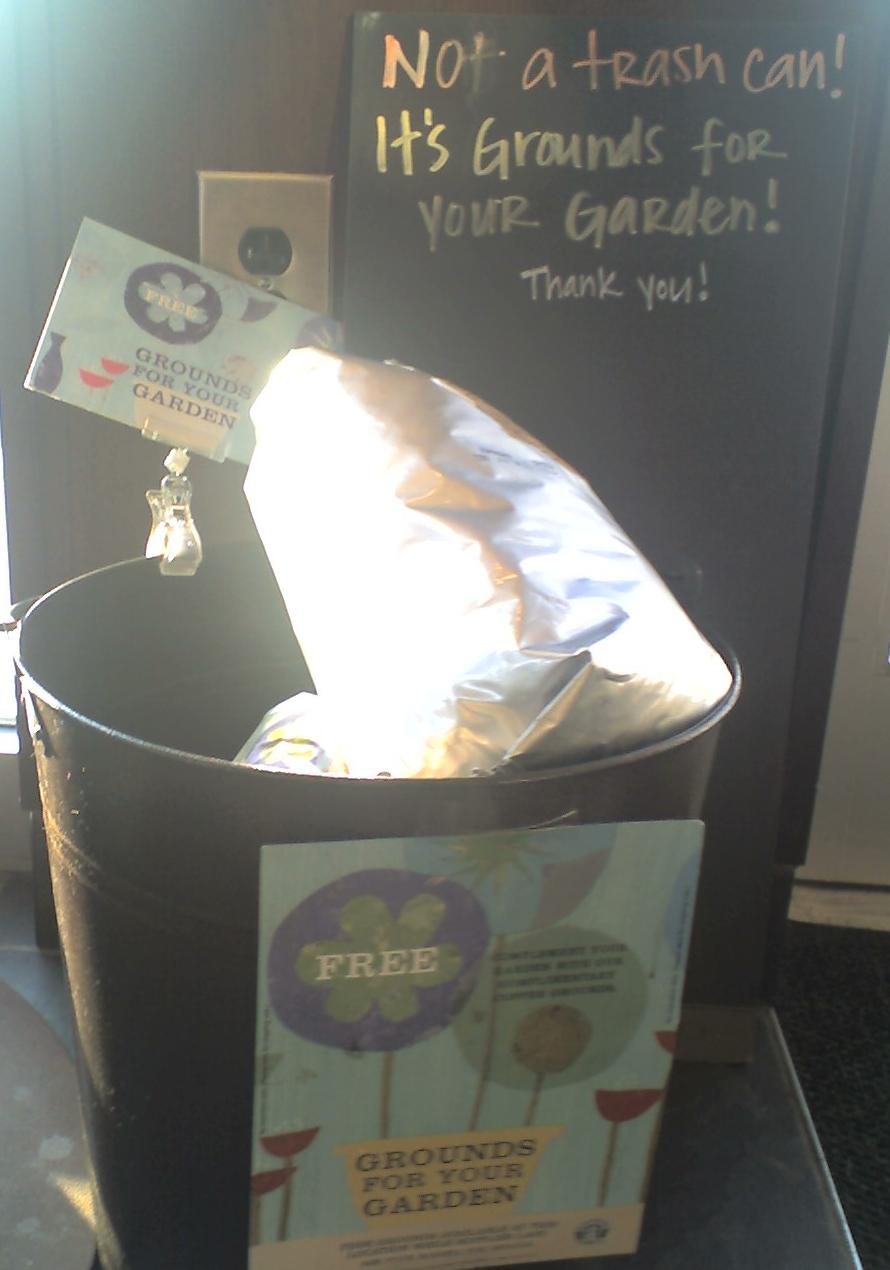
Compost: yes, genuinely. Spent grounds are a good nitrogen source and worms are famously enthusiastic about them. Toss them in the pile.
The acid myth: mostly wrong. The persistent claim is that grounds are strongly acidic and will therefore acidify soil for blueberries and azaleas. But brewing pulls most of the acid out — that acid ended up in your cup, which is the whole point of the last two pages. Used grounds come out close to neutral and won’t meaningfully acidify anything. If you want acid soil, use something formulated to do that.
A real caution about the garden. Don’t dump a thick layer of grounds directly on soil. They’re fine-particled and mat into a water-repellent crust that sheds water instead of letting it through — the opposite of what mulch should do. Mix them into a compost pile, or scatter thinly and work them in. Coffee also contains compounds that can suppress germination of some seeds — arguably a feature around established plants, a problem in a seed bed. And the slug-barrier and pest-repellent claims you’ll see everywhere are largely folklore.
Everything else — deodorizing a fridge, scrubbing a pan, dyeing paper — works about as well as you’d expect from damp, dark, gritty organic matter: fine and unremarkable. Just don’t pour them down the sink. They pack into a plug with grease and they’ll cost you a plumber.
Where it lands
The through-line on this whole page is that coffee never actually stopped being a roasted seed. Every job it does in savory food — the crust on a steak, the depth in a chili, the umami in a sauce, the backbone under chocolate — is the same job it does in the cup: roasted bitterness, mild acid, tannin, and a whole freight of Maillard compounds that taste like something delicious has been near fire. That’s the same thing I’m chasing when I run a smoker for fourteen hours or cook a BBQ sauce down until it darkens. Coffee is just another way to get there, and it’s sitting in your pot right now.
Start with the steak. A bag, some coffee, one night. It costs you nothing and it’ll make you a believer.
Comments (0)