Coffee · 10 of 64
Camp Coffee: Scotland's Coffee and Chicory Essence
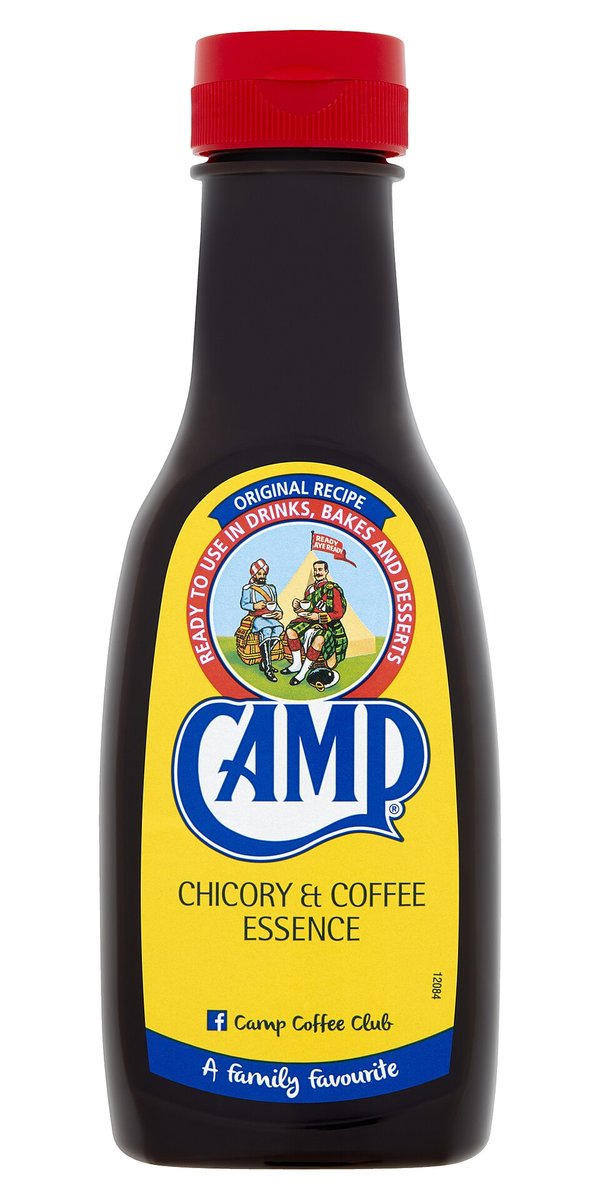
Camp is a sweet, nearly black syrup of chicory and coffee, sold in Britain and Ireland since the 1880s. Its label lists four ingredients: sugar, water, chicory extract (25%) and dried coffee extract (4%) (SuperValu). It is a quarter chicory extract, one part in twenty-five coffee extract, and the rest is sugar and water.
It was made as instant coffee before instant coffee existed: two or three teaspoons in a mug of hot milk or water, and the coffee was made. Instant coffee, first sold by Nestlé as Nescafé in 1938, took that job once wartime rationing ended, and Camp became a baking ingredient: the coffee in British coffee icing, coffee buttercream and, above all, the coffee and walnut cake of every village fête and tearoom. It is also known for its label, a Highland officer and a Sikh soldier outside a tent, which has been redrawn twice as attitudes to the empire it pictures changed.
Camp is Britain’s nearest relative of Rhode Island’s coffee syrup, but with chicory doing most of the work, it is closer to New Orleans chicory coffee.
The short version
| Question | Answer |
|---|---|
| What is it? | A coffee and chicory essence: sugar, water, chicory extract 25%, coffee extract 4%. Sweet, dark and syrupy. |
| Who made it? | R. Paterson & Sons of Glasgow, a vinegar, sauce and wine firm founded in 1849. Its works on Charlotte Street were called the “Camp Coffee Works”. |
| Since when? | The 1880s at least. The company dates it to 1885, other accounts to 1876 or 1874. A Wellcome Collection advertising fan of 1880–89 is the earliest dated object. |
| Was it made for soldiers? | Not provably. The story says the Gordon Highlanders asked for an easy coffee in the field; no record of the request has been published, and the brand’s own site says it was made for use at home. |
| What is on the label? | A Gordon Highlander, said to be Major-General Sir Hector MacDonald, and a Sikh soldier outside a tent flying “Ready, Aye, Ready”. The Sikh once served him on a tray; some time after 1955 the tray was removed, and since 2006 both men sit and drink. |
| How much caffeine? | Little. At 4% coffee extract, a teaspoon carries a small fraction of a cup of coffee; no figure is published. |
| How do I drink it? | 2–3 teaspoons in a mug of hot water or milk, or over ice. |
| How do I bake with it? | The maker’s coffee and walnut cake uses 2 tablespoons in the cake and 2 in the icing. Recipe. |
| Can I make it? | Something like it: brew roasted chicory and coffee strong, sweeten and reduce. Recipe. |
| Where do I buy it? | UK and Irish supermarkets, in 241 ml bottles (€3.29 in Ireland, October 2026); British-food shops and online in the US. |
What is in the bottle
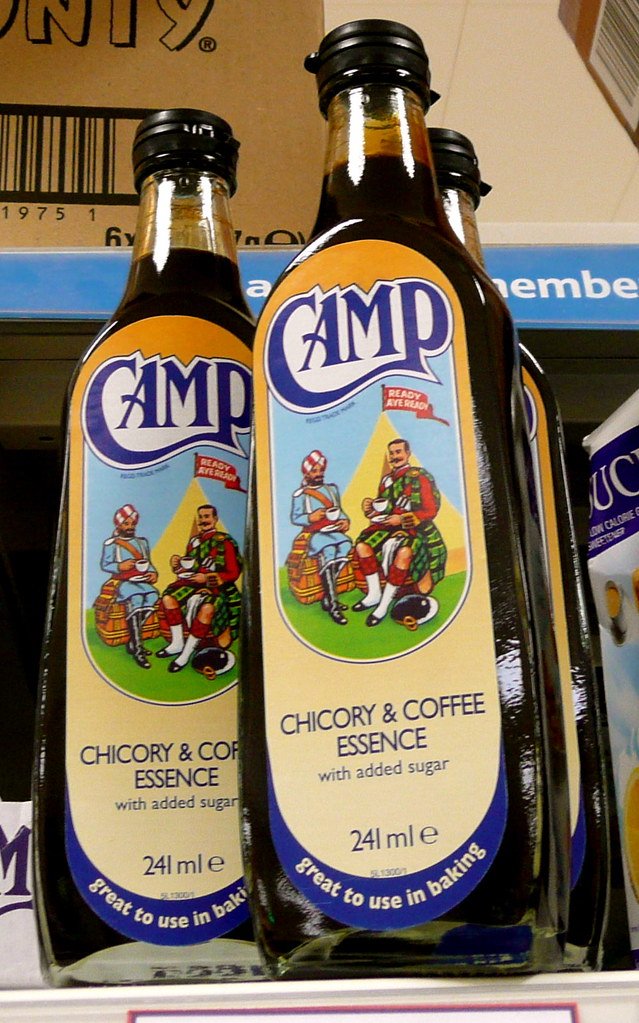
| Ingredients | Sugar, water, chicory extract (25%), dried coffee extract (4%) |
| Per 100 ml | 254 kcal; 61 g carbohydrate, of which 45 g sugars; 1.3 g protein; 0.5 g fat; 0.29 g salt |
| Per teaspoon (5 ml) | About 13 kcal and 2.3 g sugar |
| Bottle | 241 ml |
| Keeping | ”Refrigerate after opening”, use within 28 days |
| Diets | Certified vegan and gluten-free |
All from the current pack, as listed by SuperValu (Ireland), October 2026.
Older accounts give 26% chicory (Grace’s Guide; CooksInfo); the current label says 25%. When it changed is not on record.
Chicory is the roasted root of Cichorium intybus, which has no caffeine. Roasting turns its inulin, a fibre made of fructose chains, into caramel-tasting compounds, which is why chicory tastes like burnt sugar and wood, and why a syrup that is mostly chicory still reads as “coffee”. The Chicory and New Orleans Coffee page covers the root, its history and its chemistry.
How it compares:
| Camp | Rhode Island coffee syrup (Autocrat) | Coffee extract | Espresso powder | |
|---|---|---|---|---|
| Made from | Chicory (25%) and coffee extract (4%) | Coffee extract | Coffee | Coffee |
| Sweetened | Yes, sugar | Yes, corn syrups | No | No |
| Strength | Mild, roasty, more chicory than coffee | Mild, very sweet | Strong; used by the half-teaspoon | Strong; dissolve in a little hot water |
| Used for | Baking; milky coffee | Coffee milk; ice cream | Flavouring cakes and icings | Baking; boosting chocolate |
| Page | Here | Coffee Milk and Coffee Syrup | — | Cooking with Coffee |
History
R. Paterson & Sons, Glasgow
R. Paterson & Sons was founded in Glasgow in 1849 by Robert Paterson, a vinegar merchant. His son Campbell Paterson joined in 1868, and the firm made sauces, wines and “Golden Grain Malt Vinegar” as well as the essence that made it famous. In 1904 Campbell Paterson took control with his sons Robert and James Davidson Paterson; in 1909 it became a private company, R. Paterson and Sons Ltd, with its works at 77 Charlotte Street, Glasgow, known as the Camp Coffee Works, and a London office at 36 East Cheap (Grace’s Guide).
When Camp began is not settled. Grace’s Guide gives 1874; most accounts, including Wikipedia’s opening line, give 1876; and the brand’s own site says it was “established in 1885 by Campbell Paterson” (Camp). The earliest object with a date is a “Camp” coffee novelty fan from R. Paterson & Sons in the Wellcome Collection, catalogued as made “between 1880 and 1889” (Wellcome Collection). The safest statement is that Camp was on sale by the 1880s. The Victoria and Albert Museum holds a poster of about 1899 by the advertising agent S. H. Benson: “Ask your grocer for ‘Camp’ coffee, it is the best” (V&A). The name was registered as a trade mark in 1906 (Grace’s Guide).
The army story
The story printed nearly everywhere is that Camp was made at the request of the Gordon Highlanders, a Scottish regiment serving in India, who wanted a coffee that could be made quickly in the field. Grace’s Guide repeats it. No record of the request has been published, and the brand’s own history says something else: Camp was made as “an easy way to enjoy the rich flavour of coffee at home, without the need for expensive equipment” (Camp). The likeliest reading is that the label made the legend: a product called Camp, showing an officer outside a tent, told a story that was easier to remember than “a Glasgow vinegar firm made a cheap coffee for the kitchen”.
The label
The label shows a Highland officer in a kilt, said to be Major-General Sir Hector MacDonald, a Gordon Highlander who rose from the ranks, sitting outside a tent with a cup. Over the tent flies a flag reading “Ready, Aye, Ready”. The original art is credited to William Victor Wrigglesworth (Wikipedia). In the older versions, the bottle on the tray carried the same label, a picture inside a picture.
For most of its life the label showed the Sikh soldier standing, holding a tray with a bottle of Camp and a jug, serving the seated Scot. It changed in two steps:
| When | The Sikh soldier | Source |
|---|---|---|
| From the 1880s or 1890s | Standing, serving the officer from a tray | Early labels and posters |
| After 1955 | Still standing; the tray removed | The Wellcome Collection holds a sample label dated “8th Feb. 1955” (Wellcome); Grace’s Guide; Wikipedia |
| 2006 | Seated beside the officer, with his own cup and saucer | Grace’s Guide; Wikipedia |
The 2006 change answered years of criticism that the label was a picture of colonial servitude. “Ready, Aye, Ready” was also the motto of an Indian regiment, the 59th Scinde Rifles (Frontier Force) (Wikipedia). In Scots, aye here means “always”, not “yes”: always ready.
Owners since
- 1974: R. Paterson & Sons merges with the Jenks business to form Paterson Jenks plc (Grace’s Guide; Wikipedia).
- 1984: McCormick & Co. buys Paterson Jenks, and Camp becomes a McCormick UK brand alongside Schwartz, made in Paisley (Wikipedia; CooksInfo).
- Today: the pack information names RH Amar, a British food importer and brand company in High Wycombe (SuperValu), and RH Amar lists Camp among its brands (RH Amar). Whether it owns or distributes the brand, and when it took over, is not published.
Drinking it
The maker’s instructions: 2–3 teaspoons in a mug or glass with 100–200 ml of hot water, then milk; or over ice for an iced coffee (Camp). The pack says the same for warm or cold milk. Made with all milk, it is a sweet, mild, chicory-heavy milky coffee, much like a New Orleans café au lait with the sugar already in. Recipe: Camp Coffee (Hot Milk).
It is no substitute for brewed coffee. With 4% coffee extract it has a fraction of the caffeine and little coffee aroma; what it offers is the roasted bitterness of chicory and a lot of sugar. For a long time that was the point: it was cheap, it kept, and it needed no grinder, pot or filter.
Baking with it
Camp’s real modern job is in the cake tin. It gives a strong coffee colour and flavour without adding much liquid, and its sugar goes into the cake with it.
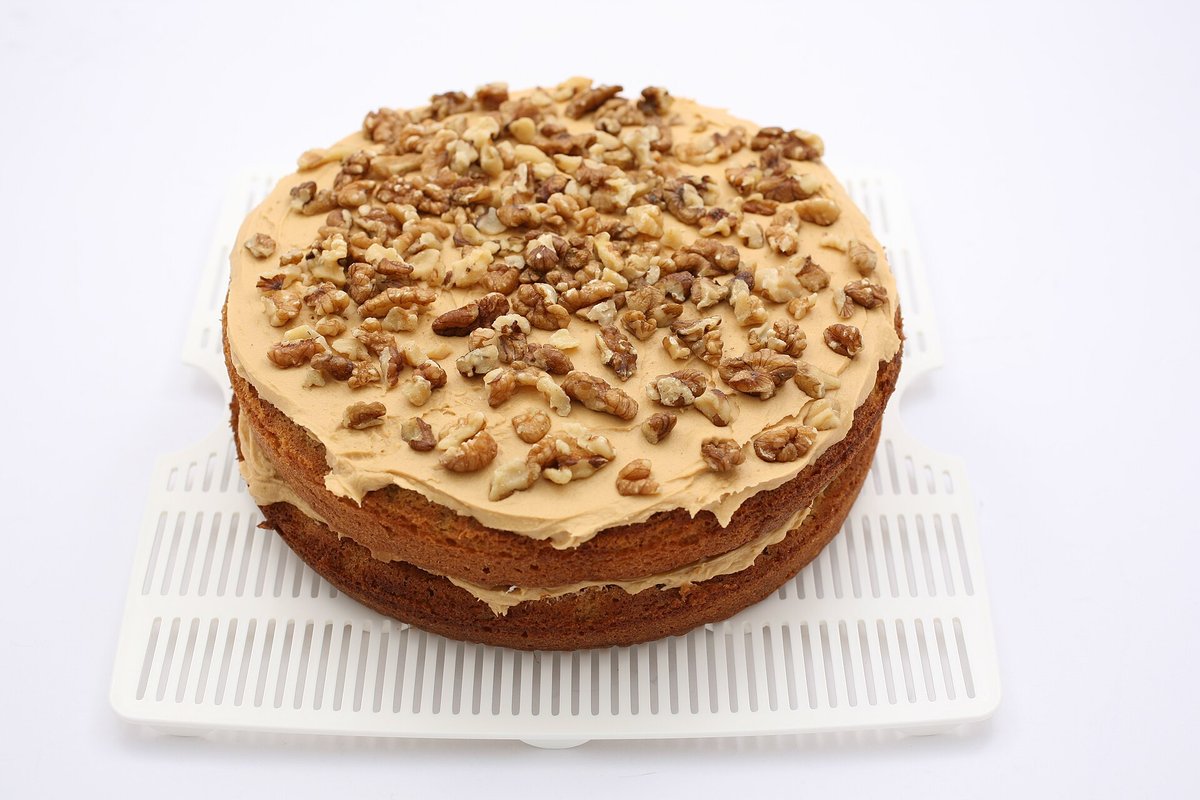
The maker’s coffee and walnut cake (“Back of the Bottle”), for two 20 cm (8 inch) tins, 180 °C (350 °F), 25–30 minutes, serves 8–10 (Camp):
| Cake | Icing |
|---|---|
| 225 g butter | 175 g butter |
| 225 g light muscovado sugar | 350 g icing sugar |
| 225 g self-raising flour | 2 tbsp Camp |
| 1 tsp baking powder | |
| 4 medium eggs | |
| 2 tbsp Camp | |
| 50 g walnuts |
Recipe: Coffee and Walnut Cake (Camp Coffee), with US measures.
Other uses, from the maker’s own recipe list of more than fifty (Camp recipes):
- Tiramisu: 3 tablespoons of Camp and 3 of Marsala made up to 200 ml with water, to soak 28 sponge fingers (Camp).
- Coffee buttercream and glacé icing: a tablespoon or two in place of the liquid.
- Biscotti, coffee and walnut Chelsea buns, mocha flapjacks.
- Savoury: coffee-marinated barbecued skirt steak, coffee-rubbed pork shoulder, black bean stew, the same jobs coffee does in rubs and sauces.
- Ice cubes and ice lollies.
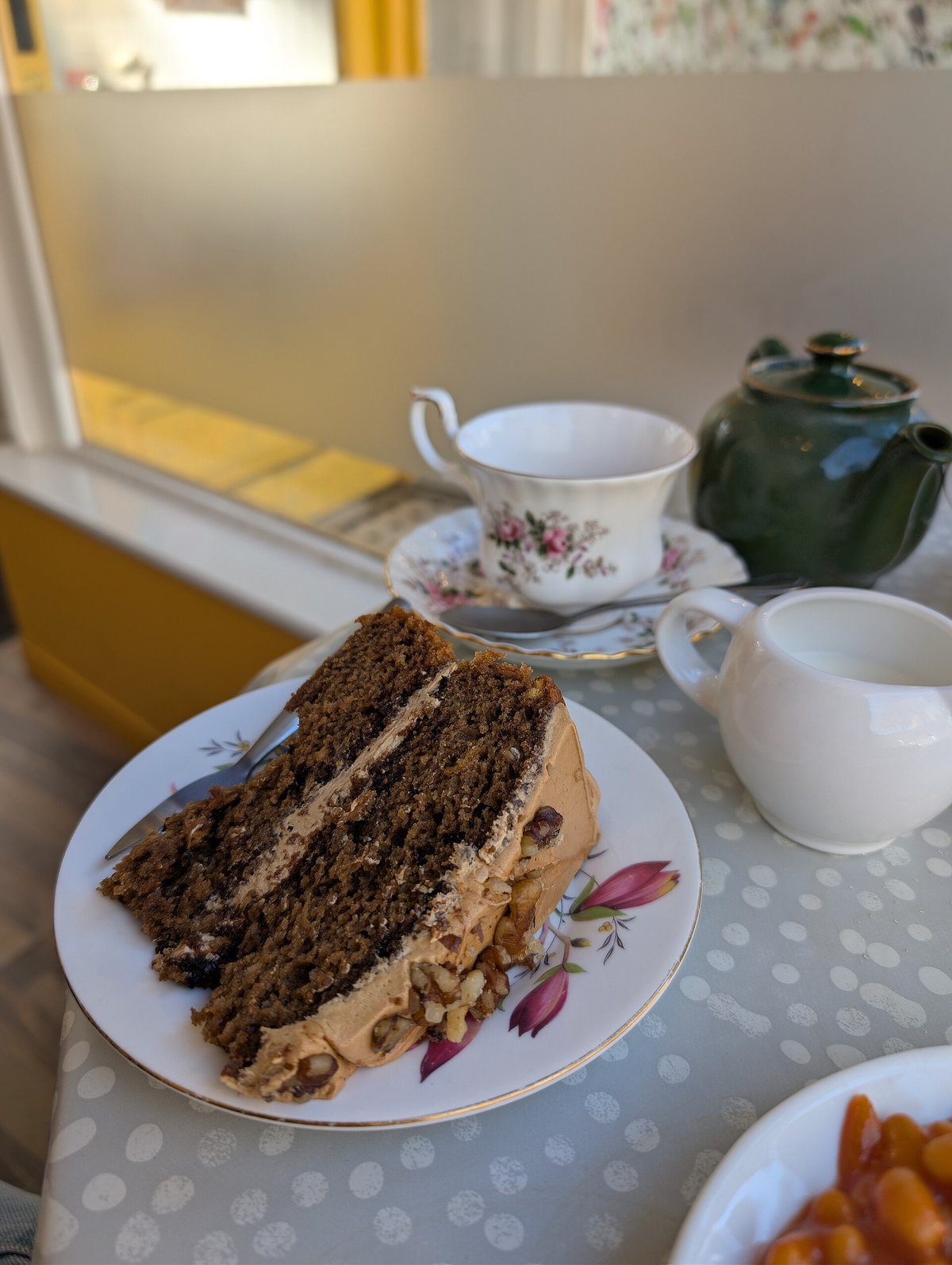
Substituting in American recipes. A British recipe that says “2 tbsp Camp” can use 2 tablespoons of Rhode Island coffee syrup (sweeter, no chicory), or 2 teaspoons of instant espresso dissolved in 1 tablespoon of hot water plus a teaspoon of sugar (stronger coffee, no chicory). Neither tastes of chicory; if that matters, the homemade essence does.
Making a coffee and chicory essence at home
No published home recipe for a Camp-style essence exists. The commercial method, as described for Lyons’ coffee and chicory extract, was to powder roasted coffee and chicory, force steam through them, concentrate the liquid under vacuum, and sweeten it (People’s Collection Wales). A kitchen can do a version of that with a pan:
- Brew strong. Simmer roasted chicory granules and ground dark-roast coffee, about 2 parts chicory to 1 of coffee by weight (a starting point for this recipe, not a published formula; Camp itself is about six parts chicory extract to one of coffee extract), in water for 5 minutes, then steep 10 minutes and strain through a paper filter.
- Sweeten and reduce. Add sugar and simmer until it coats a spoon.
- Keep it cold, in a clean jar, and use within about two weeks, like homemade coffee syrup. There is no tested canning process for it.
Recipe: Coffee and Chicory Essence (Homemade). Roasted chicory granules are sold in health-food shops and online; the chicory page covers roasting the root yourself.
Camp’s rivals: the coffee essences of Britain, Ireland and the empire
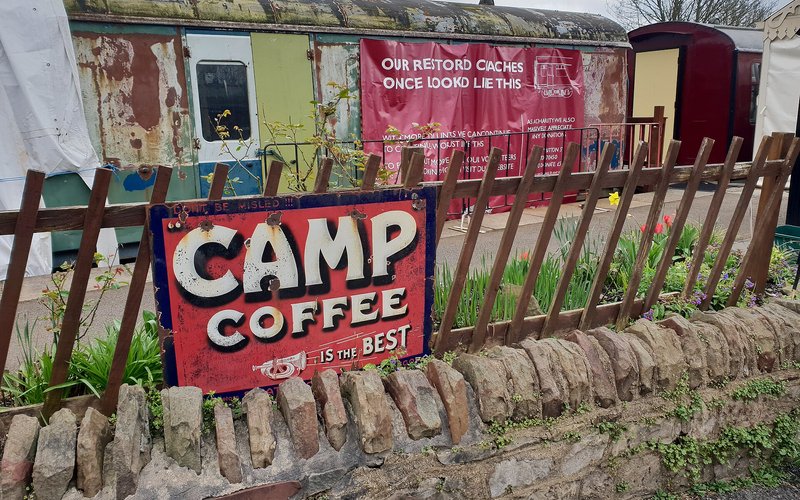
Camp was the survivor of a crowded shelf. Victorian and twentieth-century grocers sold dozens of coffee-and-chicory essences, which is what Camp’s enamel signs meant by “Don’t be misled!!!”
| Essence | Where | What is known |
|---|---|---|
| Bev | J. Lyons & Co., London | Lyons’ coffee and chicory extract, launched 1921, renamed Bev in 1930. In the Second World War, when chicory from Belgium and France was cut off, the Ministry of Food treated coffee essence as essential for morale, and Dr Edwin Hughes, a Lyons chemist, replaced the chicory with artichokes bought at Covent Garden and dried in Kent hop kilns (People’s Collection Wales). |
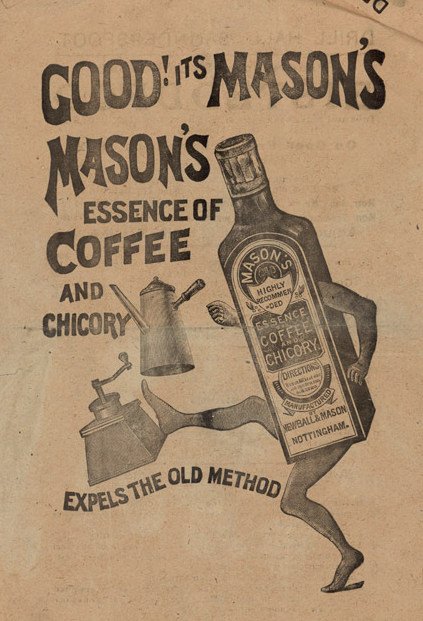
| Mason’s | Britain | Nineteenth-century essence of coffee and chicory (advert above). |
| Symington’s | Scotland | ”Symington and Co. Coffee and Chicory” bottles reached New Zealand (Auckland Museum, below). |
| Shieldhall | Scottish Co-operative Wholesale Society, Glasgow | The co-op’s own Coffee and Chicory Essence, advertised in the 1950s as “Instant coffee at its best!” (below). |
| Newsom’s | Cork, Ireland | An “Essence of Coffee and Chicory”; bottles survive in museum collections, but its dates are not confirmed. |
| Australian brands | Australia | Coffee and chicory essence is still sold in Australian baking aisles, and its bottles are common finds on Queensland archaeological sites (Queensland Museum). |
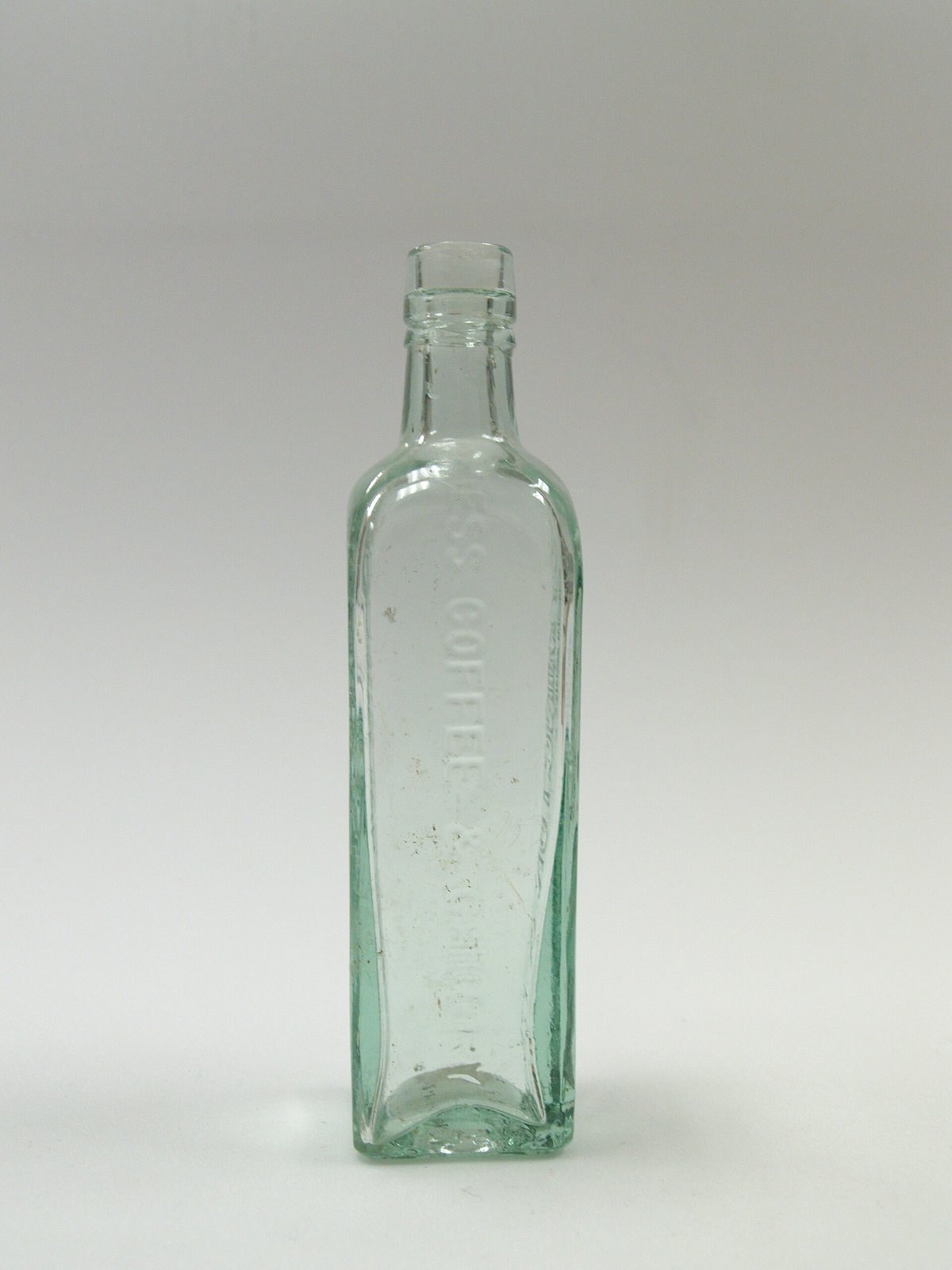
The bottles turn up wherever the empire went. Coffee-and-chicory essence bottles are common finds on nineteenth- and twentieth-century archaeological sites in Queensland, and the essence is still sold in Australian baking aisles (Queensland Museum). New Zealand museums hold Camp bottles too (Auckland Museum; DigitalNZ).
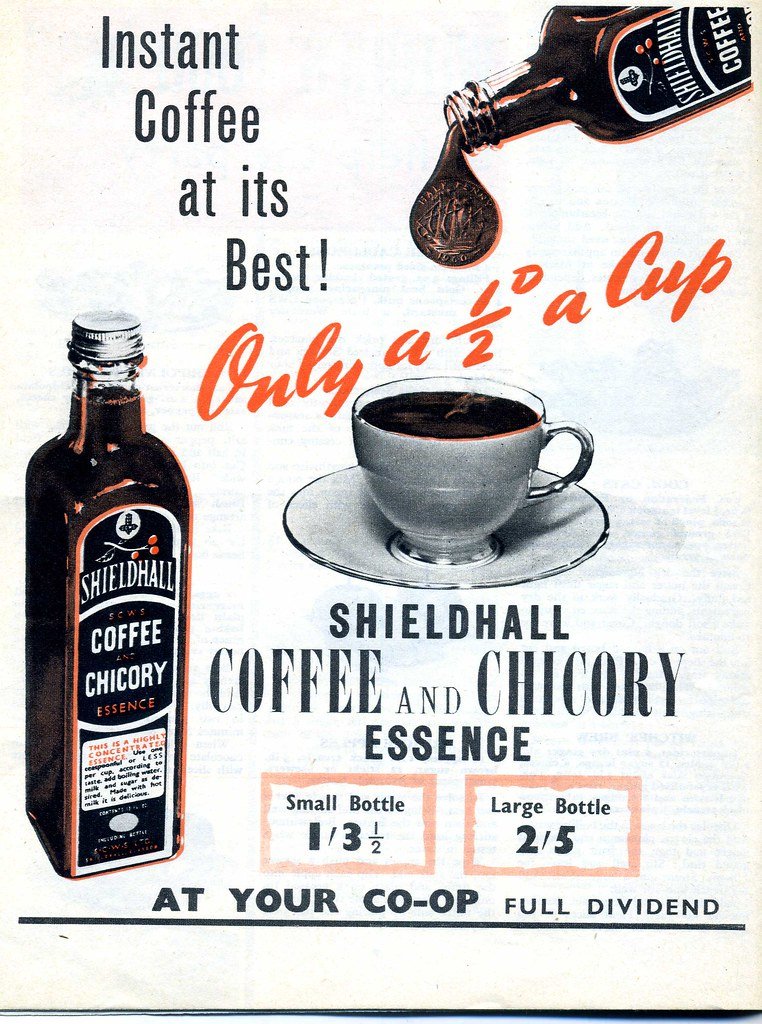
That advert shows why the essences declined. “Instant coffee” was their claim, and when instant coffee (Nescafé, 1938) became plentiful after rationing ended, it did the same job with more coffee in it. Camp survived by changing jobs, from the breakfast table to the baking cupboard. It had one late revival as a drink: in late 1975, when frost in Brazil doubled coffee prices, Camp briefly became a popular alternative to instant coffee in the UK (Wikipedia).
Where to buy it (October 2026)
| Where | Price |
|---|---|
| Ireland, SuperValu | €3.29 for 241 ml (€13.65 a litre) (SuperValu) |
| UK supermarkets | Widely stocked, in the baking or coffee aisle |
| United States | British-food importers and online shops, at an import mark-up |
What is not known
- When Camp was first sold: 1874, 1876 and 1885 are all claimed; the 1880s are certain.
- Whether the Gordon Highlanders asked for it. No record has been published.
- Who owns the brand today, and when it passed from McCormick.
- How much caffeine is in a teaspoon. Not published.
- When the chicory share changed from 26% to 25%.
Sources
- Camp, About us, Home, Recipes, Coffee and walnut cake, Tiramisu.
- SuperValu, Camp Chicory & Coffee Essence 241 ml.
- Grace’s Guide, R. Paterson and Sons and Camp Coffee.
- Wellcome Collection, “Camp” coffee novelty fan, 1880–89 and Camp sample label, 1955.
- Victoria and Albert Museum, Camp Coffee poster, c. 1899.
- Wikipedia, Camp Coffee.
- CooksInfo, Camp Coffee.
- RH Amar, Brands.
- People’s Collection Wales, Lyons’ coffee essence.
- Queensland Museum, Have you tried coffee and chicory essence? (2021).
- Auckland War Memorial Museum, Camp Coffee and Chicory bottle; DigitalNZ, Camp Coffee.
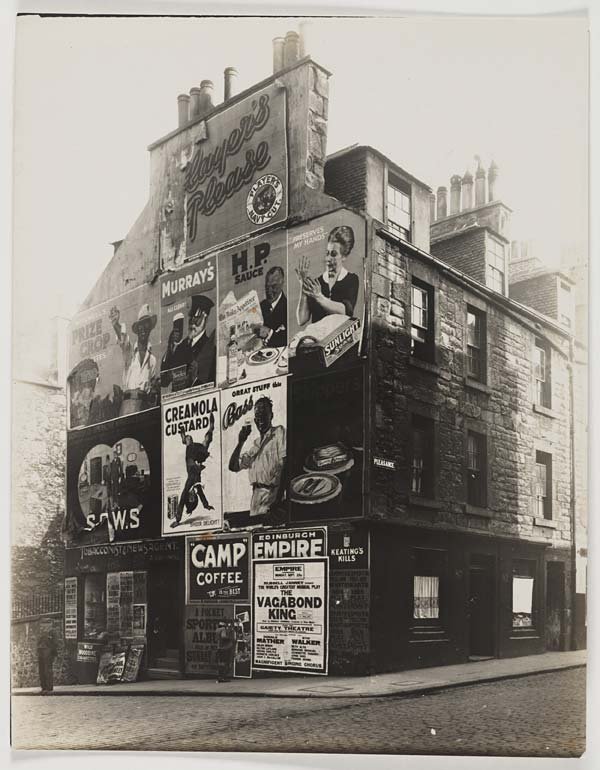
- National Library of Scotland, photographs of Edinburgh advertising hoardings, 1929 (via Wikimedia Commons).
Comments (0)