Coffee · 45 of 64
Postum and Coffee Substitutes: Grain, Chicory, Dandelion and Acorn
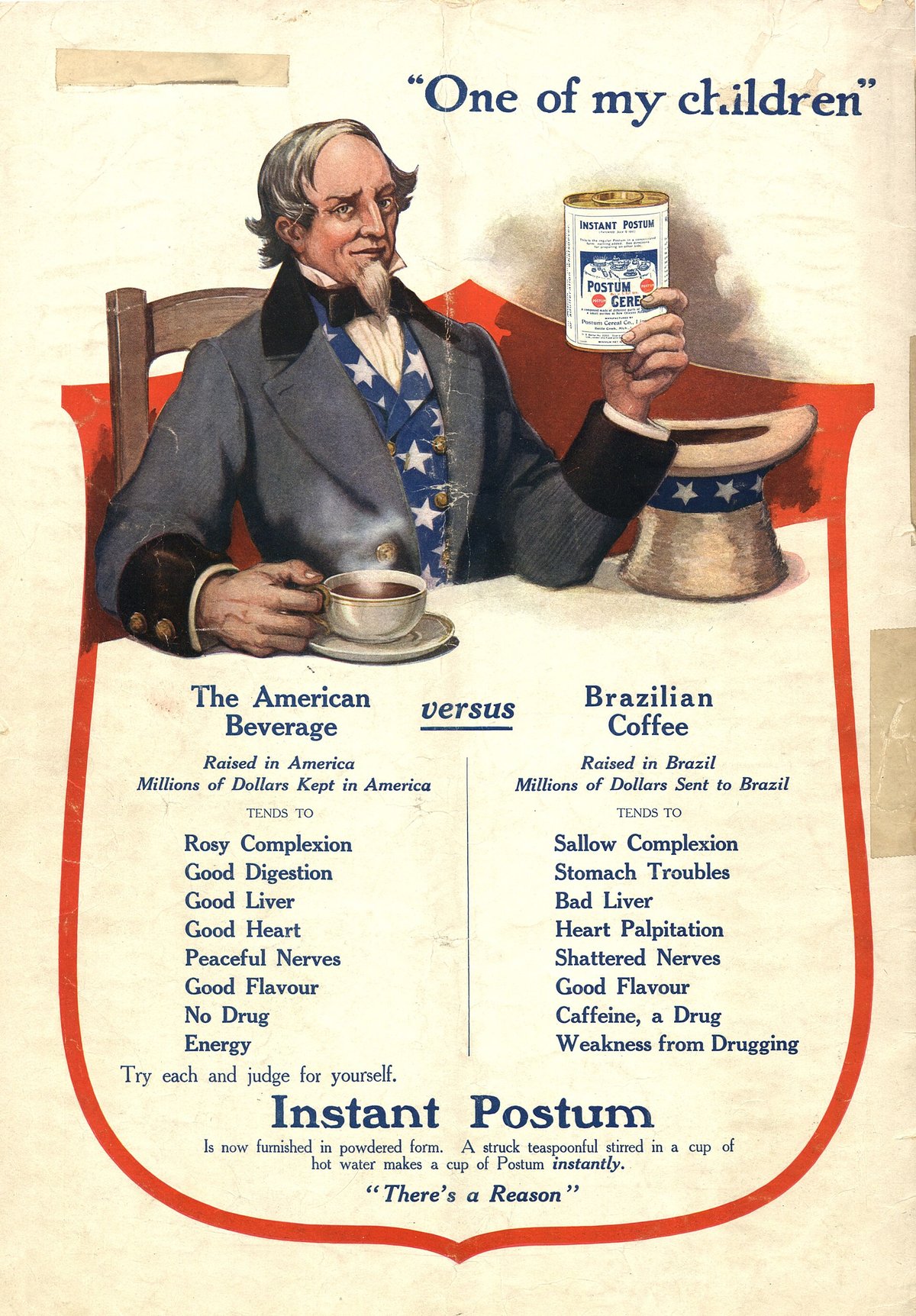
Postum is a roasted wheat-and-molasses powder that makes a dark, coffee-coloured, caffeine-free drink. C. W. Post first made it in 1895 in a barn in Battle Creek, Michigan, and sold it with some of the most aggressive advertising of its era. His adverts said coffee caused bad nerves, bad hearts and bad children, and that Postum cured them: “There’s a Reason”. Postum built the company that became General Foods. Kraft dropped it in 2007, and a couple from North Carolina brought it back in 2012.
Postum belongs to a large family of coffee substitutes: drinks brewed from roasted grain, roots, seeds and nuts to look and taste something like coffee. Some were medicine, some were economy and some were war. Germany drank malt coffee by the ton and called it Muckefuck. The Confederacy drank okra seed when coffee reached $196 a pound. Italy still serves roasted barley from the espresso machine as caffè d’orzo, and a foraged dandelion root makes a good cup in a Michigan kitchen.
Chicory, the most important substitute of all, has its own page: Chicory and New Orleans Coffee.
The short version
| Question | Answer |
|---|---|
| What is Postum? | A roasted grain drink: wheat, wheat bran, molasses and wheat starch. Caffeine-free. 1–2 teaspoons in a cup of boiling water, with milk and sugar to taste. |
| Who made it? | C. W. Post, in Battle Creek, Michigan, from 1895. His Postum Cereal Company became General Foods in 1929. |
| Is it still made? | Yes. Kraft discontinued it in 2007; June and Dayle Rust’s Eliza’s Quest Foods revived it in 2012. $16.99 for an 8 oz jar from postum.com (October 2026), in Original, Natural Coffee and Cocoa Blend. |
| Did coffee really cause “coffee heart”? | No. Post’s adverts were salesmanship. For what the evidence says about coffee, see Caffeine and Health. |
| What else is in the family? | Chicory; German malt coffee (Kathreiner, Caro); Italian caffè d’orzo (barley); Polish Inka; Pero; Teeccino and Dandy Blend; dandelion root; acorn; and the Confederacy’s okra seed and sweet potato. |
| Do they taste like coffee? | Like roast, not like coffee: toasty, malty, slightly bitter, with none of coffee’s acidity or aroma. Best with milk. |
| Caffeine? | None, unless a blend adds coffee. |
| Gluten? | Grain substitutes made from wheat, barley or rye contain gluten unless certified gluten-free. Postum’s label says “Contains: wheat”. |
| Acrylamide? | Roasted grain and chicory form more of it than coffee. The EU’s benchmark is 500 µg/kg for cereal substitutes and 4,000 for chicory, against 400 for roast coffee. |
| Can I make one? | Yes: roasted dandelion root, or ground roasted barley in a moka pot. Recipes below. |
Postum
C. W. Post and Battle Creek
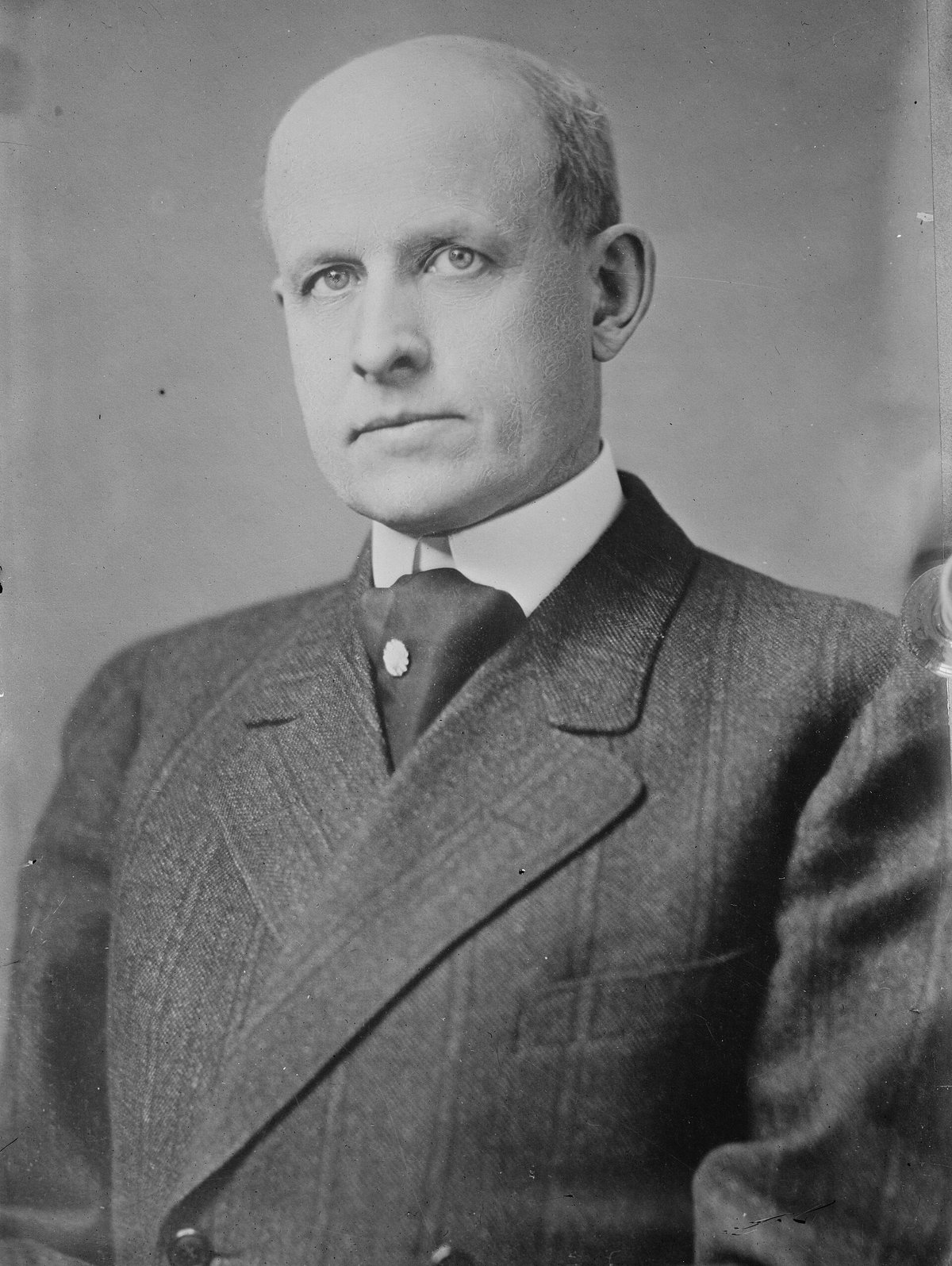
Charles William Post came to Battle Creek in the early 1890s as a patient. He had suffered breakdowns in 1885 and 1891 and went to the Battle Creek Sanitarium run by Dr. John Harvey Kellogg, the Seventh-day Adventist health institution where patients ate a strict vegetarian diet and drank cereal “coffee” instead of the real thing (Wikipedia). Post left, set up on his own, and has been accused of taking several of Kellogg’s ideas with him.
The company says: “In 1895, the first batch of Postum was made by C.W. Post in a small white barn in Battle Creek, Michigan” (Postum). Grape-Nuts followed in 1897, and Elijah’s Manna, renamed Post Toasties in 1908 (Willard Library, Battle Creek). Battle Creek became the cereal capital of the world, with the Kellogg and Post plants in the same city, and it still is. The state historical marker at the factory site gives 1894.
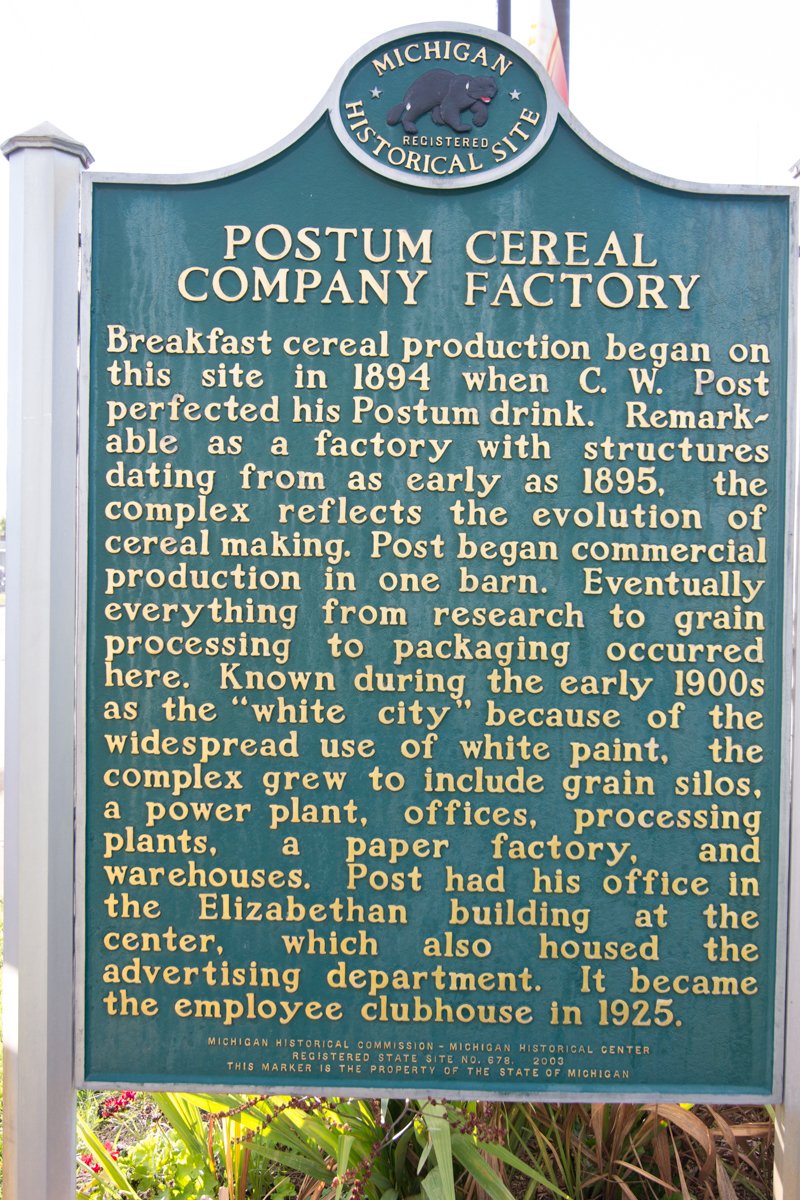
Battle Creek is about an hour’s drive from Lansing. The marker stands beside the former factory site. Post’s company is now Post Consumer Brands, and cereal is still made in the city.
”There’s a Reason”
Post was an advertising man before he was a food man, and Postum was sold on fear of coffee. His ads, under the slogan “There’s a Reason”, blamed coffee for headaches, indigestion, “nerves”, heart trouble, sleeplessness and bad complexions, and offered Postum as the cure. A Battle Creek postcard of the period says the company spent $2,000,000 a year on advertising, “chiefly done by ‘There’s a Reason Co.’” (Willard Library).
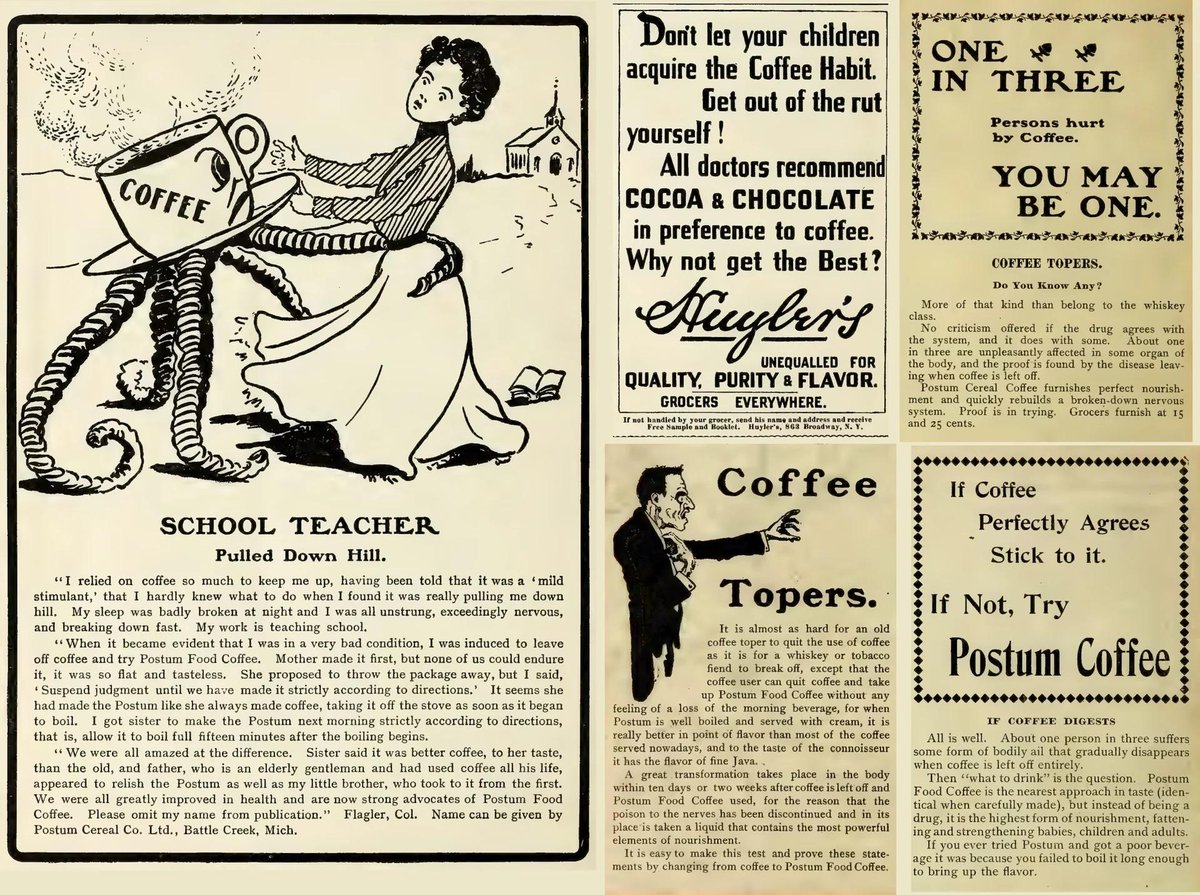
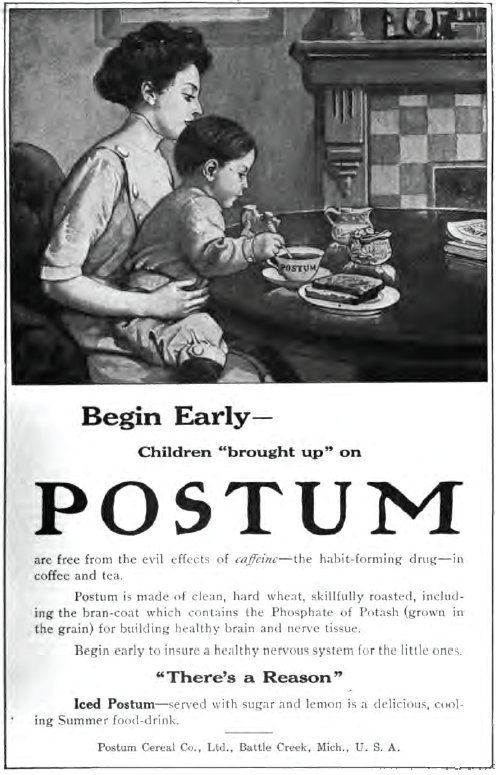
The adverts aimed at parents most of all. The 1910 one below tells mothers to “Begin early” with children “brought up” on Postum rather than coffee; the 1913 one at the top of the page lists “Brazilian Coffee” beside nervousness and bad complexions, and “The American Beverage” beside good digestion and energy.
Mr. Coffee Nerves. In the 1930s Postum ran comic-strip advertisements starring a villain called Mr. Coffee Nerves, a “vaudevillian apparition” given to “breaking up families, destroying careers”, until Postum drove him off. Ohio State University’s Billy Ireland Cartoon Library says they were drawn about 1936–38 by Milton Caniff and Noel Sickles, two of the great newspaper cartoonists, under the joint pen-name “Paul Arthur”, for three times what the syndicates paid them; a 1950s revival gave Mr. Coffee Nerves a jet-pack (Ohio State).
Were the claims true? No. Coffee does not cause “coffee heart” or ruin children’s complexions, and moderate coffee drinking is associated with good health outcomes in large modern studies; the Caffeine and Health page has the evidence. Post’s adverts belong to the same patent-medicine era as cure-all tonics, before the 1906 Pure Food and Drug Act and long before advertising claims were policed.
Instant Postum, General Foods, and the Mormons
Instant Postum came in 1911. Wikipedia, citing the Oxford English Dictionary, says a 1912 Instant Postum advertisement is the earliest known use of “instant” for a processed food (Wikipedia).
Post died in 1914, and his daughter Marjorie Merriweather Post inherited the company. Under her it bought Jell-O (1925), Maxwell House coffee (1928) and Birdseye (1929), and became General Foods in 1929 (Postum; Wikipedia). A company built on selling people off coffee ended up owning Maxwell House.
Postum found steady customers in two churches that avoid coffee: the Seventh-day Adventists, whose health teaching had shaped the Battle Creek Sanitarium, and the Latter-day Saints, whose 1833 Word of Wisdom forbids “hot drinks”, read as coffee and tea. In 2018 the revived company said 15–20% of its sales were in Utah (Food Dive). Sales also rose when coffee was rationed in the Second World War.
2007: gone, and back
Kraft, by then the owner of General Foods’ brands, discontinued Postum in 2007 for low demand. In 2012 June and Dayle Rust of Charlotte, North Carolina, Latter-day Saints who had missed it, bought the rights through their company Eliza’s Quest Foods and began making it again, at first in their garage (Atlanta Journal-Constitution). Food Dive says they bought the manufacturing rights from Indulgent Foods, which had acquired the recipe from Kraft; other accounts say Kraft sold it to them directly. By 2018 it had sold about $4 million and was back in Kroger, Walmart and Albertsons.
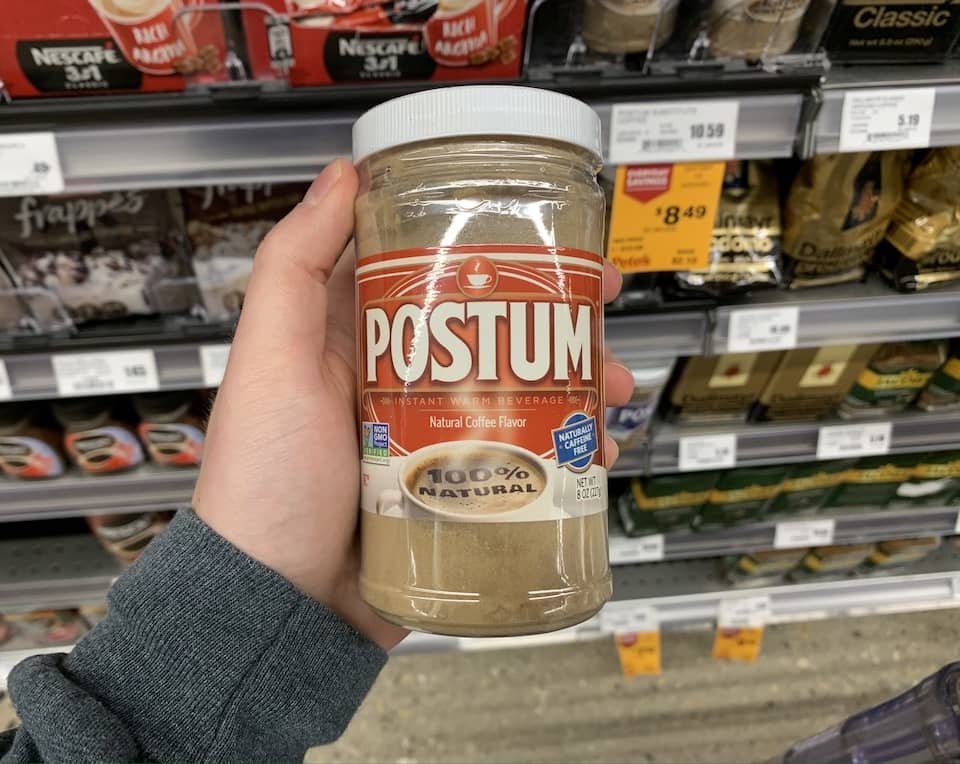
Postum today (postum.com, October 2026):
| Ingredients (Original) | Wheat, wheat bran, molasses, wheat starch. “Contains: wheat.” |
| Caffeine | None |
| Directions | ”Use 1-2 tsp. Postum. Add boiling water; stir. Add milk; sweeten to taste.” |
| Flavours | Original; Natural Coffee; Cocoa Blend; a Matcha jar |
| Price | $16.99 for an 8 oz jar; larger pouches $55 |
| Labels | Non-GMO Project Verified, vegan, kosher |
(Postum Original; all products)
The revived recipe swapped maltodextrin for wheat starch to win its non-GMO certification (Food Dive). The product pages now name the maker as “Postum Beverage”; whether Eliza’s Quest Foods still owns it is not stated.
The coffee-substitute family
Germany: malt coffee and Muckefuck
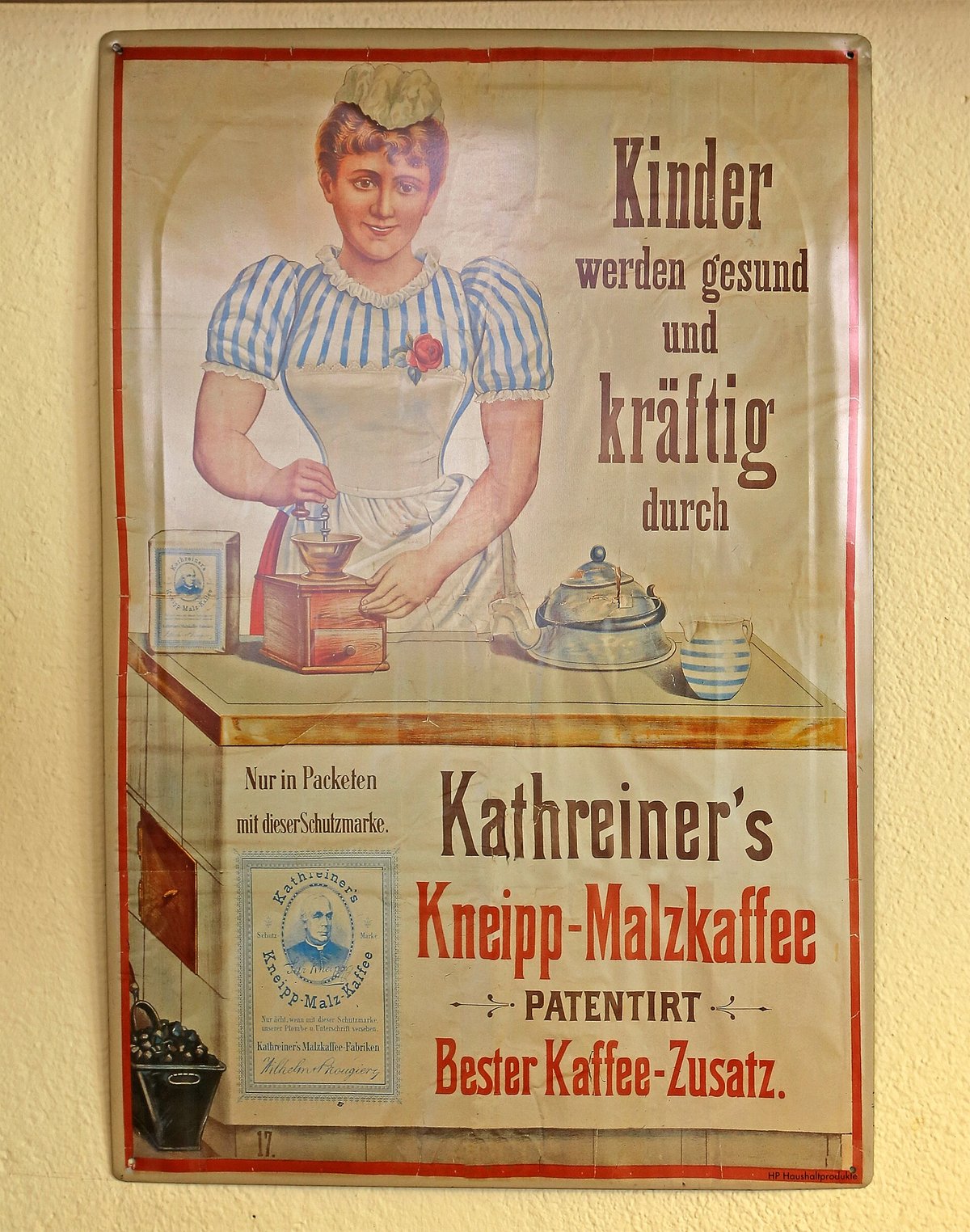
Malt coffee (Malzkaffee) is barley that is sprouted, dried and roasted. Germany made it an industry. Kathreiner of Munich, a firm dating from 1829, developed a malt-coffee process from 1889 (patented 8 March 1892), and the priest-healer Sebastian Kneipp lent his name to it in 1891: “Kathreiner’s Kneipp-Malzkaffee” (German Wikipedia). The firm went bankrupt in 1997; Nestlé makes the malt coffee now. Germans drank substitutes in two world wars and in the coffee-short East Germany afterwards.
Germans call substitute coffee Muckefuck. The popular explanation is French soldiers’ mocca faux, “false mocha”. The Wahrig etymological dictionary rejects that as even less likely than its own derivation, from Rhineland dialect Mucken, “brown wood-mould”, and fuck, “rotten” (wissen.de): rotten-wood coffee.
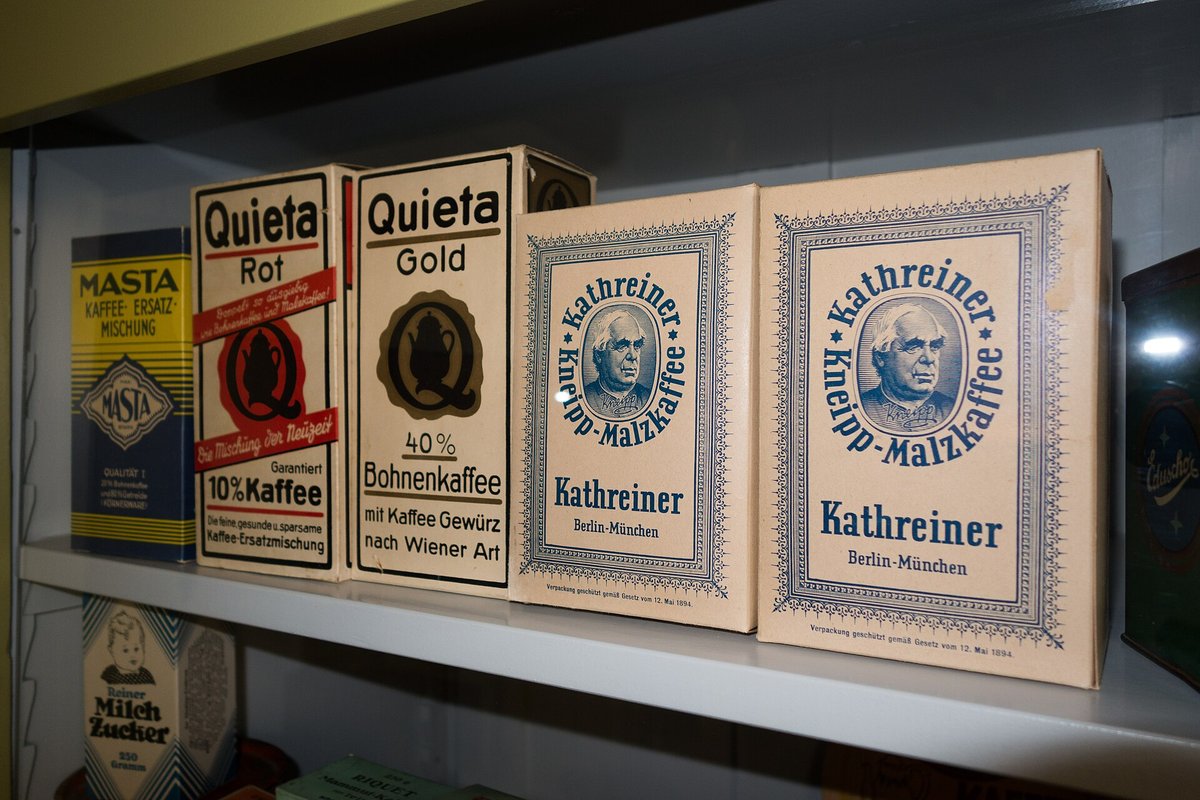
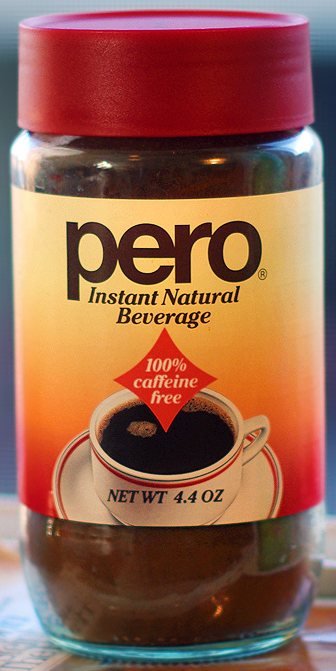
Caro is Nestlé’s German instant: roasted barley, malted barley, chicory and rye, introduced in West Germany in 1954 from a chicory business founded in 1828. In the United States the same drink is sold as Pero, and in Spain as Eko (Wikipedia).
Poland: Inka
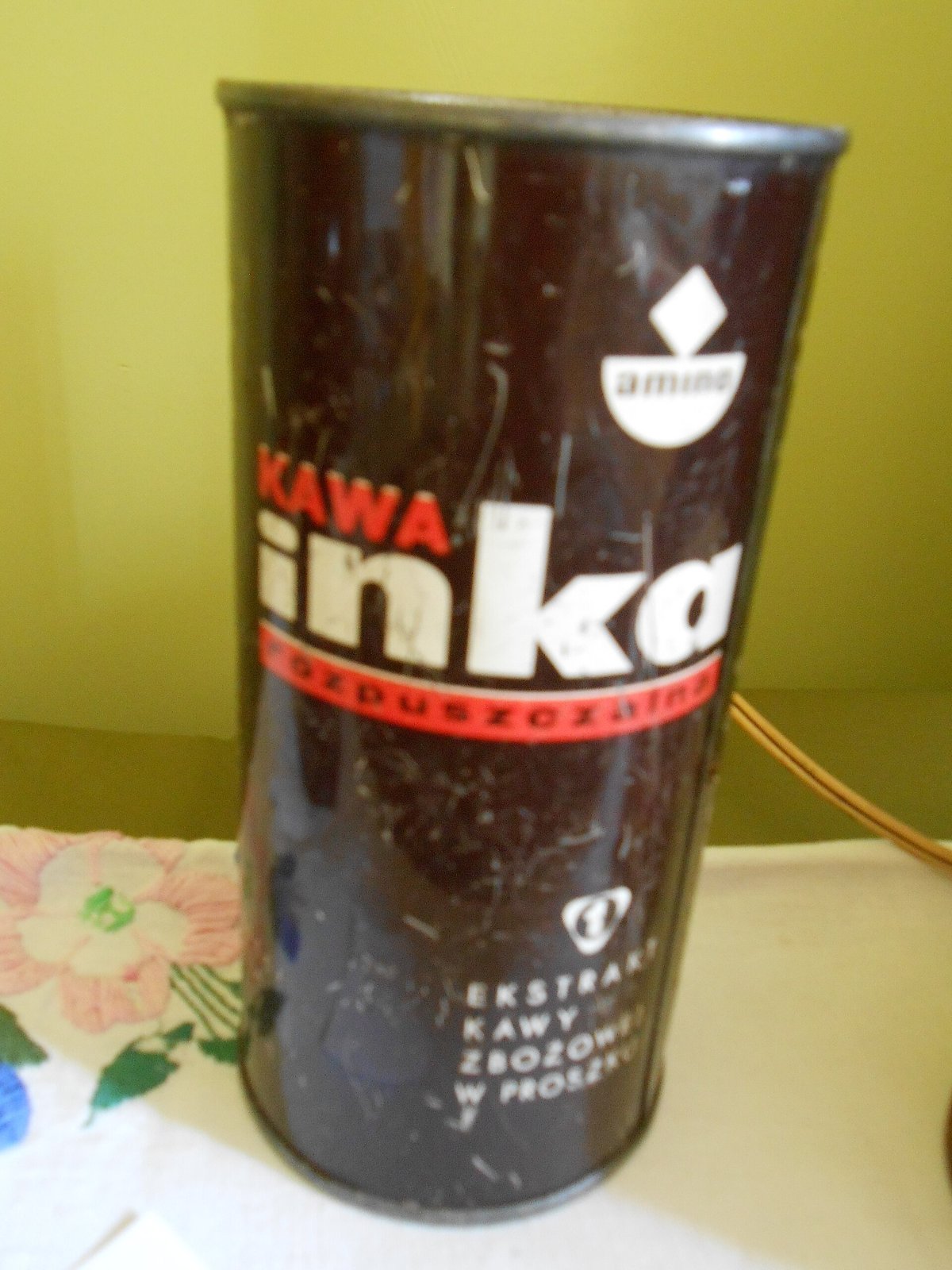
Inka has been made in Poland since 1971: barley, rye, chicory and sugar beet, roasted. It also makes a line certified gluten-free by the Polish Coeliac Society, with the gluten removed from the extract (Inka). Polish shops sell it as kawa zbożowa, “grain coffee”.
Italy: caffè d’orzo
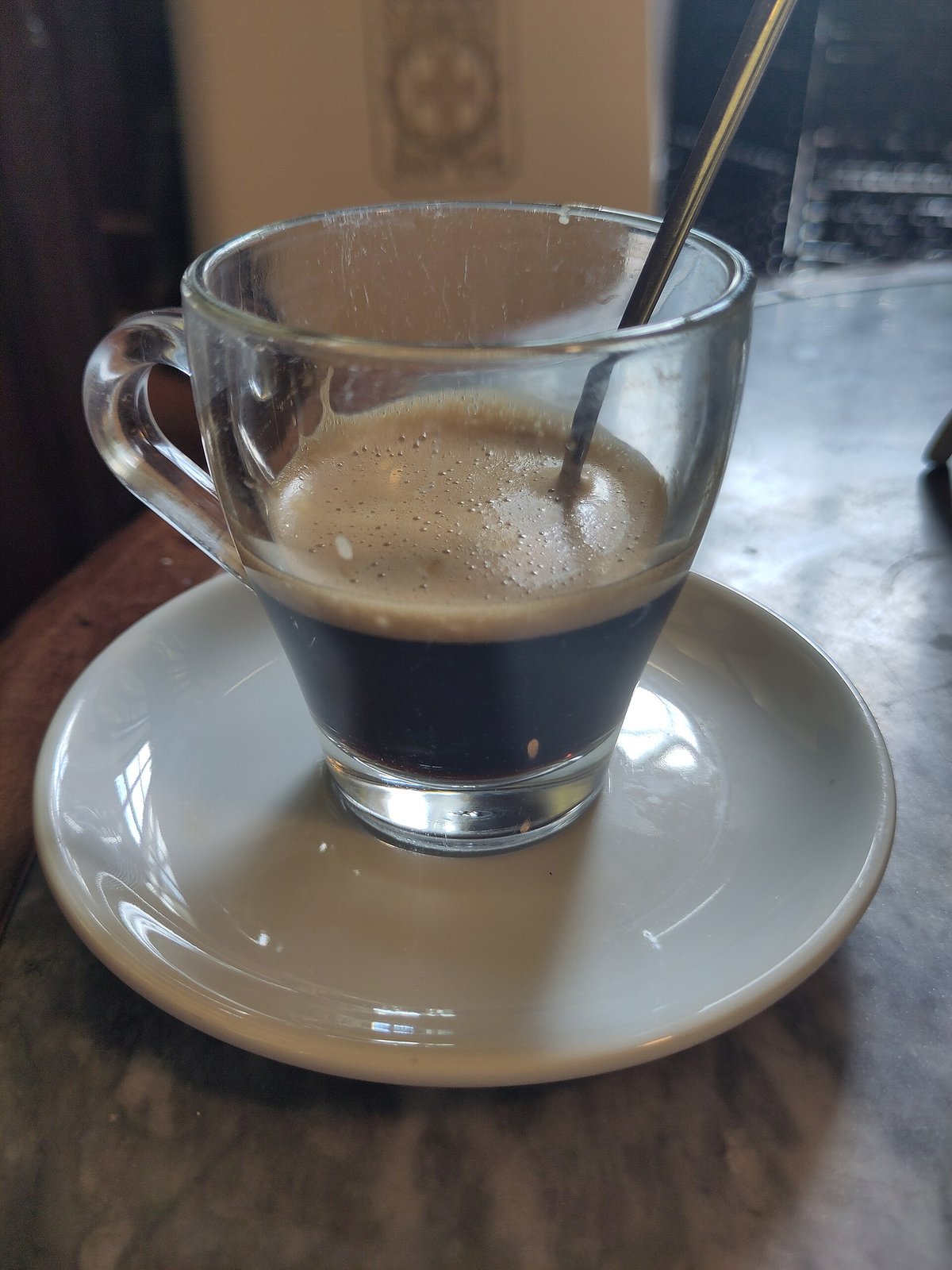
Caffè d’orzo is roasted barley, drunk in Italy since the first half of the nineteenth century and especially popular in the 1930s, the years of Fascist Italy’s drive for self-sufficiency (autarchia), when imports were cut (Beverfood). It never went away. Italian bars serve it from capsules on the espresso machine or made in the cup, as a caffeine-free coffee, and Italians drank about 9 million kg of it in 2017, mostly as instant powder. Nestlé’s Orzoro has been sold “since 1940”; Crastan and Orzobimbo are the other big brands.
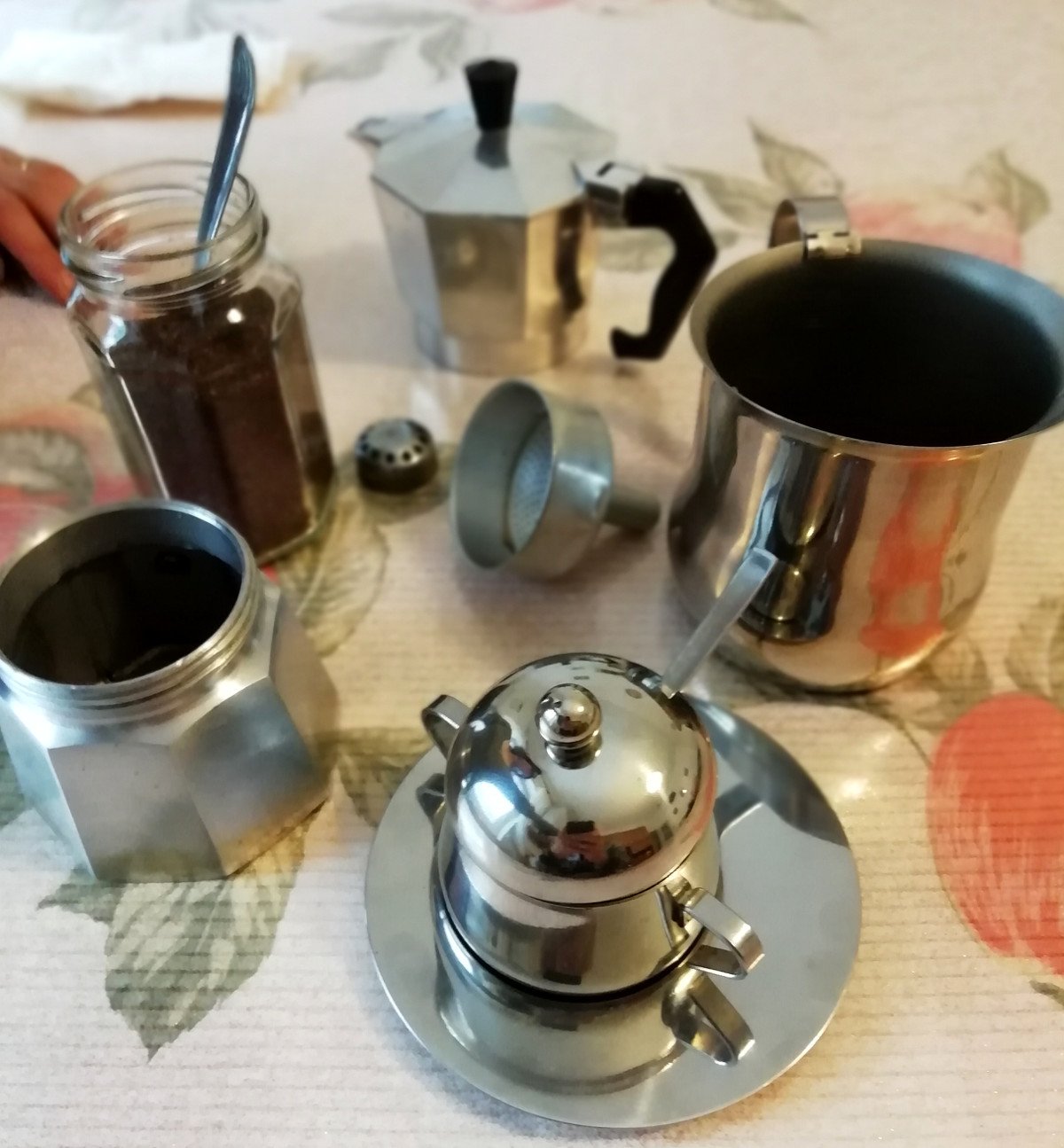
Recipe: Caffè d’Orzo (Barley Coffee).
America: Teeccino, Dandy Blend and the herbal blends
Teeccino was founded in 1993 by Caroline MacDougall, and blends roasted chicory, carob, dandelion and barley with fruit and nuts; it makes a barley-free dandelion line for the gluten-free (Teeccino). Dandy Blend, from Ohio, is an instant extract of roasted barley, rye, dandelion root and chicory root (Dandy Blend). Both are brewed or dissolved like coffee and sold in health-food shops.
Dandelion root
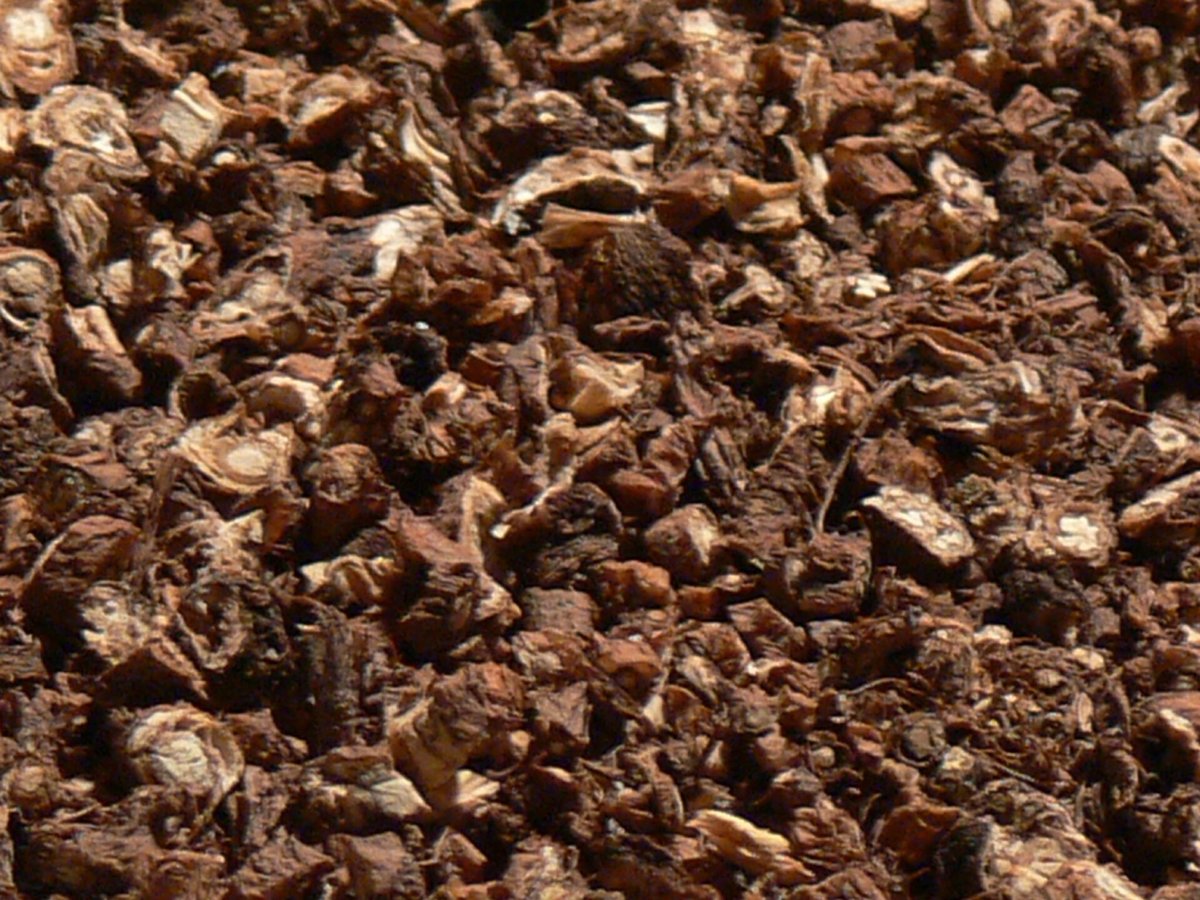
Dandelion root coffee has been made in North America since at least the 1830s (Wikipedia). It is the only substitute on this page that grows in every Michigan lawn. The root is a cousin of chicory (both are in the daisy family), and roasted it tastes much the same: dark, bittersweet and earthy. Dig the roots in autumn, when they are fullest (spring roots are the poorest); scrub, chop, dry, roast until dark brown, grind and simmer. Dig only where no weedkiller or lawn chemicals have been used, away from roadsides, and not on Michigan state land. The full story is on Dandelion Root Coffee.
Acorn
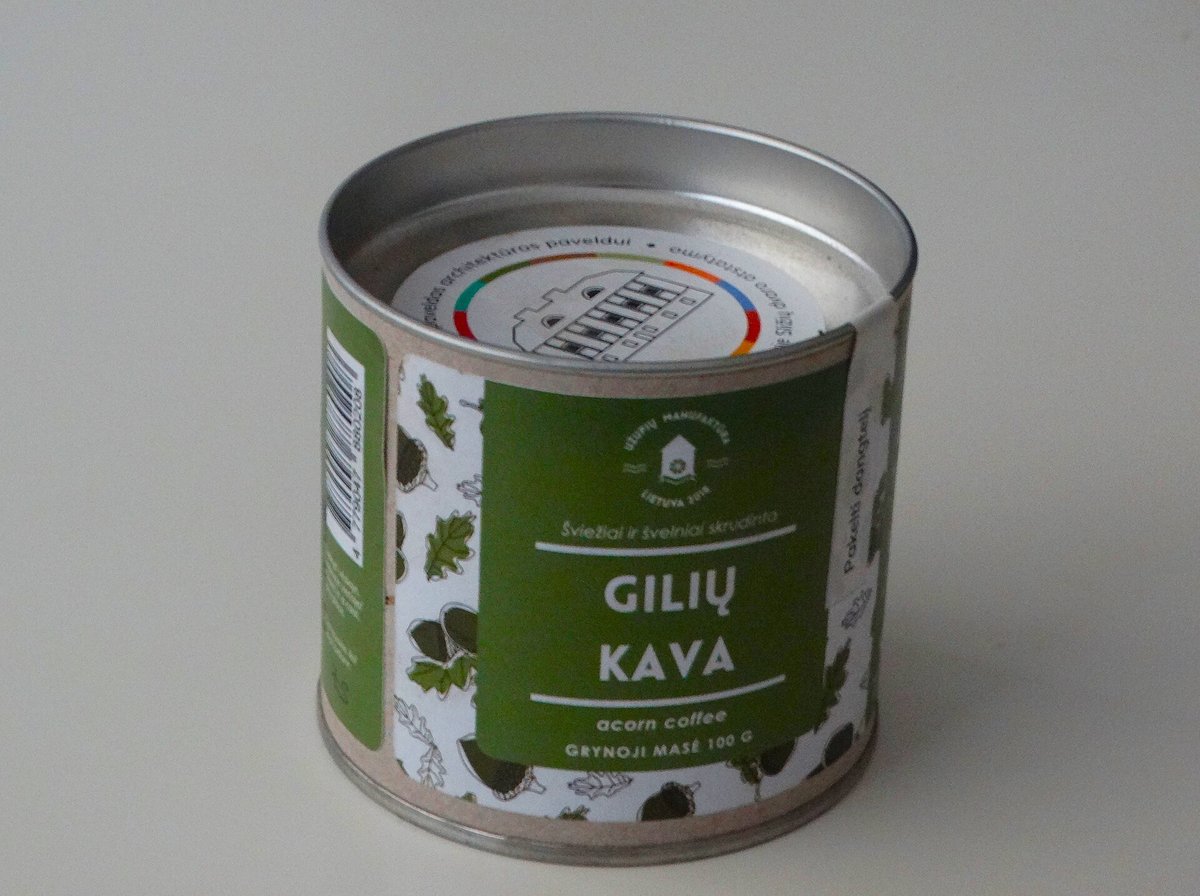
Acorn coffee is roasted, ground acorns. Acorns are full of tannins, which are bitter and astringent, so they must be leached (soaked in changes of water, cold or hot) before roasting. It is still sold in Lithuania, and was one of the Confederate South’s substitutes (below). Gathering, leaching and roasting Michigan acorns is on Acorn Coffee.
The Confederate South
When the Union blockade cut off coffee, the South made it out of almost anything. The American Battlefield Trust puts Confederate coffee at $1.20 a pound in March 1861 and an average of $196 a pound in February 1865, and lists what people roasted instead: chicory, okra seed, parched corn, sweet potato, rye, wheat, beets, acorns, sassafras, field peas, peanuts, carrot, sugar-cane seed, burnt molasses, potato peel, persimmon seed, asparagus seed and cottonseed. One Charleston housekeeper mixed two-thirds cottonseed with one-third coffee (American Battlefield Trust).
Wilmington’s Daily Journal of 21 April 1863 printed a letter from Dr. N. B. Cloud, who had tried rye, ground peas, corn meal and potatoes before settling on okra seed: with cream and sugar, he said, he would not choose coffee over it even at ten cents a pound (UNC Libraries).
What they are, side by side
| Substitute | Made from | Taste | Caffeine | Gluten |
|---|---|---|---|---|
| Postum | Wheat, wheat bran, molasses | Toasty, molasses, malty | None | Yes (wheat) |
| Chicory | Roasted chicory root | Dark, bittersweet, woody | None | No |
| Malt coffee (Kathreiner) | Sprouted, roasted barley | Malty, bready | None | Yes |
| Caro / Pero | Barley, malted barley, chicory, rye | Roasty, bittersweet | None | Yes |
| Inka | Barley, rye, chicory, sugar beet | Mild, sweetish | None | Yes (a certified gluten-free line exists) |
| Caffè d’orzo | Roasted barley | Toasty, nutty, light | None | Yes |
| Teeccino | Chicory, carob, dandelion, barley, nuts, fruit | Rounder, sweeter | None | Most lines yes; dandelion line no |
| Dandelion root | Roasted dandelion root | Like chicory, earthier | None | No |
| Acorn | Leached, roasted acorns | Nutty, earthy | None | No |
Acrylamide. Roasting starchy, sugary plant foods makes acrylamide, a compound classed as a probable human carcinogen, and grain and chicory roasts make more than coffee does. The EU sets benchmark levels, which are targets for manufacturers rather than legal limits: 400 µg/kg for roast coffee, 500 for substitutes made only from cereals, and 4,000 for those made only from chicory (Regulation (EU) 2017/2158). In the FDA’s 2006 survey, one sample of Postum (the old Kraft recipe) measured 5,399 µg/kg, the highest in its table (FoodNavigator). A cup uses a teaspoon or two of powder, so the amount drunk is much lower than the figure per kilogram suggests; and the revived recipe has not been published as tested. Chicory’s own acrylamide is covered on the chicory page.
Gluten. Barley, rye and wheat drinks contain gluten. A coeliac should use only those certified gluten-free (such as Inka’s certified gluten-free line) or the grain-free ones: chicory, dandelion, acorn, and Teeccino’s dandelion line.
Making a substitute at home
Dandelion root coffee. Dig in autumn; scrub, chop, dry, then roast at about 350 °F until dark brown right through; grind; simmer 2 tablespoons in 2 cups of water for 10 to 20 minutes; strain. Dandelion Root Coffee; recipe.
Acorn coffee. Shell, chop and boil in changes of water until no longer bitter; dry; roast at 350–400 °F; grind. Acorn Coffee; recipe.
Barley coffee. Ground roasted barley (sold as orzo or orzo macinato in Italian shops) brews in a moka pot like coffee, without tamping. Recipe.
Roasting grain yourself. Wheat, barley and rye can be roasted in a dry pan or oven until dark brown, as Civil War households did. No tested home method with temperatures has been published; roast in small batches, stir constantly, and stop at dark brown before the grain smokes, since burnt grain is bitter and makes more acrylamide.
Where to buy them (October 2026)
| Product | Where | Price seen |
|---|---|---|
| Postum | postum.com; Kroger, Walmart, Albertsons | $16.99 for 8 oz direct |
| Pero | Health-food shops; Vitacost; Walmart | $9.55 for 7 oz at Vitacost (Vitacost) |
| Teeccino | teeccino.com; health-food shops | Instant French Roast $16.99 |
| Dandy Blend | dandyblend.com | From $14.95 |
| Inka, Caro, caffè d’orzo | Polish, German and Italian delis | — |
| Roasted chicory or dandelion root | Health-food shops, herb suppliers | — |
What is not known
- The original 1895 Postum recipe. Bran, wheat and molasses is the maker’s account; no recipe from the time has been published.
- Who owns Postum now, and how much acrylamide the revived recipe contains.
- A tested home method for roasting grain coffee.
Sources
- Postum, Our roots, Original, All products.
- Willard Library, Battle Creek, Postum Cereal Company postcard.
- Ohio State University, Billy Ireland Cartoon Library, Mr. Coffee Nerves.
- Food Dive, Why a North Carolina couple brought Postum back (2018).
- Atlanta Journal-Constitution, Where can I find Postum? (2022).
- Wikipedia, C. W. Post, Postum, General Foods, Caro, Coffee substitute; German Wikipedia, Kathreiner.
- wissen.de (Wahrig), Muckefuck.
- Inka, inka.pl.
- Beverfood, Il mercato dell’orzo tostato in Italia.
- Teeccino, Our story; Dandy Blend, dandyblend.com.
- American Battlefield Trust, Coffee on the home front during the Civil War.
- UNC Libraries, 21 April 1863: okra, the best substitute for coffee.
- EUR-Lex, Commission Regulation (EU) 2017/2158.
- FoodNavigator, FDA produces most extensive list of acrylamide content in foods (2006).
- Practical Self Reliance, Dandelion coffee; Edible Cape Cod, Roasted dandelion root coffee.
- Vitacost, Pero.
Comments (0)