Coffee · 35 of 64
Kaffeost: Cheese in Coffee, From Finland and Swedish Lapland
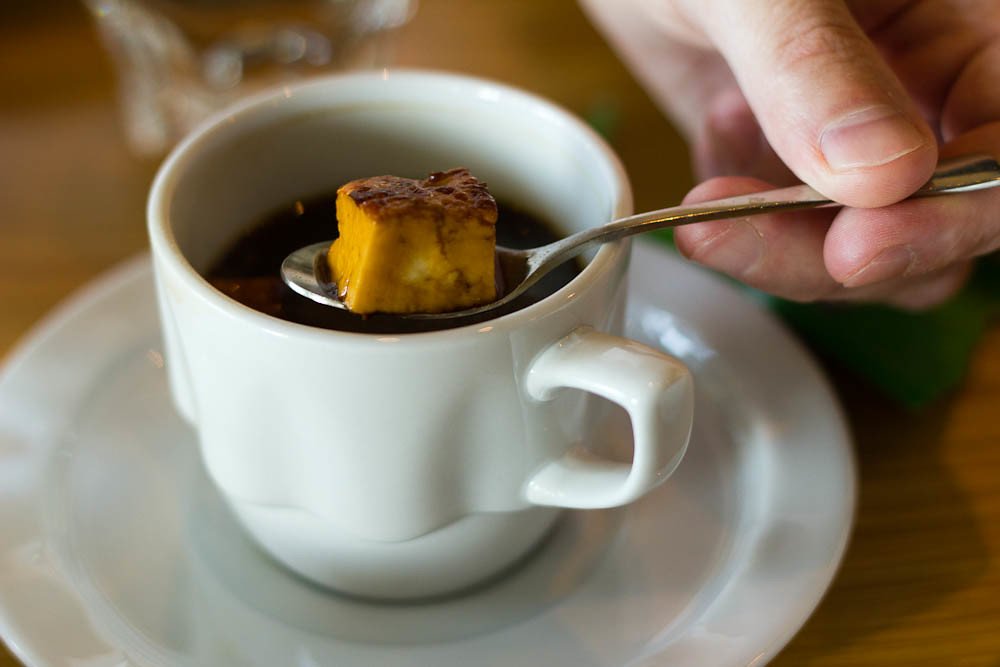
In northern Finland and Swedish Lapland, coffee is sometimes served with cheese in it. Squares of a baked fresh cheese go into the cup, hot coffee is poured over, and after a minute the cheese is soft and warm and the coffee is a little richer. The coffee is drunk, and the cheese is eaten out of the bottom of the cup with a spoon.
The Swedes call the cheese kaffeost, “coffee cheese”, and since 2025 that name has been protected across the European Union. The Finns call it leipäjuusto (“bread cheese”) or juustoleipä (“cheese bread”); in English it is bread cheese or squeaky cheese, because it squeaks against the teeth. Finnish emigrants took it to Michigan’s Upper Peninsula, Minnesota and Wisconsin, where it is still made and sold, and where people still dip it in coffee.
The custom has a practical origin, written down in Finland’s own protected-name applications: the cheese used to be dried hard as wood to keep through the winter, and it had to be softened in something hot to be eaten. Coffee was the hot thing on every table.
The cheese itself, and how to make it, is on the cheese section’s Scandinavia page and the Leipäjuusto recipe; the Upper Peninsula’s Finnish coffee table is on The Finnish Table.
The short version
| Question | Answer |
|---|---|
| What is kaffeost? | A fresh rennet cheese, pressed thin and baked, grilled or smoked until spotted brown, then cut into pieces and put into hot coffee. |
| Where? | Northern Finland (Ostrobothnia, Kainuu, Lapland) and northern Sweden (Norrbotten, including the Torne Valley, Västerbotten, Lapland, Jämtland, Härjedalen, Ångermanland). |
| Why in coffee? | The cheese was dried hard to keep for the winter and had to be softened. Finland’s two protected-name applications say so. |
| What milk? | Cow’s, goat’s or reindeer milk, with rennet. Reindeer milk is the Sámi tradition; cow’s and goat’s milk the settled farms’. |
| Is it made from colostrum? | Not according to the producers’ specifications, which call for ordinary milk. Finland’s colostrum dish is a different cheese, uunijuusto. This site’s cheese pages said otherwise and have been corrected. |
| Is the name protected? | Kaffeost was registered as an EU Protected Designation of Origin by a regulation of 18 June 2025, in force from 15 July 2025. Two Finnish names, Pohjalainen leipäjuusto and Kainuun juustoleipä, were approved in Finland in January 2024 and sent to the European Commission. |
| How do I serve it? | Cut the cheese into small squares or diamonds, put a few in a cup, pour over hot coffee, wait a minute, drink, and eat the cheese with a spoon. Recipe. |
| Where do I buy it? | In the US, as “bread cheese” or “juustoleipä” from Wisconsin makers (Carr Valley, Brunkow, Pasture Pride) and in U.P. shops; in Finland in ordinary supermarkets. |
The cheese
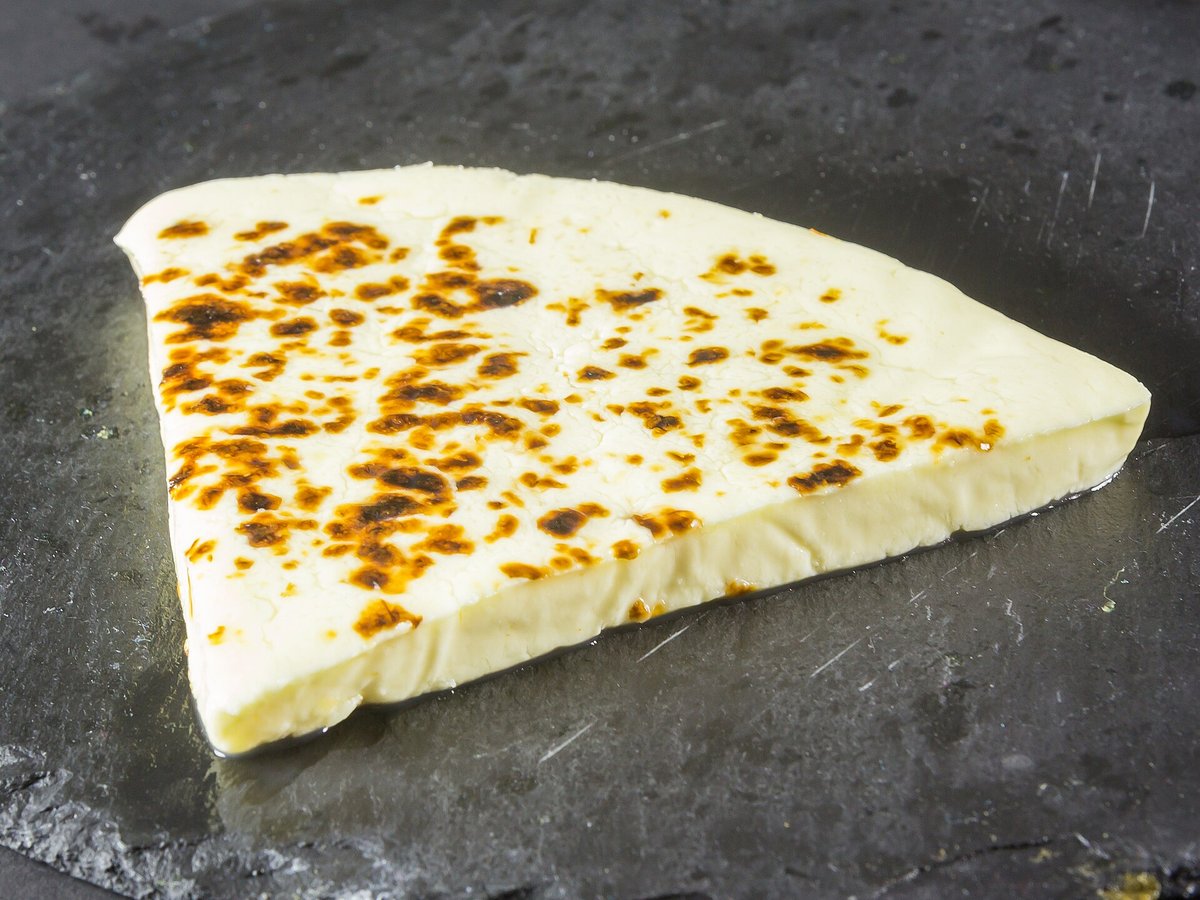
The Finnish specification describes a baked fresh cheese. Milk, Finnish and pasteurised (cow’s, goat’s or reindeer), is warmed in the vat with salt and rennet; the curd is set, cut, drained, and “moulded into a sheet 0.5–3 cm thick, which is baked on both sides until dark-spotted, for example in an oven, on a grill or before an open fire.” Its crust is “black-brown spotted, koppelonkirjava”, speckled like a capercaillie hen, and its texture “squeaky and firm” (Pohjalainen leipäjuusto, single document, Finnish Food Authority).
The Swedish Kaffeost registration describes the same thing a little more widely: “a fresh cheese with a dry crust produced from whole reindeer, goat’s or cow’s milk”, unhomogenised, 150–500 g, 1–5 cm thick, tasting “reminiscent of boiled milk”, with three finishes (Commission Implementing Regulation (EU) 2025/1249; single document):
| Finish | Colour | Who made it |
|---|---|---|
| Dried, untreated | Milky white | The mountain variety |
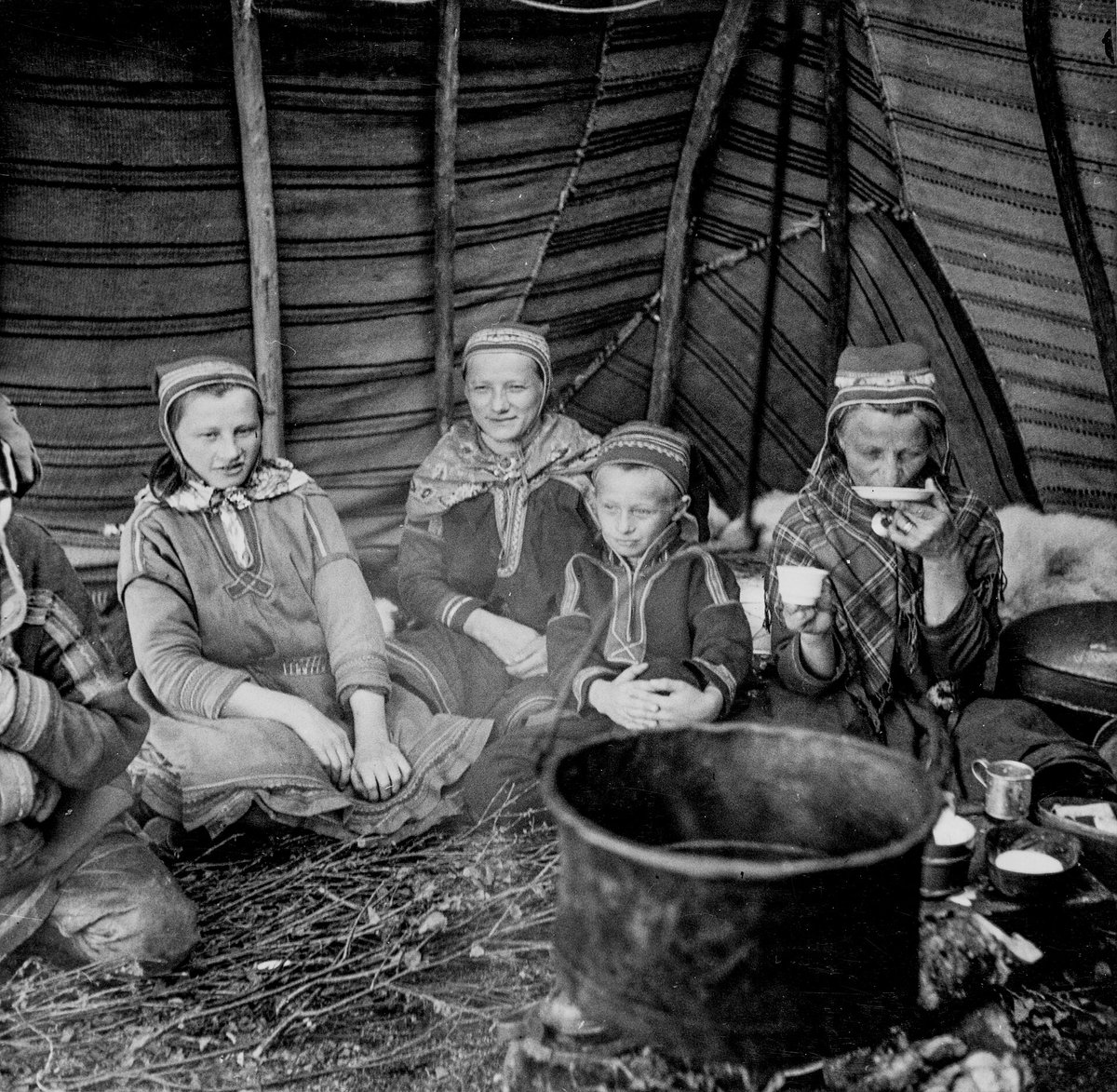
| Smoked | Yellowish and sooty | Nomadic herders (the registration ties reindeer milk to the Sámi), who smoked it in the smoke-hole at the top of the lavvu (tent) |
| Oven-baked | Golden with dark brown spots | Settled farmers in the north-east, with bake ovens |
Why it keeps. Both Finnish applications say the cheese was made in summer, when milk was plentiful, and eaten in winter “when the cows were dry”. It was dried and stored in the grain bin, among the rye. Dried, it was “stone-hard” and had to be softened, warmed over embers, added to soups, or put in coffee (Kainuun juustoleipä, single document). The Swedish registration says pieces went into boiled broth as well as coffee.
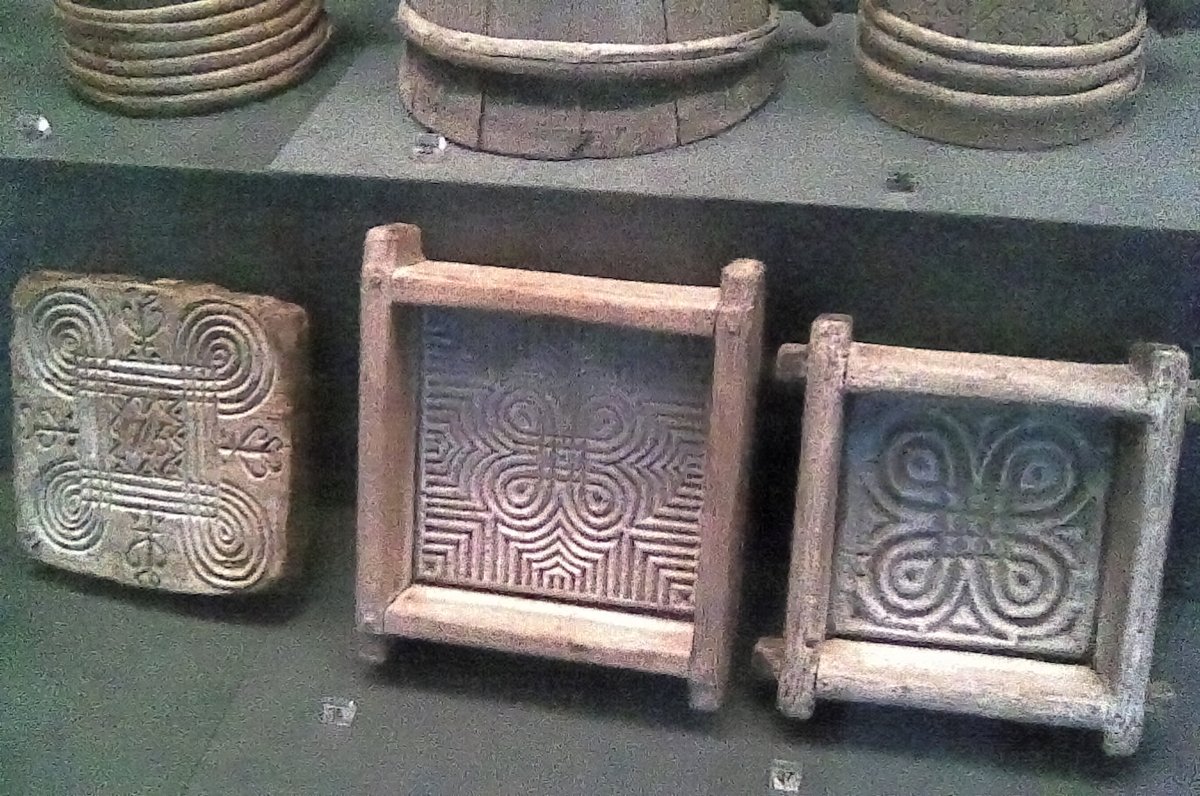
A cheese worth a salary. The Kainuu application says the cheese was made on almost every farm, given as a valued present, used to pay haymakers and neighbours who came to help with the work, and was for a long time “an official perquisite of the clergy’s pay”; making it was “the honoured task of the mistress of the house”. The Ostrobothnian one quotes the farm magazine Emäntälehti of 1928: Christmas does not feel like Christmas to an Ostrobothnian without leipäjuusto on the table.
Two names, one cheese. “Leipäjuusto” (bread cheese) is the western Finnish word; “juustoleipä” (cheese bread) is Kainuu’s. The Kainuu document says the rennet cheese reached Kainuu from western Finland, and the two regions simply say it in different orders. Other names: narskujuusto (“squeaky cheese”) in dialect; kahvijuusto in Meänkieli, the Finnish of the Torne Valley; kaffeost in Swedish (Swedish Wikipedia).
Not “Lapp cheese”. Older English and Swedish writing calls it “Lapp cheese”. Lapp and Laplander are outsiders’ names for the Sámi, who regard them as offensive and call themselves Sámi (Wikipedia).
Colostrum: a correction
Many English sources, including English Wikipedia and, until now, this site, say leipäjuusto is “traditionally made from colostrum”, the rich first milk a cow gives after calving. Neither Finnish specification nor the Swedish registration mentions colostrum: all three call for ordinary milk with rennet. Finland does have a colostrum dish, and it is a different one: uunijuusto (“oven cheese”), colostrum salted and baked into a soft, custardy cake (Wikipedia). The two seem to have been run together in English. The Scandinavia and Upper Peninsula pages and the Leipäjuusto recipe now carry the correction.
Reindeer milk is a real strand, but not the origin. Wisconsin sources say bread cheese “was originally made from reindeer milk”; the University of Wisconsin’s own 2002 announcement of its American bread cheese said only “legend has it” (UW CALS, 2002). The Swedish registration ties reindeer milk to the Sámi, and cow’s and goat’s milk to the farms; the Finnish applications tie the cheese to the cattle farms of Ostrobothnia and Kainuu.
The custom
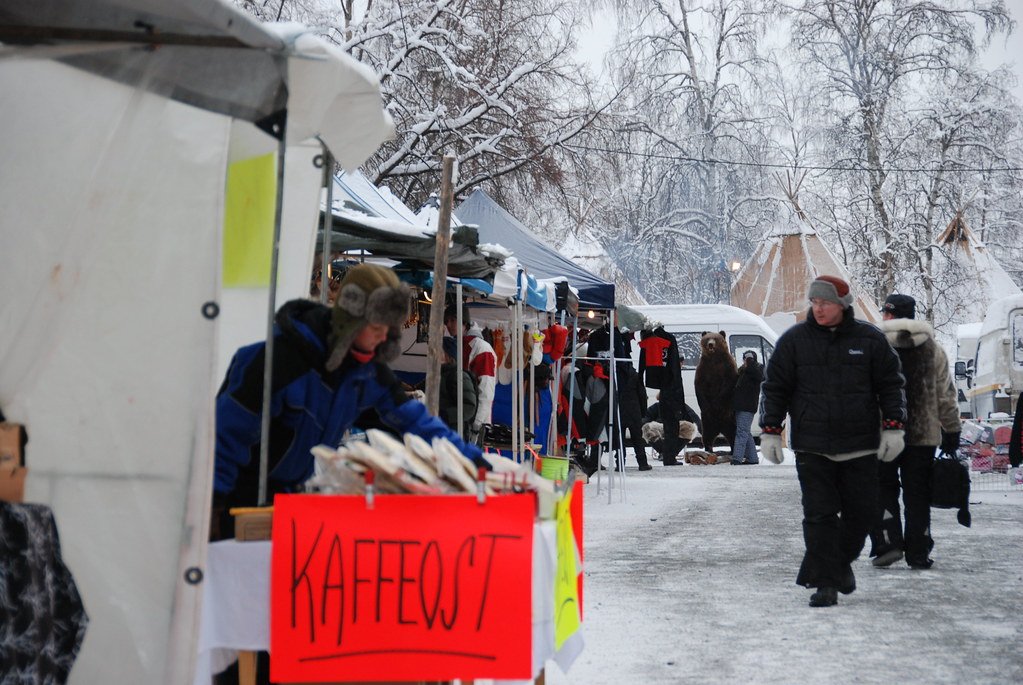
The Kainuu specification gives the custom in one paragraph: “One traditional way to enjoy juustoleipä was to mix it, in pieces, into the coffee in the coffee cup and let the cheese soften. The cheese was eaten out of the coffee with a spoon. This custom came from the fact that juustoleipä used to be dried and had to be softened, for example in coffee.” The Ostrobothnian document has the same spoon. The Swedish registration: the cheese is “intended to be served cut into small pieces that are added to coffee and enjoyed together with the coffee when they have become warm and soft in consistency.”
How it is done:
- Cut the cheese into small pieces: squares, triangles or, in Kainuu and Ostrobothnia, diamonds (vinoneliöt).
- Put a few in a cup, traditionally a wooden guksi (below) or an ordinary coffee cup.
- Pour over hot coffee. In Finland, filter coffee; in the Swedish north, often kokkaffe, boiled coffee.
- Wait a minute or two. The cheese softens, warms through and stops squeaking.
- Drink the coffee, then eat the cheese with a spoon.
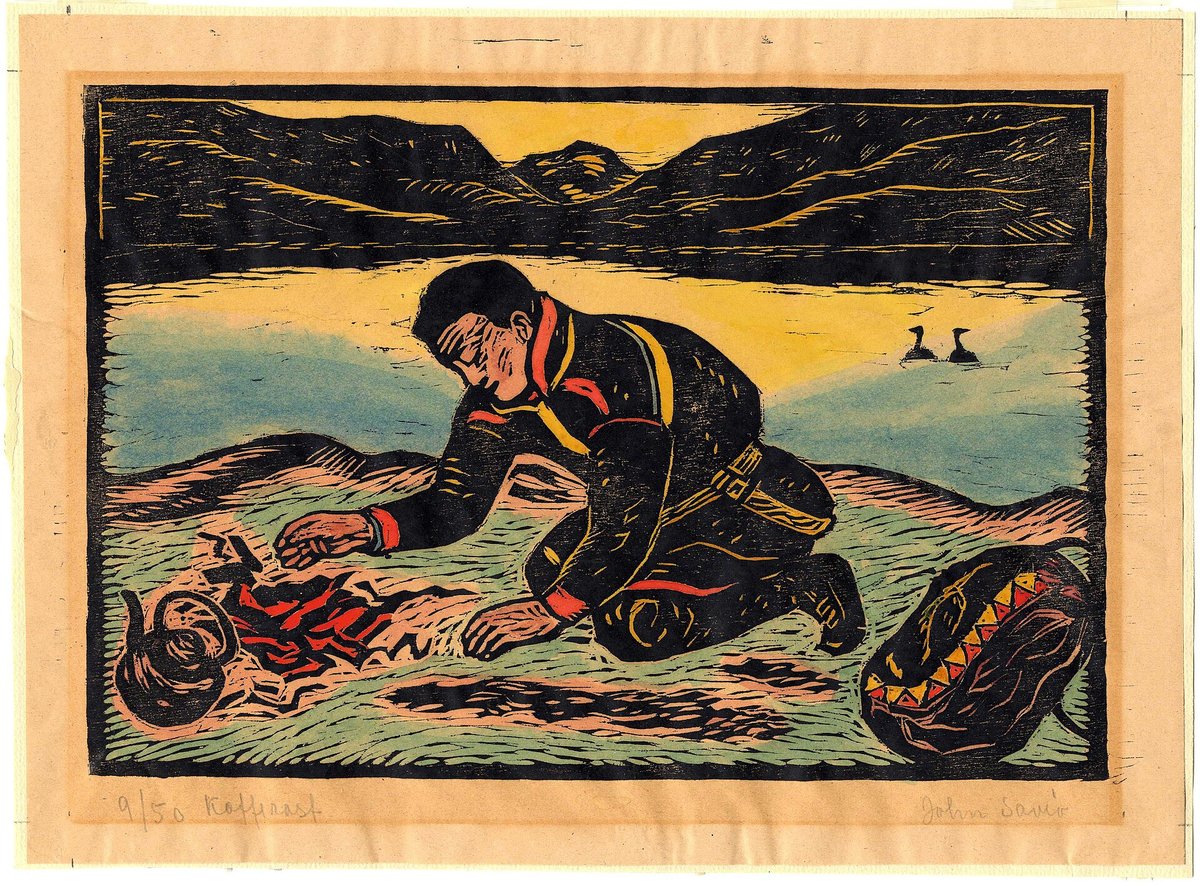
Swedish Lapland’s tourist board adds that it is “our custom to put cheese and meat in the coffee”, meaning dried reindeer meat, and that Sámi and settlers alike sometimes salted their coffee (Swedish Lapland). Those two customs appear only in tourism writing and are given here as such.
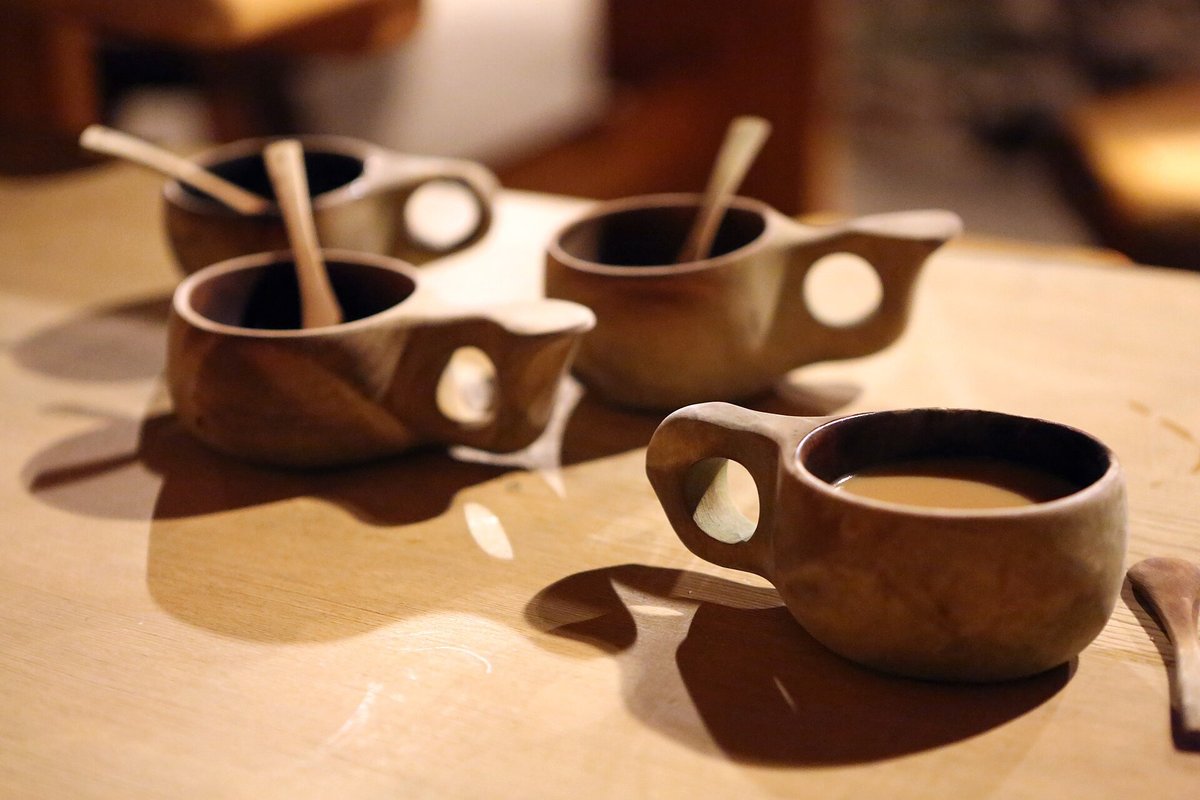
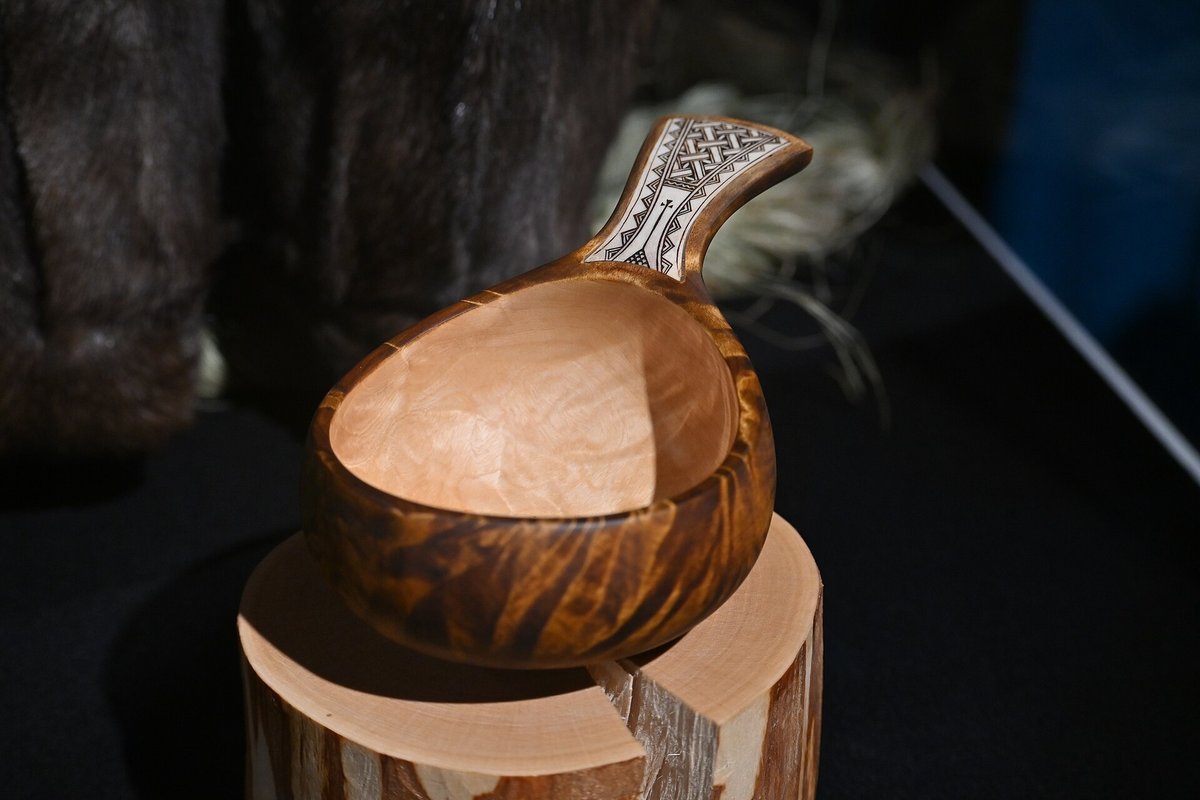
The guksi. The traditional cup is the guksi (North Sámi; Finnish kuksa, Swedish kåsa), carved from a birch burl, the hard, twisted growth on a birch trunk, and dried slowly so it does not crack. It is rinsed in plain water, never soap (Wikipedia).
Bread cheese in America
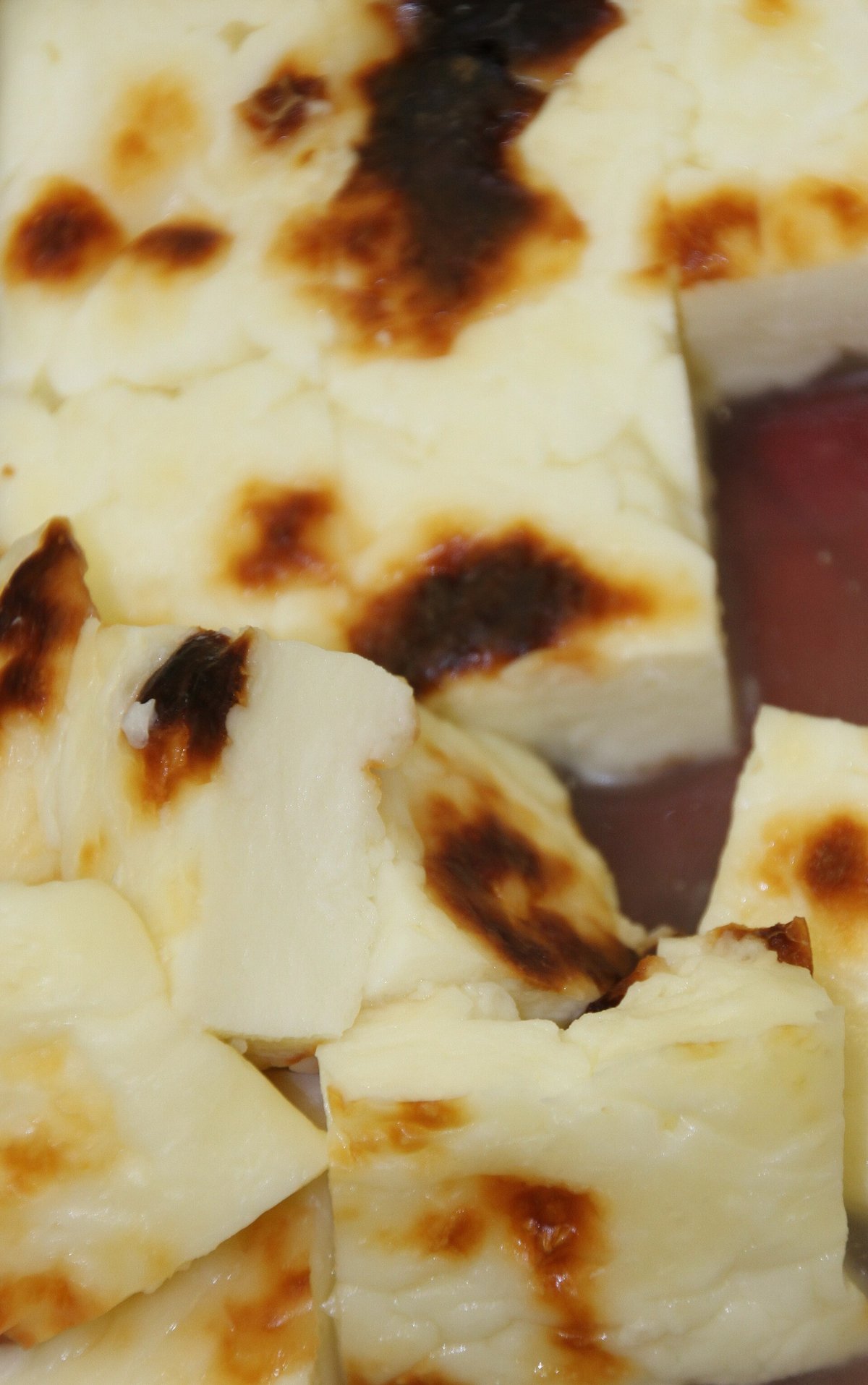
Finnish emigrants brought the cheese to the Upper Peninsula of Michigan, northern Minnesota and Wisconsin, where it is still called squeaky cheese. In 2002 the University of Wisconsin’s Center for Dairy Research announced an American bread cheese for Wisconsin makers, to be served warmed “with honey or lingonberry or cloudberry jam as a dessert or dipped in hot coffee” (UW CALS). Wisconsin’s dairy board now lists Brunkow Cheese, Carr Valley Cheese and Pasture Pride Cheese among its makers (Wisconsin Cheese). In the U.P., it is sold in Finnish shops and bakeries and eaten warm with coffee and jam (The Finnish Table).
Serving it at home
- In coffee: a few squares per cup, as above. Recipe: Kaffeost (Bread Cheese in Coffee).
- Warm, with jam: warm slices in a low oven or a dry pan until soft, and serve with cloudberry jam (lakkahillo), or lingonberry, or honey. The Kainuu document says it is often eaten this way today. Recipe: Warm Leipäjuusto with Cloudberry Jam.
- Dried, the old way: leave a piece uncovered in a cool, airy place until hard, then soften it in coffee. No modern safety guidance covers drying a fresh cheese at home; do it in the cold, and throw out anything that grows mould.
- Make the cheese: whole milk, rennet, an oven grill. Leipäjuusto recipe.
Cousins: dairy in a hot drink
| Drink | What it is | Source |
|---|---|---|
| Chocolate santafereño | In Bogotá, hot chocolate eaten with cheese, almojábanas and bread | Bogotá city site |
| Ethiopian butter coffee | Ground coffee in ghee, or clarified butter in brewed coffee, in the Kaffa and Sidamo regions | Capital FM, 2014 |
| Tibetan butter tea | Tea churned with yak butter and salt | Wikipedia |
| Bulletproof coffee | Coffee blended with butter and oil, from Dave Asprey’s 2009 blog, after Tibetan butter tea | Wikipedia |
| Egg coffee | Hanoi’s whipped-yolk cà phê trứng; and the American Midwest’s “Scandinavian” egg coffee, where a raw egg clears boiled grounds | Additions |
What is not known
- When the custom began. The Finnish documents describe it as traditional without a date; a “late 1700s, among the Sámi” date appears only in blogs.
- A Sámi name for the cheese.
- Whether the two Finnish names have been registered by the European Commission since 2024.
Sources
- Commission Implementing Regulation (EU) 2025/1249, registration of “Kaffeost” (PDO); single document, C/2025/1371.
- Finnish Food Authority (Ruokavirasto), Leipäjuusto and juustoleipä; Pohjalainen leipäjuusto, single document; Kainuun juustoleipä, single document.
- Maa- ja kotitalousnaiset, Name protection for two Finnish bread cheeses (2024).
- University of Wisconsin CALS, New speciality bread cheese unveiled (2002).
- Wisconsin Cheese, Bread cheese (juustoleipa).
- Swedish Lapland, The way we eat.
- Wikipedia, Kaffeost (Swedish), Juustoleipä, Uunijuusto, Kuksa, Sámi people, Butter tea, Butter coffee.
- Bogotá, Chocolate santafereño; Capital FM, Butter coffee in Ethiopia (2014).
Comments (0)