Coffee · 43 of 64
Monsooned Malabar and the Aged Coffees: Beans Changed by Wind and Sea
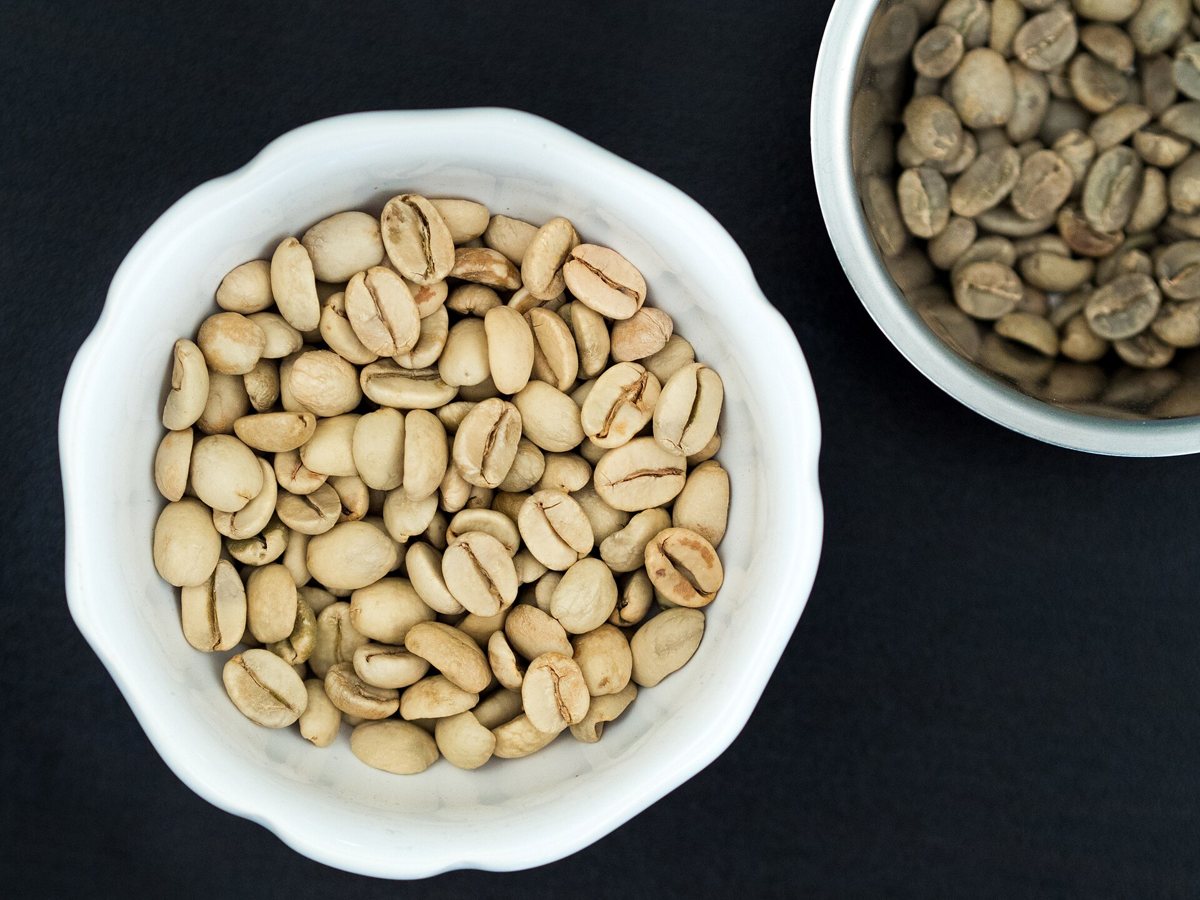
Monsooned Malabar is Indian coffee that has been left in open-sided warehouses on the west coast through the south-west monsoon, from June to September, until the damp sea air has swollen the beans and turned them pale straw-yellow. It roasts into a heavy, low-acid, earthy cup.
It is also the last working member of a family. For two centuries coffee crossed oceans in the holds of sailing ships, and the long, hot, damp voyage changed it. Buyers came to like the change and paid more for it. The usual story is that when steamships made the voyage too quick, the trade looked for ways to put the change back, and India’s answer was the monsoon; no dated record supports the story, but it fits. The oldest documented case is not Indian at all: it is Java coffee shipped to New York under sail until 1915. Monsooning in general is covered briefly on Origins; this page has the detail.
The short version
| Question | Answer |
|---|---|
| What is it? | Dry-processed Indian arabica or robusta exposed to the monsoon winds in open warehouses on the west coast for 12 to 16 weeks, June to September. |
| What does it do to the beans? | They take up moisture, swell (the Coffee Board says to “nearly double the size”) and turn pale yellow or straw-coloured. |
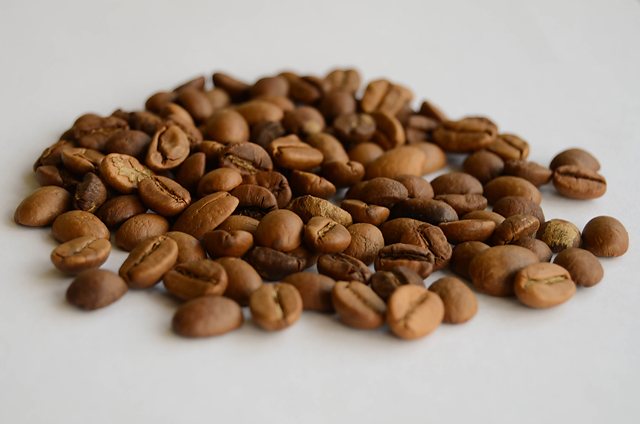
| What does it taste like? | Very low acidity, heavy body, earthy, musty-sweet, often with tobacco and dark chocolate; usually roasted dark, often for espresso blends. |
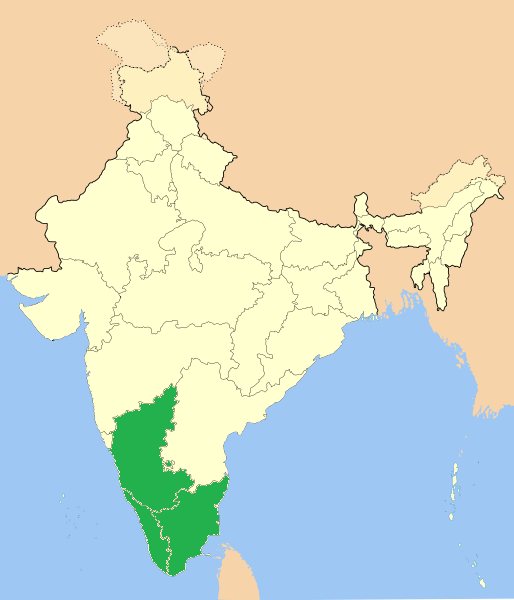
| Is the name protected? | Yes. Monsooned Malabar Arabica Coffee and Monsooned Malabar Robusta Coffee are registered Indian Geographical Indications (2008), for Karnataka and Kerala. |
| Where did it come from? | By the Coffee Board’s account, from the change coffee underwent in the holds of sailing ships to Europe. No dated record of the first deliberate monsooning is known. |
| Any older relative? | Java coffee shipped “ex-sailing ships” to New York until 1915, which sold at a premium for the “sweating” it took on in four to five months at sea (Ukers, 1922). |
| Where do I buy it? | US green-coffee importers and specialty roasters; roasted, it is often sold simply as “Monsooned Malabar” or “India Monsoon Malabar AA”. |
How it is made
The Coffee Board of India describes the process in its own words (Coffee Board, archived 2015):
“Only whole crop Arabica Cherry and Robusta Cherry coffees are selected for monsooning. In order to ensure the quality of monsooned coffee, only ‘A’ grade of both Arabica Cherry and Robusta Cherry are subjected to monsooning. The Process of monsooning is carried out from June to September of a year when the south-west monsoon is very intense on the west coast. The cherry coffee is evenly spread in thick layers in airy godowns, open on all sides and raked frequently.”
“Cherry” coffee here is the Indian trade name for dry-processed (natural) coffee, dried in the fruit; the washed coffees are not used. A godown is a warehouse. The beans are then packed loosely in jute sacks and stacked with gaps between the rows “for the monsoon air to circulate freely around the bags”. The Board goes on:
“The cherry coffee absorbs moisture from the humid monsoon atmosphere. The beans swell up to nearly double the size and the colour of the beans change to pale yellow/straw colour. The coffee is bulked and repacked at frequent intervals or poured from one bags to another to prevent mould growth on the beans and to ensure uniform monsooning. The monsooning process is completed in 12 to 16 weeks.”
At the end the coffee is polished, graded by size and fumigated against weevils. The Board’s main grades were Monsooned Malabar AA, Monsooned Basanally and Monsooned Robusta AA, and it named Scandinavia as the coffee’s best market.
The standard. India’s grading rules for monsooned coffee are a Bureau of Indian Standards document, IS 4074:2019, Grading for Monsooned Coffee, first published in 1967. The coffee “shall be between 13 and 14.5 percent by mass” moisture “at the time of clearance of coffee from pool warehouses”; the 1967 edition allowed 13 to 16%, narrowed in 1975. The 2019 revision renamed the grades to match the Geographical Indication, and “Basanally” does not appear in it. It sets six grades by the round-hole sieve the beans must stay on:
| Grade | Sieve (mm) | Retained | Other allowance |
|---|---|---|---|
| Monsooned Malabar AAA | 7.50 | 90% | 2% triage |
| Monsooned Malabar AA | 7.10 | 90% | 2% triage |
| Monsooned Malabar A | 6.70 | 75% | 3% triage |
| Monsooned Malabar Arabica Triage | 6.00 | 90% | 3% black, brown and bits |
| Monsooned Malabar Robusta AA | 7.10 | 90% | 3% triage |
| Monsooned Malabar Robusta Triage | 6.00 | 90% | 3% black, brown and bits |
Total defects may be no more than 2% in Monsooned Malabar AA and 3% in Robusta AA, and the coffee goes out in “new, clean and sound jute bags”. The standard describes the warehouse work too: layers “of 10 to 15 cm thickness” on brick floors, raked and rebagged, “completed in about 12 to 16 weeks”.
The process is a controlled form of what the Keeping Coffee page warns against: green coffee taking up water. Ordinary green coffee is stored dry, at about 10 to 12% moisture, precisely so that it does not swell, fade and grow mould. Monsooning does the opposite on purpose, and the turning and re-bagging are what keep it from simply rotting.
Protected names
India registered both versions as Geographical Indications in 2008, with the Coffee Board as applicant (IP India, application 85; application 114):
| Name | Application | Certificate | Area | Valid to |
|---|---|---|---|---|
| Monsooned Malabar Arabica Coffee | No. 85, filed 5 April 2007 | No. 54, 28 March 2008 | Karnataka and Kerala | 4 April 2027 |
| Monsooned Malabar Robusta Coffee | No. 114, filed 12 October 2007 | No. 55, 28 March 2008 | Karnataka and Kerala | 11 October 2027 |
Indian GI registrations run ten years and can be renewed, so both come up in 2027. Some English sources put monsooning in the Nilgiri hills of Tamil Nadu as well; the registered area is Karnataka and Kerala, on the coast.
Where the idea came from
The Coffee Board’s own account: “The ‘Monsooning’ of coffee first happened quite by accident in the deep of sailing ships — a shipload of coffee bound for Europe acquired a mellow yet unique taste en route, with the coffee beans ‘swelling’ due to the moisture in the air.” The usual continuation, that the Suez Canal (1869) and steamships shortened the voyage and the trade then recreated the effect on land, appears in importers’ and roasters’ descriptions but not in any dated record; when monsooning on purpose began is not known.
Java, under sail, to 1915. The best-documented case of coffee changed at sea is not Indian. William Ukers, the editor of the Tea & Coffee Trade Journal, wrote in 1922 (All About Coffee):
“Up to 1915 it was the custom to ship considerable Java coffee to New York in slow-going sailing vessels of the type in favor a hundred years ago. Java coffees ‘ex-sailing ships’ always commanded a premium because of the natural sweating they experienced in transit.”
The trip from Padang or Batavia to New York took four to five months and crossed the Equator twice; “when the ship left Padang or Batavia the hatches were battened down, not to be opened again until New York harbor was reached.” The sweating “frequently produced a musty flavor which, if not too pronounced, was highly prized by experts”, and “the captain always received a handsome gratuity if the coffee turned ‘extra brown.’” When steamships took over, some importers tried to fake the effect by steam-heating coffee that had arrived quickly, and “interference therewith by the pure-food authorities” helped end the trade in the “light”, “brown” and “extra brown” Javas. The trade called the best of it Old Government Java, after the Dutch colonial government’s coffee sold at auction in Batavia and Padang.
So the monsooning story told about India is the same story documented for Java, and it fits what the trade did: when a long sea voyage stopped doing the work, somebody tried to do it deliberately, on land. When that happened is not recorded. Ukers’s 1922 survey of the whole trade lists Malabar and Tellicherry as ordinary Indian grades and never uses the word “monsoon”; the first firm date for monsooning as a graded, regulated process is India’s standard of 1967.
The other aged coffees
| Coffee | What it is | Note |
|---|---|---|
| Monsooned Malabar | Moistened by the monsoon for 12 to 16 weeks | The only one with a protected name and a published process |
| Aged Sumatra, Old Brown Java | Sold by some roasters as green coffee held in warehouses for years before roasting | Warehouse-aged, not ship-aged; no standard process is published |
| Old Government Java | The Dutch colonial grade Ukers describes, prized “extra brown” | Historical; the name is still used for some aged Javas |
Aged coffees are not the same thing as old coffee. Coffee that has merely sat too long in a bag loses aroma and turns flat and papery (Keeping Coffee); a coffee sold as aged is meant to be held so that it changes in a particular way, which buyers either value or do not.
Roasting and brewing it
- It roasts fast. Roaster makers note that decaf and aged coffees “roast faster and get darker more quickly” (the Behmor manual, quoted on Green Coffee and the Line-up). Swollen, light beans take heat quickly, so watch the colour, not the clock.
- It is usually roasted dark and used in espresso blends, where its heavy body and low acidity are wanted (Burman Coffee). As a single-origin pour-over it is divisive: Coffee Review gave one in 1998 80 points, noting “pungent chocolate in the nose” and tobacco, and called the cup “slightly sharp” (Coffee Review).
- Low acidity, not “no acid”. Monsooned coffee is often described as nearly acid-free; no published pH measurement backs a number.
Buying it
Green monsooned Malabar is sold by US green-coffee importers, usually as “India Monsooned Malabar AA”, in full jute bags, and by some home-roasting suppliers by the pound; roasted, many specialty roasters list it, often as an espresso coffee. Prices were not reliably published at the time of writing. The Home Roasting pages cover roasting green coffee at home.
What is not known
- When monsooning began on purpose, and whether the steamship story is history or a later explanation. The bounds are Ukers’s silence in 1922 and India’s standard in 1967.
- What “Basanally” meant: an older Coffee Board grade name, absent from the 2019 standard.
- A measured pH for brewed monsooned coffee.
Sources
- Coffee Board of India, Speciality Coffee (archived 2015).
- IP India, Geographical Indications Registry, application 85 and application 114.
- Bureau of Indian Standards, IS 4074:2019, Grading for Monsooned Coffee (third revision; first published 1967), and IS 3581:2019, Green Coffee, via the Wayback Machine.
- William H. Ukers, All About Coffee (1922).
- Coffee Review, Armeno Coffee, Monsooned Malabar (1998).
- Burman Coffee, Indian Monsooned Malabar.
- Wikipedia, Monsooned Malabar.
Comments (0)