Espresso
Espresso is where coffee stops being a beverage and starts being a craft with a machine shop attached, which is probably why I love it. It’s the most demanding thing you can do with a coffee bean, the most unforgiving of sloppiness, and the most rewarding when it goes right — thirty grams of liquid that took you four hours to learn to make and nine seconds to drink, standing up, at a bar in Italy, where nobody sits down and nobody takes longer than ninety seconds about it. This page is the deep version of the brew-methods family: the physics, the gear, the puck, the milk, and an honest accounting of where the money should go. The commercial two-group, run-a-bar version lives over on the coffee program.
Espresso is a method, not a bean
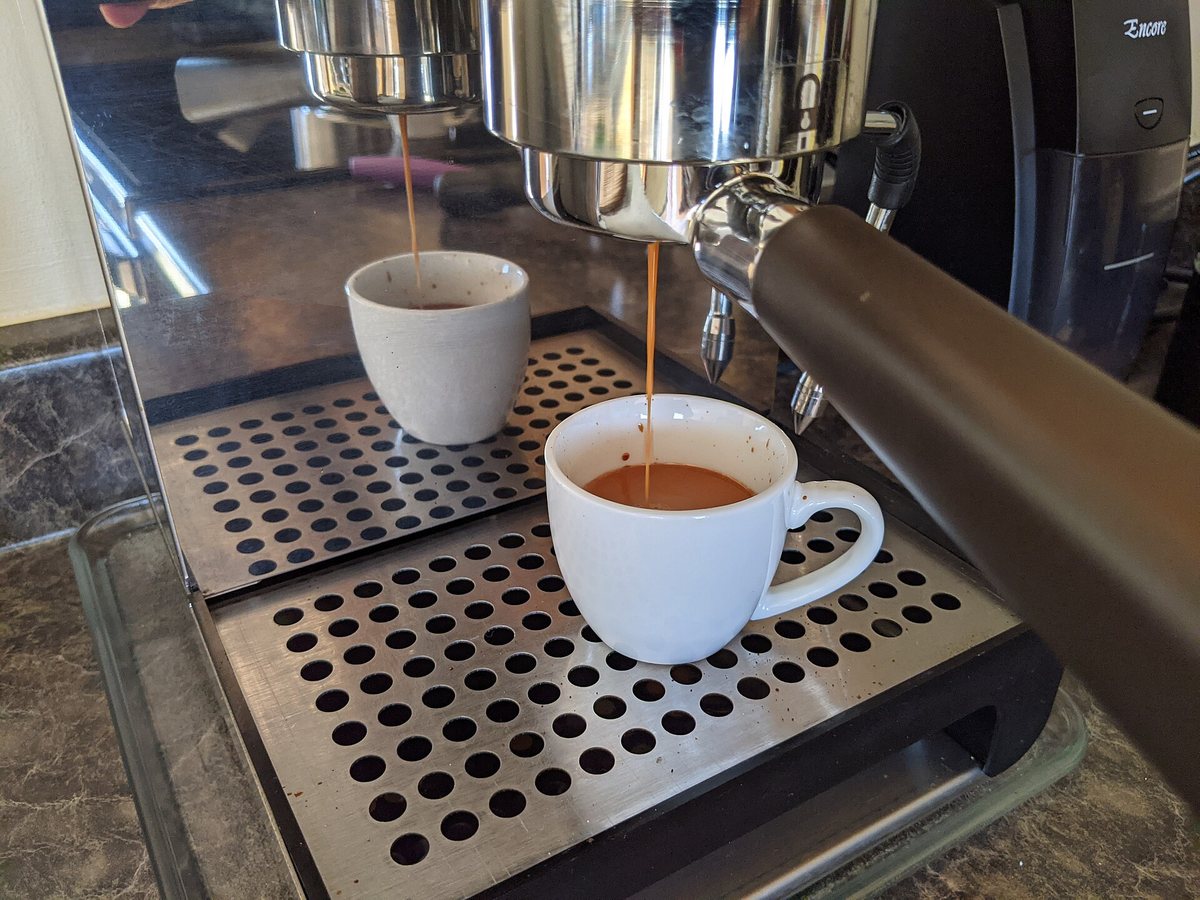
There is no such thing as an espresso bean. No espresso plant, no espresso variety, no espresso roast level anyone can point to as definitional. “Espresso” describes what you do to the coffee — push hot water through a compressed bed of finely ground coffee under substantial pressure — and you can do it to any coffee ever grown. A washed Ethiopian picked for a bright, floral pour-over makes a startling, tea-like, wildly acidic espresso. Some people build whole cafés on it.
So what is a bag labeled “espresso roast” telling you? Mostly that the roaster took it darker, because darker roasts are less dense and more soluble, they dissolve faster and more evenly under pressure, their acidity is muted (and espresso concentrates acidity by a factor of four or five, so raw brightness gets fierce fast), and they forgive a grinder that isn’t perfect. Good reasons — but it’s a suggestion, not a category. More on roast level at Roasting and on what the bean brings at Beans.
The numbers, and how much to believe them
| Parameter | Convention |
|---|---|
| Dose | ~7–9 g single, ~14–20 g double |
| Pressure | ~9 bar |
| Time | ~25–30 s |
| Ratio | ~1:2 — 18 g in, ~36 g out |
| Water temperature | ~90–96°C (195–205°F) |
| Grind | Fine — table salt, roughly |
Those numbers are real, useful, and not law. They’re conventions that hardened around what mid-century Italian pump machines happened to do well, with a medium-dark Italian blend. 9 bar in particular isn’t a physical constant — it’s roughly where the spring-lever machines of the 1950s peaked; pump machines were built to imitate the levers, and then everyone forgot it was an imitation. Modern lever and pressure-profiling machines deliberately ramp from 3 bar to 9 and taper back down, often to better results. Treat the table as a starting point: pull 18-in/36-out/28 s, taste it, then chase what it tells you.
Dose, yield, time — and ratio
Dose is how much dry coffee goes in the basket. It’s set by your basket — an 18 g basket wants 18 g, give or take a gram — and you mostly leave it alone once matched.
Yield is how much liquid comes out, weighed. Not volume — crema is foam and lies about volume, which is why the lines on a shot glass are useless.
Time is how long it takes, and here’s what beginners get backward: time is not a dial you set, it’s a readout. You decide a dose and a yield, then adjust the grind until the machine delivers that yield in about that time. Time is your grinder’s report card.
Ratio = yield ÷ dose, and it’s the flavor lever. Ristretto, ~1:1–1:1.5 — cut early, so you keep the front of the extraction (acid, sugar, intensity) and never reach the back. Thick, syrupy, punchy; sharp if you’re careless. It’s not “a stronger shot,” it’s a different part of the coffee. Normale, ~1:2 — the default, and rightly so: the best balance of sweetness, body, and acidity. Lungo, ~1:3+ — more water through the same puck, pulling further in. Bigger, more developed, eventually bitter and thin; light roasts often want it. A lungo is not an americano — the lungo pulls water through the coffee, the americano adds water to a finished shot, and the lungo is the more bitter of the two.
The grinder matters more than the machine
I’ll say it flatly: if you’re buying an espresso setup and have to choose, buy the grinder. A $300 grinder with a $400 machine beats a $150 grinder with a $2,000 machine, and it isn’t close. It’s the single most expensive mistake in the hobby, made every day by people who buy a beautiful chrome machine and pair it with whatever grinder was on sale.
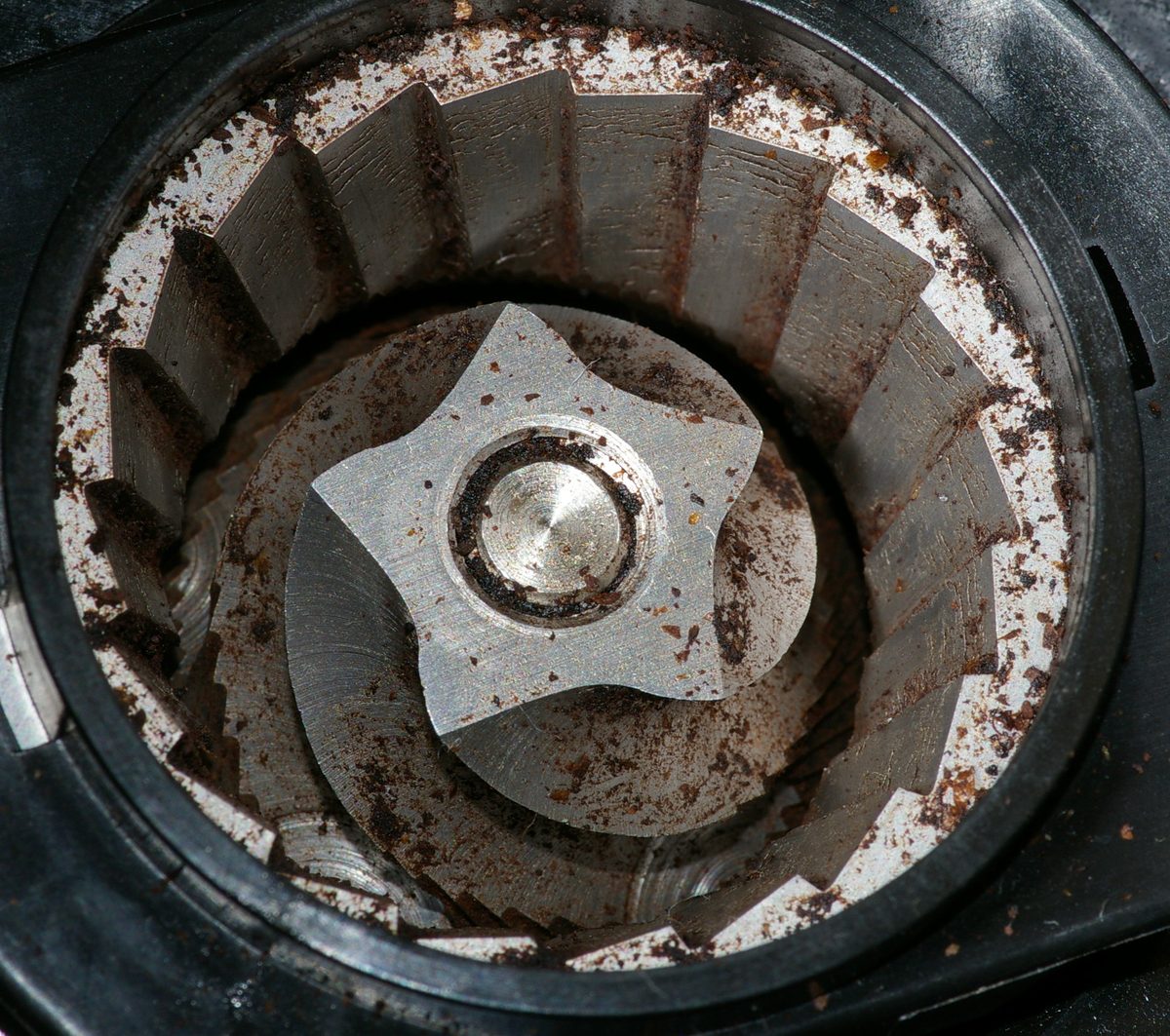
Espresso needs a grind no cheap grinder can produce. You’re building a compressed bed that water at 9 bar must pass through in a controlled way. That demands particles that are fine, uniform, and — critically — adjustable in tiny increments. The difference between a 24-second gusher and a 34-second choke can be a fraction of a turn on a burr collar. A grinder that can’t resolve that adjustment cannot dial in espresso, and no machine compensates. It doesn’t make worse coffee; it makes the target unreachable.
Uniformity does invisible work. Fines over-extract instantly under pressure, boulders barely extract at all — and in a puck, excess fines migrate and clog, choking flow in some places and letting water blow through others. Under 9 bar, a wide particle distribution isn’t a nuance, it’s a structural failure, and it’s the mechanical cause of channeling.
Stepped vs. stepless. A stepped grinder clicks between preset positions — fine for drip, frequently too coarse a resolution for espresso, where you need to land between two clicks. Stepless adjusts continuously, and it’s what espresso wants. Flat vs. conical is genuinely contested and I won’t pretend otherwise: flat burrs trend toward a tighter distribution, read as clarity and separation (the light-roast crowd’s pick); conical trend slightly wider, read as body and a rounder, chocolatier cup. Neither is better — they’re voiced differently, like two microphones.
Retention and single-dosing. A grinder holds coffee inside it, and that trapped coffee comes out in your next shot — stale, from yesterday, in a dose you didn’t measure. Single-dosing means weighing exactly the beans for one shot and getting nearly all of them back. Low-retention grinders are built for it; the RDT trick — a spritz of water on the beans before grinding — kills the static that makes grounds cling and clump. Costs nothing, works.
Puck prep, and the real enemy
Everything from here serves one goal: make the water pass through every part of the bed equally. That’s the entire craft.
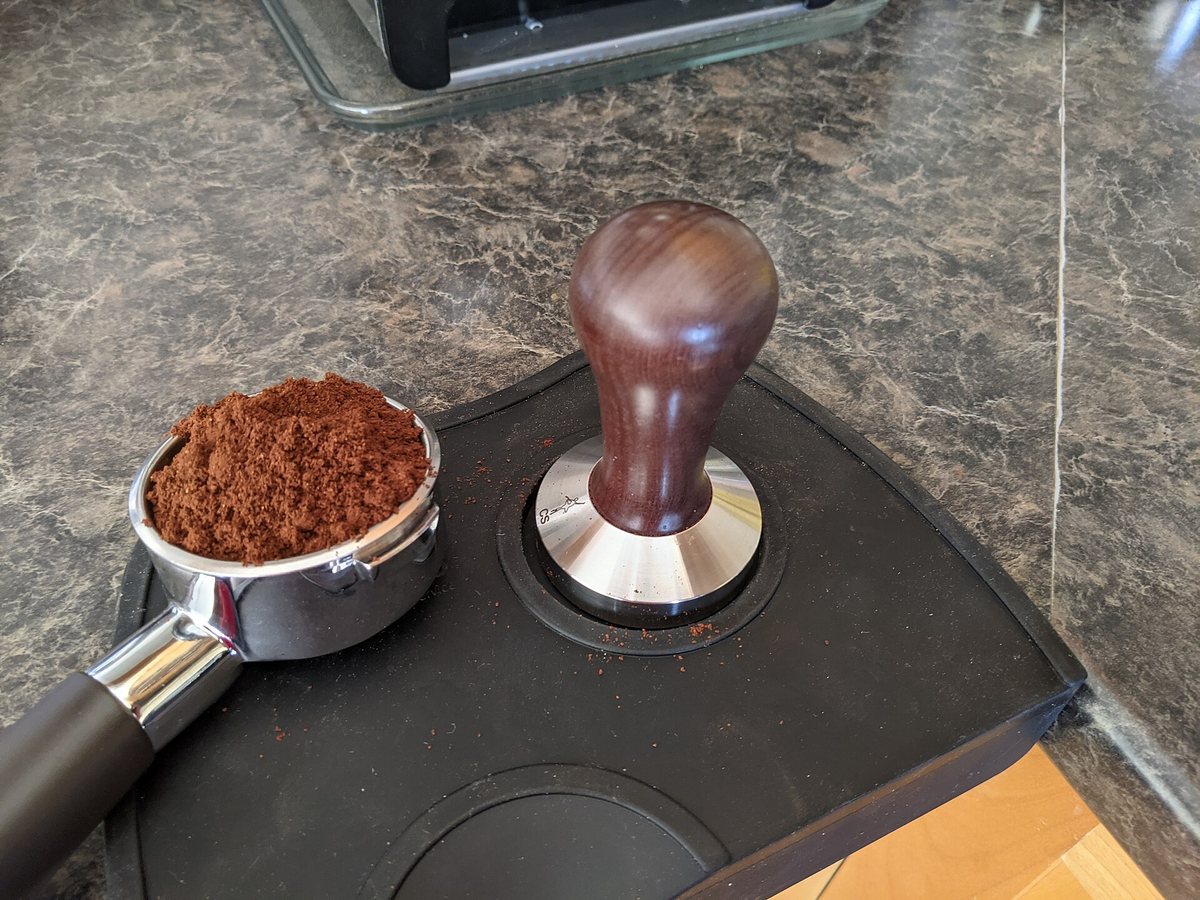
Distribution. Fresh from the grinder, coffee in the basket is a clumpy pile with density variations you can’t see. Water is lazy — it takes the path of least resistance — so any low-density region gets a torrent while dense clumps get nothing. The fix is WDT (Weiss Distribution Technique): stir the dry grounds with a few fine needles, breaking clumps and evening density before you tamp. Ten seconds, and per dollar and per second it’s the highest-return technique in espresso. A WDT tool is a handful of acupuncture needles in a handle — twenty minutes with a piece of stock and a drill, which is exactly the kind of shop job I enjoy.
Tamping, and here’s the correction most people need: level matters enormously, pressure barely matters at all. The old “30 pounds of force” line is folklore. Once the bed is a coherent puck — well below 30 lbs — more force accomplishes essentially nothing, because 9 bar of water is vastly stronger than your arm and compresses the bed regardless. What matters is that the surface is flat and perpendicular. Tamp at an angle and one side is thinner and less dense, water races through it, and you’ve engineered a channel on purpose.
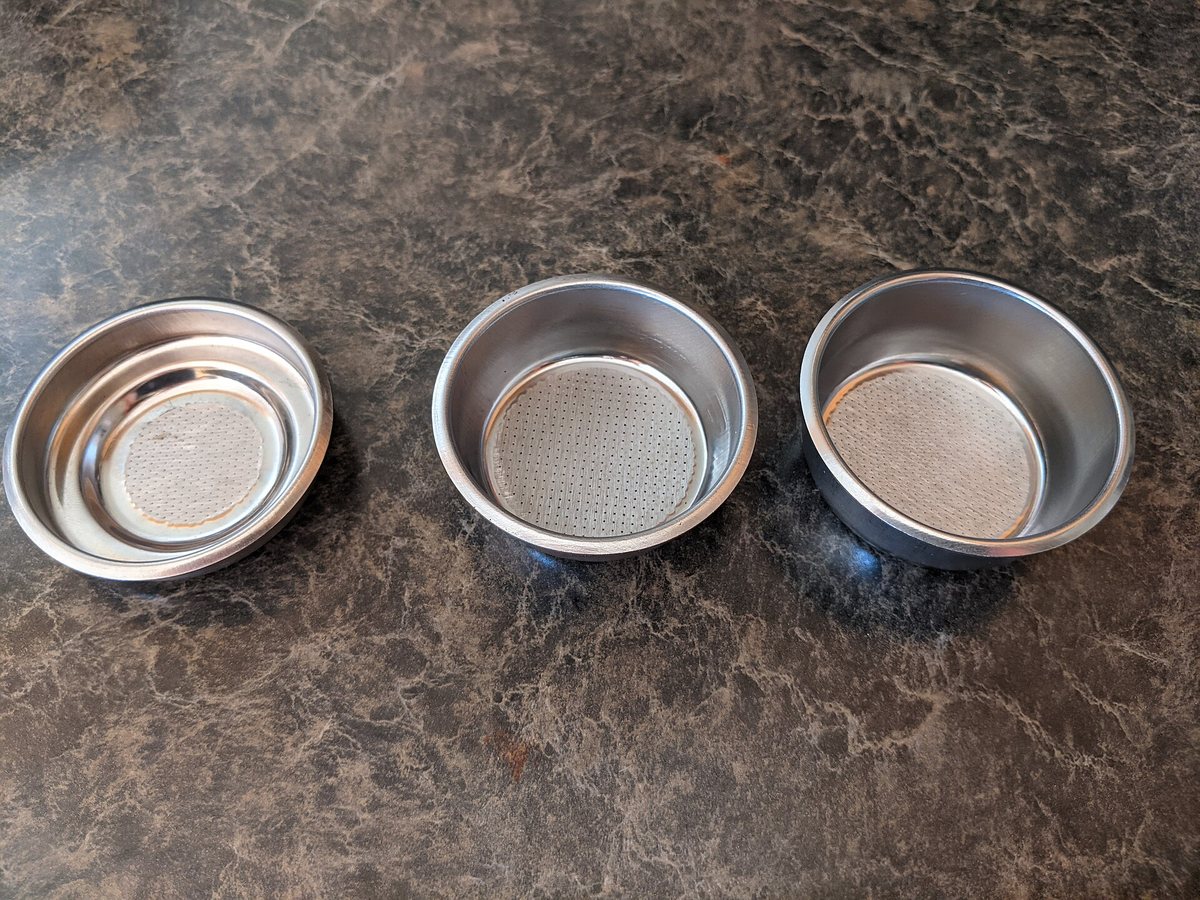
The basket is a precision part people treat as a container. Precision baskets have uniformly sized, evenly spaced holes; cheap stock baskets have irregular patterns that guarantee uneven flow no matter how good your prep is. A $30 fix that outperforms a lot of $300 upgrades. Match dose to basket — an 18 g basket run at 14 g leaves too much headspace, and the puck can break apart under pressure.
Channeling is the enemy, and it ruins more shots than everything else combined. A channel is a low-resistance path through the puck; once water finds it, essentially all the water goes through it. The coffee along the channel gets blasted into bitterness; the rest is bypassed and under-extracts into sourness. Both, in the same cup. A channeled shot tastes sour and bitter at once and thin all the way through, and grinding finer won’t fix it — the problem is geometry, not setting.
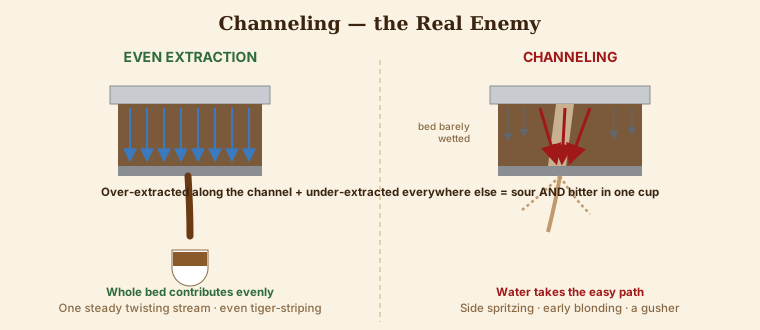
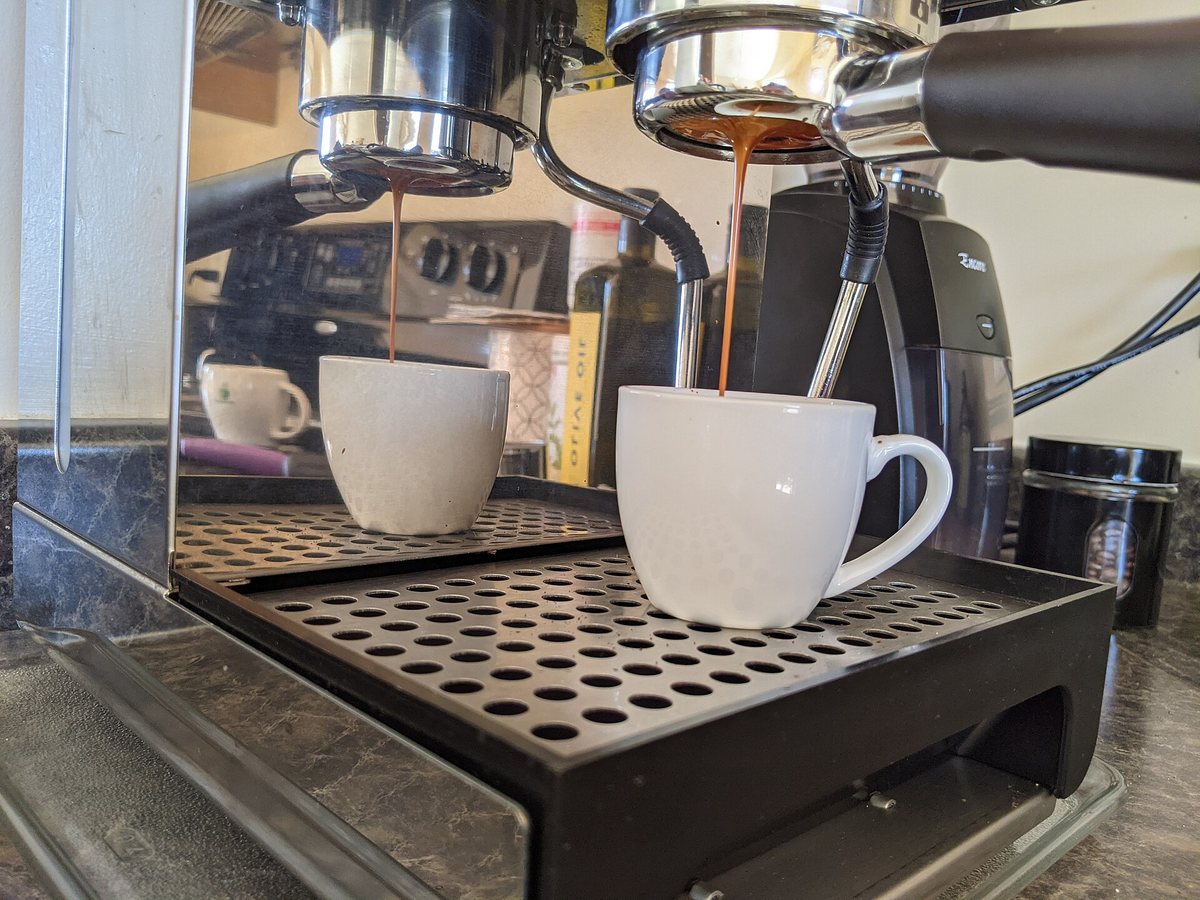
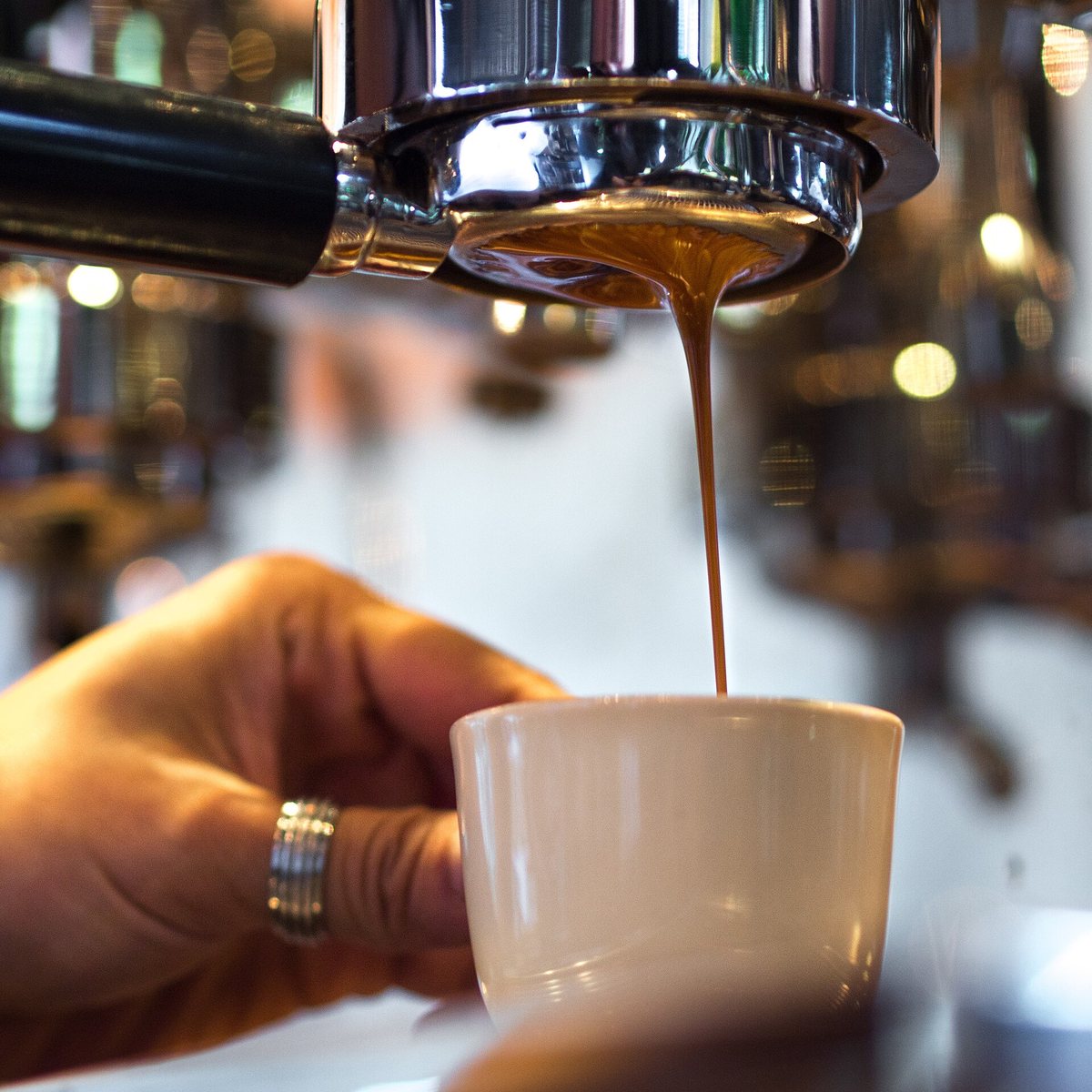
How to see it: get a naked (bottomless) portafilter. The bottom is cut away so you watch the underside of the basket directly — the best diagnostic in espresso, and it costs almost nothing. The tells: spritzing (jets firing sideways), early blonding (the stream going pale well before target yield), gushers (36 g in 15 seconds), and an uneven start (coffee appearing in one spot seconds before the rest). A good shot starts with the whole basket weeping evenly, the drips converge, and it twists into the cup like a rat’s tail.
Crema, and what it actually tells you
Crema is carbon dioxide — trapped in the bean from roasting, dissolved into the water under 9 bar — coming out of solution the instant the coffee hits atmospheric pressure, emulsified into a foam by the coffee’s oils and surfactants. It’s carbonation, stabilized by fat and protein.
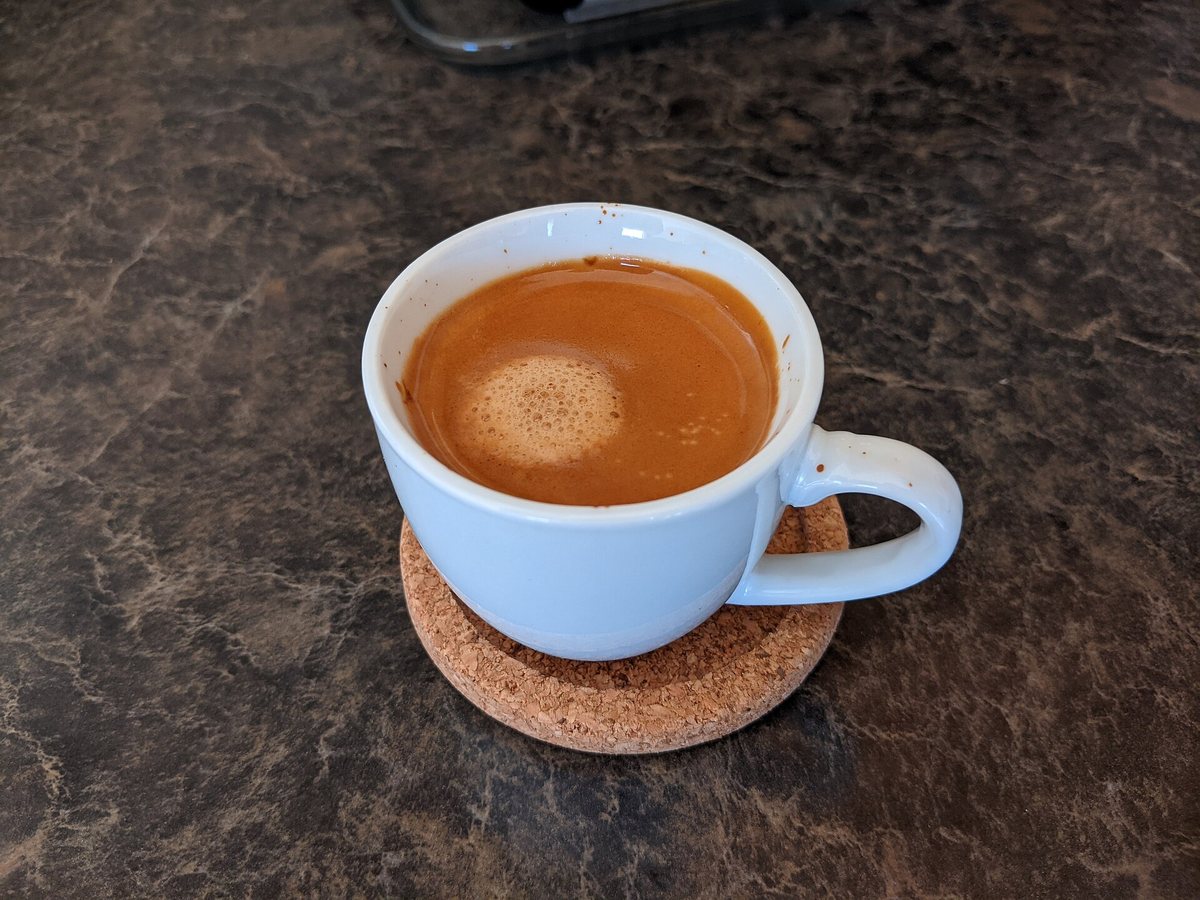
And now the part the industry doesn’t love: crema is not a reliable quality indicator. It’s a decent indicator of freshness and bean type, which is a different claim. Fresh beans give lots of crema because they still hold CO₂; beans a couple of months old give thin, pale, vanishing crema — a useful daily check. Robusta gives dramatically more crema than arabica, which is exactly why traditional Italian blends carry some, and why Cuban and Vietnamese styles lean on it — but a shot of cheap 100% robusta produces a magnificent blanket of crema and tastes like a burnt tire. Dark roasts give more than light ones.
So thick crema tells you “fresh, and probably darker or robusta-containing.” It does not tell you the shot was well extracted or good. Some of the best espresso I’ve had — light, modern, single-origin — had thin, patchy crema that vanished in twenty seconds. And crema tasted alone is bitter and harsh, which is why traditional service stirs the shot first. Judge by taste; the foam is a byproduct.
Machines
Steam toys — avoid. The cheap things that make pressure by boiling water in a sealed vessel reach maybe 1–2 bar, not 9, and only build that by making the water far too hot. It’s a scorched moka pot with worse ergonomics. At that budget buy an AeroPress and a hand grinder (see Brewing) and make genuinely good coffee instead.
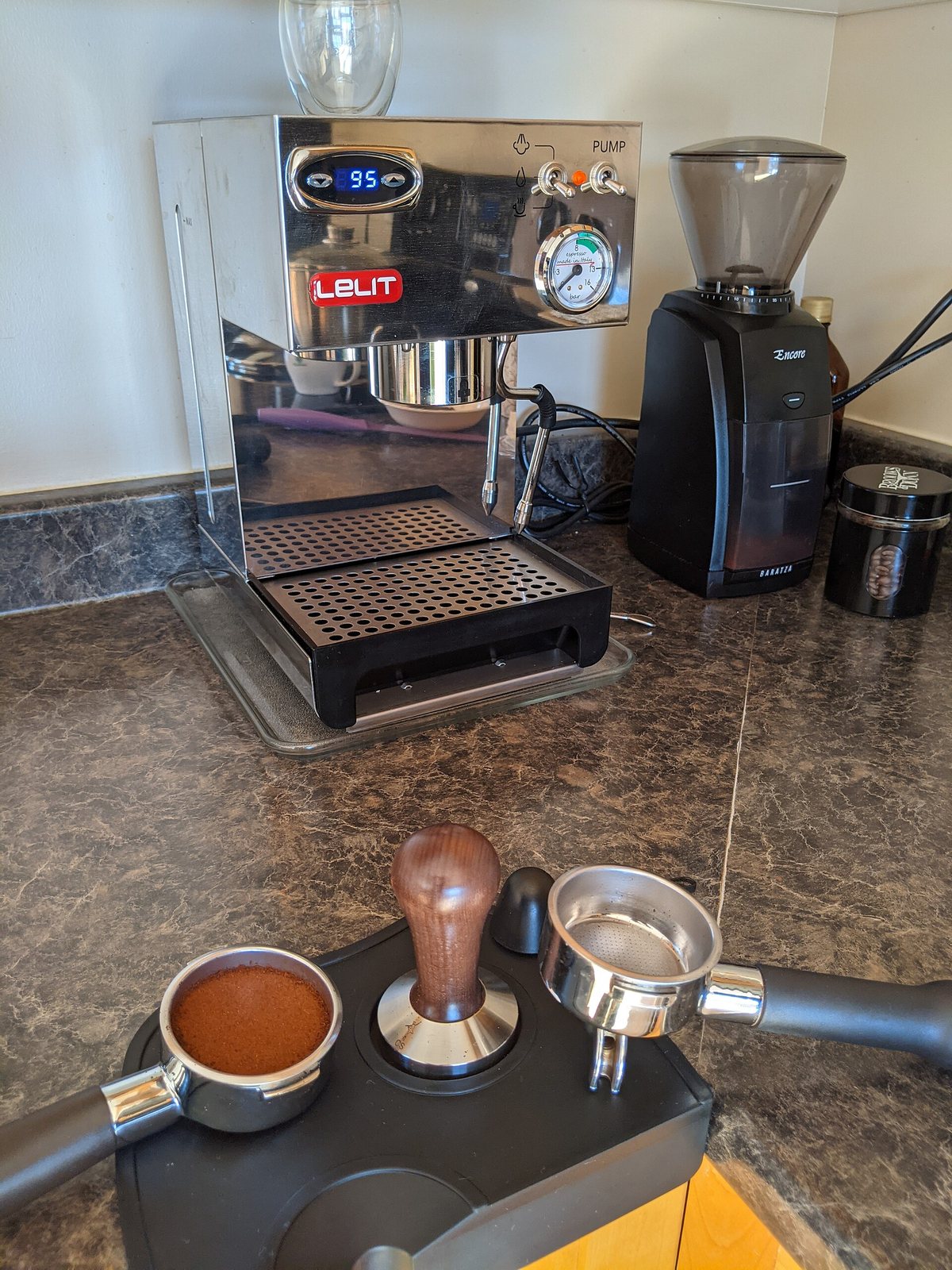
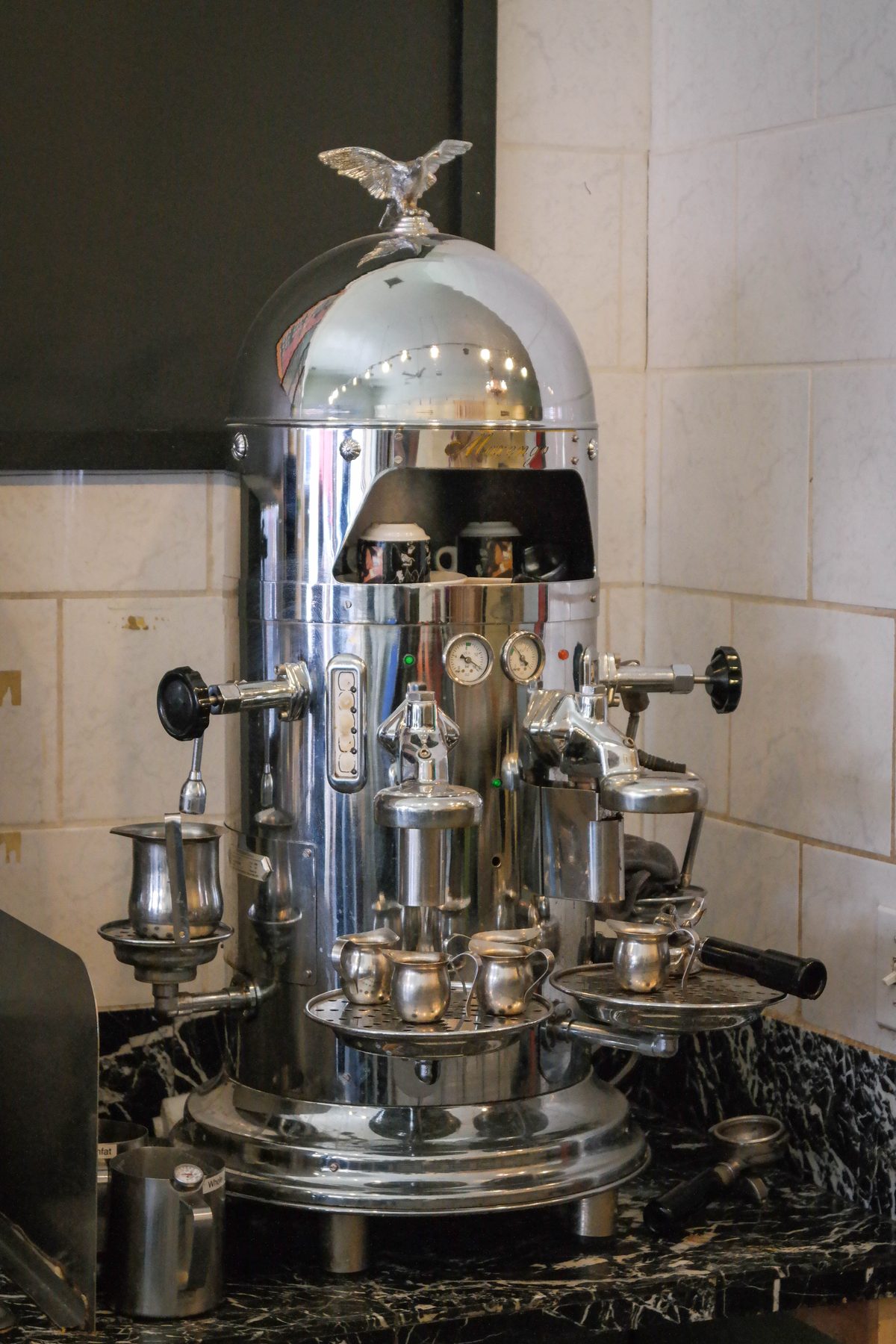
Pump machines are everything real, and they divide by boiler. Single boiler (SBDU) — one boiler brews and steams, switching between two very different temperatures. Cheapest, and the compromise is real: brew, flip the switch, wait 30–60 s to climb to steam, steam, then wait minutes and purge to cool back down. Fine for two drinks, miserable for a dinner party. Heat exchanger (HX) — one steam-temperature boiler with a tube running through it, so brew water is heated on demand. Steam and brew simultaneously from one boiler; the catch is that water sitting in the tube gets too hot, so you cooling-flush before every shot. A learnable ritual, and the sweet spot for a lot of people. Dual boiler — two boilers, one at brew temperature, one at steam. No compromise, no flush, independently PID-stable. The right answer, and the most expensive.
The E61 group deserves a note — a lovely piece of engineering from 1961, still in production. A chunk of chrome-plated brass with a thermosyphon: water circulates between boiler and group head by natural convection alone, no pump, driven purely by hot water rising. The group is always at temperature, with enormous thermal mass, needing no electronics — and it gives passive pre-infusion through a clever three-way valve. Its weaknesses are its virtues inverted: 20–30 minutes to heat up, slow to change temperature when you want it to.
Lever machines — the romance, and I’d argue the truth. No pump: you compress a spring and the spring pushes the water (a spring lever, giving a naturally declining pressure curve — high at the start, tapering as the spring relaxes, which is exactly the profile that pressure-profiling machines spend thousands imitating electronically). Or there’s no spring and your arm is the pump (a manual lever), in which case you feel the puck’s resistance through the handle and control pressure by hand, in real time, with feedback. That’s not nostalgia, it’s control — and it’s a mechanism you could repair with hand tools. Also physically demanding and deeply unforgiving.
Pressure profiling and flow control are the modern rediscovery of what levers did by accident: shape the pressure over the shot — gentle low-pressure pre-infusion, ramp to peak, decline as it runs. It reduces channeling and makes light roasts pullable where a flat 9 bar would blow holes in them. Flow-control paddles retrofit the idea onto E61 machines cheaply, and it’s the best money in the hobby after the grinder.
Portables — the Flair (a manual lever, no electricity, genuinely excellent), Picopresso, the Wacaco family. Real espresso, not toys; a Flair and a good hand grinder out-pull a lot of countertop machines.
Capsules, honestly. Consistent, convenient, expensive. They solve the two hardest problems — grind and puck prep — in a factory, months ago, in a sealed container, and that seal is why they aren’t stale. You give up freshness at the moment, any control at all, and roughly $40–80 per pound. If you want a hot brown drink at a button, that’s an entirely reasonable purchase and I won’t sneer. If you want to make espresso, it’s not the same activity.
Temperature stability and pre-infusion
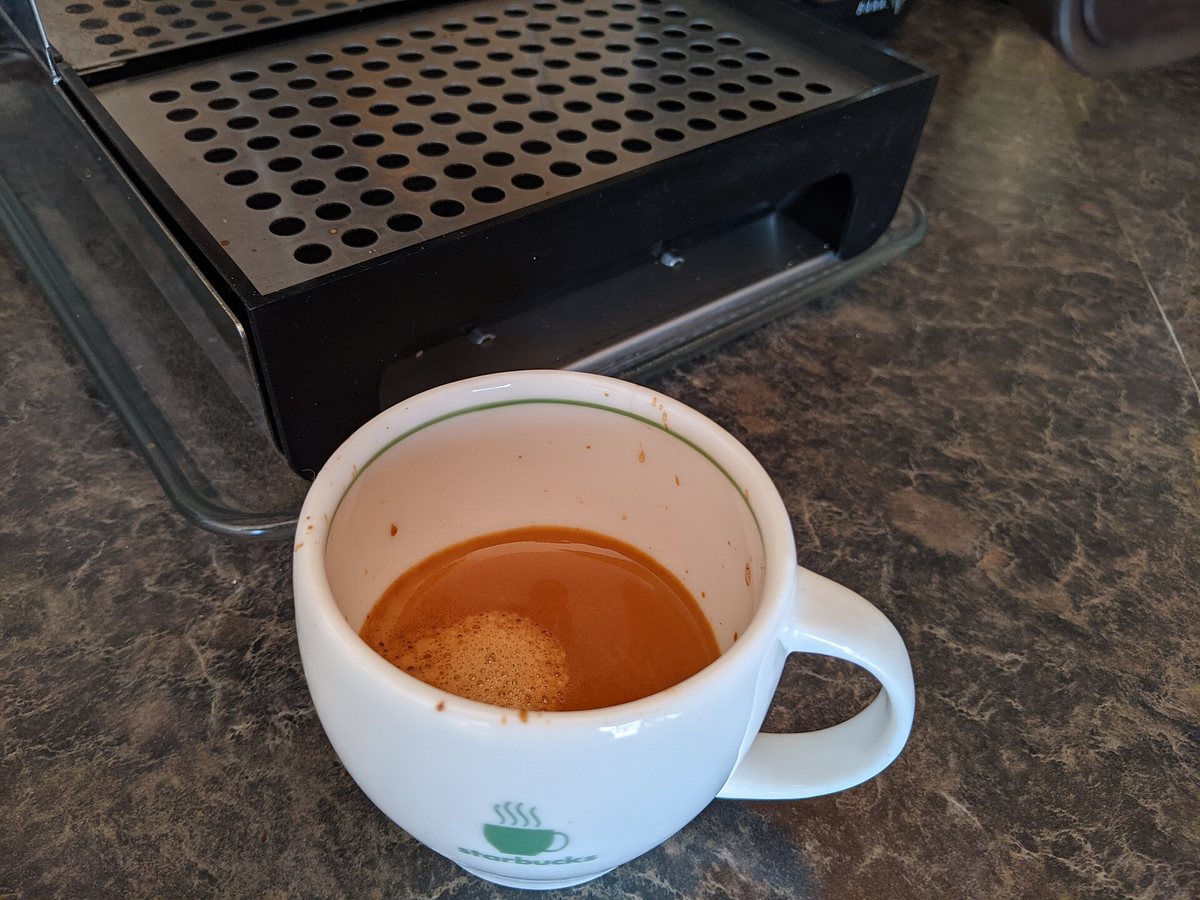
Temperature stability is why machines cost what they cost. A shot is 25 seconds; if the water starts at 96°C and finishes at 90°C, the front and back extracted under different rules and you’re dialing a moving target. Consistency isn’t a luxury — it’s what makes any of your adjustments mean something, because you can’t learn from an experiment whose conditions shift underneath you. PID control (a feedback loop holding a setpoint, versus a dumb thermostat swinging ±5°C) is the modern answer — the same control problem as holding a smoker at 225°F for twelve hours, smaller box. Temperature is also a flavor dial: run hotter (95–96°C) for light roasts, which are dense and stubborn; cooler (90–92°C) for dark roasts, which are soluble and turn bitter fast. If your dark-roast espresso is harsh at every grind setting, drop two degrees before anything else.
Pre-infusion is wetting the puck at low pressure — 1–3 bar for a few seconds — before ramping up. A dry puck hit instantly with 9 bar is a puck being shocked: dry channels form in that first second and stay open the whole shot. Pre-infuse and the bed wets, swells, and settles evenly first, so full pressure meets a coherent bed. It measurably reduces channeling and makes light roasts possible.
Milk
Half of espresso work, and where most home setups — and most cafés — fall down. Latte art is downstream of milk texture, and milk texture is physics.
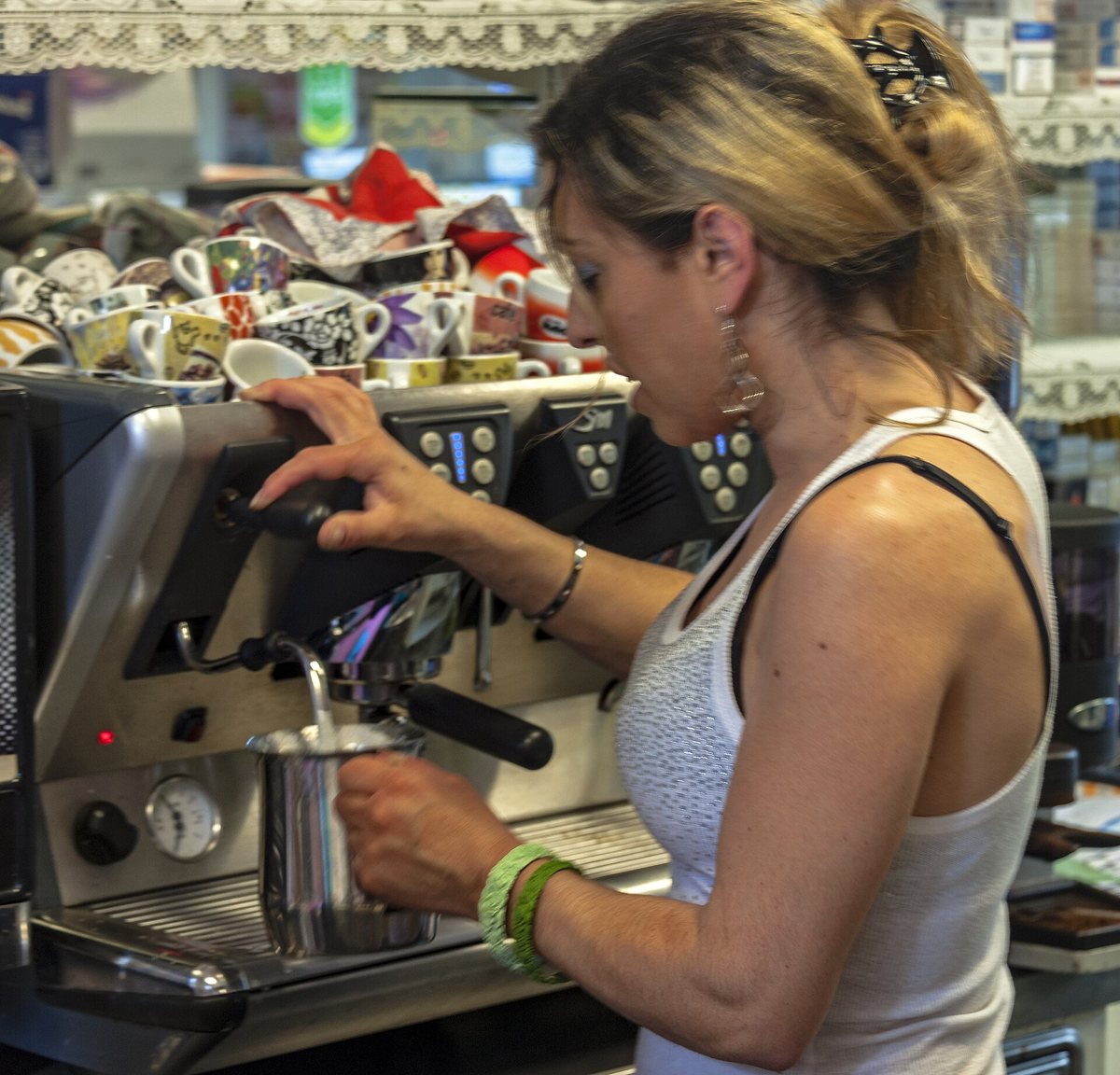
Steam does two jobs, in order. First stretch: hold the wand tip just at the surface so it pulls air in — a light, steady tsk-tsk-tsk, like tearing paper. This is when you add volume, and it only works while the milk is cold. Then texture: submerge the tip and angle it off-center to spin the pitcher into a whirlpool, shearing those bubbles smaller and folding them evenly through. Stretch late and you get big ugly bubbles that never break down.
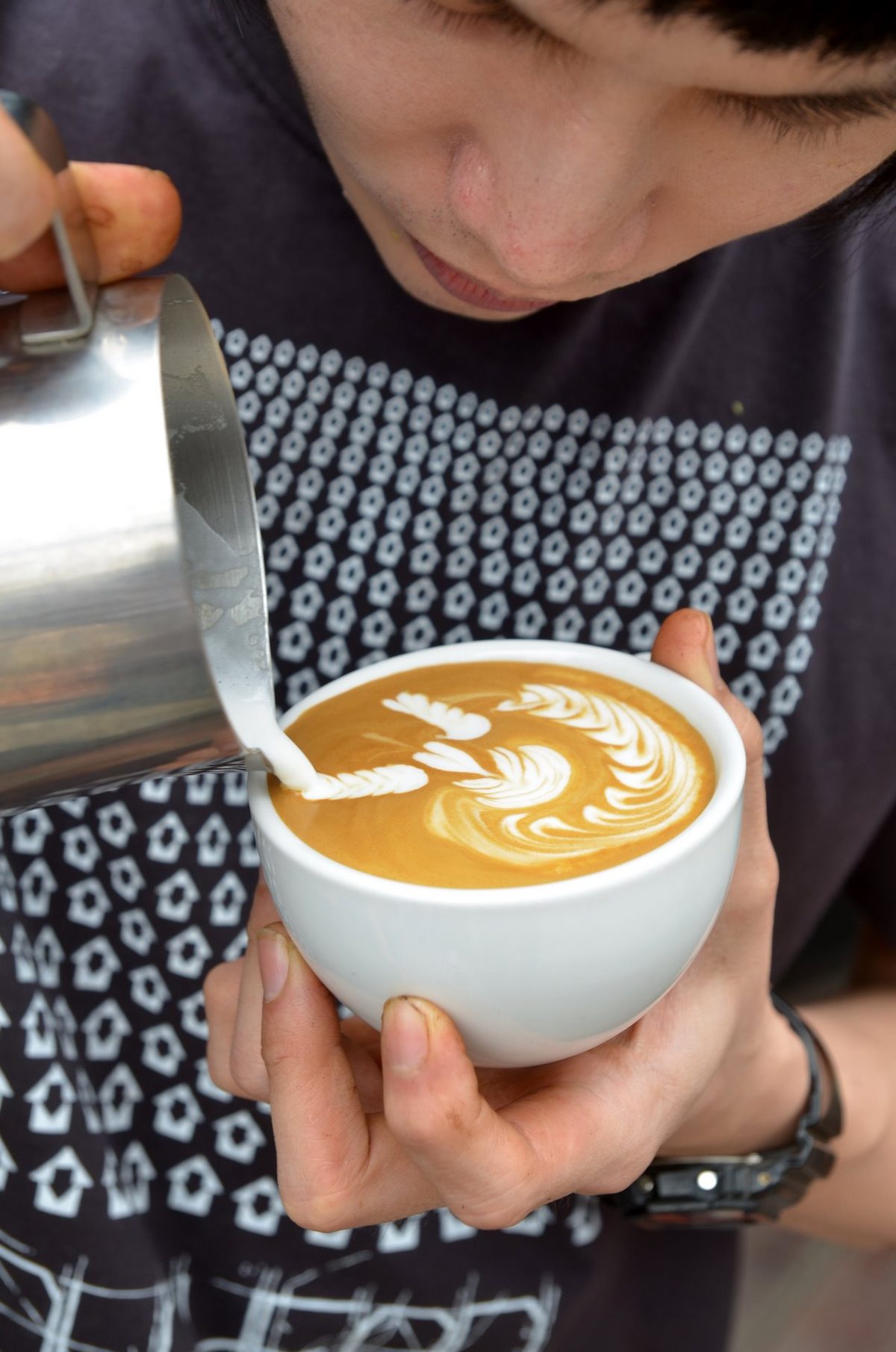
Microfoam is the goal — bubbles so small they’re invisible, giving milk the look and behavior of wet glossy paint. Swirl it: liquid satin, not a bubble bath.
Temperature: 55–65°C (130–150°F), and stop. This is where nearly everyone goes wrong. Milk’s sweetness peaks around there because lactose reads sweeter with warmth and the proteins are just denatured enough to hold a stable foam. Past ~70°C (160°F) the whey proteins denature too far, the foam collapses, and the milk throws off sulfur compounds — the cooked, scalded, faintly eggy taste in bad café lattes. The damage is permanent and takes about three seconds. No thermometer needed: hand on the pitcher, and when it becomes genuinely uncomfortable to hold — not warm, uncomfortable — you’re at about 60°C. Overheated milk is the single most common flaw in the drink.
Latte art, briefly, because it’s the visible part and the least important: it exists only if the microfoam is right. You cannot pour a rosetta with bubbly milk at any skill level. Get the milk glossy and the art follows — which is also why it’s a genuine quality signal.
The drink family tree. Every one is the same shot; the variables are water, milk, and foam.
| Drink | Build |
|---|---|
| Espresso | The shot, alone. ~1:2, ~36 g. The reference. |
| Ristretto | A short shot, ~1:1–1:1.5. Intense, syrupy. |
| Lungo | A long shot, ~1:3+. Bigger, more developed, more bitter. |
| Americano | Shot + hot water. (Espresso into water keeps the crema.) |
| Macchiato | Shot “marked” with a dollop of foam. Tiny and strong. |
| Cortado | Shot cut ~1:1 with steamed milk, minimal foam. |
| Flat white | Double, ~1:3–1:4, all silky microfoam, no dry cap. |
| Cappuccino | ⅓ espresso, ⅓ steamed milk, ⅓ foam. Airy, foam-forward. |
| Latte | Shot with a lot of steamed milk, thin cap. The canvas. |
| Mocha | Latte with real chocolate. |
| Affogato | A shot over vanilla gelato. The best two-ingredient dessert there is. |
What else goes in — syrups, spices, condensed milk, the alternative milks and how they behave under steam — is on additions. And espresso goes into food beautifully: it’s the soak in a proper tiramisu, the point of Keller’s coffee and doughnuts, and what makes my sourdough discard espresso chocolate cookies taste like more than chocolate. More on cooking with coffee.
Maintenance, and what actually kills machines
Espresso machines don’t die of old age. They die of water and neglect.
Backflushing — weekly, or daily on a busy machine. A blind basket goes in the portafilter, so the pump’s water is forced backward through the three-way valve, flushing the group head. With detergent it strips the rancid coffee oils that build up on the shower screen, and rancid oil is a flavor problem before it’s a mechanical one — a neglected group makes every shot taste faintly stale no matter how fresh the beans. (This needs a three-way valve; most single boilers don’t have one, so you clean the screen by hand.)
Gaskets harden and compress over about a year. The tell: the portafilter handle creeps further right as you lock it in, and eventually it leaks. A $5 part and twenty minutes.
Descaling vs. water treatment, and this is the important one. Descaling runs acid through to dissolve scale that’s already deposited — it works, it’s harsh, and on some boilers it does its own damage. Water treatment prevents the scale forming at all, and prevention wins by a mile. Water chemistry is what kills espresso machines: hard water deposits calcium carbonate fastest on the hottest surfaces, which is your heating element. Scale insulates the element from the water it’s meant to heat, so it runs hotter and hotter until it burns out. It narrows the fill probe until the machine misreads its own water level; it clogs the group and the gicleur jet. Slow, silent, total — and entirely preventable. Never use distilled or RO either: it makes bad coffee (see Brewing) and, being mineral-hungry, is corrosive and can fool conductivity-based level probes into thinking the boiler is empty. Aim for that moderate middle — roughly 50–150 ppm TDS, low alkalinity. For a commercial machine, filtration and softening isn’t an accessory, it’s part of the purchase; I make that case in the coffee program.
Daily: wipe and purge the steam wand immediately after every use, every time — milk bakes onto a 130°C wand in seconds and then it’s a scrubbing job and a hygiene problem. Rinse the portafilter, don’t soap it.
The honest closing
There’s a diminishing-returns curve here, and it’s steeper than in almost any hobby I know. The distance between a $150 setup and a $1,200 setup is enormous — it’s the difference between not being able to make espresso and being able to. Between $1,200 and $6,000 is real but modest: better temperature stability, steam that doesn’t run out, profiling, build quality that lasts twenty years. Between $6,000 and $15,000 is mostly volume and durability, which is a commercial concern, plus the honest fact that a beautiful machine is a nice thing to own and I won’t pretend that’s illegitimate.
So: a $300 grinder and a $500 machine beats a $150 grinder and a $2,000 machine, every time. If you remember one thing, that’s it — the grinder makes espresso possible, the machine makes it pleasant. Then work on the two things that cost nothing and matter most, WDT and a level tamp, and the one that costs $30 and tells you the truth, a naked portafilter. That’s a better setup than most people with three times the budget.
Next: Additions for what goes in the cup, Roasting for where the flavor comes from, and the coffee program for the two-group, run-it-as-a-business version of all of this.
Comments (0)