Coffee · 59 of 64
Turkish Coffee in Sand, and Reading the Cup
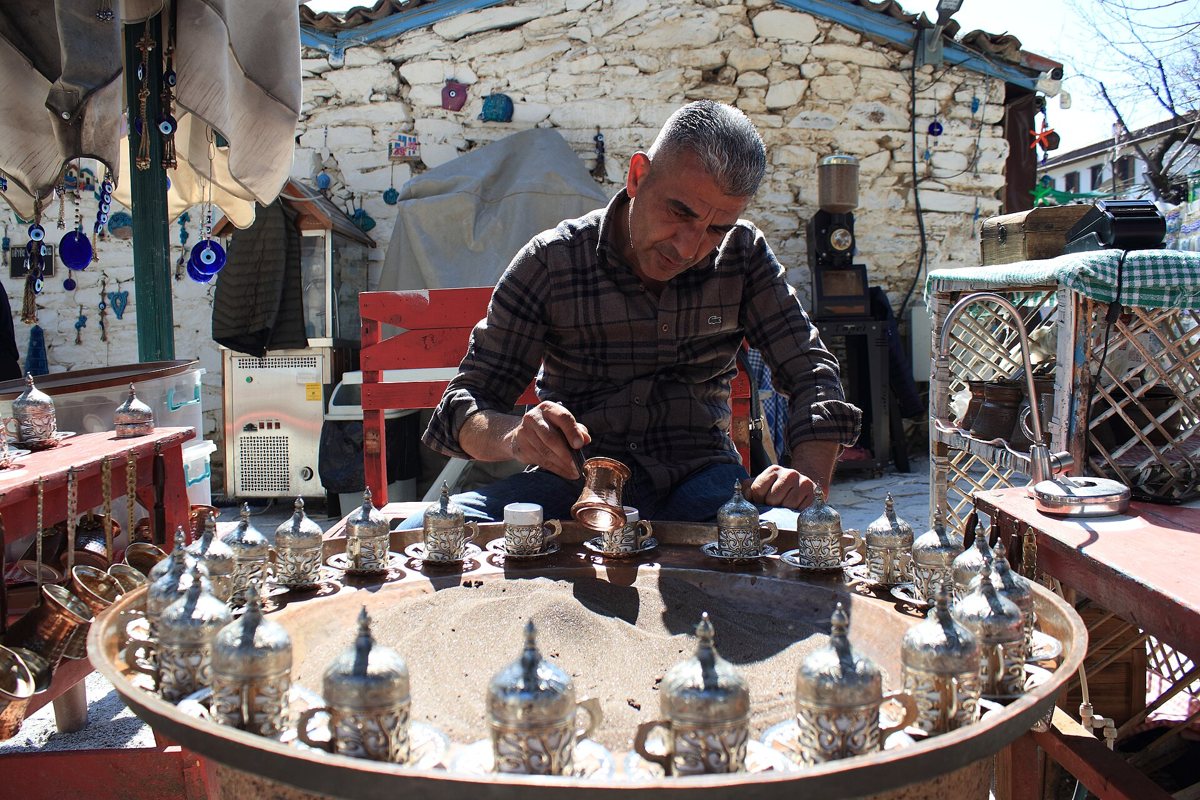
Two customs travel with Turkish coffee wherever it is sold to visitors. One is kum kahvesi, “sand coffee”: the small copper pot, the cezve, is pushed into a tray of very hot sand instead of standing on a flame. The other is kahve falı, reading the grounds left in the cup. Both are presented as ancient. The evidence says one probably is not, and that the other is old, popular and, by Turkey’s own description, entertainment.
Turkish coffee itself, the powder-fine grind, the cezve and the foam, is on Brewing; this page is about the sand and the cup.
The short version
| Question | Answer |
|---|---|
| What is sand coffee? | Turkish coffee brewed in a cezve pushed into a tray of hot sand. Deeper in the sand means more heat; lifting it means less, so the foam can be raised several times without boiling over. |
| Is it ancient? | Not shown to be. The older practice described in Turkish sources is a pot set in hot ash or embers. A sand-coffee machine maker told Habertürk in 2012 that sand was his own update on ash. Today it is mostly sold in bazaars and tourist quarters. |
| Is Turkish coffee UNESCO-listed? | Yes: “Turkish coffee culture and tradition”, inscribed in 2013. The file describes the pot brewed “on the stove” and never mentions sand. |
| What is kahve falı? | Fortune-telling from the grounds: the cup is turned upside down on its saucer, left to cool, and the shapes the grounds leave are read. |
| Is reading the cup part of the UNESCO listing? | Yes, as a custom. Turkey’s own file says the shapes are read “according to the ‘rules’ of fortunetelling as a part of entertainment”, with “rules” in quotation marks. |
| How old is it? | In western Europe, at least as old as the 1740s: a Vauxhall Gardens painting of 1741–42 and German verse of the 1740s–60s describe it. The story that it began in the Ottoman harem is unproven. |
| Can I make sand coffee at home? | A version: a heavy pan of clean, dry sand on a burner. Or use the stove, as the UNESCO file does. Recipe: Turkish Coffee in Sand. |
Turkish coffee and UNESCO
In December 2013 UNESCO added “Turkish coffee culture and tradition” to its Representative List of the Intangible Cultural Heritage of Humanity (file No. 00645). UNESCO’s summary: “The freshly roasted beans are ground to a fine powder; then the ground coffee, cold water and sugar are added to a coffee pot and brewed slowly on a stove to produce the desired foam.” It calls the drink “a symbol of hospitality, friendship, refinement and entertainment” (UNESCO).
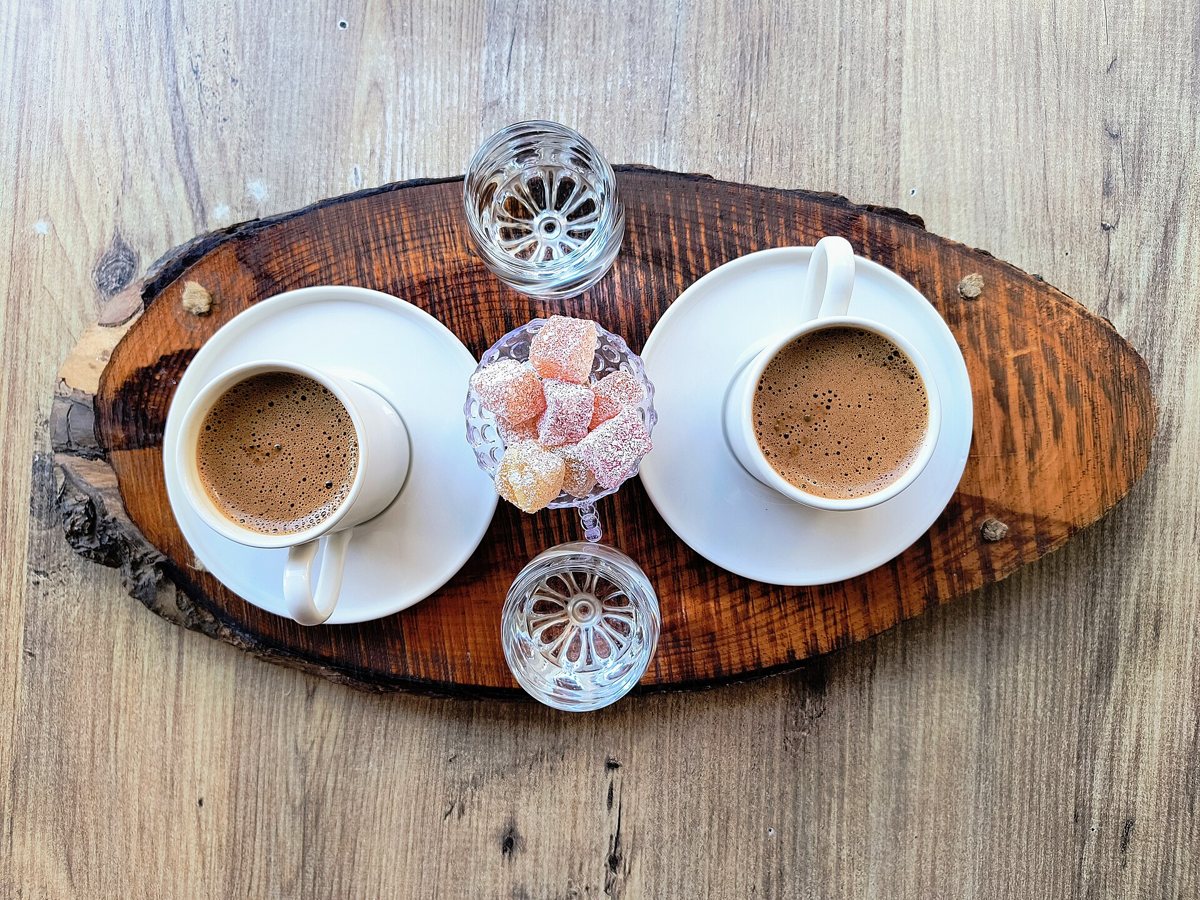
Turkey’s nomination file dates the tradition to “the 16th century when coffee started to be served at coffeehouses in Istanbul” and describes the method: beans ground “(preferably) in a mortar or in a mill until beans turn into a fine powder”, then coffee, cold water and sugar in the pot, “placed on the stove and … brewed slowly ensuring that foam is formed on the surface. Finally, it is served with a glass of water and Turkish delight” (nomination file). There is no sand anywhere in it.
Sand coffee
How it works. Sand holds a great deal of heat and passes it to the pot gently and evenly. The cook controls the heat by depth: push the cezve down into the sand and the coffee heats fast; draw it up and it slows. The foam can be brought up, lifted off and brought up again three or four times without the coffee boiling over, which is the whole skill of a Turkish coffee on any heat source (Wikipedia).
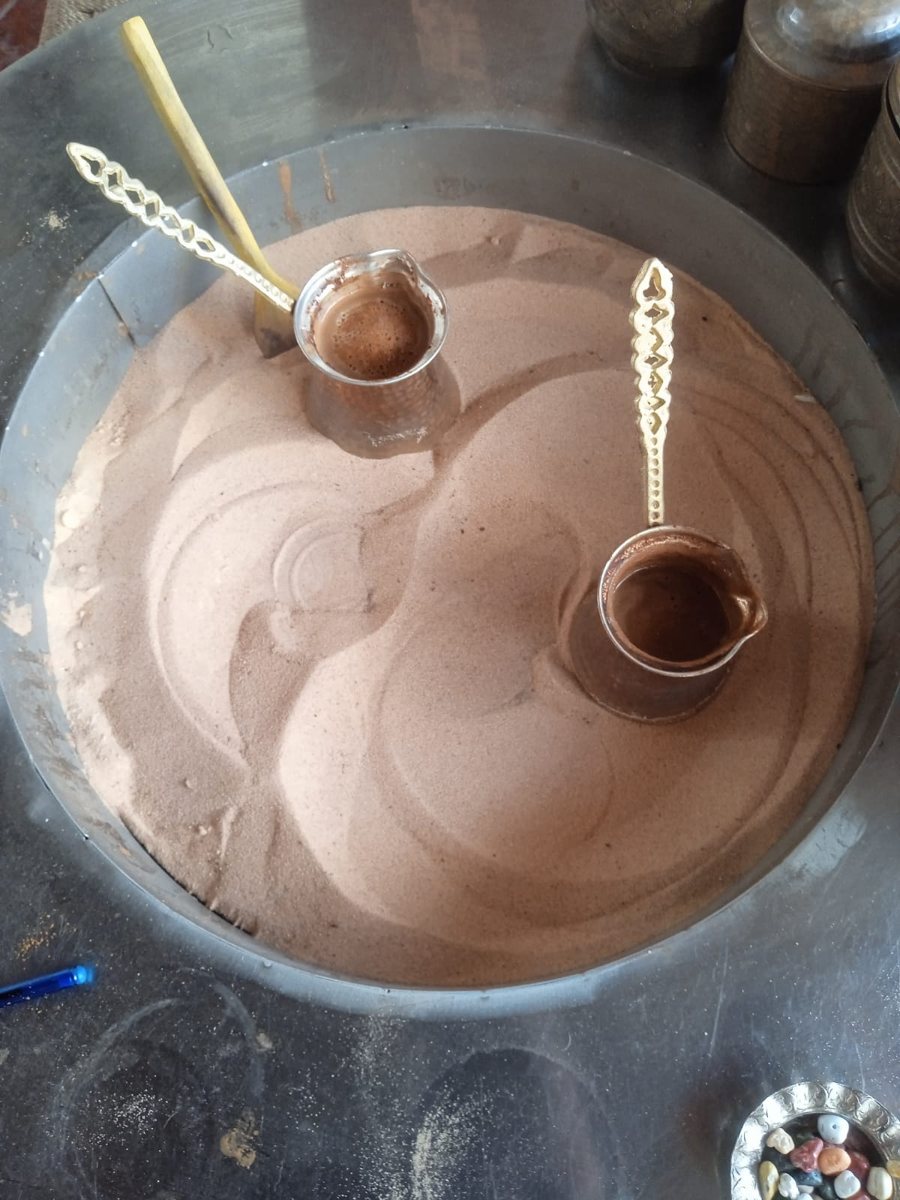
Is it old? English Wikipedia calls it “an ancient traditional method”, but its only source is a coffee company’s blog post of 2022. The Turkish press tells a different story. In 2012 Habertürk interviewed Seyfettin Şimşek of Amasya, who makes sand-coffee machines: “Önceden kahvelerimiz külde pişerdi, biz buna yenilik katarak kumda pişirmeyi denedik” — “our coffee used to be cooked in ash; we added something new by trying cooking it in sand” — and “we produced sand coffee to keep this culture alive more vividly” (Habertürk, 2012). That does not prove nobody heated coffee in sand earlier, but it is the only dated account, and it calls sand the new part.
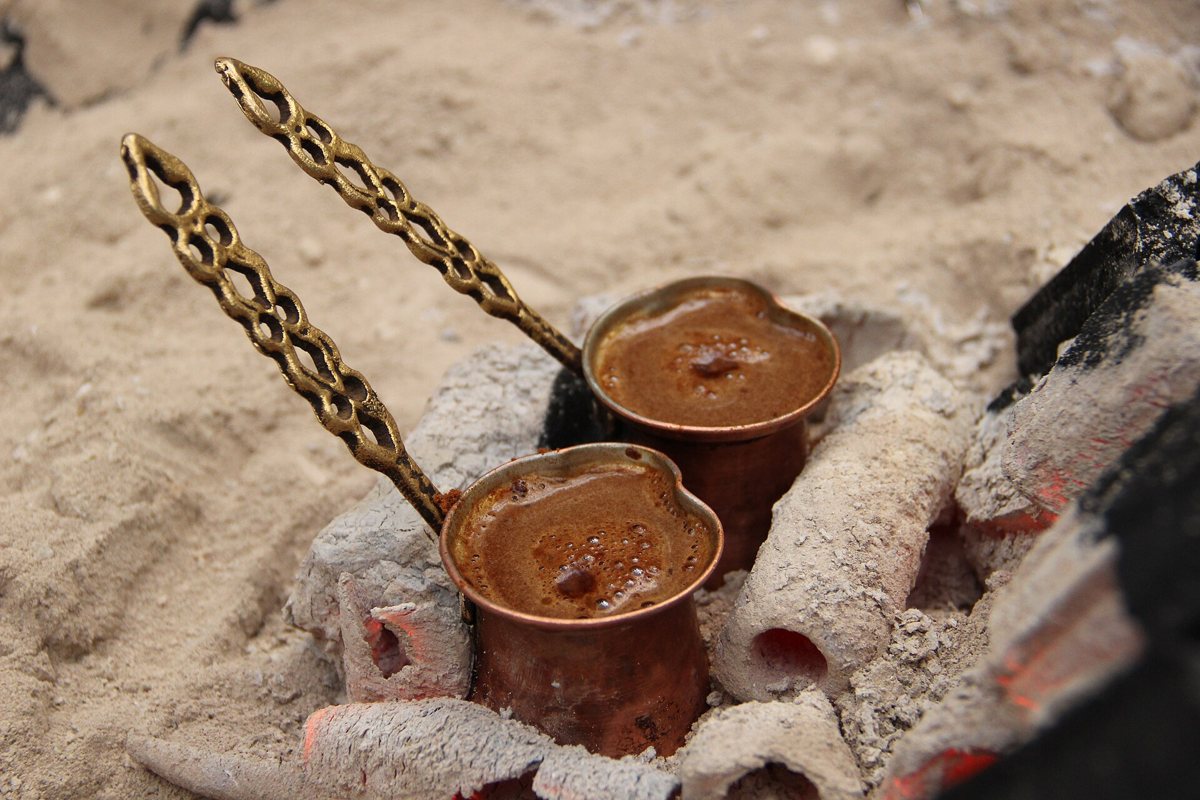
Where it is sold. In 2018 a café owner in Ödemiş told Memurlar that sand and ember coffee (“kumda ve közde”) was made in İzmir’s tourist centres, Kızlarağası Hanı, Kemeraltı and Şirince, and that he had opened in Ödemiş because nobody there did it; a cup of ember coffee cost 5 lira and sand coffee 4 (Memurlar, 2018). It is found the same way in Ankara’s Hamamönü and in Safranbolu: a bazaar show, made in front of the customer. Commercial sand machines are heated by gas or electricity.
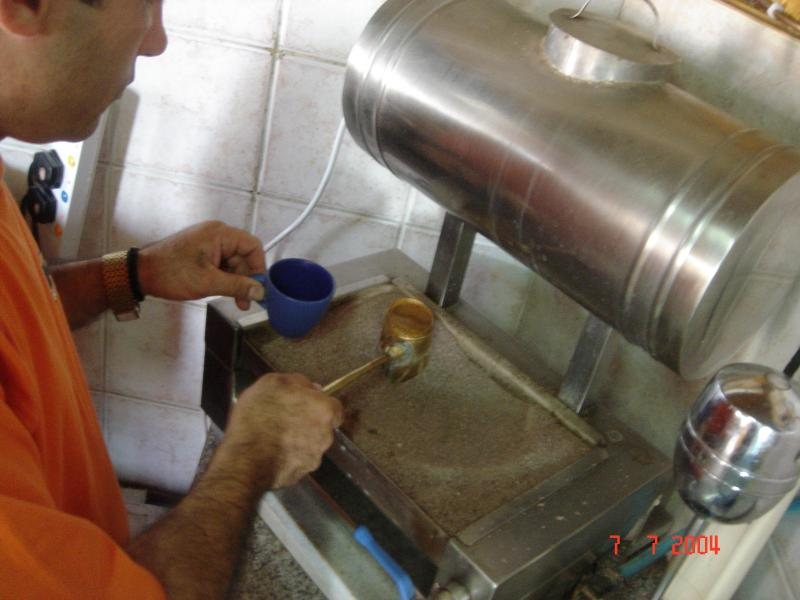
At home. The UNESCO file’s own method, a cezve on the stove at the lowest heat, needs no sand. For the sand version, a heavy cast-iron pan of clean, dry sand on a burner works: the sand takes 10 to 15 minutes to heat through and holds its heat long after the burner is off. Use clean, washed sand meant for the purpose, keep the pan away from the edge of the stove, and let it cool completely before moving it. Recipe: Turkish Coffee in Sand.
Reading the cup
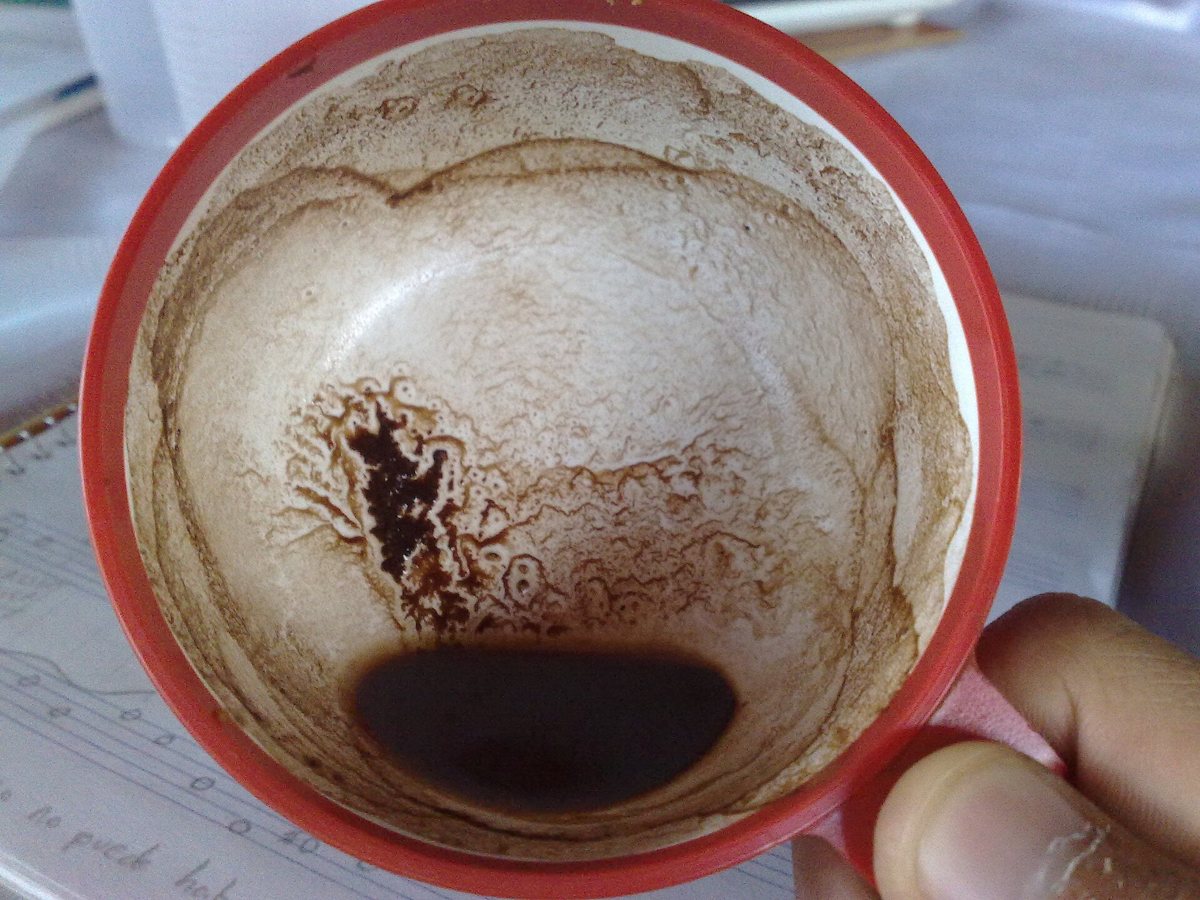
How it is done. Turkey’s nomination file describes it: “after finishing coffee, the cup is rotated, a wish is made, the cup is turned upside down on the saucer, left for cooling. Apparent images are interpreted in the coffee cup according to the ‘rules’ of fortunetelling as a part of entertainment” (nomination file). UNESCO’s summary says only that “the grounds left in the empty cup are often used to tell a person’s fortune.” The heavy sediment of unfiltered coffee is what makes it possible; filter coffee leaves nothing to read.
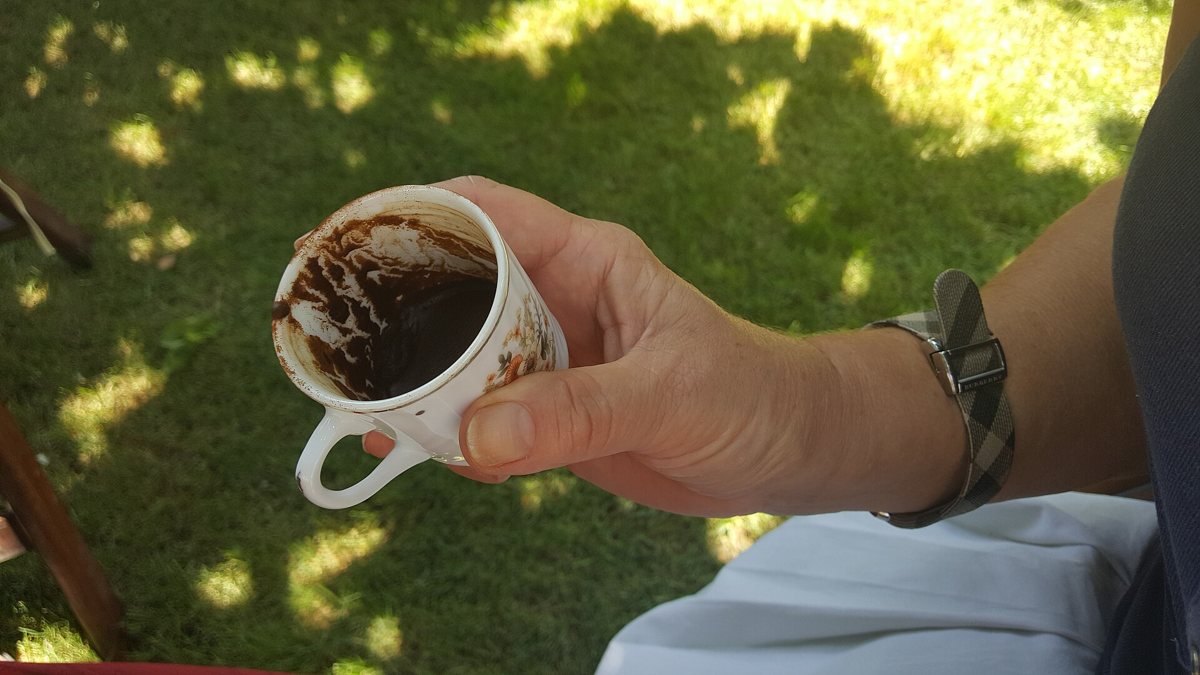
The names. The custom is spread across the old Ottoman world and beyond: Turkish kahve falı, Arabic qirāʾat al-finjān (“reading the cup”), Persian fāl-e qahve, Greek kafemanteía, Serbian gledanje u šolju. English calls it tasseography, from French tasse, cup, which comes from Arabic ṭās, a bowl (Wikipedia). Tea-leaf reading in Britain and Ireland is the same idea with a different drink.
What readers say they look for. In the Turkish tradition, readers are said to divide the cup in two: shapes in the bottom half speak of the past, shapes in the top half of the future, and some say a cup cannot see more than forty days ahead (Wikipedia, citing the Turkish Cultural Foundation). There is no single list of symbols; the lists printed in English are mostly the tea-leaf reader’s (a snake for falsehood, a house for change), and each reader has their own.
How old. The often-told origin, that coffee-cup reading began among the women of the Ottoman harem in the 1500s, rests on commercial websites; Wikipedia flags it as failing verification. What can be dated is western European, and older than is usually said:
- 1741–42, London: Francis Hayman’s supper-box painting for Vauxhall Gardens, engraved and sold as The fortune teller on casting the coffee grounds, from an original design at Vaux-hall Gardens (Wellcome Collection). Reading coffee grounds was a London party entertainment by then.
- 1744 or soon after, Leipzig: Justus Friedrich Wilhelm Zachariä’s comic epic Der Renommiste speaks of “die nun verlorne kunst, aus dickem caffeesatz … die zukunft auszuspähn”, the now-lost art of spying out the future from thick coffee grounds. The poem appeared in 1744 and was revised later; which edition first has the lines is not settled (Grimm’s dictionary, via DWDS).
- 1768: J. P. Uz, “der coffesatz wird nun der neugier zeitvertreiber”, coffee grounds become curiosity’s pastime (same source). Jean Paul has a Kaffeeprophetin in 1797, and Schiller added fortune-tellers “aus dem thee- und kaffeesatz” to his Turandot in 1802, where his Italian source has none.
Two later prints only work if their viewers already knew the custom:
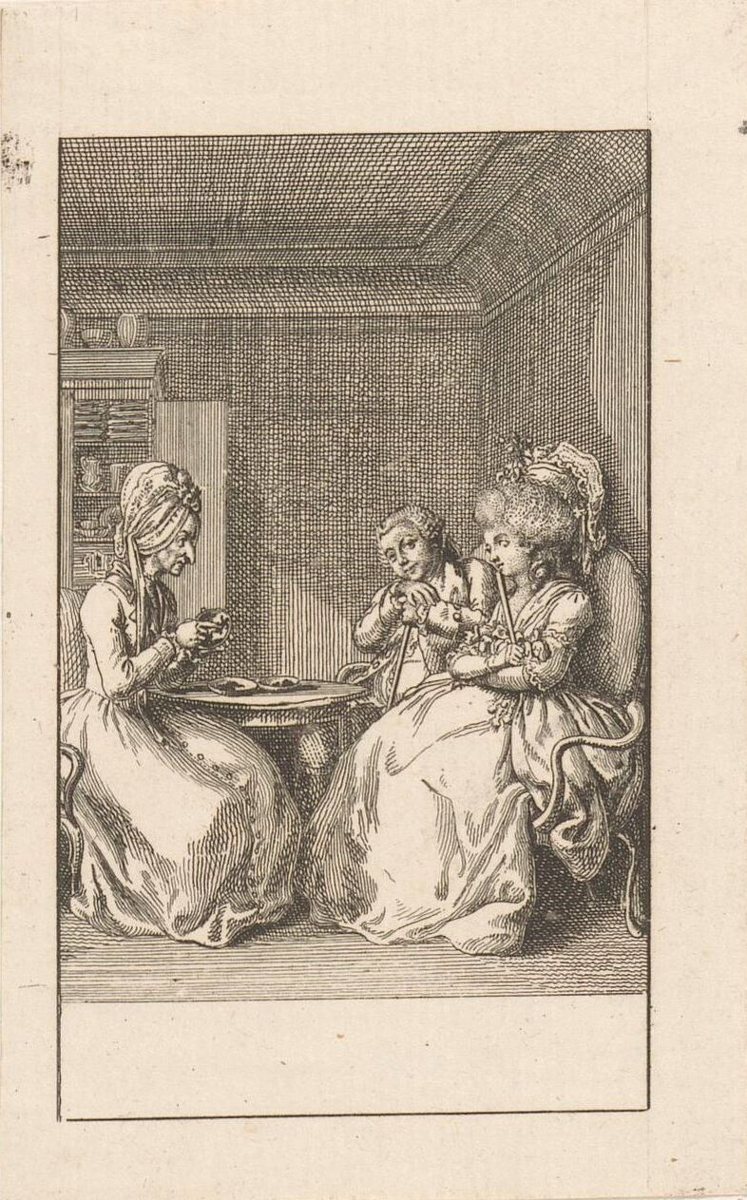
- 1782, Berlin: Daniel Chodowiecki’s etching Folly of Superstition, made for a German edition of Abraham a Sancta Clara and reused in the Göttingen almanac for 1783. The Rijksmuseum catalogues its subject as “divination with the aid of coffee-grounds or tea-leaves” (Rijksmuseum, via Commons).
- 1789, London: Isaac Cruikshank’s Grounds of Fortune Telling, or the Princely Repast, in which Mrs Fitzherbert throws the contents of a coffee cup in the face of the Prince of Wales. The pun in the title needed a buyer who knew about reading coffee grounds (British Museum, via Commons).


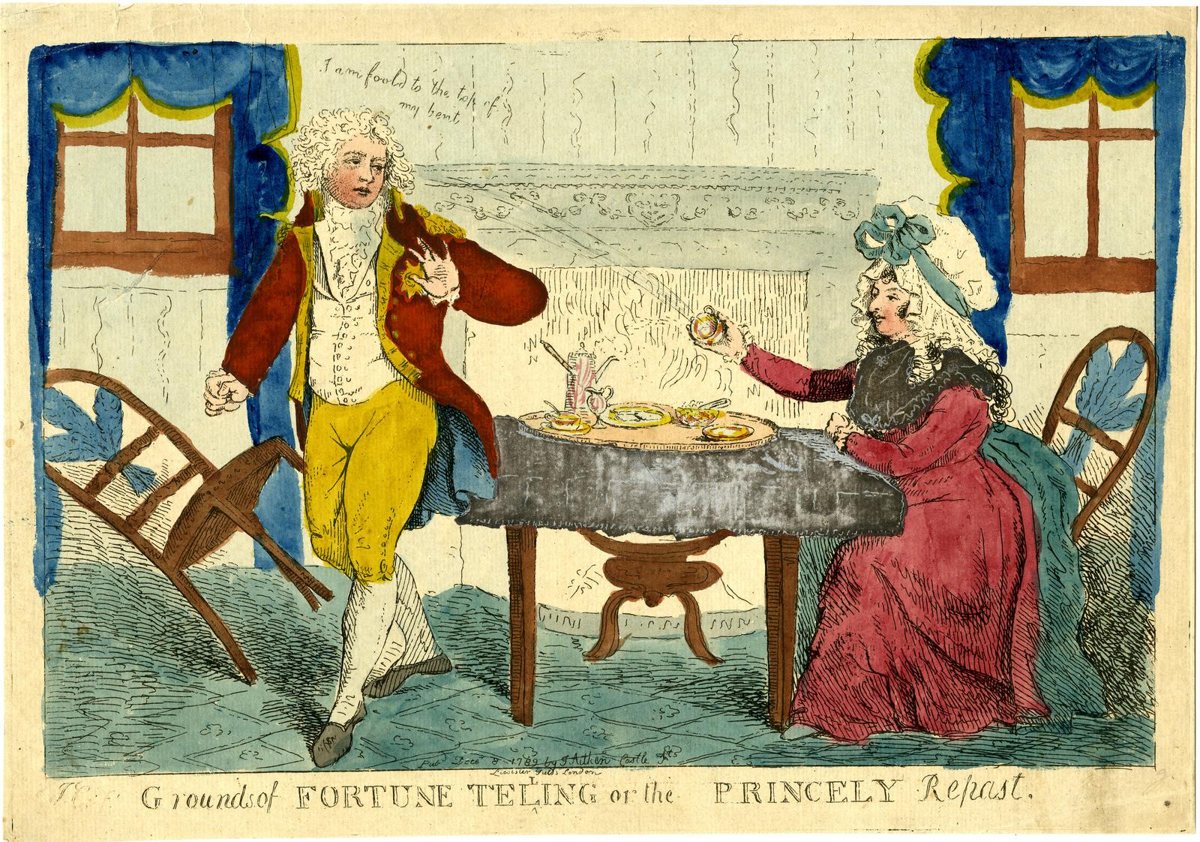
German still has the phrase: Kaffeesatzleserei, “coffee-ground reading”, now means guesswork with no data behind it, the way an economist’s forecast might be dismissed (DWDS). The phrase has outlived the belief.
Is it legal? Reading a friend’s cup is a parlour game and is not regulated. Charging for it is where old laws bit: Michigan made telling fortunes for money a misdemeanour in 1931, under laws dating to 1913, and repealed the ban by Public Act 282 of 1993 (House Bill 5181), effective 1 April 1994, after Battle Creek police raided a restaurant’s “psychic night” and seized money from some 200 patrons (enrolled act; House analysis). Coffee grounds were never named; the 1931 law reached them under “other means”. Petoskey repealed its own local ban, with a penalty of up to $500 and 93 days in jail, in April 2022 (Reason, 2022). Some local codes may still list it.
What is not known
- When coffee was first heated in sand, as opposed to ash or embers, and whether it was ever common before the bazaar machines.
- The first written description of reading coffee grounds. The earliest dated witnesses are the Vauxhall painting (1741–42) and Zachariä’s verse; nothing earlier, in any language, has been found.
- Where cup reading began. The harem story is unproven.
Sources
- UNESCO, Turkish coffee culture and tradition (2013), and the nomination file.
- Habertürk, Kumda kahve keyfi (8 June 2012).
- Memurlar, Kumda ve közde pişen Türk kahvesine büyük ilgi (31 October 2018).
- Wikipedia, Turkish coffee, Tasseography.
- Rijksmuseum, Daniel Chodowiecki, Dwaasheid van het bijgeloof (1782); British Museum, Isaac Cruikshank, Grounds of Fortune Telling (1789).
- DWDS, Kaffeesatz.
- Reason, This Michigan town repealed a ban on fortunetellers (2022).
Comments (0)