Coffee · 1 of 35
A Coffee Glossary
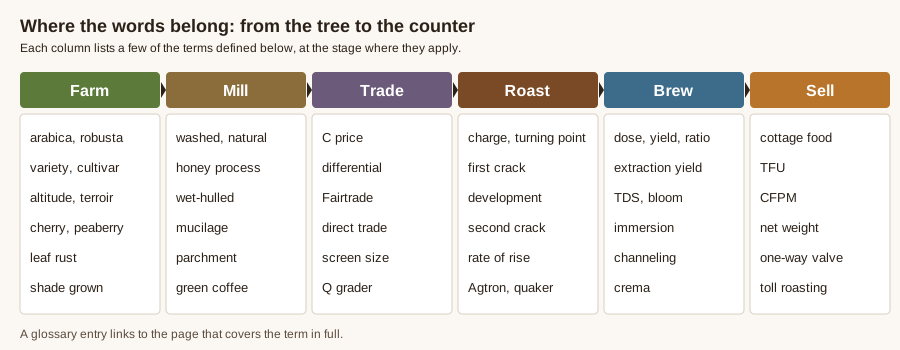
Coffee has a trade vocabulary of several hundred words, and the Coffee pages use most of them. This glossary collects every term of art those pages use, from the farm to the licence, with a plain definition and a link to the page that covers it in full. Each letter is a heading and each term has its own anchor, so any page can link straight to a definition: /coffee/glossary/#first-crack.
Where a number appears, it is the one the linked page uses and sources. Freshness numbers follow Keeping Coffee at Home.
The short version
Ten pairs of words that are most often confused, and the difference in one line each.
| These two | Are not the same |
|---|---|
| Strength and extraction | Strength is how concentrated the cup is; extraction is how much was taken out of the grounds. A weak cup can be perfectly extracted. |
| Dose and yield | Dose is the dry coffee that goes in; yield is the liquid that comes out, weighed. |
| Arabica and quality | Arabica is a species. Most of it is ordinary exchange-grade coffee. |
| Dark roast and caffeine | Bitter is not caffeine. By weight, light and dark carry about the same. |
| Crema and a good shot | Crema shows fresh, darker or robusta-containing coffee. It does not show a well-made shot. |
| Cold brew and iced coffee | Cold brew is steeped cold for hours; iced coffee is brewed hot and chilled. |
| Fairtrade and direct trade | Fairtrade is an audited standard with a price floor; direct trade has no definition at all. |
| The C price and what a farmer is paid | The C price is a futures benchmark in New York; farmers are paid a local price. |
| Cottage food and a food licence | Cottage food covers sealed bags from a home kitchen; a cup of coffee needs a licence. |
| Pasteurised milk and “keeps at room temperature” | Milk is a time-and-temperature-controlled food; black coffee is not. |
A
Acidity
In a cup, the bright, lively sourness of a good coffee, the quality that makes a Kenyan taste of blackcurrant. A compliment in coffee, as long as sugar sits behind it; sharp acidity alone is a sign of under-extraction. See The Bean and Troubleshooting.
Acrylamide
A compound formed in roasting, as in toast and fries, and the reason California once required a cancer warning on coffee. The state’s own 2019 rule says coffee needs none. See Caffeine and Health.
Additional insured
A market, city or landlord named on a vendor’s liability policy, so the policy covers them too. Most markets that ask for insurance ask for this. See Insurance.
AeroPress
A plastic hand brewer, invented in 2005 by Alan Adler, that steeps coffee and then pushes it through a paper filter with a plunger: a hybrid of immersion and pressure. It has its own world championship. See Brewing and Competitions.
Afterburner
A second, gas-fired chamber that burns a roaster’s smoke and odour before it leaves the stack. A catalytic one for a small drum is listed at $11,500 to $22,000 as of October 2026. See Smoke, Air Permits and the Neighbours.
Agitation
Stirring, swirling or a turbulent pour: anything that moves fresh water against the grounds and speeds extraction. The lever nobody measures and everybody changes. See Brewing.
Agtron number
A roast-colour measurement from an Agtron analyzer, which reads reflected near-infrared light. The scale runs backwards: a higher number is a lighter roast. The trade’s cupping roast is Agtron 63, ground. See How Coffee Is Roasted.
Airpot
An insulated pump-top flask for brewed coffee or hot water. Coffee holds for about three hours in a sealed airpot without a difference professionals could detect. See Sampling and Hot Water and Power.
Alkalinity
How much the water can neutralise acid, mostly from bicarbonate. High alkalinity flattens a coffee’s brightness; the SCA’s current guidance is 40 to 70 ppm as calcium carbonate. See Water.
Americano
A shot of espresso with hot water added afterwards. Not the same as a lungo, which pushes the extra water through the coffee. See Espresso.
Anaerobic fermentation
A processing method borrowed from winemaking: cherries or seeds fermented in sealed tanks without oxygen, sometimes under carbon dioxide (carbonic maceration). The results range from spectacular to candy-like. See The Bean.
Arabica
Coffea arabica, the species specialty coffee is built on: about 56% of the world crop in the USDA’s 2026/27 forecast. It grows high, carries more sugar and aroma than robusta and half the caffeine, and is badly prone to leaf rust. “100% Arabica” on a bag states the species, not the quality. See The Bean.
Assumed name
A trading name other than the owner’s own, often called a DBA (“doing business as”). In Michigan a sole proprietor files it with the county clerk and an LLC with the state. See Setting Up the Business.
B
Batch brew
Filter coffee made in quantity in an automatic brewer, usually into an airpot or a thermal carafe. The workhorse of cafés and caterers. See The Drinks.
Bean Belt
The band around the equator, roughly between the tropics, where coffee grows. See Origins.
Bird Friendly
The Smithsonian’s certification: organic, plus a real shade canopy of mostly native trees. The only seal with a measurable shade standard. See Labels and Certifications.
Blade grinder
A spinning blade that chops beans, like a spice mill. The grind is uneven, so the cup is part over- and part under-extracted. See Grinders.
Blend
Two or more coffees roasted together or mixed after roasting, usually for consistency through the year or for espresso. See Roast Logs, Quality Control and Blending.
Bloom
The swelling and bubbling when hot water first hits fresh grounds, as trapped carbon dioxide escapes. Pour-over methods wet the grounds first and wait about 30 seconds, so the gas does not push water away from the coffee. A bloom that hardly rises means old coffee. See Brewing.
Body
How heavy a coffee feels in the mouth, from oils and fine particles. A French press and a natural-process coffee have more; a paper filter and a washed coffee have less. See Brewing.
Bottomless portafilter
See naked portafilter.
Brew ratio
The weight of coffee to the weight of water, written 1:16 (one gram of coffee for sixteen of water). Filter coffee runs 1:15 to 1:18; espresso is a different measure, dose to drink. See Coffee to Water: The Ratios.
Burr grinder
A grinder that crushes beans between two toothed rings or discs set a fixed distance apart, giving an even grind. A blade grinder chops instead. See Grinding and Grinders.
Bypass
Water that runs past the coffee instead of through it, down the paper wall of a pour-over or round the edge of a puck. It dilutes the cup without extracting anything. See Troubleshooting.
C
C price
The price of the arabica futures contract on ICE Futures U.S.: 37,500 pounds of exchange-grade washed arabica, quoted in cents a pound. A benchmark for traders, not the price a farmer is paid. It passed $4 a pound in February 2025 and stood at $2.93 on 5 October 2026. See The Coffee Market.
C.A.F.E. Practices
Starbucks’ own audited buying code. “Ethically sourced” on a Starbucks bag refers to it. See Labels and Certifications.
Café au lait
Coffee with hot milk. In New Orleans, dark-roast coffee with chicory and scalded milk in roughly equal parts. See Chicory and New Orleans Coffee.
Café de olla
Mexican coffee brewed in an unglazed clay pot with cinnamon and piloncillo (unrefined cone sugar). See What People Put In It.
Cafecito
Cuban espresso: the first dark drops of the shot whipped with sugar into a pale foam (espuma), with the rest of the shot pulled through it. A colada is a larger one for sharing in tiny cups. My first one came through a walk-up window in Miami. See What People Put In It.
Cafestol
An oil in coffee, with its relative kahweol, that raises LDL cholesterol. A paper filter holds it back; a French press, a metal filter, boiled and Turkish coffee let it through. See Caffeine and Health.
Caffeine half-life
The time the body takes to clear half the caffeine drunk: about five hours on average, and anywhere from about three to fourteen. See Caffeine and Health.
Cà phê sữa đá
Vietnamese iced coffee: dark robusta dripped through a phin onto sweetened condensed milk, then poured over ice. I drank it every morning in Vietnam. See The Drinks.
Carbonic maceration
Whole cherries fermented in a sealed tank under carbon dioxide, a winemaking method applied to coffee. See anaerobic fermentation.
Cascara
The dried skin and pulp of the coffee cherry, Spanish for “husk.” Brewed as a tea; approved as a food in the EU in 2022. See The Bean and Cooking With Coffee.
Certified food protection manager
A person who has passed an accredited food-safety manager exam, such as ServSafe Manager. In Michigan a Transitory Food Unit, a mobile unit and a shop each need one; a temporary licence does not. Abbreviated CFPM. See Food-Safety Certification.
Chaff
The papery silverskin that loosens and blows off the beans during roasting. It goes everywhere, and it burns. See Roasting Your Own and Smoke, Air Permits and the Neighbours.
Channeling
Water finding a fast path through a weak spot in an espresso puck, so part of the coffee over-extracts and the rest is hardly touched. The shot tastes sour and bitter at once and may spurt from the basket. See Espresso and the diagram on Troubleshooting.
Charge
Dropping the green beans into a preheated roaster; the charge temperature is the drum’s temperature at that moment, and it sets the course of the whole roast. See How Coffee Is Roasted.
Cherry
The fruit of the coffee tree. Inside the skin, pulp and sticky mucilage are two seeds wrapped in parchment and silverskin: the coffee beans. See The Bean.
Chicory
A roasted root, Cichorium intybus, brewed alone or blended with coffee. It has no caffeine. New Orleans is famous for it. See Chicory and New Orleans Coffee.
Chloramine
A disinfectant some water utilities use in place of chlorine. Unlike chlorine it does not boil off and a plain carbon filter removes it slowly. Both spoil coffee. See Water.
Chlorogenic acids
The main acids in green coffee, which roasting breaks down. Robusta has more, which is part of its bitterness. See The Bean.
City, Full City
American roast-level names. City is the end of first crack; Full City is on the verge of second crack. They mean different things at different roasteries. See roast level.
Clever dripper
A cone brewer with a valve in its base: it steeps like a French press, then drains through paper when set on a cup. See The Drinks.
Coffee Value Assessment
The Specialty Coffee Association’s tasting system, published in 2023 and adopted as standards in 2024, replacing the 100-point cupping form. It separates describing a coffee from scoring how much the taster liked it. Abbreviated CVA. See Cupping.
Cold brew
Coffee steeped in cold or room-temperature water for many hours, then filtered. Its pH is about the same as hot coffee’s; it carries fewer titratable acids. See Brewing and Iced Coffee and Ice.
Commissary
A licensed kitchen that a mobile food unit returns to for water, cleaning and supplies. Michigan’s Mobile Food Establishment licence requires a return every 24 hours. See The Michigan Rules.
Consignment
A shop sells a producer’s goods and pays for them only once they sell, keeping a share. Allowed only for licensed product, not cottage food. See Wholesale and Consignment.
Cooling tray
The perforated pan under a drum roaster’s door, with a stirring arm and a fan, that pulls heat out of the beans the moment they drop. Beans that are not cooled fast keep roasting. See How Coffee Is Roasted.
Cottage food
Michigan’s exemption that lets non-perishable foods made in a home kitchen be sold without a licence, face to face or (since 24 March 2026) online to Michigan buyers, with a set label and a $50,000 a year cap. Bagged roasted coffee qualifies; a cup of coffee does not. Other states write their own lists. See The Michigan Rules.
Crema
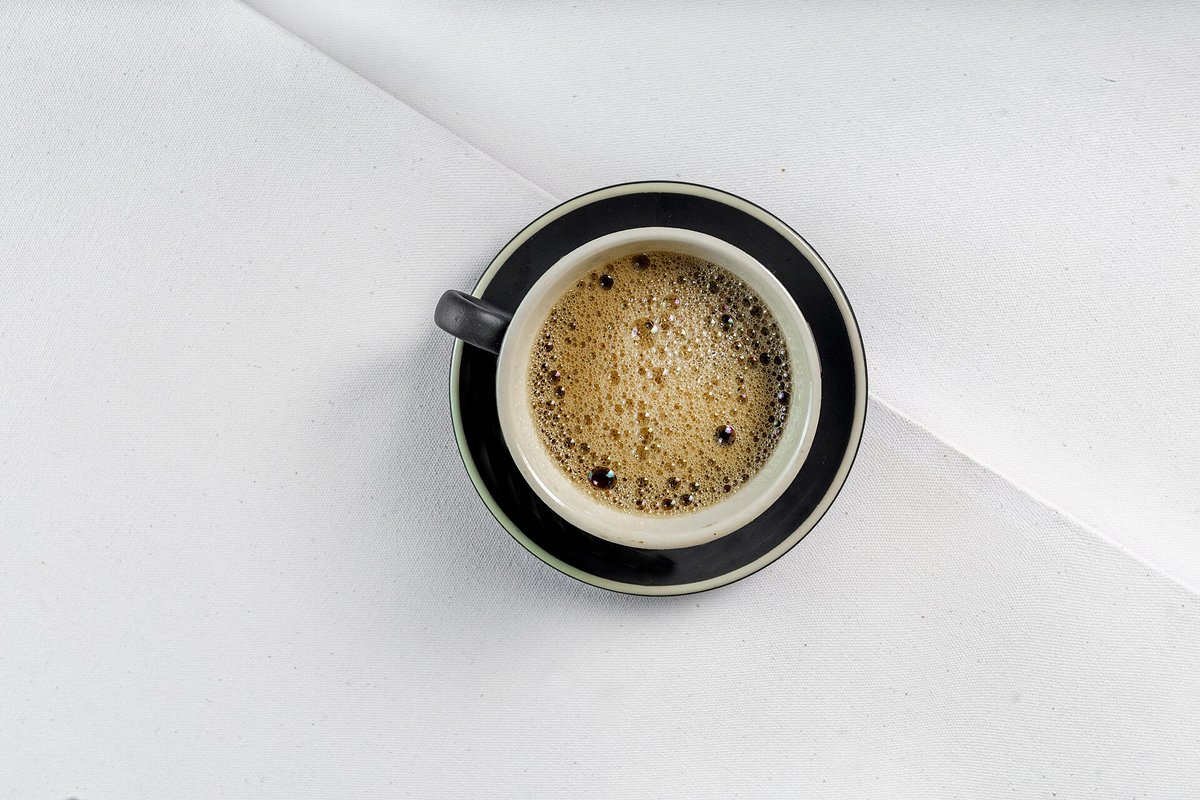
The tan foam on an espresso: carbon dioxide from the roast, dissolved under pressure, coming out of solution and held by the coffee’s oils. It shows fresh, darker or robusta-containing coffee; it does not show a good shot. See Espresso.
Crust
The floating layer of grounds that forms on top of a cupping bowl; it is left alone for three to five minutes and then broken with a spoon. See Cupping.
Cup of Excellence
A competition and auction for the best lots of a producing country, scored over several rounds by international panels; a coffee needs 87 or more to win. See Cupping.
Cupping
The trade’s standard way of tasting coffee: grounds steeped in open bowls at a fixed ratio, the crust broken, and each spoonful slurped. See Cupping.
D
Decaf
Coffee with most of the caffeine removed from the green beans, by water (Swiss Water), carbon dioxide, ethyl acetate or methylene chloride. A cup still carries about 2 to 15 mg. See Caffeine and Health.
Degassing
Roasted coffee giving off the carbon dioxide the roast left in it: fast in the first day or two, then slowly for weeks. A dark roast gives off about four times what a light roast does. See Packaging Roasted Coffee.
Density
How heavy a bean is for its size. High-grown beans are denser, take more heat in the roaster and are often graded by it. See The Bean.
Development
The stretch of a roast between first crack and the drop, where sugars finish and acids soften. Too short and the coffee is sour and grassy (“underdeveloped”). See How Coffee Is Roasted.
Dial in
Adjusting the grind (and sometimes dose and ratio) for a new coffee until the shot or the brew tastes right. In espresso, time is the readout of the dial, not a setting. See Espresso.
Differential
The premium or discount, over or under the futures price, at which a particular lot of physical coffee sells, for its origin, grade and delivery date. See The Coffee Market.
Direct trade
A roaster’s claim to buy straight from a farm. It has no definition, no standard and no audit; it can mean a great deal or nothing. See Labels and Certifications.
Dose
The weight of dry ground coffee used for a brew or a shot. In espresso it is set by the basket: an 18 g basket wants about 18 g. See Espresso.
Drop
The end of a roast: the beans leave the drum for the cooling tray. See How Coffee Is Roasted.
Drum roaster
A roaster that tumbles beans in a rotating heated drum, heating them by contact, hot air and radiation. Most commercial roasters are drums. See Roasting Machines.
Dulce de leche
Milk and sugar cooked down until the sugars brown. Sweetened condensed milk cooked in the can makes a version of it. See The Drinks.
E
E61
The Faema E61 group head of 1961: an electric pump, automatic pre-infusion, and a heavy heated brass group kept warm by a thermosiphon. Most home “prosumer” machines still copy it. See The Espresso Machine.
EIN
The Employer Identification Number, a business’s federal tax ID. Free from the IRS online, in minutes; any site that charges for one is not the IRS. See Setting Up the Business.
Espresso
A small, concentrated coffee made by forcing hot water through a tightly packed bed of fine grounds at about 9 bar, conventionally 18 g in, about 36 g out, in 25 to 30 seconds. A method, not a bean or a roast. See Espresso.
EUDR
The European Union Deforestation Regulation, which requires importers to show that coffee (among other goods) was not grown on land deforested after 2020. See The Coffee Market.
Excelsa
Coffea dewevrei, long treated as a variety of liberica and recognised as its own species in 2025. Tart and dark-fruited. See Beyond Arabica and Robusta.
Extraction yield
The share of the dry coffee’s weight that ends up dissolved in the cup. About 18 to 22% is the long-standing target for filter coffee. Not the same as strength. See Brewing.
F
F1 hybrid
A first-generation cross between a modern arabica line and a wild Ethiopian or Sudanese arabica, such as Centroamericano or Starmaya: 22 to 47% more yield, and resistance to leaf rust. See Beyond Arabica and Robusta.
Fairtrade
Fairtrade International’s certification: a minimum price to a smallholder co-operative ($1.80 a pound for washed arabica, $2.00 from 1 December 2026) plus a 20-cent premium. Fair Trade USA’s “Fair Trade Certified” is a separate standard. See Labels and Certifications.
Fines
The smallest particles a grinder makes. They extract fast, cloud a French press cup and can clog a filter. See Grinding.
First crack
The audible popping, like dry popcorn, when steam inside the bean breaks the cell walls, at about 390 to 410 °F (199 to 210 °C) bean temperature. The bean nearly doubles in size. Coffee is drinkable only after it. See How Coffee Is Roasted and Home Roasting, Step by Step.
Flash brew
Coffee brewed hot, at double strength, straight onto ice, so the ice melts into the brew water. Also called Japanese iced coffee. Keeps the brightness that cold brew loses. See Iced Coffee and Ice.
Flavor wheel
The SCA and World Coffee Research’s chart of tasting words, arranged from general (fruity) to specific (blackcurrant). See Cupping.
Fluid-bed roaster
A roaster that floats the beans on a stream of hot air, like a popcorn popper. Fast and clean; most small home roasters work this way. See Roasting Machines.
Fragrance and aroma
In cupping, fragrance is the smell of the dry grounds and aroma the smell once water is added. See Cupping.
French press
A glass or steel jug in which coarse grounds steep in hot water for about four minutes before a mesh plunger pushes them down. Full-bodied and unfiltered. See Brewing.
French roast
A very dark roast, through second crack, dark and oily, in which the roast flavour has replaced most of the origin. See How Coffee Is Roasted.
G
Gesha
An arabica variety from the Gori Gesha forest of Ethiopia, made famous in Panama for a jasmine-and-bergamot cup and auction prices. Also spelled Geisha. See The Bean.
Golden ratio
The common name for filter coffee’s 1:15 to 1:18 coffee-to-water range. The National Coffee Association’s version is one to two tablespoons per six ounces. See Brewing and Coffee to Water: The Ratios.
Gooseneck kettle
A kettle with a long, thin, curved spout that pours a slow, aimed stream, the one tool that makes pour-over controllable. See Brewing.
Green coffee
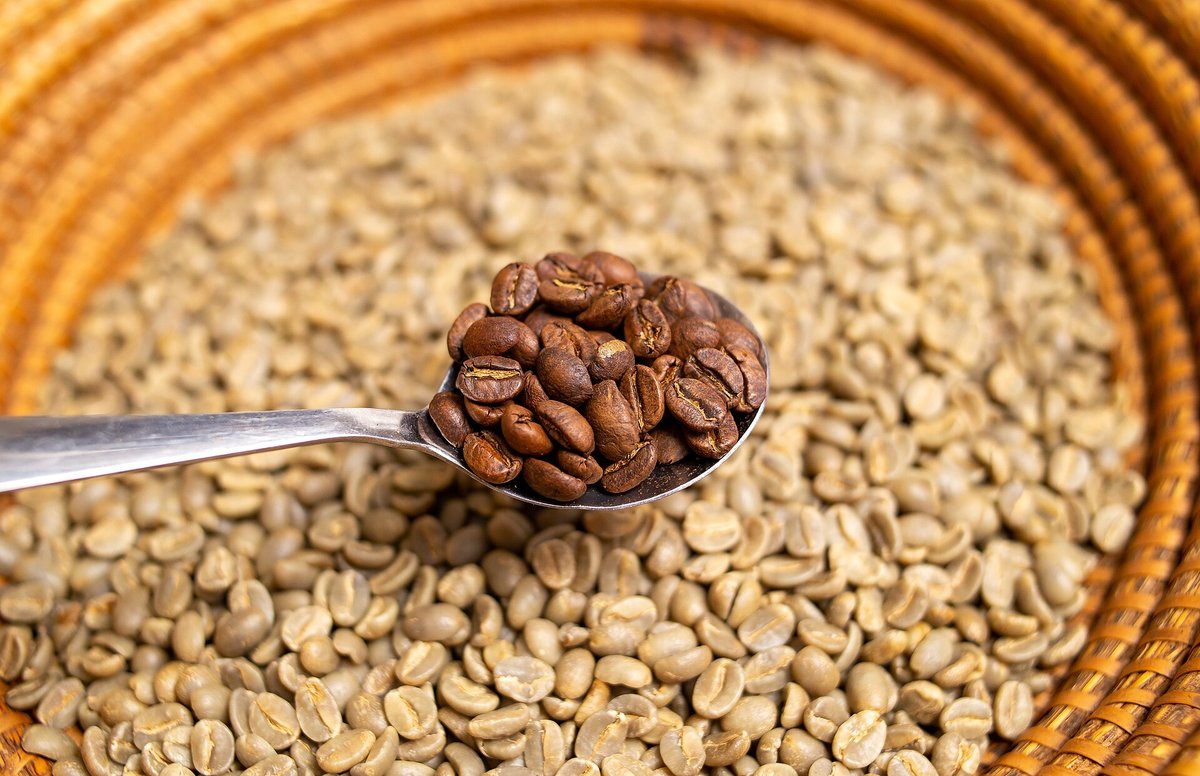
The raw, dried seed after milling and before roasting. It keeps for months in the right conditions; roasted coffee does not. See The Bean and Green Coffee and the Line-Up.
H
Hardness
The calcium and magnesium dissolved in water. Some is needed for flavour; too much makes scale. The SCA’s current guidance is calcium hardness of 50 to 175 ppm as calcium carbonate. See Water.
Headspace
The empty space above the coffee: in a sealed bag, the air sealed in with the beans; in an espresso basket, the gap between the puck and the shower screen. See Packaging Roasted Coffee and Espresso.
Home occupation
A small business run from a home, allowed under conditions set in a township’s or city’s zoning ordinance. Michigan’s cottage food exemption does not override local zoning. See Setting Up the Business.
Honey process
Also called pulped natural: the cherry’s skin is removed but some or all of the sticky mucilage is left on the seed to dry. Graded white, yellow, red and black by how much is left. There is no honey in it. See The Bean.
I
Iced coffee
Coffee brewed hot and then cooled, poured over ice, or brewed onto ice (flash brew). Not the same as cold brew. See Brewing.
Immersion
Brewing in which grounds sit in a fixed body of water, as in a French press, a Clever or cold brew. Extraction slows as the water fills with coffee, so it forgives. The opposite of percolation. See Brewing.
Impulse sealer
A bag sealer that heats a wire for a moment when the arm is pressed. Fine for plastic; many cannot seal a thick foil coffee bag, which wants a constant-heat sealer. See Packaging Coffee for Sale.
Incubator kitchen
A licensed shared kitchen rented by the hour to small food businesses. A roaster working there needs its own licence at that address; MDARD says renting one does not let cottage food be sold. See Toll Roasting, Private Label and Shared Roasteries.
J
Jebena
The Ethiopian clay coffee pot with a round base and a long neck, used in the coffee ceremony. See Brewing.
K
Kona blend
Coffee sold under Hawaii’s Kona name that is only partly Kona. Hawaii law requires at least 10% Kona until 30 June 2027 and 51% from 1 July 2027, with the percentage printed. See Labels and Certifications.
L
Leaf rust
Hemileia vastatrix, the fungus that erased Ceylon’s coffee industry and still devastates arabica farms. Robusta and the newer hybrids resist it. See The Bean.
Lever machine
An espresso machine in which a piston, pulled by hand or driven by a spring, makes the pressure. The spring lever of 1947 made the first crema. Some need no electricity at all. See The Espresso Machine.
Liberica
Coffea liberica, a large-tree species with big asymmetric beans and a smoky, jackfruit-like cup, grown in the Philippines (as barako) and Malaysia. See Beyond Arabica and Robusta.
Limited Wholesale Food Processor
The Michigan Department of Agriculture and Rural Development (MDARD) licence for a processor with $25,000 or less of wholesale sales a year: $186 a year as of October 2026. What a small roaster needs to sell to cafés and shops. Not allowed in the home’s living space. See Wholesale and Consignment.
Lot code
A code on each bag that ties it to a roast date and batch, so a problem can be traced and the right bags pulled back. See Roast Logs, Quality Control and Blending.
Lungo
An espresso run long, to a ratio of about 1:3 or more, so more water passes through the same puck. See Espresso.
M
Maillard reaction
The browning reaction between sugars and amino acids that makes bread crust, seared meat and most of roasted coffee’s flavour. See How Coffee Is Roasted.
MDARD
The Michigan Department of Agriculture and Rural Development, which runs the cottage food law and licenses food processors, including roasters that sell wholesale. Food service, including cups at a market, is licensed by the county health department. See The Michigan Rules.
Melanoidins
Large brown compounds formed late in the Maillard reaction; much of roasted coffee’s colour, body and roasty flavour. See Cooking With Coffee.
Methylene chloride
A solvent used in one decaffeination process. The FDA limits its residue in decaf to 10 parts per million; a 2023 petition asks the agency to withdraw approval, undecided as of October 2026. See Caffeine and Health.
Microfoam
Milk steamed into a fine, glossy foam with bubbles too small to see, the texture latte art needs. See Espresso.
Micro-lot
A small, separately kept lot of coffee from one farm or one part of a farm. The word has no legal definition. See Labels and Certifications.
Mocha
Two things. The Yemeni port of Mokha, from which coffee was shipped for two centuries; and a drink of espresso, chocolate and milk, named after the port’s chocolatey coffee. See History and Flavored and Seasonal Drinks.
Moka pot
The Italian stovetop brewer: water in the lower chamber boils, steam pressure pushes it up through the grounds into the upper chamber. Strong, but not espresso. See Brewing.
Mucilage
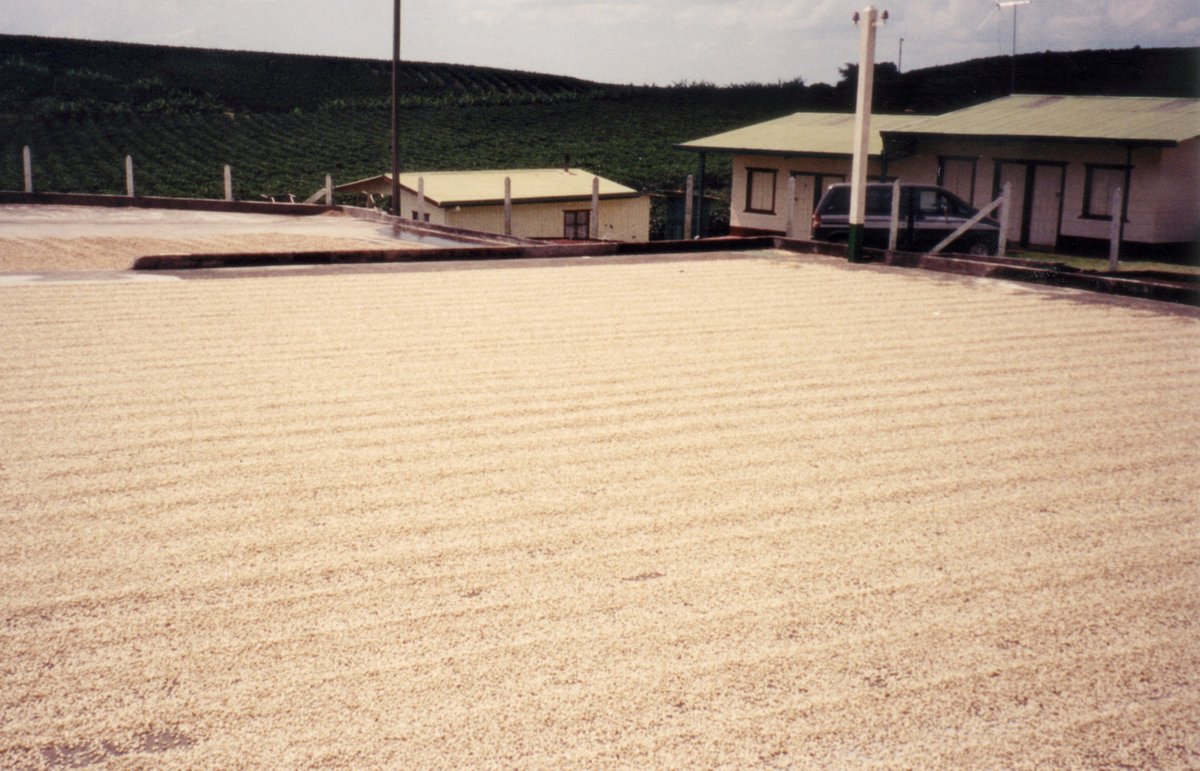
The sticky, sugary layer between the cherry’s pulp and the seed’s parchment. Washing removes it; honey process leaves it on. See The Bean.
N
Naked portafilter
An espresso handle with the bottom cut away, so the shot can be watched coming straight out of the basket. It shows channeling at once. Also called bottomless. See Espresso.
Natural process
Drying the whole coffee cherry, fruit and all, before hulling it off. The oldest method; fruity, heavy and variable. Also called dry process. See The Bean.
Net weight
The weight of the coffee alone, without the bag, printed on the front panel in ounces and grams. A bag of fresh coffee loses weight as gas, so roasters fill a little over. See Packaging Coffee for Sale.
Nitrogen flushing
Blowing nitrogen into a bag before sealing to push the oxygen out. See Packaging Roasted Coffee.
O
Ochratoxin A
A toxin made by some moulds that can grow on badly dried or stored coffee. The EU sets a maximum for it in coffee. See Caffeine and Health.
One-way valve
The button on a coffee bag that lets the coffee’s carbon dioxide out and keeps air from coming in, so coffee can be sealed the day it is roasted. A film of oil under a rubber disc does the sealing. See Packaging Roasted Coffee.
Origin
Where a coffee was grown, by country, region, farm or lot. See Origins, Regions and Climate.
Over-extraction
Taking too much out of the grounds: too fine, too long or too hot. The cup tastes bitter, harsh and drying. Grind coarser. See Troubleshooting.
P
Parchment
The papery hull around each coffee seed inside the cherry. Washed coffee is dried “in parchment” and hulled just before export. See The Bean.
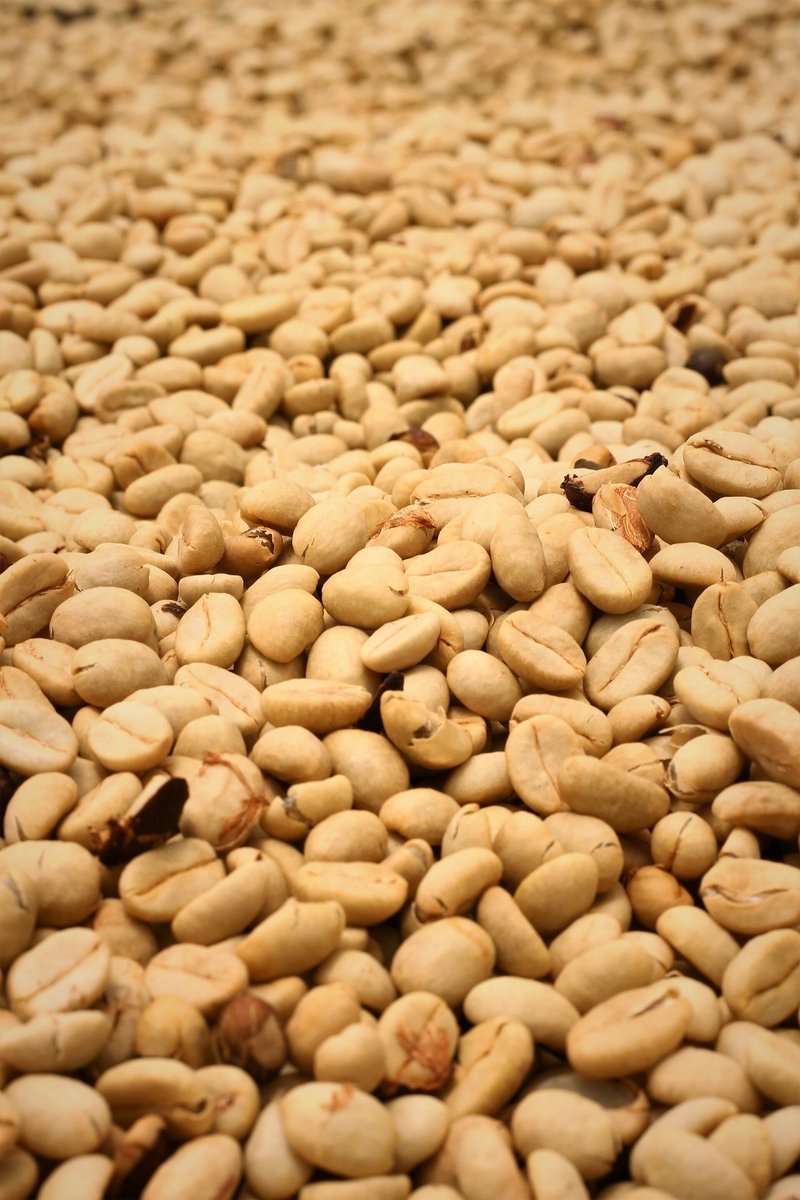
Peaberry
A cherry in which only one seed develops, so the bean is small and round instead of flat-faced. Often sorted out and sold separately. See The Bean.
Percolation
Brewing in which water flows through the bed of grounds and out, as in pour-over, drip and espresso. Extraction never slows, so grind and technique matter more than in immersion. See Brewing.
Percolator
The stovetop or electric pot that pumps boiling water up a tube and showers it back over the grounds again and again. Percolator coffee at a campsite is one I have made. See Brewing.
Permit to install
Michigan’s air-quality permit, required for any process that may emit an air contaminant unless an exemption applies. No exemption names coffee roasting; EGLE decides which fits. See Smoke, Air Permits and the Neighbours.
Person in charge
The person at a licensed food stand who must be present and know the rules, whether or not a certified manager is required. See Food-Safety Certification.
PFAS
Per- and polyfluoroalkyl substances, once used to grease-proof food packaging. In the largest US survey none of 30 paper cups had them; the FDA says the grease-proofing uses left the US market in 2024. Michigan has no packaging ban as of October 2026. See Compostable, PFAS and Waste.
Phin
The small Vietnamese drip filter: a perforated cup, a press plate and a lid, set on a glass. Slow, strong and simple. See The Drinks.
Portafilter
The handle and basket that hold the coffee in an espresso machine. See Espresso.
Pour-over
Brewing by pouring water by hand over grounds in a filter cone, such as a V60, Kalita Wave or Chemex. See Brewing.
Pre-infusion
Wetting an espresso puck at low pressure for a few seconds before full pressure, which evens out the flow and reduces channeling. See Espresso.
Private label
Coffee roasted by a licensed roaster and sold under another business’s name. See Toll Roasting, Private Label and Shared Roasteries.
Products-completed operations
The part of a liability policy that covers harm caused by a product after it has been sold: a scald in the car park, a stone in a bag of beans. A food vendor needs it. See Insurance.
Puck
The disc of spent coffee left in an espresso basket, and the bed of grounds before the shot. “Puck prep” is distributing and tamping it evenly. See Espresso.
Purging
Grinding and discarding a little coffee to clear out what the grinder retained from the last coffee. No maker publishes a weight for it. See Grinding.
Pyrolysis
The outright breakdown of the bean’s structure by heat late in a dark roast: smoke, carbon and char. See How Coffee Is Roasted.
Q
Q grader
A taster licensed by the Coffee Quality Institute after six days of courses and nine exams, renewed every three years. See Where to Learn.
Quaker
A pale bean that never browns in the roast, because the cherry was picked unripe. It tastes of cardboard and peanuts, and roasting cannot fix it; pick them out. See Roast Logs, Quality Control and Blending.
R
Rate of rise
How fast the bean temperature is climbing during a roast, in degrees a minute. A healthy roast shows a steadily falling rate; a “crash” (a sudden drop) followed by a “flick” (a jump) after first crack is a sign of trouble. Abbreviated RoR. See How Coffee Is Roasted.
Refractometer
An instrument that reads how much is dissolved in a liquid. Coffee refractometers give TDS, from which extraction yield is worked out. Cafés use them to hold a batch brewer steady. See Troubleshooting.
Rest
Waiting after roasting before brewing, so some carbon dioxide leaves: 2 to 5 days for filter, 5 to 7 days or more for espresso. See Keeping Coffee at Home.
Retention
The ground coffee that stays inside a grinder after grinding, and comes out stale in the next dose. Low-retention grinders and single-dosing keep it small. See Grinding.
Reverse osmosis
A filter that pushes water through a membrane fine enough to remove nearly everything dissolved in it, including chloride. Water from it is too pure for coffee until minerals are added back. Abbreviated RO. See Water.
Ristretto
An espresso cut short, at a ratio of about 1:1 to 1:1.5: thick and intense, the front of the extraction without the back. See Espresso.
Roast level
How far a roast went, from light (Cinnamon, City) through medium (Full City) to dark (Vienna, French, Italian). The names are not standardised; the cracks, the weight lost and an Agtron number are the objective markers. See How Coffee Is Roasted.
Robusta
Coffea canephora: hardy, low-grown, rust-resistant, about twice arabica’s caffeine, and about 44% of the world crop. Harsh when cheap, good when grown and processed with care; the coffee of Vietnam. See The Bean.
S
SCA
The Specialty Coffee Association, the trade body formed in 2017 from the American (SCAA) and European (SCAE) associations. It publishes the brewing, water and cupping standards. See Where to Learn.
Scale
Two meanings at the coffee bench. The kitchen scale, which weighs coffee and water and is the cheapest upgrade there is; and the mineral crust hard water leaves inside kettles and machines. See Brewing and Cleaning and Descaling.
Screen size
Bean size, measured by which sieve holes, in 64ths of an inch, the beans will not pass. Colombia’s Supremo and Excelso grades are screen sizes. See The Bean.
Second crack
A quieter, faster crackle, at about 440 to 450 °F (227 to 232 °C), as the bean’s structure fractures and oil comes to the surface. Past it is dark-roast territory. See How Coffee Is Roasted.
Shade grown
Coffee grown under a tree canopy. The phrase has no legal definition; only the Bird Friendly standard measures the shade. See Labels and Certifications.
Single-dosing
Weighing the beans for one brew and grinding exactly those, with nothing left in a hopper. Keeps beans fresh and retention small. See Keeping Coffee at Home.
Single origin
Coffee from one country, region or farm, not a blend. The phrase has no legal definition, but “100% Colombian” must mean every bean. See Labels and Certifications.
Single-service articles
Cups, lids and stirrers used once and thrown away. A Michigan temporary stand that uses only these, serves only non-perishable drinks and prepares no food may be exempt from licensing; whether brewing coffee counts as preparation is an open question. See The Michigan Rules.
Siphon
Also called vacuum pot: two glass chambers over a flame. Vapour pressure pushes water up into the grounds, and when the heat comes off the cooling lower chamber pulls the coffee back down through a filter. See Brewing.
Specialty coffee
Coffee graded and tasted to a high standard, usually traceable to a farm or region. Under the old cupping form, 80 points or more; the new Coffee Value Assessment has no single cutoff. See Cupping.
Stenophylla
Coffea stenophylla, a West African species rediscovered in Sierra Leone that tastes like good arabica and grows in temperatures several degrees warmer. In trials; not for sale as of October 2026. See Beyond Arabica and Robusta.
Strength
How concentrated a cup is, measured as TDS. Weak but balanced coffee needs more coffee, not a longer brew. See Brewing.
Swiss Water Process
A decaffeination method using water and activated carbon only, no solvent. See decaf.
T
Tamp
Pressing the ground coffee in an espresso basket into a firm, level bed. Level matters far more than force. See Espresso.
TCS food
“Time/temperature control for safety”: a food that must be kept cold or hot to stay safe, such as milk, cream and egg drinks. The Food Code’s newer term for “potentially hazardous.” Black coffee is not one; anything with milk is. See The Michigan Rules.
TDS
Total dissolved solids: how much is dissolved in a liquid, as a percentage. Filter coffee lands around 1.15 to 1.45%. In water, TDS in parts per million says how much mineral is there but not which. See Brewing and Water.
Temporary food establishment
A Michigan food licence for one location for up to 14 consecutive days, issued by the county: $104 to $126 per event in the counties priced on the rules page, as of October 2026. See The Michigan Rules.
Terroir
The idea that place, through soil, climate and altitude, shows in the cup. Altitude and processing are better documented than soil. See Origins.
Thermosiphon
Water circulating between a machine’s boiler and its group head by convection alone, with no pump, keeping the group hot. The trick inside the E61. See Espresso.
Third wave
The specialty movement, from the 2000s, that treats coffee like wine: light roasts, farm names, careful brewing. The first wave was mass-market cans; the second, the espresso chains. See History.
Toll roasting
Paying a licensed roaster to roast your green coffee to your profile. The roaster’s licence covers the roasting; reselling may need one of your own. See Toll Roasting, Private Label and Shared Roasteries.
Transitory Food Unit
Michigan’s annual, statewide licence for a food operation that moves from place to place, tents and trailers included: a plan review, a licence and two inspections a year, about $335 a year after the first. It requires a certified food protection manager. Abbreviated TFU. See The Michigan Rules and A Truck or Trailer.
Turning point
The lowest bean-probe reading just after the charge, before the temperature starts to climb, usually about a minute in. See How Coffee Is Roasted.
Typica and Bourbon
The two old arabica lines from which most of the world’s farmed arabica descends. Bourbon is named after the French island of Bourbon, now Réunion. See Beyond Arabica and Robusta.
U
Under-extraction
Taking too little out of the grounds: too coarse, too short or too cool. The cup tastes sour, thin and oddly salty with a hollow finish. Grind finer. See Troubleshooting.
Underdeveloped
A roast dropped too soon after first crack: sour, grassy and cereal-like however it is brewed. The commonest defect of the light-roast fashion. See How Coffee Is Roasted.
V
V60
Hario’s cone brewer, with a 60-degree angle, spiral ribs and one large hole, which leaves flow almost entirely to the pourer. See Brewing.
Variety
A distinct type within a species, such as Typica, Bourbon, Gesha or SL28 in arabica. A cultivar is a variety bred and kept in cultivation. See The Bean.
VFFS
Vertical form-fill-seal machine: a packaging machine that forms bags from a roll of printed film, fills them from a weigher and seals them. The top rung of the packaging ladder. See Packaging Coffee for Sale.
W
Washed process
Removing the cherry’s skin and pulp, fermenting the seeds in water to loosen the mucilage, washing it off and drying. Clean, bright and consistent. Also called wet process. See The Bean.
Water activity
How much of the water in a food is free for microbes to use, from 0 (none) to 1 (pure water). Roasted coffee is very dry; honey keeps because it is low; syrups are high and can ferment. See Packaging Roasted Coffee.
WDT
The Weiss Distribution Technique: stirring the grounds in an espresso basket with fine needles to break up clumps before tamping. Named after John Weiss. See Espresso.
Wet-hulled
Indonesia’s method, giling basah: the parchment is hulled off while the seed is still wet, and the bare seed finishes drying. It gives Sumatra’s earthy, heavy, low-acid cup and a blue-green bean. See The Bean.
Wholesale Food Processor
MDARD’s full wholesale licence, $471 a year as of October 2026, for a processor above $25,000 of wholesale sales. See Wholesale and Consignment.
Y
Yield
In espresso, the weight of liquid that comes out of the shot. Weighed, not measured by volume, because crema is foam. See Espresso.
Sources
Every definition above is drawn from the page it links to, and the sources are listed on that page. The standards and agencies most often behind them:
- Specialty Coffee Association, coffee standards (brewing, water, cupping).
- ICE Futures U.S., Coffee “C” futures (contract specification).
- Michigan Department of Agriculture and Rural Development, cottage food getting-started FAQ.
- US Food and Drug Administration, Spilling the Beans: How Much Caffeine Is Too Much?
- William H. Ukers, All About Coffee (1922), for the older trade vocabulary.
- On this site: Myths and Corrections gathers the popular claims these words are tangled up in, and Start Here maps the business terms onto the road from a market table to a shop.
Comments (0)