Starting a Coffee Business · 24 of 43
Recalls, Complaints and Returns
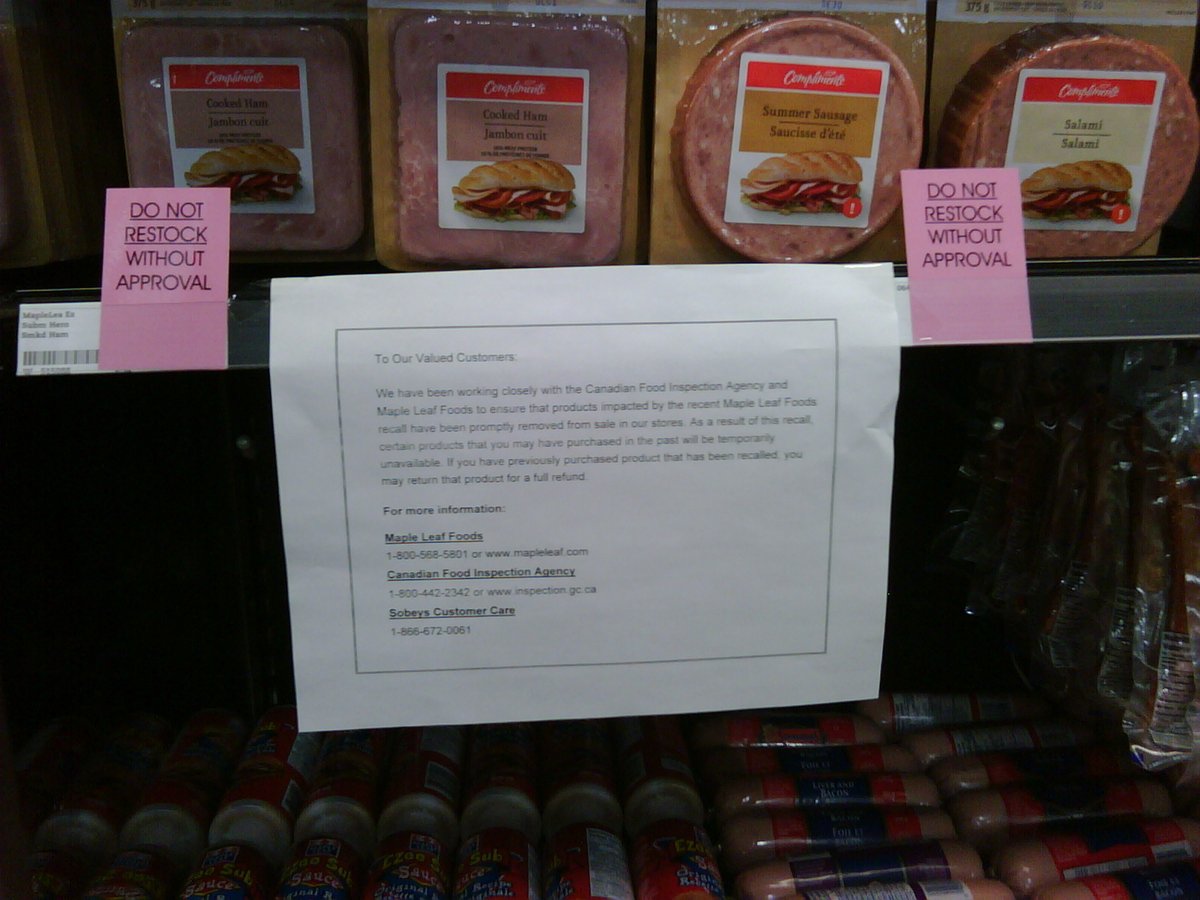
Roasted coffee is one of the safest foods a small business can sell, and plain whole-bean or ground coffee is almost never recalled. The coffee recalls that do happen come from the things around the coffee: a flavouring with a nut in it, a label printed without the allergen line, a decaf bag filled with regular, a stone or a sliver of metal, and sealed cold brew made without a validated process. Every one of those is something a one-person roaster could do on a busy bagging day. This page is the procedure for when it happens, the log that catches it early, and the return policy that settles the ordinary complaints that are not recalls at all.
Lot codes, and the one-page recall plan, are on Roast Logs and Quality Control and Packaging; recall insurance is on Insurance; refunds on shipped orders are on Selling Online. They are not repeated here.
The short version
| Question | Answer |
|---|---|
| What actually gets coffee recalled? | Undeclared allergens in flavoured or creamer products, label printing errors, decaf mixed up with regular, foreign objects in ready-to-drink coffee, and botulism risk in sealed cold brew. No US recall of plain roasted coffee for mould or for a stone was found. |
| Is a recall voluntary? | Almost always. The FDA can order one only in narrow cases, and that power is aimed at registered food facilities. In practice a firm recalls, and the regulator watches. |
| Who decides how serious it is? | The FDA, not the firm: Class I (serious harm or death likely), Class II (temporary or reversible harm, or serious harm remote), Class III (harm unlikely). |
| Who do I call in Michigan? | MDARD, 800-292-3939, [email protected]. A licensed booth also calls the county health department that licensed it. A registered wholesale roaster also calls the FDA’s Human Food Inspectorate Central I, 313-393-8118. |
| What is the best template? | MDARD’s own Food Product Recalls Guidance for Industry (2026 edition): a consignee letter, a press release, allergen wording and a notice for the point of sale. |
| Must a cottage operator report to the FDA within 24 hours? | Not on a reading of the definitions: the Reportable Food Registry binds registered facilities, and a private home is not one. A registered wholesale roaster is bound. |
| Is “no returns on coffee” legal? | Yes. Michigan has no returns law. A bag that is defective (a stone, the wrong coffee, a wrong label) is a different matter from one the buyer did not like. |
| How often to practise? | A mock recall once a year, and before the first wholesale account. It takes under an hour. |
What has actually been recalled
Seven US cases from the last fifteen years cover nearly every way coffee gets recalled.
| Year | Firm | Product | Why | Class | What it means at a stall |
|---|---|---|---|---|---|
| 2012 | Berres Brothers, Watertown, Wisconsin | Flavoured whole-bean and ground coffee: Chocolate & Peanut Butter, Monkey Mocha, Lunch with Elvis | ”may contain undeclared walnuts” from the flavouring | Reported as Class I | The allergen was in the flavouring, not the coffee |
| 2021 | Door County Coffee & Tea, Sturgeon Bay, Wisconsin | French Vanilla Cappuccino single-serve cups | Undeclared milk and soy; “the problem was caused by a printing omission” | Allergen | A wrong label alone is a recall. Sold in Michigan |
| 2023 | Berner Foods, for Costco | Kirkland Signature cold brew, 2.77 million cans | ”Foreign material, metal” | II | Foreign-object recalls are usually Class II |
| 2023 | PepsiCo | Starbucks Frappuccino Vanilla, 25,200 cases | ”Foreign object (glass)“ | II | As above |
| 2025 | Massimo Zanetti Beverage USA | Our Family Traverse City Cherry decaf, 692 cases | ”mislabeled as decaffeinated when it may contain caffeine” | II | A decaf mix-up is a recall even with no allergen. Sold in Michigan |
| 2017, 2024, 2026 | Death Wish (New York); Snapchill (Wisconsin); Brooklyn Roasting Company | Canned nitro cold brew; 250+ canned coffees made for roasters; bag-in-box cold brew concentrate | Botulism risk from the process; Snapchill’s canning process “was not filed with FDA, as is required” | II (2026) | Sealed, unrefrigerated coffee is the one with a real pathogen hazard. A roaster can be drawn in through a co-packer |
| 2017–2019 | AMPT, Caverflo, “Kopi Jantan” sellers | ”Herbal” and “male enhancement” coffees | Hidden sildenafil and tadalafil | — | Drugs sold as coffee; not a roaster’s risk |
Berres Brothers is the case to remember. It is a regional roaster, the products were ordinary bags of flavoured beans, and the recall was bounded by the Julian date code stamped on each bag: “12001-12318”, 1 January to 13 November 2012, in 12 oz bags, small packs and 5 lb bulk bags with “No UPC” (Alaska DEC notice, 16 Nov 2012). Because every bag carried a date, the recall covered particular weeks. Without the codes it would have had to cover everything.
The decaf case is the one closest to a one-person roaster’s bench: two coffees bagged the same day, one of them labelled decaf. Keeping decaf apart is on Decaf for a Small Roaster.
The vocabulary: recall, withdrawal, stock recovery
The FDA’s rules for voluntary recalls are in 21 CFR Part 7, Subpart C. They define three different events, and naming the right one decides how much has to be done.
| Term | Definition (21 CFR 7.3) | A roaster’s example |
|---|---|---|
| Stock recovery | Removal of product “that has not been marketed or that has not left the direct control of the firm” | A batch labelled wrong, caught on the bagging bench |
| Market withdrawal | Removal of product “which involves a minor violation that would not be subject to legal action … or which involves no violation” | Bags pulled because the roast was off, with nothing unsafe or mislabelled |
| Recall | Removal of a violative product | A missing allergen line, a decaf mix-up, a foreign object, anything that made someone ill |
The class of a recall is assigned by the FDA:
- Class I: “a reasonable probability that the use of, or exposure to, a violative product will cause serious adverse health consequences or death.” An undeclared nut is usually here.
- Class II: “may cause temporary or medically reversible adverse health consequences or where the probability of serious adverse health consequences is remote.” Foreign objects and the decaf case were here.
- Class III: “not likely to cause adverse health consequences.”
A recall strategy (21 CFR 7.42) sets three things: the depth (wholesale, retail or consumer level), whether a public warning is needed (one is “reserved for urgent situations where other means for preventing use of the recalled product appear inadequate”), and the effectiveness checks, from Level A (“100 percent of the total number of consignees to be contacted”) down to Level E (none). A market-stall roaster’s bags went straight to the public, so the depth is nearly always the consumer. Named buyers (online orders, coffee shares, wholesale accounts) can all be reached, which is a Level A check: every one of them.
Recalls are voluntary. The FDA’s power to order one (21 U.S.C. 350l) applies when there is “a reasonable probability” that a food will “cause serious adverse health consequences or death”, and it is aimed at the registrant of a food facility. MDARD’s guidance says the same thing plainly: “legally enforced recalls are rare. In almost all cases, recalls are voluntary actions”. What happens to a firm that will not recall is also plain: “the regulatory agency will take action to protect public health”, by “seizure of available products and/or the release of public notification”.
Who to call, and what they can do
MDARD
The Michigan Department of Agriculture and Rural Development is the agency a Michigan coffee seller deals with. Its recalls page describes its inspectors conducting “routine and targeted recall audit checks”, and offers a sign-up for Michigan recall alerts.
Its Food Product Recalls Guidance for Industry (2026 edition) is the most useful single document for a small Michigan seller. Its definition of an “entity” is “any business or person that manufactures, sells, grows, harvests, packages, stores, distributes, or produces food or beverage”, which takes in a home roaster. What it requires of the recalling entity:
- “When initiating a recall, the recalling entity must notify the appropriate regulatory agencies with jurisdiction over the product”, “by phone or email”.
- “The entity must identify all food that is affected, including the full scope of product names, lot numbers, production/harvest dates, packaging dates, package sizes, or other identifying information.”
- Product held while waiting must be “adequately quarantined”, and “return of product and/or final destruction must be documented”. Relabelling or reworking “must be approved by the regulatory agency prior to implementation.”
- The entity “must keep documentation of their consignees’ actions” and must notify the agency of its intent to end the recall; the agency decides when it is over.
- A press release is reviewed by the agency first, and “If a recalling entity fails to prepare an adequate press release within 24 hours of recall initiation, the regulatory agency may release their own public messaging.”
Its appendices are ready to copy: a letter to the businesses that received the product, a press release (including a worked allergen example for a firm “of Lansing, MI”), recommended hazard wording, and a “Voluntary Recall Notice” to post where the product was sold. The allergen sentence MDARD recommends is: “People who have an allergy or severe sensitivity to … run the risk of serious or life-threatening allergic reaction if they consume these products.”
Contacts (from the guidance): MDARD Bureau of Food Safety and Animal Health, 800-292-3939, [email protected]. FDA Human Food Inspectorate Central I (Illinois, Indiana, Michigan), 313-393-8118, [email protected]. The FDA’s recall coordinators used to be in the Office of Regulatory Affairs; the coordinator list is now under the Office of Inspections and Investigations (OII).
Complaints and illness under cottage food
A cottage food seller has no inspector until a complaint arrives. MDARD’s cottage food page is explicit about what follows one: “In the event a complaint is filed or a foodborne illness is linked to your food, MDARD will investigate your operation … it may be necessary for MDARD to enter and inspect your Cottage Food production and storage areas, view and copy records, and take photos”. MDARD may also “seize product suspected of being adulterated; order corrections of label violations; and require you to discontinue making unapproved products.”
“View and copy records” is the sentence that matters. In an investigation, the roast log and the sales records are what is read.
A customer with a complaint about food can contact MDARD directly (800-292-3939, or MDARD’s online complaint form), and a customer who has been ill is told to report it “through the local health department in the county where you reside” (MDARD food safety).
The Michigan Food Law
No section of the Food Law is titled “recall”. The state’s tools are prohibition, seizure and condemnation:
- MCL 289.5101 makes it a prohibited act to “Manufacture, sell, deliver, hold, or offer for sale adulterated or misbranded food”. A bag whose label leaves out an allergen is misbranded.
- MCL 289.2105 lets the director “seize without formal warrant any food found to be sold, held for sale, or exposed for sale” in violation, and tag it; “A person shall not remove or dispose of the food tagged”.
- MCL 289.2107: adulterated food declared a nuisance is condemned or destroyed.
The federal registry, and who it binds
The FDA’s Reportable Food Registry requires a report “in no case later than 24 hours” after a “responsible party” determines that a food could cause serious harm or death (21 U.S.C. 350f). The responsible party is the registrant of a food facility, and the FDA’s registry page limits the duty to “Registered Food Facilities”.
Who is not registered follows from the definitions: “The private residence of an individual is not a facility” (21 CFR 1.227), and retail food establishments, those selling more than half their food directly to consumers, are exempt from registering (21 CFR 1.226). On that reading, a cottage operator and a stall selling mostly to the public have no registry duty, and a roaster that registers because most of its sales have become wholesale does. No FDA text says this about cottage food in so many words; it is drawn from the definitions. MDARD’s guidance tells every recalling entity to file a registry report “if applicable to the product and hazard”.
A written recall plan is legally required only of firms under the FDA’s preventive-controls rule (21 CFR 117.139), which a home kitchen and a retail stall are not. The FDA’s general rule (21 CFR 7.59) still urges every firm to “Prepare and maintain a current written contingency plan” and to “Use sufficient coding of regulated products to make possible positive lot identification”.
The FDA’s food traceability rule does not reach coffee, which is not on the Food Traceability List; enforcement of that rule has in any case been put back to 20 July 2028 (FDA).
The procedure, in order
Assembled from MDARD’s 2026 guidance, 21 CFR 7.42–7.49, and the University of Georgia’s Developing a Recall Plan: A Guide for Small Food Processing Facilities (Extension Bulletin 1509).
- Stop selling the suspect lot. Take it off the table, the website and any shelf. Keep it, marked “hold, do not sell”, away from stock (MDARD: “adequately quarantined”). Do not throw it away until told; it may be evidence.
- Name the event. Bags never sold: a stock recovery. Bags with nothing wrong except quality: a market withdrawal. A wrong label, a missing allergen, a decaf mix-up, a foreign object, or anyone ill: a recall.
- Find the scope from the roast log. Which lots, how many bags of each, roasted and bagged on which dates. Then from the sales records: every market day, online order, share member and wholesale account that received those lots.
- Call MDARD (800-292-3939 or [email protected]). A licensed booth also calls the county health department that issued its licence. A registered wholesale roaster also calls the FDA (313-393-8118) and, for a serious hazard, files with the Reportable Food Registry within 24 hours.
- Call the insurer. Recall cover, where held, has its own notice terms (Insurance).
- Tell everyone who has a bag. Every named buyer by email and telephone; the market manager; wholesale accounts by MDARD’s consignee letter. A notice on the stall table and the website. The letter follows 21 CFR 7.49: “Be brief and to the point”, “Identify clearly the product, size, lot number(s), code(s)”, “Explain concisely the reason for the recall and the hazard involved”, say what to do, and give a way to reply. Nothing promotional.
- A press release, if one is needed, reviewed by the agency; for an allergen, MDARD’s sentence.
- Account for every bag: returned, destroyed, or confirmed used. UGA’s measure is the number that left against the number returned or accounted for: “If 100% of the recalled products are not accounted for, it may be necessary to reassess the recall strategy.”
- Fix the cause, and write down what changed: a separate bagging day for decaf, a second look at the label proof, a new destoning step.
- Ask the agency to close it, and keep the file.
The recall starts, in the FDA’s eyes, on “the date of a firm’s first communication about a recall, either to its direct accounts or to the public” (FDA guidance, 2022). The same guidance advises keeping “draft templates that help the firm issue recall communications promptly”. For a one-person roaster, that means the three notices (letter, table card, website) written in advance and kept with the log.
What a bag needs on it for any of this to work
A roast date and a batch number on every bag, matching a line in the log. Counter Culture’s refund policy counts 30 days “after roast date”, and Berres Brothers’ recall was bounded by Julian dates: both depend on the date being on the bag. A cottage food label does not require a lot code, but nothing else on this page works without one (Packaging).
A mock recall, for one person
UGA’s bulletin says “Mock recalls should be performed at least once a year and whenever there are significant changes in the structure or personnel of the company and distribution chain”. For a one-person roaster it is a forty-minute exercise:
- Pick a lot at random from the log, at least a month old.
- Start a timer.
- From the log: the green coffee’s lot, the roast date, the number and size of bags.
- From sales records: every place and person that lot went, and how many bags each.
- Count the bags of that lot still in stock. Bags roasted, minus bags sold, minus bags in stock, should be zero; anything else is the gap a real recall would fall into.
- Draft, without sending, the email to buyers, the table card and the website notice from MDARD’s templates.
- Check that the MDARD and FDA numbers above still answer.
- Stop the timer. Write down what was slow or missing, and fix the log or the sales record.
The first one is best done before the first wholesale account, because wholesale is where bags start leaving without a name attached to each one.
The complaint log
UGA’s bulletin gives the reason to keep one: “keep a record of the complaints, and determine a set number of complaints that is considered normal. Then, if the number of complaints over a period exceeds the ‘normal’ amount, you will know to begin testing for problems and considering a recall.”
No Michigan form exists for a small seller. These fields are assembled from UGA’s worksheets and the elements MDARD asks for in a recall notice:
| Field | Why |
|---|---|
| Date received, and how (stall, email, phone) | Order and timing |
| Customer’s name and a way to reply | Only what is needed to answer |
| Product, size, and lot / roast date | Ties it to the log |
| Where and when bought | Ties it to the sales record |
| The complaint: taste, stale, foreign object, label, wrong coffee, illness, allergic reaction | Sorts the ordinary from the serious |
| Anyone hurt or ill? | Decides whether it goes to MDARD |
| Bag or remainder kept? | Evidence |
| What was checked: the log line, other bags of the lot, a kept sample | The investigation |
| Cause found | |
| What the customer got: replacement, refund, nothing | |
| What changed | |
| Date closed |
Illness and allergic reactions are not settled over the counter. They are the complaints that go to MDARD (or, for a licensed booth, the local health department), and the customer is pointed to their own county health department to report the illness.
Returns and refunds
Michigan has no returns law. The Michigan Retailers Association’s counsel put it in one line: “Michigan has no laws regulating returns”, “except for when the product is defective and a return or replacement is necessary for consumer protection purposes” (Michigan Retailers Association, 2023). Bills to require a posted return policy were introduced several times between 2005 and 2013; none was enacted that could be found.
The Michigan Consumer Protection Act still sets three edges:
- A policy may not cause “a probability of confusion or of misunderstanding as to the legal rights, obligations, or remedies of a party” (445.903(1)(n)).
- “No refunds” does not by itself cancel the implied warranty that food is fit to eat; disclaiming it must be clear and conspicuous (445.903(1)(p)). A bag with a stone in it is not saved by a sign.
- A cancelled order, pre-order or subscription has to be refunded promptly (445.903(1)(u)).
For orders by mail, phone or internet, the FTC’s Mail Order Rule adds that a seller who gives no shipping time must have “a reasonable basis for believing that you can ship within 30 days”, and that after a cancellation “you must refund the correct amount within seven working days”. Whether the rule reaches a seller who ships only inside Michigan is not settled by the FTC’s guide; following it costs nothing. Selling Online has the shipped-order cases.
How roasters word it
| Roaster | Policy | Shape |
|---|---|---|
| Madcap, Grand Rapids | ”Due to coffee’s perishable nature, we are unable to accept returns on any whole bean coffee products.” “Please be sure to contact us within 15 days of your order date for any problems or dissatisfaction with your coffee.” | No returns; tell us within 15 days |
| Onyx Coffee Lab, Arkansas | ”If your coffee beans arrive and don’t fit your order, we will replace them within one week of the purchase date.” | Replace a wrong or faulty order within a week |
| Counter Culture, North Carolina | ”To receive a refund, unused portions of coffees must be returned … at the customer’s expense.” “Refunds will be honored up to 30 days after roast date”. | Refund on return, counted from the roast date |
| Burman Coffee Traders, Wisconsin | ”Coffee and Tea are food items and cannot be returned.” | No returns on food |
None of them puts returned coffee back on sale, and none should: a returned bag of food goes in the bin, or to the kitchen.
A policy that fits a market stall, in the same plain words:
Coffee is food, so opened bags can’t be returned. If something is wrong with a bag (the wrong coffee, a stone, a torn seal, a label mistake), tell me within two weeks with the roast date from the bag, and I’ll replace it or refund you. If you just didn’t like it, tell me how you brewed it and I’ll suggest another, or swap it for a different coffee next market.
Post it on the table, the website and the receipt. Card processors pay attention to whether the buyer saw the policy before paying: Stripe’s dispute guidance says “There must be reasonable evidence that you presented your customer with a full copy of your policies prior to their purchase”, and notes that customers “can’t dispute fully refunded payments” but “can still dispute partially refunded payments”. When refunding at all, refund in full. Chargebacks are on Taking Cards.
What is not known
- Whether any US recall of plain roasted coffee has been for mould, ochratoxin or a stone. None was found; the foreign-object recalls found are all ready-to-drink products, and the US sets no ochratoxin limit for coffee.
- The FDA’s own class for the Berres Brothers recall and the record of the 2026 Brooklyn Roasting recall, which are known here from secondary reports.
- How MDARD expects a cottage food operator to run a recall. Its guidance defines “entity” broadly enough to include one, but says nothing specific.
- Whether the FTC Mail Order Rule reaches a Michigan-only online seller.
- Whether a farmers market’s own rules require a vendor to report a recall to the market: that is market by market.
- MSU Extension’s recall bulletin (E3466), which is listed online but whose link returned an error.
Sources
- MDARD: Food Product Recalls Guidance for Industry (2026 edition); Recalls; Food safety; Cottage food: selling and samples.
- Michigan Food Law: MCL 289.5101, 289.2105, 289.2107. Consumer Protection Act, MCL 445.903.
- Federal: 21 CFR 7.3, 7.42, 7.46, 7.49, 7.59, 1.226, 1.227, 117.139; 21 U.S.C. 350f and 350l.
- FDA: Initiation of Voluntary Recalls under 21 CFR Part 7, Subpart C (2022); OII recall coordinators; Reportable Food Registry; Food Traceability List and compliance date.
- Recalls: Berres Brothers, Alaska DEC notice (2012); Door County Coffee & Tea (2021); Food Safety News on Kirkland cold brew (2023), Frappuccino (2023), Our Family decaf (2025) and male-enhancement coffees (2017); Death Wish (2017); Sprudge on Snapchill (2024); WRNJ on Brooklyn Roasting (2026).
- Mohan, Fortner and Chatterjee, Developing a Recall Plan: A Guide for Small Food Processing Facilities, UGA Extension Bulletin 1509.
- Returns: Michigan Retailers Association (2023); FTC Mail Order Rule business guide; Stripe dispute prevention; roaster policies linked in the table.
- On this site: Roast Logs and Quality Control, Packaging, Insurance, Selling Online, Taking Cards, Decaf for a Small Roaster, The Michigan Rules.
Comments (0)