Starting a Coffee Business · 3 of 39
Branding, Naming and Trademarks
A name and a look are the cheapest things a coffee business will ever buy and the most expensive to change once they are on two hundred bags, a canopy, a sign and a web address. This page covers choosing a name, checking that nobody already owns it, the difference between a registered business name and a trademark, what a Michigan or a federal trademark costs as of October 2026, two coffee trademark fights worth knowing, and how to make a logo and a label on a small budget. The paperwork for registering the name with the county or the state is on Setting Up the Business; the rules for what a coffee label must say are on Bags, Labels and What They Cost.
I have not named the coffee business yet. My honey already sells under a name at farmers markets, and whether the coffee goes under that name, a longer version of it, or a new one is the first decision on this page. I am not a lawyer; where a trademark question matters, the answer below says who to ask.
The short version
| Question | Answer (October 2026) |
|---|---|
| What makes a good name? | Short, easy to say aloud at a market and to spell into a search box, not already used for coffee or food, and not merely a description (“Michigan Coffee Roasters” protects nothing). |
| Is a DBA a trademark? | No. An assumed name filed with the county clerk ($6 by statute; $16 in Ingham County) or LARA ($25 for an LLC) tells the state who is behind a name. It stops nobody from using it. |
| Do I own a trademark without registering? | Partly. Using a name in trade creates rights, but only where it is actually used. Registration widens them. |
| Michigan trademark | $50 to file, lasts 10 years, $25 to renew (MCL 429.33, 429.35). The mark must already be in use in Michigan. Covers Michigan only. |
| Federal trademark | $350 per class filed online, with $100–$200 surcharges per class for a vague or free-written description, and $150 per class later if filed before use (USPTO fee schedule). Coffee and honey usually fall in one class; a café is another. |
| When is the federal one worth it? | Before selling online across state lines, before wholesale into other states, before a shop, and before spending real money on signs and printed bags. A one-county market stall can wait, but should search first. |
| ® or ™? | ™ any time. ® only after federal registration, and only on the goods listed in it. |
| First steps, free | Search the USPTO trademark database, search the web and the social platforms, check the domain. All before printing anything. |
Choosing the name
A coffee name has to work in five places at once: shouted across a market (“Is this the ___ stall?”), typed into a phone by someone who heard it, printed small on a 12 oz bag, printed large on a canopy valance, and registered as a web address and a social handle. A name that fails one of those costs sales quietly.
| Test | Why it matters for a coffee stall | Quick check |
|---|---|---|
| Say it once | Most customers hear the name before they read it. | Say it to someone; ask them to type it into a search. Did they get it? |
| Spell it once | Clever spellings (“Kafé”, doubled letters) lose the customer who searches later. | Ask three people to write it down from hearing it. |
| Short | It has to fit a bag front at a readable size and a canopy valance at a distance. | Mock it up at full size on the bag and on the valance, and read it from across a room. |
| Says what it is, without being a description | ”Coffee” or “Roasters” after a distinctive word tells a stranger what is sold. The distinctive word is the part the law protects. | In “Lantern Coffee” the protectable word is “Lantern”; “Good Coffee” protects nothing. |
| Room to grow | Coffee, honey, jam, baked goods and T-shirts on one table, and later a shop. | Does the name still fit if coffee becomes half the business, or all of it? |
| Not taken | A clash found after printing costs the print run. | The search steps below. |
The legal shape of a name
Trademark law ranks names by how distinctive they are, and the ranking decides how much protection a name can ever get. Michigan’s own statute shows it: the state will refuse to register a mark that is “merely descriptive” of the goods, “primarily geographically descriptive”, “primarily merely a surname”, that uses “the name, signature, or portrait of a living individual” without that person’s written consent, or that “so resembles” a mark already used in Michigan “as to be likely … to cause confusion” (MCL 429.32). The federal rules are of the same shape.
| Kind of name | Example (invented) | Protection |
|---|---|---|
| Generic | ”Coffee Roasters” | None, ever. |
| Descriptive | ”Fresh Roasted Coffee”, “Michigan Coffee” | None at first; only after years of use make the public link it to one seller (Michigan accepts five years’ continuous use as evidence). |
| Suggestive | ”Morning Hive Coffee” | Protectable. It hints at something without describing it. |
| Arbitrary | A real word with no link to coffee (“Lantern Coffee”) | Strong. |
| Fanciful | A made-up word | Strongest, and hardest to make memorable. |
A family name or a nickname sits awkwardly in this table: a surname alone is refused, a first name or a nickname with another word usually is not, and the name of a living person needs that person’s consent. A name built on a family member’s nickname is fine in law with their consent, and is good story material.
Is a longer name too long?
Joining a new product to an existing name (”___ Coffee and Sweets”) keeps the customers the honey has already found, which is worth more to a small stall than a fresh start. The cost is length. Two practical answers used by many small food businesses:
- A long name and a short mark. The full name goes on the licence, the bank account and the bottom of the label; the canopy and the bag front carry the short distinctive word and a picture.
- One house name, product lines under it. ”___ Honey” and ”___ Coffee” on separate labels, one name on the canopy.
Either way, the distinctive part is the part to search and, later, to register.
Checking that the name is free
The checks cost nothing but an evening. Do them in this order and keep a dated note of what was found; it is evidence of good faith if a dispute ever comes.
- The federal register. The USPTO’s free Trademark Search system, which replaced the old TESS database, searches every application and registration. Search the distinctive word alone, then with “coffee”, then likely misspellings and sound-alikes. The USPTO’s own guidance on likelihood of confusion explains what counts: marks that look, sound or mean the same, on goods that are related. “Related” is wide. A café, roasted coffee, tea and honey are all likely to be judged related to each other.
- The classes that matter. The USPTO sorts goods and services into numbered classes, and the fee is charged per class. For this business the likely ones are below; confirm the exact wording in the USPTO’s Trademark ID Manual before filing.
| Class | What it covers here |
|---|---|
| 30 | Coffee (beans and ground), coffee-based drinks, tea, honey, baked goods, syrups |
| 29 | Jams and jellies |
| 43 | Café and coffee-shop services, catering, a coffee cart serving drinks |
| 35 | Retail store and online store services |
| 21 | Mugs, hand-operated coffee grinders, drippers |
| 25 | T-shirts and other clothing |
Coffee and honey in the same class is a convenience: one class 30 filing covers both.
- Michigan’s register. LARA’s Corporations Division keeps the state register of trademarks and of assumed names. A Michigan registration elsewhere in the state is a conflict even if nothing shows federally.
- Unregistered use. Many small roasters never register anything and still have rights where they trade. Search the web, Google Maps, the state’s farmers-market directories, Instagram, Facebook and Etsy for the word with “coffee”, “roaster”, “café” and “honey”.
- The domain and the handles. Check the .com and the main social handles at the same time. A name whose .com belongs to another coffee business is a name to drop, whatever the register says.
- A professional clearance search, for a shop or a large print run. A trademark attorney or a commercial search firm searches state registers, business names and common-law use together. The Michigan SBDC and some law school clinics can point to one.
If the search turns up a coffee business using a similar name anywhere in the country, the safest course for a new stall is a different name. Being first in your own county does not help if the other business is federally registered: registration gives the owner nationwide rights.
A business name, a Michigan trademark and a federal trademark
| Assumed name (DBA) | Michigan trademark | Federal trademark | |
|---|---|---|---|
| Filed with | County clerk (sole proprietor) or LARA (LLC) | LARA, Corporations Division | USPTO, online through Trademark Center |
| Fee, October 2026 | $6 by statute, $16 in Ingham County; $25 at LARA for an LLC | $50 (MCL 429.33(4)) | $350 per class, plus any surcharges |
| Needs use first? | No | Yes: the form asks for the date first used anywhere and first used in Michigan, with two specimens | No: an “intent to use” application can be filed first, then $150 per class when use begins |
| Lasts | Five years (Ingham County); five calendar years (LLC) | 10 years; renew within six months before expiry for $25 (MCL 429.35) | Forever, with a declaration of use between years 5 and 6 ($325 per class) and renewal every 10 years ($325 per class for each of the two filings, or $650 combined) |
| Protects the name? | No | In Michigan; the certificate is evidence in a Michigan court of the right to use the mark “throughout this state” (MCL 429.34), and the owner can sue to stop imitations | Nationwide; the right to use ® |
| Good for | Banking and selling under the name; required anyway | A stall and a shop that will stay in Michigan | Online sales, wholesale, a second state, a franchise one day |
The Michigan registration is cheap and its first-use rule fits a business that is already trading. It does not stop an out-of-state business from registering federally and later claiming the name, so it is a first step, not a substitute.
What a federal filing actually costs
The USPTO restructured its trademark fees in January 2025. The old cheap form is gone; the single base fee now rewards an application that uses the pre-written wording from the ID Manual.
| Item | Fee per class (electronic filing) |
|---|---|
| Base application | $350 |
| Surcharge if the application is missing required information | $100 |
| Surcharge for writing the goods description in free text instead of picking from the ID Manual | $200 |
| Each further 1,000 characters of free text | $200 |
| Allegation of use or statement of use, for an intent-to-use filing | $150 |
| Six-month extension to file the statement of use | $125 |
| Declaration of use (Section 8), between years 5 and 6 | $325 |
| Renewal (Section 9), every 10 years, with Section 8 | $650 combined |
Fees from the USPTO fee schedule as published October 2026. A paper filing costs $850 per class.
Worked example. One mark for roasted coffee and honey (class 30), filed with ID Manual wording, already in use: $350. Add café services (class 43) for a later shop: $700. Filed before the coffee is on sale, as intent to use, then the statement of use when it is: $500 for class 30 alone. One class, from filing through its first ten-year renewal, costs about $1,325 in USPTO fees ($350 + $325 + $650).
Attorney or not. A US-based applicant is not required to use a lawyer, though the USPTO “strongly encourage[s]” it. The examining attorney searches the register and may send an “office action” refusing the mark or asking for changes, and the applicant has three months to answer or the application is abandoned. A refusal for likelihood of confusion is where a lawyer earns the fee. A simple, distinctive mark with clean search results is the case most people file themselves.
Scam warning. Federal filings are public, and applicants then get official-looking letters offering “registration services” or “monitoring” for a fee. The USPTO’s site has a section on avoiding scams and fraud; real USPTO email comes from a uspto.gov address, and every official fee is on the fee schedule.
Two coffee trademark fights
Charbucks: the small roaster won, after twelve years
In 1997 Black Bear Micro Roastery, a New Hampshire company then selling by mail, in a few New England supermarkets and at one shop, named a dark blend “Charbucks Blend”, later “Mister Charbucks”. Its founder told the court the word had been used during “the coffee wars in Boston between Starbucks and the Coffee Connection”, and the court accepted that one reason for the name was “the public perception that Starbucks roasted its beans unusually darkly.” Starbucks demanded it stop, and in 2001 sued for trademark dilution.
Black Bear won at trial in 2005, again in 2008 and 2011 after the law changed and the case went back and forth to the appeals court, and finally on 15 November 2013, when the Second Circuit affirmed (Starbucks Corp. v. Wolfe’s Borough Coffee, Inc., 736 F.3d 198). Starbucks’s own telephone survey sank it: asked what came to mind on hearing “Charbucks”, 30.5% said Starbucks, but asked who might sell a product called Charbucks, only 3.1% named Starbucks. The court found the marks “minimally similar” as they actually appeared, on Black Bear’s own packaging and with “Mister” or “Blend” attached.
What it teaches a small roaster. A small business can win against the largest coffee company in the world, and it took twelve years and three trips to the appeals court to do it. A name that plays on a famous one is a lawsuit waiting for a reason. The case also shows how the courts look at a mark: in context, on the bag, as a customer meets it, which is one more argument for a consistent label.
Kona: a place name that was faked, and a mark that protects it
“Kona” is a place on the Big Island of Hawaii, and Kona coffee sells for many times the price of ordinary arabica. In 1993 the growers’ Kona Coffee Council tried and failed to protect the name with a trademark, opposed by several Hawaii coffee companies. In the 1990s a California company was found to have been putting Central American coffee into bags labelled Kona since 1993; its executive pleaded guilty to wire fraud in 2000. That year Hawaii’s Department of Agriculture registered “100% Kona Coffee” as a certification mark, a trademark that certifies origin rather than identifying one seller. Kona farmers then sued large retailers over coffee sold as Kona; settlements announced by March 2021 totalled more than $13.1 million (Wikipedia summary, with the court and press sources). Hawaii’s blend law, which lets a “Kona blend” contain as little as 10% Kona, is on Origins.
What it teaches. An origin name on a label is a claim that can be checked. Sell “Kona”, “Jamaica Blue Mountain” or “Yirgacheffe” only when the importer’s paperwork says so, and say “100%” only when it is. The same goes for any honey varietal on a label: a varietal name is a claim about where the bees foraged.
The look: logo and label on a budget
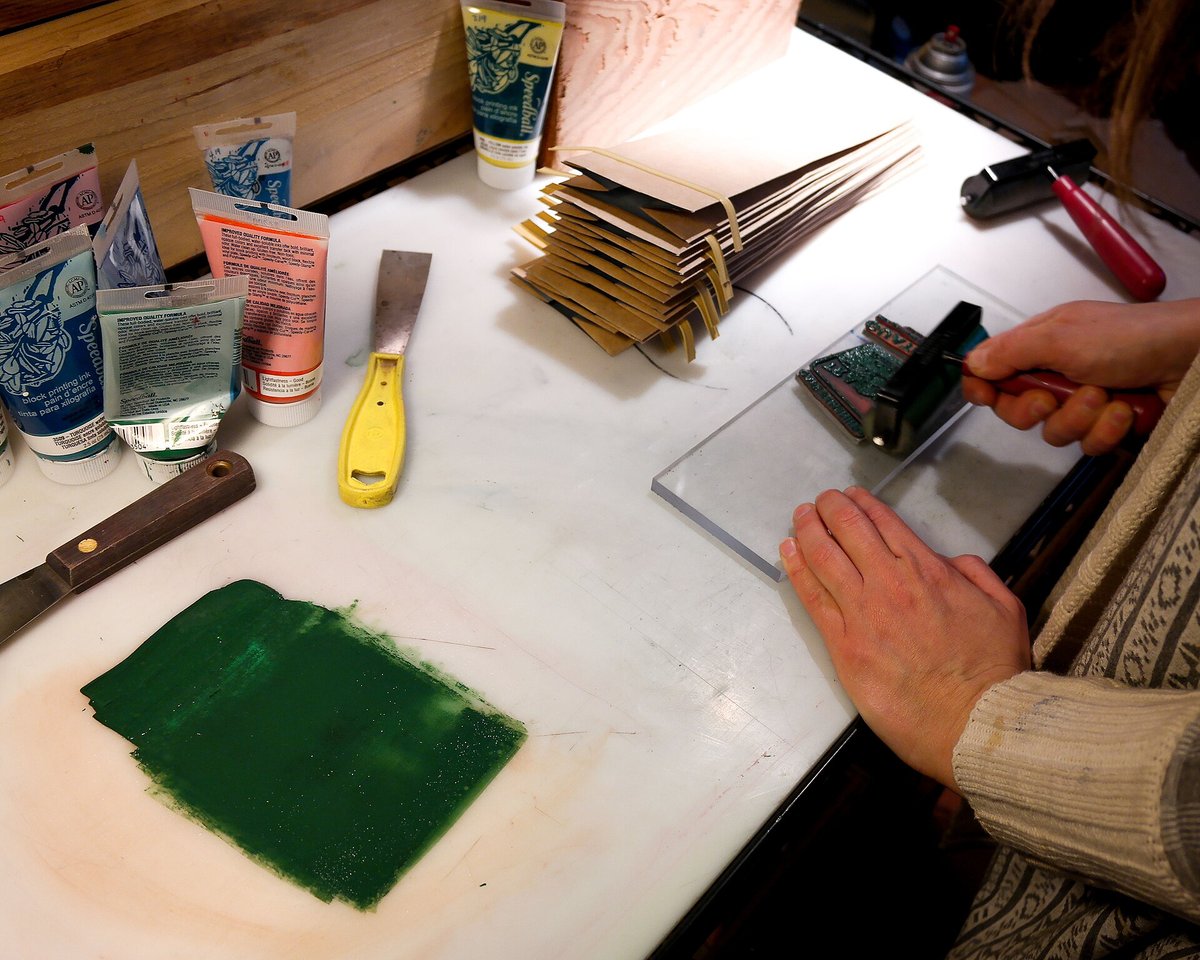
A brand is the same name, mark, colours and voice everywhere a customer meets them. The money goes on the things that are printed in quantity; the design itself can be cheap if it is simple.
A ladder, cheapest first
| Step | What it is | Cost range | Good for |
|---|---|---|---|
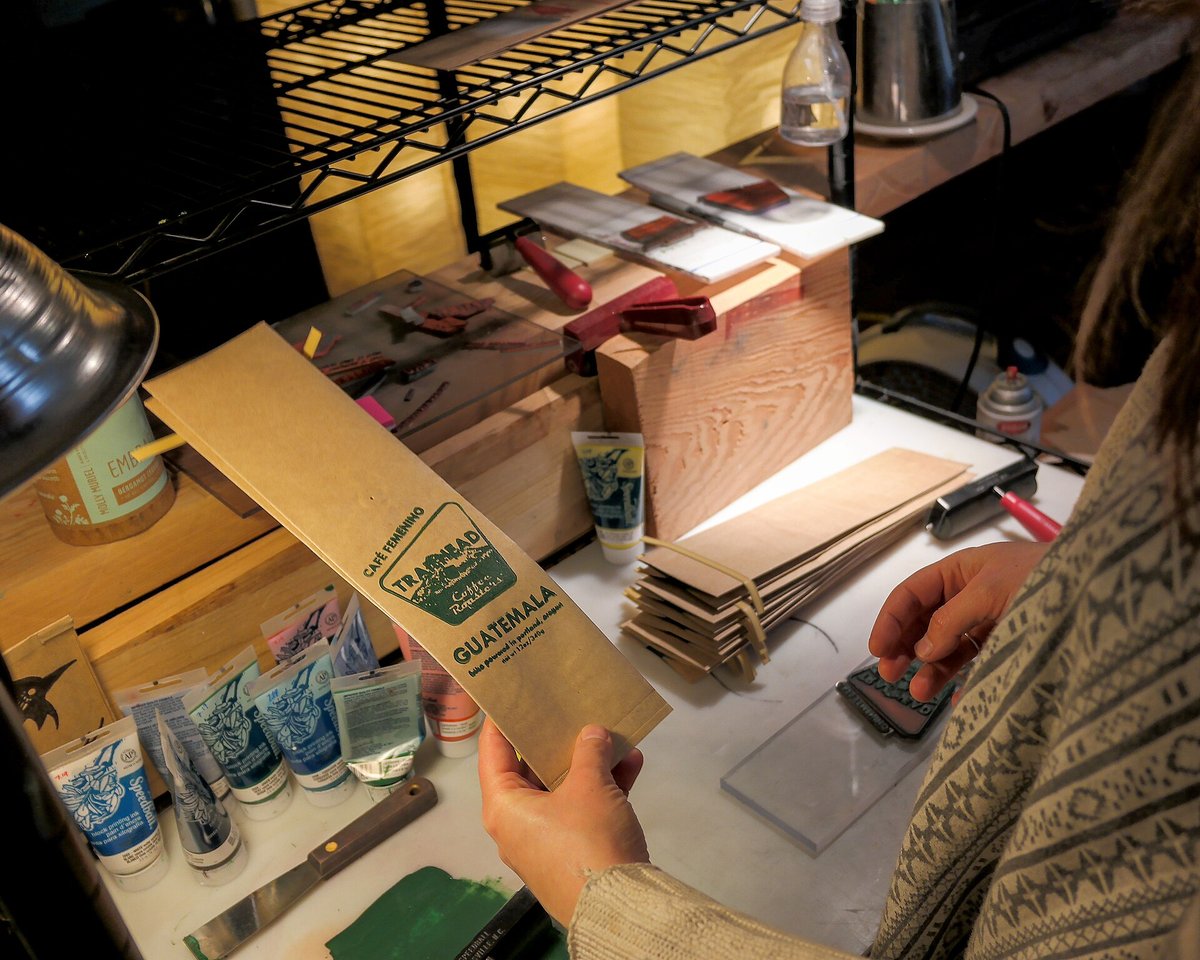
| 1. A rubber stamp | The mark cut into a stamp, pressed onto plain kraft bags, cup sleeves and kraft labels | A custom stamp and ink pads | The first season; the hand-stamped look suits a small roaster |
| 2. Printed stickers on stock bags | Plain valve bags with a round or rectangular printed sticker on the front and the legal label on the back | Roll labels from a sticker printer; see Bags, Labels and What They Cost | Most market roasters, for years |
| 3. A designed label set | A designer draws the mark properly and lays out a front label, a back label and a card template | A freelance designer, by quote | Before a shop, before wholesale |
| 4. Custom printed bags | The mark printed on the bag itself | Minimum orders in the thousands | A roaster selling through shops; not a first-year stall |
What the designer, or anyone making the mark, should hand over:
- The mark in one colour (black), so it works on a stamp, a cup sleeve, a receipt and a photocopied invoice. A mark that only works in full colour will be redrawn later.
- The mark as a vector file (SVG or PDF), which scales from a sticker to a 10-foot banner without blurring.
- Two or three colours written down as numbers, and one or two typefaces.
- Written confirmation that the copyright is assigned to the business. A logo bought from a stock site or made with an online generator may not be the business’s to register.
What the label must carry, and what it can
The legal contents of a coffee label (the name and place of business, net weight, the statement of identity, the Michigan cottage food statement where it applies) are on Bags, Labels and What They Cost and on the rules page. The brand gets the front. What sells coffee from a market table, on the front, in this order: the coffee’s name or origin, the roast date, the roast level, and two or three tasting words. The mark can be small. Customers at a stall pick up the bag and turn it over; a roast date they can find in a second does more than a large logo.
The story
Every small coffee brand tells a story on its bag, its canopy sign and its “about” page. The stories that work are short, true and specific; the ones that do not are vague (“passion for quality”) or borrowed. Mine has three true parts, and they are the parts I plan to use:
- The bees. I keep bees and sell their honey at farmers markets. The coffee joins a table that already has customers, and honey in coffee is a reason to stop (Honey in Coffee).
- Beaufort, around 1990. My first business was a coffee and ice cream shop in Beaufort, South Carolina, where I baked desserts and cookies and made sandwiches. Nearly all the coffee was ground on site and brewed in French presses.
- Roasting at home. I have roasted coffee by home methods, and the plan is to roast every bag the stall sells.
The rule for a story is the same as the rule for an origin name: it is a claim, so it has to be true. A brand that invents a grandmother’s recipe or a heritage date will be found out by the kind of customer who reads labels, and that is the customer a specialty roaster most needs.
The same everywhere
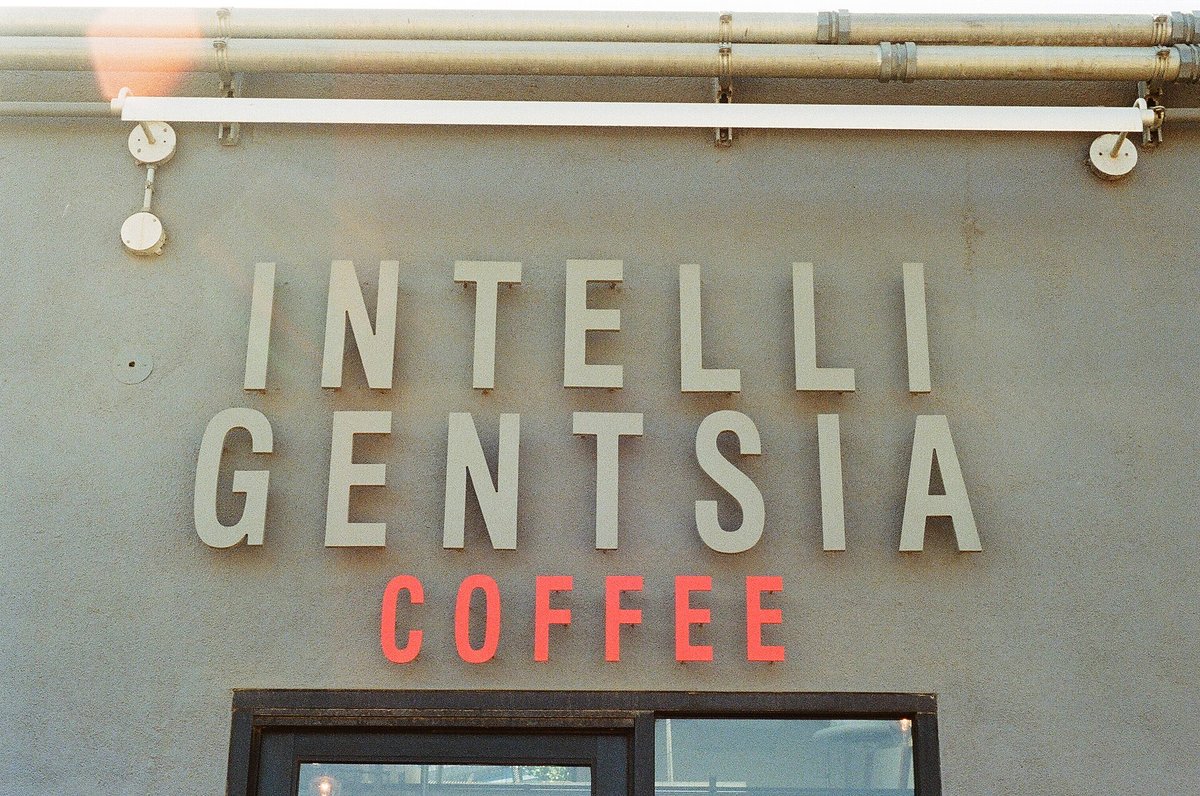
Consistency is what turns a name into a brand. The checklist below is the whole job, and it costs nothing but attention.
| Where | Carries |
|---|---|
| Bag front | Mark, coffee name, roast date, roast level |
| Bag back | The legal label, the web address or handle |
| Cup or sleeve | The mark, stamped or printed (Cups, and Standing Out) |
| Canopy valance and table banner | Name large enough to read from the end of the aisle; one line saying what is sold (“Small-batch coffee · Local honey”) (The Stall) |
| Menu board and price cards | Same typeface and colours as the bag |
| Card in every bag | Name, handle, web address, how to order |
| Social profiles and email | Same name, same mark as the profile picture, same handle on every platform |
| Licence, bank account, receipts | The registered name, so a customer’s card statement shows a name they recognise (Taking Cards) |
The last row is easy to miss. A card reader set up under the owner’s personal name puts a stranger’s name on the customer’s statement; set the business name in the reader’s settings from the first day.
Domain and social handles
- Register the .com of the distinctive name if it is free, even before there is a website; a page with the market schedule and an email sign-up is enough (Selling Online and by Mail).
- Take the same handle on Instagram and Facebook, and on any platform likely to matter, the same week. If the exact handle is taken, add one consistent word (“coffee”, or the state) everywhere rather than a different variant on each.
- Own the accounts in the business’s name and email, not a personal account, so they can move with the business.
- A domain or a handle is not a trademark, and owning one does not give rights in a name somebody else uses for coffee.
When to do each
- Before printing anything: the free searches above; the domain and handles; a dated note of results.
- Before the first market day: the assumed name with the county or LARA (Setting Up the Business); ™ on the mark if wanted.
- After the first season of sales in Michigan: a Michigan trademark for $50, using the specimens from that season.
- Before online sales across state lines, wholesale outside Michigan, or a lease on a shop: a federal application in class 30, and class 43 for the shop, ideally with an attorney’s clearance search first.
- Every ten years, and between years five and six: the renewals. Diary them the day the certificate arrives.
What is not known
- No published study measures how much a name change costs a small food business, or how often small roasters are challenged over a name. The Charbucks case is famous because such fights rarely reach a court.
- Whether a particular name will be refused can only be known by filing; the free search reduces the risk but cannot remove it.
Sources
- USPTO: Fee schedule; Search our trademark database; Likelihood of confusion; What is a trademark?; Trademark process.
- Michigan Trademark Act, 1969 PA 242: MCL 429.32 (marks refused), MCL 429.33 (application, $50 fee), MCL 429.34 (certificate), MCL 429.35 (10-year term, $25 renewal).
- Starbucks Corp. v. Wolfe’s Borough Coffee, Inc., 736 F.3d 198 (2d Cir. 2013), full opinion.
- Kona coffee, Wikipedia, for the 1993 trademark attempt, the 2000 certification mark, the Kona Kai Farms case and the 2021 settlements, with its cited sources.
- Michigan Small Business Development Center.
- On this site: Setting Up the Business (assumed-name fees and filing), Bags, Labels and What They Cost, The Michigan Rules, Origins (Hawaii’s Kona blend law).
Comments (0)