Coffee · 4 of 35
Beyond Arabica and Robusta: Stenophylla, Liberica, Excelsa and the New Varieties
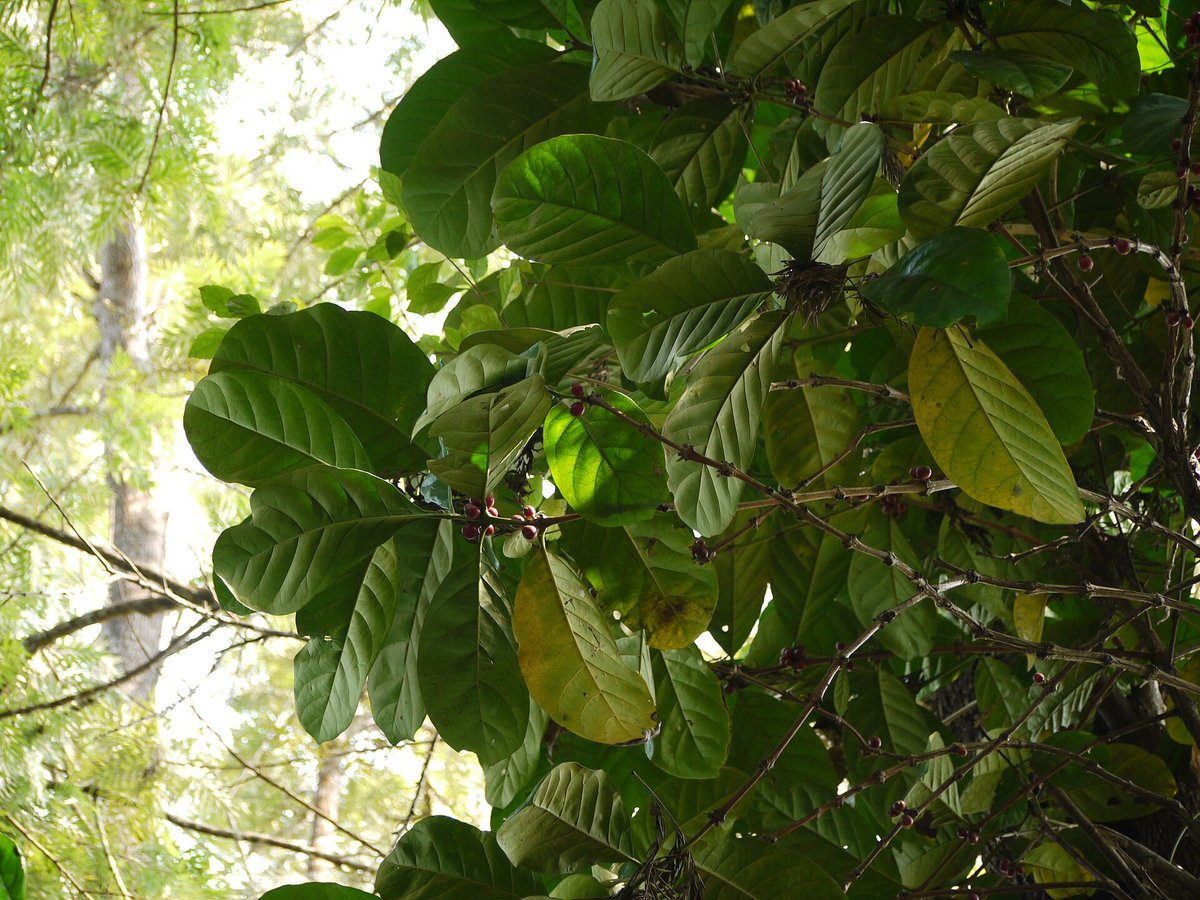
Almost all the coffee in the world comes from two plants. Arabica (Coffea arabica) and robusta (Coffea canephora) are covered on the Beans page, and where they grow is on Origins. Here the subject is everything else: about 130 other wild coffee species, a handful of them drinkable and a few of them suddenly important, and the new arabica varieties bred to survive disease and heat.
The reason anyone cares is climate. Arabica wants a cool, steady climate and has very little genetic variety to adapt with. Robusta tolerates heat but tastes harsher. Breeders and botanists are looking in two directions at once: into arabica’s own wild relatives in Ethiopia for new genes, and outside arabica altogether for a species that tastes good and takes heat. One of those, stenophylla, was nearly lost and was found again in Sierra Leone in 2018.
The short version
| Question | Answer |
|---|---|
| How many coffee species are there? | About 130. A 2019 assessment of 124 found at least 60% threatened with extinction. |
| Why is arabica fragile? | It began as one hybrid of two wild species, 350,000–610,000 years ago, and went through several genetic bottlenecks. Most farmed arabica descends from two lines, Typica and Bourbon. |
| What is stenophylla? | A West African species, rediscovered in Sierra Leone, that tastes like good arabica and crops at a mean annual temperature 6.2–6.8 °C warmer. 81% of a tasting panel took it for arabica. |
| Can I buy stenophylla? | No. As of October 2026 it is in trial plantings; the project says seeds and seedlings are not for sale. |
| Liberica and excelsa? | Two separate species since 2025: Coffea liberica and Coffea dewevrei. Together probably under 1,000 tonnes a year, about 0.01% of world exports. |
| Can I buy them? | Sometimes. Green Liberica and excelsa turn up from US importers and small retailers; prices run from about $6 a pound by the 65 lb box to much more for a single pound. |
| Racemosa? | A Mozambican species with naturally low caffeine (about a third of its relative C. zanguebariae). Rare outside research collections. |
| New arabica varieties? | Rust-resistant lines (Catimor, Sarchimor) and F1 hybrids such as Centroamericano and Starmaya, which yield 22–47% more and resist leaf rust. |
| How bad is the climate outlook? | One global model puts the loss of highly suitable arabica land at 54–60% by 2050, depending on the emissions path. |
Why arabica needs help
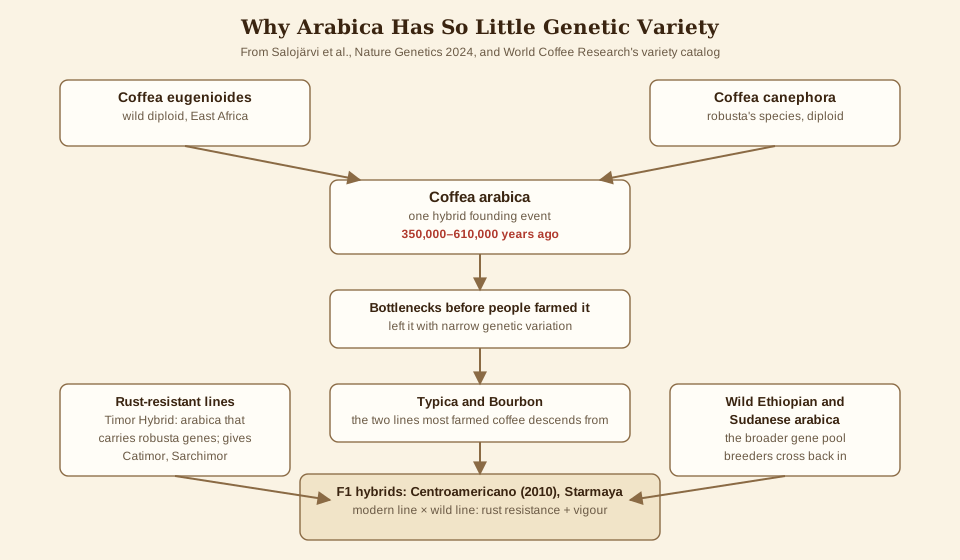
The arabica genome, published in 2024 by a large international team (Salojärvi and others, Nature Genetics), confirmed that C. arabica is a hybrid of two wild species, C. eugenioides and C. canephora (robusta’s species). The cross happened once, 350,000 to 610,000 years ago, and was followed by several “pre-domestication bottlenecks, resulting in narrow genetic variation.” Arabica is also allotetraploid: it carries both parents’ full sets of chromosomes, which lets it pollinate itself. Self-pollination keeps a variety true from seed, and also keeps the gene pool small.
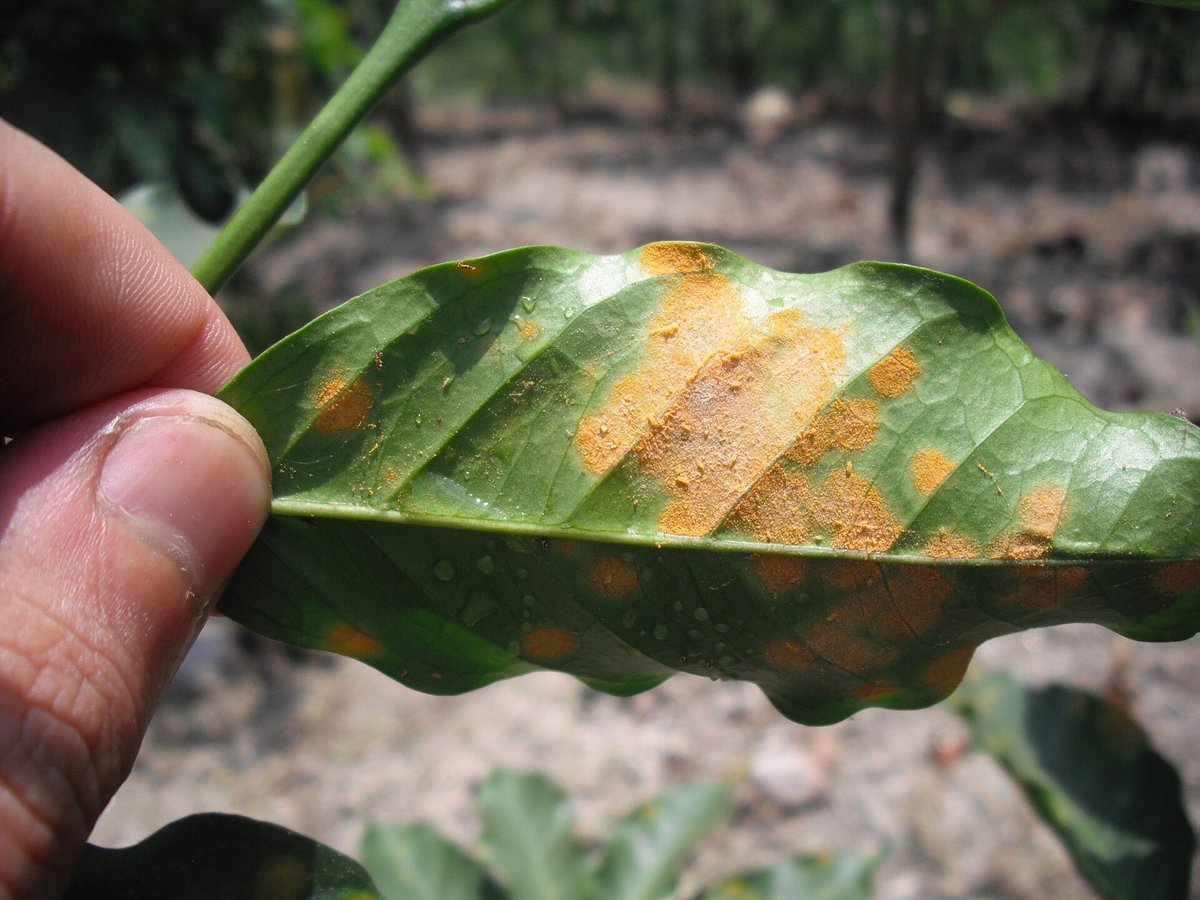
Then people narrowed it again. As the World Coffee Research variety catalog puts it, “most coffees were descendant from Typica and Bourbon,” the two lines whose journey out of Yemen is told on the History page. A narrow crop is a crop that one disease can sweep through, and one did: coffee leaf rust.
Wild arabica itself is in trouble. Assessed against today’s climate, it rates “Least Concern.” Assessed against projected climate change, it becomes Endangered, with wild populations falling by 50% or more by 2088 (Moat, Gole and Davis, 2019). And across the genus, a 2019 study of all 124 wild coffee species then known found “at least 60% of all coffee species are threatened with extinction, 45% are not held in any germplasm collection” — that is, no seed bank or living collection holds them (Davis and others, Science Advances).
The climate outlook
| Study | Finding |
|---|---|
| Grüter and others, PLOS ONE 2022 | Highly suitable arabica land worldwide falls 54.4% (low emissions), 53.7% (middle) or 59.5% (high) by 2050. Coffee was the most vulnerable of the three crops modelled, with cashew and avocado. |
| Bunn and others, PLOS ONE 2015 | The zones best suited to arabica “will migrate upwards by about 500m in elevation.” Hot, dry zones are hit hardest. |
The Origins page gives the range of other estimates. The direction is not in dispute. The size depends on the model.
Stenophylla: the one that tastes like arabica
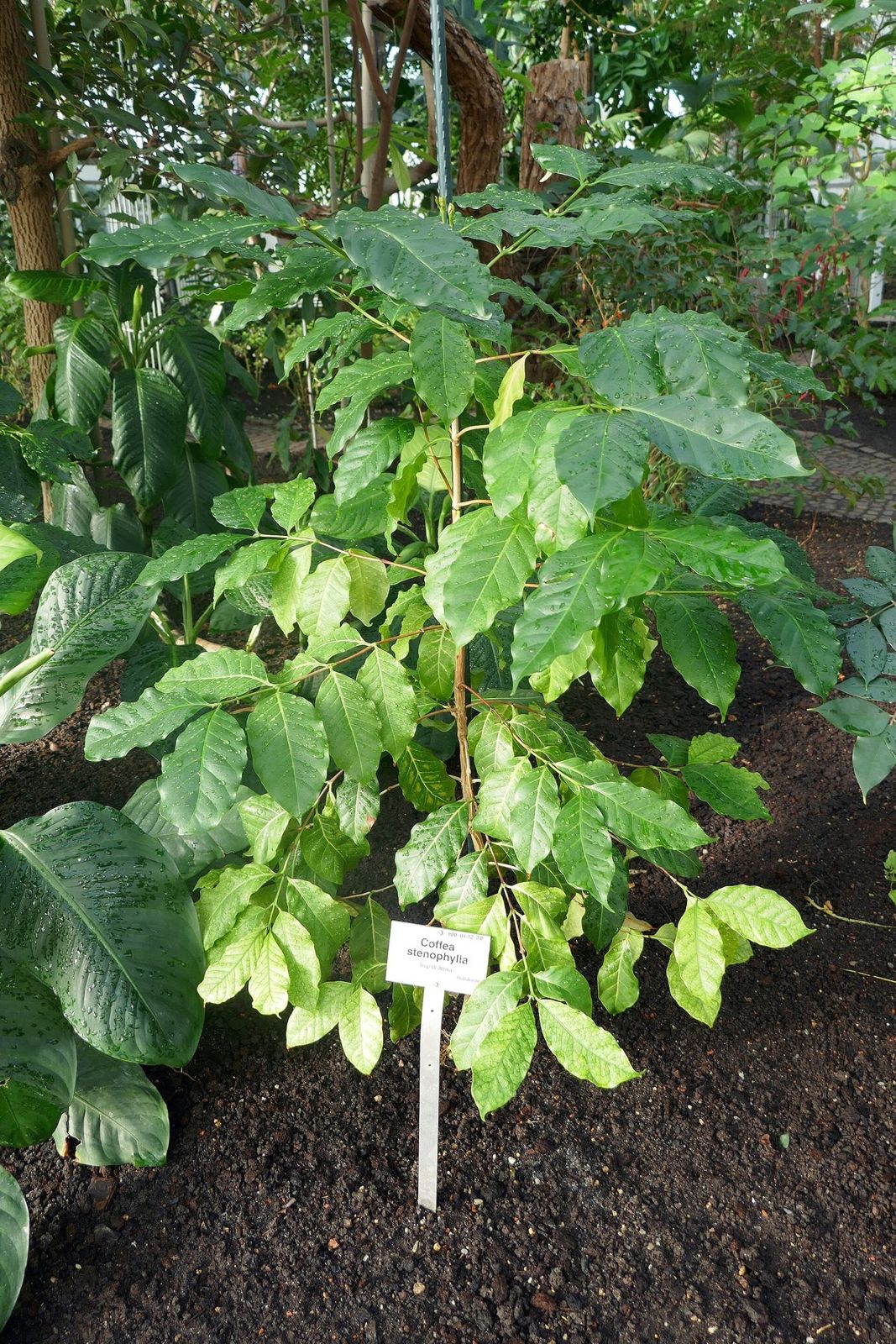
Coffea stenophylla was farmed on a small scale across Upper West Africa, and further afield, more than a hundred years ago, and old reports praised its flavour. Then it went out of cultivation altogether. By the 2010s it was “extremely rare in the wild” and had not been recorded wild in Sierra Leone since 1954.
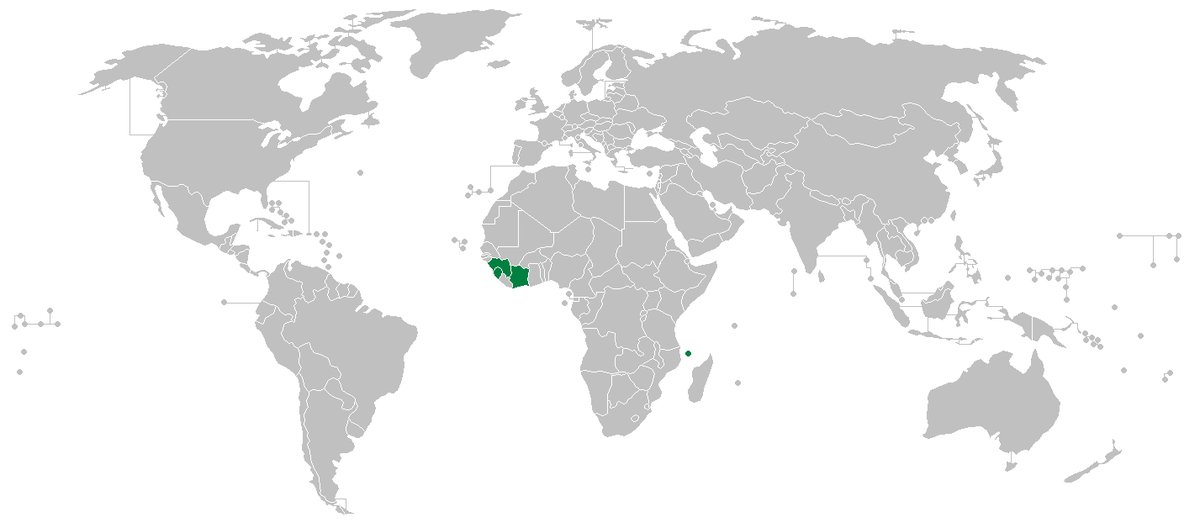
In 2018 the Sierra Leonean forestry specialist Daniel Sarmu, working with Aaron Davis of the Royal Botanic Gardens, Kew and Jeremy Haggar of the University of Greenwich, found it again. It had taken five years of searching to locate 15 trees (Tea & Coffee Trade Journal, 2023). The 2020 paper reporting the find confirmed stenophylla as native to Guinea, Sierra Leone and Ivory Coast, and showed that another lost coffee, C. affinis, is so closely related that it may be the same species.
The 2021 tasting results are why the find made news (Davis and others, Nature Plants; authors’ summary):
| Measure | Result |
|---|---|
| Tasting panel | 18 judges; 81% said it resembled arabica |
| Flavour notes | peach, blackcurrant, honey, floral; “natural sweetness, medium-high acidity, fruitiness, and good body” |
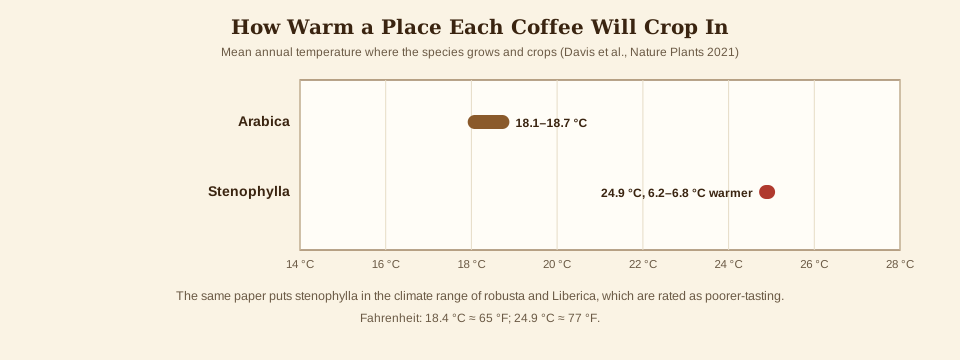
| Mean annual temperature where it crops | 24.9 °C (about 77 °F) |
| Arabica’s | 18.1–18.7 °C (about 65 °F) |
| Difference | 6.2–6.8 °C warmer, “even under equivalent rainfall conditions” |
| Climate range | the same as robusta and Liberica, which the paper calls “sensorially inferior” |
A separate panel study (Bertrand and others, 2023) put stenophylla beside two other wild species, C. congensis and C. brevipes: stenophylla was “the fruitiest wild species, and was considered an Arabica-like coffee.” A 2025 chemical study (Jan-Smith and others) found its caffeine, sugar and citric acid close to arabica’s, and found theacrine, a caffeine-like compound never before recorded in coffee beans.
Where stenophylla stands now
| Date | Step |
|---|---|
| 2018 | Rediscovered in Sierra Leone |
| 2021 | Tasting and climate results published |
| 2023 | 1,400 seedlings planted out; 6,000 more scheduled. Plants look likely to fruit in three or four years rather than the seven to nine in old references (TCTJ). |
| End of 2023 | From 300 wild plants, 5,600 seedlings across eight trial plots (Sucafina, the coffee trader funding the project) |
| 2024 | 80% survived a heatwave above 40 °C for 59 days in a row; shaded plots did best. 200 plants grafted onto excelsa rootstock, all of which took. |
| October 2026 | Not on sale. Sucafina: “stenophylla seeds/seedlings are not being made available at this time”; export would need the Sierra Leone government’s approval. |
So for a home roaster or a small shop, stenophylla is something to read about and watch for, not something to buy. Anything sold as stenophylla before the Sierra Leone project releases coffee deserves a question about where it came from.
Liberica and excelsa: two species, not one
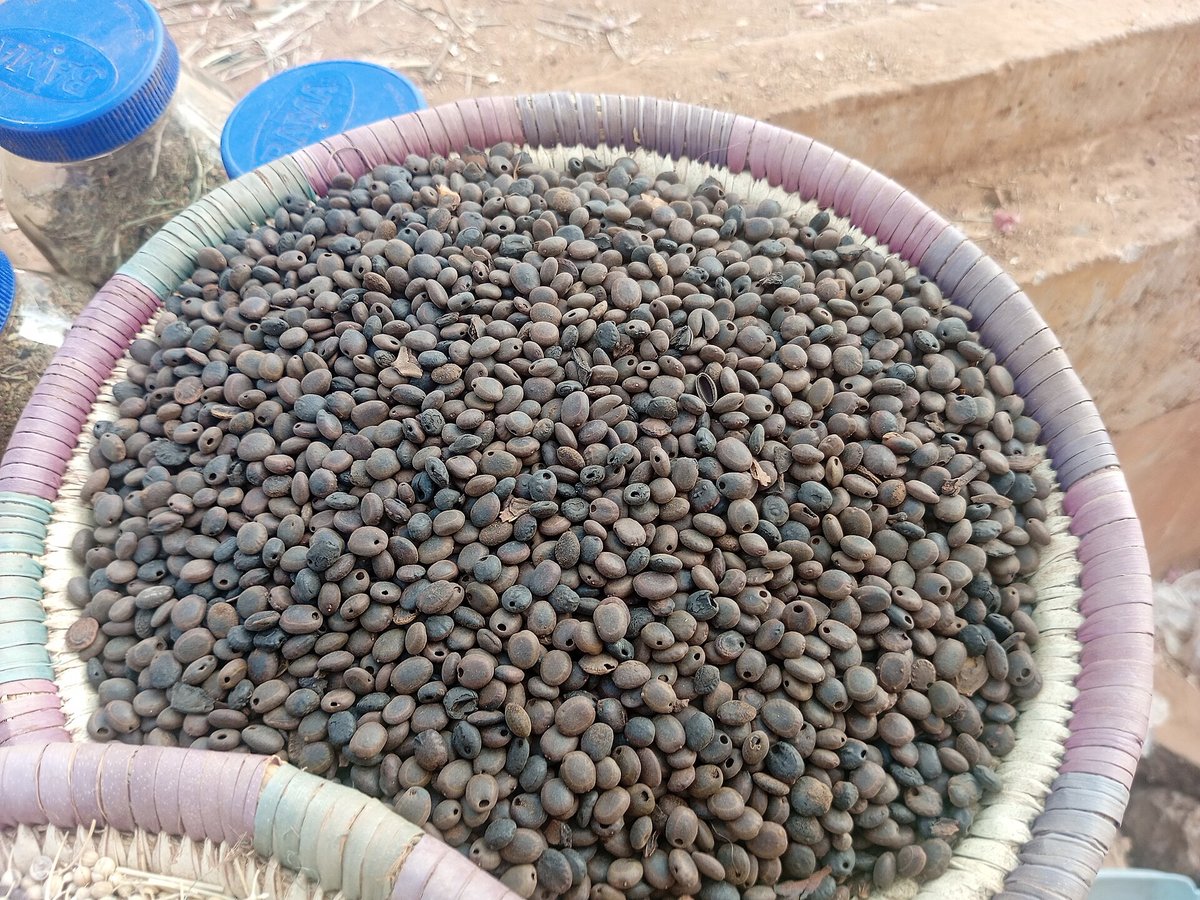
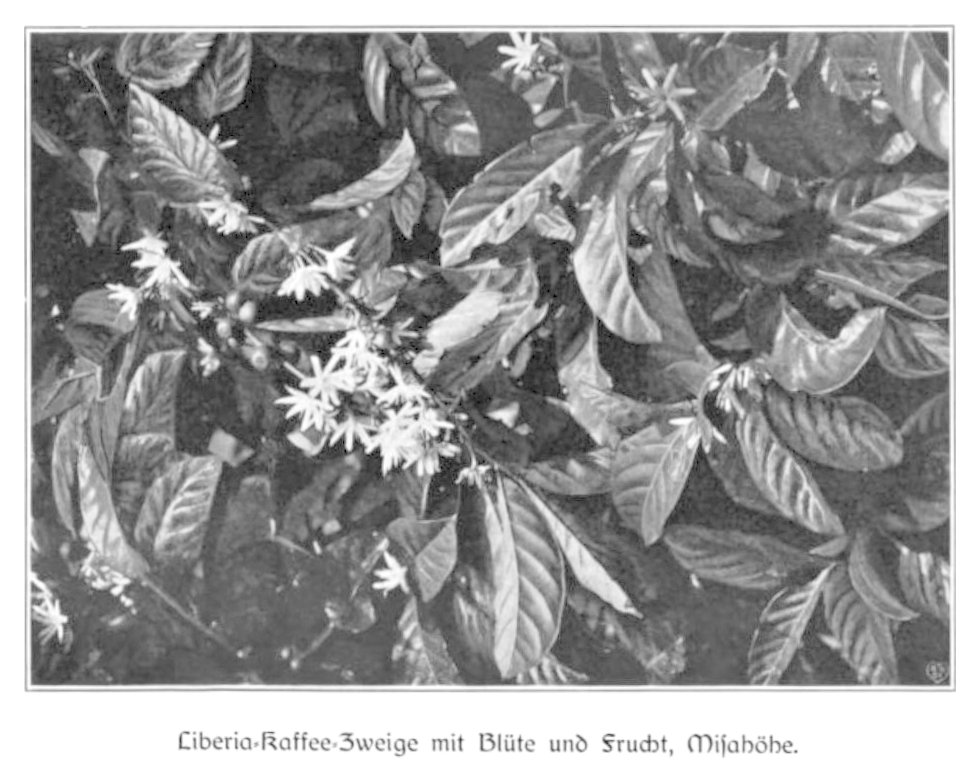
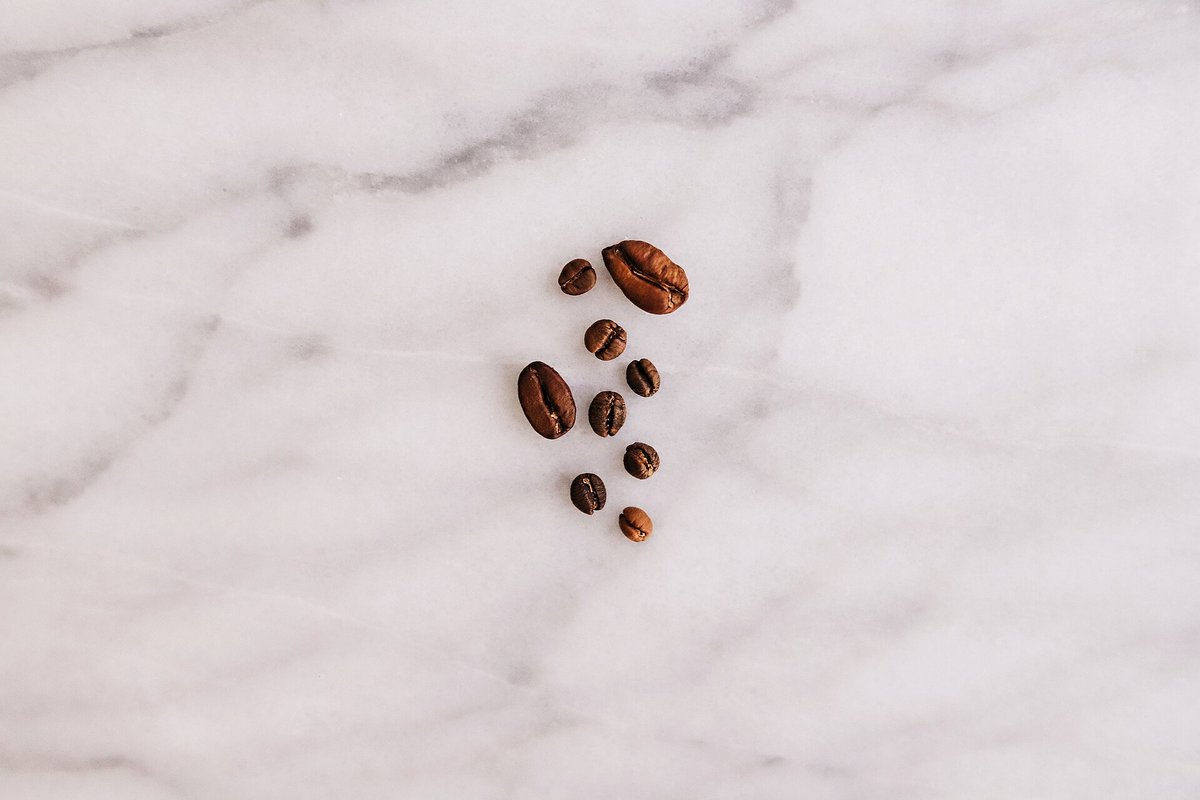
Liberica (Coffea liberica) is a tall tree with big leaves and big, lopsided beans, native to West and Central Africa. It was introduced to Southeast Asia in the late nineteenth century and has been drunk there ever since; in the Philippines it is the strong coffee called barako. Beans describes the cup.
Excelsa is a close relative that botanists treated as a variety of Liberica (C. liberica var. dewevrei). That is how most books, including older pages on this site, describe it.
That changed in 2025. A genomic study by Davis and colleagues (Nature Plants, August 2025) concluded: “Genomic and other datasets support the division of Coffea liberica into three species: C. liberica, C. dewevrei (excelsa) and C. klainei.” In a 2026 letter (Davis), Davis corrected a food-science review that had still called them varieties, and noted that the trade word “Liberoid” has no precise scientific meaning. The names to use now:
| Common name | Scientific name | Grown in |
|---|---|---|
| Liberica | Coffea liberica | Malaysia, the Philippines, Indonesia, lowland Southeast Asia; Fiji |
| Excelsa | Coffea dewevrei | Uganda, South Sudan, Guinea; increasingly India, Vietnam and Indonesia |
| (no common name) | Coffea klainei | not farmed |
The 2025 paper’s other numbers are as striking: world production of the two is “probably less than 1,000 metric tons,” which would be about 0.01% of world coffee exports. Both are gaining ground for the same reason: excelsa grows and crops “under higher temperatures and extended periods of low rainfall compared with robusta,” and Liberica may tolerate longer dry seasons.
A 2026 follow-up (Davis and others, Scientific Reports) found that the two cross readily on farms, especially in Sarawak (Malaysian Borneo), producing fertile hybrids with traits in between. The authors proposed a name for the hybrid, Coffea × libex, and suggested hybrids could bring both crops forward quickly. Excelsa is also the rootstock the stenophylla project grafts onto.
Racemosa and the low-caffeine coffees
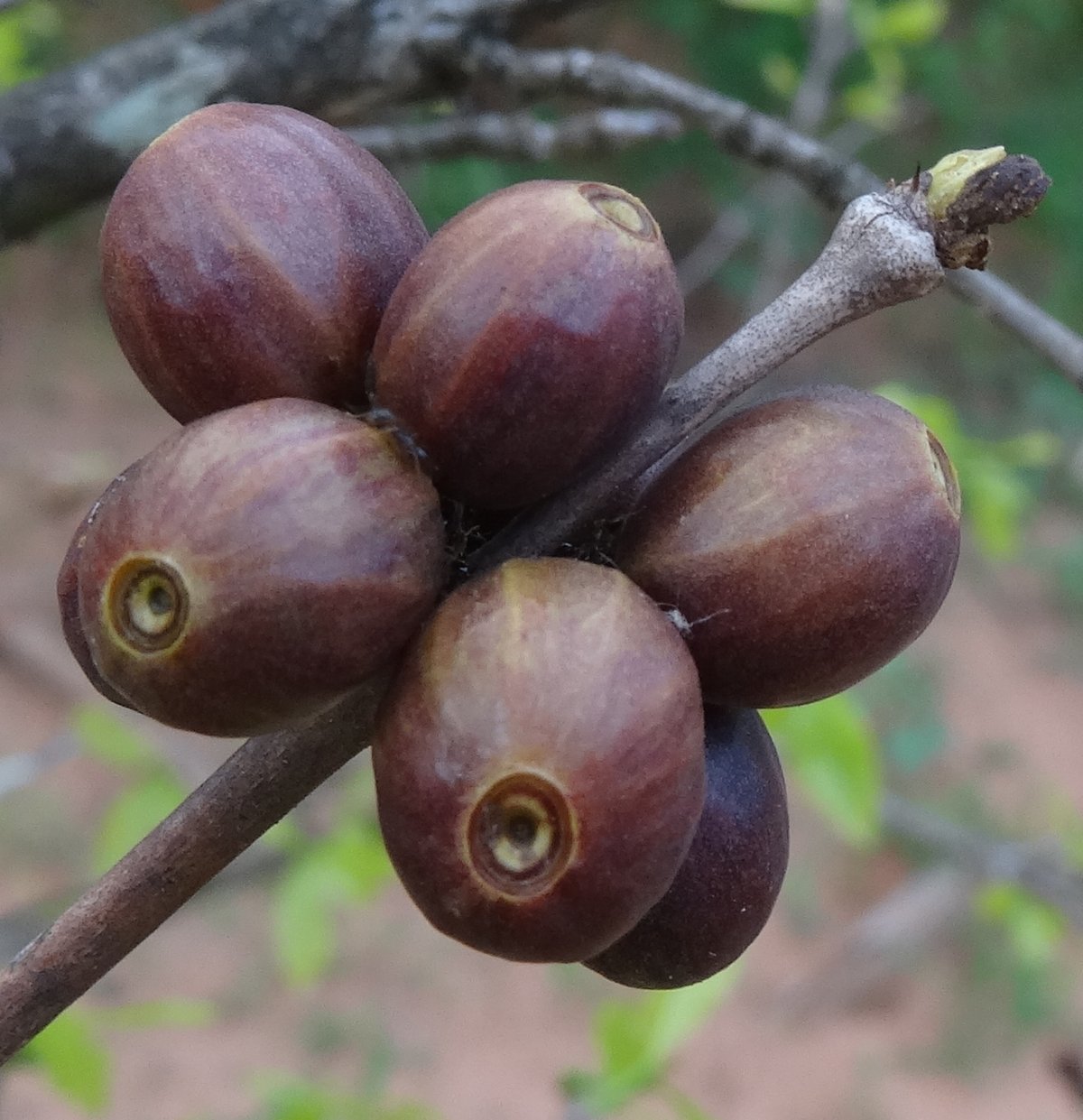
Coffea racemosa is a small-beaned wild coffee that researchers in Mozambique are studying because it shows “promising characteristics for cultivation under stress conditions” (Alberto and others, 2025). Its other interest is caffeine. A 2026 study of 24 wild Mozambican accessions (dos Santos Gomes and others, Genetic Resources and Crop Evolution) measured an average of 7.3 mg of caffeine per gram in racemosa beans, against 21.9 in its neighbour C. zanguebariae, and high chlorogenic acids. The authors call it promising for “naturally low-caffeine beverages.” For comparison, the Beans page gives robusta about twice arabica’s caffeine.
Racemosa is not a commercial coffee. It turns up in research collections and occasionally in specialty importers’ novelty lots.
The new arabica varieties
Inside arabica, breeders have been adding back the genes the bottlenecks removed. Every name below has a page in the World Coffee Research catalog, the standard reference.
| Generation | Examples | How it was made | Trade-off |
|---|---|---|---|
| Heirloom lines | Typica, Bourbon, Gesha | selections from old stock | good cup; very susceptible to rust |
| Dwarf mutants | Caturra, Catuai | natural mutations of Bourbon, then crosses | high-density planting; still susceptible |
| Rust-resistant lines | Catimor 129 (Caturra × Timor Hybrid), Sarchimor | crosses with the Timor Hybrid, an arabica line carrying robusta genes | resistance; older selections had a poorer reputation for cup quality (see Origins) |
| F1 hybrids | Centroamericano, Starmaya | a modern line crossed with a wild Ethiopian or Sudanese arabica | vigour, yield and resistance; harder to propagate |
An F1 hybrid is the first generation from crossing two different parents. It often grows more strongly than either (hybrid vigour), but its seeds do not breed true, so farmers cannot save seed from it.
- Centroamericano (T5296 × Rume Sudan) was released in 2010 by a consortium of the French research centre CIRAD, the Central American coffee programme PROMECAFE and CATIE in Costa Rica. In trials it yielded 22–47% more than the standard varieties and is highly resistant to rust. It performs best above about 1,300 m. Its drawback: “Seeds taken from hybrid plants will not have the same characteristics as the parent plants,” so every plant has to be cloned in a lab or nursery (WCR).
- Starmaya (Marsellesa × a wild Ethiopian/Sudanese line) gets round that. One parent is male-sterile, so any seed it sets must be a hybrid, and the variety can be grown from seed. About 15% of seedlings still come out different (WCR). A 2026 methods paper calls seed-propagated F1 hybrids “a major innovation for the global coffee sector” (Georget and others).
Buying these coffees
For a home roaster or a small roaster, here is what can actually be bought, as of October 2026. Unusual species come and go in small lots; when one sells out it may not return for a year.
| Coffee | Availability | Example listing (October 2026) |
|---|---|---|
| Liberica, green | occasional, from importers and Philippine or Malaysian specialists | New Orleans Coffee Import Co.: Philippines Liberica, Batangas co-op, $38.95, pre-order; the listing does not state the weight |
| Excelsa / Liberica, green, by the box | occasional | Genuine Origin: Uganda “Natural Liberica Excelsa,” screen 14+, $6.15/lb in a 65 lb box ($399.75), cup score 81, sold out at the time of reading |
| Stenophylla | not available | trial plantings only |
| Racemosa, eugenioides | rare novelty lots | none listed by the sellers above |
| F1 hybrids (Centroamericano, Starmaya) | regular, from Central American lots | sold as ordinary arabica lots, with the variety named on good importers’ sheets |
A practical ladder, cheapest first:
- Buy a roasted Liberica or excelsa from a roaster that sells one, to taste it before committing to green coffee.
- Buy one or two pounds of green Liberica from a small retailer and roast it at home. Its beans are large and uneven in size, so roast small batches and watch them closely; the step-by-step roasting page covers the home methods.
- Buy a 65 lb box only when the coffee has a place on a menu. For a market stall, a Liberica or excelsa makes a conversation piece, sold as a small bag beside the regular line-up (Green coffee and the line-up).
- Ask importers for F1 hybrid lots by variety name. They cost no more than any other good Central American coffee, and buying them supports the farms that planted them.
What is not known
- Whether stenophylla will crop well on farms at scale, and at what yield. The trials began in 2023; the old literature is not a reliable guide.
- What excelsa and Liberica will taste like when grown and processed with specialty care. Most published tasting is of ordinary commercial lots.
- How fast the climate change projections will arrive in any one growing region. The models agree on the direction and differ on the size.
Sources
- Salojärvi and others, The genome and population genomics of allopolyploid Coffea arabica, Nature Genetics, 2024.
- Davis and others, High extinction risk for wild coffee species, Science Advances, 2019.
- Moat, Gole and Davis, Least concern to endangered: climate change and the extinction risk of wild Arabica coffee, Global Change Biology, 2019.
- Davis and others, Lost and Found: Coffea stenophylla and C. affinis, Frontiers in Plant Science, 2020.
- Davis, Mieulet, Moat, Sarmu and Haggar, Arabica-like flavour in a heat-tolerant wild coffee species, Nature Plants, 2021; the authors’ summary.
- Bertrand and others, Potential beverage quality of three wild coffee species, Journal of the Science of Food and Agriculture, 2023.
- Jan-Smith and others, Metabolomic insights into the Arabica-like flavour of stenophylla coffee, npj Science of Food, 2025.
- Davis and others, Genomic data define species delimitation in Liberica coffee, Nature Plants, 2025.
- Davis and others, Genomic elucidation of hybridization between Liberica and excelsa coffee, Scientific Reports, 2026.
- Davis, Why valid, scientific names matter in food science: the case of Liberica and excelsa coffee, Comprehensive Reviews in Food Science and Food Safety, 2026.
- Alberto and others, Mass and nutrient content of beans and husks of Coffea racemosa and Coffea zanguebariae grown in Mozambique, Plants, 2025.
- dos Santos Gomes and others, Non-volatile bioactive compounds in wild African coffee accessions: Coffea racemosa and Coffea zanguebariae, Genetic Resources and Crop Evolution, 2026.
- Grüter and others, Expected global suitability of coffee, cashew and avocado due to climate change, PLOS ONE, 2022.
- Bunn and others, Multiclass classification of agro-ecological zones for Arabica coffee, PLOS ONE, 2015.
- World Coffee Research, Variety catalog; Centroamericano; Starmaya; Catimor 129.
- Georget and others, Improving resilience of Arabica coffee plantations by cultivating F1 hybrid varieties, Frontiers in Plant Science, 2026.
- Tea & Coffee Trade Journal, Progress made into climate-resistant coffee species in Sierra Leone, 26 June 2023.
- Sucafina, Unlocking the potential of stenophylla coffee.
- Genuine Origin, Uganda Natural Liberica Excelsa Scr 14+ 2024.
- New Orleans Coffee Import Co., Green beans.
Comments (0)