Coffee · 16 of 35
Flavored and Seasonal Drinks: Mocha, Pumpkin Spice, Cold Foam and More
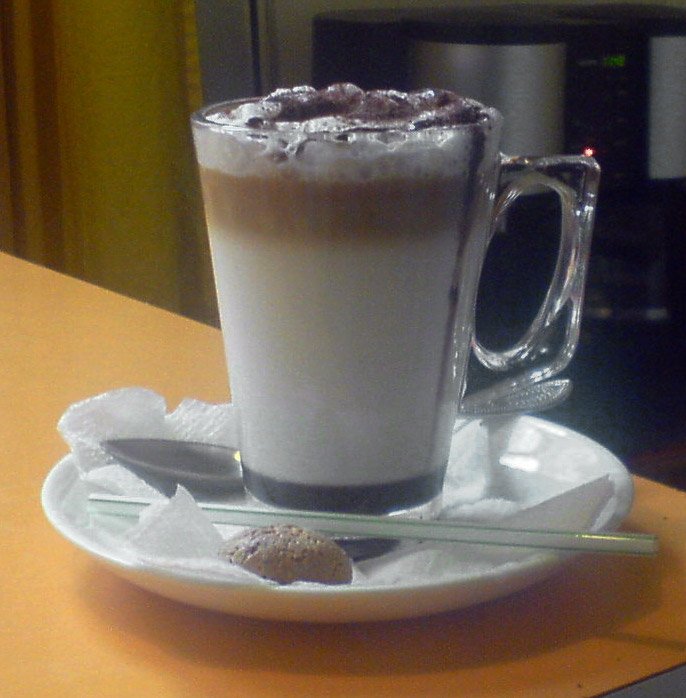
Most of the Coffee pages are about coffee with nothing added. This one is about the drinks most cafés actually sell: chocolate, pumpkin spice, caramel, maple, a cold foam on top. Each one here is a sauce or a syrup, by weight, that can be made in a kitchen, with what it is, where it came from, how long it keeps and where the law lets it be made. It ends with the beans that come pre-flavoured, which are a different thing altogether, and a calendar of what to pour in which month at a Michigan market stall.
The recipes are starting points worked out from ordinary proportions, not tested formulas. Weigh everything; a cup of sugar and a cup of cocoa are very different weights. Plain syrups (simple, rich, honey, vanilla, maple) are on Syrups, and honey has its own page, Honey in Coffee.
The short version
| Drink | What makes it | Dose in a 12 oz drink | Keeps, refrigerated |
|---|---|---|---|
| Mocha | Cocoa sauce: cocoa, sugar, water | 30 g | A sugar syrup; no tested figure |
| Pumpkin spice | Spice syrup (no pumpkin), or a pumpkin sauce | 25–30 g | Spice syrup like simple syrup; pumpkin sauce 3–4 days |
| Cold foam | Cold skim milk and a little syrup, frothed | 60–80 g on top | Make to order |
| Caramel | Sugar cooked to amber, cream, butter, salt | 25 g | Dairy: a few days |
| Dulce de leche | Condensed milk cooked in the can | 25 g | Dairy: a few days once opened |
| Maple | Dark maple syrup, straight | 20 g | Refrigerate once open |
| Honey lavender | Lavender steeped in water, stirred into honey | 20 g | Cold; days, not weeks |
| Cinnamon, horchata | Cinnamon syrup; or rice, cinnamon and sugar soaked and blended | 20 g; or half the cup | Syrup like simple syrup; horchata 3–4 days |
| Peppermint mocha | Mocha sauce with peppermint extract | 30 g | As mocha sauce |
| Eggnog latte | Commercial eggnog steamed with milk | half the milk | Homemade eggnog 2–4 days |
| Gingerbread | Brown sugar, molasses, ginger, cinnamon, clove | 25 g | Like a rich syrup |
At a licensed market booth, nothing made at home can be served; a syrup may be mixed at the booth on the day. Under Michigan’s cottage food law, syrups and drinks cannot be made for sale at all. A shop with a licensed kitchen can make every recipe here (the law, below).
Mocha
The word came before the chocolate. “Mocha” first meant coffee shipped from the Yemeni port of Mokha; the chocolate meaning appears around 1900, and a “Chilled Mocha” of milk, coffee and cocoa is in print by 1920. Turin’s bicerin, coffee and chocolate and cream layered in a small glass, is older still (Wikipedia, “Caffè mocha”).
A café mocha is a latte with a chocolate sauce in it. A sauce made from cocoa, rather than melted chocolate, mixes into hot coffee without seizing and needs no dairy, so it keeps like a syrup.
Mocha sauce, from cocoa (makes about 370 g)
| Ingredient | Weight |
|---|---|
| Unsweetened cocoa powder | 60 g |
| Sugar | 150 g |
| Salt | 1 g |
| Water | 180 g |
| Vanilla extract, optional | 3 g |
- Whisk the cocoa, sugar and salt together dry, so the cocoa does not lump.
- Whisk in the water, bring to a simmer and keep it there for 2 to 3 minutes, whisking, until smooth and a little thicker.
- Off the heat, add the vanilla. Cool, bottle and refrigerate.
Dutch-processed cocoa gives a darker, rounder sauce; natural cocoa a sharper, fruitier one.
The drink. 30 g of sauce in the cup, a double espresso or 60 g of strong concentrate on it (an AeroPress, a moka pot or a phin all make one without an espresso machine), stirred, then about 200 g of steamed milk. Iced: the same over ice with cold milk.
White mocha uses white chocolate melted into an equal weight of hot milk (100 g of each). That is a dairy sauce and keeps a few days, not weeks.
Peppermint mocha is the mocha sauce with 1 g of pure peppermint extract stirred into the whole batch after cooking. Peppermint extract is strong; add it a drop at a time and taste.
Pumpkin spice
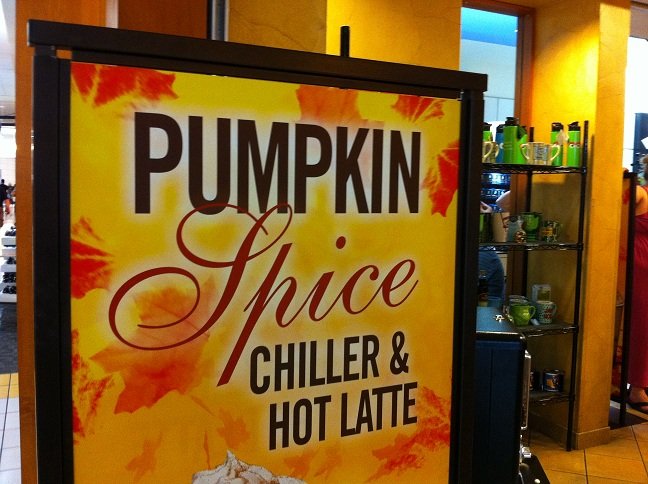
The drink is younger than most people think and had no pumpkin in it for its first twelve years. Starbucks began developing it in January 2003, after the success of two winter drinks it already sold, the peppermint mocha and the eggnog latte. It was tested in Vancouver and Washington, D.C., in late 2003 and went to every American store in 2004. In August 2015 Starbucks changed the recipe to include pumpkin purée and drop the artificial colours; the sauce since then is listed as sugar, condensed skim milk, pumpkin purée, colouring and preservatives, and the Institute of Food Technologists judged the change largely impossible to taste (Wikipedia, “Pumpkin spice latte”, from its cited sources).
Two corrections follow from that:
- “Pumpkin spice” is the spice for pumpkin pie, not pumpkin. Spice companies sold ready-mixed pumpkin pie spice from the 1930s. The flavour people know is cinnamon, ginger, nutmeg and clove, in sugar, in milk.
- Starbucks did not invent the idea. Small coffee shops sold pumpkin spice lattes in the 1990s; who did it first is not recorded. Starbucks made it national.
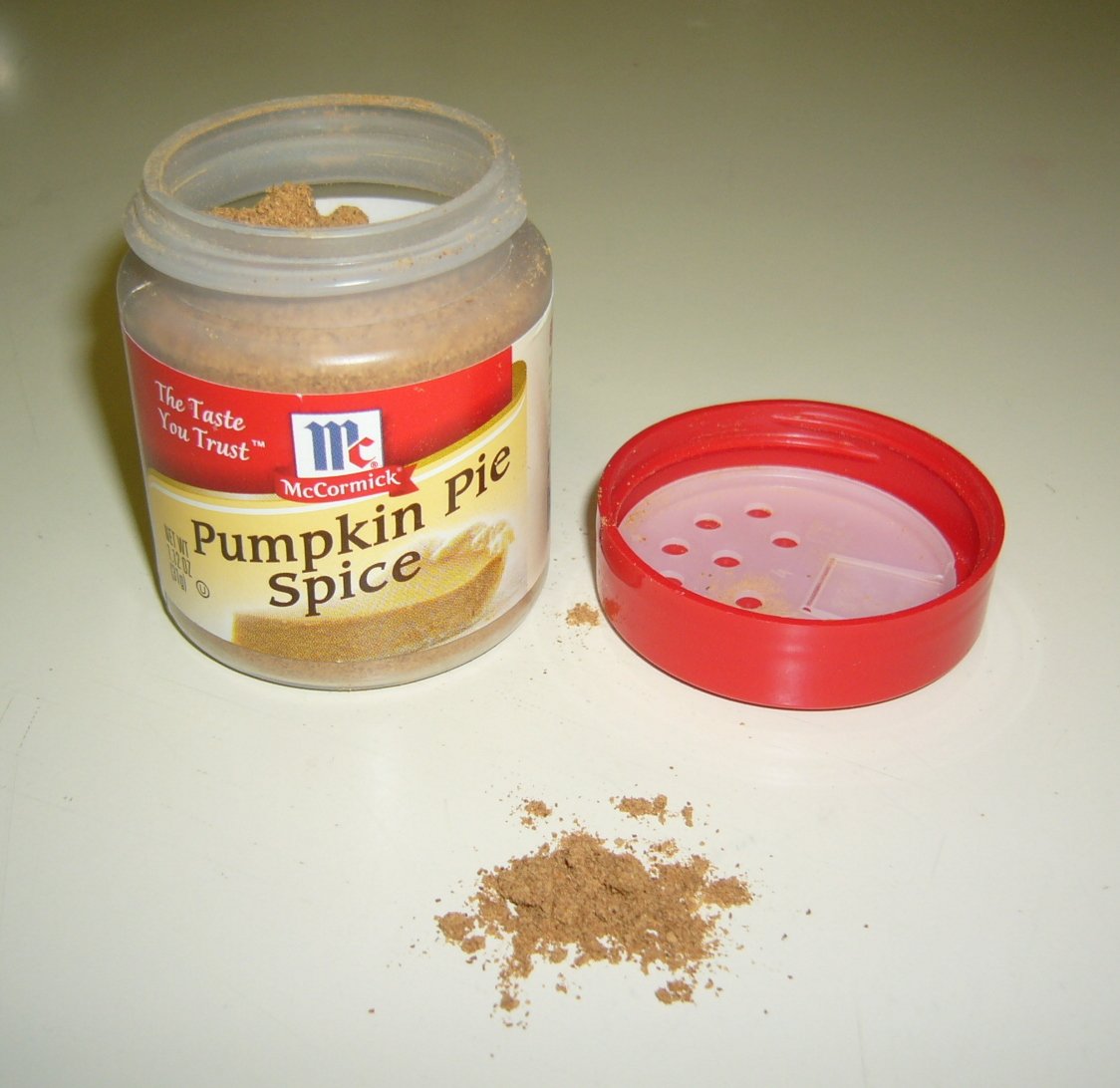
A house pumpkin pie spice (makes 20 g)
| Spice, ground | Weight |
|---|---|
| Cinnamon | 12 g |
| Ginger | 4 g |
| Nutmeg | 2 g |
| Allspice | 1 g |
| Cloves | 1 g |
Pumpkin spice syrup, the 2003 way (no pumpkin; makes about 300 g): 150 g sugar and 150 g water brought to a simmer, 4 g of the spice blend whisked in, simmered 2 minutes, cooled and strained through a paper coffee filter so the cup is not gritty. It keeps like simple syrup.
Pumpkin sauce, the 2015 way (makes about 330 g)
| Ingredient | Weight |
|---|---|
| Canned pumpkin purée | 100 g |
| Brown or white sugar | 150 g |
| Water | 100 g |
| House pumpkin pie spice | 4 g |
| Salt | 1 g |
| Vanilla extract | 3 g |
Simmer everything but the vanilla for 5 minutes, whisking; add the vanilla; blend smooth or strain. This is a vegetable sauce, not a syrup. It contains too little sugar to protect itself and nothing acidifies it. Keep it cold and use it within 3 to 4 days, the figure the federal cold storage chart gives for baked pumpkin pie, the nearest food it lists. Do not try to can it: the National Center for Home Food Preservation’s tested process for pumpkin is for cubes only, with the caution “Do not mash or puree.”
The drink: 25 g of syrup or 30 g of sauce, a double espresso or 60 g of concentrate, 200 g of steamed milk, a pinch of the spice on top.
Cold foam
Cold foam is milk frothed without heat and spooned or poured onto an iced drink, where it floats and slowly sinks. It is not whipped cream and not steamed milk.
The dairy science explains why most recipes use skim milk. A review of how milk foams found that “skim milk foams can be extremely stable,” and that “the presence of lipids can be detrimental to the formation and stability of milk foams, particularly at a temperature where the milk fat is partially crystalline” (Huppertz, 2010). In skim milk the bubbles are held by milk protein, with little fat to break them. The “sweet cream” kind made with cream works the other way: it is closer to a loosely whipped cream, held by the fat, and thicker. No study of café cold foam itself is published; that is the general foam science applied to it.
Without a commercial blender, three tools do it:
| Tool | How | Result |
|---|---|---|
| French press | Cold milk and syrup in the press, no more than a third full; pump the plunger hard 30 to 40 times | Thick, fine foam; the most control |
| Handheld battery frother | In a tall cup, 30 to 45 seconds, moving it up and down | Lighter foam; fine for one drink |
| Blender or immersion blender | 15 to 20 seconds | Fast; bigger bubbles |
Two foams
| Foam | Ingredients | Notes |
|---|---|---|
| Skim cold foam | 100 g cold skim milk, 10 g vanilla or any syrup | Light and stiff; the bubbles last |
| Sweet cream cold foam | 40 g heavy cream, 40 g 2% milk, 15 g vanilla syrup | Thick, pourable, rich; stop before it turns to whipped cream |
Spoon 60 to 80 g over a 16 oz iced coffee or cold brew. Flavour goes in the foam rather than the coffee: pumpkin syrup, maple, honey syrup, a pinch of salt. Cold brew with whipped cream, and what to do with cold brew generally, is on Iced Coffee and Ice.
Caramel and dulce de leche
Caramel sauce (makes about 360 g)
| Ingredient | Weight |
|---|---|
| Sugar | 200 g |
| Water | 50 g |
| Heavy cream, warmed | 120 g |
| Butter | 30 g |
| Salt | 2 g |
- Sugar and water in a heavy pan over medium heat. Swirl, do not stir, until it is an even amber.
- Off the heat, pour in the warm cream: it will boil up hard. Never add cold liquid to caramel, which is far above boiling (Syrups).
- Stir in the butter and salt. Cool and refrigerate. It contains cream, so it keeps days, not weeks.
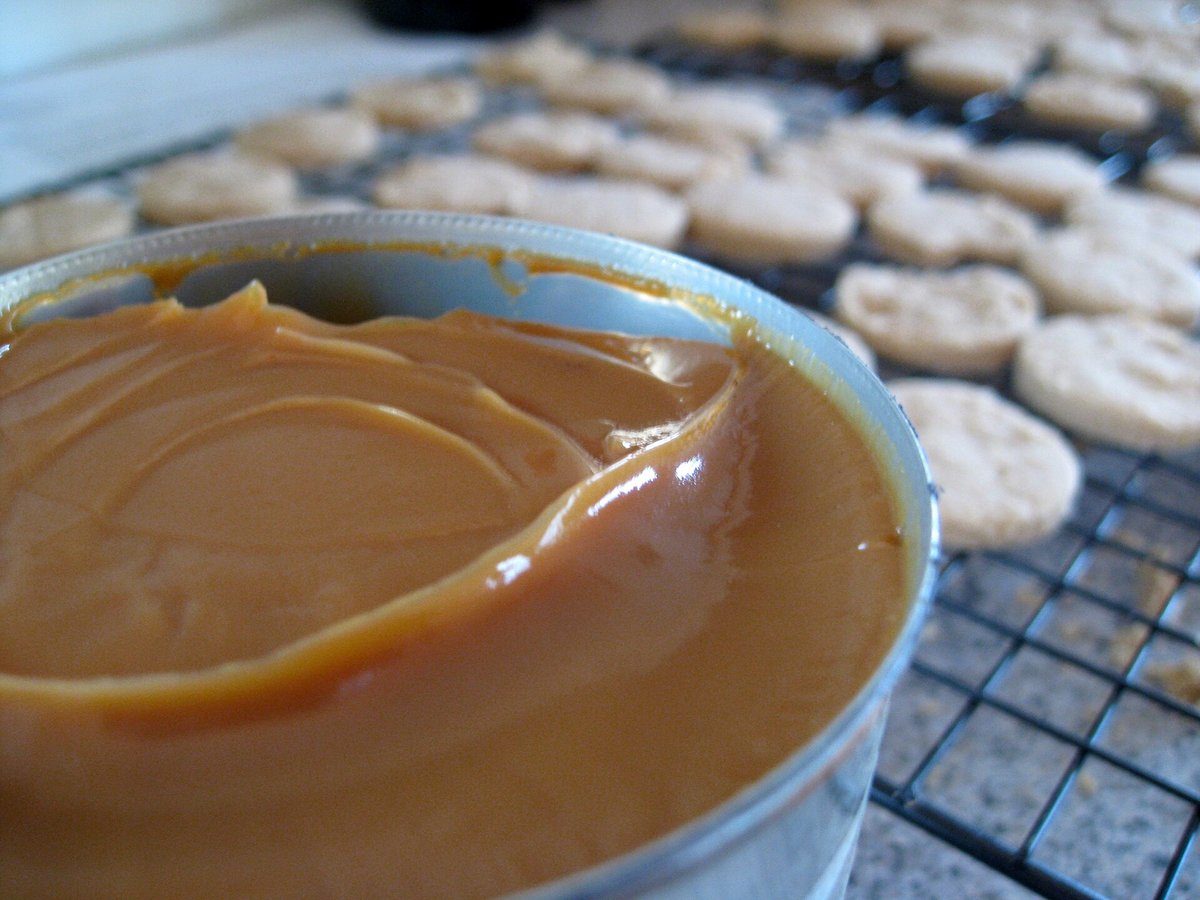
Dulce de leche is condensed milk browned by long, gentle heat: tan and butterscotch at an hour and a half, deep brown at three and a half. How it is made in the can, the colour and taste at each stage, and how to do it safely are on The Drinks. In a drink, whisk 25 g of it into the hot espresso or concentrate before the milk goes in; it will not dissolve in cold milk. With a phin and ice it becomes a richer cousin of cà phê sữa đá (kah fay shoo-uh dah · [kaː˨˩ fej˧˧ ʂɨə˨˩˦ ʔɗaː˦˥]).
Maple
Michigan makes maple syrup, and a maple latte is the most local flavoured drink a central Michigan stall can pour. The grades, and why dark syrup tastes stronger, are in the Tree Syrups dive (The grades; Michigan maple). For coffee, the darker grades carry through milk better than golden.
Maple latte: 20 g of dark maple syrup in the cup, a double espresso or concentrate, 200 g of steamed milk, a pinch of cinnamon or a few flakes of salt on top. Maple needs no recipe, keeps on the shelf sealed and in the refrigerator once open (Syrups), and is a product the stall may well have on the table already: the planned house jams are sweetened with honey and maple.
Honey lavender
Honey lavender syrup (makes about 200 g): pour 50 g of just-boiled water over 2 g of dried culinary lavender, steep 5 minutes, strain, let it cool to warm, and stir it into 150 g of honey. The honey is never boiled. How honey behaves in hot and cold drinks, which honey suits which coffee, and how long a honey syrup keeps (the sources differ) are on Honey in Coffee. Use 20 g in a latte, hot or iced, and less lavender rather than more: too much tastes of soap.
A version that is a cottage food. Lavender steeped in honey itself, with no water, is a flavoured honey, and MDARD’s cottage food list allows “Flavored honey” by name. A jar of lavender honey can be sold from the table under the exemption; the syrup made from it with water cannot. Strain the flowers out before jarring, and label it as a cottage food (Gift Baskets works through the same rule).
Cinnamon and horchata
Cinnamon syrup: 150 g sugar, 150 g water and 10 g of broken cinnamon stick, simmered 5 minutes, left to steep as it cools, then strained. Sticks give a cleaner syrup than ground cinnamon, which never fully dissolves.
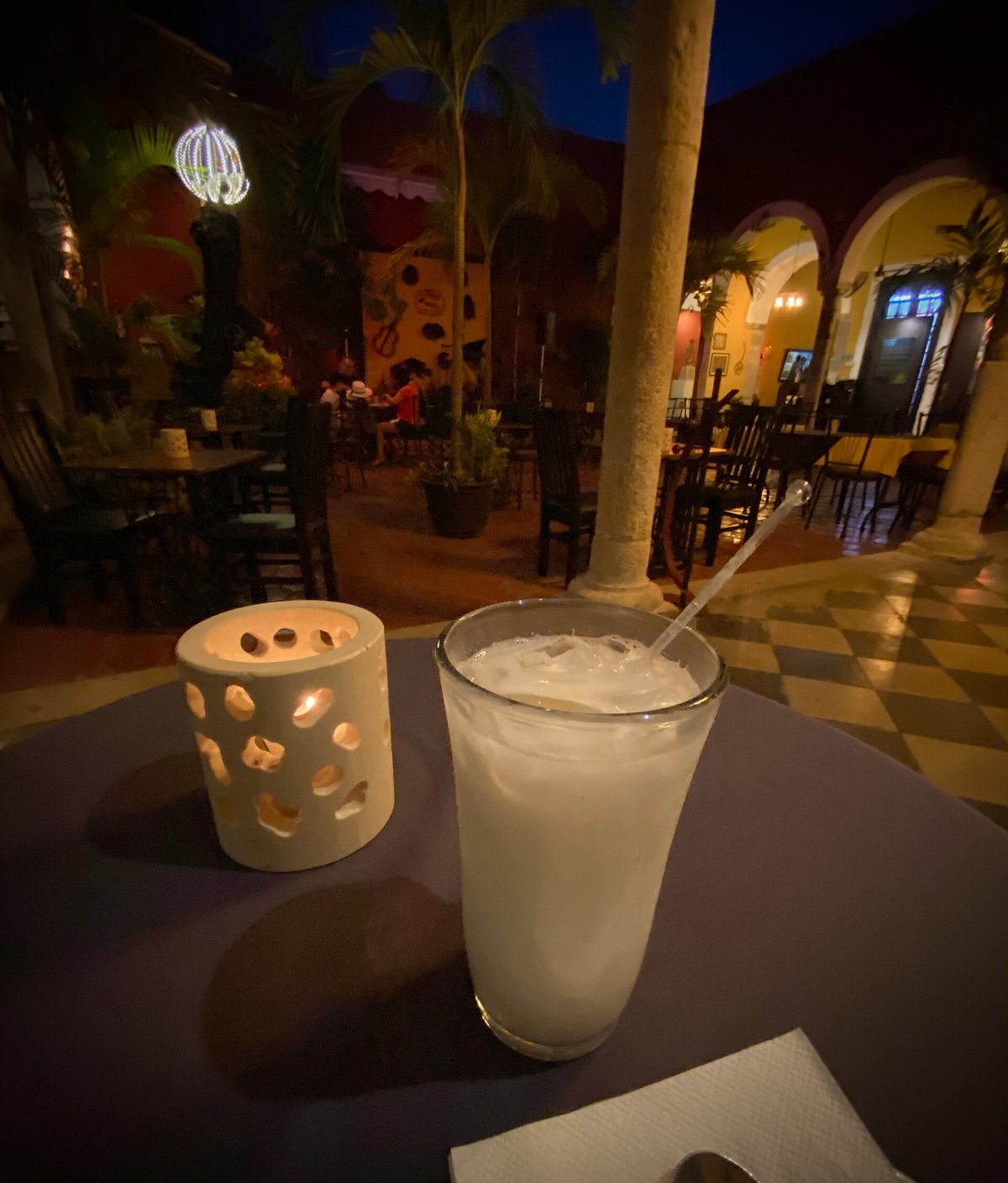
Horchata is the Mexican rice drink flavoured with cinnamon. Poured over a shot of coffee, it is a horchata latte, and iced it is one of the best summer drinks a stall can have.
| Ingredient | Weight |
|---|---|
| Long-grain white rice | 100 g |
| Cinnamon stick | 5 g |
| Water, for soaking | 500 g |
| Sugar | 60 g |
| Milk, optional | 250 g |
Soak the rice and cinnamon in the water overnight in the refrigerator. Blend until fine, strain through a cloth, stir in the sugar and the milk. Keep it cold and use it within 3 to 4 days. The drink: 150 g of horchata over ice with a double espresso or 60 g of concentrate.
Eggnog and gingerbread
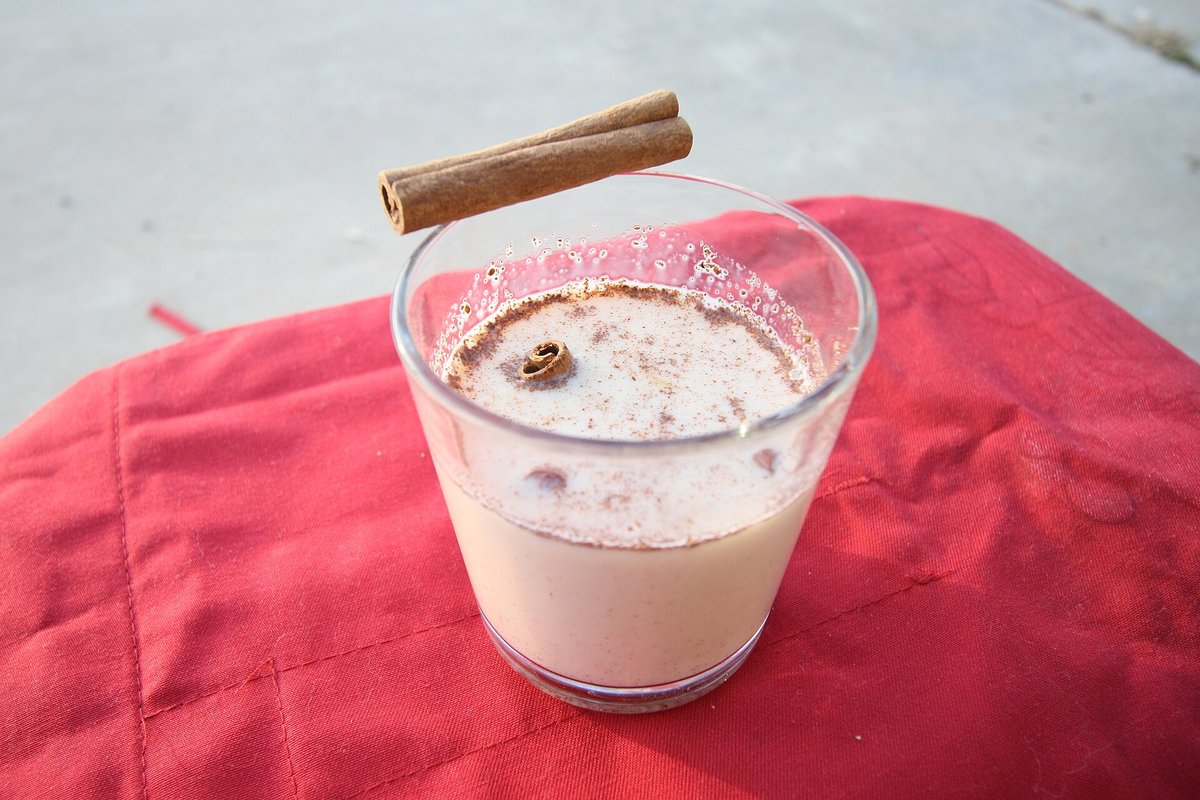
Eggnog latte is older at Starbucks than pumpkin spice. Steam 120 g of eggnog with 80 g of milk, gently, since eggnog scorches and thickens faster than milk, and pour it over a double espresso or concentrate. Use a commercial eggnog, or a home recipe made with pasteurised eggs: raw eggs are the risk in eggnog. Homemade eggnog keeps 2 to 4 days refrigerated and should not be frozen; commercial, 3 to 5 days once opened (FoodSafety.gov).
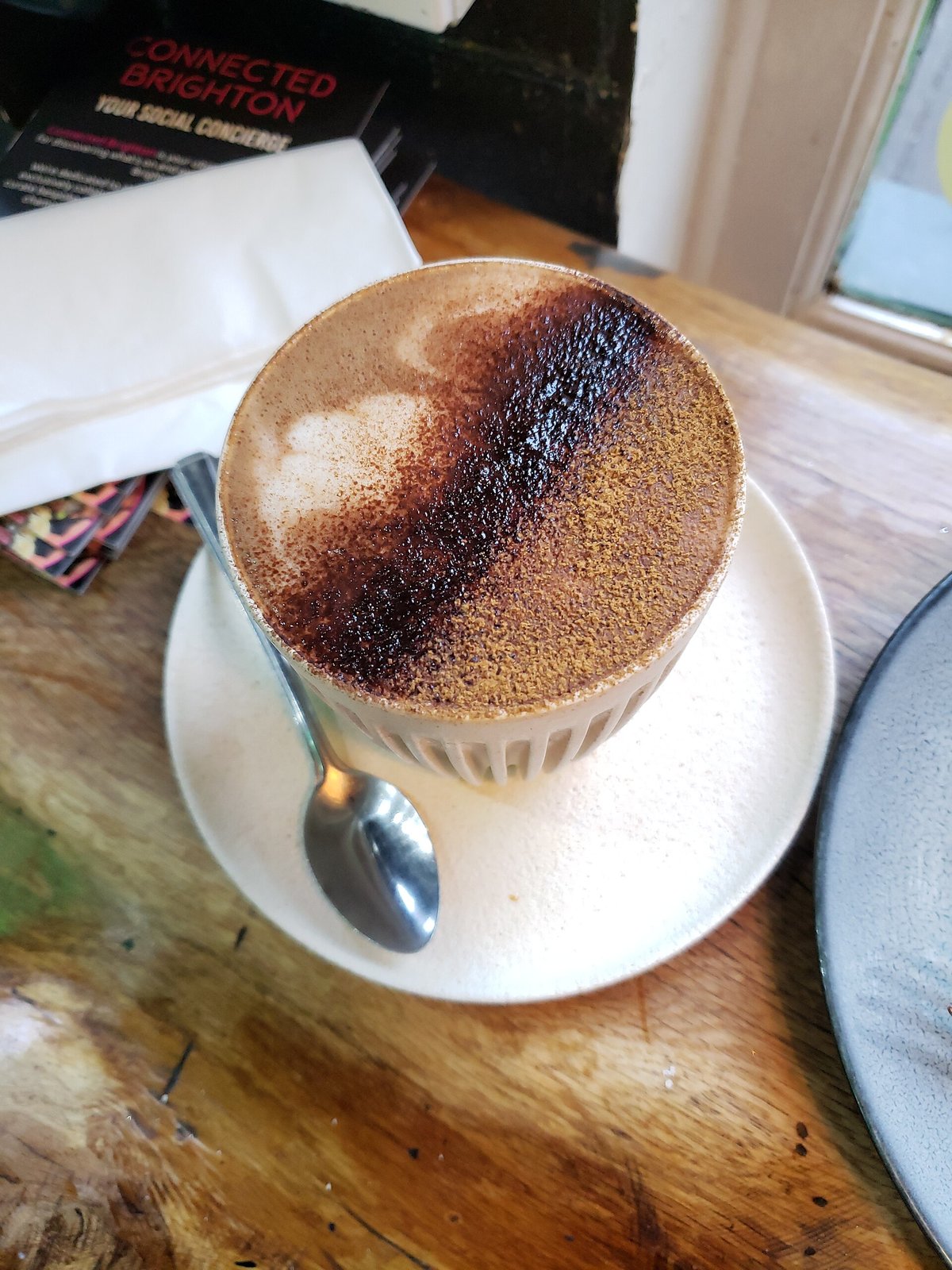
Gingerbread syrup (makes about 330 g)
| Ingredient | Weight |
|---|---|
| Brown sugar | 150 g |
| Molasses | 30 g |
| Water | 150 g |
| Ground ginger, or 15 g sliced fresh ginger | 4 g |
| Ground cinnamon | 2 g |
| Ground cloves | 0.5 g |
Simmer 5 minutes, strain through a paper coffee filter, cool. Use 25 g in a latte, or add it to the mocha for a gingerbread mocha.
Flavoured beans: a different thing
Flavoured coffee beans (hazelnut, French vanilla, “blueberry”) are not made the way a flavoured drink is. A U.S. Centers for Disease Control report on a small Texas coffee-processing plant describes the method: in the flavouring room, “whole roasted coffee beans were mixed with liquid flavorings in an open process, ground, and packaged,” with a worker weighing liquid flavourings at an open bench and pouring them “into barrels of roasted coffee beans. A machine rotated these open barrels” (CDC, MMWR 62(16), 2013).
That report is about the people doing it. Two workers in the plant developed obliterative bronchiolitis, a rare, permanent lung disease already known in microwave-popcorn and flavouring plants. Diacetyl, the butter-flavour chemical blamed for it, was in some of the flavourings, and “other flavorings might have contained undeclared diacetyl” because safety data sheets list only hazards of 1% or more; “no specific federal regulations govern workers exposed to diacetyl or its substitutes.”
Why specialty roasters rarely flavour beans, and why this stall will not:
- The flavouring hides the coffee. The point of a single-origin coffee is how it tastes. A coating of vanilla or hazelnut makes any bean taste of vanilla or hazelnut.
- The grinder. Flavouring oils stay in the burrs and turn up in the next coffee ground. No published study measures how long; the practical answer is a grinder kept for flavoured beans only, or none at all (Grinders). At a stall that grinds bags to order, one bag of hazelnut coffee would flavour the next customer’s Ethiopian.
- The air. Liquid flavourings in an open room are a workplace exposure the CDC report treats seriously. A roaster has no reason to bring them into the roastery.
- No published figure exists for how much flavouring goes on a kilo of beans, so a home or stall version would be guesswork.
The same flavours come out better, and fresher, as a syrup added to the cup.
Where each can be made
Michigan’s rules decide which of these a market stall can sell, and the answer is narrower than the recipes suggest. The full table is on The Michigan Rules.
| Home kitchen, cottage food | Licensed market booth | Licensed shop or commissary kitchen | |
|---|---|---|---|
| Spice, cinnamon, gingerbread and vanilla syrups | No. MDARD’s cottage food list says “No simple syrups,” and drinks are outside the exemption | Yes, mixed at the booth on the day | Yes |
| Mocha sauce, caramel, pumpkin sauce (cooked) | No | Only if cooked at the booth, which few booths can do; otherwise a commercial shelf-stable sauce | Yes |
| Cold foam | No | Yes, frothed to order from milk held at 41 °F or below | Yes |
| Horchata, eggnog | No | Commercial eggnog, kept cold; horchata only from a licensed kitchen | Yes |
| Maple syrup and honey, straight; flavoured honey | Yes for a producer’s own honey and maple, and the cottage food list allows “Flavored honey” and “Flavored maple syrups”; reselling someone else’s needs a licence (Gift Baskets) | Yes, in a pump or squeeze bottle | Yes |
Shelf life, honestly. No published test gives a refrigerated shelf life for a home cocoa sauce, caramel or pumpkin sauce. The nearest federal figures are 3 to 4 days for baked pumpkin pie and 2 to 4 days for homemade eggnog (FoodSafety.gov), and Syrups gives about a month cold for simple syrup. A rule that fits all of them: sugar-and-water syrups for weeks in the refrigerator; anything with milk, cream, pumpkin or egg for days, made in small batches, dated on the bottle, and thrown out at the first cloudiness, mould or off smell. Commercial sauces keep on a shelf because they add preservatives, most often potassium sorbate and citric acid.
A seasonal menu for a Michigan market stall
Most central Michigan farmers markets run from May to October, and many towns add a holiday market in November or December. A flavoured drink or two each month gives regulars a reason to come back; the coffee line-up stays the same (Green Coffee and the Line-Up).
| Month | Weather | Flavoured drinks to feature | Why |
|---|---|---|---|
| May | Cool mornings | Honey lavender latte; maple latte | Honey from the hives; maple season has just ended |
| June | Warming | Iced honey coffee with skim cold foam | The first iced weeks |
| July | Hot | Horchata iced latte (from a licensed kitchen); cinnamon cold foam on cold brew | Cold sells; horchata is a hot-weather drink |
| August | Hot | Iced mocha; the first pumpkin spice in the last week | Customers start asking for pumpkin before the weather turns |
| September | Cool mornings return | Pumpkin spice, hot and iced; maple cold foam | The busiest flavour of the year |
| October | Cold | Pumpkin spice; caramel or dulce de leche latte; maple latte | The last markets; hot drinks sell again |
| November–December (holiday markets, or the shop) | Cold | Gingerbread; peppermint mocha; eggnog latte | The original winter drinks that came before pumpkin spice |
What will actually be poured depends on the licence. Under a temporary booth licence, the realistic flavoured menu is the syrups mixed at the booth (cinnamon, vanilla, spice, honey, maple), cold foam, and commercial sauces; the cooked sauces and horchata wait for the shop.
What is not known
- A tested refrigerated shelf life for a home cocoa sauce, caramel or pumpkin sauce.
- How much flavouring the industry puts on a kilogram of flavoured beans, and how long flavour persists in a grinder’s burrs.
- Who first served a pumpkin spice latte, before Starbucks made it national.
- A measured study of café cold foam; the explanation above applies the general research on milk foams.
Sources
- Wikipedia, “Pumpkin spice latte” and “Caffè mocha,” read 5 October 2026, for the dates and the 2015 recipe change, from their cited sources.
- Centers for Disease Control and Prevention, “Obliterative Bronchiolitis in Workers in a Coffee-Processing Facility — Texas, 2008–2012,” MMWR 62, no. 16 (2013): 305–307.
- Thom Huppertz, “Foaming properties of milk: a review of the influence of composition and processing,” International Journal of Dairy Technology 63 (2010), from its published abstract.
- National Center for Home Food Preservation, “Pumpkins and Winter Squash, Cubed.”
- FoodSafety.gov, “Cold Food Storage Chart” (last reviewed 19 September 2023).
- MDARD, cottage food: what can I make (“No simple syrups”; “Flavored honey”). Michigan rules for syrups and booths: The Michigan Rules, with its MDARD sources.
- The recipes are house starting points by weight, worked out for this page.
Comments (0)