Coffee · 60 of 64
Vietnamese Coffee: the Phin, Robusta and Condensed Milk
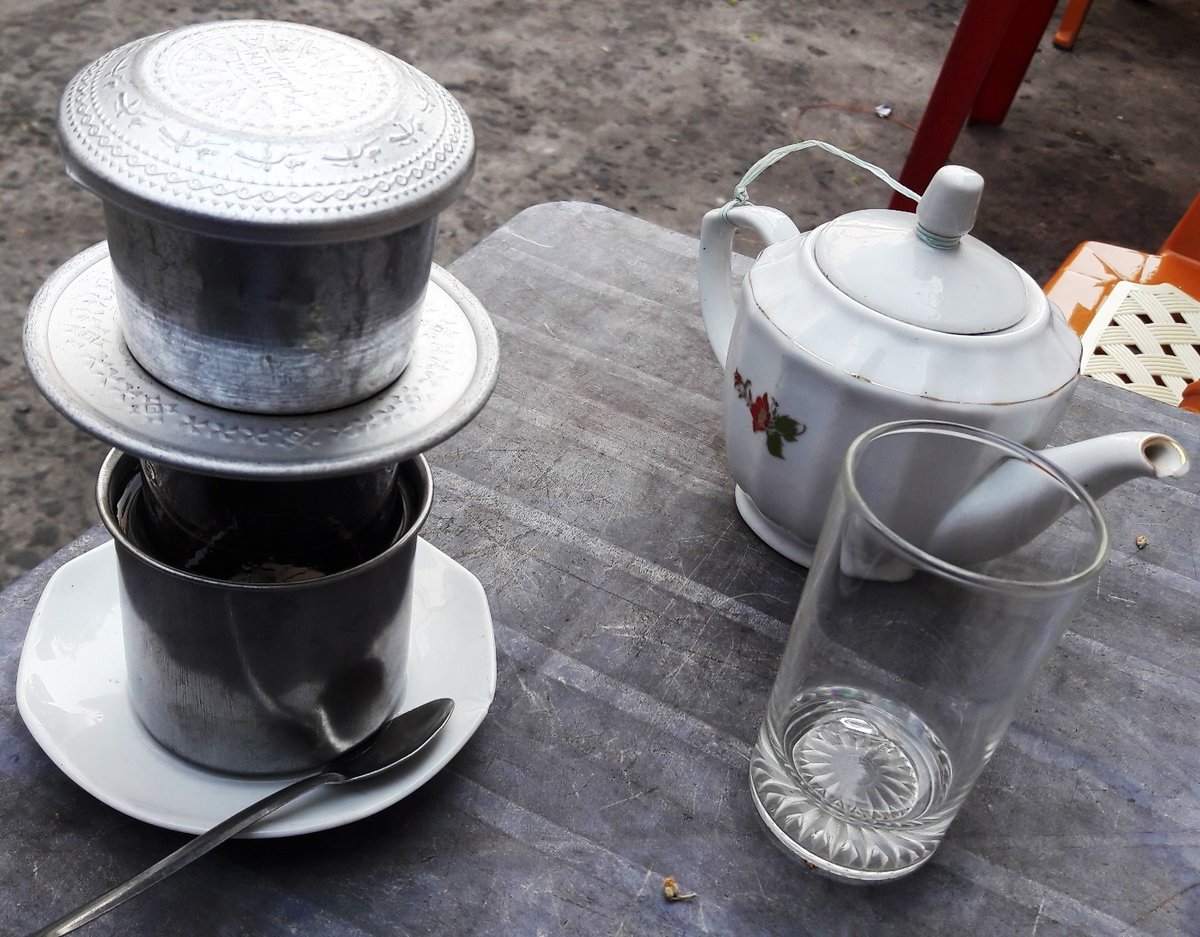
Vietnam is the world’s second-largest coffee producer and its biggest grower of robusta, and it drinks its coffee its own way: dark, strong, dripped slowly through a small metal filter called a phin into a glass with sweetened condensed milk, then poured over ice. I drank cà phê sữa đá (kah fay shoo-uh dah · [kaː˨˩ fej˧˧ ʂɨə˨˩˦ ʔɗaː˦˥]) every morning I was in Vietnam, and some of those were on a plastic stool in Buôn Ma Thuột, the town at the centre of the coffee country.
Most of what makes the cup what it is turns out to be recent. The French brought coffee in the nineteenth century, but Vietnam became a coffee power only after 1986, partly on plantations that East Germany paid for. Condensed milk is in the glass because the country had almost no fresh milk as late as 1990. Egg coffee dates from the 1940s, and salt coffee from 2010.
The short version
| Question | Answer |
|---|---|
| What is a phin? | A small metal drip filter that sits on the glass: a perforated cup, a press that sits on the grounds, a lid. No paper. It makes a few ounces of strong coffee in about four to seven minutes. |
| Cà phê sữa đá? | Phin coffee stirred into sweetened condensed milk and poured over ice. Sữa is milk, đá is ice. |
| And đen đá, bạc xỉu, egg coffee, salt coffee? | Black iced coffee, usually sugared; mostly milk with a little coffee; coffee under a whipped egg-yolk cream; coffee under a salted cream. |
| When did coffee arrive? | French missionaries in 1857 is the usual date, though no primary record of it is known. French plantations were photographed near Đà Nẵng in 1898. |
| How did Vietnam get so big? | East German–funded plantations in the 1980s, then the Đổi Mới reforms of 1986. Output went from about 92,000 tonnes in 1990 to 487,000 in 1999; Vietnam passed Colombia around 2000. |
| Why condensed milk? | Vietnam had no dairy tradition. National milk output was 12,000 tonnes in 1990, and tinned condensed milk keeps without a refrigerator. |
| Is Vietnamese coffee mixed with chicory? | Not in Vietnam. Vietnamese restaurants in the US often use Café du Monde’s coffee-and-chicory from New Orleans. |
| Can I make it? | Yes: Cà Phê Sữa Đá, Cà Phê Đen Đá, Bạc Xỉu, Egg Coffee, Salt Coffee, and Coconut Coffee. |
The phin
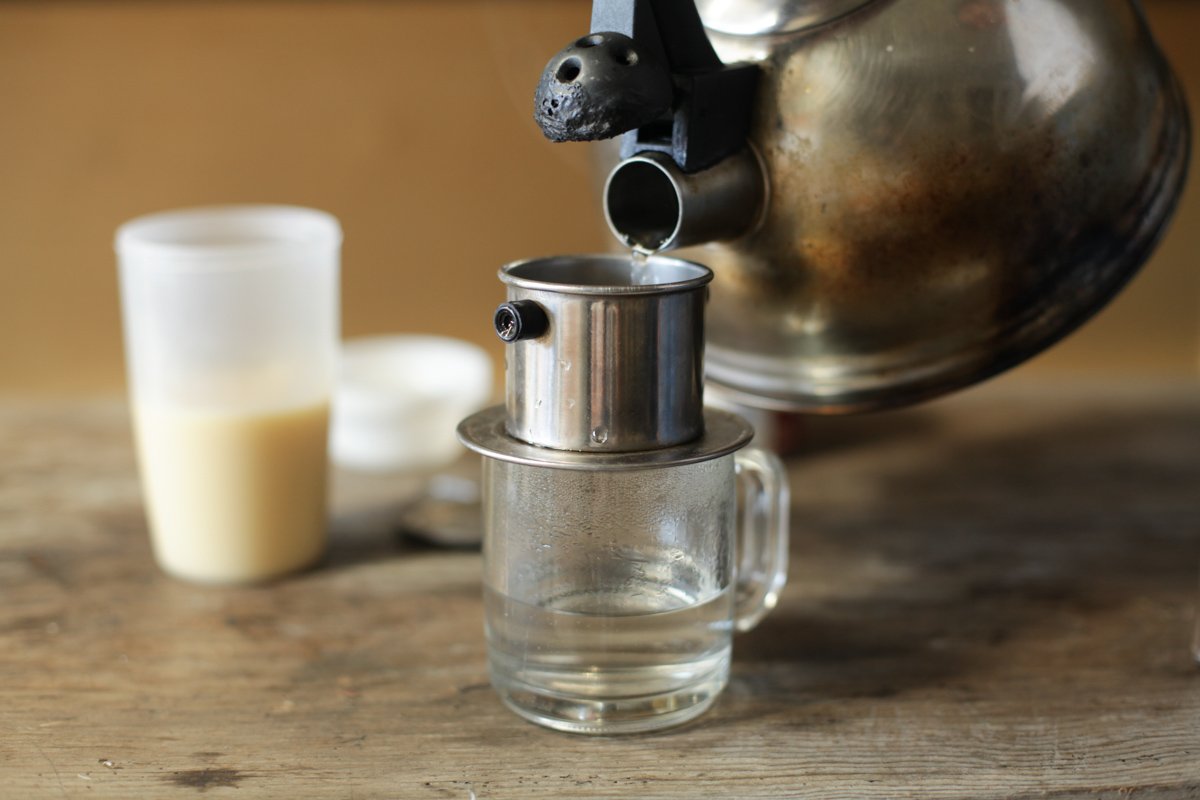
A phin is a small aluminium or stainless-steel gravity filter: a cup with holes in the bottom, a perforated press that sits on (or screws onto) the grounds, a base plate that rests on the glass, and a lid (Sprudge; Viet World Kitchen). Water drips through slowly and makes a small, strong concentrate, not a mug of drip coffee.
Where it came from. Nobody knows who designed the phin or when. It looks like a descendant of the French drip pot of around 1800, a filter chamber with a perforated plate on top, and the word phin is usually taken to come from French filtre, but no dictionary or document shows either. A 1922 issue of L’Éveil économique de l’Indochine advised colonists to carry a small coffee filter and suggested that “the too fragile glass will advantageously be replaced by an aluminium cup”; the earliest “phin cà phê” in the National Library of Vietnam’s digitised texts is in a 1952 novel (Đạt N., “On Phin”). Sahra Nguyen of Nguyen Coffee Supply told Daily Coffee News it is “unclear who invented the phin” (2019).
How it is used. Recipes disagree widely on dose, water and time:
| Source | Coffee | Water | Time |
|---|---|---|---|
| StarChefs, after Sahra Nguyen | 2 Tbsp, medium grind | ½ oz to bloom 30 s, then 2½ oz | First drops about 2½ min, done about 6¾ min |
| Chus (Vietnam) | about 25 g, coarse | 30 ml to bloom 30 s, then 120 ml | Until it stops |
| Hungry Huy | 4 tsp | Up to 1 cup | 3 to 5 min |
| Vicky Pham | 2 heaping Tbsp | To fill the chamber | 5 to 10 min |
By weight that runs from about 1 part coffee to 3 of water up to 1 to 6: a concentrate either way. Vietnamese guides give water at 80 to 95 °C; American ones say just off the boil. A few Vietnamese recipes, and Vicky Pham for a stronger cup, pour away the first wetting of the grounds; most bloom and keep it. The rule all of them share: if the water rushes through in a minute or two, the grind is too coarse or the press too loose; if it barely drips, the reverse. How a phin compares with other brewers is on Brewing.
The drinks
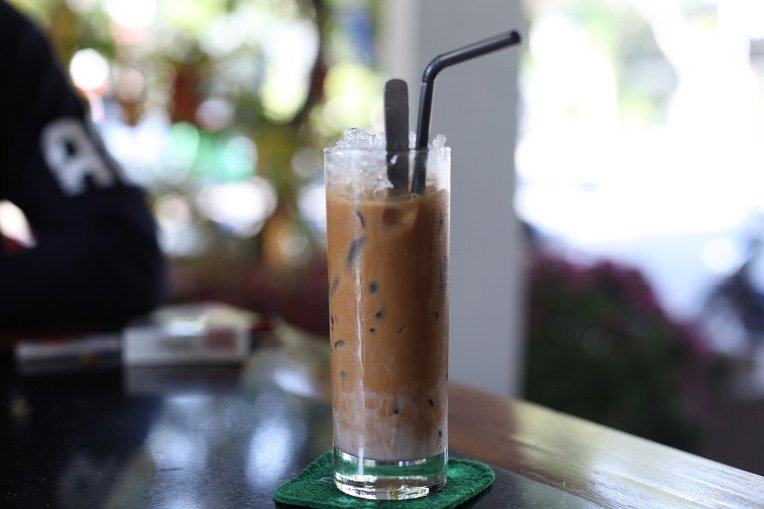
- Cà phê sữa đá is the national drink: phin coffee dripped onto sweetened condensed milk, stirred, then poured over ice. Hot, it is cà phê sữa nóng. In the north milk coffee is often called cà phê nâu, “brown coffee” (Rusty Compass). A glass of free iced tea, trà đá, usually comes with it. Recipe.
- Cà phê đen đá is black coffee over ice, usually with sugar stirred in while it is hot. Recipe.
- Bạc xỉu is mostly milk with a little coffee, from the Cantonese-speaking Chinese community of Saigon’s Chợ Lớn (chuh luhng · [cəː˨˩˨ ləːŋ˦˥]). The full name, bạc tẩy xỉu phé, is generally explained as Cantonese for a white glass with a little coffee (白底小啡 or 白底少啡; the exact characters are not settled) (Vietnamese Wikipedia). It is usually made now with fresh milk, condensed milk and a splash of coffee. Recipe.
- Coconut coffee (cà phê cốt dừa), coffee with frozen, blended coconut cream, is on Iced and Whipped Coffees.
- Yogurt coffee (cà phê sữa chua), set yogurt with phin coffee poured over, is a Hanoi drink. One account credits Phạm Duy Trí of Cà Phê Duy Trí with inventing it in 2012; another says it has been around for decades (Local Vietnam).
Egg coffee
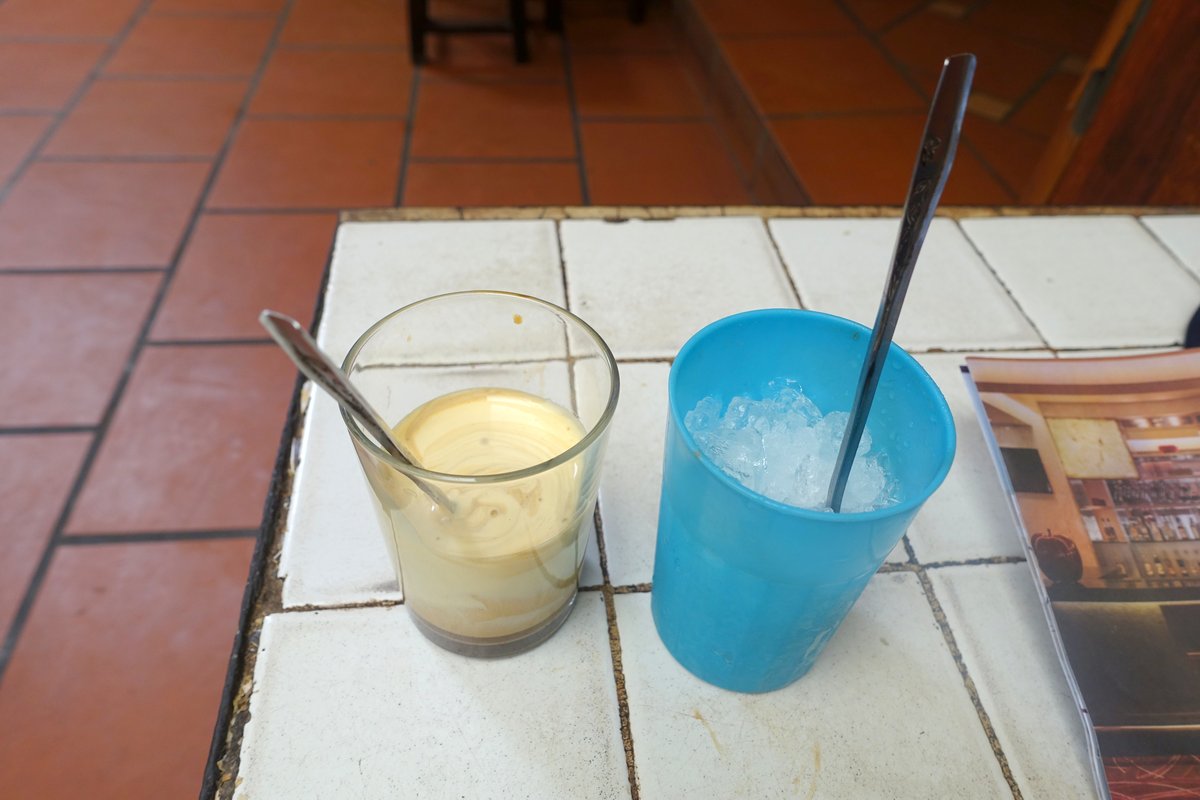
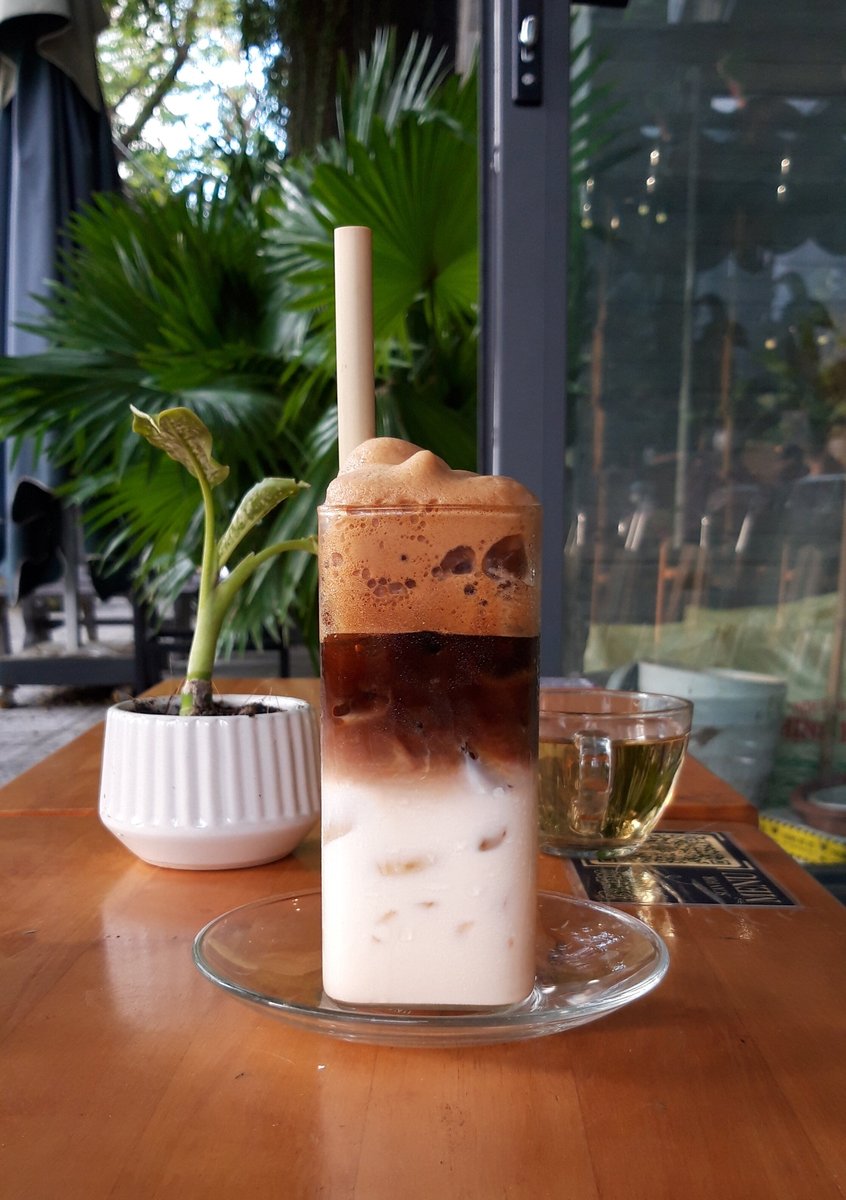
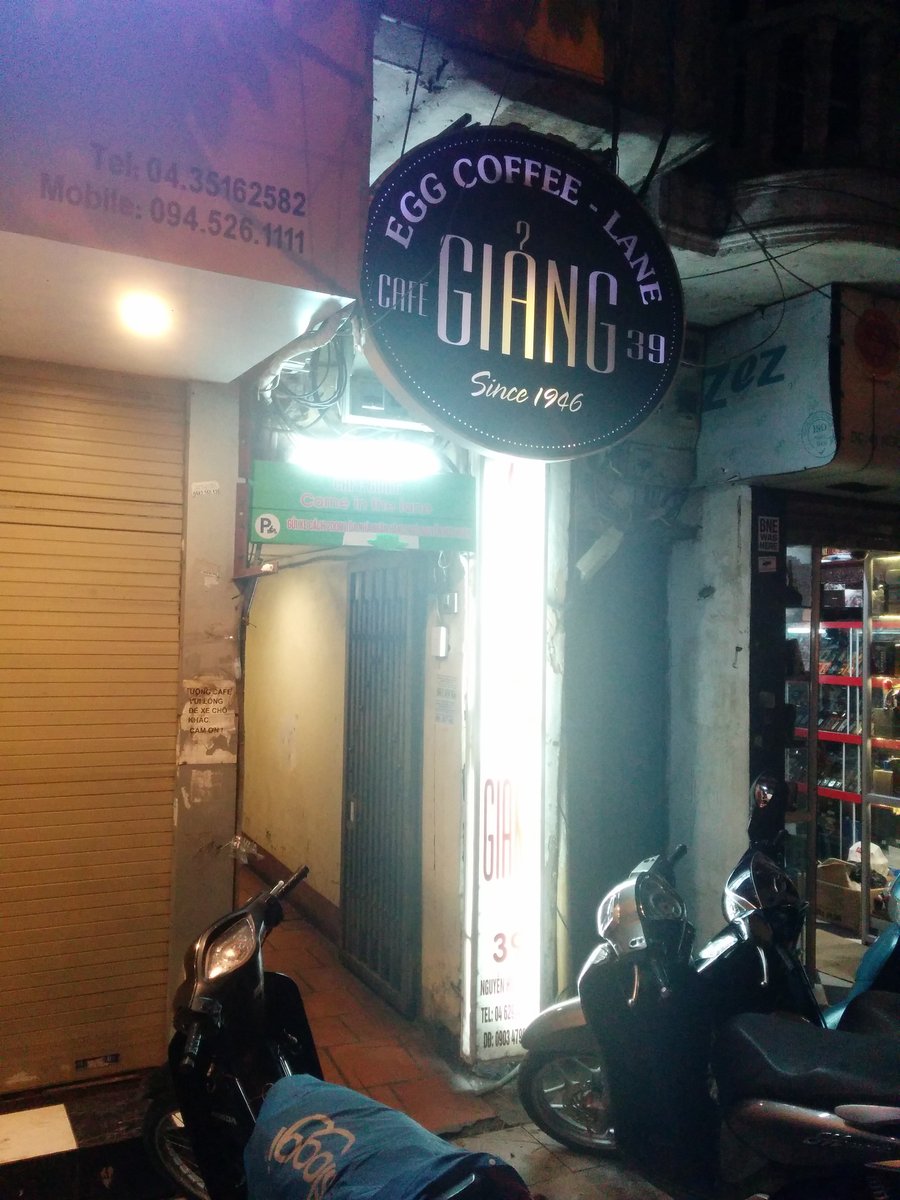
Cà phê trứng is a cup of strong coffee under a thick cream of egg yolk beaten with sugar and condensed milk. The story told everywhere is that Nguyễn Văn Giảng, a bartender at Hanoi’s Metropole hotel, beat egg yolk into coffee as a substitute for milk when fresh milk was scarce during the war with France, and in 1946 left to open his own café, Café Giảng (VietNamNet, 2020; Vietcetera). Every version traces to the Giảng family’s own account; no 1940s document or Metropole record of it has been published. His son Nguyễn Văn Đạo has said the recipe is yolk, condensed milk, coffee, butter, cheese “and some secret ingredients”. The café, now run by another son, is in an alley at 39 Nguyễn Hữu Huân and at 106 Yên Phụ. In Hanoi the cup is often served standing in a bowl of hot water to keep it warm.
The eggs are raw. Hot coffee underneath does not cook the cream. The FDA’s advice for any dish served with raw or undercooked egg is to “use shell eggs that have been treated to destroy Salmonella, by pasteurization”, and children, older adults, pregnant women and people with weakened immune systems are at greater risk (FDA). The recipe uses pasteurized yolks.
Salt coffee
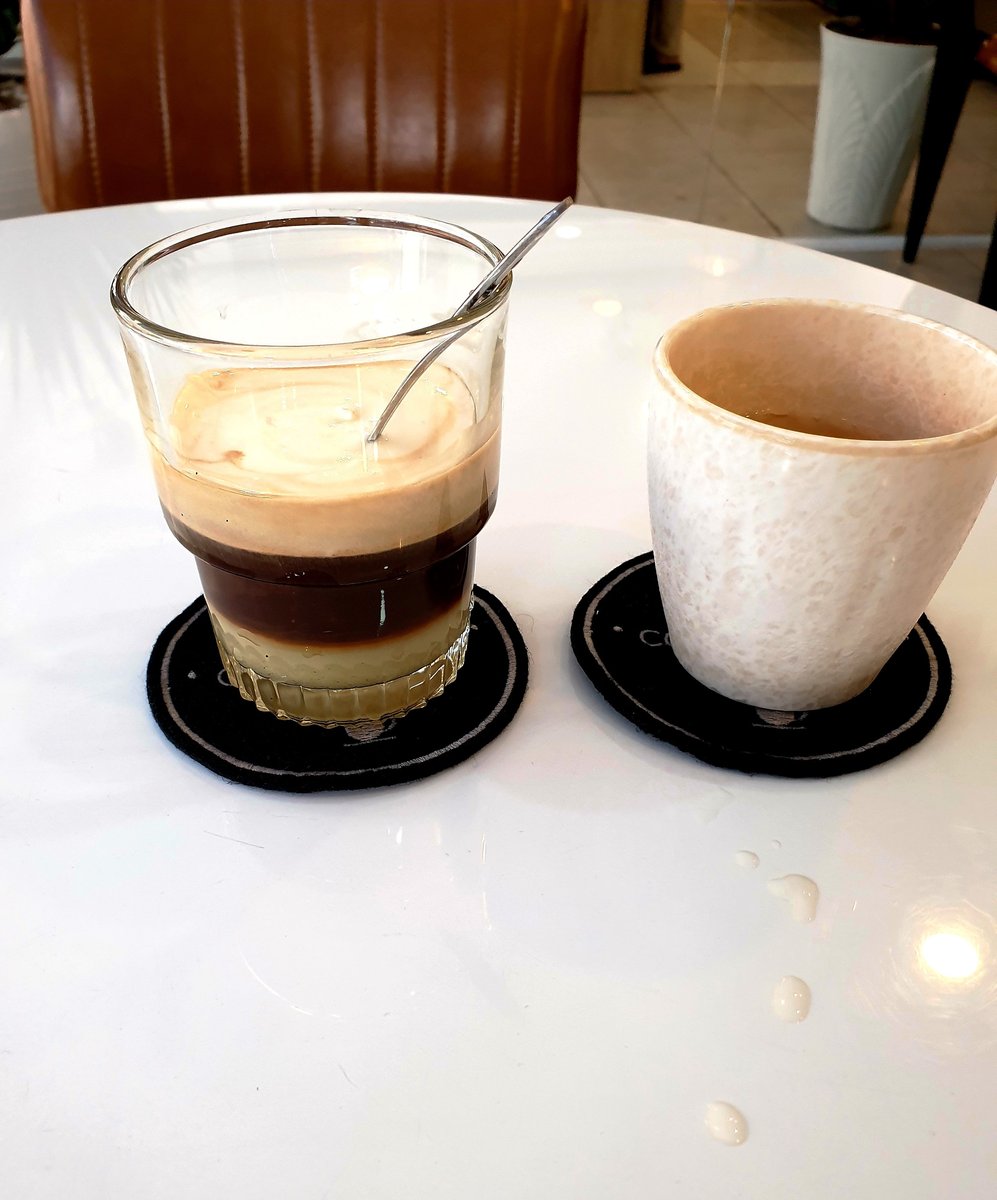
Cà phê muối began in 2010 at a café at 10 Nguyễn Lương Bằng in Huế, created by husband and wife Hồ Thị Thanh Hương and Trần Nguyễn Hữu Phong; the name came from an internet love story about a nervous suitor who asked for salt in his coffee (VnExpress, 2020; Vietnam Coracle). The original puts condensed milk at the bottom, a salted dairy layer over it and phin coffee on top; VnExpress describes the layer as fermented milk mixed with salt, not whipped cream, and the owners keep the recipe to themselves. The drink spread across Vietnam in the late 2010s, mostly as salted whipped cream on coffee, so every published recipe, this one included, is an imitation. It is not an old Huế tradition, and the story of a seasick sailor who invented it has no source.
How coffee came to Vietnam
1857, by the usual account. French Catholic missionaries are said to have planted coffee in 1857. The date is repeated everywhere, but the source usually cited is a nematology paper, not a history, and no mission letter or colonial report has been found for it (Coffee production in Vietnam). Sources disagree on whether the first plant was arabica or robusta; robusta was not grown commercially anywhere until the late 1890s, so arabica is the likelier.
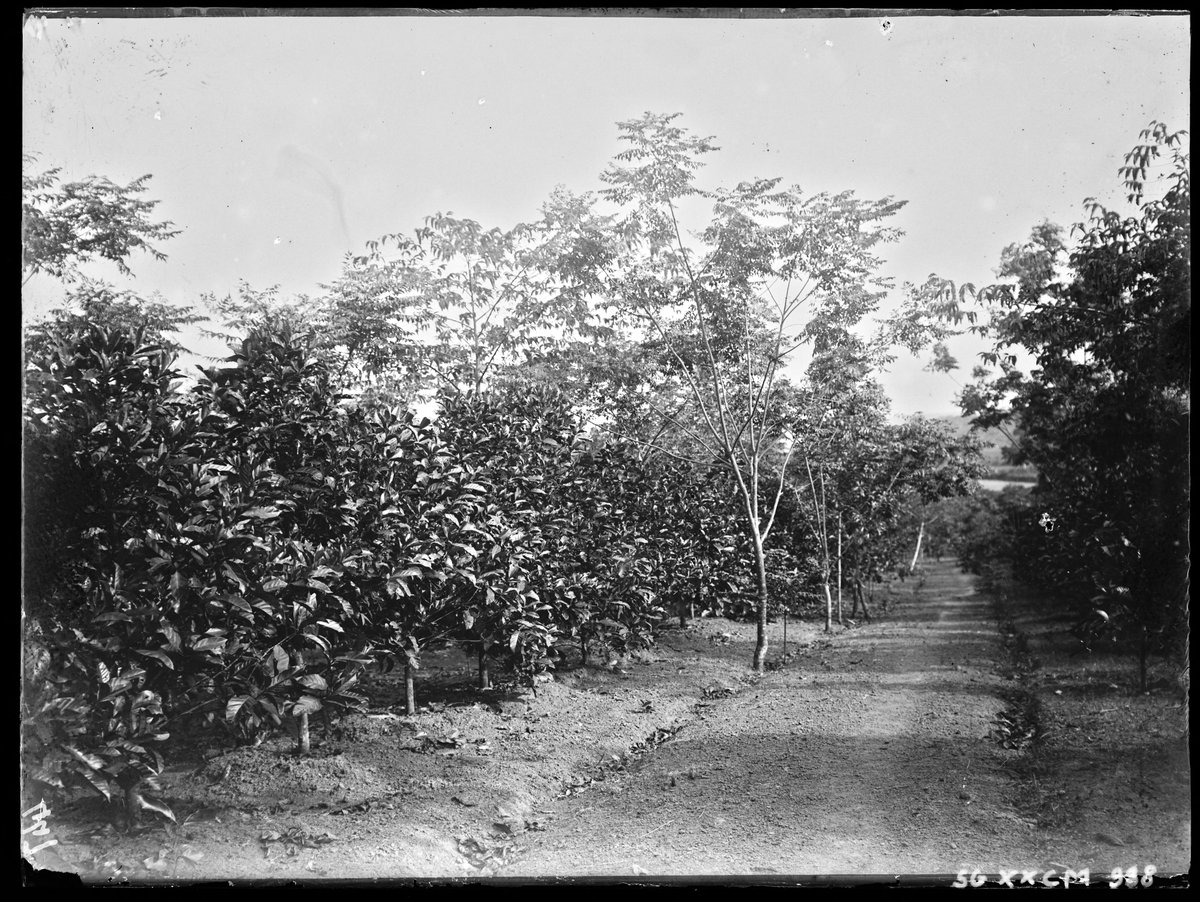
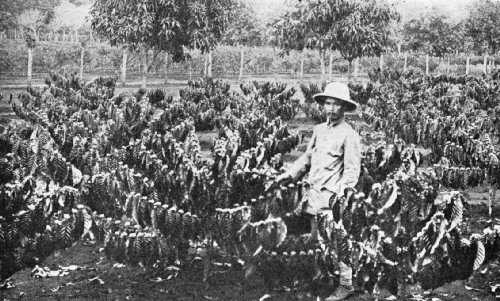
French plantations. The first plantations are usually dated to 1888 in the north and centre. By 1898 André Salles was photographing coffee trees on French plantations near Đà Nẵng and in Tonkin (Commons). William Ukers’s All About Coffee (1922) prints a photograph of “Robusta Coffee Growing on the Suzannah Estate, Cochin-China”, so robusta was established in the south by then. Plantations reached Buôn Ma Thuột and Đắk Lắk in the 1910s and 1920s; sources give 1914, 1916 and the 1920s. Exports were about 1,500 tonnes a year by 1930.

From 1986 to second in the world
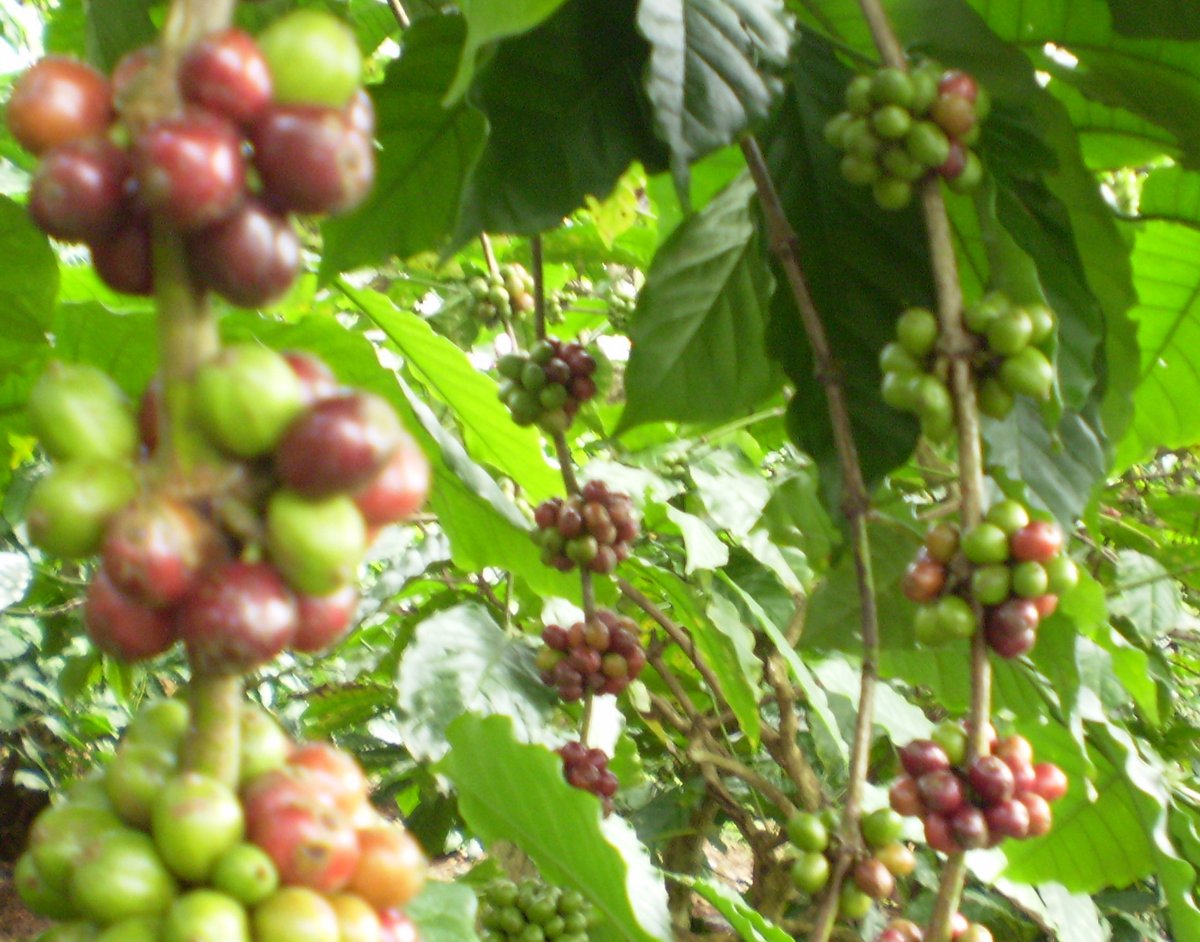
East Germany. After the 1977 “coffee crisis”, when a Brazilian frost and a shortage of hard currency left East German shops short of coffee, the German Democratic Republic signed coffee agreements with Vietnam in 1980 and 1986. It supplied machinery, trucks, irrigation, a hydroelectric plant and housing for settlers, to plant thousands of hectares in Đắk Lắk; in return it was to receive half the harvest. The first real harvest came in 1990, by which time the GDR had ceased to exist (East German coffee crisis, citing Bernd Schäfer; Andrew Kloiber, Brewing Socialism). Accounts differ on whether the deal ran ten or twenty years and on its size (8,600 or 10,000 hectares).
Đổi Mới. The economic reforms of 1986 let farmers grow and sell for themselves, and millions of migrants were already in the Central Highlands. Output rose from about 92,000 tonnes in 1990 to 487,000 tonnes in 1999 (Christian Science Monitor, 2001), and Vietnam passed Colombia as the world’s second-largest producer around 2000 (Federal Reserve Bank of Boston, 2002).
The crash. World prices fell from about 95 cents a pound in December 1999 to about 45 cents in November 2001, the start of the coffee crisis. Vietnam was widely blamed. Brazil was expanding too; the World Bank denied that it had financed the boom; and in Vietnam itself farming families cut back on food and took children out of school (Christian Science Monitor; Boston Fed). The longer history of prices and the agreements that once managed them is on International Coffee Agreements.
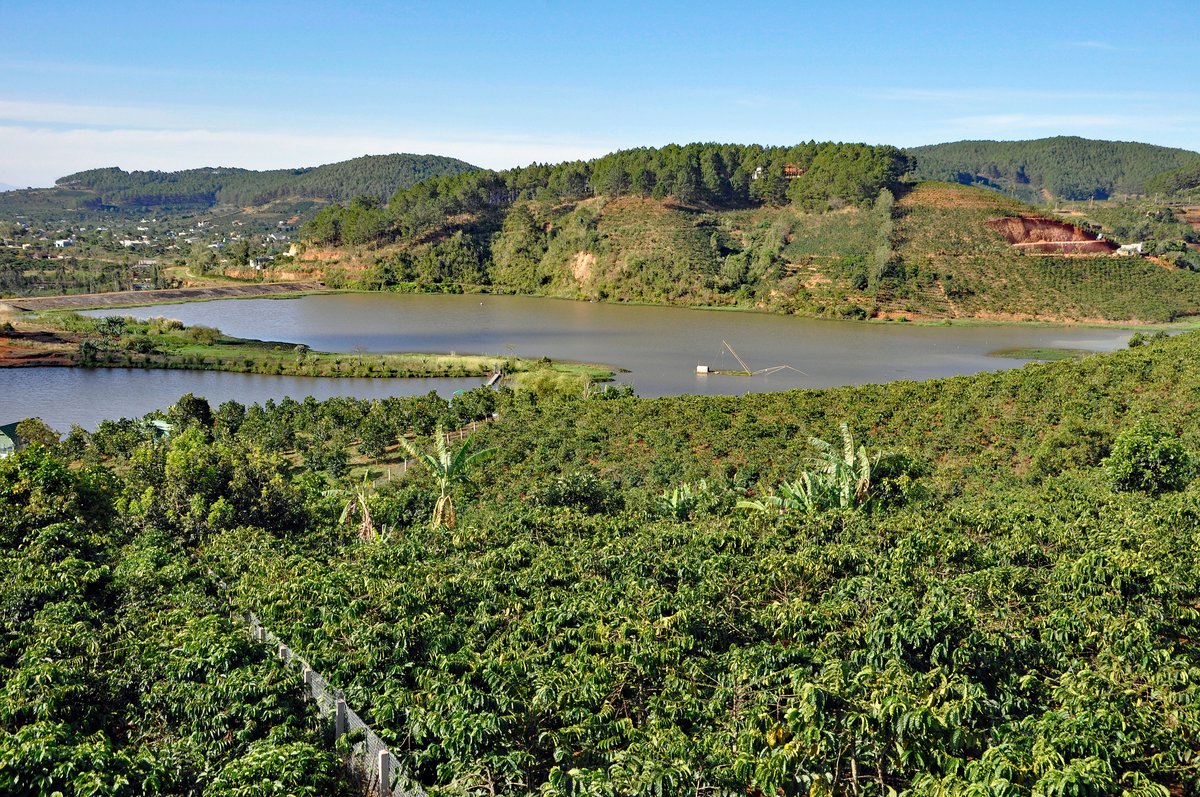
Today. The US Department of Agriculture forecast the 2025/26 crop at about 31 million 60-kg bags, about 30 million of them robusta, with 27 million bags exported and 4.9 million drunk at home (USDA FAS; Daily Coffee News). About 710,000 hectares are planted, most in five Central Highlands provinces; Đắk Lắk alone grows about a third of the national crop. Cà phê Buôn Ma Thuột is a protected geographical indication, among the Vietnamese names the EU agreed to protect in its 2020 trade agreement (Trung tâm WTO). Vietnam is also where excelsa is being replanted; see New Coffee Species.
Buôn Ma Thuột and Trung Nguyên
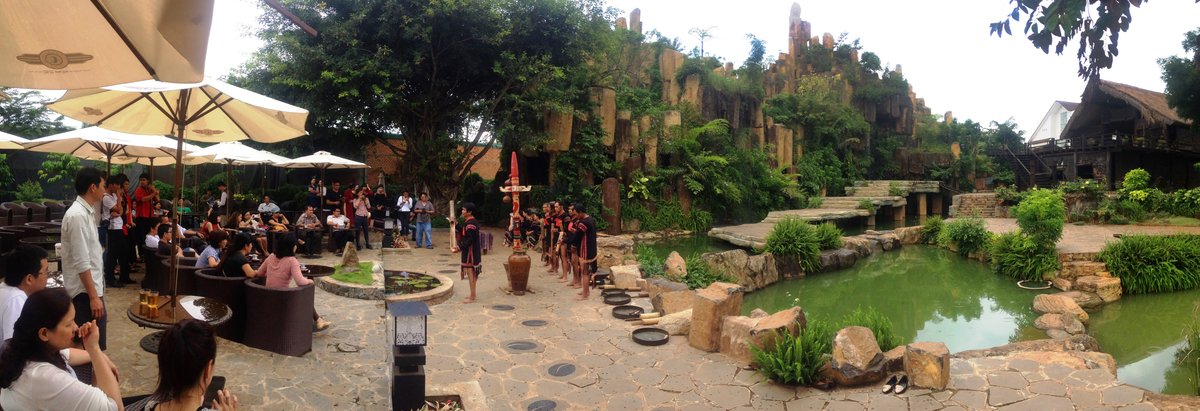
Buôn Ma Thuột, the capital of Đắk Lắk, calls itself the coffee capital, thủ phủ cà phê; it is a slogan, not a title. Trung Nguyên, Vietnam’s best-known coffee company, was founded there on 16 June 1996 by Đặng Lê Nguyên Vũ (Trung Nguyên Legend). Its World Coffee Museum, opened in 2018 in a building modelled on Ê Đê longhouses, holds the coffee collection of the German collector Jens Burg. The province has held a Buôn Ma Thuột Coffee Festival roughly every two years since 2005, the ninth in 2025, with Trung Nguyên as a sponsor rather than the organiser (Trung Nguyên Legend).
Why condensed milk
The usual explanation is that fresh milk was scarce and spoiled fast in the heat, so cafés used tinned sweetened condensed milk, which keeps without a refrigerator. The facts behind it are firmer and more recent than the usual telling. FAO says plainly: “There is no historical tradition in Viet Nam for the production or consumption of dairy products”; cattle were for draught, manure and meat. The whole country produced 12,000 tonnes of milk in 1990, about 0.2 kg a person (FAO).
Condensed milk has been sold in Vietnam since at least the colonial period; Dutch Lady says its first packs went on sale in 1924. The Ông Thọ (“Longevity”) brand dates from 1976, made by the company that became Vinamilk; after 1975 condensed milk was itself a luxury kept for the sick, the old and the young (Ministry of Industry and Trade). The claim that condensed milk went into Vietnamese coffee in the 1850s is not possible: commercial condensed milk barely existed then. Lactose intolerance is sometimes given as the reason too, but condensed milk is full of lactose.
The Vietnamese roast, and what else goes in the bag
Vietnamese coffee is roasted dark, and traditional roasters may finish the beans with butter, sugar, salt, rice wine or a little fish sauce, which leaves them glossy; Vietnam’s national tourism site describes the practice (Vietnam Tourism). No dated history of it has been published. Much cheap coffee is also cut. A 2016 Tuổi Trẻ investigation found Ho Chi Minh City makers selling “pure coffee” that was 10 to 15 percent coffee and the rest soybean and corn, with flavourings and bottles of fish sauce, “an indispensable ingredient used to improve the product’s taste” (Vietstock, republishing Tuổi Trẻ). In January 2026 police in Lâm Đồng seized 4.1 tonnes of “coffee” made from soybeans. The widely shared 2018 story about coffee dyed with battery cores was corrected by the police: the dyed product was not sold as coffee (Tuổi Trẻ News).
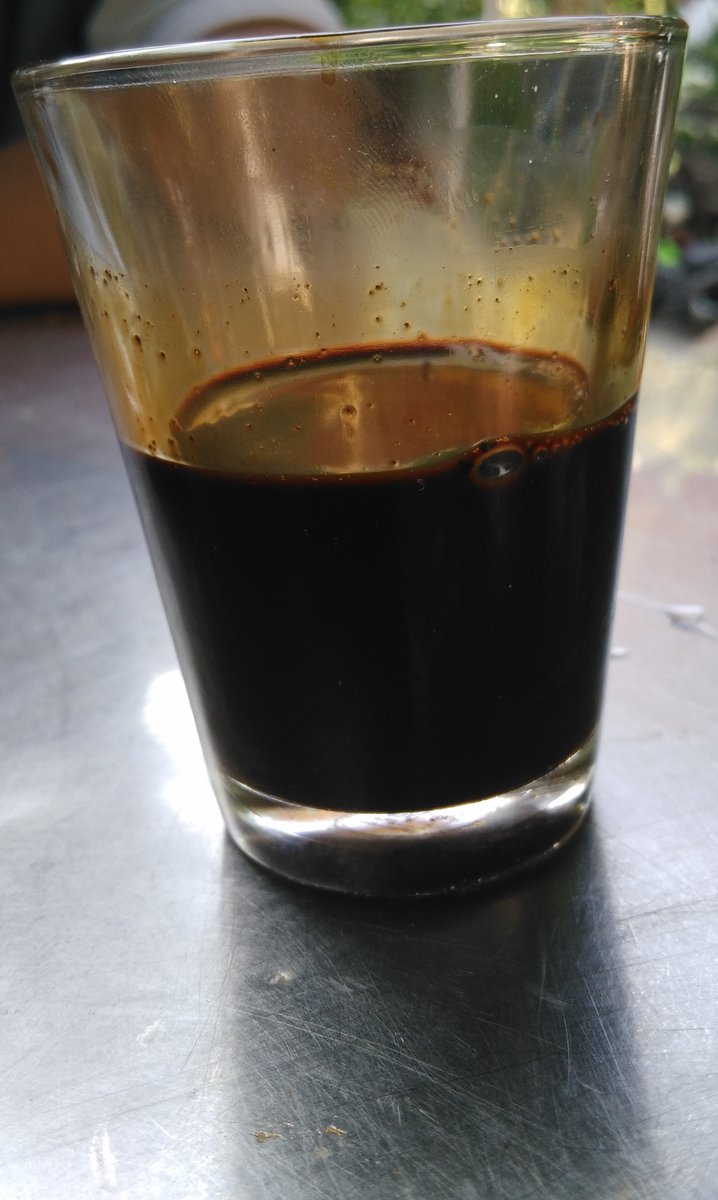
Weasel coffee. Cà phê chồn is Vietnam’s name for civet coffee. Much of what is sold to visitors is ordinary coffee with “weasel” flavouring, and Trung Nguyên sells an enzyme-processed imitation alongside a tiny natural run. Caged civet farming is criticised on welfare and disease grounds. A page on civet coffee is planned.
Café culture
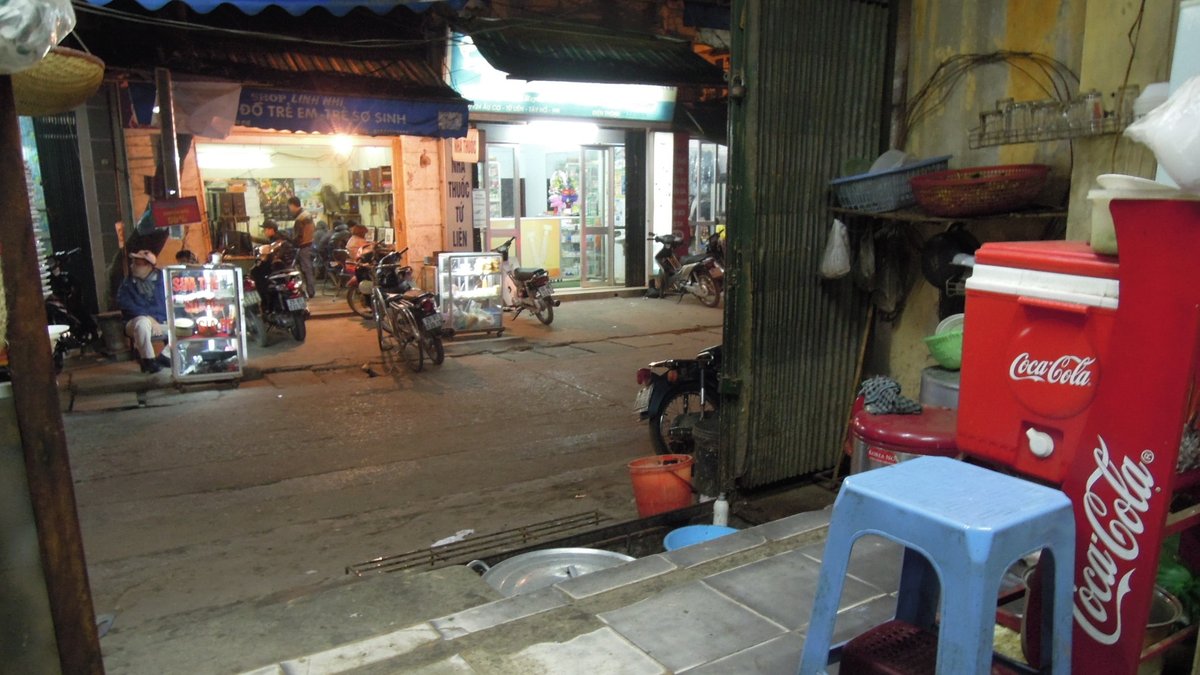
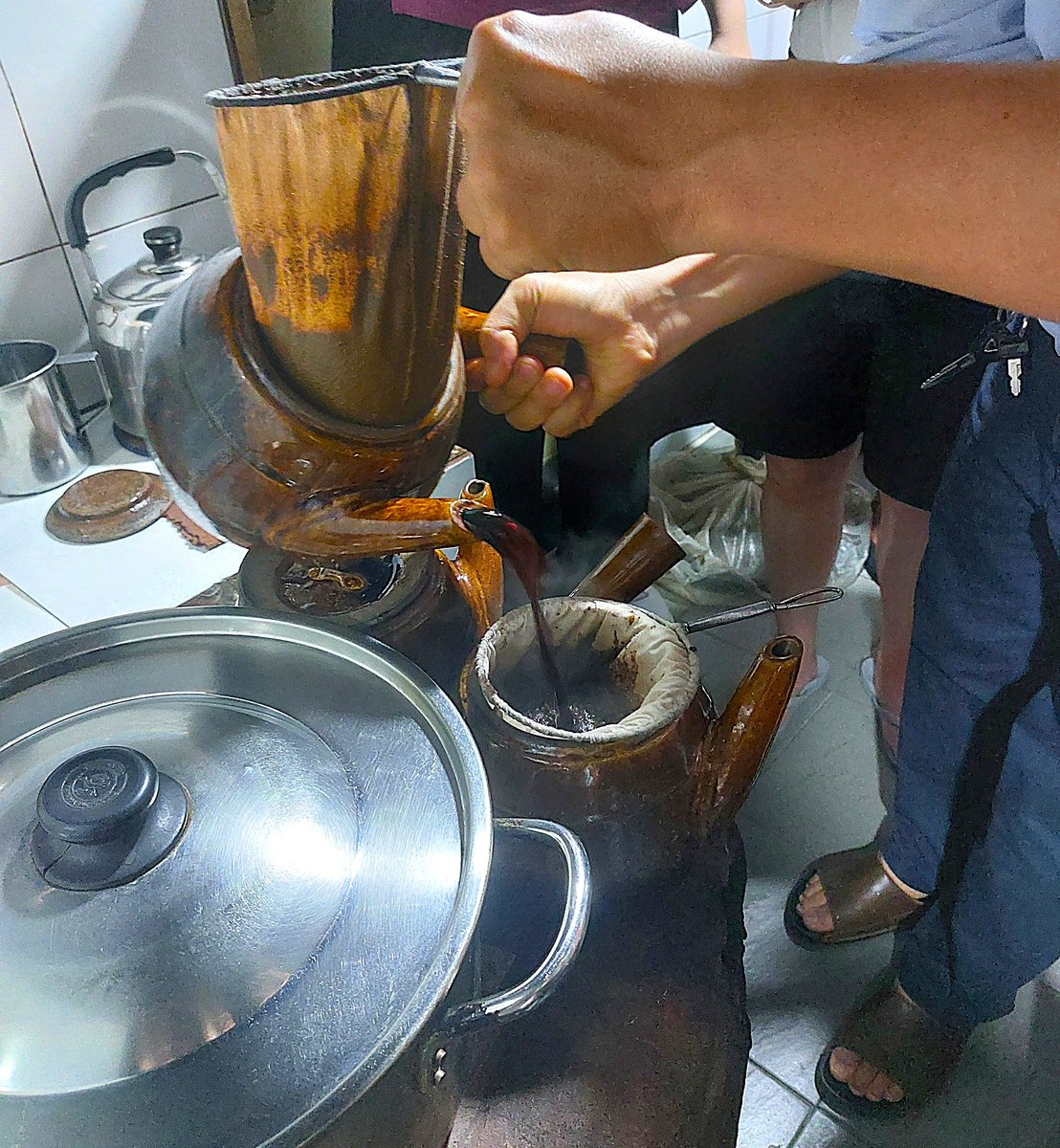
Vietnamese coffee is drunk on the pavement as much as indoors: low plastic stools around low tables, the cà phê vỉa hè (“sidewalk coffee”), and in Saigon the cà phê bệt, coffee sitting on the ground, best known in the park beside the cathedral (VnExpress). Saigon drinks its coffee iced and fast; Hanoi drinks more of it hot, in old cafés such as Nhân, Nhĩ, Lâm and Giảng. Café Lâm took paintings from Bùi Xuân Phái and other painters in lieu of payment (Hanoi Times). Saigon also kept an older method, cà phê vợt, grounds steeped and strained through a cloth “net”, kept hot in a clay pot, associated with Chợ Lớn’s Chinese community and now rare (Báo Pháp luật, 2023).
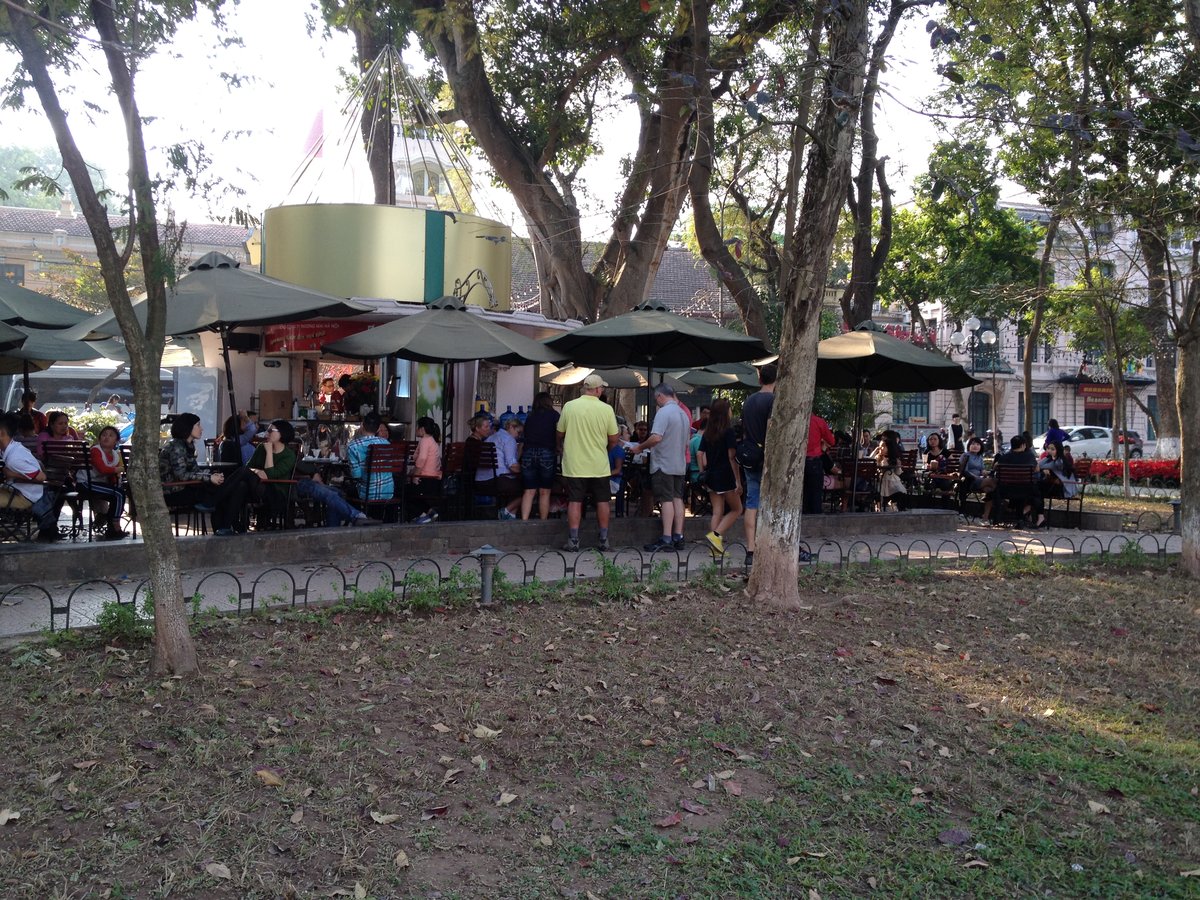
The chains. Highlands Coffee, founded by the Vietnamese-American David Thai in 1998 or 1999, opened its first café in 2002 opposite the cathedral in Saigon; Phúc Long began as a tea business in Bảo Lộc in 1968; Cộng Cà Phê opened in Hanoi in 2007; Starbucks arrived in 2013. Counts of Vietnam’s cafés run from about 317,000 to “over 500,000”, and no per-capita figure has been published, so the claim that Vietnam has the most cafés per head in the world is unproven (Vietnam News, 2025).
Vietnamese coffee in America
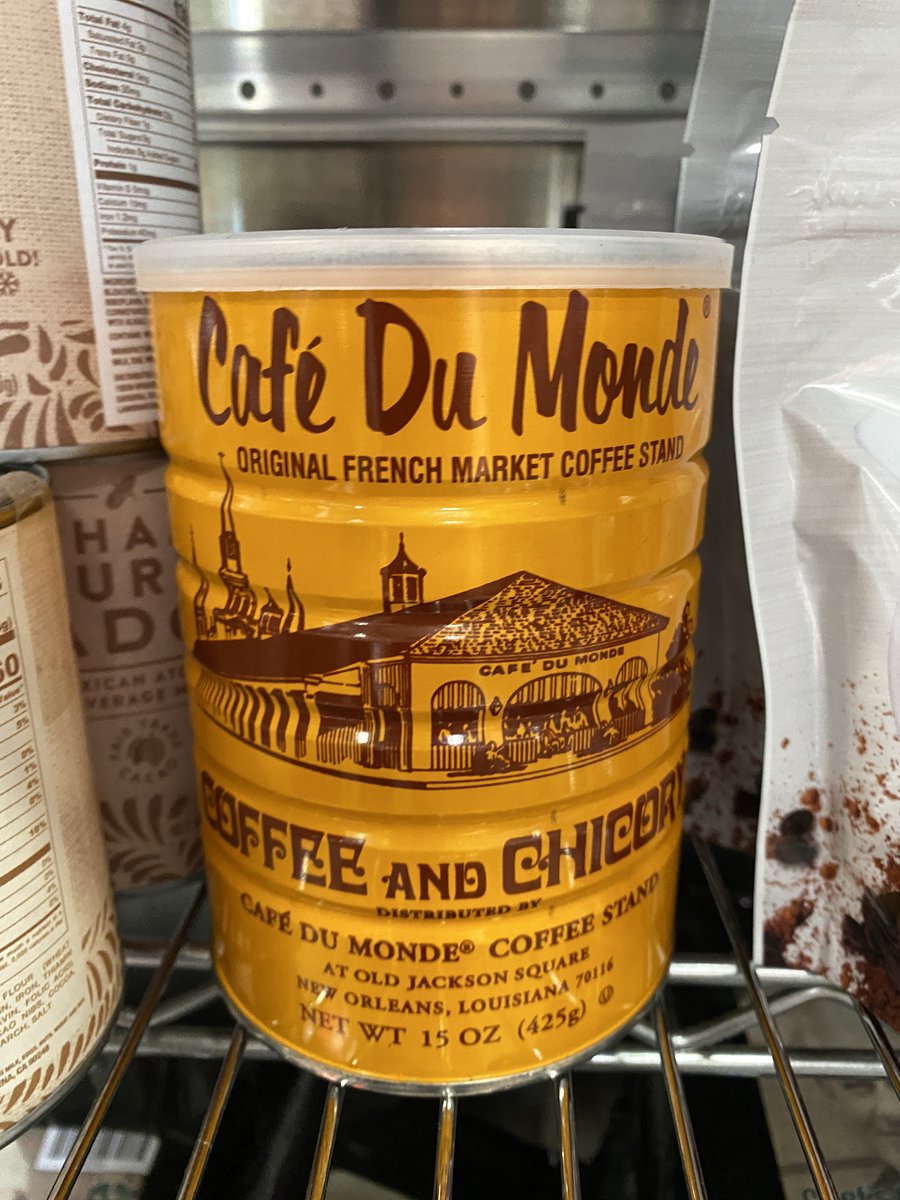
Many Vietnamese restaurants in the United States make cà phê sữa đá with Café du Monde’s coffee and chicory, from New Orleans. Andrea Nguyen’s family “sometimes bought the yellow can” (Viet World Kitchen), and Hungry Huy uses it. Refugees resettled after 1975 in numbers in New Orleans through the Catholic Church; Café du Monde’s vice president Burt Benrud said in 2021 that “one of the large [Vietnamese-American] population clusters is here in New Orleans, because of our Catholic community”, and the company began stocking Vietnamese groceries after learning its employees were sharing the coffee with their families (Country Roads, 2021). Robusta was hard to buy in the US, and chicory’s bitterness stood in for it. Coffee in Vietnam is not a chicory blend; that is the diaspora’s substitute. The New Orleans side is on Chicory and New Orleans.
Since 2018 Nguyen Coffee Supply in Brooklyn has imported green robusta from a Central Highlands farm and sold it roasted in the US, along with phins. In Michigan, Sapo Coffee House in Wyoming, near Grand Rapids, opened in August 2025 serving bạc xỉu and sea-salt coffee (WOOD TV).
Making them
The recipes give quantities. Five things that apply to all of them:
- Preheat the phin and glass with hot water, so the coffee does not cool as it drips.
- Wet the grounds first and wait 20 to 30 seconds before filling the chamber.
- Adjust the grind before the press. If the coffee is through in under three minutes, grind finer; if it is still dripping at eight, grind coarser.
- Dark-roasted robusta, or a robusta blend, is what the drinks are built on; an arabica works but tastes thinner under condensed milk.
- Stir the coffee into the milk before the ice, so the condensed milk dissolves.
Caffeine. Robusta carries roughly twice the caffeine of arabica, and a phin is a concentrate, so a cà phê sữa đá made with robusta can carry as much as a large drip coffee or more. See Caffeine and Health.
Related pages
- Origins: Vietnam among the producing countries.
- Brewing: the phin beside other brewers.
- Iced and Whipped Coffees: coconut coffee and the cold-coffee family.
- Chicory and New Orleans: the can on the shelf.
- The Drinks: a phin and cà phê sữa đá at a market stall.
What is not known
- Who designed the phin, when, and whether phin comes from filtre.
- The primary source for 1857, and whether the first plant was arabica.
- The terms of the East German deal: ten or twenty years, 8,600 or 10,000 hectares.
- The first written mention of cà phê sữa đá, or of condensed milk in Vietnamese coffee.
- The exact Chinese behind bạc xỉu.
- Nguyễn Văn Giảng’s dates, and whether the first egg-coffee shop was at 7 Hàng Gai.
- What the Huế original salt layer is: fermented milk or cream.
- Who invented yogurt coffee and coconut coffee.
- When roasting with butter, sugar or fish sauce began, and how common it still is.
- A per-capita count of Vietnam’s cafés.
Sources
- Wikipedia: Coffee production in Vietnam, East German coffee crisis, Vietnamese iced coffee; Vietnamese Bạc xỉu.
- Andrew Kloiber, Brewing Socialism (McMaster University, 2017).
- Christian Science Monitor, Vietnam coffee (15 August 2001); Federal Reserve Bank of Boston, Trouble in coffee lands (2002).
- USDA Foreign Agricultural Service, Vietnam Coffee Annual (2025); Daily Coffee News, Vietnam coffee report (5 June 2025).
- FAO, Viet Nam: the emergence of a rapidly growing industry; Ministry of Industry and Trade, Vietnamese milk brands.
- Đạt N., “On Phin”; Sprudge, Coffee in Vietnam: phin facts and myths (2021); Daily Coffee News, Nguyen Coffee Supply’s phin (2019).
- VietNamNet, Wake up and smell the egg coffee (2020); Vietcetera, Lịch sử của cà phê trứng.
- VnExpress, Cà phê muối xứ Huế (3 September 2020); Vietnam Coracle, Salt coffee (2023).
- Trung Nguyên Legend, Milestones and the 8th Buôn Ma Thuột Coffee Festival; Trung tâm WTO, EVFTA geographical indications.
- Vietnam Tourism, The secret art of Vietnamese coffee; Vietstock / Tuổi Trẻ, The secret business of making “pure” Vietnamese coffee (2016); Tuổi Trẻ News, Battery-dyed coffee beans not sold as coffee (2018).
- VnExpress, Cà phê bệt; Hanoi Times, Hanoi’s coffee shops; Báo Pháp luật, Cà phê vợt (2023); Rusty Compass, Hanoi coffee culture; Local Vietnam, Yogurt coffee; Vietnam News, How Viet Nam became the second-biggest producer (2025).
- Andrea Nguyen, Vietnamese iced coffee tips, Viet World Kitchen; Country Roads, Café du Monde and Vietnamese coffee (2021); WOOD TV, Sapo Coffee House (2025).
- FDA, What you need to know about egg safety.
- Recipes: StarChefs, Vietnamese iced coffee (after Sahra Nguyen); Chus, Vietnamese coffee recipes (2024); Vicky Pham, Bạc xỉu and Egg coffee; Toplist, Cà phê muối; Hungry Huy, Vietnamese coffee.
Comments (0)