Coffee · 5 of 64
Arabic Coffee: Qahwa, the Dallah and the Gulf Tradition
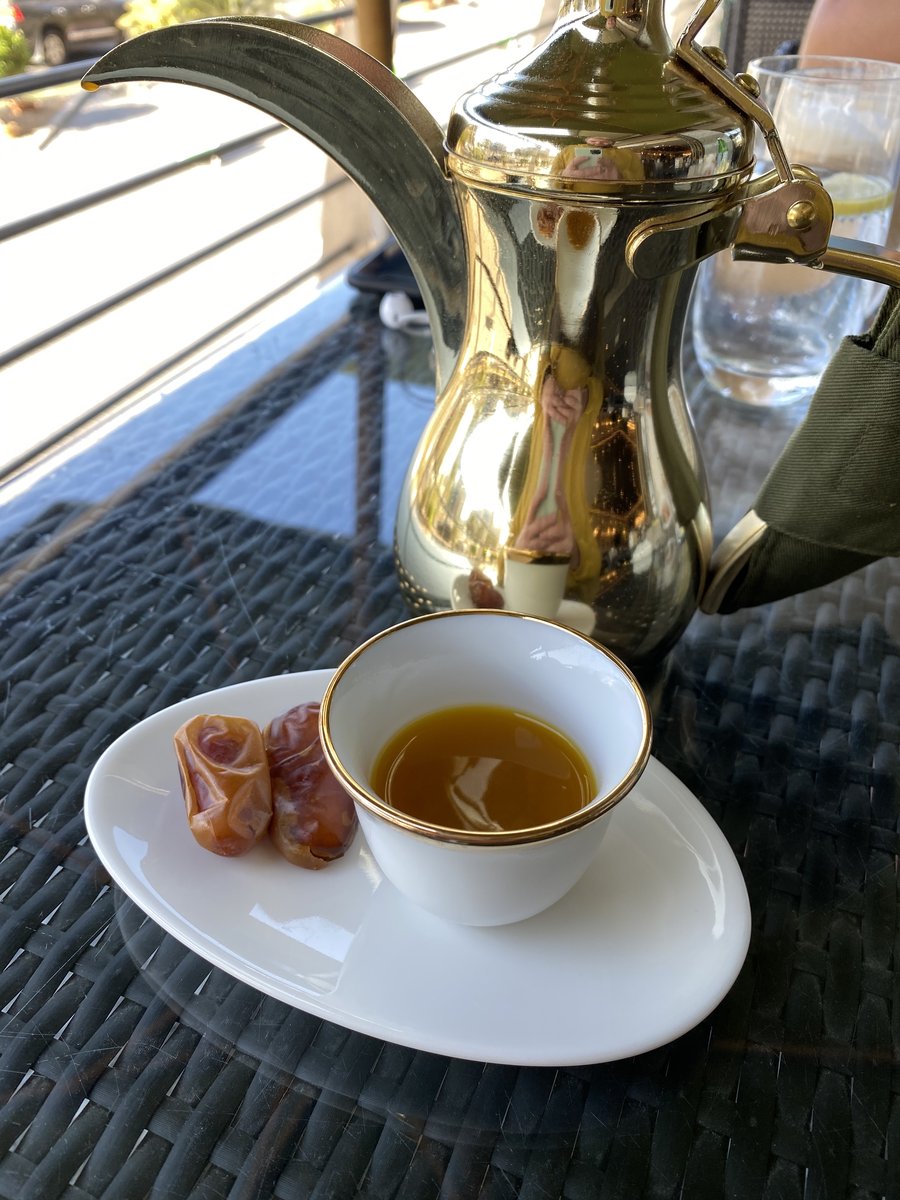
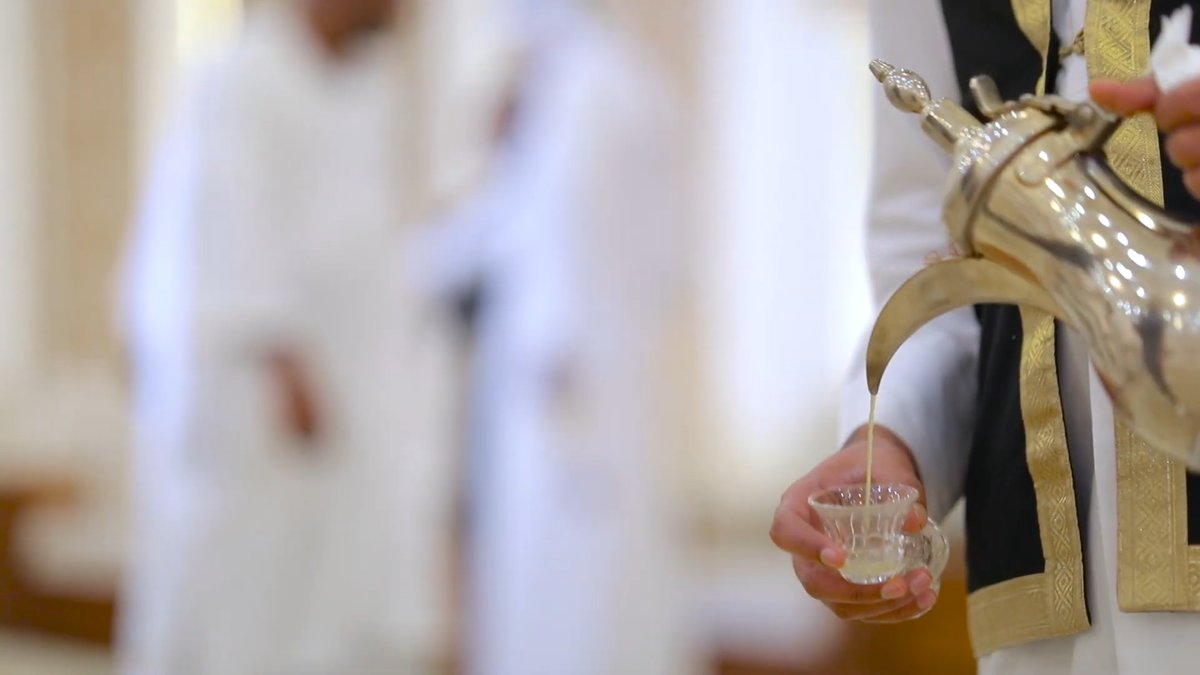
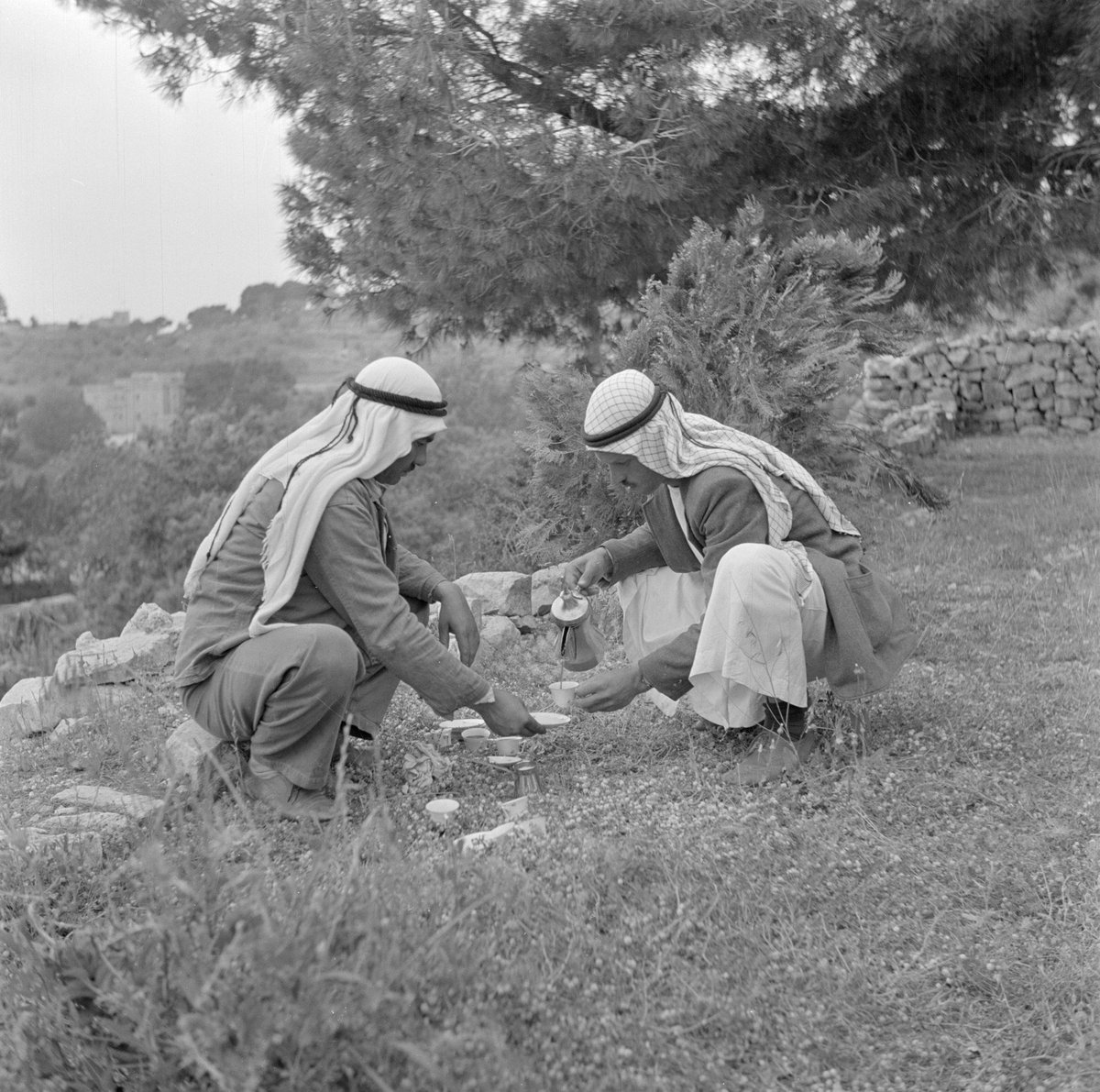
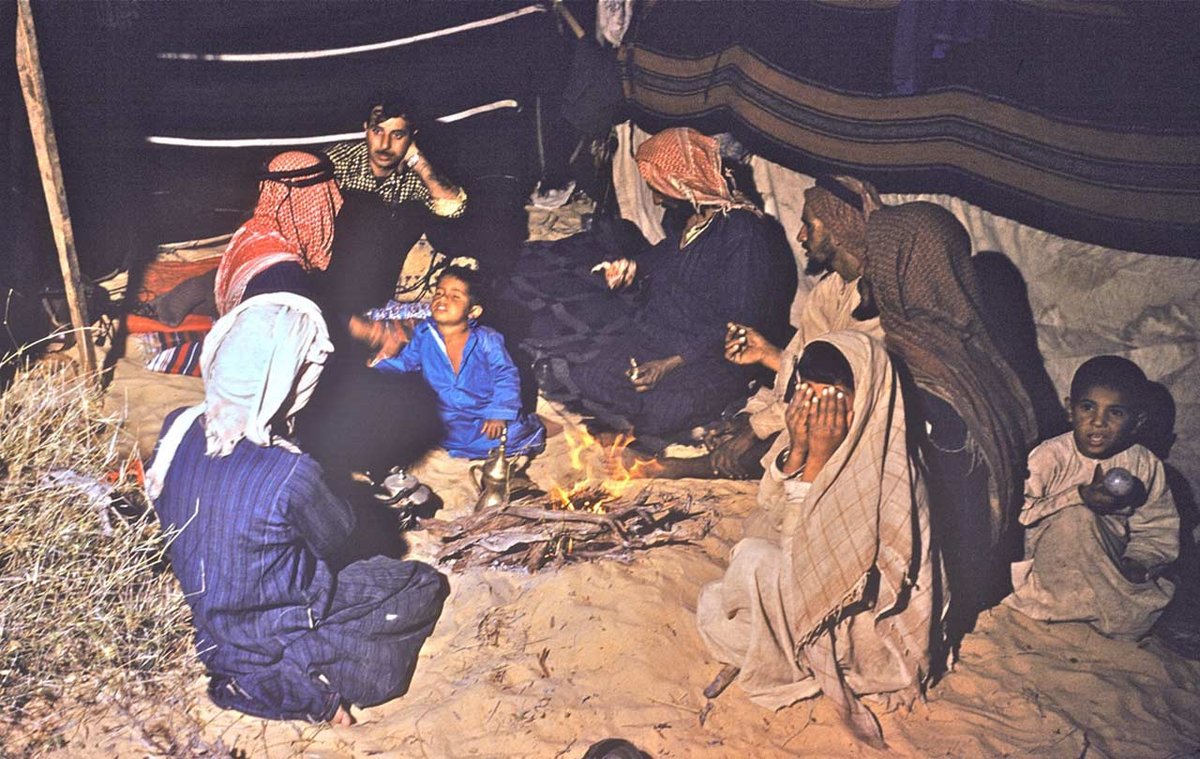
Arabic coffee, qahwa (gahwa in the Gulf), is the coffee of hospitality across the Arabian Peninsula and much of the Arab world. It is unlike almost anything else called coffee: lightly roasted beans boiled with a great deal of cardamom, sometimes saffron, cloves or rose water, served unsweetened from a long-spouted pot called a dallah in small handleless cups, a few sips at a time, with dates. A guest takes at least one cup and usually no more than three, and stops by shaking the cup.
In 2015 UNESCO inscribed “Arabic coffee, a symbol of generosity” on its list of the world’s intangible heritage, on behalf of the UAE, Saudi Arabia, Oman and Qatar; Jordan joined in 2024. The serving rules, the names of the tools and even the roast vary from country to country, and the sources disagree on more of them than the popular accounts admit.
The short version
| Question | Answer |
|---|---|
| What is it? | Light-roasted coffee boiled with cardamom (and sometimes saffron, cloves or rose water), unsweetened, served from a dallah in small cups with dates. |
| How much cardamom? | A lot. The official Saudi recipe uses 30 g of cardamom to 40 g of coffee. |
| Is it raw coffee? | No. It is roasted, usually light; some Emirati and northern Saudi coffee is roasted darker. |
| How do I stop the refills? | Shake the cup gently from side to side. Some sources say tilt or shake. |
| How many cups? | ”At least one cup but no more than three” (UNESCO). |
| Which hand? | The cup is always handed over and taken with the right hand; Emirati and Qatari sources put the pot in the server’s left. |
| Is it UNESCO heritage? | Yes: 2015, re-inscribed with Jordan in 2024. The majlis (2015) and Saudi Arabia’s Khawlani coffee growing (2022) are listed too. |
| Did Saudi Arabia rename it? | In January 2022 its Ministry of Commerce told businesses to call it Saudi coffee. |
| Can I make it? | Yes: Saudi Coffee and Emirati Gahwa with Saffron and Rose Water. |
What is in the pot
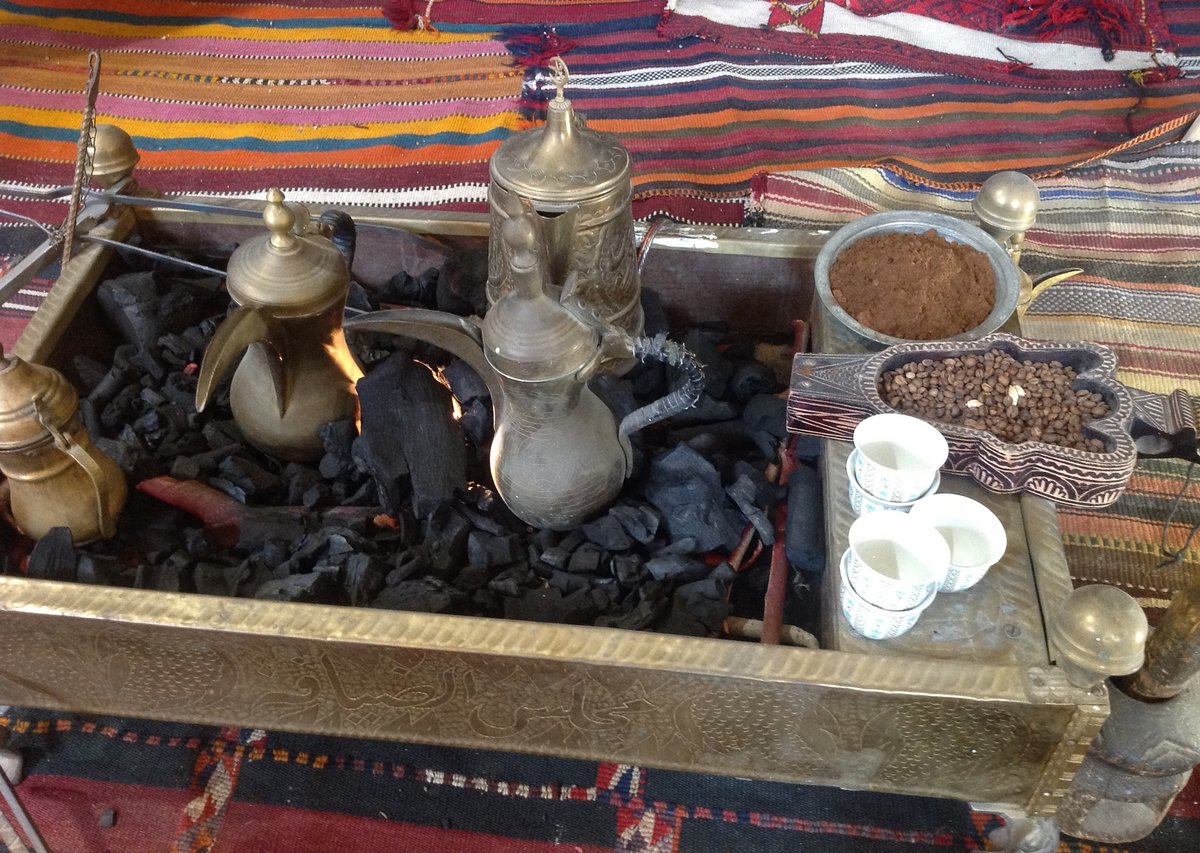
UNESCO’s description of the tradition is the plainest: beans “lightly roasted in a shallow pan over a fire”, pounded in a mortar, boiled in a large pot, then poured into a smaller pot and served from it, prepared in front of the guests (UNESCO, 2015). The Saudi government’s encyclopedia gives a base recipe of 800 ml of water, 40 g of ground coffee and 30 g of ground cardamom, and says the preferred colour is “light (blonde)”; boiling longer makes it darker and more bitter (Saudipedia). Nearly as much cardamom as coffee, by weight, is what separates Gulf coffee from Turkish or Levantine coffee. It is not sweetened; the sweetness comes from the dates.
Regional styles. Saudipedia sets out the Kingdom’s own variations (Saudipedia):
| Region | Roast | Spices |
|---|---|---|
| Central (Najd) | Golden | Cloves and saffron occasionally |
| North | Deeper | None; boiled 20 to 30 minutes |
| South | Light | The widest mix: ginger, cinnamon, fennel, cloves, saffron |
| West (Hijaz) | Moderate | Mastic; about 15 minutes on medium heat |
| East | Moderate | Saffron |
Mecca also has a “white coffee” of water, rose water and cardamom, and an “almond coffee” made with rice flour: drinks called coffee that contain none. In the UAE, the recipe the Founder’s Office published from Sheikh Zayed’s majlis roasts the beans for at least 30 minutes over charcoal to “a deep reddish colour” and uses cloves instead of cardamom, with saffron and rose water (Gulf News, 2026), so “Arabic coffee is always pale” is a modern Gulf preference, not a rule. In Oman the coffee is often scented with rose water and served with halwa (Oman Observer, 2026). In Jordan and among the Bedouin, qahwa sada, “plain coffee”, is dark, bitter and boiled with green cardamom; in Levantine cities the same word sada simply means “no sugar”.
The tools
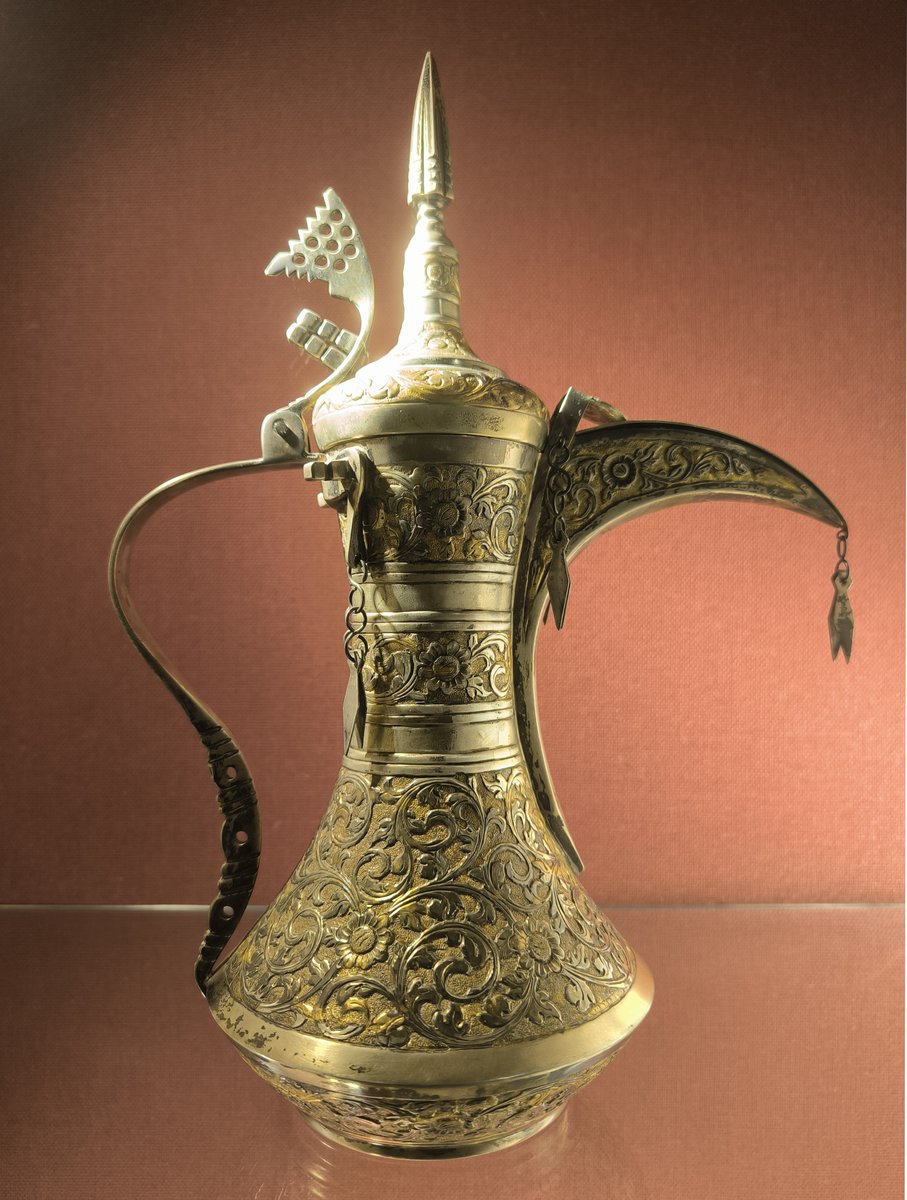
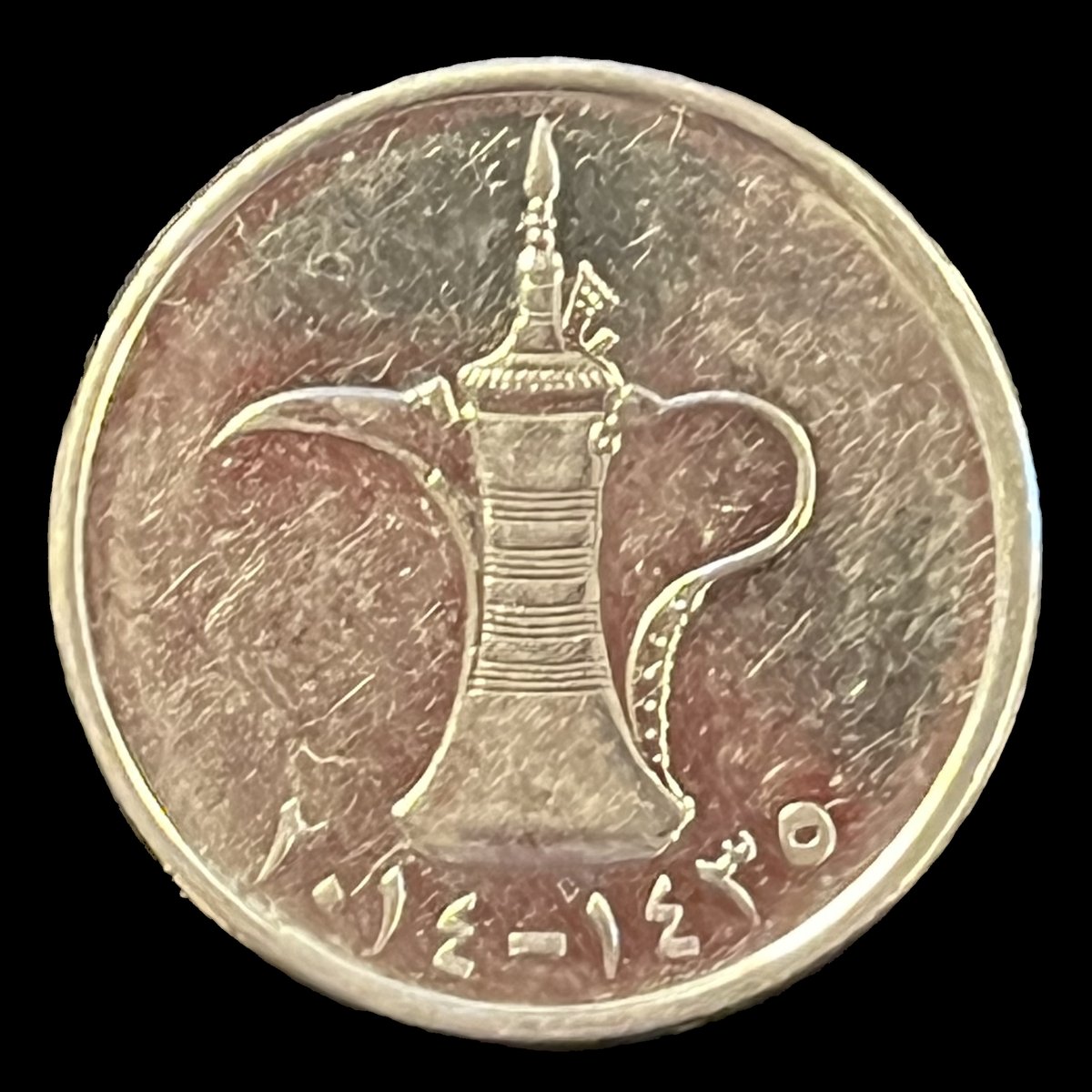
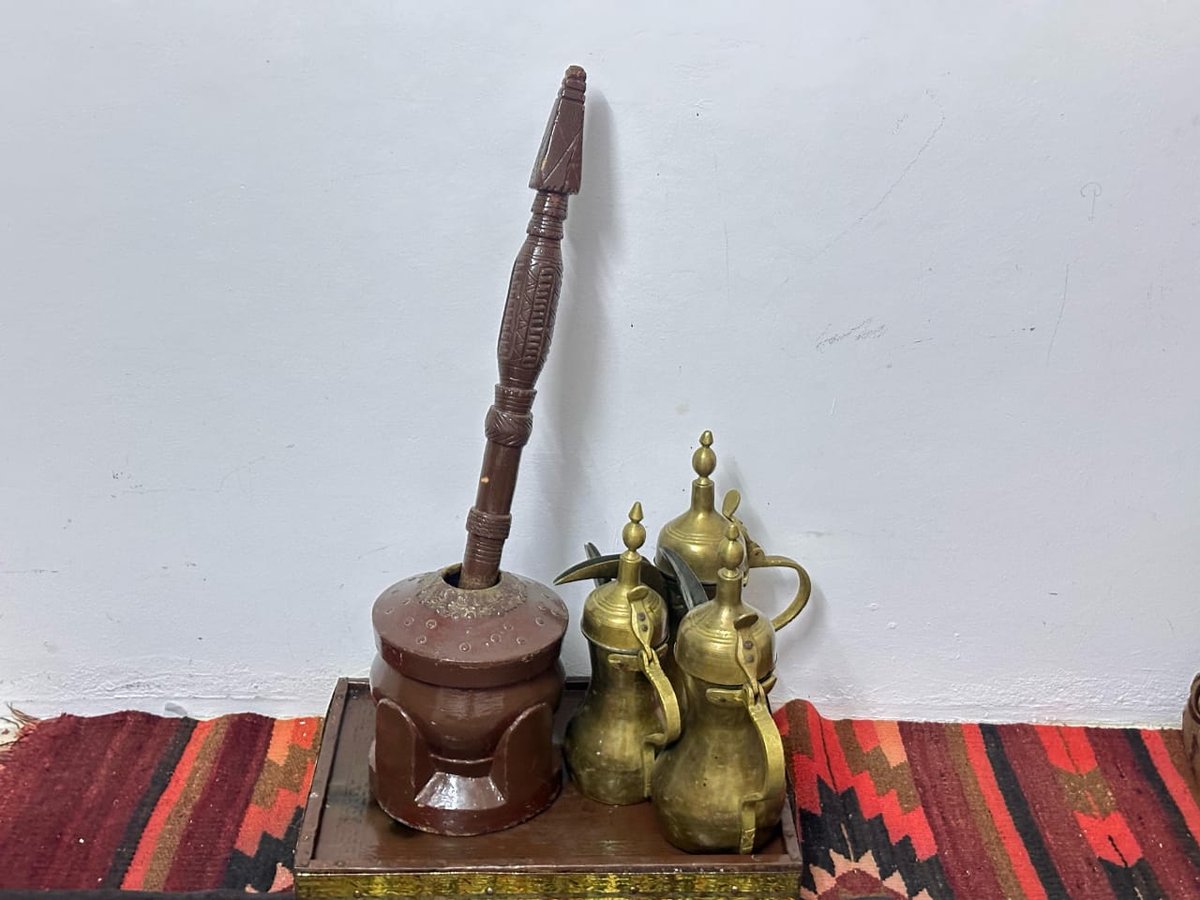
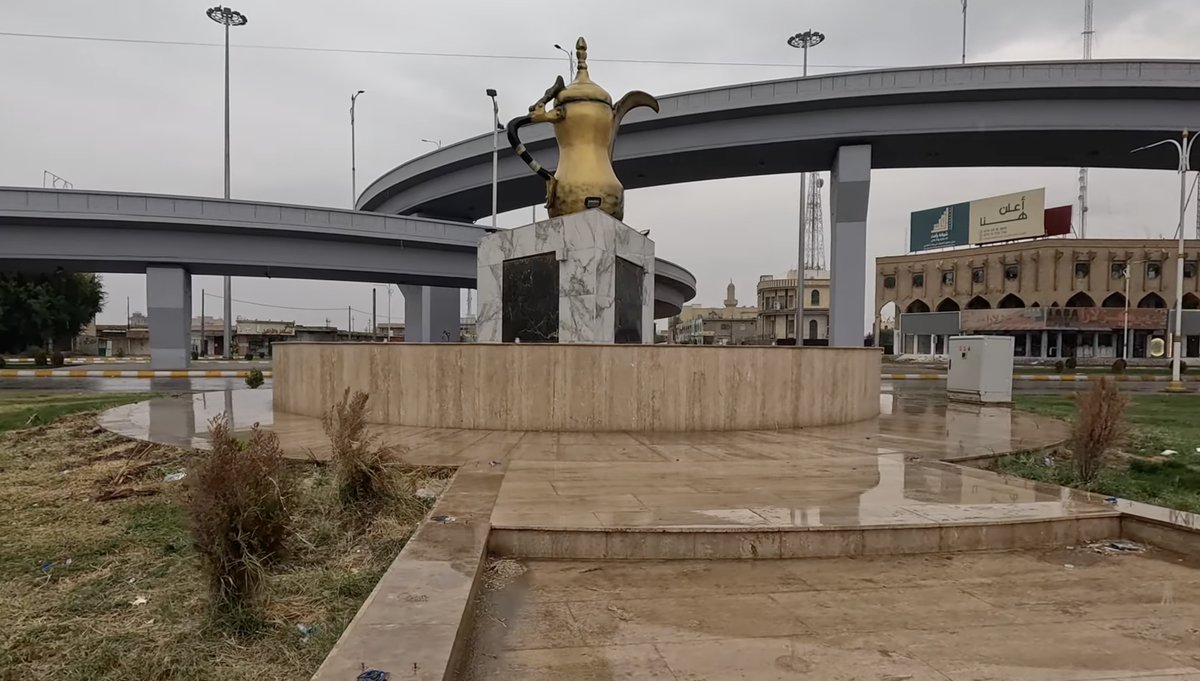
The dallah (plural dilal) is the long-spouted pot with a beaked spout and a tall lid. The copper coffeepot trade centred on Damascus, Aleppo and Baghdad; the prized qureishi style is reported as a design of Hail in northern Saudi Arabia, where Souq al-Dallal is called the region’s largest coffeepot market (Christian Science Monitor, 2023). Dealers elsewhere say the style comes from Mecca, so that is unsettled. A new handmade Hail pot costs from about $2,000 to more than $10,000; mass-produced steel ones $30 to $50. Service traditionally uses three pots, one to boil, one to settle and strain, and one to serve from; Abu Dhabi’s heritage department names them dallat al-khumrah, dallat al-talgeemah and dallat al-mazalah (Abu Dhabi Culture). The dallah has been on the UAE’s 1-dirham coin since the first issue in 1973 (The National, 2021).
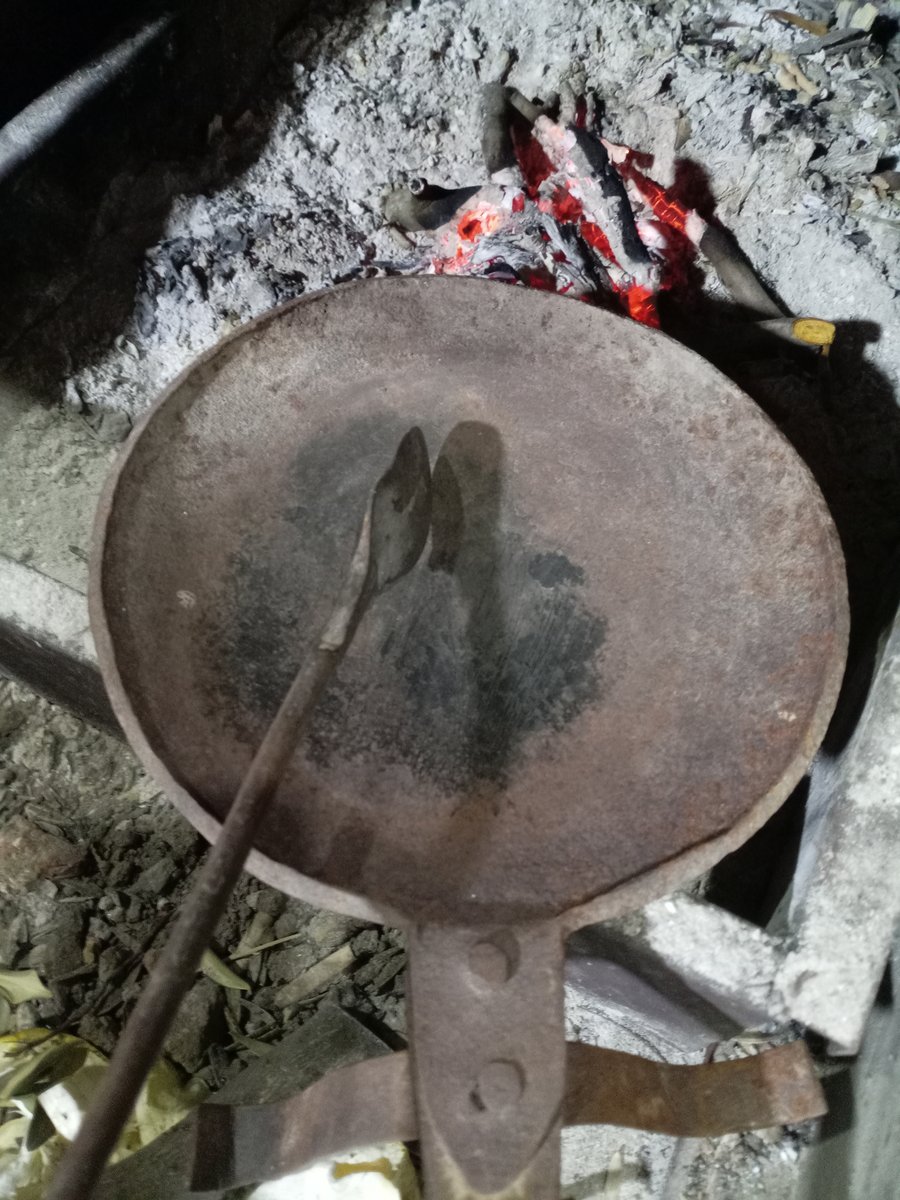
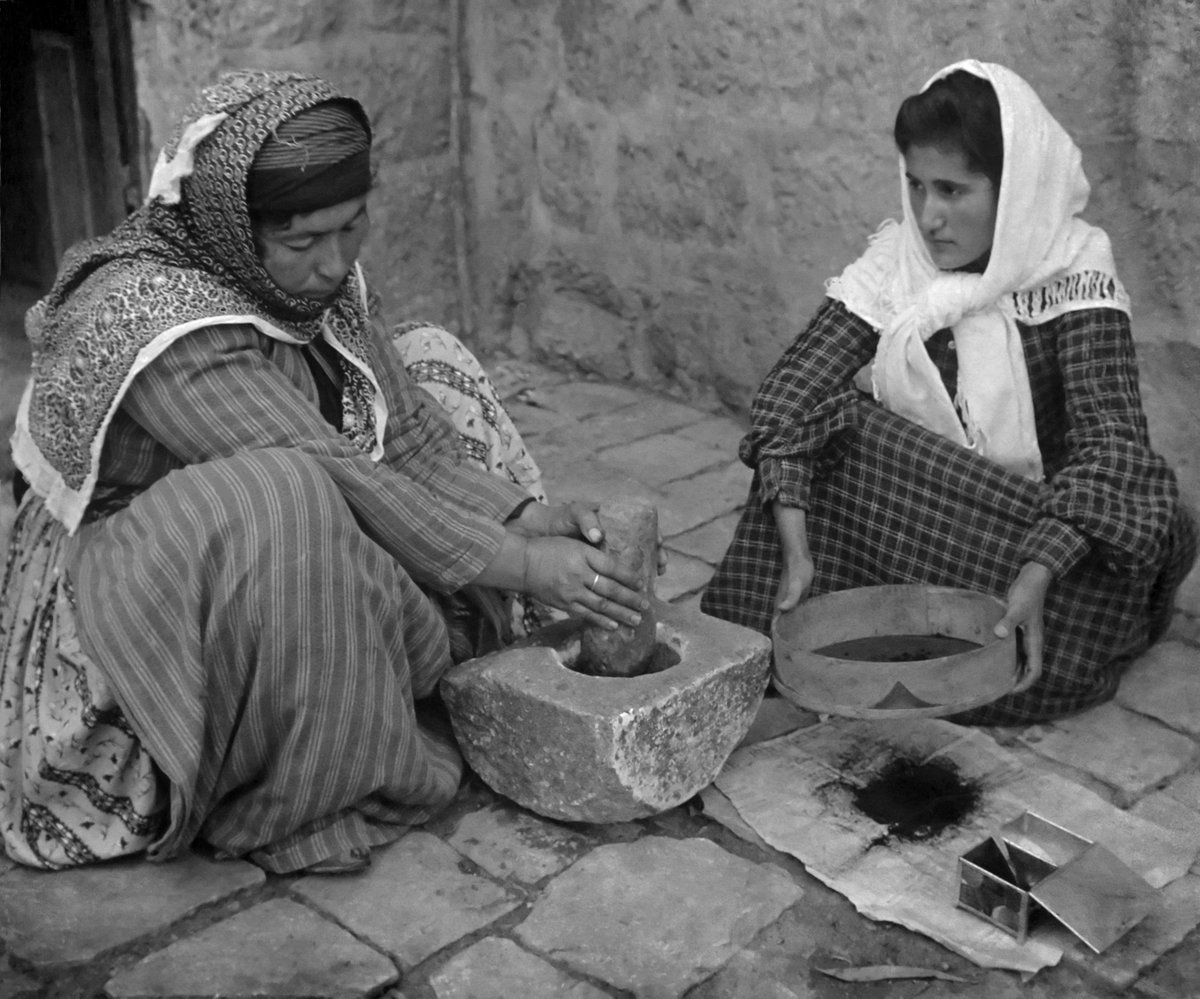
The roasting pan and the mortar change names from country to country. In Saudi and Jordanian usage the long-handled roasting pan is the mihmas or mehmasah; in Abu Dhabi the pan is the tawa and the mihmas is the stirring spoon. The mortar is the mehbash in Jordan and the najr in Saudi Arabia, where its rhythmic pounding “traditionally signaled guests that coffee was being prepared” (Riyadh Daily, 2026); in Abu Dhabi the word mehbash means the tongs for the coals. UNESCO’s text describes a copper mortar; Jordanian Bedouin mortars are wooden. The cups are finjan (plural fanajeen).
Serving, and the rules nobody agrees on
| Point | What the sources say |
|---|---|
| Order | The oldest or most important guest first (UNESCO); in Qatar’s National Museum account, the eldest seated in the centre of the majlis, then the person on his right. |
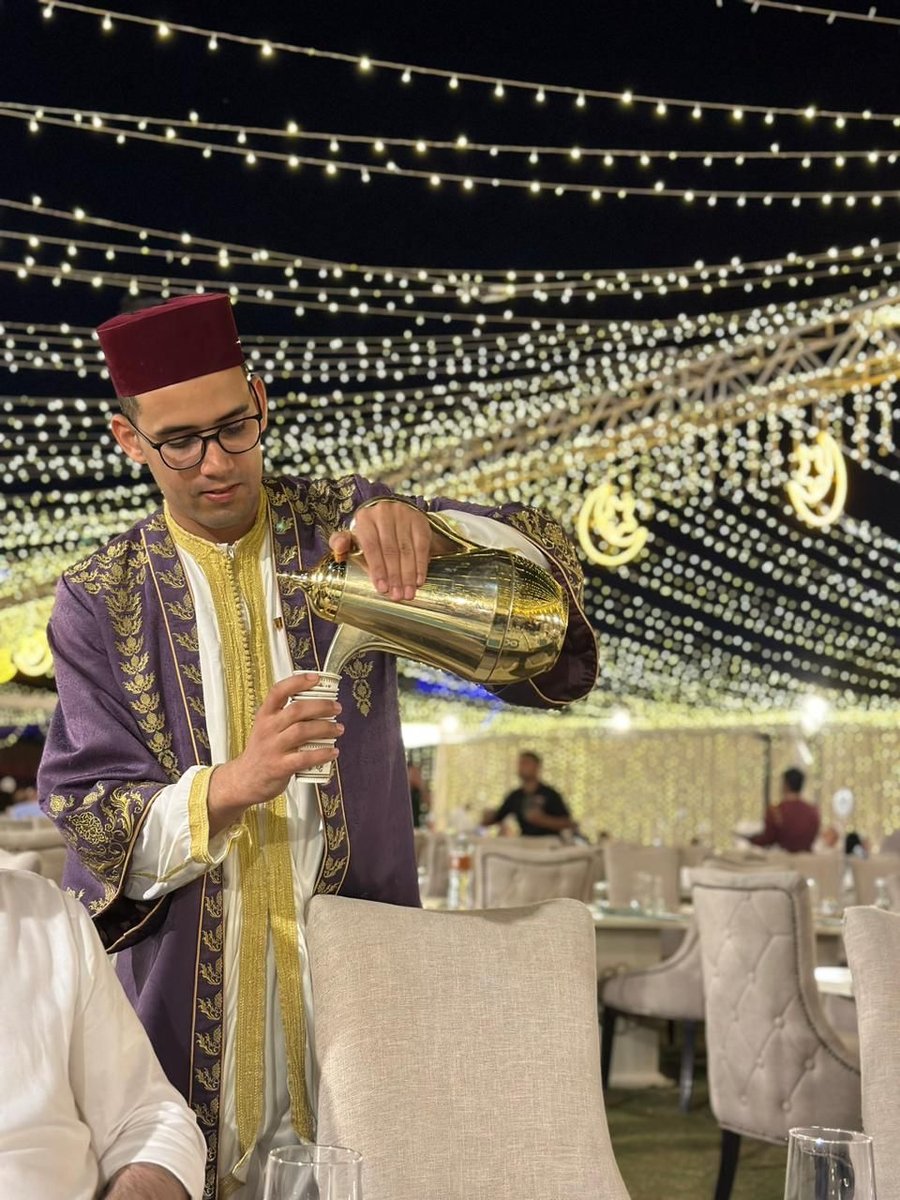
| Hand | UNESCO’s 2024 text: “must be poured using the right hand”. Abu Dhabi Culture and the National Museum of Qatar: the pot in the left, the cup in the right. Gulf News: “never hand over a cup of coffee with the left hand”, even if left-handed. |
| How full | A quarter of the cup (UNESCO, Abu Dhabi), a third (Qatar’s museum), about half (a Dubai protocol officer). A full cup can mean “I don’t want you to come to my house again” (Gulf News, 2021). |
| How many | ”At least one cup but no more than three” (UNESCO). A Jordanian host’s rule: “Never four” (Fathom, 2017). |
| Stopping | Shake the cup (hazz al-finjan); some sources say tilt or shake. At funerals some cover the cup with a hand instead. |
| Refusing | You do not refuse. Formerly, a guest who left his coffee untouched was signalling a request he wanted to raise (Gulf Times, 2014). |
| Dates | Sheikh Zayed took dates in odd numbers, three or more (Founder’s Office). |
The named cups. Qatar’s National Museum names three: the finjan al-dhayf, the guest’s cup; the finjan al-sayf, the sword’s cup, after which “they are committed to defending the host’s household”; and the finjan al-kayf, the cup of pleasure (National Museum of Qatar). Gulf Times gives the sword cup a different meaning, honouring men’s courage in settling quarrels, and Jordanian hosts drink a first tasting cup themselves, al-heif, to show the coffee is good. The story that the host drinks first to prove it is not poisoned has no source.
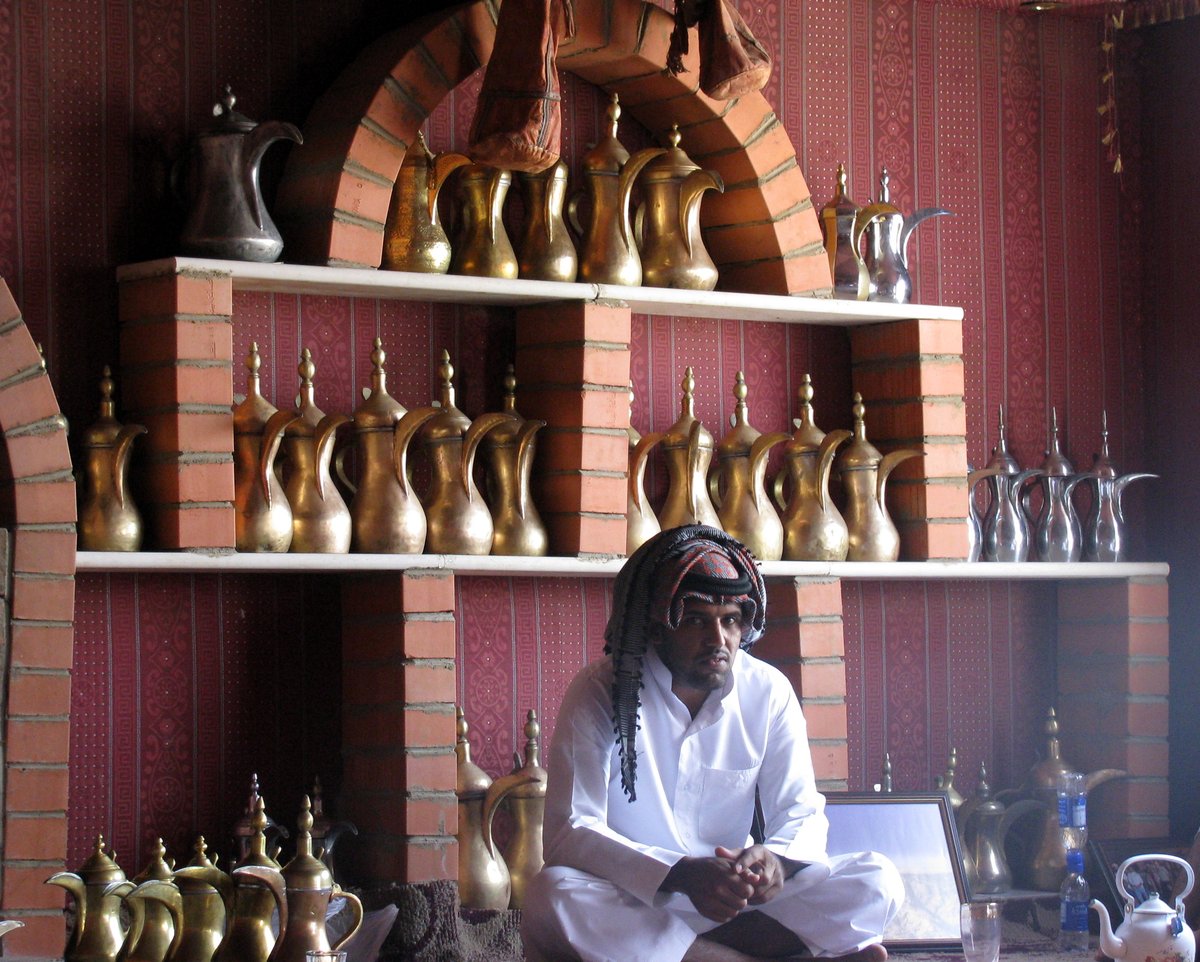
In Iraq, a tribal guest-house prepares coffee from early morning; when the pot runs dry the server says the guest’s share is the fresh batch, not the stale, and the guest replies that the shortfall is in the pot, not in the host (Al Jazeera, 2021).
UNESCO and the majlis
- “Arabic coffee, a symbol of generosity”, inscribed in 2015 at Windhoek on behalf of the UAE, Saudi Arabia, Oman and Qatar, and re-inscribed in 2024 with Jordan added (UNESCO).
- “Majlis, a cultural and social space”, also 2015, by the same four states: the sitting room where community matters are discussed, where “there is usually a stove or fire to prepare coffee” (UNESCO).
- “Knowledge and practices related to cultivating Khawlani coffee beans”, Saudi Arabia, 2022: coffee grown on terraces in the mountains of Jazan by the Khawlani tribes “for over 300 years”, where serving guests your own harvest is “a sign of honour and respect” (UNESCO). The “eight centuries” sometimes given has no source.
Turkish coffee was inscribed in 2013; the Ethiopian ceremony is not yet listed. See Turkish Coffee in Sand and The Ethiopian Coffee Ceremony.
Saudi coffee in the 2020s
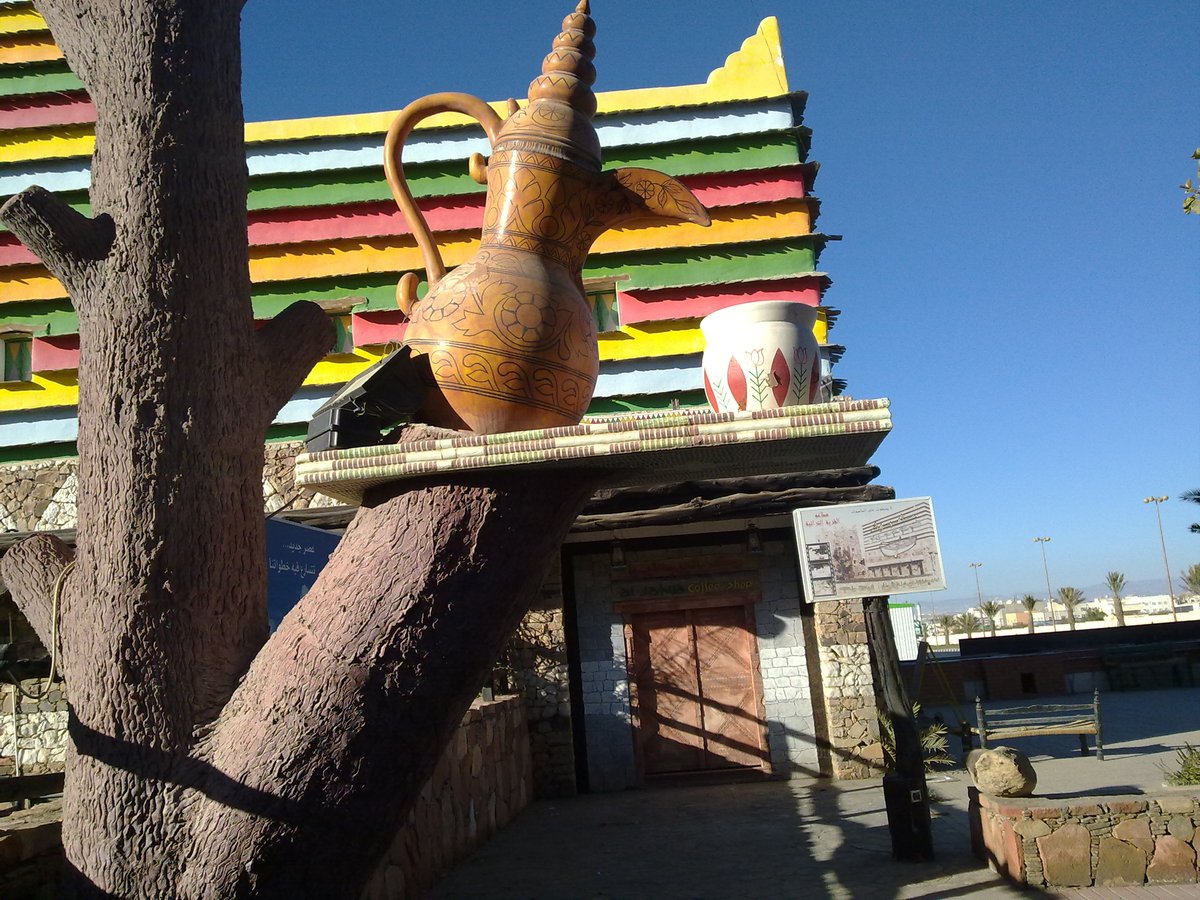
Saudi Arabia made 2022 the Year of Saudi Coffee. On 30 January 2022 a Ministry of Commerce spokesman announced that the drink’s commercial name in restaurants, cafés, shops and roasters “will be officially changed to Saudi coffee” (Arab News); a later instruction to businesses mentioned possible fines, without an amount (Gulf News, 2024). The UNESCO listing Saudi Arabia co-signed is still called “Arabic coffee”. The sovereign Public Investment Fund launched the Saudi Coffee Company in May 2022 with SAR 1.2 billion (about $320 million) and a target of 2,500 tonnes a year (Daily Coffee News), growing in Jazan, Asir and Al Baha. Reported production figures conflict, from 300 to about 1,500 tonnes for overlapping years; what is clear is that output is rising and still well short of the targets.
The word
Qahwa is older than coffee. William Ukers wrote in 1922 that qahwah was “originally one of the names employed for wine in Arabic”, and that deriving the word from Kaffa in Ethiopia was conjecture without evidence; the coffee plant and bean are bunn (Ukers, All About Coffee). Arab lexicographers linked it to a root meaning to lose one’s appetite, which wine and coffee both dull; Alan Kaye proposed a root meaning dark colour (1986). The story of coffee’s start among the Sufis of Yemen is on History and Coffeehouses in History.
Arabic coffee in Michigan
Detroit’s first Arab coffeehouses served men from what is now Lebanon and Syria early in the twentieth century, and Iraqi, Lebanese and Yemeni immigrants opened more across the metro area through the century. In November 2025 Dearborn’s mayor, Abdullah Hammoud, declared the city the “Coffee Capital of America”; the three Dearborn-born Yemeni chains, Qahwah House, Qamaria and Haraz, now run 121 stores in 14 states (Sally Howell, Daily Coffee News, 2026). Their coffee is Yemeni, often spiced with cardamom, and their husk drink is on Qishr. Qahwah House sells a cardamom “Sana’ani Blend” for $29.99 and green Yemeni beans for home roasting for $26.99 (October 2026). Lebanese coffee in Dearborn is mostly the Turkish-style ahweh, a different drink.
Making it at home
The recipes give quantities. Five things that apply to both:
- Strength is a household choice. Published recipes range from about 3 tablespoons of coffee to 4½ cups of water to 40 g to 800 ml. Gulf coffee is drunk a few sips at a time, so a strong pot goes a long way.
- Light roast, if you roast your own: stop when the beans have just started to brown. How to pan-roast is on Home Roasting, Step by Step.
- Freshly ground cardamom makes the difference; green pods, cracked or ground.
- Let it settle for a few minutes off the heat and pour off the grounds into a serving pot or a vacuum flask.
- Serve it unsweetened with dates, a small amount in each cup.
What is not known
- When and where the dallah took its shape.
- When cardamom became standard in Arabian coffee.
- Whether the mortar’s rhythm was a widespread invitation or a romantic retelling.
- The fixed order and meaning of the named cups.
- Saudi Arabia’s actual coffee output; reported figures run from 300 to 1,500 tonnes.
- A distinctly Kuwaiti or Qatari recipe from an official source.
- The amount of the fine, if any, for calling it “Arabic coffee” on a Saudi menu.
Sources
- UNESCO: Arabic coffee, a symbol of generosity and decision 10.COM 10.B.32 (2015); Majlis, a cultural and social space (2015); Khawlani coffee (2022).
- Saudipedia (Ministry of Media), How is Saudi coffee made? and Coffee recipes in Saudi Arabia.
- Abu Dhabi Culture, Gahwa, Arabic coffee; National Museum of Qatar, Finjan.
- Gulf News: How to make, serve and drink Emirati gahwa (2021), The coffee once served in Sheikh Zayed’s majlis (2026), Saudi Arabia mandates renaming (2024).
- Gulf Times, Brewing a tradition of honour and trust (2014); Fathom, A Bedouin coffee ceremony in Jordan (2017); Oman Observer, Scent of an Omani welcome (2026); Al Jazeera, Bitter coffee in Iraq (2021); Riyadh Daily, coffee tools (2026).
- Christian Science Monitor, In coffee-crazy Arab Gulf, a pricey pursuit of the perfect pot (2023); The National, The story behind the coins in your pockets (2021).
- Arab News, Arabic coffee to be officially renamed Saudi coffee (2022); Daily Coffee News, Saudi fund investing $320 million (2022) and Sally Howell, The rise of Yemeni coffeehouses in Dearborn (2026).
- William H. Ukers, All About Coffee (1922), via Biblioklept; Wikipedia, Arabic coffee.
Comments (0)