Coffee · 42 of 64
Mazagran: Coffee in a Glass, From an Algerian Fort to Lisbon and Vienna
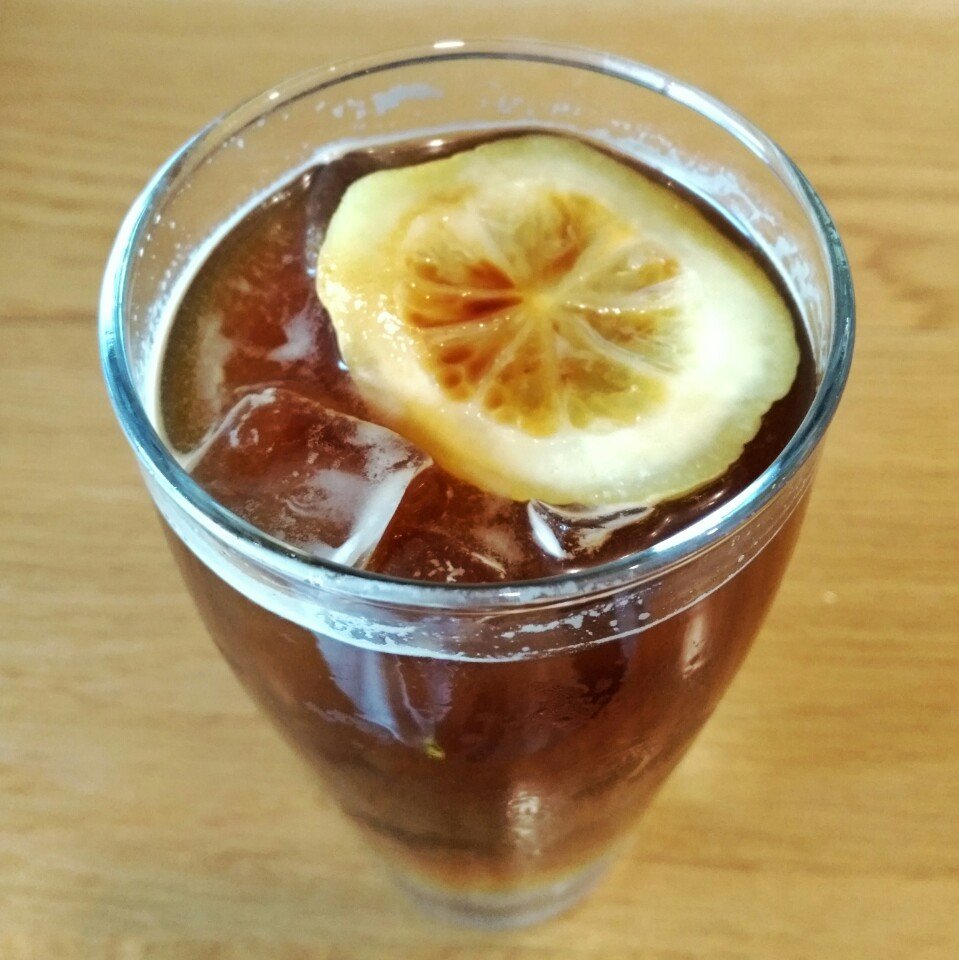
A mazagran is coffee served in a glass. That sounds like nothing, but the word has travelled a long way. It is the name of a fortified village near Mostaganem in Algeria, where in February 1840 a company of French soldiers held off a siege, and the defence was celebrated so loudly in France that the name stuck to streets, songs, a porcelain cup and a way of drinking coffee. Over the next century it became a different drink in every country that took it up:
- In France, black coffee in a tall glass, thinned with water, sweetened, sometimes laced with brandy, hot or cold.
- In Portugal, mazagrã: coffee, sugar and lemon over ice.
- In Austria, cold black coffee with ice, sugar and a shot of rum.
- In 1995, a lightly fizzy bottled coffee that Starbucks and Pepsi tested and dropped, and which led to bottled Frappuccino.
It is often called “the first iced coffee”. The French dictionaries do not support that: they define it as coffee hot or cold, and one of the earliest literary mazagrans is steaming.
The short version
| Question | Answer |
|---|---|
| What is it? | Coffee served in a glass rather than a cup. In France, black coffee with water and sugar, sometimes brandy; in Portugal, iced with lemon; in Austria, iced with rum. |
| Where is the name from? | Mazagran, a village by Mostaganem in western Algeria, where 123 French soldiers held a fort from 3 to 6 February 1840. |
| Did the soldiers invent it? | Not provably. Every telling of the soldiers’ coffee dates from 1897 or later, and the tellings contradict each other: no brandy, so coffee with water; coffee with brandy; or coffee syrup and water on marches near the town. |
| When is the word first printed? | For the drink, 1866 in a Paris slang dictionary (“cold coffee with seltzer”); Zola (Le Ventre de Paris, 1873) and Rimbaud (Illuminations, written 1872–75) use the word soon after. The cup sense is dated to 1879 (Huysmans). Newspapers used “un mazagran” in 1840, but in what sense is not established. |
| Is it iced? | Not originally. French dictionaries say “hot or cold”, and the early French versions are about water, not ice. Ukers mentions ice by 1922; today ice is the norm in Portugal, Austria and Spain. |
| What is a mazagran cup? | A deep, footed cup without a handle, of thick porcelain, stoneware or earthenware, used in French cafés. |
| What was Starbucks’ Mazagran? | A lightly carbonated coffee drink, tested in two Santa Monica stores from about May 1995. It did not sell; the coffee extract reportedly went into bottled Frappuccino. |
| Can I make it? | Yes, three ways: French, Portuguese, Austrian. |
The siege of Mazagran, 1840
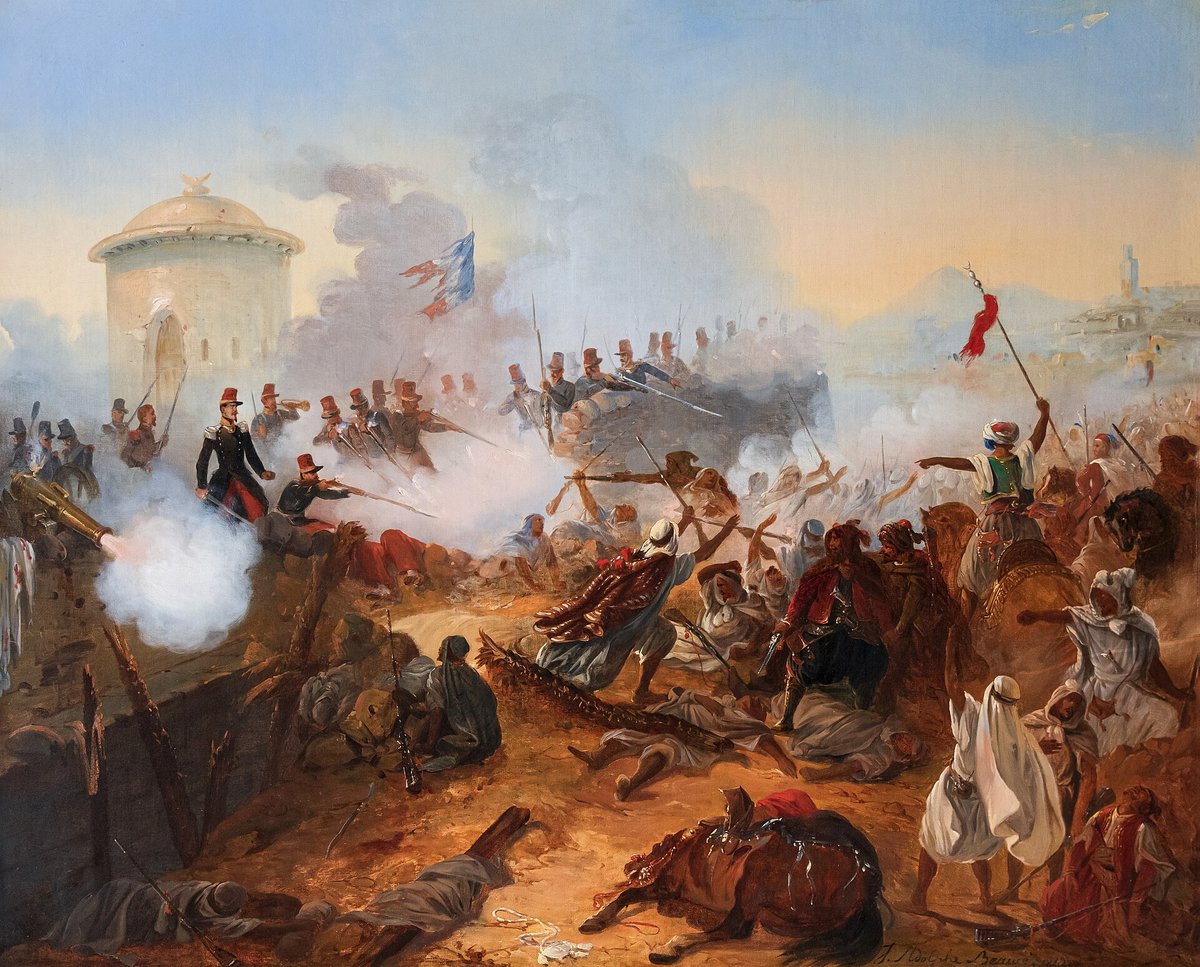
France invaded Algeria in 1830, taking Algiers that July. Much of the interior was held by the resistance led by the Emir Abd el-Kader; the Treaty of Tafna (1837) recognised his control of it, and when war resumed at the end of 1839 the French held small garrisons on the coast (Wikipedia). The conquest took until Abd el-Kader’s surrender in 1847 and cost hundreds of thousands of Algerian lives.
Mazagran is a village about 3 km from Mostaganem, on the coast west of Algiers. From 3 to 6 February 1840, its small fort was held by Captain Hilaire Étienne Lelièvre and 123 men of the 1st battalion of African light infantry (the Bat’ d’Af), against forces led by Mustapha ben Tami, one of Abd el-Kader’s lieutenants (French Wikipedia). The garrison lost 3 killed and 16 wounded and held the fort.
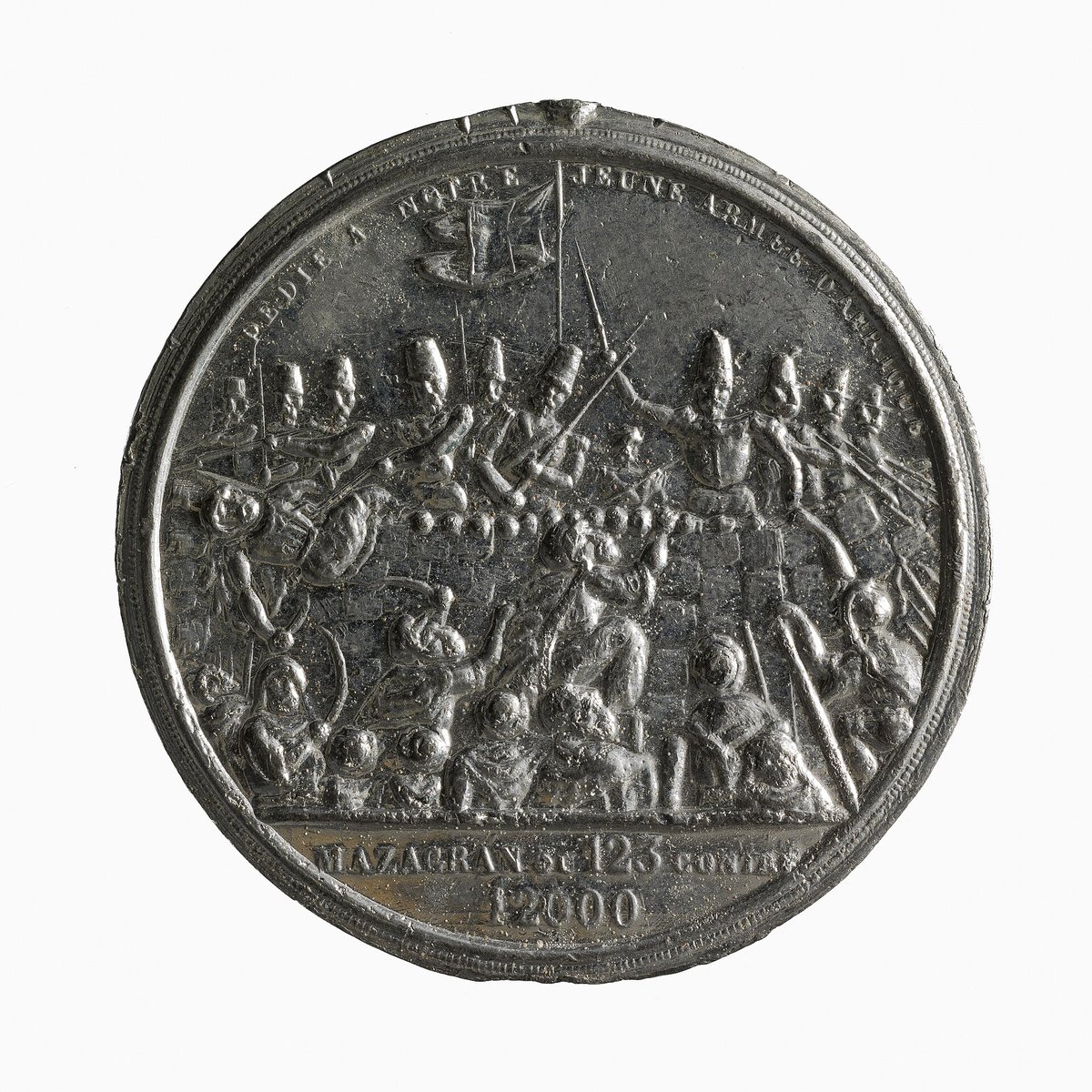
How many attacked them is disputed. The official report claimed 12,000; the military historian Edmond Pellissier de Reynaud put it at 1,500 to 2,000 and wrote of “a great deal of exaggeration”. The English-language claim that the defenders were the Foreign Legion is wrong; they were the light infantry.
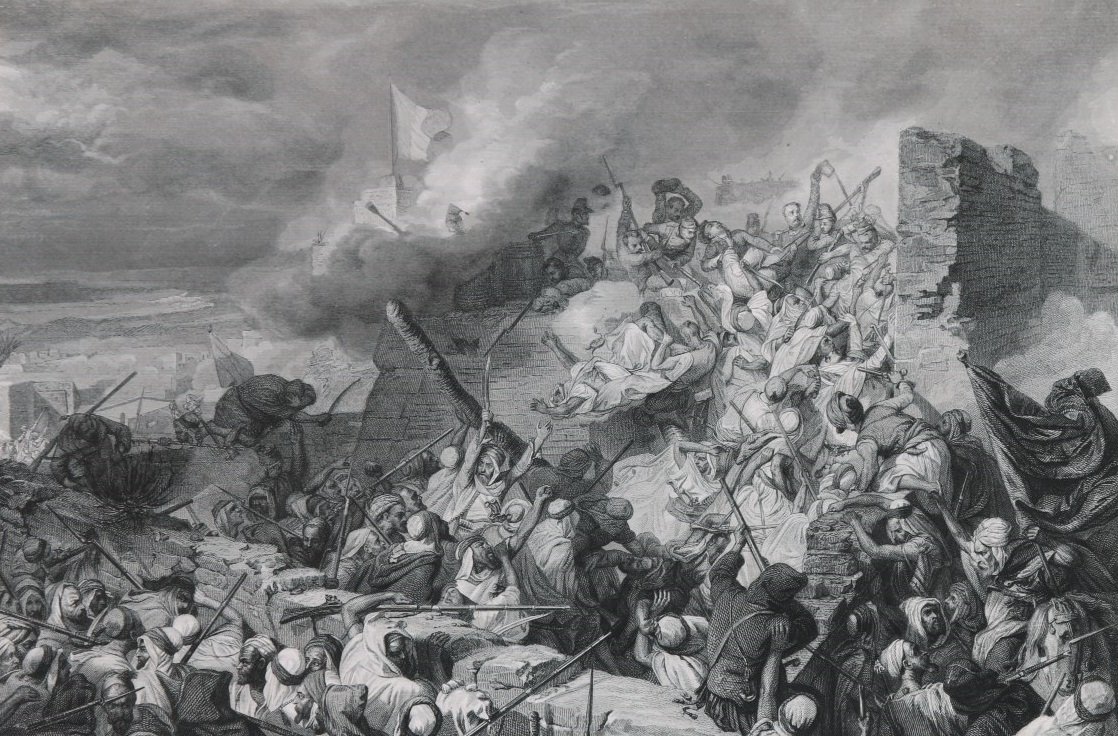
In France the defence became a sensation. It was celebrated in lithographs, songs and plays; a medal was struck; King Louis-Philippe commissioned a painting for Versailles; a monument went up at Malesherbes, Lelièvre’s home town (1842, demolished 1878); a class at the military academy of Saint-Cyr was named after it; and towns all over France named a rue Mazagran (French Wikipedia; for the lithographs, songs and plays, English Wikipedia, citing Jennifer Sessions’s history of French Algeria). The name of the coffee is a souvenir of that publicity, and of a war of conquest.
The coffee legend
Every telling of how the drink got its name is later than the siege, and they do not agree:
| Version | Where it is told |
|---|---|
| The fort had plenty of water from a well, but the brandy ran out, so the soldiers drank black coffee, a little sugared and well thinned with water. Back in France they took their coffee “like at Mazagran”. | Eugène Muller, Curiosités historiques et littéraires, 1897 (Wiktionnaire) |
| The defenders kept going on coffee with sugar and brandy. | Wiktionnaire’s etymology note |
| French colonial troops were first served coffee syrup and cold water on marches near Mazagran, not at the siege. | William Ukers, All About Coffee, 1922, who hedges it (“It is said”, “probably”) (Project Gutenberg) |
| The idea is coffee drunk in a hurry, “comme à Mazagran en 1840”. | The lexicographer Gaston Esnault, 1952, quoted in the TLFi |
No account from 1840 describes soldiers drinking coffee at Mazagran; every version is from 1897 or later. The most that can be said is that a drink took the name of a famous victory, as drinks and dishes often did, and the story of how was told afterwards.
The earliest printed uses. The Trésor de la langue française (TLFi), France’s historical dictionary, dates the drink sense to 1866, in Alfred Delvau’s dictionary of Paris slang: “Mazagran: café froid à l’eau de Seltz”, cold coffee with soda water. It dates the cup to 1879, in Huysmans (CNRTL). Zola’s Le Ventre de Paris (1873) and Rimbaud’s Illuminations (written 1872–75) already use the word for the drink. French newspapers print the phrase “un mazagran” as early as March 1840, a few weeks after the siege, but whether those uses mean the drink is not established.
Hot or cold. Littré’s dictionary (1860s–70s) describes black coffee in a deep glass with a long spoon to mix in sugar, water “and sometimes brandy, which the customer adds” (Littré). The TLFi defines it as black coffee, “hot or cold”, mixed with water and sugar, with or without brandy, served in a deep glass. In Rimbaud’s line “les mazagrans fumèrent dans les estaminets”, the mazagrans steamed in the bars. The French mazagran was about the glass and the water, not the ice.
By 1921, Proust could write of “what used to be called a mazagran or a gloria, drinks found now only as archaeological curiosities in the plays of Labiche”: in France it had become old-fashioned.
The mazagran cup
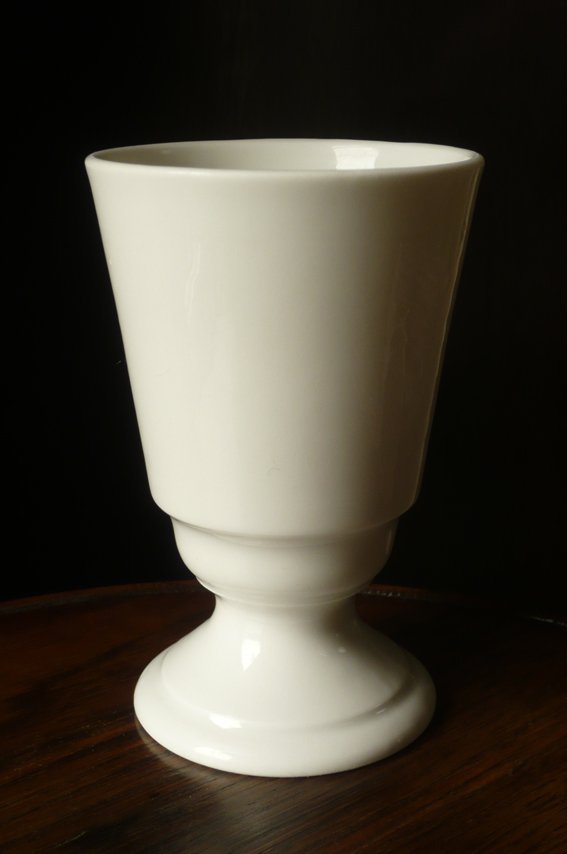
The second meaning of the word in French is the vessel: a deep, footed cup with no handle, like a stemmed goblet in thick porcelain, stoneware or earthenware (Académie française, 9th edition, via CNRTL). It was the standard way to serve coffee in a French café or bistrot, and is still made. Glass mazagrans, sometimes with a handle, are made in Portugal.
The shape does a job. A thick-walled, footed cup keeps the drinker’s hand off the hot sides without a handle, and its depth holds coffee plus water, or coffee plus ice.
Portugal: mazagrã
The Portuguese dictionary Priberam defines mazagrã as “a coffee drink, usually served cool, with sugar and lemon” (Priberam). The usual method: an espresso sweetened while hot, poured over a glass full of ice with a squeeze of lemon and a slice to garnish (RFM). Some versions add rum or mint. It is a summer drink, a cousin of the espresso tonic in its pairing of coffee and citrus.
Recipe: Mazagrã (Portuguese Iced Coffee with Lemon).
Austria
The Austrian embassy’s guide to Viennese coffee: “Similar to a Fiaker [a Viennese black coffee with rum] but served cold. The Mazagran is a strong, black coffee served with ice, a shot of rum and a bit of sugar” (Austrian Press and Information Service). Other Austrian guides use brandy or cognac instead of rum. The English Wikipedia’s “rum or maraschino” has no Austrian source behind it.
Recipe: Mazagran (Austrian Iced Coffee with Rum).
Spain: café del tiempo, a relative
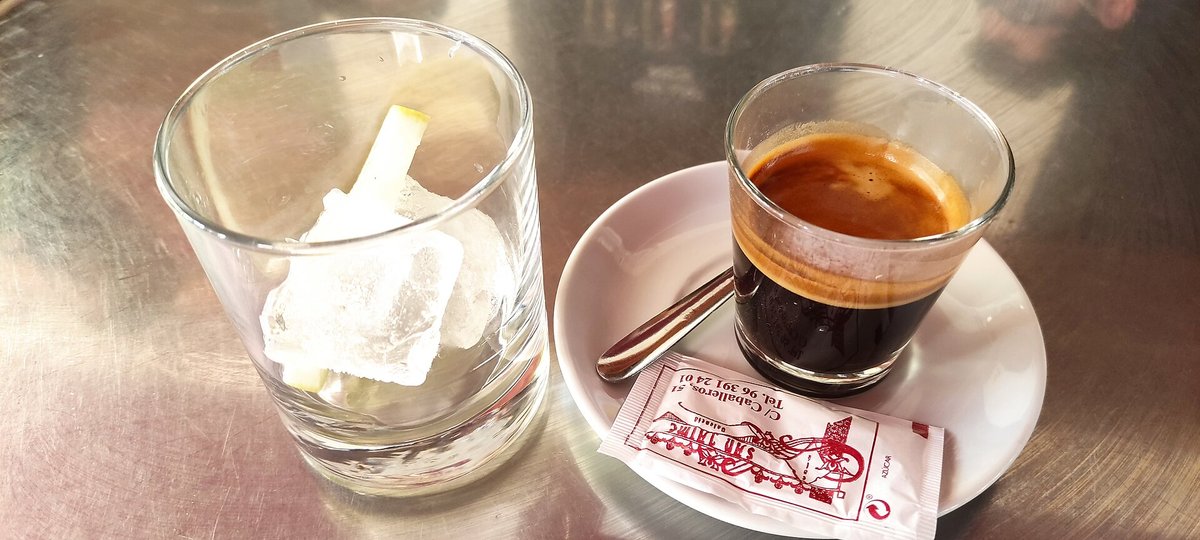
In Valencia and much of eastern Spain, a coffee ordered del tiempo (“of the season”) or con hielo comes with a separate glass of ice, often with a slice of lemon, and the customer pours the hot coffee over it (Ara; Directo al Paladar). It is the same drink as the Portuguese mazagrã. No history links the two names; they are simply the same answer to hot summers.
Starbucks and Pepsi’s Mazagran, 1995
In 1994 Starbucks went into partnership with PepsiCo. Its first product was a lightly carbonated, chilled coffee drink called Mazagran. The Seattle Times reported in June 1995 that Starbucks had begun testing it “less than a month ago” in two stores in Santa Monica, California, with a bottled version due to be tested there at the end of July and a national launch possible the following year (Seattle Times, 19 June 1995). The date often given, 1994, is the year of the partnership, not the test.
It never launched. Howard Schultz wrote in his memoir Pour Your Heart Into It (1997) that it “polarized people” and did not get the repeat business hoped for. According to Wikipedia, the coffee extract developed for it was reused for bottled Frappuccino, which the partnership launched in 1996. The other coffee sodas that came and went are on Manhattan Special and Coffee Sodas.
Iced coffee’s other histories
Mazagran is often called the first iced coffee. It is better described as one early cold coffee among several:
| Drink | Where, when |
|---|---|
| Mazagran | France, by 1866 as “cold coffee with seltzer”; hot or cold before that |
| Iced coffee in Japanese coffeehouses | From the 1910s–20s, with syrup and milk |
| Cà phê đá, cà phê sữa đá (kah fay shoo-uh dah · [kaː˨˩ fej˧˧ ʂɨə˨˩˦ ʔɗaː˦˥]) | Vietnam: phin-dripped coffee over ice, with or without condensed milk (Additions) |
| Café del tiempo, mazagrã | Spain and Portugal: hot espresso poured over ice, with lemon |
| Cold brew | Coffee steeped cold, never heated (Brewing) |
What is not known
- Whether the drink began at the siege. No source from 1840 says so.
- What the 1840 newspaper uses of “un mazagran” mean: the drink, a café named after the battle, or the battle itself.
- What Algerians call mazagran today, if anything.
- When ice entered the drink, in Portugal or Austria.
Sources
- CNRTL, Trésor de la langue française: mazagran (with the Académie française, 9th edition).
- Littré, mazagran.
- Wiktionnaire, mazagran (quoting Muller 1897, Zola, Rimbaud, Proust).
- Priberam, mazagrã.
- French Wikipedia, Bataille de Mazagran; English Wikipedia, Mazagran (drinkware), Mazagran (drink), French conquest of Algeria.
- William H. Ukers, All About Coffee (1922).
- Austrian Press and Information Service, Coffee.
- RFM, Top 5 de bebidas frescas (2021).
- Ara, Café frío (2021).
- Seattle Times, The Starbucks challenge (19 June 1995).
Comments (0)